fannybaratto, Author at White Light
Explore White Light: White Light | HireWL | SalesWL | ShopWL

Author Archives: fannybaratto

  1. White Light Helps Bring Fantasmagorical Magic to Life at the Watermill Theatre

    Leave a Comment
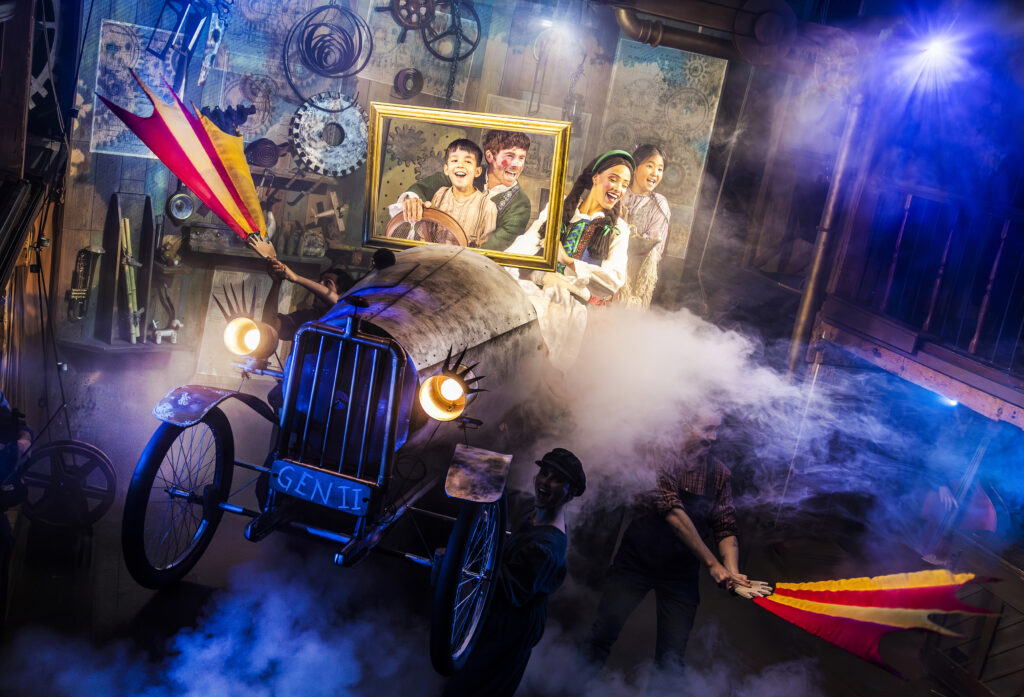
    White Light (WL) is proud to have supported the Watermill Theatre’s ambitious new production of Chitty Chitty Bang Bang, where lighting designer Jai Morjaria has delivered a bold and inventive design that transforms a compact venue into a world of spectacle.

    Tasked with reimagining a much-loved musical within one of the UK’s most intimate theatre spaces, Morjaria approached the project with a clear brief to achieve the seemingly impossible. A single small stage needed to represent multiple locations while also accommodating a flying car, meaning lighting became central to how the story was told and experienced.

    “We had to find a way to make a show that takes place in so many different locations exist within one small space, whilst still delivering the magic,” explains Morjaria.

    This production differs significantly from traditional large-scale versions of Chitty Chitty Bang Bang. With a cast of actor-musicians and limited space, the design relies on creativity rather than scale. Lighting plays a pivotal role in supporting illusion and enhancing the integration of puppetry, automation and set.

    “Lighting played a huge role in helping the illusions read, especially with an audience sitting just feet away,” he adds.

    Designing for the Watermill’s immersive environment brought a unique set of challenges. Audience members sit in close proximity to the action, sometimes just a few feet from the performers and technical rig so the lighting needed to deliver clarity, consistency and impact across every seat in the auditorium.

    “Someone in the front row could be three feet from the action, while someone at the back deserves just as much spectacle. We had to deliver seamless illusions for every viewpoint as well as enough space for those close to the car,” says Morjaria.

    The technical solution combined flexibility, reliability and performance. Inside the theatre, a rig built around Martin MAC Aura and Ayrton Diablo fixtures provided a rich colour palette, precision control and low-maintenance performance, essential in a venue where access is limited and fixtures must remain in place for extended periods.

    The production extended beyond the main stage, with additional performance areas including a circus tent and outdoor environments. This required a cohesive lighting approach across the entire site, ensuring the audience experience remained consistent from arrival through to the performance itself. Flicker-free lighting was prioritised to support audience interaction and social content capture, enhancing engagement beyond the show.

    Technology played a significant role in unlocking creative possibilities. The use of wireless lighting, LED sources and atmospheric effects enabled a range of dynamic moments, from subtle storytelling cues to playful details such as illuminated elements within the car itself. These innovations allowed the team to deliver effects that would have been difficult to achieve in a venue of this scale, even a few years ago.

    While the flying car is a defining moment of the production, lighting underpins many of the show’s most memorable scenes. From transforming the stage into multiple locations to supporting high-energy musical numbers, the design brings pace, colour and clarity to the storytelling. One standout moment for Morjaria is the vibrant “Bombie Samba” sequence, where bold colour choices and dynamic effects create an energetic visual shift.

    “One of my favourite moments was lighting a number called ‘Bombi Samba’, where the Baroness performs a big dance number. It was an exciting, flamboyant and jazzy sequence that gave me the opportunity to work with bold, vibrant colours,” he notes.

    Collaboration was central throughout the process. Morjaria worked closely with director Paul Hart, set designer Katie Lias and the wider creative team to ensure lighting integrated seamlessly with every aspect of the production. He also worked with Associate Lighting Designer Sam Osborne, Production Electrician Ryan Tate, Production manager Neil Starke and the WL team to deliver a tailored solution that maximised both creative ambition and technical constraints.

    “WL’s Adam Walker-Cheetham was incredible. The level of support and the rig we achieved would not have been possible otherwise,” comments Morjaria.

    WL’s Key Account Manager Adam Walker-Cheetham comments: “Supporting Jai, Sam and the lighting team at The Watermill to realise their creative vision while overcoming technical challenges has been incredibly rewarding. The results look amazing. It was a pleasure being able to guide them with their fixtures choices.”  

    Ultimately, the success of Chitty Chitty Bang Bang at the Watermill lies in its ability to deliver a large-scale theatrical experience within an intimate setting. For Morjaria, the lasting impact of the production is not the spectacle alone, but the emotional connection it creates with audiences. “Giving people that sense of joy and escape is what really matters,” he concludes.

    Photography by Pamela Raith

    Lighting & Technical Team Credits:

    • Lighting Designer: Jai Morjaria
    • Associate Lighting Designer and Programmer: Sam Osborne
    • Production Electrician: Ryan Tate
    • Technical & Production Manager (Watermill Theatre): Neil Starke
    • Deputy Technical & Production Manager (Watermill Theatre): Charlie Hodsdon
    • Theatre Technician (Watermill Theatre): Ruth Corris
    • Associate Production Manager: Jordan Harris

  2. It’s Showtime! White Light turns on the Juice!

    Leave a Comment

    The hit Broadway stage adaptation of Beetlejuice The Musical has finally arrived in the West End, and White Light (WL) is proud to have supplied the complete lighting rig, supporting multi‑award‑winning Lighting Designer Kenneth Posner to bring the show’s distinctive visual world to life.

    A defining creative force behind the production, Posner’s lighting design plays a central role in reimagining the beloved pop culture phenomenon for the stage, balancing theatrical storytelling, technical innovation and immersive audience experience.

    From the outset, Beetlejuice presented a unique creative opportunity. “It’s such an iconic piece,” explains Posner. “The challenge was asking: how do we tell this story theatrically?”

    Working alongside Director Alex Timbers and the creative team, Posner helped shape a bold visual language rooted in a heightened, “Burton‑esque” fantasy world. It embraces asymmetry, humour and spectacle while remaining grounded in character‑driven storytelling.

    Projection Designer, Peter Nigrini adds: “From the outset, the projections were conceived as part of a tightly integrated visual language, working hand in hand with lighting, scenic and costume design. Rather than adding another layer, they support the narrative, shifting seamlessly between intimacy and scale.”

    At its core, Beetlejuice is not just spectacle, it is an emotional journey. “It’s really about Lydia,” Posner notes, highlighting the importance of lighting in supporting the narrative arc of a young woman navigating grief and identity.

    This duality, balancing emotional depth with high‑energy comedy, defines the lighting approach. Bold colour, dynamic transitions and presentational lighting cues create a vibrant, playful atmosphere, while carefully considered moments of intimacy ensure the story’s emotional resonance shines through.

    For the West End production, the creative team extended the visual experience beyond the stage, transforming the theatre environment itself. From the moment audiences enter the Prince Edward Theatre, they are immersed in the world of Beetlejuice, with low‑level animated house lighting and ambient soundscapes setting the tone before the curtain rises. “The goal is to invite the audience into the journey straight away,” Posner explains. “They know they’re about to experience something unexpected.”

    The result is a fully integrated design that supports the show’s energetic pacing and layered storytelling, culminating in consistently enthusiastic audience reactions, including standing ovations driven by the production’s final moments of visual and musical impact.

    Having evolved across nine global productions, Beetlejuice continues to demonstrate the flexibility of its design. The transition from Broadway’s Winter Garden Theatre to the Prince Edward Theatre required a considered response to a fundamentally different architectural space. “The Winter Garden is very horizontal, whereas the Prince Edward is much more vertical,” says Posner. “So it became about embracing that new environment while remaining faithful to the original design intent, and taking advantage of the venue’s scale and verticality to enhance the overall visual composition.”

    The West End production also marks a significant technical milestone as the first iteration of Beetlejuice to feature a fully LED lighting rig. Transitioning from discharge fixtures to Martin MAC Viper XIP, Posner and the team were able to future‑proof the design while maintaining its visual integrity.

    This shift required meticulous preparation, with pre‑programming, colour matching and showfile adaptation taking place in WL’s visualisation suite and prep areas ahead of installation.

    The result is a highly efficient, flexible system capable of supporting the production’s demanding visual language, from bold, saturated musical numbers to nuanced, story‑led moments.

    Central to the success of Beetlejuice is its collaborative ethos. “It’s a multi‑layered process,” Posner says. “The storytelling comes from the combined contribution of design, performance, music and direction.”

    WL worked closely with Posner and his team throughout the production process, supporting both creative ambition and technical delivery. From previsualisation through to installation and programming, the partnership ensured a seamless transition from concept to stage.

    Reflecting on the experience, Posner comments: “WL took great care of us. The level of support, both technically and personally, was outstanding.”

    He also praised the West End lighting and production team for their incredible work and support, particularly in executing the show’s complex followspot choreography and integrated lighting cues.

    Beetlejuice The Musical continues to captivate West End audiences with its distinctive blend of humour, heart and high‑impact design.

    Dom Yates, WL’s Head of Lighting, comments: “Through close collaboration with Kenneth Posner, Production Electrician Lee Jones, and the wider lighting team, we were proud to help deliver a production that not only honours its Broadway origins but elevates the experience for UK audiences.”

    The result is a visually striking, technically advanced and emotionally engaging piece of theatre, one that demonstrates the power of lighting design to shape storytelling at every level.

    Photography by Johan Persson

    Lighting Team Credits:

    • Lighting Designer: Kenneth Posner
    • Associate Lighting Designer and Lighting Programmer: David Arch
    • UK Associate Lighting Designer and Lighting Programmer: Nick Simmons
    • US Associate Lighting Designer: Anthony Person
    • Projection Designer: Peter Nigrini
    • Production Electrician: Lee Jones
    • Production Manager: Simon Gooding
    • Followspot Lead: Jim Bristow
    • Theatre Team Lead: James Perrin

  3. Dunottar School Delivers West End-Calibre Les Misérables with White Light

    Leave a Comment

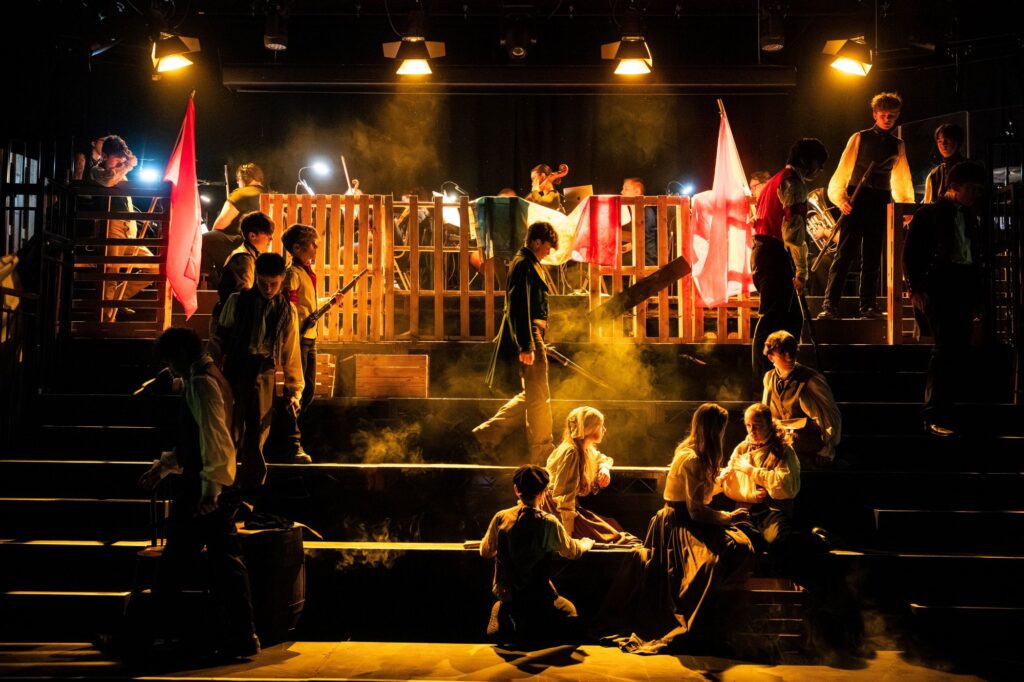
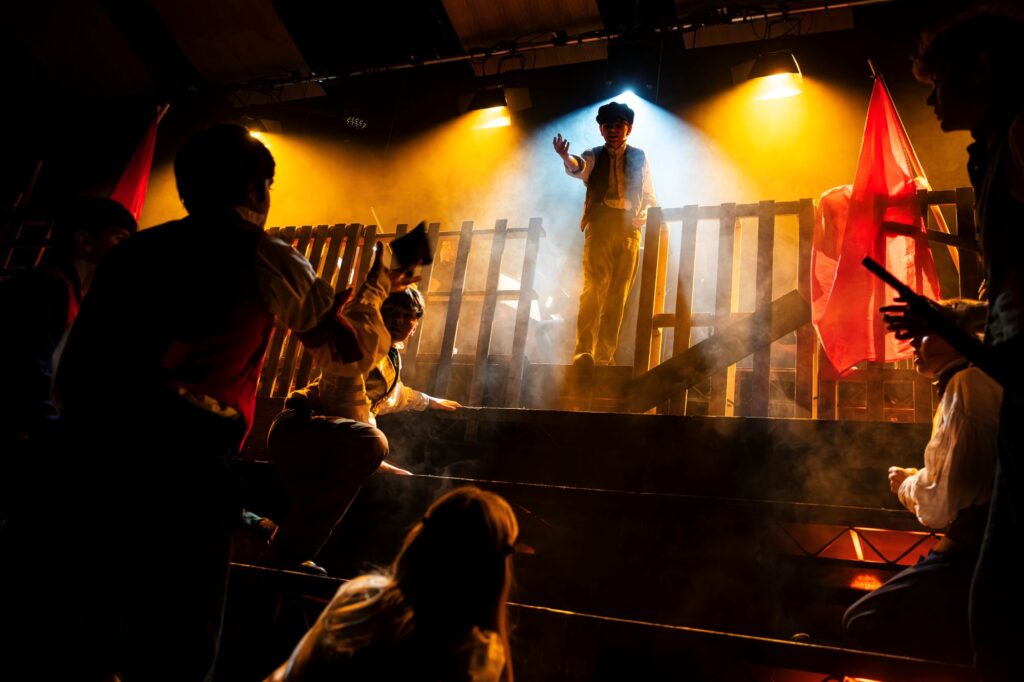
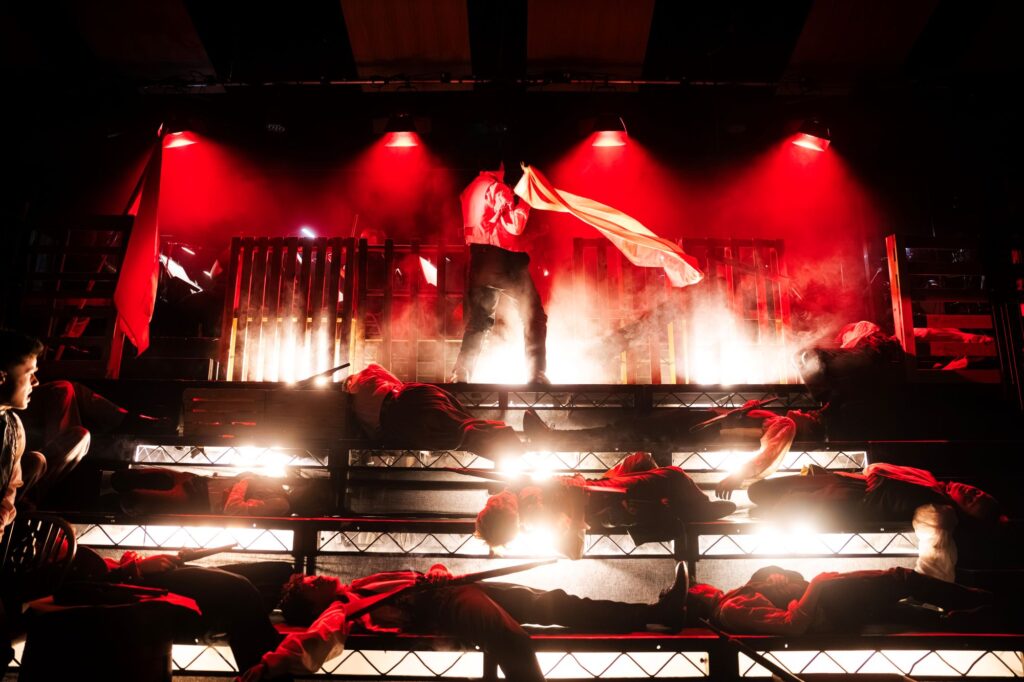
    Dunottar School has raised the bar for school productions with a visually and technically ambitious staging of Les Misérables, delivering a show that audiences described as “almost like watching a West End performance.”

    Technically led by Ted Swan, Theatre and AV Manager, and working collaboratively with Director of Drama Sarah van Duijvenvoorde and Director of Music Laura Channell, the production formed the centrepiece of the school’s centenary celebrations. The brief was clear: create a showstopping experience that matched professional theatre standards while operating within the constraints of a school environment.

    “We wanted to go a step further,” said Swan. “It’s our 100th year, so we needed everything to feel brilliant and as impactful as possible.”

    Despite having a dedicated theatre, Dunottar faced technical challenges. Limited rigging capacity and weight restrictions required careful design decisions to maximise visual impact without compromising safety.

    Working collaboratively with White Light, Swan selected lightweight yet powerful fixtures such as Ayrton Diablo fixtures. This approach allowed for a denser, and more dynamic rig while staying within structural limits.

    “We had to be really careful with what we could hang,” Swan explained. “The guidance from White Light helped us choose the right tools to still achieve the effects we wanted.”

    The design extended beyond traditional overhead rigs. For the first time, lighting fixtures were integrated directly into the set, including blinders and side lighting positioned within the staging itself. Custom rigging points were engineered into the set build, creating new creative possibilities and enhancing the visual storytelling.

    The production drew inspiration from established professional staging, incorporating a tiered set design reminiscent of Evita, constructed by Steel Deck. Combined with a fully mic’d live band, including musicians with West End credits, the result was an immersive and authentic theatrical experience.

    Swan’s vision was rooted in his professional theatre background and a commitment to giving students access to industry standards.

    “I want them to experience what real theatre looks and feels like,” he said. “If they go on to further study or careers in the arts, it shouldn’t be the first time they encounter this level of equipment.”

    White Light’s hire service played a critical role in enabling Dunottar to scale its production. Alongside an expanded lighting package and special effects such as low fog systems, the school benefited from responsive technical support and expert advice throughout the process.

    “White Light’s support always proves invaluable under pressure, and we know we are in safe hands. I’ve worked with Adam Walker-Cheetham, WL’s Key Account Manager, for many years, and his level of responsiveness gives you complete confidence.”

    Adam commented: “We’ve very much enjoyed working with Ted and Dunottar over the years. Our collaborative approach extends from initial planning through to design, with regular consultation ensuring the technical solution aligns with both creative ambition and budget constraints.”

    “You can talk through ideas and find the right approach together,” Swan added. “There’s always a way to make it work.”

    A key outcome of the production was hands-on student engagement with professional-grade technology. Students operated the ETC Gio @5 lighting desk, executing more than 480 cues during performances, while working alongside Swan in a real-world production environment.

    This experience is central to Dunottar’s approach. By integrating industry-standard tools such as DiGiCo sound desks and advanced lighting systems, the school equips students with practical skills and confidence.

    “They’re not just learning theory,” Swan said. “They’re actually doing it, using the same equipment they’ll see in professional venues.”

    Audience response reflected the success of this approach, with feedback praising both performance quality and technical execution.

    “The lighting elevated everything,” Swan said. “We achieved effects we’ve never been able to do before, and it made a huge difference to the overall production.”

    For other schools considering how to balance ambition with budget, Swan’s advice is clear. “Trust the expertise available to you and invest where it matters. The impact on your production is enormous.”

    Photo courtesy of Dunottar SchoolDaniel Cook Photography

  4. Lighting the Mischief: White Light Powers Thespians

    Leave a Comment

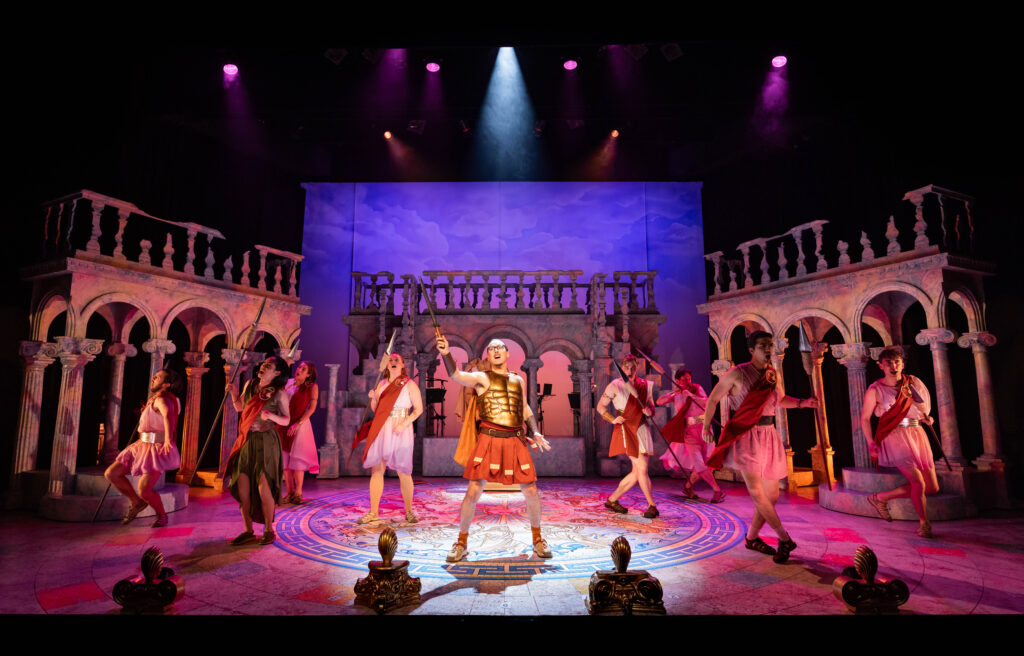
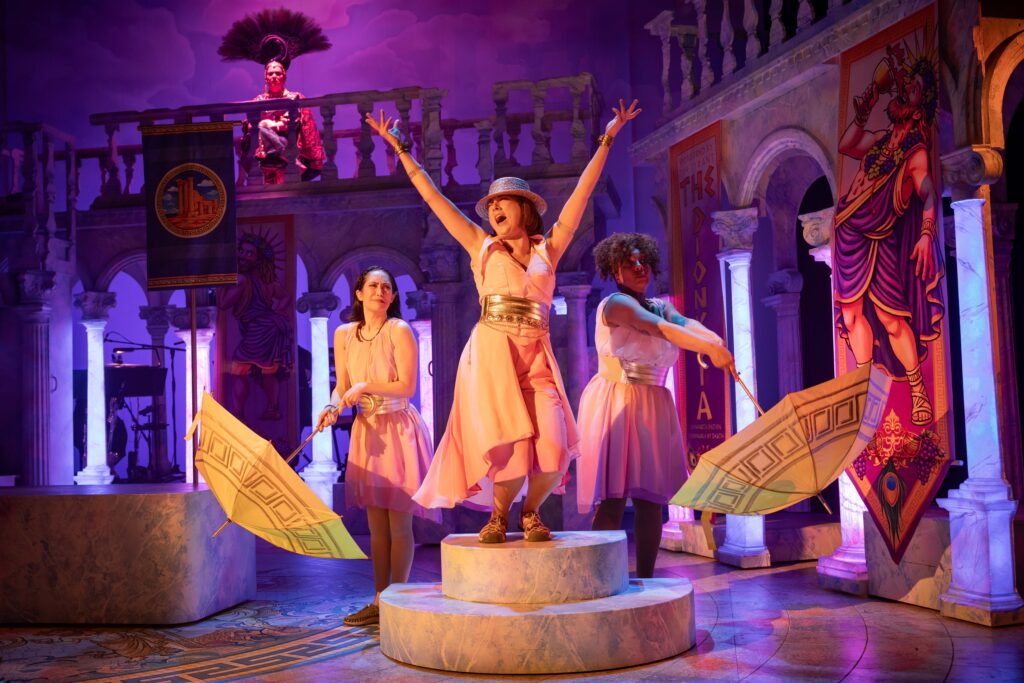
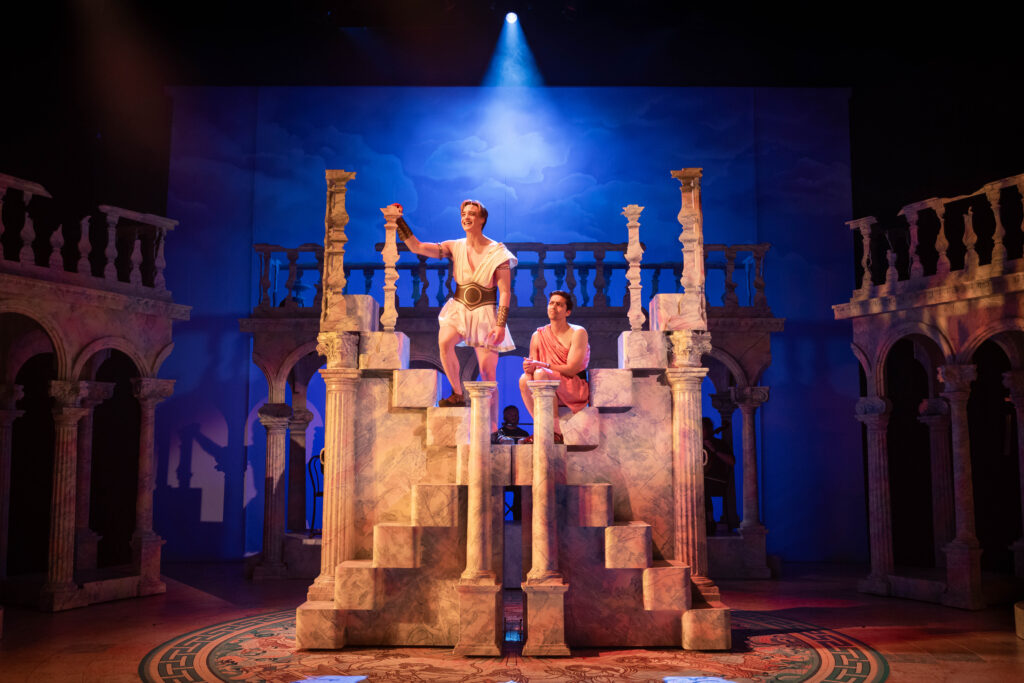
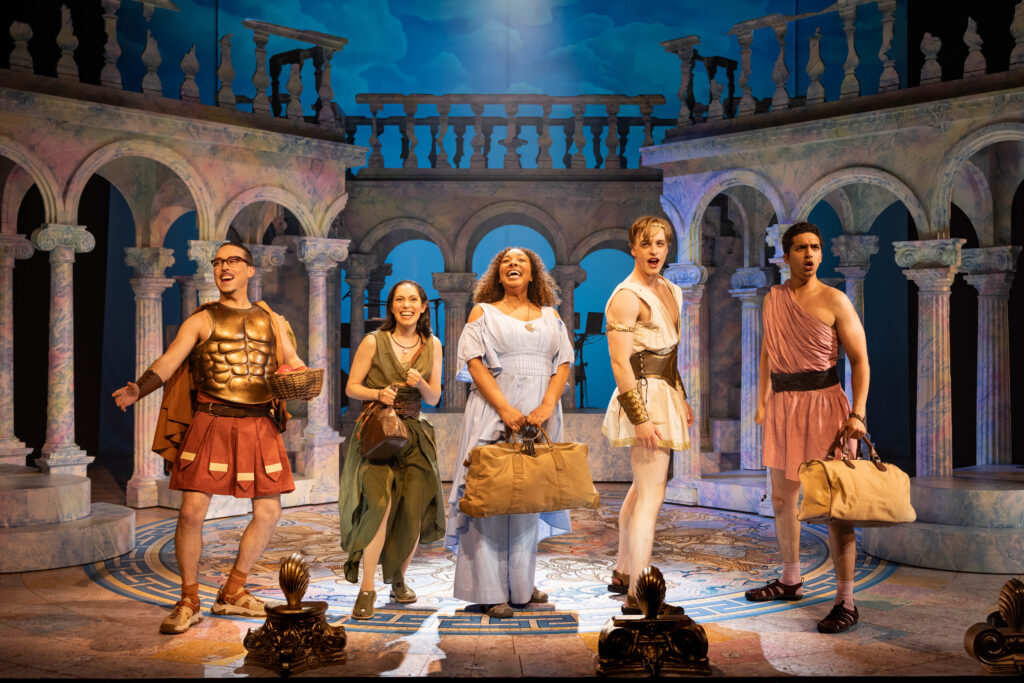
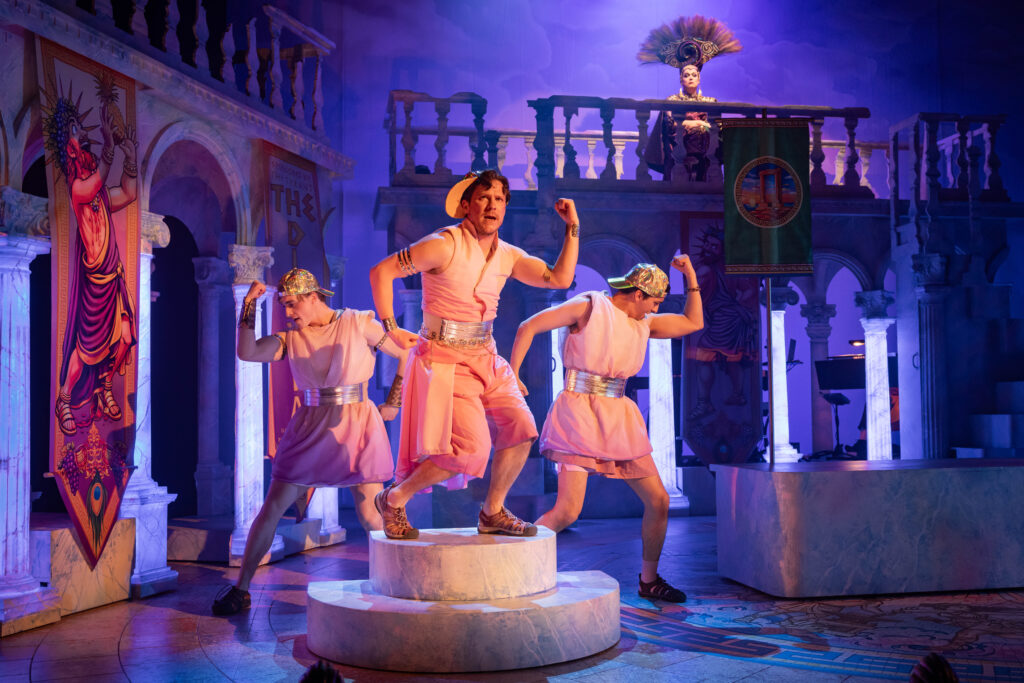
    Lighting Thespians meant finding a world somewhere between Ancient Greece, Saturday morning cartoons and a musical comedy that absolutely must keep moving.

    As Mischief continues to expand beyond its best-known Goes Wrong titles, Thespians represents an important new chapter: a fresh, licensable musical comedy with the potential to have a life beyond its first production. Written by Jonathan Sayer and Ed Zanders, and co-produced by Mercury Theatre Colchester, HOME Manchester and JPT Productions, the show takes audiences to Ancient Greece for a deadly prayer contest, told with Mischief’s unmistakable comic energy.

    For Lighting Designer David Howe, the challenge was to create a world that felt ambitious, theatrical and full of colour, while remaining practical enough to tour.

    “Lighting Thespians was about creating a bright, warm, slightly ridiculous world where the audience immediately understood the tone and wanted to be part of it,” says Howe. “The design was never about making something grand for the sake of it. It was about supporting the storytelling, the music and the comedy.”

    Director Robyn Grant and Designer Jasmine Swan established a visual language that deliberately avoided museum-piece Ancient Greece. Instead, the world of the production sits somewhere between myth, musical theatre and cartoon.

    “Robyn and Jasmine had a very clear visual world in mind,” Howe explains. “It was a playful blend of Disney’s Hercules and The Flintstones, which immediately gave me permission to think in bold, graphic terms. I wanted the colour palette to move from warm Mediterranean daylight, sun-baked stone, terracotta and sunset tones into bolder musical and comic moments. The Grecian sky backdrop became central to that world, helping the lighting shift between daylight, sunset and theatrical night, with strong backlight at times to accentuate the show’s bigger ‘hero’ moments, while keeping everything inside its bright, cartoon Ancient Greece.”

    A key part of Howe’s approach was not to “light the jokes”, but to make sure the world of the show remained clear, inviting and alive. As a musical, the production moves constantly across the set, so the lighting had to create spaces, environments and tone for each scene and song, while keeping the performers connected to the audience. With the budget unable to sustain followspots, precision became essential: the design relies on a detailed network of specials, meaning reliable equipment and accurate positioning were vital from the outset.

    “I don’t think comedy wants to be lit with a wink,” he says. “The lighting still has to believe in the world. If the audience feel comfortable, included and able to read the actors’ faces clearly, then the comedy has the best chance of landing. The danger is over-signalling the joke.”

    The budget was tight, so every fixture had to work hard. Howe worked with White Light to create a practical touring rig that could still deliver scale, colour and flexibility from venue to venue.

    “This was not a case of throwing a large rig at the problem,” says Howe. “We had to be disciplined about what toured, what could be picked up from each venue, and which units genuinely earned their place. Every moving light had to do several jobs: specials, texture, scenery, sky, and the occasional piece of theatrical mischief.”

    The production made use of a very small touring package alongside house equipment, including the Mercury Theatre Colchester’s upgraded LED rig and existing tungsten fixtures. This allowed the design to feel richer than the equipment list might suggest, while still remaining adaptable.

    “White Light’s role was not just supplying the fixtures,” Howe continues. “They understood the brief and supported what we were trying to achieve. The useful conversations were around making the package robust enough to tour, simple enough to re-create quickly, and flexible enough to cope with different venues. On a show like this, the success is often in the unglamorous details – data, power, cable runs, sensible fixture choices and knowing what can be achieved repeatedly without making each Monday feel like starting again.”

    Howe drew on the following fixtures: ETC ColorSource Profiles, High End Systems SolaFrame Profiles and Chroma-Q Color Force battens, each chosen for their ability to serve multiple purposes across the production. They played a vital role in shaping the visual identity of the show, from detailed key lighting to colour, texture and the atmospheric illumination of the Grecian sky backdrop.

    The design was programmed by Freddy Sherwood, who has also taken on the role of Touring Production Electrician and weekly re-lighter, giving the production valuable continuity as it moves between venues. “Freddy understands the tone of the piece -the pace, the musicality, the comedy and the warmth,” says Howe. “That makes a real difference when the show has to be re-created quickly each week. It is not just about putting lights in roughly the right places; it is about protecting the spirit of the design.”

    As with any tour, each week brings a different venue, with front-of-house positions, sightlines and available equipment varying slightly from building to building. The touring version therefore has to be robust without becoming rigid. The aim is always to protect the character of the show – the colour, warmth, pace and sense of fun – while allowing Freddy and the touring team enough flexibility to make it work properly in each space.

    Reflecting on the project, Howe says: “I’m proud that the show feels bigger than the equipment list. That’s always the exciting challenge – when the audience hopefully see a bright, confident, theatrical world, rather than the compromises that made it necessary.”

    Thespians opened at the Mercury Theatre Colchester and is now touring, bringing Mischief’s distinctive comic voice to a new musical world of gods, mortals, music and theatrical chaos.

    Photography by Mark Senior

    Lighting Team Credits:
    Lighting Designer: David Howe
    Programmer / Touring Production Electrician / Weekly Re-lighter: Freddy Sherwood
    Production LX / Mercury Theatre Colchester: Alex Ray

  5. White Light Creates the Glow of 1890s Paris for CHAT NOIR!

    Leave a Comment

    When it comes to creating unforgettable immersive experiences, The Lost Estate is at the forefront of transporting audiences into lost worlds of magical music and immersive dining. Past productions include Paradise Under the Stars, which took audiences to 1950s Cuba; 58th Street, immersing guests in 1930s New York; and The Great Christmas Feast, inviting audiences into the home of Charles Dickens on Christmas Eve, 1843.

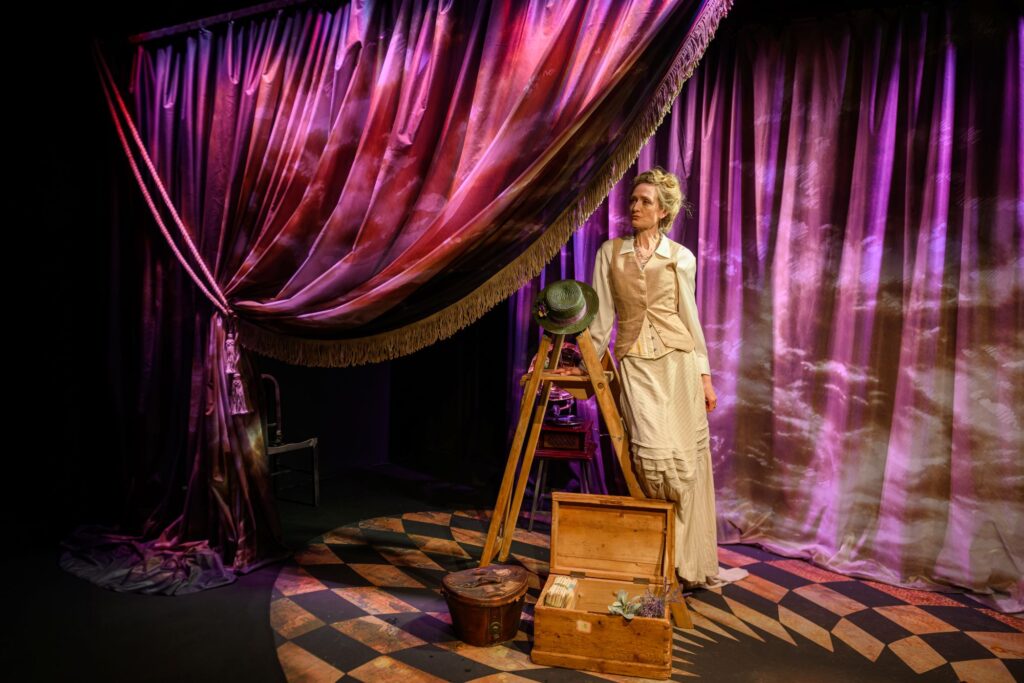
    Their brand‑new experience now transports audiences to 1890s Paris, inside the legendary night‑club Le Chat Noir, a lost world of glittering cabaret performance, bohemian pleasures, vintage cuisine and live music. To bring CHAT NOIR! to life, writer and director Will Kunhardt approached lighting designer Mike Gunning to shape the visual language of the show. Having worked with The Lost Estate for many years, White Light (WL) was once again proud to supply the lighting rig for this extraordinary production.

    From the earliest conversations, lighting was treated not as spectacle, but as a vital storytelling tool. “When Will Kunhardt approached me with the premise of the show, it felt like something that could be clearly and visually expressed,” says Gunning. “There was a real opportunity to collaborate and create something unique.”

    The creative vision was twofold: to root the audience firmly in the time and place of 19th‑century Paris, while also embracing the variety and energy of cabaret performance unfolding throughout the space. “I wanted the light to feel soft, almost like looking at an old photograph,” he explains, ensuring the environment felt authentic, intimate and lived‑in.

    Immersive theatre presents a very different set of challenges from traditional venue‑based productions. CHAT NOIR! unfolds in a site‑specific environment where audiences are both observers and active participants, surrounded by performance on all sides.

    “The audience fills the space, and the performers move through them,” says Gunning. “So, you have to be constantly aware of sightlines, proximity and comfort, while still delivering atmosphere and clarity.”

    Low ceilings, limited rigging positions, and the need to light performers dynamically without blinding audiences demanded a flexible and responsive technical solution. Reliability was also critical for a show running repeatedly, night after night, in close proximity to its audience.

    The lighting system combined low‑voltage LED and incandescent practicals, integrated throughout the set and controlled via encoders, to reinforce the period aesthetic. Fresnels and PCs provided soft, sculptural washes, while Ayrton Diablos introduced subtle movement and texture where required.

    A key technical element was the use of zactrack, enabling performers to be followed seamlessly as they move through the multi‑arched space. Martin MAC Auras formed the backbone of this system, ensuring the lighting could breathe with the performance rather than feeling programmed or static.

    “In collaboration with my programmer Tom Davis, zactrack was the biggest unknown,” Gunning notes. “Understanding how many anchors and trackers were needed in such a complex space was something I completely relied on my team’s expertise for.”

    WL’s role went beyond supplying equipment. With a long‑standing relationship with The Lost Estate and an intimate knowledge of the venue, the team provided invaluable insight throughout the design process. “WL’s understanding of what works in that space helped me decide on the right tools to achieve the look I wanted,” says Gunning. “That knowledge made a real difference to the final outcome.”

    The project was delivered in close collaboration with Show Works Ltd and the Lost Estate Head of Lighting Benjamin Vetluzhskikh, underscoring the collective effort behind the experience.

    Eddy Hackett, Co-founder and Executive Producer of The Lost Estate, comments: “With CHAT NOIR!, we set out not simply to recreate a space, but to revive a moment in time, capturing the energy, the creative spirit and the sense of possibility that defined bohemian Paris. Every element, from performance to design, works together to dissolve the boundary between audience and story. Our collaboration with partners like WL has been instrumental in achieving that level of immersion. Working closely with Mike Gunning and Tom Davis, we’ve developed a truly collaborative process with a shared commitment to authenticity, particularly in shaping a lighting design that feels true to the period.”

    WL’s Head of Lighting, Dominic Yates, comments: “As audiences continue to discover CHAT NOIR!, we are proud to have supplied the lighting rig for this fantastic production, which places storytelling and collaboration at its core. It was great working with Mike, Tom, Callum and Ben to build such a transportive experience.”

    Opening to rave reviews, CHAT NOIR! continues to immerse audiences in a hedonistic night of bohemian Paris, where music, performance and atmosphere collide.

    LX Team Credits:

    Lighting Designer: Mike Gunning

    Lighting Programmer: Tom Davis

    The Lost Estate Head of Lighting: Benjamin Vetluzhskikh

    Show Works Project Manager: Callum Moore Show Works Production LX: Rhys Barratt

    Photo courtesy of The Lost Estate

    More information about the The Lost Estate.

  6. White Light Connects with Evening All Afternoon at the Donmar Theatre

    Leave a Comment

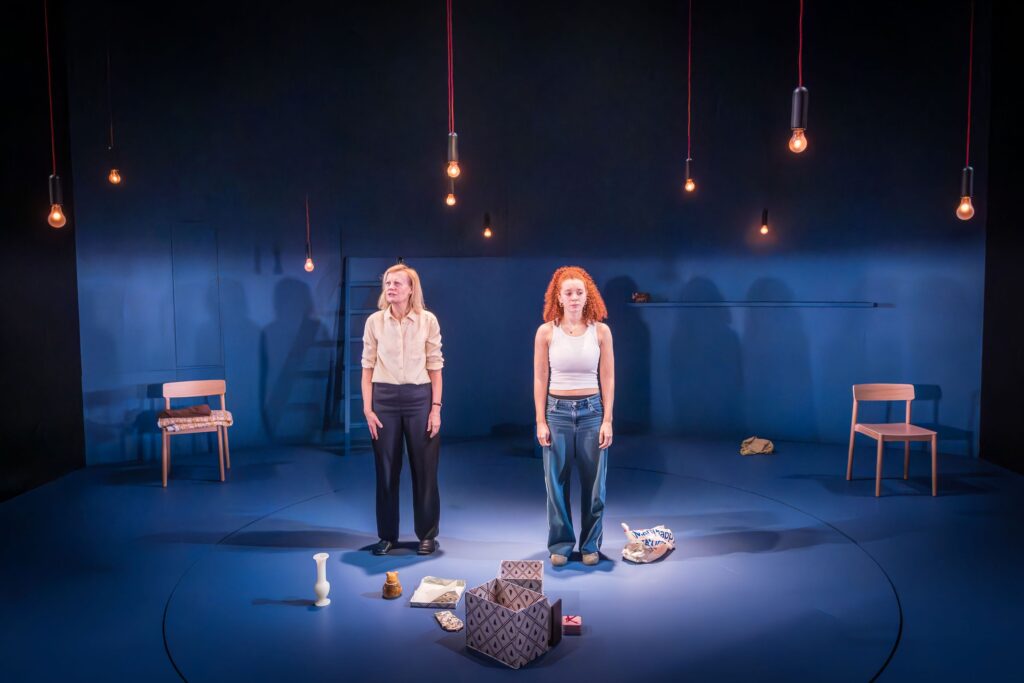
    As Evening All Afternoon closed at the Donmar Theatre earlier this month, White Light (WL) spoke with Lighting Designer Natasha Chivers about her creative vision for Anna Ziegler’s latest play.

    Evening All Afternoon explores the complexity of relationships. It is a story about things lost and remembered, and how sometimes, in order to live, you have to face what is no longer there. To realise the lighting design for the production, Chivers worked closely with WL, who supplied the lighting rig.

    From the outset, the lighting approach focused on how the audience reads relationships. “The play is about family and connection,” says Chivers, “that deep-seated sense of belonging, or not belonging, to the people closest to you.” The design responded by expanding and contracting the space, with tightly focused states reflecting isolation and internal thought, and wider states marking moments where the characters genuinely connect. This allowed emotional shifts to be communicated spatially, as well as through performance and text.

    The script’s structure played a key role in shaping the design language. With a mix of monologues, duologues and scenes that move between interior and shared experience, the lighting needed clarity and restraint. “I wanted there to be a real contrast between the moments when someone was in their own head and when they were connecting,” Chivers explains. Characters held in small, isolated pools of light gradually became part of a shared space as the light spread, visually reinforcing the transition from separation to proximity.

    Colour temperature was used consistently to guide the emotional journey. Warm, soft light suggested intimacy, inclusion and the idea of family, while cooler, whiter states reflected emotional distance and resistance. “Warm light was family to me,” says Chivers. Shifts between softness and hardness in the light were carefully calibrated in response to vulnerability, emotional withdrawal, and moments of openness between the characters.

    A defining visual element came from the introduction of hanging tungsten light bulbs early in the play. These became central to the production’s visual and narrative language, representing the ghost of Delilah’s mother, who returns throughout the story. “The light bulbs in the space represented a ghost,” Chivers explains. Individual bulbs were flown in at different moments to suggest her presence, while the final scenes introduced many more together, signalling a broader emotional resolution. The quality of this warm, domestic light also informed the use of overhead par cans during monologues, creating soft, enveloping states that could overlap and expand as scenes required.

    Close collaboration between the creative team was essential, particularly in resolving how the revolve would be used. All duologues were ultimately staged on the revolve, creating a clear visual rule for shared scenes. “Every time they both appeared together on the revolve, we knew they were in the scene together,” says Chivers. This simple, consistent approach allowed lighting to reinforce storytelling choices with confidence.

    The technical solution balanced flexibility with efficiency. Working within a limited budget and a theatre surrounded by audience on three sides, a compact moving light rig provided the adaptability needed to place light exactly where it was required. Martin MAC Encores formed the backbone of the rig, selected for their strong colour mixing and reliability, alongside par cans, the GLP Impression X4 Bars and ETC Source 4 Series 2 Lustr LED Profiles. DMX winches were used to fly the hanging bulbs in and out of the space, supporting both practical staging and narrative intent.

    Chivers describes the process as a genuinely collaborative experience, praising her Assistant Lighting Designer, Amelia Hawkes, who joined via the Donmar Catalyst Youth programme, as well as the directorial approach and working environment at the Donmar.

    “It really was a complete pleasure to work with Diyan,” she says, noting the openness and trust that characterised the rehearsal room. She also reflects on the production as personally moving, drawn to a script that is delicate but expansive in its emotional reach.

    WL’s Key Account Manager, Jedd Hamilton, comments: “It was a pleasure working closely with the creative team to deliver a lighting solution that supported performance, respected the architecture of the Donmar Theatre and placed storytelling at the centre of every decision.”

    The result was a design that demonstrated how considered lighting can define space, clarify relationships, and guide audiences through a complex emotional landscape.

    Photography by Marc Brenner

    LX Team Credits:

    Lighting Designer: Natasha Chivers
    Assistant Lighting Designer: Amelia Hawkes
    Donmar Head of Lighting: Miguel Figueiredo
    Donmar Deputy Head of Lighting: Joe Watts

  7. White Light supports Jermyn Street Theatre, empowering bold creative storytelling in an intimate West End space

    Leave a Comment

    Jermyn Street Theatre, one of London’s most distinctive studio venues, has long been celebrated for presenting ambitious, design‑driven theatre within an intimate performance space in the heart of the West End. Known for championing innovative artists and delivering award-winning productions, the theatre approached White Light (WL) to help them elevate their technical ambition.

    To support this vision, WL has supplied lighting equipment, including MAC Auras and LED battens, selected to strengthen the theatre’s evolving artistic and technical capabilities. The new rig is already transforming productions across the current season.

    Working closely with Co‑Artistic Director and Executive Producer David Doyle, WL provided a tailored package that expands the theatre’s lighting capabilities while supporting its commitment to low‑energy, sustainable production.

    “As a small space, we’ve always been limited by the number of dimmers on site,” says Doyle. “Because the new equipment is LED, designers can work with a significantly larger number of fixtures than before. It’s opened up our creative palette enormously.”

    The Martin MAC Auras and LED battens have been instrumental in productions across the Autumn and Spring seasons, helping designers achieve levels of dynamism, subtlety, and depth that were previously out of reach. Ragdoll, the first production to benefit from the new kit, went on to receive nominations for both a Standard Theatre Award and a Critics’ Circle Award, highlighting the immediate impact of the expanded rig.

    Jermyn Street Theatre’s distinctive architecture, a wide 8‑metre playing space with a shallow 3‑metre depth, poses both opportunities and challenges for scenic and lighting designers. The new LED battens have allowed teams to illuminate Perspex, drapes, and textured scenery with precision, adding previously impossible layers of dimension.

    “Our space rewards detail,” Doyle explains. “These fixtures allow designers to bring out intricate scenic elements with extraordinary clarity. The audience are never more than four rows from the stage, so that subtlety is really felt.”

    Productions such as David Copperfield and Dear Liar have already showcased how the upgraded equipment can elevate storytelling, lighting, and spatial design simultaneously. For shows where depth and scenic layering are essential, the new rig has become invaluable.

    WL’s long-standing relationship with Jermyn Street Theatre is built on a shared commitment to nurturing designers and ensuring they have access to the tools they need to realise bold creative visions.

    “We’ve worked with WL many times before,” says Doyle. “They understand how vital this venue is for designers to showcase their work to a wide West End audience. Their support, for the theatre and for artists early in their careers, has been exceptional.”

    This partnership reflects WL’s wider mission: to provide sustainable, future‑focused technology solutions while empowering creative teams to tell unforgettable stories. WL’s Business Development Manager Stuart Porter comments: “By expanding the theatre’s technical resources, we help ensure Jermyn Street Theatre can continue producing work that stands proudly alongside larger West End houses. It’s been great working with the technical team and enabling them to achieve more.”  

    With its enhanced rig now in place, Jermyn Street Theatre is better equipped than ever to present work that is visually rich, emotionally resonant, and technically ambitious.

    “The hired equipment has been crucial to fulfilling our artistic ambitions,” Doyle concludes. “We want our designs to match the quality of the major theatres that surround us, and these tools allow our artists to dream bigger.”

    Photo courtesy of Jermyn Street Theatre

  8. Transforming Performance Spaces: Pontio Unveils New LED Lighting Rig with White Light

    Leave a Comment

    Pontio Arts, Bangor University’s Arts Centre, has completed a major upgrade to its theatre and studio lighting systems, marking a decisive shift toward a more sustainable and future focused technical infrastructure. In partnership with White Light (WL), and funded by the Welsh Government through the Arts Council of Wales with match funding by Bangor University, the centre has replaced the majority of its traditional tungsten fixtures with energy efficient LED solutions, supporting lower power consumption, reduced maintenance time, and expanded creative possibilities for artists and visiting companies.

    For Technical Director Gwion E Llwyd, who has been leading Pontio’s technical operations since 2013, the project represents both a practical improvement and a long-term strategic investment. “Our biggest driver was sustainability, and moving away from traditional tungsten towards a more energy efficient, flexible lighting system,” he explains. “LED technology has advanced so much that early limitations are no longer barriers. The fixtures we’ve selected offer the quality, reliability, and control we need, without compromise.”

    Pontio is a uniquely versatile receiving house, presenting everything from ballet and contemporary dance to orchestral performances, youth theatre, musical theatre, televised work, and even large-scale circus productions made possible by the venue’s extensive rigging capabilities. Because the theatre routinely transitions between a 500seat auditorium, a flat floor configuration, and gig or cabaret layouts, its lighting infrastructure must support rapid, efficient changeovers.

    The new LED rig provides exactly that. With instant colour changes, faster programming, and greater versatility, the upgrade allows the technical team to move more efficiently between back-to-back productions, often within the same day. For Gwion, the improvement is already tangible. “We work to incredibly tight schedules,” he says. “The ability to adjust colour and mood quickly, without re-gelling or re-rigging, gives us far more flexibility. It means we can do more, faster, with the same team.”

    The upgrade was supported by funding from the Welsh Government through the Arts Council of Wales with match funding by Bangor University. Pontio adopted a phased approach: fully converting its studio spaces to LED and upgrading the majority of the theatre’s fixtures, with front of house lighting earmarked for the next stage. The new rig is built around Elation KL Fresnels and KL Mini Profiles, with ETC control for ease of use. Pontio’s in-house team carried out the full installation, including adding new DMX universes to accommodate multichannel LED fixtures.

    White Light’s Business Development Manager Paul Botham worked closely with Pontio throughout the process, facilitating onsite demonstrations and providing technical guidance.

    “It’s been fantastic working with Gwion and the entire Pontio team,” Paul says. “Their passion for delivering high quality productions and their commitment to sustainability made this a truly collaborative process. Being able to demo the fixtures directly in their space meant we could explore solutions together, ensuring the final system genuinely supports their artistic and operational needs. We’re incredibly proud to play a part in their journey toward a more flexible and environmentally responsible future.”

    Pontio is now among a small but growing number of North Wales venues operating predominantly LED stage lighting, joining Venue Cymru, which also upgraded through WL. This consistency across regional venues offers touring companies greater confidence, smoother get-ins, and a more sustainable touring model overall.

    Although the upgrade is recent, the benefits are already clear. The theatre runs cooler, power consumption is dramatically reduced, and visiting companies have responded positively to the quality and reliability of the new fixtures. With a programme that is already diverse and extremely busy, Pontio is now better equipped to maintain its pace, support its community of artists, and continue shaping world class experiences for audiences across Wales.

    Photo courtesy of Pontio Arts

  9. White Light Hits Every Beat at The O2 with The Manor LDN

    Leave a Comment

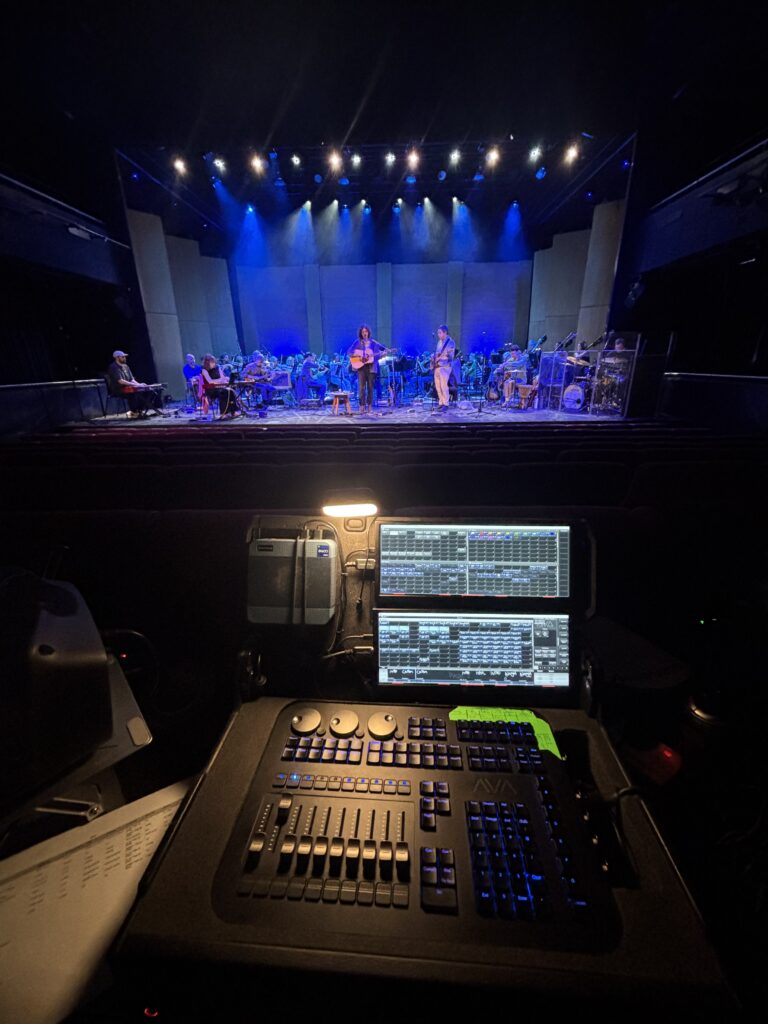
    White Light (WL) was proud to support lighting designer Matt Ladkin on Dance//Offline, The Manor LDN’s dynamic dance festival held at Indigo at The O2.

    As one of London’s leading dance studios, The Manor LDN has built a reputation for elevating training and performance opportunities for dancers of all levels. Their commitment to championing creativity and community has positioned them as a driving force in the capital’s dance culture, and this festival marks an ambitious extension of that mission.

    Based in Finsbury Park, The Manor LDN offers a broad programme of classes led by industry‑leading choreographers and performers. Following the success of their first external event in September 2025, the team returned to Indigo at the O2 last week, coinciding with MOVE IT Dance, one of the world’s biggest dance festivals at ExCeL London.

    The performance featured sixteen original works from choreographers connected to The Manor LDN, along with international guests. The festival provided dancers with the opportunity to perform on a large scale professional stage supported by full production values.

    To shape the overall look and feel of the event, The Manor LDN turned to lighting designer and technical director Matt Ladkin. Having spent nearly twenty years working with Indigo at The O2 as a freelance engineer, Matt has a long‑established relationship with the venue and was recommended to The Manor LDN team as the ideal creative and technical lead. He approached WL to supply the lighting package, drawing on a working relationship that spans almost two decades.

    Matt explains: “The reason I chose WL for this project is because they have great quality equipment, ideally suited to the project, at the right price point, and most importantly, WL is local to the venue. If we needed technical support, they were just down the road.”

    While Indigo at The O2 houses an extensive lighting rig, the venue is primarily designed for live music rather than dance. To build the show The Manor LDN envisioned, Matt created a dedicated dance‑focused package that introduced key elements including side‑light towers with ETC Lustr2’s and Elation KL6-FC Fresnel fixtures, a cyclorama package and ground row package of Chroma-Q Color Force II battens, and a complementary floor package featuring Ayrton Rivale and GLP FR10 battens.

    Matt built his design in Vectorworks before recreating the full system in Capture, using it to collaborate directly with The Manor LDN at their studios and each choreographer, many of whom were engaging in a creative lighting process for the first time. Real‑time visualisation allowed them to shape mood and tone with confidence. WL provided a full control and pre-vis package to support the week long consultations at the Manor LDN studios.

    “Having everything in pre‑vis meant the choreographers could actually see what the piece would look like on a virtual stage. We could turn fixtures on, adjust colour and intensity, and build the dance pieces together. A lot of the choreographers had never been involved in this kind of process, so being able to guide them creatively was really valuable.”

    Matt approached each piece by analysing and breaking down the music in CuePoints to identify rhythm, accents, and emotional shifts, ensuring the lighting supported rather than overshadowed the choreography. He ensured each work had its own visual identity while maintaining a cohesive festival aesthetic across the show.

    The project operated within extremely tight timeframes, with the full installation, technical rehearsal, performance, and de‑rig completed within a single 12 hour day. Thanks to WL’s prep space in Wimbledon and the efficiency of the shows production electricians, the load‑in and focus were completed in just over an hour, with a full load‑out achieved in just over forty‑five minutes. Having fully built the show in Capture, updates were minimal and enabled the rehearsals to run smoothly and without delays.

    Feedback from The Manor LDN, choreographers and audiences was overwhelmingly positive. Many choreographers emphasised how significant the collaborative lighting process felt, particularly given that most festival‑style events afford minimal technical time. The opportunity to craft bespoke lighting looks contributed to a professional experience that felt both elevated and empowering.

    “The choreographers were incredibly happy,” Matt says. “For many, it was their first chance to work with lighting at this level, and they really felt the value of having such high production standards.”

    With two successful editions delivered within six months, The Manor LDN hopes to continue developing Dance//Offline into a recurring fixture in London’s dance calendar. Matt closed by reflecting on the collaborative spirit that defined the project. “The Manor LDN is investing in a creative process that gives dancers and choreographers so much more than they usually get. Working with WL and the whole team to bring this to life has been fantastic. We have created something that feels ambitious, uplifting and genuinely community‑focused.”

    WL’s Head of Lighting, Dom Yates, adds: “We are proud to have supported Dance Offline with both technical excellence and creative partnership, helping The Manor LDN deliver a dance show that celebrates the energy of London’s dance community.”

    Photo courtesy of Manor LDN Media Team

    Credits:

    Lighting Designer: Matt Ladkin

    September 2025: Production LX – Liam Cleary & Al Kiernan

    March 2026: Production LX – Jamie Chaloner & Kyle O’Hara

    More information > https://www.themanorldn.com

  10. White Light Shines on Shadowlands

    Leave a Comment

    White Light is proud to have supplied the lighting for the West End production of Shadowlands, currently playing at the Aldwych Theatre, with lighting design by the acclaimed Howard Harrison. Renowned for his thoughtful and meticulous approach, Harrison has crafted a design that supports the production’s emotional depth and guides audiences through the contrasting worlds at the heart of William Nicholson’s play.

    Having first worked on Shadowlands during its Chichester Festival Theatre run several years ago, Harrison approached the West End transfer with fresh eyes. The Aldwych presented an entirely different stage configuration and a more contained performance space, which shaped his creative process. The result is a refined and responsive design that enhances the production’s central themes of connection, grief and imagination.

    “It was very much about responding to what is already in the play,” Harrison shares. “The story asks for a clear contrast between the warmth of Oxford life and the fragility that enters with Joy. Everything in the lighting followed that emotional journey.”

    A key part of Harrison’s design relied on the Ayrton Rivale moving lights. He explains that the Rivale’s versatility was central to the show’s needs. “They can do everything. They have shutters, strong frost, excellent colour and they work as a spot, profile or wash. That flexibility was important, especially in a play with such subtle shifts.”

    Alongside the Rivale units, the rig featured ETC Lustr fixtures, forming a streamlined and efficient toolkit that delivered consistency and control throughout the production. These fixtures proved especially valuable during the brief yet impactful transitions into the imagined world of Narnia, moments that demanded precision, balance and a strong sense of atmosphere within a limited amount of space and time.

    “These scenes only last around a minute, but everything is happening,” Harrison says. “Dry ice, light, movement. The challenge was to make the space breathe even though it is physically quite tight. I think we achieved something that feels clear and immediate for the audience.”

    Supporting Harrison throughout the process was the team led by Production Electrician Ben Nichols, supported by Michael Scott and programmer Leon Leitner. Harrison emphasises the strength of the collaboration. “They worked wonders in a very short timeframe. Everyone operated with real commitment and focus. The support was exceptional.”

    The production’s tight schedule placed further importance on the quality and reliability of the equipment supplied by White Light. Harrison notes that the smooth technical process helped the team meet ambitious deadlines. “White Light gave me exactly what I needed. The equipment was excellent and the team were always available. It made the whole process far easier.”

    Shadowlands has been warmly received by audiences and critics alike, with particular praise for the production’s cohesive visual language. For Harrison, the success lies in guiding viewers through Lewis’s personal journey while respecting the script’s understated power. “People seem to enjoy the world we take them to. That is always encouraging.”

    White Light Head of Lighting Dom Yates comments: “We are delighted to have supported the lighting for Shadowlands, continuing a long-standing relationship with Harrison across many productions. We remain committed to empowering designers with reliable technology, expert support and the tools required to realise their creative vision.”

    Shadowlands is now playing at the Aldwych Theatre for a strictly limited run, until 9 May.

    Photography by Johan Persson