

Johanna Town – Leading an Organisation in a Time of Crisis
Leave a Comment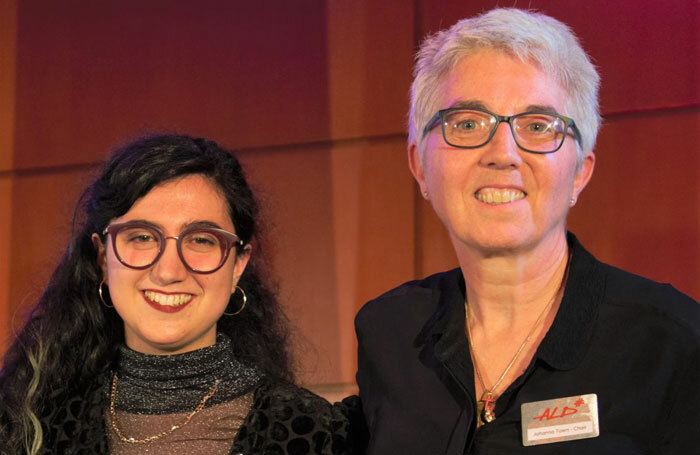
Johanna Town is one of the most recognisable figures in theatre lighting. Having served as Head of Lighting at the Royal Court for almost twenty years, she has gone on to become one of the industry’s most prolific designers, lighting shows in the West End, across the UK and throughout the globe. Three years ago, she became Chair of The ALD – The People in Performance Lighting – which aims to give lighting practitioners at all levels a voice within the industry. We spoke to Jo about what it’s been like leading the organisation through such a difficult time along with how she feels the past few months have proven just what an invaluable organisation it is.
As we sit down to talk to Jo (via Zoom, of course), the main focus of our discussion is how she’s steered the ALD through 2020. However, it seems that ever since Jo took over as Chair, there has been some sort of ‘crisis’ that she’s had to face. She explains: “When I was nominated as Chair back in 2017, it was right in the middle of the Save Stage Lighting campaign (remember that?!). Obviously, as an industry lighting body, we had to drive this important incentive but it was certainly a baptism of fire! Then, in my second year, it was the launch of the Value of Design campaign which aimed to create modernised, fit-for-purpose agreements for all designers in lighting and set design, alongside explaining to our unions and producers what it takes to create our work in a modern theatre design industry. This in itself took over 18 months of often quite challenging meetings. Then, last year, I joked to Ian Saunders, our Executive Director, that 2020 might be a quiet one for us, in which the main focus would be celebrating our sixtieth anniversary. How little did we know…”.
Like most of us, the arrival of Covid-19 took Jo and the ALD completely by surprise. And while the initial outbreak did have a palpable effect, Jo tried her hardest to maintain a bright outlook: “By nature, I am an incredibly positive person. Even when venues started closing, I thought we’d definitely be back to work by summer at the latest. I think this was optimism coupled with the fact that, with so many freelancers losing all their work overnight, including myself, it didn’t seem viable that this could go on for any longer than a few months”.

Unfortunately, it did exactly that and since March this year, venues up and down the country have been closed, with no reopening date for most in sight. Knowing there was so much uncertainty and worry surrounding the ALD members, Jo realised that now was the time for the organisation to prove exactly why it exists. She explains: “As devastating as Covid-19 has been for all of us, it actually made us realise just what our role is as a collective. I wanted to make sure we were there to support our members and wider lighting family. Speaking to the committee in those first weeks, we made it our aim to ensure people knew we were here, available to talk and offer any advice they needed”.
And the group soon proved to be a valuable support for many. Jo recalls the organisation receiving several phone calls from members, panicked that they had no work and extremely worried about what the future held: “It was an incredibly emotional time. I know myself as, in the space of a week, I had virtually six months worth of work cancelled. I asked myself what would I want from an organisation that was supposed to be there for me and made sure we implemented exactly that to the best of our ability. We are a voluntary organisation so sadly cannot offer financial support. That said, we are able to put people in touch with various resources, funds and grants and give them the tools they need”. As such, a great deal of work went into quickly making resources packages for members to access important information around financial and other supportive help.
Jo made it a personal aim of hers to ensure that the organisation was fully aware of the Covid situation as it progressed and that it constantly kept its members informed. She recalls: “For the first month, it felt like I hardly left my office! I was attending several Zoom meetings a day, keeping track of what both the government and SOLT/UK Theatre were advising and checking to see if the guidelines had changed. It was incredibly time consuming; particularly for someone like myself who suffers with dyslexia. That said, today’s social media is such a great tool for campaigns and gives you a voice so I needed more than ever to embrace that world. This mainly involved me passing on the right tweets to our network, making political statements to the government and local MPs and sometimes just giving out some hope and support. Although writing comments on a daily basis was a big learning curve and it was certainly a leap of faith for someone like me to give The ALD a voice on these platforms!”.

As the weeks went on, it soon became clear that venues would be closed indefinitely and probably not re-open until 2021. It was at this point when Jo realised that the organisation would have to think about what role it would play for its members for the rest of the year. She explains: “In the initial stages, it was about giving out advice, which we still do. However, once it became clear that our normal way of life had changed for the foreseeable future, we knew our approach as an organisation would have to do the same. That said, we still wanted to make sure we were fulfilling all of our aims and offering our members the opportunities and resources they expect from us. As such, we held our AGM in June as planned – but moved it all online!”.
The AGM was a significant moment for the ALD. By making the event virtual, it meant they could hold simultaneous training sessions, member discussions as well as the actual general meeting itself. For Jo though, it had a bigger purpose this year: “The best thing about the AGM, for me, was just the fact we were able to bring so many people together; the majority of which hadn’t seen one another in months. We had 160 people in attendance which was amazing and it was quite heart-rendering on the quiz nights to see young students on a team with someone like Ken Billington. That’s the power of our organisation and it was on full display here”.
Seeing the importance of the ALD and what it means to so many made Jo and the rest of the committee even more determined to continue providing a pivotal service for its members. She explains: “The downtime that Covid provided has actually meant we’ve had more time as an organisation to implement strategies and programmes that we wouldn’t have been able to before. This includes the expansion of three new brilliant working groups – diversity, wellbeing and sustainability; areas I have always wanted to champion as Chair. Similarly, our professional practice group have put together contract checklists which offer our members guidance as to what they should be asking for when agreeing to a job. What we noticed when Covid first hit was that many people not only lost work but didn’t receive any payment due to the contracts they had signed or having no contracts at all. We wanted to make sure this didn’t happen again, hence the guidelines which are now in place and, most importantly, available to everyone”.
The ALD also launched the ALD Boot Camp which was the brainchild of lighting designers Tim Deiling and Rob Casey. They put together a programme on how to be both an associate and assistant lighting designer which lasted a whole week and was incredibly well received. Jo remarks: “The Boot Camp showed how important it was to bring people together and to still provide a platform for them to learn, work on their craft and network”.

Because of the events of this year, the ALD also decided to expand its Lumiere Scheme for 2020. Rather than supporting just one emerging designer, the Lumiere 20:20 scheme set out to pair 20 Lumieres with 20 designers, funded thanks to the kind legacy left by Mick Hughes. Jo comments: “We have been overwhelmed by the response from applicants, and many people chose to pay forward their micro-bursaries so that more people could be involved. In total, 34 designers came forward and 65 Lumieres applied: all of them deserving a place. By opening up a group scheme, Team Lumiere, to run alongside the one-on-one mentoring, we have been able to offer something to almost everyone. The ALD are now trying to find ways to expand the scheme out to programmers and production electricians. It’s just a case of securing the funds, which as you can imagine is a bit of a challenge at the present time”.
As we speak to Jo, there is still no firm date as to when theatres may return to normal, and we still don’t know what ‘normal’ will actually look like. The future is incredibly uncertain for so many yet, amidst all this, it’s offered Jo a clear vision as to what she wants the future of the ALD to be. She explains: “It feels that, due to everything that’s happened over the past few months, we have no choice but to become more politically aware. I don’t think we can, or should, go back to being just a social group of people and that the value of our work, how we work and how we engage with others should be at the forefront of what we stand for. What’s fantastic and inspiring is that there are so many young people involved with our organisation now and they’re the ones who are advocating for change and refusing to accept any sort of complacency”.
As we look ahead to where theatre may be in a few months, Jo is hoping that, similar to the ALD, the wider industry will also look at itself and be clear on what it is trying to achieve and who it is serving. She explains: “Personally, I feel we really need to get theatre back into schools. We need to make it much more accessible, especially for those from disadvantaged backgrounds who may have never even been to a show. We need to ensure that Covid doesn’t completely disengage an entire generation with the arts and make sure accessibility is high on the agenda when we eventually return”.
As we end the conversation, Jo is very keen to remind us that, whilst we don’t know what the future holds, one thing is for sure: the ALD is here, and always will be, for its members. She concludes: “I think perhaps one of the hardest points of this whole period will come now as we see some people go back to work and some not. It will be a struggle with so much imbalance and disparity but we want people to know that we’re always at the other end of the phone should they need us and encourage them to reach out whenever they feel the need to do so”.
For more information about the ALD, please visit its website: https://www.ald.org.uk
You can also follow the ALD on Twitter: @the_ALD


