Bruno Poet Archives - White Light
Explore White Light: White Light | HireWL | SalesWL | ShopWL

Tag Archive: Bruno Poet

  1. White Light is Part of the Family for Uncle Vanya

    Leave a Comment
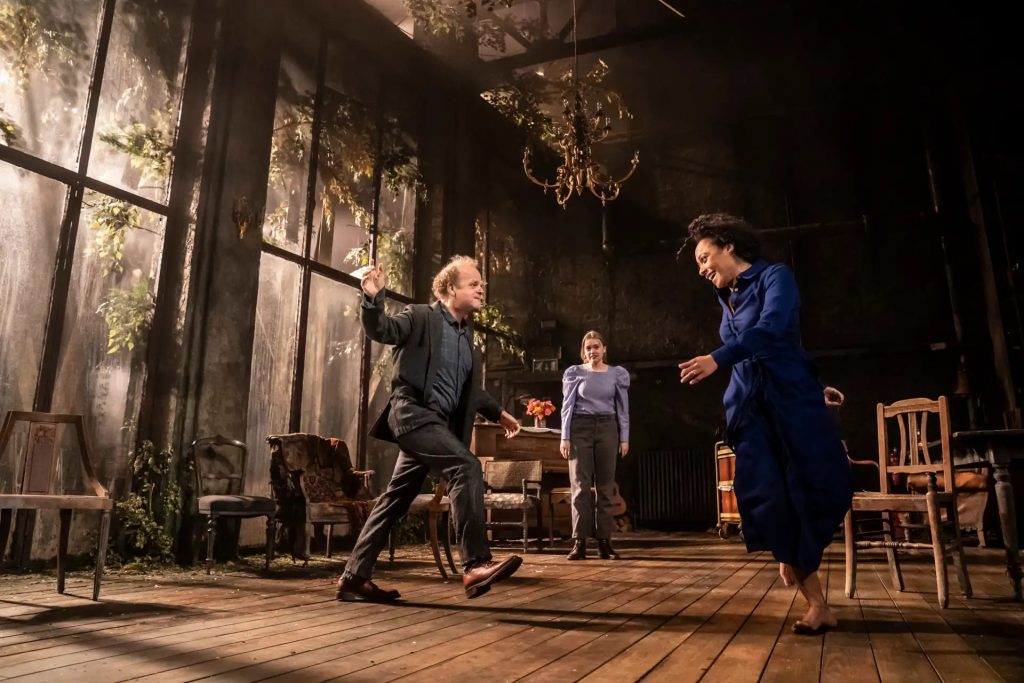
    White Light has supplied the lighting equipment for Uncle Vanya which has opened at the Harold Pinter Theatre in London’s West End.

    Written by Anton Checkov, Uncle Vanya is possibly one of theatre’s most iconic plays, with thousands of productions since its Moscow premiere in 1899. This latest production has been directed by Ian Rickson and features a lighting design by Bruno Poet. Bruno comments: “What’s great about this translation is that it doesn’t reinvent the original but actually gives it a modern edge, using contemporary and accessible language which makes it moving, clear and very funny. Whilst it is set in the 19th century, the themes feel completely relevant to today”.

    Bruno’s brief on the show was to move the story forward and support the character’s emotional journeys. He explains: “The script calls for a sense of the time of day, and the weather. We start in summer sunshine, move to a hot, but stormy night, then enter an autumnal afternoon that slowly travels through sunset to dusk and night time. The production all happens in the same space, so the lighting needed to give each act a distinctive feel while belonging within Rae Smith’s elegant design.  Although we are guided by the script, Ian and I wanted the feel to be bold and expressionistic, sculpting the air and supporting the focus of the performers; with all the characters trapped in the misery of loneliness and unrequited love”.
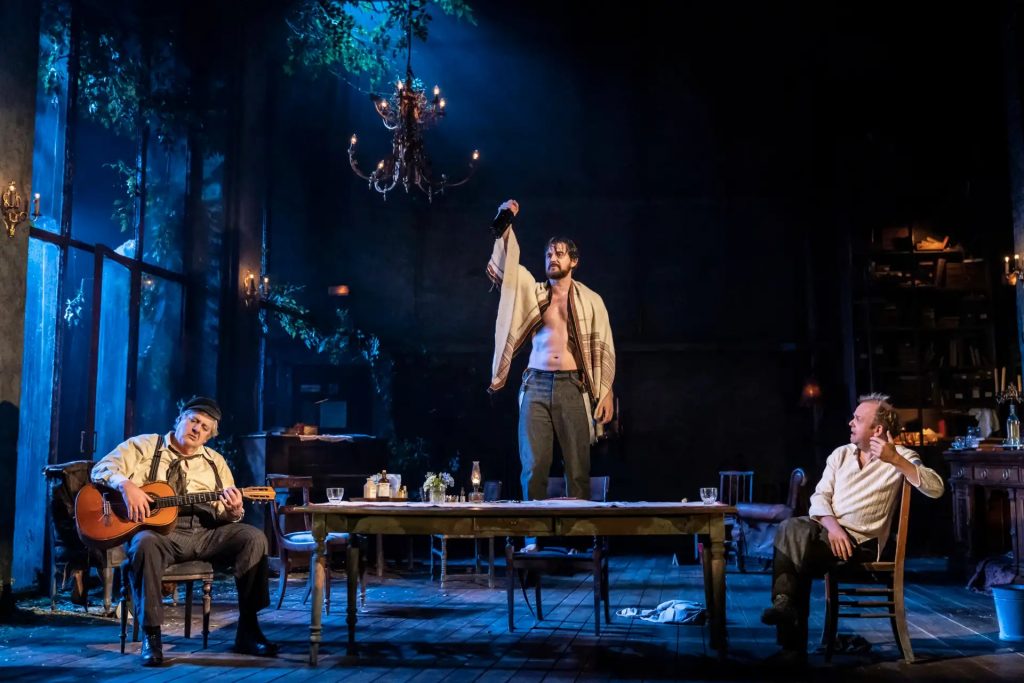
    As such, Bruno started designing his rig and choosing the fixtures that would be most suitable. He comments: “I knew I wanted tungsten light through the big windows that make up most of the stage right wall. I needed the rich warms across the wooden floor, and the beautiful colour shift as the lights fade. I wanted the flexibility of a few moving lights to allow me to put specials wherever I needed to frame and focus the storytelling. Also, I had to have an incredibly quiet rig. Ian warned me that he is obsessed with eliminating even the smallest fan noise – and rightly so. The delicacy and intimacy of the spoken word, powerfully supported by Stephen Warbeck’s music and Ian Dickinson’s sound design, should not be destroyed by the background hum of fans”.

    Bruno approached the Hire Team at WL to acquire the fixtures he needed. He explains: “The main feel of the play is driven by 24 par cans with scrollers outside the SR window. These gave me the bold directional light source I wanted. These are balanced with an area cover of ETC Source 4 Series 2 Lustrs from Front of House. I had 4 Martin MAC TW1s overhead for specials and 4 Martin MAC Encore Performances front of house for the same. Offstage of the SR window, Rae designed a forest that slowly grows into the house. This was lit by 4 Ayrton Ghiblis, chosen for their punch and wide angle (and quietness). The Ghiblis gave me the ability to show single shadow moonlight through the windows, compared to the pars that were a softer more expressionist source. A bunch of candles, lit by the cast and some tungsten practicals delivered the contrast in the night-time scenes. More Ghiblis high in the USR and USL corners gave me cold directional light for the night-time scenes. A very light haze was provided by an MDG ATMOSPHERE  – just to give a sense of dust hanging in the air”.

    As always with shows like this, Bruno’s design had to alter slightly during the rehearsal and preview period. He explains: “Ensuring the rig stayed quiet was quite hard and we had to experiment with how low we could turn down the scroller fans before we melted the gel strings. Thankfully, we found a level where they could not be heard and where the gel survives. We also had to work out where to place the foliage outside the windows without it impeding the shots of the par cans. One morning the crew looked more like gardeners than technicians!”.

    Uncle Vanya has now opened to rave reviews, receiving five stars in The Guardian, WhatsOnStage and The I. It runs until 2nd May 2020.

    Bruno comments: “I really enjoyed lighting such a delicate and nuanced play. Having recently worked on a lot of musicals, concerts and operas, this was a big (but welcomed!) contrast. There was a fantastic team on this show – everyone from the cast, creatives, stage management and the team at the Pinter – and so it was an absolute joy to work together and carefully build our version of Checkov’s story. I’d like to say particular thanks to Warren Letton, my Associate and Programmer for the show who was a huge support. Also, a big thanks to WL for supplying the equipment I needed”.

    Photos courtesy of Johan Persson.

  2. White Light is Simply the Best for TINA – The Tina Turner Musical

    Leave a Comment

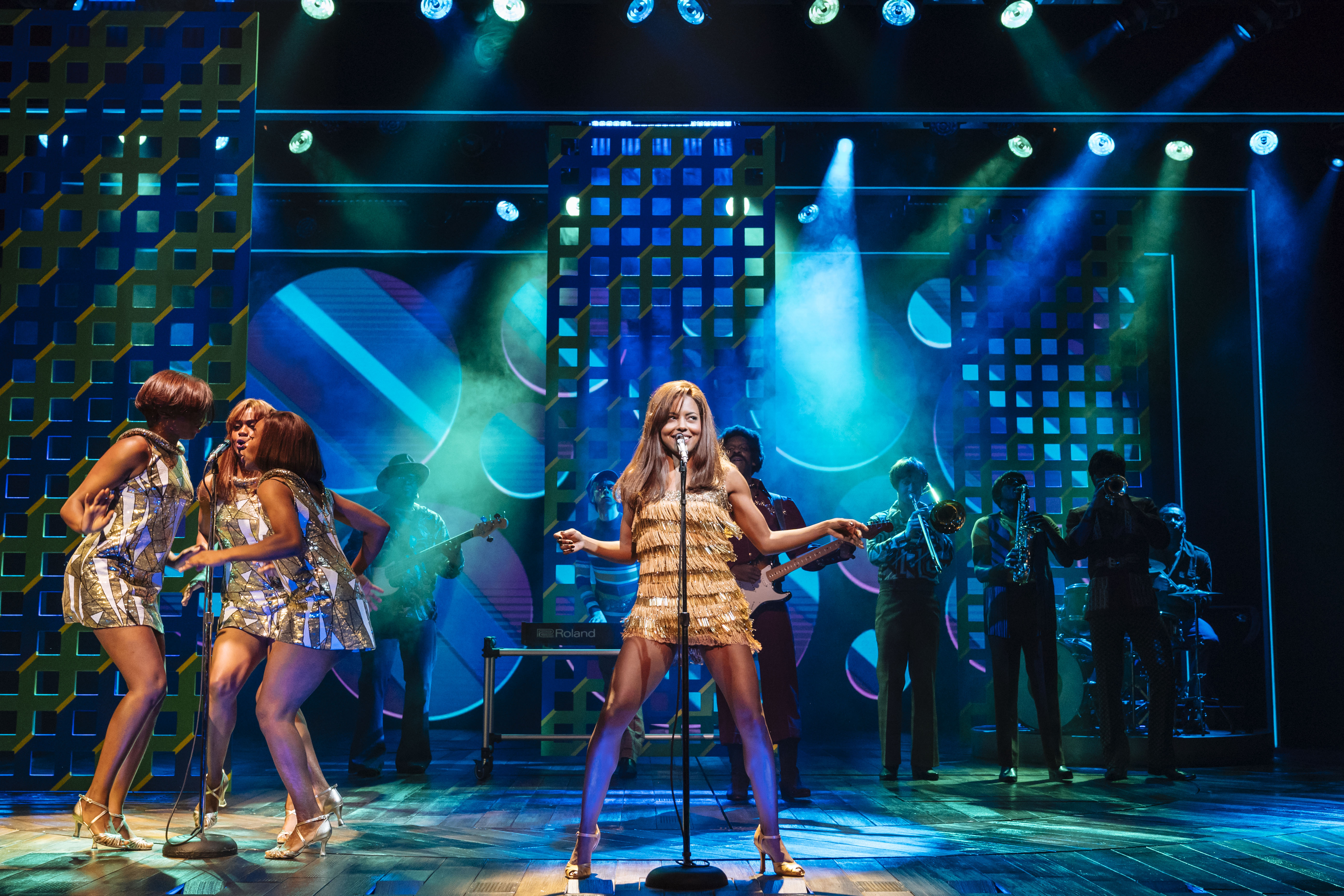
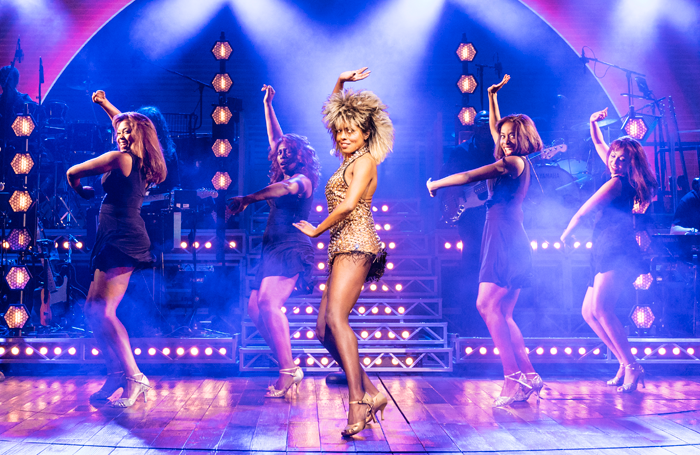
    One of the best-selling artists of all time, Tina Turner’s fascinating life story has now been turned into a stage show with TINA – The Tina Turner Musical. Written by Olivier Award-winning playwright Katori Hall, the show charts Tina’s humble beginnings in Nutbush, Tennesee to her transformation into the global Queen of Rock ‘n’ Roll. The show is playing at the Aldwych Theatre in London’s West End and as a leading lighting supplier to some of the biggest shows in the country, White Light was called upon to provide the lighting equipment.

    TINA – The Tina Turner Musical is directed by the internationally-acclaimed Phyllida Lloyd and features a lighting design by Bruno Poet. Bruno comments: “My brief for the show was to help tell this extraordinary story and make the performers come alive within Mark Thompson’s elegant design. The set frames the actors beautifully and is very stripped back, with the focus being on the characters’ emotional journeys. There are also around 40 scenes in different locations, and the lighting needs to support that sense of time and place. Added to this were several concert scenes so I had to create a design that matched this energy”.

    To achieve this, Bruno approached WL in order to draw on his ideal rig. He explains: “It was a combination of experimenting with new units that I felt might be useful in combination with tried and tested favourites. I was really keen to move away from discharge light sources and more towards the latest LED fixtures. I also needed a really flexible rig that could offer a full-on concert experience at the end of the show, but also work with the more nuanced, delicate scenes.  I was also determined to have a very quiet rig. Even a musical has quiet moments and hearing fan noise is a personal pet hate of mine!”.

    The equipment Bruno drew on included the MAC Encore Performance CLD, the VL550, the MAC Aura XB, GLP X4 Battens and the ETC Source 4 Lustr 2s. He explains: “With the MAC Encore CLD, this is the first LED source I’ve found that gives the cold discharge look of something like a MAC Viper but can also do a convincing tungsten warm. With the Auras, these have great zoom range, brilliant colours and can be used for punchy, beamy looks. The set design cried out for curtains of light and the GLP X4 Battens allowed me to achieve this, while taking up virtually no space on the grid.  I also drew on Portman P2s for the big concert finale, along with Clay Paky Sharpys. The desk I drew on was an EOS which I often use for theatre productions”.

    The decision as to what type of lighting equipment should be used was much discussed in the show’s pre-production stages. Bruno explains: “As the musical spans several decades, we did contemplate using equipment and styles that would be accurate from certain points along that timeline. However, looking at this in detail, we realised that this could be very dull for a modern audience! That said, I did make myself some ground rules. For instance, you don’t see moving lights move until we get to the late 1980s”.

    TINA – The Tina Turner Musical has now opened to critical acclaim and has already been extended to February 2019. Bruno comments: “This was a fantastic production to be a part of. I was supported by an amazing team which included Max Narula as Associate, Warren Letton as Programmer and Sam Floyd as Production Electrician. I really enjoyed collaborating with Jeff Sugg, the Video and Projection Designer, as this was one of those shows where lights and projection worked as one. Similarly, I was surrounded by a brilliant stage management team, especially Sarah Seymour our DSM whose calling of the finale is poetic and a masterclass in timing”.

    Photos courtesy of Manuel Harlan.

  3. Leading Light with…Malcolm Rippeth – Part Two

    Comments Off on Leading Light with…Malcolm Rippeth – Part Two

    Gainsborough - Geraint Lewis

    Emilia Fox and Ralph Fiennes in Richard II at the Gainsborough Studios. Malcolm was one of the Lighting Technicians for the season. 

    Malcolm was working on the London fringe scene for a good five years and he once again reached the point where he was left asking questions about his career: “I’d been working on the fringe for a while and, while it was great collaborating with so many people, I didn’t feel I was progressing”. The year was 2000 and Malcolm decided to take a year out to work at the Almeida’s temporary Gainsborough Studios space. The six month season included two Shakespeare productions starring Ralph Fiennes. He comments: “It was a really exciting project in a unique venue which is why I was so keen to get involved. I was one of the lighting technicians which meant I got to see first-hand the ins and outs of how everything worked. It was, again, a great learning curve”. The productions were to take on a life of their own and see Malcolm go on this journey with them. He comments: “The shows then went over to New York and Tokyo which was just an incredible experience. What made it even better was seeing someone such as Mark Henderson working in these vast spaces and managing to use the light as intricately yet effectively as possible. Having now not lit a show for nine months due to working on the production, this inspired me to not only get back in the game but push myself to take the next step in my career”.

    Romeo and Juliet - ETT

    Malcolm lit Romeo and Juliet for ETT.

    Malcolm soon found himself back in London and, using the contacts he’d made in Edinburgh and on the fringe, put himself forward for some relighting work. He comments: “I decided that relighting would give me the chance to work with established LDs and learn how to light shows on a bigger scale. I found myself doing relights for Bruno Poet, Ben Omerod, Mark Henderson and the ETT. What relighting shows really taught me was how to transfer ideas to bigger venues. Having worked on the fringe where spaces were so intimate, this was a real sense of stepping up in terms of scale yet also ambition”. And while Malcolm was technically relighting the work of others, it did offer him the opportunity to implement his own lighting design: “What you need to remember is that a show is never finished and a lot of those I relit were actually developing on tour. Therefore you have to bring your own creative vision to the piece when adapting to any amendments. It’s a fantastic bridge between working on the fringe and larger venues”. And this creative flair was noted by many of the companies that Malcolm worked with. He comments: “Having worked on several ETT relights, they offered me my first show as designer: Romeo and Juliet. It was directed by Stephen Unwin and toured the UK before travelling to the Hong Kong Arts Festival. This was a great opportunity for my work to be seen on a wider scale all across the country and it definitely felt that I’d made that next step”. It was around this time that Malcolm had what he deems to be his biggest career break. He recalls: “In 2002, Northern Stage approached me, asking if I would light my first show on their main stage. This was Pandora’s Box and it was a co-production with Kneehigh Theatre. I remember meeting with Emma Rice and the rest of the Kneehigh team early in rehearsals in Cornwall. We immediately hit it off and fifteen years later I’m still lighting their shows”.

    Brief Encounter - Jim Cox

    Brief Encounter for Kneehigh was an international success.

    As an Associate Artist of Kneehigh Theatre, Malcolm has worked on a range of the company’s productions including Tristan & Yseult, The Red Shoes, The Wild Bride, The Flying Lovers of Vitebsk and The Umbrellas of Cherbourg. He comments: “I love Kneehigh as a company. They are extremely ambitious in what they make and that pushes me as a designer. Whenever I’m lighting one of their shows, I find myself being part of the process from day one, through the planning and the chaos, eating and playing together. It’s a proper collaboration and I feel I’ve played a role in making that piece of work, not just lighting it”. Undoubtedly one of the biggest collaborations with Kneehigh is Brief Encounter, for which Malcolm won the White Light WhatsOnStage Award for Best Lighting Design and was nominated for the Outer Critics Circle Award in New York. He recalls: “Brief Encounter seemed to be one of those shows that just got bigger and bigger. It initially toured in 2007 before transferring to the West End in 2008. It then toured again in 2009, before transferring to Broadway in 2010, before another tour and then going to Australia in 2013. It’s a really special production. It was one of those situations where everything just came together as it were. We had a great team, great material and what resulted was a very memorable production. It was also one of those rare shows that it seemed everyone could go and see and get something from – proven by the fact that it’s one of the few shows I’ve taken my father to, and he loved it!”.

    Boudica - Steve Tanner

    Malcolm’s work at Shakespeare’s Glove is one of his proudest achievements. 

    Over the past ten years, Malcolm has worked on a whole range of productions which, together, produce a very enviable CV. These include The Empress at the RSC, Refugee Boy at the West Yorkshire Playhouse, Spring Awakening with Headlong, After Electra at Theatre Royal Plymouth, Only the Brave at Wales Millennium Centre and Pleasure at Opera North. I ask him if there is one show that he would class as a particular highlight. And while Brief Encounter was obviously a phenomenal success, it’s not an actual show which he’s most proud of. He comments: “One of the highlights of my career was the installation of the temporary lighting rig at Shakespeare’s Globe. When Emma Rice was appointed Artistic Director, she asked me to design a rig that would be suitable for the space; as discreet and sympathetic to the building as possible but also widely versatile for any number of lighting designers to explore. It provided an opportunity to discover this unique theatre in a new way, for creative teams and audiences alike. We’ve celebrated the fact that, for the majority of evening shows, you have natural light dominant for the first half and then our own lighting becoming dominant for the second. It’s the best of both worlds and it was thrilling for me to be the first lighting designer to work here. The response was extraordinary; overwhelmingly positive but also provoking hate mail and ultimately controversy which led to national news stories. Boudica will be the last show to be lit here this season, and the board have made it clear that there will be no place for theatrical lighting in the future. I’m incredibly proud of what our short-lived lighting department have achieved, on an exhilarating but all too brief journey”.

    DMlhIwAX4AMny0c

    The Tin Drum which has since opened to rave reviews.

    And so comes the point with every Leading Light where I ask Malcolm if he has any words of wisdom for the next generation of Lighting Designers. What he offers is obviously drawn from his own experience of working his way up:  “Whatever role you find yourself in on a production, try to engage with the lighting design. That sounds an obvious thing but it can be fascinating, whether you’re rigging lights, programming, attending a meeting or cutting colour, to try to figure out what the LD is up to, how you might approach the same production, the same set design. Whenever you walk into a room, consider the lighting and how this can be used creatively. I remember when I was working at the Almeida as a technician – I would always be thinking about the lighting in that space and how I would use it. If you’re lucky enough to work in theatre then listen in to the creative team’s conversation when you can and see what you find”. He also has some more general advice: “I try not to forget that everyone working on a show, and in the organisations and buildings that produce them, are essential to what we do. Also I don’t see any heirarchy between nominally creative and technical roles – good production electricians and programmers can be my closest collaborators and their work requires both great skill and creativity”.

    At that point, Malcolm’s phone vibrates and he has to dash off back to rehearsals. We walk along the Southbank and I ask him what he has coming up following Boudica. He informs me: “I’m about to get back into rehearsals for a new Kneehigh show called The Tin Drum. I’m really excited as I love working with Kneehigh. They are a truly collaborative company and everyone, director, actors and lighting designer, is a part of the entire creative process. This level of engagement is what I try to bring to every job I work on”. And looking at how much Malcolm has achieved in the past few years alone, it’s clearly an approach that’s worked extremely well.

    Photos courtesy of ETT, Geraint Lewis, Jim Cox, Malcolm Rippeth, Something Concrete, Steve Tanner and the University of Hull.

  4. Miss Saigon Takes off on UK Tour with White Light

    Comments Off on Miss Saigon Takes off on UK Tour with White Light

    MISS-SAIGON.-CompanyConsidered to be one of the greatest musicals of modern times, Miss Saigon tells the epic love story of young bar girl Kim who falls for American GI Chris during the fall of Saigon. Cameron Mackintosh’s acclaimed production of Boubil and Schonberg’s classic embarked on a record-breaking run in the West End and is now touring the UK. Having supplied the most recent revival, along with the original run thirty years ago, White Light has been called upon to provide the lighting equipment for this latest UK tour.

    The lighting designer for the tour is Olivier Award-winning Bruno Poet who also lit the West End revival. He comments: “When Cameron asked me to light the 2014 production for the West End,  it was daunting to start work on a production with so much history, yet thrilling to be asked to approach it with fresh ideas. I treated it as a completely new show. After the successful West End run, and revisiting the show for Broadway, the UK tour has been an opportunity to revisit my design and hone it for touring.

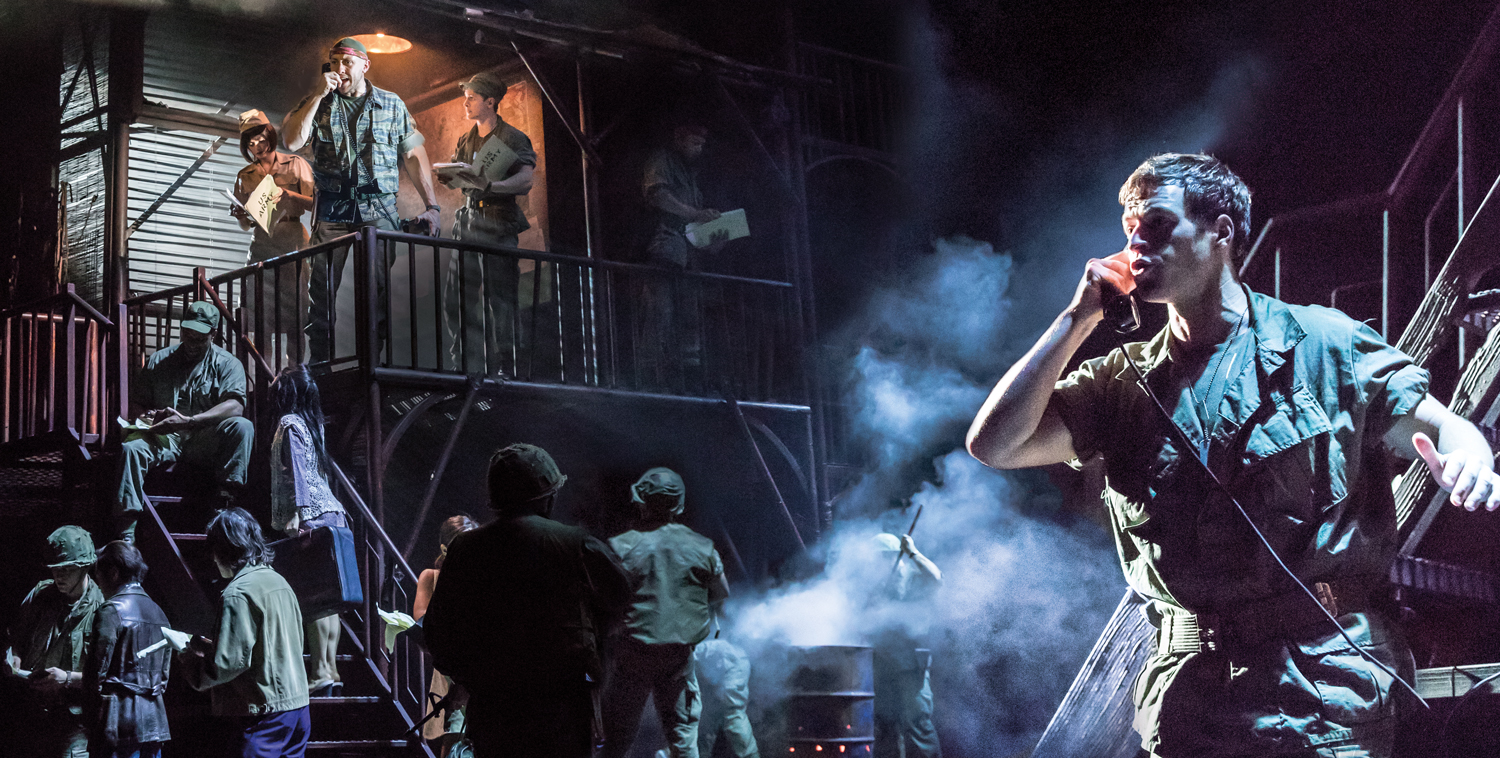
    He adds: “It’s a challenging show to light – extremely fast-paced, with many changes of mood and location, from the smoky sleaze of Dreamland, to the bleakness of the refugee camp, to the military formality of The Morning of the Dragon and the fantasy of the American Dream. At times it needs to be as epic as an opera, and at others as intimate as a play. A lot of my job would be as much directing the darkness as directing the light. Many moments of the show rely on hiding things with darkness and smoke”.

    MISS SAIGON. Red Concepcion 'The Engineer' and company. Photo by Johan PerssonIn terms of feel, the touring production still remains very similar to the West End. Bruno comments: “The main difference with the rig is that the touring version uses far less conventional fixtures and a few more moving lights. We’ve also replaced all of the scrollers with ETC Source 4 Lustr 2 units which are great touring fixtures”.

    For the tour, Bruno once again approached WL to provide him with the exact fixtures needed for this ambitious show. He states: “We have 36 x Martin MAC Viper Performances on the rig which are fantastic for creating directional keylight and beams through the haze.  Working closely with Vicky Fairall at Goboplus, we created custom-made gobos which helped the lighting blend in with the set and projection. For instance, the set features scenic borders that have a bamboo criss-cross pattern. We created a gobo which reflected this so the shadows feel like a part of the set.  Similarly, during American Dream, we use custom Dollar Bill artwork to match the projection and the themes of the song. They also make a great air look”.

    Bruno also drew on 52 x Martin MAC Auras. He states: “I packed the Auras close together so that they worked parallel with one another, creating almost light curtains. These offer big backlight looks and proved ideal for the big numbers. I also used the Auras at the side of the stage for sidelight; due to the fact they are so compact and can be hidden within the scenery”. Bruno also used the GLP X4 Battens for the other big number sequences, in particular American Dream.

    MISS-SAIGON. Sooha Kim 'Kim' and Gerald Santos 'Thuy'. Photo by Johan PerssonBruno’s lighting design worked alongside the award-winning set design by Totie Driver and Matt Kinley. He states: “At the back of the set is a skycloth made with layers of painted BP screen and gauze. I wanted to create many different looks in the sky so, to work with these layers, I chose EvenLED Panels.  They can be pixel mapped with detailed video content and are therefore extremely flexible. We also had very limited space – only 300mm between the BP and the back of the theatre in some venues.  It would never have been possible to light the cyc in a conventional way.”  Chroma Q ColourForce 12 LED Battens are also used to skim across the gauzes.

    Another significant fixture on the rig was the ETC Revolution. Bruno adds: “I still prefer the quality of tungsten light on faces. The Revolutions are used mainly in the warmer scenes and give a good contrast to the rest of the rig which is so LED and HMI heavy”. Bruno also utilised the Leader Light Stage Beam 6-06D Battens on the floor upstage during the This is the Hour sequence to backlight rows of soldiers. He explains: “Their super bright beam cuts well through the haze, and is so narrow that it can terminate on the circle fronts and avoid blinding the audience”. He also drew on Martin MAC Viper Washes and five followspots for punchier washlight effects; including three Robert Juliat Cyranos out front and Source 4 Lustr 2s positioned on the side towers.

    MISS SAIGON. Ashley Gilmour 'Chris' and Company. Photo by Johan PerssonIt’s not just lights that play a significant role in Bruno’s design. He adds: “This show has a lot of smoke machines in it. We have nine Look Solutions Unique Hazers positioned so that the haze can be pumped  through lines of holes drilled through the floor  There are four more Unique Hazers above the ground along with five Look Solution Viper 2.6 Smoke Machines.  We also have two MDG ATMe Haze Generators that WL invested in specifically for this production. These create the best fine haze which allow beams of light to be seen without obscuring the action of stage. For low lying fog we have two Cryofogs and real dry ice is built into the Cadillac which is featured in the show”.

    Miss Saigon is currently in Birmingham where it has achieved critical acclaim from critics and audience members alike. It will stay at the Hippodrome until 23rd September before visiting venues in Dublin, Edinburgh, Manchester and finally concluding at Norwich Theatre Royal in August next year.

    Bruno states: “This is a stunning show and it’s great to take it on a UK tour for the first time in over a decade. I’m extremely proud of my design and playing a part in telling this now iconic story. I have been brilliantly supported by my associate Warren Letton and programmer Dave Totaro as well as the dedicated touring electricians Jim Bristow, Stuart Moorhouse and Leoni Withers. I am also grateful to Jedd Hamilton and everyone at WL for their support throughout”.

    Photographs by Johan Persson © Cameron Mackintosh Ltd