Coronavirus Theatre Archives - White Light
Explore White Light: White Light | HireWL | SalesWL | ShopWL

Tag Archive: Coronavirus Theatre

  1. White Light Up to Mischief Movie Nights

    Leave a Comment

    Created by the Olivier Award-winning Mischief Theatre, Mischief Movie Nights recently made its much-anticipated return to London’s West End. Opening at the Vaudeville Theatre, this fully improvised show sees audience members suggest a film genre, location and title, which the Mischief team then use to bring the ‘live movie’ to life before their eyes. The lighting designer is David Howe who approached White Light to supply the lighting equipment. 

    Mischief Theatre is one of the most prominent theatre companies in London’s West End, having created The Play That Goes Wrong, Peter Pan Goes Wrong, Magic Goes Wrong and The Comedy About A Bank Robbery. Mischief Movie Nights is the first of their productions to open following the Covid-19 outbreak. David comments: “We had initially hoped that Magic Goes Wrong, which has been playing at the Vaudeville since last December, would be able to re-open; albeit with a few tweaks for the current times we’re living in. That said, as the situation evolved, it was proving difficult to keep adapting the show to match the ever-changing guidelines. As such, it was decided that Mischief Movie Nights would be a better option as it is an improvised show, meaning less rehearsal time, along with the fact that it was much easier to make any last-minute changes if needed”.    

    Mischief Movie Nights was first performed back in 2009, under its original title of Lights! Camera! Improvise! at the Edinburgh Festival Fringe. It has developed over the years and David joined the creative team when it made its West End debut at The Arts Theatre in 2017. He explains: “Movie Nights is essentially centred around a film director who asks the audience at the start of each performance what type of film they want to see. This is then performed by the cast who are ‘controlled’ by the Director’s remote control, meaning he is free to hit pause, comment on the action or rewind/fast forward to other sections. The improv possibilities are endless, and it’s even been known to jump to a ‘Director’s Cut’, behind-the-scenes documentary footage or even deleted scenes, such is the nature of the show.  

    As this is an improvised production which changes every single evening, this obviously impacts David’s design. He explains: “With the show having no set structure apart from the welcome to the audience, this means that the type of film they choose to watch dictates what design is required. As a company of actors, Mischief are an incredibly tight group and visual comedy is an important theme running through their work so it would have been hugely dissatisfying to present the show with a single ‘look’. Therefore, the rig I designed needed to have many options to add to their performance as well allow for bold, clear choices that clearly define space and location for everyone. Similarly, colour is important, and we have a Gauze Cyc that we can dial-up any variation of colour we need along with a range of gobo textures.  We also have a large range of specials focused around the set that the cast are aware of and often move scenes into these prepared areas, which then allows us to close the lighting down around them and focus the attention. 

    He continues: “It goes without saying that the operator is a key (not to mention busy!) member of the team as the programming has to allow for the director’s frequent pauses as well as have the ability to rewind, fast forward through action and then re-call a state that perhaps had been used a few minutes before. As such, the programming is intense and has many cross-referencing macros giving us the options and flexibility we need.  We use an ETC-Gio console with a customised Magic Sheet and a fully loaded sub-master fader wing for manual control. Production Electrician and Programmer Ed Locke has programmed the show since 2017 so it has evolved a great deal as we’ve seen more and more of the ‘films’ performed and added to our store of locations and choices”. 

    Once he discovered that Mischief Movie Nights was being revived at the Vaudeville, David approached the Hires Team at WL to achieve the exact fixtures he required. His rig includes a mixture of ETC Source Fours, ColorForce Battens, MAC Auras and MAC Encores. He explains: “The moving lights provide the intensity and impact I needed for the bold looks. There can’t be too much movement as there is no-knowing what might come next in the show and therefore nothing can be pre-set in advance. That said, I’m really pleased with the package we have and it’s great to see the operator and cast in total synchronicity, telling a story that uses the building blocks of light I’ve designed”. 

    As Mischief Movie Nights was taking place during a global pandemic, this obviously meant for a slightly surreal rehearsal and tech process for David and the team. He comments: “Mischief and our producer Kenny Wax with Nimax Theatres spent a lot of time and effort in making sure that the theatre felt like a place we could all be in at the same time for long periods; something which we were incredibly appreciate of. The cast and crew were also all having regular Covid tests with quick results within 15 minutes, so we all knew we were safe to work. The turnaround was fast: we loaded-in on Monday morning, focused mid-afternoon and had a few states in the desk by the end of Monday night. Tuesday morning, we were all sent for Covid tests and then back to the theatre for a lighting and tech session. Since the opening three minutes of the show are really the only fixed point, it was then a matter of giving Helen, our Operator, the console and letting her rehearse with the cast as they refined their timings and I was able to make adjustments to focuses, colour palettes and timings. Helen has worked with us before on this show, so I watched in amazement as looks came and went with great panache. She deservedly gets a Bow in the curtain call”.

    The show opened earlier this month and was originally intended to run until 31st January 2021. However, with London having now entered Tier 3, Nimax Theatres have announced that all shows within its venues will be suspended from today until 8th January 2021. 

    David concludes: “It was a fantastic experience to be in a theatre once again, working with some brilliant individuals and creating a truly unique and equally hilarious show. It’s a shame that we find ourselves in this situation once again; particularly as everyone was so safe and cautious and the appropriate measures were all in place. It’s a scary and unpredictable time for so many of us in our industry and I am just hopeful that in the new year, we can return to some sort of normality and get back to entertaining audiences and doing what we love”.  

    Photos courtesy of Pamela Raith.
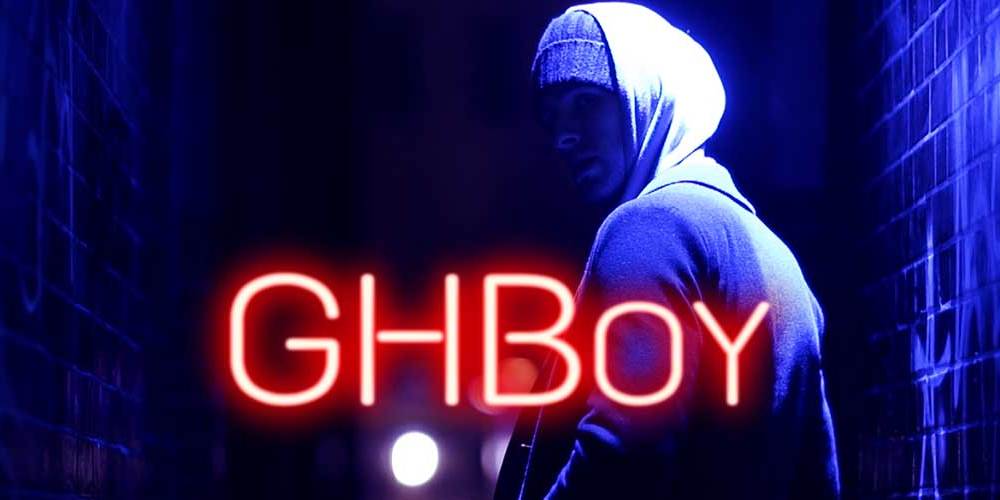
  2. White Light Supplies GH Boy at Charing Cross Theatre

    Leave a Comment

    Back in September when it was announced that theatres could play to socially-distanced audiences, this saw a range of venues prepare for their re-opening. One of these included the Charing Cross Theatre which re-opened with the world premiere of GH Boy. The lighting designer was Tony Simpson, who approached White Light to supply the lighting equipment. 

    GH Boy is a brand-new piece of writing which aims to tackle the misconceptions around gay culture and promiscuity. Set in the burgeoning party scene of East London, it focuses on Robert, who has to cope with tragedy and addiction, all whilst avoiding the wrath of an unnamed killer. Prior to its Charing Cross run, the show was originally going to play at The Vaults. Tony explains: “We were initially supposed to be opening in April and heading into the Waterloo tunnels. We had site visits, meetings and I’d even formulated a design. Then the outbreak of Covid happened and the entire production had to be pulled”. 

    Like many other freelance designers, Tony found his entire workload for the rest of the year suddenly disappear. He remarks: “It was an incredibly worry time as overnight my diary just emptied. Like most freelancers in the industry, I wasn’t sure where the next pay cheque was coming from and this continues to be the case for so many”. 

    It was in the second week of September that Tony would receive an email which would offer him his first project in months; one which would see him literally pick up where he finished back in March: “I got an email from Paul Harvard, the writer and lead producer of GH Boy. He told me he’d received some emergency fund money and that GH Boy had been chosen to re-open the Charing Cross Theatre. It was completely out-of-the-blue yet something I of course leapt at the chance to be a part of again”.  

    GH Boy would play at a stripped-down Charing Cross Theatre that would have 90 seats as opposed to the normal 250+. The company would have to rehearse in the space as well as comply to all of the government guidelines and be frequently tested. Tony explains: “We were all so keen to just get the work on but equally as keen to be safe. On day one, all of the company were given a Covid test. Similarly, everyone was wearing masks and maintained social distancing. It was incredibly well thought out and testament to the producer’s planning”.  

    The Charing Cross Theatre is the only theatre in Central London that is set up ‘in the round’. As such, it was perfect for GH Boy. Tony explains: “The Vaults show was going to be in traverse so thankfully it was a very similar set-up. My design has to change, mainly as at The Vaults you have to account for infrastructure, racks, rigging; all of which the Charing Cross had. As such, when it came to the hire, I was able to focus on obtaining the specific fixtures I needed to help tell this story”.  

    For his rig, Tony drew on Martin MAC Aura XBs, a fixture he regularly uses on smaller scale studio productions. For the crosslight positions, he used 4 x GLP Impressions X4 Bar 20s, which offered great coverage but were also very quiet; a necessity for the show. He also used a single Vari Light 2600, meaning his rig was all LED and incredibly flexible. He explains: “The play moves at a very fast pace and the director wanted the light to help steer where we were in terms of location. For instance, the main action takes place in a therapy studio so we wanted a warm, safe feel for these scenes. Whereas in the outdoor scenes, or those set in a nightclub, we wanted something much different. The lighting essentially became the backbone of the production and help guide the audience through the story”.  

    Tony and the team had a five-and-a-half-day technical rehearsal before their first preview on Wednesday 4th November. However, this first preview was going to be their last, with the government announcing a new national lockdown that was to begin the very next day. Tony explains: “We were all incredibly disappointed that after all of our hard work, the run was cut short by the new measures and that we were back to square one. However, putting on a show during a global pandemic is somewhat extraordinary and I’m so proud to be part of this production”. 

    GH Boy will actually re-open on 3rd December 2020 and run for the rest of that month. For more information, please click here.  

    Tony concludes: “While it’s been a slightly surreal year, and this production was no exception, what was fantastic was knowing that WL was there as a constant support throughout. I have a long-standing relationship with the company and want to thank them, particularly Dave Isherwood, for all of their support with GH Boy. It truly is a special project and we cannot wait to share it again with audiences next month”.  

    Photos courtesy of Bettina John.

  3. White Light Hits the Right Notes at Garsington Opera

    Leave a Comment
    Fidelio at the Garsington Opera which ran earlier this month.

    Founded in 1989, Garsington Opera is one of the UK’s largest summer opera festivals, annually held in Wormsley Park, Buckinghamshire. Like so many other productions and festivals this year, the outbreak of Covid-19 saw its entire season cancelled, with the Festival being postponed until 2021. However, as some restrictions slowly lifted, this meant Garsington was able to present semi-staged performances of Beethoven’s Fidelio last month to a socially-distanced audience. For the run, White Light was asked to provide the lighting equipment.   

    Fidelio features direction, lighting and video design by Peter Mumford, who first created the piece very much in the style of his iconic Opera North Ring cycle performances. He explains: “The original Paris production was a co-production between Garsington Opera and Orchestre Chambre de Paris, conducted by Douglas Boyd who is Artistic Director of both companies. He and Laura Canning, Garsington’s Director of Artistic Administration, asked me to repeat the concept for a concert performance of Fidelio at Garsington, replacing the originally scheduled production that had been cancelled because of the pandemic. The original Paris concert production was very much constructed to emphasise the individual characters and much of the Fidelio opera concentrates on the thoughts and ambitions of those characters as much as the action and dramatic interplay.  In that production, although not strictly separated by regulations, the singers were much of the time both emotionally and, to some extent, physically distanced. It therefore seemed very possible to adapt that version to suit these extraordinary circumstances without actually compromising the concept or style. In both versions, the performance are backed by a continuous video which supports and illustrates the narrative”. 

    Peter was previously working in Vienna where he had to observe strict Covid guidelines.

    Prior to Fidelio, Peter had been working at the Vienna State Opera lighting Madama Butterfly, which was a restaging of the original ENO production. He explains: “It was great to be working out in Vienna in what was a very well organised set-up. The entire theatre staff were regularly tested, temperature checks taken at the stage door and a well-observed mask regime in corridors, offices and the canteen. This enabled us to rehearse and work in the theatre itself quite normally; all funded by the Austrian Government who were determined to see the Opera House reopened.  It almost felt like we had returned to normality for a couple of weeks!”.  

    Unfortunately while he was en-route to Vienna, Austria was put on to the quarantine list by Gov UK so the plan to fly direct to the UK following the premiere to start work at Garsington had to be abandoned. So, in tandem with Garsington, and in particular Technical Director Steve Hawkins, a plan was developed to make it possible to direct and light the show remotely via Zoom.  

    Peter’s set up in his office which allowed him to view both the production desk and the main stage.

    Having arrived back to his home in Greece, Peter created a set up in his studio in which he had two monitors: one showing Garsington’s main auditorium and another to communicate with the production desk. At Garsington itself, a large monitor was rigged in the auditorium so that the performers could see and hear Peter during rehearsals. He explains: “It was a very surreal way of working but the only choice we had. As I was wearing two different hats, I would be directing during the day and holding tech sessions in the evening. When working in these conditions, you have to have a great team on the ground and thankfully I did. I was able to communicate with Steve Parkinson, my brilliant Lighting and Video Programmer, who was effectively my eyes as I couldn’t always judge the light levels on stage through my monitor. Similarly, Will Reynolds, the Video Associate, did an equally great job in achieving the look and feel I wanted whilst, on stage, Sam Floyd led a great lighting team.”  

    The entire show was focussed, lit and cued up on Zoom, with Peter drawing up a clear plan and focus notes before sending these across. He comments: “The show features an ensemble of 14 players so it was an opportunity to light them individually in a way that you wouldn’t light a full orchestra. Of course they were very much a part of the overall stage picture and it was great to be able to achieve both a visual and musical blending between singers and players in a way that you can’t always do with a ‘fully’ staged opera. The lighting rig itself wasn’t actually that complex – a mixture of Lustr Profiles and MAC Encores which gave me a nice flexibility in terms of colour and also in achieving a fast focus”. 

    The show received acclaim from critics and audience members alike.

    Fidelio recently finished its run, for which it both sold out and received fantastic reviews. It proved to be a great opportunity for Peter to not only revisit a previous production but also work during a time when live performance has become a rarity. He comments: “It really was a brilliant experience to work at Garsington. I’ll be honest and say this is obviously not the way I would want to collaborate or work in the future but in this instance it was the only way we could make it happen. Thankfully, we had a brilliant team, both on and off stage, who created something quite special and unique in these perpetually trying times”. 

    Photos courtesy of Johan Persson and Peter Mumford.