David Howe Lighting Designer Archives - White Light
Explore White Light: White Light | HireWL | SalesWL | ShopWL

Tag Archive: David Howe Lighting Designer

  1. West Side Story at Birmingham Hippodrome – A Lighting Designer’s Perspective

    Leave a Comment
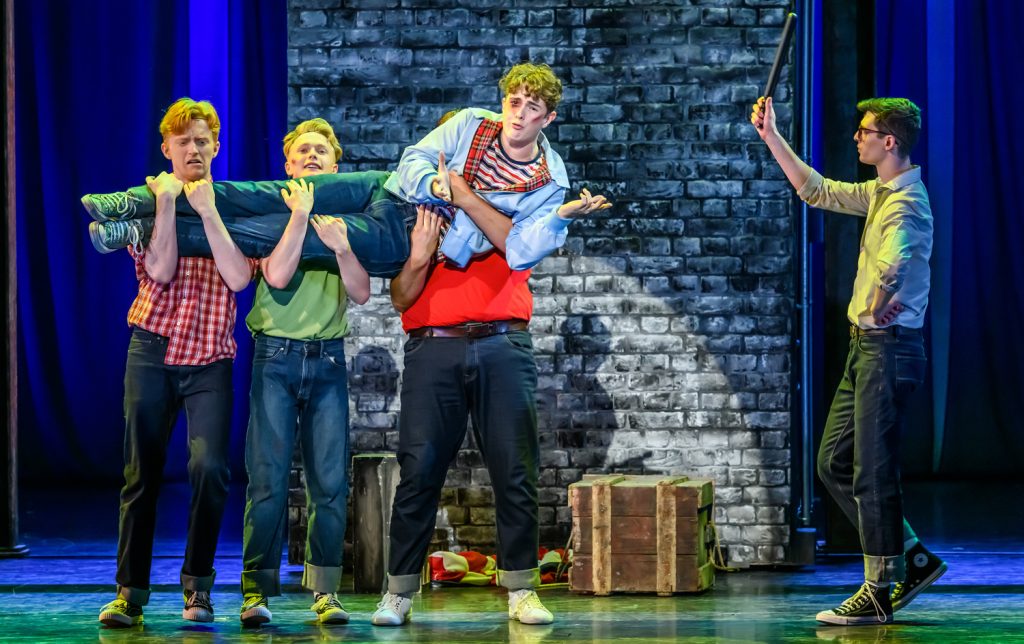
    A few weeks ago, Birmingham Hippodrome raised the curtain on its first ever home-grown youth production with a dynamic re-imagining of West Side Story. Opening to a sell-out audience, the show was the centrepiece of the venue’s 120th birthday and featured forty local young performers. The show’s Lighting Designer David Howe takes us through his design for the show and the role it played within the overall production:

    I had a very clear design brief for West Side Story: to ensure the piece remained within the period it was written and stayed true to its Manhattan location. As this was both a big celebration and the first time the venue had produced a youth show in-house, we wanted to show off the entire stage house area to our audience as it was a side of the theatre they’d probably never seen. The stage was also kept as open as possible to allow for the 40 strong cast to inhabit the space for some of the big ensemble dance numbers. 

    I have worked with the Designer (and Production Manager) Al Parkinson before so it was nice to get the chance to revisit this working relationship. The set itself was a big gauze box into which trucks were moved around in order to create certain spaces. Those who have seen the show will know that it flows from small interior rooms to bigger spaces for some of the more famous songs and dance routines. One of the main roles of the lighting was to reflect the scale and fluidity of the music so I wanted big statements of light – shadows, shafts and colour.  Also, as we were celebrating the actual theatre, Al and I wanted to include its beautiful architecture as much as possible. As a result, with the last scene, we decided to open the space completely, tear down the masking and reveal the whole space which included the scene dock upstage and resulted in a very epic ending.  

    Working with the local cast was fantastic as they all had such raw talent and it was thrilling to see them make a real ensemble for the piece. It was also great to work with director and choreographer Matt Hawksworth. That said (as often is the nature of projects like this), we had a very short amount of time to bring the show together. We also knew there were several aspects of the show which would continue evolving right up until the final dress rehearsal.
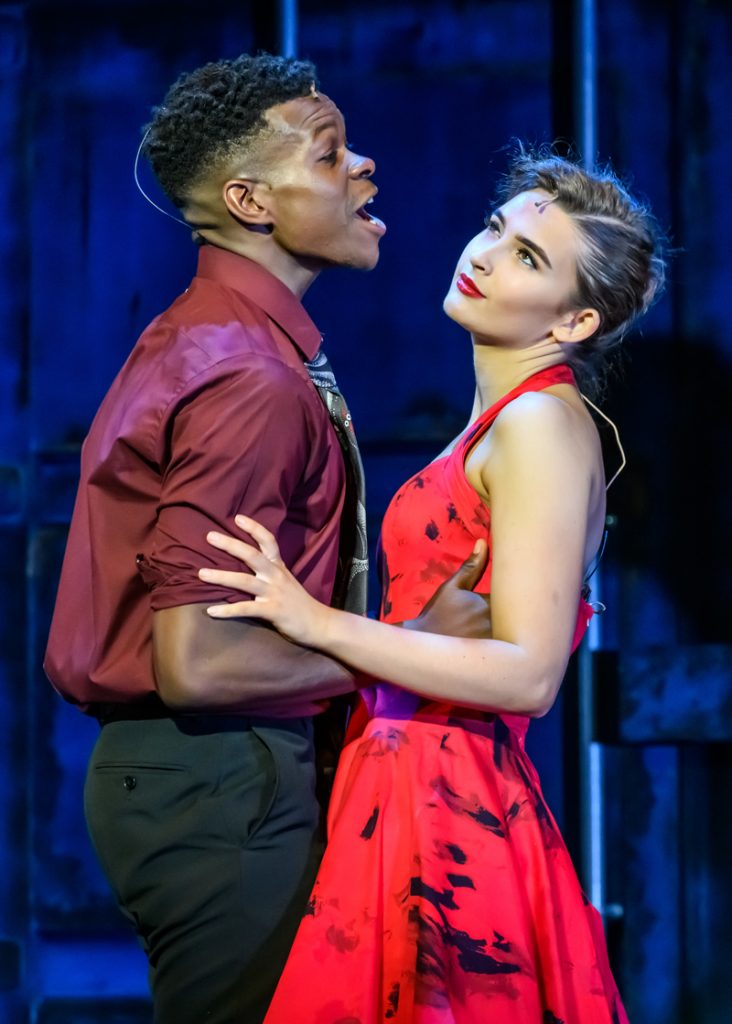
    So how did all of this influence my lighting? Well due to the nature of the show and the rehearsal process, I made sure my lighting package was all about the ‘big statement’ looks. This largely consisted of 5kWs, GLP Bars and a rig of Aura Washes and Viper Profiles. The rig in particular gave me discharge white colours and we used 96 x Par 64 Aeros for brutal beams of light to reveal the theatre at the end of the show.  

    One of my favourite moments was at the end of Act One, which is set ‘under the underpass’ and features a massive musical ‘rumble’. I really wanted to create a sense of disorientation so I had dollies made of car headlights (Par Heads) and pointed them onto the stage as if the whole fight was lit solely by the six cars. This deliberately brutal/dazzling light really worked alongside the sheer energy of the fight. A brutal open white Viper added a cold top light in the middle of the space as the action turns ugly and two characters die as the curtain falls. Often, at the end of both acts, there would be complete silence from the audience and you could literally hear a pin drop; such was the emotion on stage.  

    The show was programmed by Ed Locke who I’ve worked with a lot. Ed’s short-hand expertise was essential as we had to make some big numbers work in very quick time. Additionally I was joined by Alex Musgrave who is this year’s ALD Lumière. The Lumière Scheme is a professional development programme that provides pathways into the industry for some of the most promising emerging designers by working as an assistant on larger scale shows. Alex watched rehearsals with me and we created a follow-spot plot together. He then liaised all this with the operators, freeing me up to concentrate on the looks and cueing.  

    I also worked closely with the in-house team at the Hippodrome. Usually they deal with  incoming touring shows which have very set agendas and are obviously not idiosyncratic to the venue. With West Side Story, we wanted to use as much of the Hippodrome space as possible; with the show celebrating the venue’s birthday. As such, it was great to work with the in-house team who know the building so well and were able to be creative with the facilities they use on a day-to-day basis.  

    Ultimately, it was a bold choice for the Hippodrome to stage a show like this but it certainly paid off. Using a group of local, young actors meant that the musical resonated with a new, much younger audience and it was a fantastic celebration of a brilliant venue.

    Photos courtesy of Simon Hadley

  2. White Light in the Frame for The Comedy About A Bank Robbery

    Leave a Comment

    From the team behind the Olivier Award-winning The Play That Goes Wrong, The Comedy About A Bank Robbery is an hilarious and dynamic show focusing on the robbery of Minneapolis City Bank – and everything that goes wrong in the process. The play has run in the West End for three years now at The Criterion Theatre and has been a smash hit with audiences and critics alike. It is now embarking on a UK tour and White Light is supplying the lighting equipment.

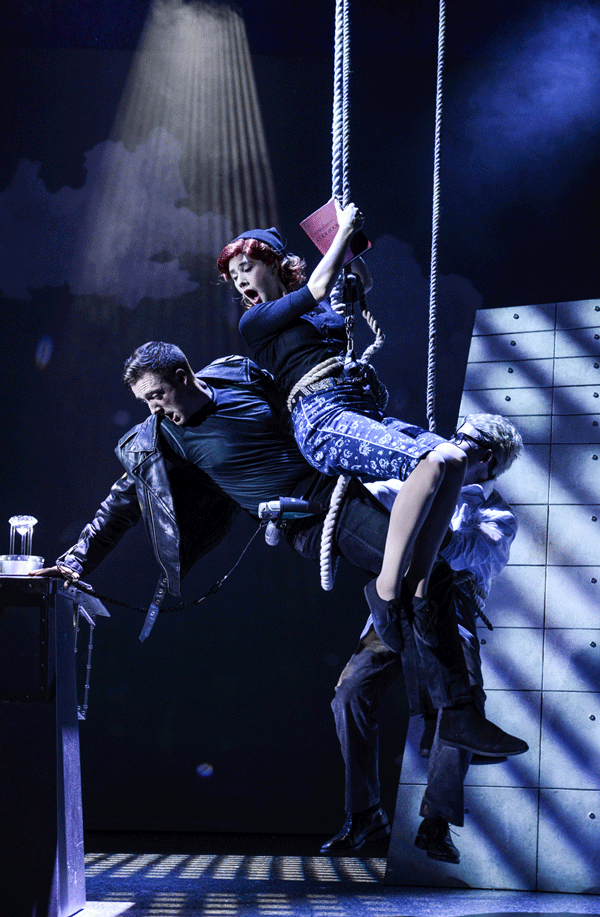
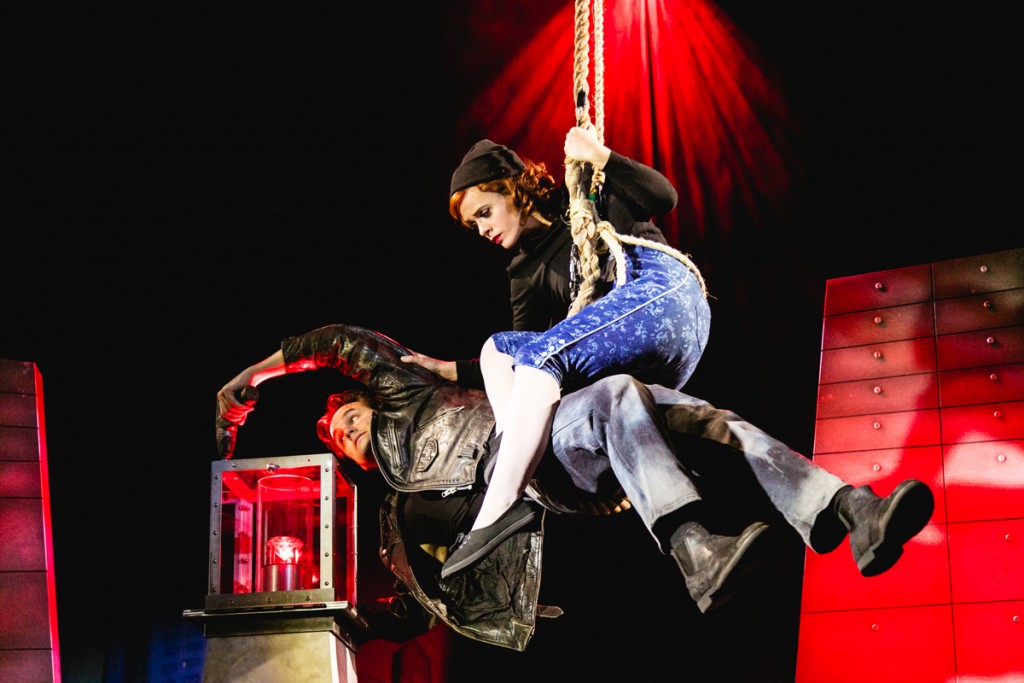
    A Mischief Theatre Company production, The Comedy About A Bank Robbery is produced by Kenny Wax and Stage Presence in association with Birmingham Rep and features a lighting design by David Howe. David comments: “Bank Robbery is a play where the situation really brings the comedy to life. You have an escaped convict set on capturing a priceless diamond from the bank and with him his eccentric sidekick, trickster girlfriend and the maintenance man. The brief for me was to support the writing, which is extremely fast paced, as we swiftly move from one location to another, often by the way of musical montages. I worked closely with the other brilliant designers David Farley (Set Designer), Roberto Surface (Costume) and Jon Fiber (Sound) to create the world our writers envisaged. The writers were the performers in the original West End company and therefore the show evolved massively in rehearsals and it was very much an organic, collaborative process”.
    Whereas the script remains the same as that performed in the West End, there were some changes to the production that needed to be implemented for the tour due to both space and logistical requirements. David comments: “Structurally, the set is quite complex. It may look simple but contains much trickery to help achieve the visual and, often, gravity defying effects. David Farley produced a range of visualisations for each venue which proved invaluable to both producers and myself when planning the show.  When I originally laid-out the West End design on paper (yes I use paper!), the show hadn’t even started rehearsals, so I had to design-in as much flexibility into the rig as possible; knowing the script would evolve. Coming back to the production for the tour I’ve been able to pare back and make stronger statements which give it vibrancy and set the tone from the start.


    He continues: “The West End’s rig is a mixture of Viper Performance Spots, Revolutions, MAC Auras and TW1s. For the tour, we have a simpler package of MAC Encore (Cold) and MAC Auras as the basic spot/wash combination, a couple of LED Lustrs for a low angle cross light and Colour Force Battens to provide a colour highlight on the set. I’ve been really impressed with the MAC Encore’s flexibility – not only with the quality of LED light, but also the really great colour mixing which has meant I’ve been able to replicate some of the warmer colour tones I use in the West End version.  It used to send a chill through me when people requested ‘bright for comedy’ lighting, but not on this show. In fact, darkness and shade in many ways are key to creating the ambience and location in our world of ‘The Robbery’. If anything the darkness plays against the insane comedy action of the play”.

    The Comedy About A Bank Robbery opened in Birmingham in September and is currently at the Theatre Royal Plymouth and will tour until mid-2019. As with most touring productions, the tight schedule meant that David had to work closely with his team to ensure his intricate design could be recreated across the country. He comments: “The show closes on a Saturday night before loading in on Monday and opening Tuesday. I remain indebted to my team who manage to make it all work – the initial team from Birmingham Rep led by Andy Fidgeon, Programmer Alex Boucher along with my Touring Production Electrician Sonic Harrison who re-focuses/updates the show each week”.

    Photos courtesy of Robert Day.

  3. Leading Light with…David Howe – Part Two

    Comments Off on Leading Light with…David Howe – Part Two

    FuhlamRoadOffice

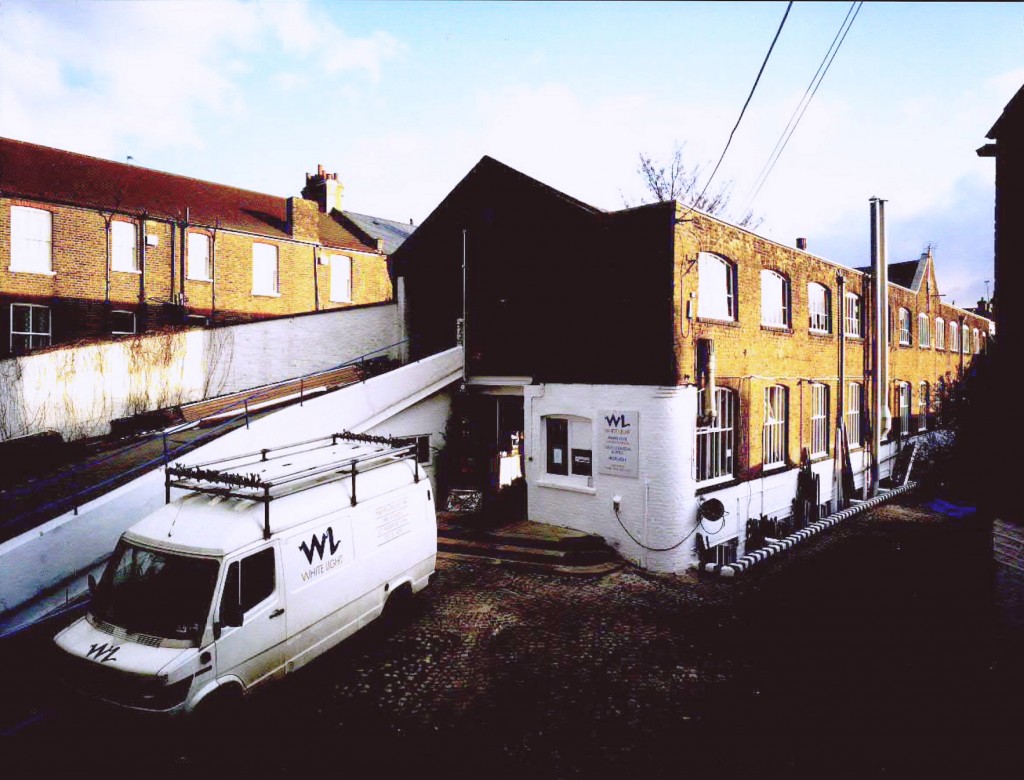
    WL at Filmer Road in Fulham when David first joined.


    Carousel was a special production in many ways, as at the end of its National run, Cameron Macintosh transferred the production into the West End and David was asked to join the paid creative team as Assistant Lighting Designer. However, once he had finished his work on the production, he had to move on and face: “the scary real world which was out there waiting for me”. Step forward WL, in the shape of Bryan Raven who supplied the show and liaised with David in the preparation of the rig, who made contact and asked David if he’d like to join their team. He recalls: “What could be better than working for a company who supplied equipment to shows. I initially worked in the Sales team, prepping colour-calls. As the company evolved, I was able to work more and more with designers and chief electricians of venues all over as the National Lottery funding started to roll out to new theatre development. WL was often called-upon to be involved with those capital projects where new technology was being ordered and tested. It was an amazing time to meet, not only the users of the equipment, but also the manufacturers. It was such a huge advantage to not only know about the equipment being used in the industry but how the hire and sales business works”.
     
    Seven Brides

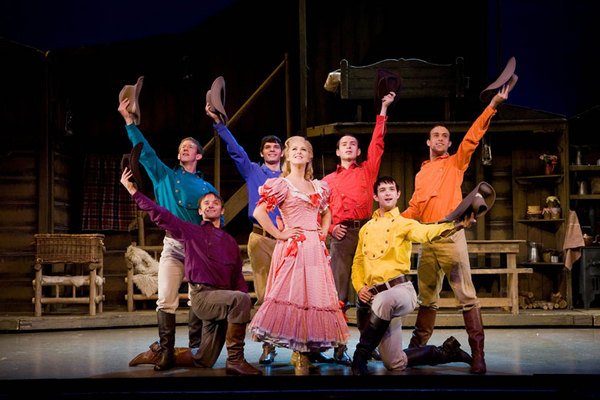
    The UK tour of Seven Brides for Seven Brothers

    He adds: “WL were incredibly supportive of my lighting career and allowed me leave to develop my design work when I could – working in many fringe and Off-West End venues and productions where the challenge is to make the show you want within incredibly tight time-scales and small budgets. I was also continuing to assist other designers such as Paul Pyant, Howard Harrison and Hugh Vanstone”.

    After a while the lighting design work began to increase, and David worked on UK tours of Fiddler on the Roof, Oklahoma, Singing in the Rain, South Pacific, Beauty and the Beast, 42nd Street, Seven Brides for Seven Brothers, to name but a few. He comments: “I was so lucky to work with amazing creatives, electricians and touring production staff during this period which really opened my eyes to the industry and the processes we need to think about to make any show happen, effectively and within budget”.

    The more David worked, the more his reputation grew, resulting in him being in high demand. So much so that he reached the point where he had to make a decision: continue at WL or take the plunge and become a full time LD. It was a decision he didn’t take lightly: “I had worked at White Light for ten years (1993-2003) and really felt part of the family there. However, I thought to myself that if I don’t become a freelance lighting designer now then I never will”. David was now out in the big wide world of freelancing; something he describes as “unbelievably scary”. He recalls: “The thing about being freelance is that you’re on your own. If a show gets cancelled then you need to find another way of paying that month’s rent. That’s why you need to work really hard to keep in touch with people and build on relationships as you are only as good as your last job”.

    Evita 7

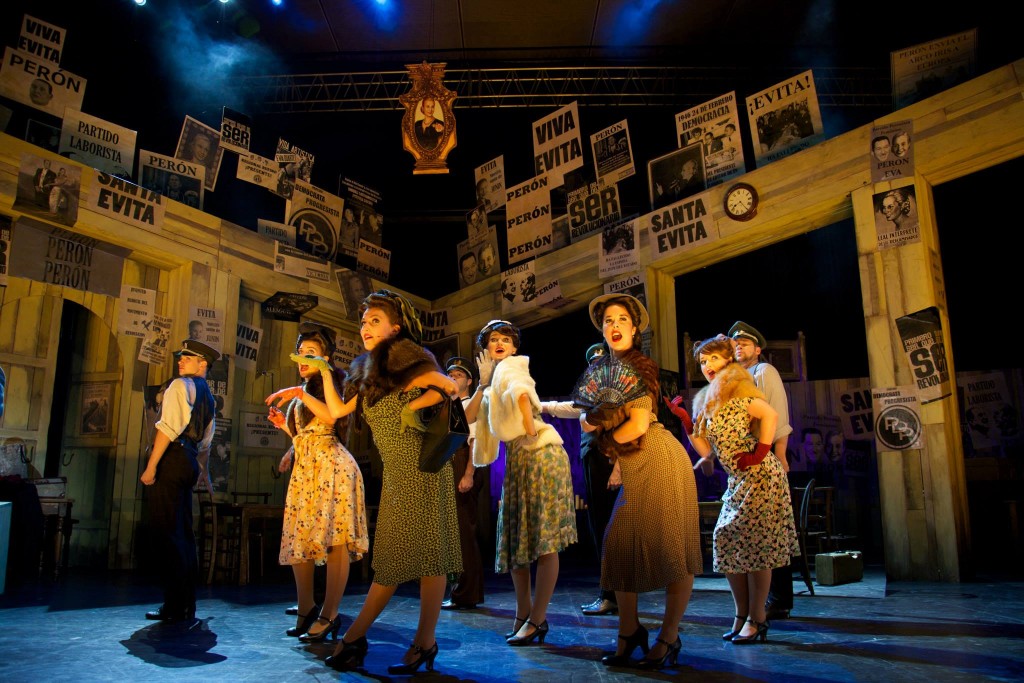
    Evita at the Ljubljana Festival in Slovenia.

    Having turned freelance, David has since found himself working on some of the most exciting theatre productions both in the UK and across the globe. In the West End, he has lit, amongst others; A Comedy about A Bank Robbery, McQueen, Sweet Charity, The Last Five Years, Rent, A Christmas Carol, Bette & Joan, Birdsong and Seven Bridges for Seven Brothers. Most recently, he has lit the UK tour of Million Dollar Quartet (supplied by WL and out till June 2017). On Broadway, he has lit Private Lives, The Norman Conquests and recreated Primo and designed Opera in UK, Europe, USA and Asia. At Off West End venues his notable credits include Dead Sheep, An Audience with Jimmy Savile and The Curing Room. Judging from these alone, it’s safe to say that he has certainly been an extremely busy man! He comments: “What I really love about my role is the variety of projects I work on and the opportunities of working with many different collaborators. I believe theatre offers you the opportunity to do this more than any other profession”.

    So out of everything he’s worked on (and it really is an extensive list) which project is David the most proud of? Like virtually all of the LDs I’ve proposed this question to, he doesn’t offer one answer (“I can’t”). However, there are a couple of highlights that still make his face ignite. He recalls: “The Rocky Horror Show (European Tour) was quite special. Rather than your traditional theatres, we played predominately in stadiums. I remember one night just being stood at a console surrounded by 10,000 people. It was just a surreal moment”. Equally surreal for David was when he lit the Il Barbiere di Siviglia opera at the National Centre for Performing Arts in Beijing. He states: “I was just stood on stage and I remember looking around thinking: I’m lighting an opera in Beijing!”. Another highlight was his West End debut when he lit Forbidden Broadway at the Albery Theatre (Noel Coward) in 1999.

    Bank-Robbery

    A Comedy About a Bank Robbery which is currently running at the Criterion Theatre in London’s West End.

    True to the last few years, it seems that 2017 is going to be equally as busy for David, with shows opening at the Arcola, two at the Southwark Playhouse, a play in New York and even a Hong Kong Festival production of All My Sons. Before we say our goodbyes, I ask him what I ask everyone who’s been a part of Leading Light: what advice does he have for the future generations? He draws back on his experience with Paul Pyant: “Try to keep in contact with people you meet in the industry. This industry is all about connections and there is such competition that you need to ensure you remain relevant and noticed. Even if it’s just the occasional hello or a brief email, communication is key. No matter what our pathways were to where we are now in our careers, we want to be supportive of the next wave of creatives. It’s a tough world to get those first jobs. The fringe and smaller theatres are a great way of starting as you rig,focus and plot your own show allowing you to really experiment. You can try things and, dare I say, get them wrong! It’s more than ok to make mistakes and sometimes, when you do make one, this leads to discovering something you never would have found. Be confident with your work but respect and appreciate the input of others you are working with.  You need that freedom at the start of your career as you progress into becoming a professional LD. This really is a profession where you learn on the job and there is no better place”.

    Our time has come to an end and David has to head over to the Arcola for a production meeting. It’s regarding The Cherry Orchard that he is lighting. I say how this is a world away from the last show of his I saw: Dick Whittington at the New Wimbledon Theatre. Yet it once again highlights the variety of work that David embraces: “Whatever the production, I always have the same goal: to create a lighting design to accentuate the piece and make sure it achieves its potential.” And as I’ve learnt this afternoon, it’s an approach that’s served him extremely well…

    Photos courtesy of Chris Davis, Darren Bell, monkswellmanor, Oli Sones, Paul Pyant and Robert Workman.