David Howe Archives - White Light
Explore White Light: White Light | HireWL | SalesWL | ShopWL

Tag Archive: David Howe

  1. White Light Up to Mischief Movie Nights

    Leave a Comment

    Created by the Olivier Award-winning Mischief Theatre, Mischief Movie Nights recently made its much-anticipated return to London’s West End. Opening at the Vaudeville Theatre, this fully improvised show sees audience members suggest a film genre, location and title, which the Mischief team then use to bring the ‘live movie’ to life before their eyes. The lighting designer is David Howe who approached White Light to supply the lighting equipment. 

    Mischief Theatre is one of the most prominent theatre companies in London’s West End, having created The Play That Goes Wrong, Peter Pan Goes Wrong, Magic Goes Wrong and The Comedy About A Bank Robbery. Mischief Movie Nights is the first of their productions to open following the Covid-19 outbreak. David comments: “We had initially hoped that Magic Goes Wrong, which has been playing at the Vaudeville since last December, would be able to re-open; albeit with a few tweaks for the current times we’re living in. That said, as the situation evolved, it was proving difficult to keep adapting the show to match the ever-changing guidelines. As such, it was decided that Mischief Movie Nights would be a better option as it is an improvised show, meaning less rehearsal time, along with the fact that it was much easier to make any last-minute changes if needed”.    

    Mischief Movie Nights was first performed back in 2009, under its original title of Lights! Camera! Improvise! at the Edinburgh Festival Fringe. It has developed over the years and David joined the creative team when it made its West End debut at The Arts Theatre in 2017. He explains: “Movie Nights is essentially centred around a film director who asks the audience at the start of each performance what type of film they want to see. This is then performed by the cast who are ‘controlled’ by the Director’s remote control, meaning he is free to hit pause, comment on the action or rewind/fast forward to other sections. The improv possibilities are endless, and it’s even been known to jump to a ‘Director’s Cut’, behind-the-scenes documentary footage or even deleted scenes, such is the nature of the show.  

    As this is an improvised production which changes every single evening, this obviously impacts David’s design. He explains: “With the show having no set structure apart from the welcome to the audience, this means that the type of film they choose to watch dictates what design is required. As a company of actors, Mischief are an incredibly tight group and visual comedy is an important theme running through their work so it would have been hugely dissatisfying to present the show with a single ‘look’. Therefore, the rig I designed needed to have many options to add to their performance as well allow for bold, clear choices that clearly define space and location for everyone. Similarly, colour is important, and we have a Gauze Cyc that we can dial-up any variation of colour we need along with a range of gobo textures.  We also have a large range of specials focused around the set that the cast are aware of and often move scenes into these prepared areas, which then allows us to close the lighting down around them and focus the attention. 

    He continues: “It goes without saying that the operator is a key (not to mention busy!) member of the team as the programming has to allow for the director’s frequent pauses as well as have the ability to rewind, fast forward through action and then re-call a state that perhaps had been used a few minutes before. As such, the programming is intense and has many cross-referencing macros giving us the options and flexibility we need.  We use an ETC-Gio console with a customised Magic Sheet and a fully loaded sub-master fader wing for manual control. Production Electrician and Programmer Ed Locke has programmed the show since 2017 so it has evolved a great deal as we’ve seen more and more of the ‘films’ performed and added to our store of locations and choices”. 

    Once he discovered that Mischief Movie Nights was being revived at the Vaudeville, David approached the Hires Team at WL to achieve the exact fixtures he required. His rig includes a mixture of ETC Source Fours, ColorForce Battens, MAC Auras and MAC Encores. He explains: “The moving lights provide the intensity and impact I needed for the bold looks. There can’t be too much movement as there is no-knowing what might come next in the show and therefore nothing can be pre-set in advance. That said, I’m really pleased with the package we have and it’s great to see the operator and cast in total synchronicity, telling a story that uses the building blocks of light I’ve designed”. 

    As Mischief Movie Nights was taking place during a global pandemic, this obviously meant for a slightly surreal rehearsal and tech process for David and the team. He comments: “Mischief and our producer Kenny Wax with Nimax Theatres spent a lot of time and effort in making sure that the theatre felt like a place we could all be in at the same time for long periods; something which we were incredibly appreciate of. The cast and crew were also all having regular Covid tests with quick results within 15 minutes, so we all knew we were safe to work. The turnaround was fast: we loaded-in on Monday morning, focused mid-afternoon and had a few states in the desk by the end of Monday night. Tuesday morning, we were all sent for Covid tests and then back to the theatre for a lighting and tech session. Since the opening three minutes of the show are really the only fixed point, it was then a matter of giving Helen, our Operator, the console and letting her rehearse with the cast as they refined their timings and I was able to make adjustments to focuses, colour palettes and timings. Helen has worked with us before on this show, so I watched in amazement as looks came and went with great panache. She deservedly gets a Bow in the curtain call”.

    The show opened earlier this month and was originally intended to run until 31st January 2021. However, with London having now entered Tier 3, Nimax Theatres have announced that all shows within its venues will be suspended from today until 8th January 2021. 

    David concludes: “It was a fantastic experience to be in a theatre once again, working with some brilliant individuals and creating a truly unique and equally hilarious show. It’s a shame that we find ourselves in this situation once again; particularly as everyone was so safe and cautious and the appropriate measures were all in place. It’s a scary and unpredictable time for so many of us in our industry and I am just hopeful that in the new year, we can return to some sort of normality and get back to entertaining audiences and doing what we love”.  

    Photos courtesy of Pamela Raith.
  2. White Light Conjures Lighting for Magic Goes Wrong

    Leave a Comment

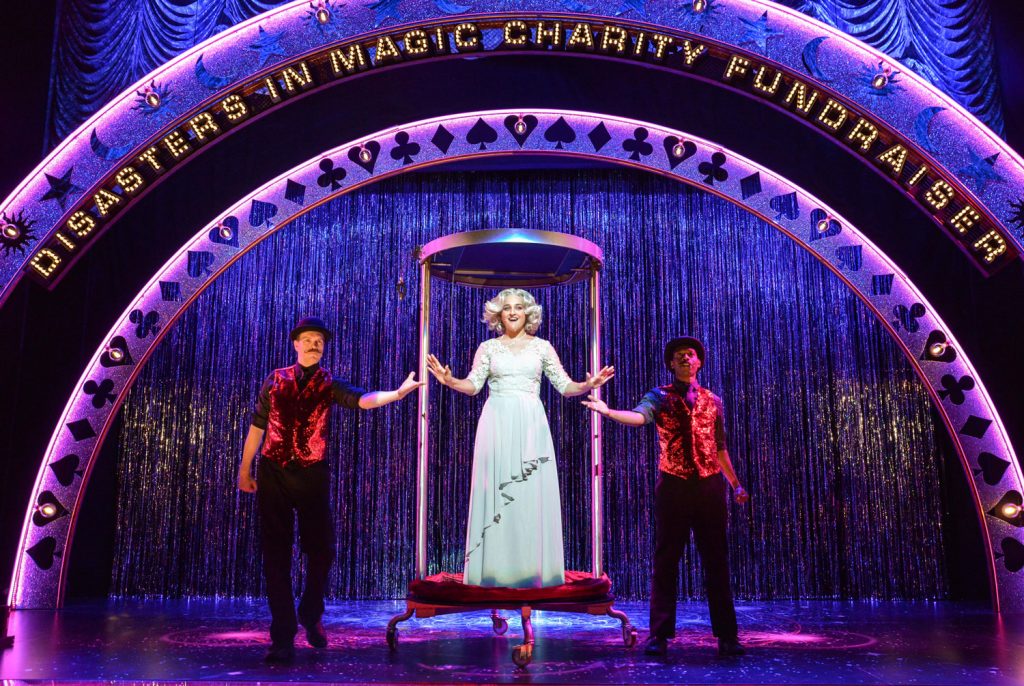
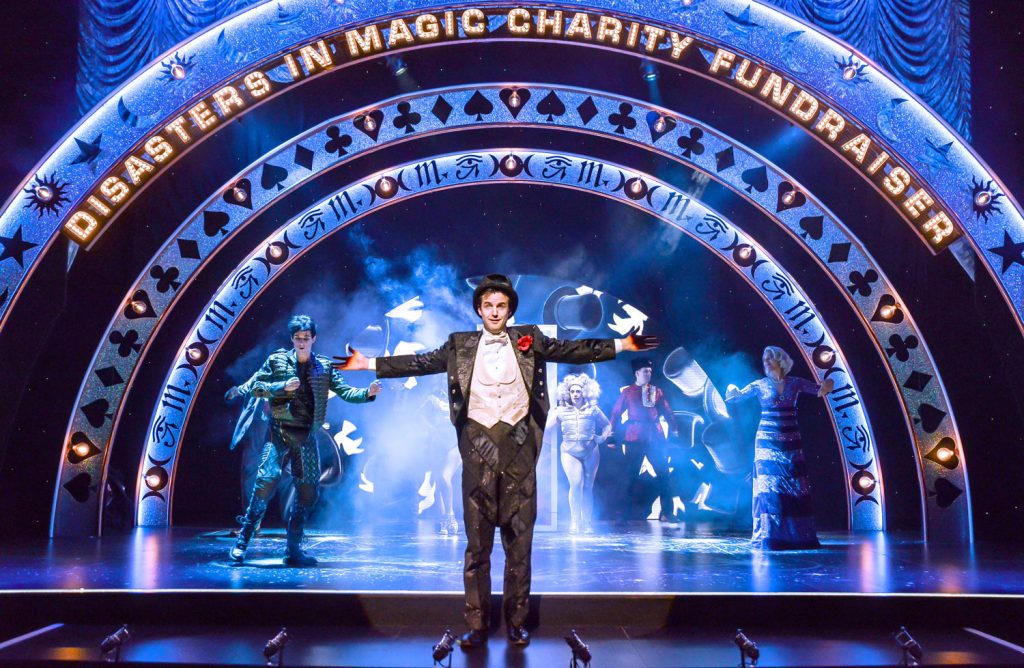
    White Light has supplied the lighting for Magic Goes Wrong, which recently opened at the Vaudeville Theatre in London’s West End.

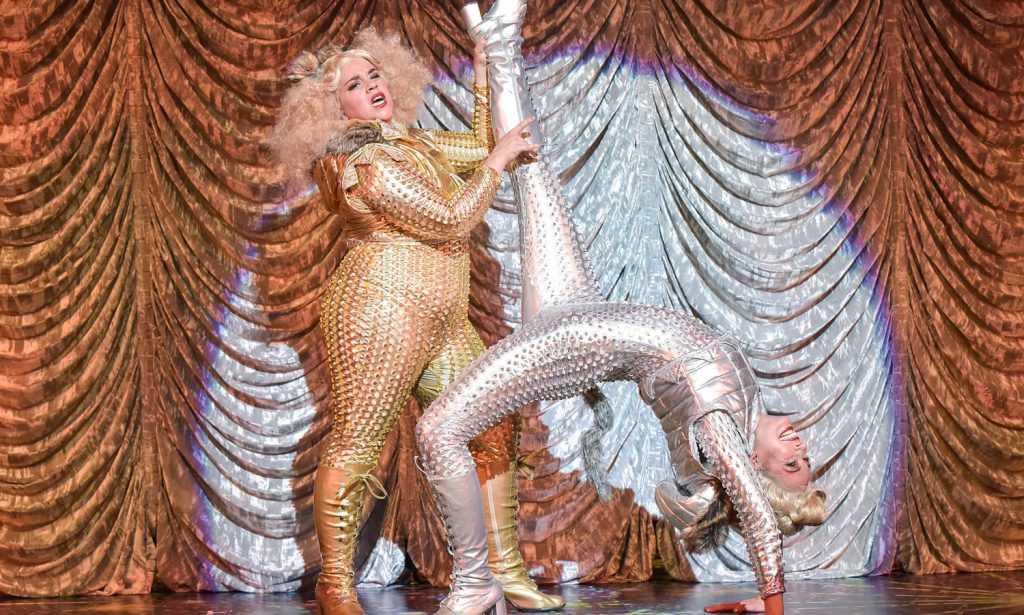
    Created by the award-winning Mischief Theatre and magic legends Penn & Teller, Magic Goes Wrong focuses on a hapless gang of magicians trying to host a charity fundraiser – with hilarious results. It features a lighting design by David Howe, who is lighting several of Mischief Theatre’s other shows. He comments: “The basis of the show is that it’s very much a slick variety show where everything should technically run smooth. However, the magicians and acts who perform aren’t the most skilful which results in everything going wrong… As ever with Mischief, it’s a very slick and fast-paced show. Set Designer Will Bowen created a very ‘variety-looking’ stage, complete with glossy floor, big theatrical tabs and glitter-drapes. There is also a large video wall at the back of the space which is used to introduce the acts as well as add texture, with a brilliant video design by Duncan McLean.

    He continues: “Taking all of this into consideration, my design has three goals. The first was to support the ‘variety show’ feel, with strong washes of colour, lots of comedy face light yet still be suitable for camera work. The second was ensuring that the portals and flown drapes received lots of lighting in order to make them ‘zing’ and ensure we maintain that light entertainment feel we’re used to seeing on TV. Thirdly, there was the wider brief of lighting the various tricks and keeping them ‘magical’ whilst still allowing the comedy to shine”.

    Knowing the look and feel he had to achieve, David approached WL who is also supplying the Mischief Theatre tour of Comedy About a Bank Robbery. He explains: “I worked closely with WL’s Customer Service Team Leader Andy Cullen and Customer Service Account Handler Jade Johnson who were extremely helpful when it came to choosing the appropriate fixtures. Due to the theatre space being tight, I knew I needed a versatile rig. As such, I drew on the Martin MAC Encores, Martin Aura XBs, MAC Viper Washes, Clay Paky Sharpy Washes, Chroma-Q Colour Force 48 LED Battens, GLP Impression X4 Bar 20s, ETC ColorSource Spot LEDs and Source Fours. These worked perfectly for both the production and venue’s requirements. Whilst it is a loud show, at times, we need total silence in order for some of the brilliant jokes to work. With this rig, we can truly achieve that and help move both the action and comedy forward.

    He adds: “We programmed the lighting on an ETC Eos Ti Console and the show runs on a Gio. I knew the control aspect of the show was going to be important as so many different elements are all linked together. Lighting additionally triggers video content and switching for cameras and playback. This, in turn, at times is triggered from sound and keeps sync with time-code, Midi and even the old-fashioned Stage Manager calling cues. Lighting also, on occasion, triggers a wide range of set and prop items that move, swing, drop and add to the comedy, so it has to be a tight and secure network”. 

    Whilst the rig featured a range of fixtures that played equally important roles, there was one in particular that was pivotal: the followspot. David explains: “The humble followspot is obviously not the most innovative fixture but was an essential item for the style of this production. I wanted a central followspot position in the upper circle so we had to work closely with Nimax Theatres in creating a position which avoided losing precious seats and didn’t cause issues with the building and stringent listing issues. So we found the old followspot box that had been (some years ago) converted into a staff bathroom and repurposed it. The result, thankfully, looks incredible and I’m grateful to the theatre for being so accommodating!”. 

    Prior to its West End run, the show ran The Lowry theatre in Salford. David comments: “With a show like this, it’s forever evolving. The space in Manchester was quite similar to the West End in width so this acted as a good template. That said, the show was constantly changing in previews so the equipment set-up has to be such that we can re-light a scene or create something entirely new on the spot which allows the writers (who also are currently performing) to see how the show plays with those changes. It’s incredible how much the content of the show has changed since those initial previews in Salford; which of course has completely changed aspects of my design.”

    Following its recent opening, Magic Goes Wrong has just announced that it will extend its West End run until August 2020.

    David concludes: “As always, it’s brilliant working with the Mischief team and contributing to a show that creates two hours of non-stop laughter every night. It was also great working with WL once again and their ever-helpful Hire team; especially Andy and Jade”.

    Photos courtesy of Robert Day.

    Lighting Team Credits

    Lighting Designer – David Howe
    Programmer – Stuart Cross
    Lead Production Electrician – Ed Locke
    Prod Electricians – Nick Wooley, Theo Chadha, Barry Abbots, Joe Crossley, Alex Matthews.
    Assistant Lighting Designer – Alex Musgrave (Part of the ALD Lumiere Scheme for 2019)
    Followspot Operator – Virginie Serneels
    Production Manager – Tom Nixon 

  3. West Side Story at Birmingham Hippodrome – A Lighting Designer’s Perspective

    Leave a Comment

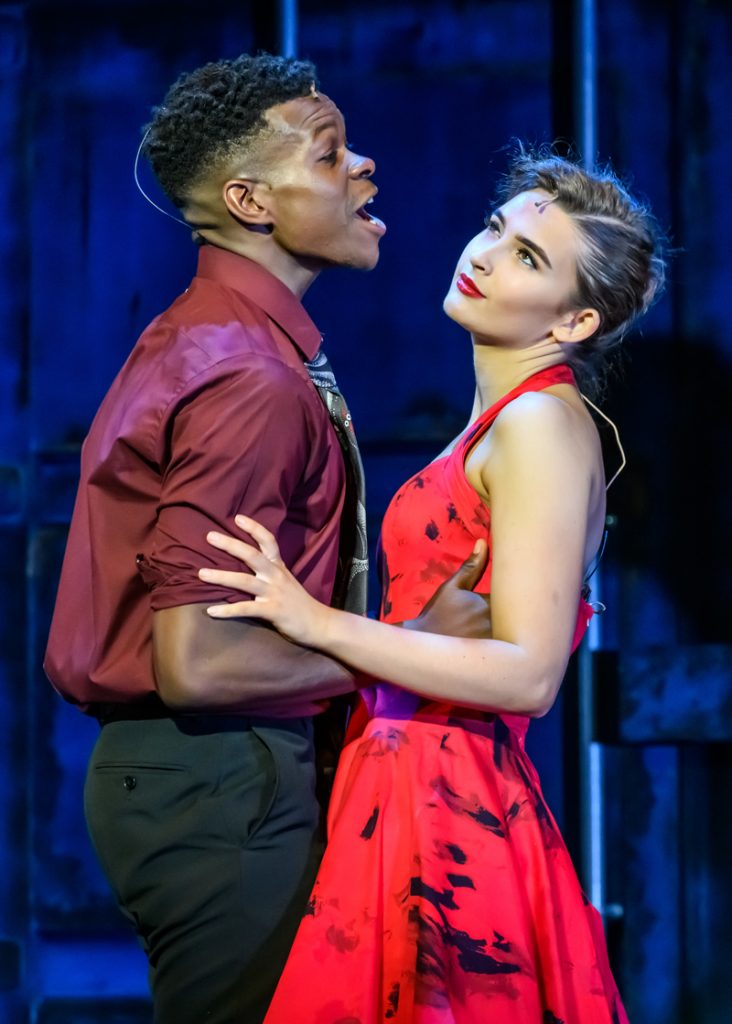
    A few weeks ago, Birmingham Hippodrome raised the curtain on its first ever home-grown youth production with a dynamic re-imagining of West Side Story. Opening to a sell-out audience, the show was the centrepiece of the venue’s 120th birthday and featured forty local young performers. The show’s Lighting Designer David Howe takes us through his design for the show and the role it played within the overall production:

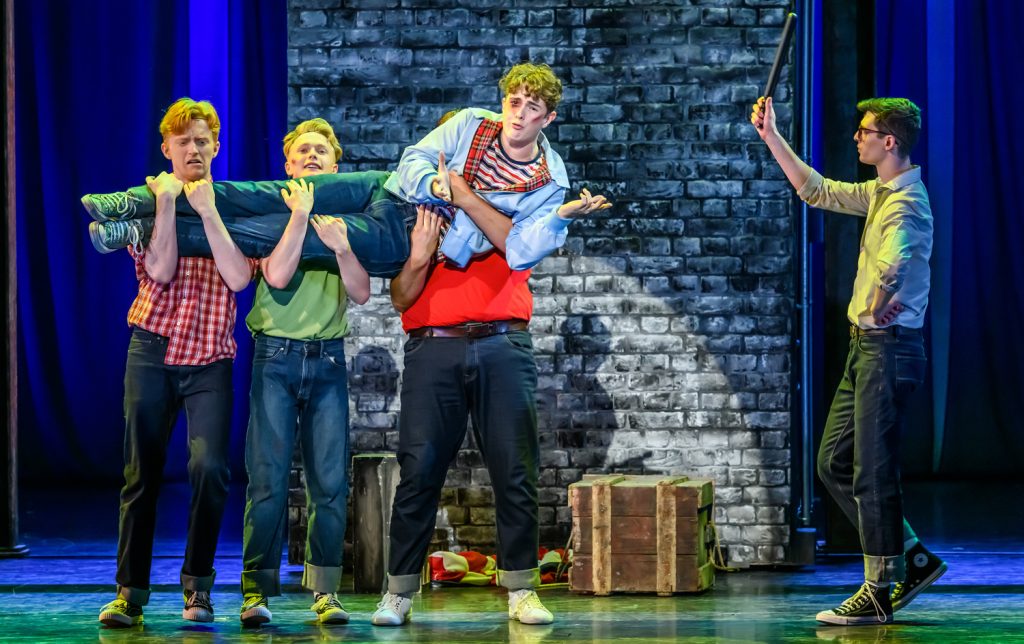
    I had a very clear design brief for West Side Story: to ensure the piece remained within the period it was written and stayed true to its Manhattan location. As this was both a big celebration and the first time the venue had produced a youth show in-house, we wanted to show off the entire stage house area to our audience as it was a side of the theatre they’d probably never seen. The stage was also kept as open as possible to allow for the 40 strong cast to inhabit the space for some of the big ensemble dance numbers. 

    I have worked with the Designer (and Production Manager) Al Parkinson before so it was nice to get the chance to revisit this working relationship. The set itself was a big gauze box into which trucks were moved around in order to create certain spaces. Those who have seen the show will know that it flows from small interior rooms to bigger spaces for some of the more famous songs and dance routines. One of the main roles of the lighting was to reflect the scale and fluidity of the music so I wanted big statements of light – shadows, shafts and colour.  Also, as we were celebrating the actual theatre, Al and I wanted to include its beautiful architecture as much as possible. As a result, with the last scene, we decided to open the space completely, tear down the masking and reveal the whole space which included the scene dock upstage and resulted in a very epic ending.  

    Working with the local cast was fantastic as they all had such raw talent and it was thrilling to see them make a real ensemble for the piece. It was also great to work with director and choreographer Matt Hawksworth. That said (as often is the nature of projects like this), we had a very short amount of time to bring the show together. We also knew there were several aspects of the show which would continue evolving right up until the final dress rehearsal.

    So how did all of this influence my lighting? Well due to the nature of the show and the rehearsal process, I made sure my lighting package was all about the ‘big statement’ looks. This largely consisted of 5kWs, GLP Bars and a rig of Aura Washes and Viper Profiles. The rig in particular gave me discharge white colours and we used 96 x Par 64 Aeros for brutal beams of light to reveal the theatre at the end of the show.  

    One of my favourite moments was at the end of Act One, which is set ‘under the underpass’ and features a massive musical ‘rumble’. I really wanted to create a sense of disorientation so I had dollies made of car headlights (Par Heads) and pointed them onto the stage as if the whole fight was lit solely by the six cars. This deliberately brutal/dazzling light really worked alongside the sheer energy of the fight. A brutal open white Viper added a cold top light in the middle of the space as the action turns ugly and two characters die as the curtain falls. Often, at the end of both acts, there would be complete silence from the audience and you could literally hear a pin drop; such was the emotion on stage.  

    The show was programmed by Ed Locke who I’ve worked with a lot. Ed’s short-hand expertise was essential as we had to make some big numbers work in very quick time. Additionally I was joined by Alex Musgrave who is this year’s ALD Lumière. The Lumière Scheme is a professional development programme that provides pathways into the industry for some of the most promising emerging designers by working as an assistant on larger scale shows. Alex watched rehearsals with me and we created a follow-spot plot together. He then liaised all this with the operators, freeing me up to concentrate on the looks and cueing.  

    I also worked closely with the in-house team at the Hippodrome. Usually they deal with  incoming touring shows which have very set agendas and are obviously not idiosyncratic to the venue. With West Side Story, we wanted to use as much of the Hippodrome space as possible; with the show celebrating the venue’s birthday. As such, it was great to work with the in-house team who know the building so well and were able to be creative with the facilities they use on a day-to-day basis.  

    Ultimately, it was a bold choice for the Hippodrome to stage a show like this but it certainly paid off. Using a group of local, young actors meant that the musical resonated with a new, much younger audience and it was a fantastic celebration of a brilliant venue.

    Photos courtesy of Simon Hadley

  4. Oh Yes It is Panto Season for White Light

    Leave a Comment

    With the festive season now upon us, theatre stages up and down the country are being filled with dames, beanstalks, flying carpets and glass slippers. As a leading lighting supplier to West End and UK touring theatre, White Light is once again suppyling a range of pantomimes this Christmas.

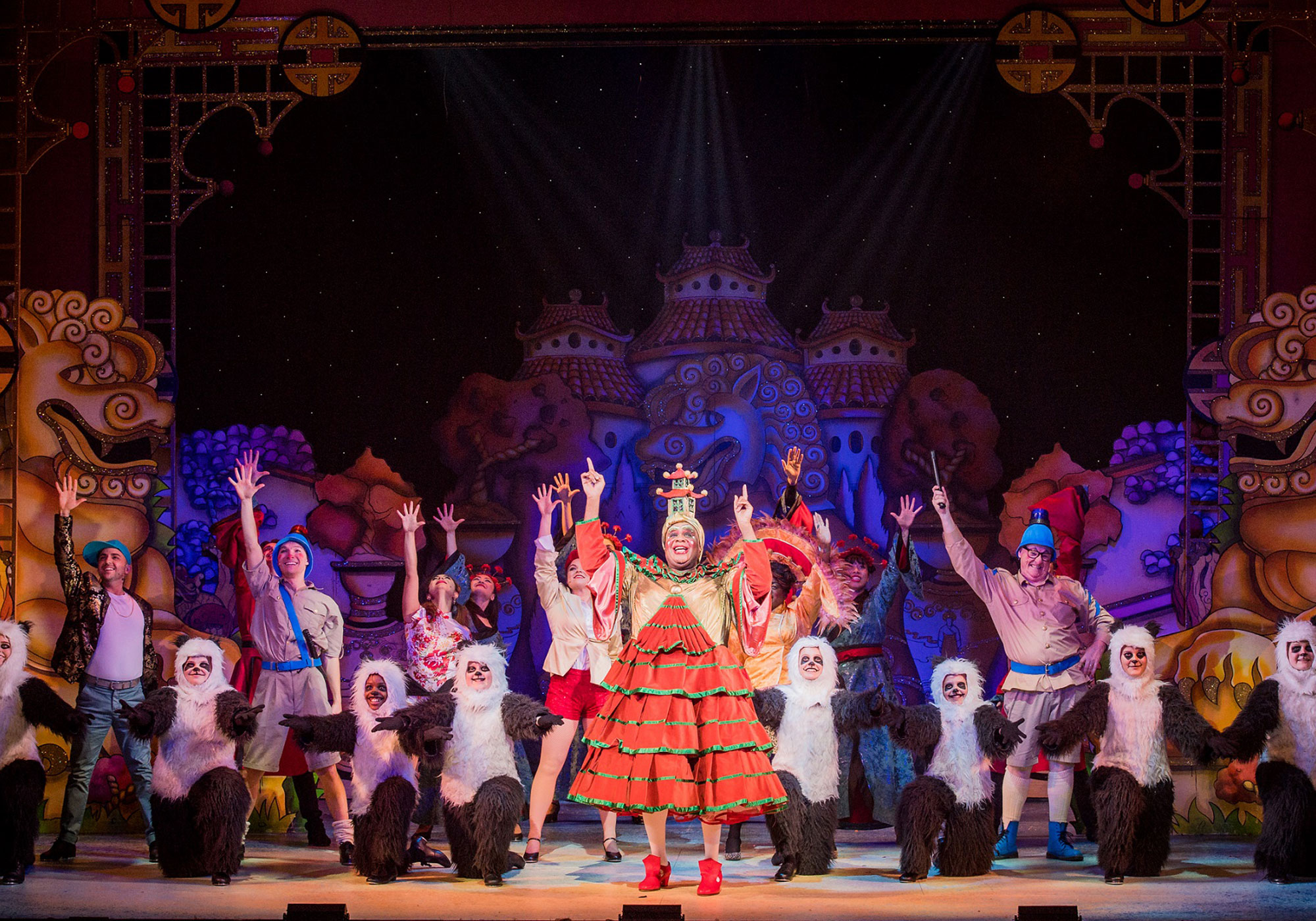
    Pantomimes are many venue’s biggest production of the year, with these classic childhood stories often starring household names. An all-time favourite is Aladdin and, this year, WL is supplying several versions of the show, including one at Hackney Empire which is lit by David Howe. He comments: “Hackney Empire’s Aladdin evolved a lot in the rehearsal process, with a lot new music being written specifically for this production. My brief, as ever, was to enhance the whole look of the show and help the audience focus on each story-telling moment. When it comes to equipment, it’s not actually about the flashiest new kit or what’s just arrived on the shelf. Rather, it’s about drawing on fixtures that you know will be reliable and able to cope with 12 performances a week – something WL has in abundance”.

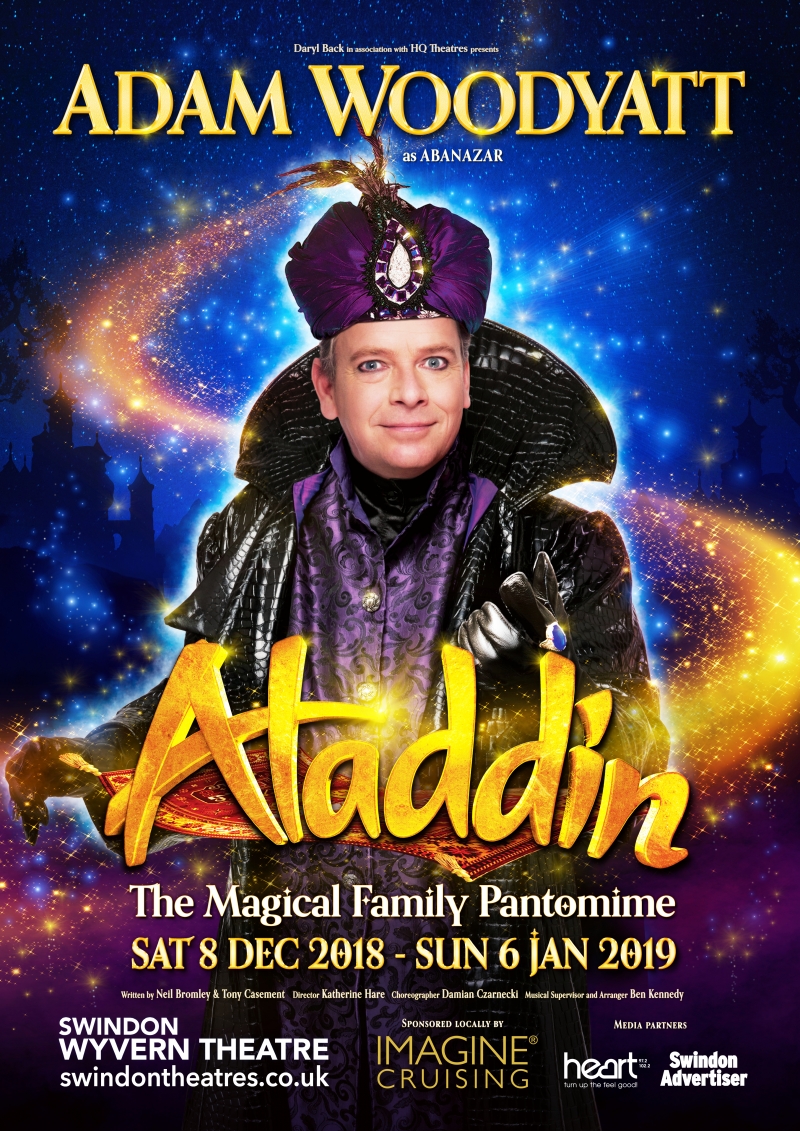
    WL is also supplying Aladdin in Cambridge, Crawley, Norwich, Yeovil and Swindon, with the Wyvern Theatre production starring EastEnders legend Adam Woodyatt. The Lighting Programmer for the show is Eden Thornton, who comments: “I’ve now worked on ten pantos over the last six years. They can often be hard work as you’re trying to create a big show in what’s not a great amount of time. That said, it’s very exhilarating. It’s also important to have a good team around you as well as the services of a reliable hire company; hence we try and use WL whenever we can”.

    Other popular titles that WL is supplying include Snow White in Bolton and Malvern, along with The Wizard of Oz at the Birmingham Rep and Bolton Octagon. Cinderella is going to the ball in Canterbury, Eastbourne, Guildford and Portsmouth whereas Jack and the Beanstalk is sprouting on stage in both Epsom and Watford. Peter Pan is also flying into Theatre Royal Portsmouth as well as the Park Theatre, London, where Nic Farman is the lighting designer. Nic comments: “I’ve worked on a couple of pantos now and, from my experience, you can really be bold and create beautiful, colourful stage pictures which captivate the audience’s imagination. Peter Pan at the Park Theatre is actually a more traditional version of the play and my role is to use light to create the locations that appear throughout the course of the show. We rely heavily on saturated colour and texture from gobo washes to help transform the relatively small stage for each part of the play. The team at WL have been great in providing me with the fixtures I need to take the audience to places such as Neverland, Mermaids Lagoon and Captain Hook’s Pirate Ship”.

    WL also supplied the lighting for Sinbad at the Beck Theatre for BACCES: the British Airways Cabin Crew Entertainment Society which puts on a yearly panto, and in its history has raised over £1M for worthy causes. The Lighting Designer was Jonathan Haynes, who states: “Compared to a traditional play, panto is generally very flashy and colourful, jam packed with fun where anything goes! Basically nothing is off limits, so long as it also helps to tell the story! With this show in particular, as the cast are full-time cabin crew for British Airways, there were only a limited number of rehearsals so I had to have a design that was flexible and could change. For instance, the first tech run was the first time I actually saw the characters’ lavish costumes and so I very quickly had to tune the colours to compliment these; hence it was vital I had equipment that offered versatility”.

    The busy panto season is a fitting conclusion to what’s been an extremely busy 2018 for WL, who have supplied the lighting on a range of theatre smashes including Company, The Band, Tina – The Musical, The Inheritance, The Pinter Season alongside long-running hits such as Harry Potter and the Cursed Child, Aladdin, Matilda and Les Misérables.
    WL’s Managing Director Bryan Raven comments: “It’s been another great year in which we’ve continued working on shows of all sizes all across the country. We are now looking forward to 2019 where we will continue our investment in both the latest technology and expert staff in order to offer lighting professionals the level of service they’ve come to expect from us”.

  5. Leading Light with…David Howe – Part One

    Comments Off on Leading Light with…David Howe – Part One

    10330393_1417048488621057_6861829846095611172_n

    David Howe – Lighting Designer

    It’s a crisp sunny morning in London as I exit the tube at Piccadilly Circus. Today’s interview for Leading Light is taking place (conveniently) along Shaftesbury Avenue. Before heading into the heart of the West End, I stop near the Statue of Eros to make a quick call. As I stand on the phone, freezing, I look at the Criterion behind me and see a poster for The Comedy About a Bank Robbery. Looking down the list of credits I clock that the Lighting Design is credited to a certain David Howe – who just happens to be the person I am on my way to meet.

    For those of you who’ve read the previous Leading Light articles you’ll have no doubt noticed a pattern: all of the lighting designers have a long relationship with White Light. David is no exception. Except, he is. David actually worked at WL for ten years before becoming a full-time lighting designer. And while he and I could talk about the old days all morning, we’re here to discuss his experience as a designer. And as always, we start at the beginning… David was born in Essex but moved to Weston-super-Mare at an early age. He describes his hometown as “a quiet sleepy town”. As a child, David was extremely musical. He recalls: “My passion for music stemmed from my mother who loved to sing”. He was a chorister in the local church and also played the piano, church organ, violin and viola.

    Weston Super Mare Playhouse

    Weston-super-Mare Playhouse where David saw his first show.

    While David’s family weren’t avid theatregoers, they would make the annual trip to the local pantomime at Weston-super-Mare’s Playhouse. It was here where David, then aged 7, received his first experience of theatre – and was instantly hooked. He comments: “I remember watching the show and being amazed by all the theatrical tricks, how the scenery changed and people flew across the stage. It was two hours of pure bliss and I didn’t want it to end”. Imagine the excitement then when the theatre advertised that they were running a backstage open day; something David naturally leaped at the chance to attend: “I clearly remember being on that stage and walking up to the village set (which I previously thought was real) and seeing its construction, along with looking up into the fly tower and standing behind a follow spot. It was truly magical and, even at that age, I knew this was something that would play a big impact in my future life”.

    From that moment on, David tried to immerse himself in as much theatrical activity as possible. He joined the local amateur operatic company, firstly on the stage as he could both “sing and move”. He comments: “I genuinely enjoyed being in the productions but was never entirely comfortable performing in front of others. However, I really enjoyed being backstage and helping the crew when I wasn’t on-stage, so things moved nicely in that direction”.

    Paul Pyant

    Paul Pyant who David assisted early in his career.

    At the same time, David was at school and, unlike some of the other LDs I’ve spoken to, actually enjoyed his academic years. He recalls: “I went to school in Bristol and it had a great drama department; something, in hindsight, I was extremely lucky to be a part of. I spent a lot of my time stage-managing the various productions we put on. Funnily enough though, I never worked with the lights!”. During his A-Levels, he was fortunate to meet-up again with the Chief Electrician of the Western-super-Mare Playhouse, Pete Magor, who gave him his first job as a follow spot operator for a summer season. It turns out that Pete had been the Chief at the Ashcroft Theatre in Croydon and knew a certain other ‘leading light’ of the theatre world: Paul Pyant.

    After his A-Levels, David made the move to London in the early 90s where he studied Technical Theatre at the Central School of Speech and Drama. It would be a two-year period that would impact the rest of his career. When starting his course, David was still unsure as to where his studies would take him, especially as he had come from a predominately stage manager background. He recalls: “The course was great as it covered all aspects of production, I actually really enjoyed stage management and being a DSM. Yet the more lighting work we did, the more I realised that this was a field in which I had a growing interest. In that regard, it wasn’t a Eureka moment where I thought this is what I want to do. It was more of a progressive passion”.

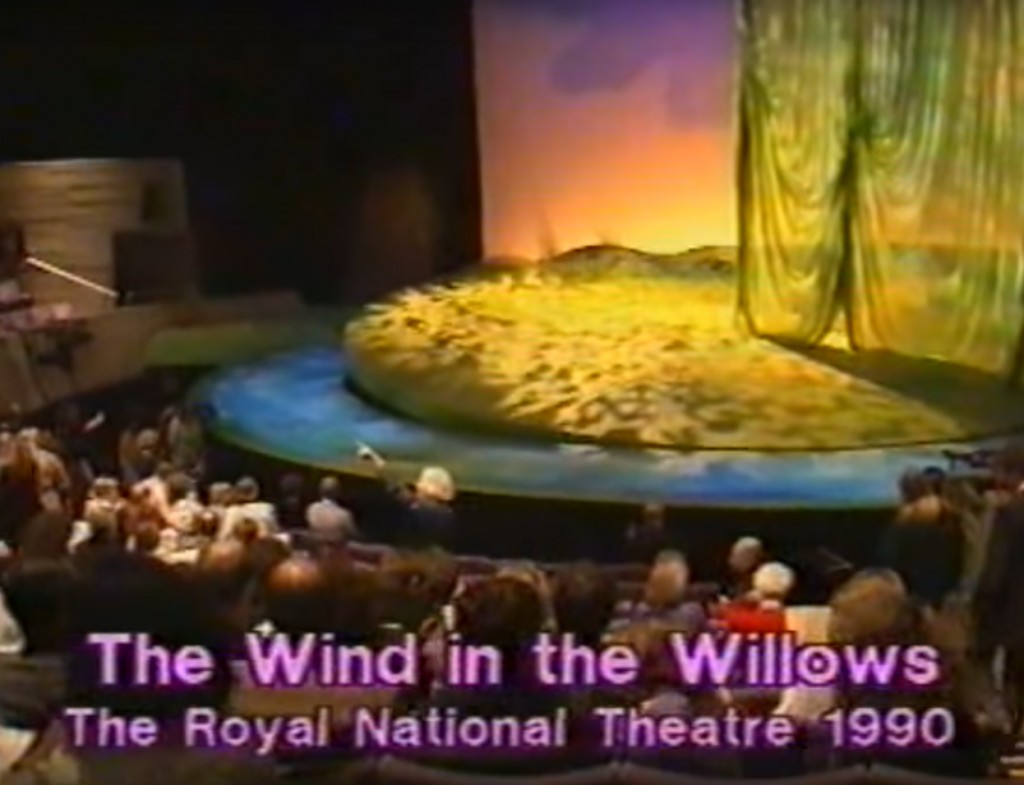
    It was during his first year at Central that David had an experience that would prove vital for his career as an LD. He comments: “At Central, you would have outside creatives coming in to design the 3rd year acting shows, which included designers such as Rick Fisher and Mark Jonathan. As a class, we were taken to The Wind in the Willows at the Olivier Theatre and afterwards Mark mentioned that he knew Paul Pyant (there’s that name again) who lit it. It was a beautiful production – a perfect show for a lighting designer to create. Mark introduced me to Paul and, crazily, he invited me to come and observe another production: The Recruiting Officer“.

    Wind-in-the-Willowx

    The Wind in the Willows at the Olivier Theatre.

    David stayed in touch with Paul (“back in the days when you used to write letters!”) and, during the summer holiday, he visited Birmingham Rep to see a new musical called Radio Times being created. He said: “I was cheeky enough to ask Paul if he needed an Assistant as I was due a placement period at Central. And whilst I don’t think either of us fully knew the job description, he agreed and it seemed to work”. David then worked with Paul on the transfer Radio Times into the Queens Theatre, Assassins which was directed by Sam Mendes and the opening production at the Donmar Warehouse, an Opera at ENO called Princess Ida which was directed by Ken Russell, and a new production of Carousel at the National which was directed by Nicholas Hytner. David adds: “Back in the mid 90s, there was no real CAD for Lighting Designers, so Paul drew his own plans and I was got involved with that process. This meant I really could experience the process from the scratch of an ink-pen on a piece of tracing paper through to the light being hung focused and programmed into a show. I also called follows-spots on the musicals and took notes. That kind of experience, in any form, is true gold to a young, inspiring designer to see how designs work in the ‘real world’. It was something I truly relished”.

    Click here to read part two.

  6. Leading Light with…David Howe – Part Two

    Comments Off on Leading Light with…David Howe – Part Two

    FuhlamRoadOffice

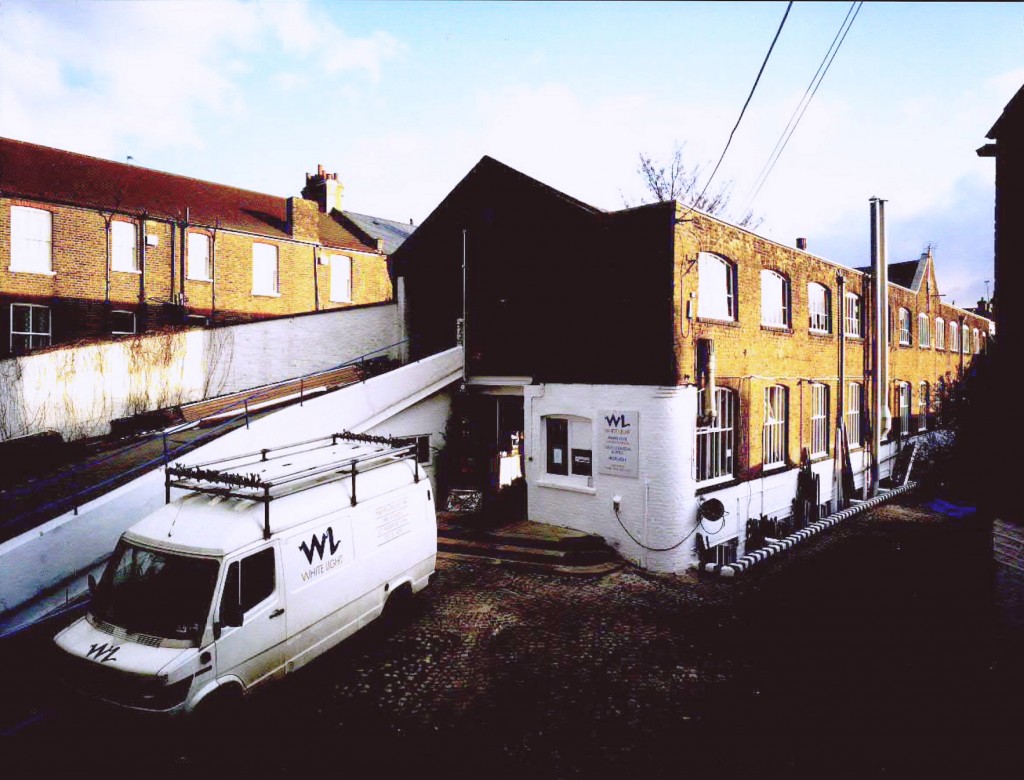
    WL at Filmer Road in Fulham when David first joined.


    Carousel was a special production in many ways, as at the end of its National run, Cameron Macintosh transferred the production into the West End and David was asked to join the paid creative team as Assistant Lighting Designer. However, once he had finished his work on the production, he had to move on and face: “the scary real world which was out there waiting for me”. Step forward WL, in the shape of Bryan Raven who supplied the show and liaised with David in the preparation of the rig, who made contact and asked David if he’d like to join their team. He recalls: “What could be better than working for a company who supplied equipment to shows. I initially worked in the Sales team, prepping colour-calls. As the company evolved, I was able to work more and more with designers and chief electricians of venues all over as the National Lottery funding started to roll out to new theatre development. WL was often called-upon to be involved with those capital projects where new technology was being ordered and tested. It was an amazing time to meet, not only the users of the equipment, but also the manufacturers. It was such a huge advantage to not only know about the equipment being used in the industry but how the hire and sales business works”.
     
    Seven Brides

    The UK tour of Seven Brides for Seven Brothers

    He adds: “WL were incredibly supportive of my lighting career and allowed me leave to develop my design work when I could – working in many fringe and Off-West End venues and productions where the challenge is to make the show you want within incredibly tight time-scales and small budgets. I was also continuing to assist other designers such as Paul Pyant, Howard Harrison and Hugh Vanstone”.

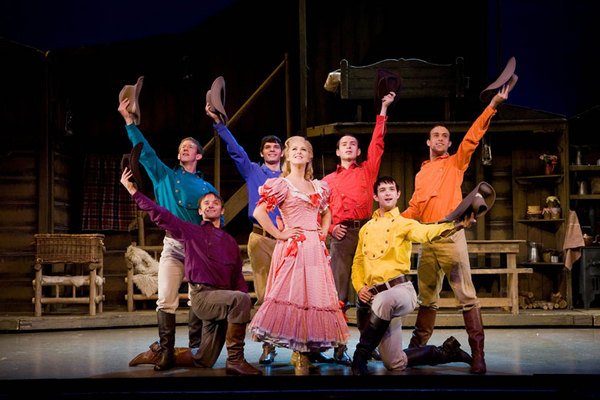
    After a while the lighting design work began to increase, and David worked on UK tours of Fiddler on the Roof, Oklahoma, Singing in the Rain, South Pacific, Beauty and the Beast, 42nd Street, Seven Brides for Seven Brothers, to name but a few. He comments: “I was so lucky to work with amazing creatives, electricians and touring production staff during this period which really opened my eyes to the industry and the processes we need to think about to make any show happen, effectively and within budget”.

    The more David worked, the more his reputation grew, resulting in him being in high demand. So much so that he reached the point where he had to make a decision: continue at WL or take the plunge and become a full time LD. It was a decision he didn’t take lightly: “I had worked at White Light for ten years (1993-2003) and really felt part of the family there. However, I thought to myself that if I don’t become a freelance lighting designer now then I never will”. David was now out in the big wide world of freelancing; something he describes as “unbelievably scary”. He recalls: “The thing about being freelance is that you’re on your own. If a show gets cancelled then you need to find another way of paying that month’s rent. That’s why you need to work really hard to keep in touch with people and build on relationships as you are only as good as your last job”.

    Evita 7

    Evita at the Ljubljana Festival in Slovenia.

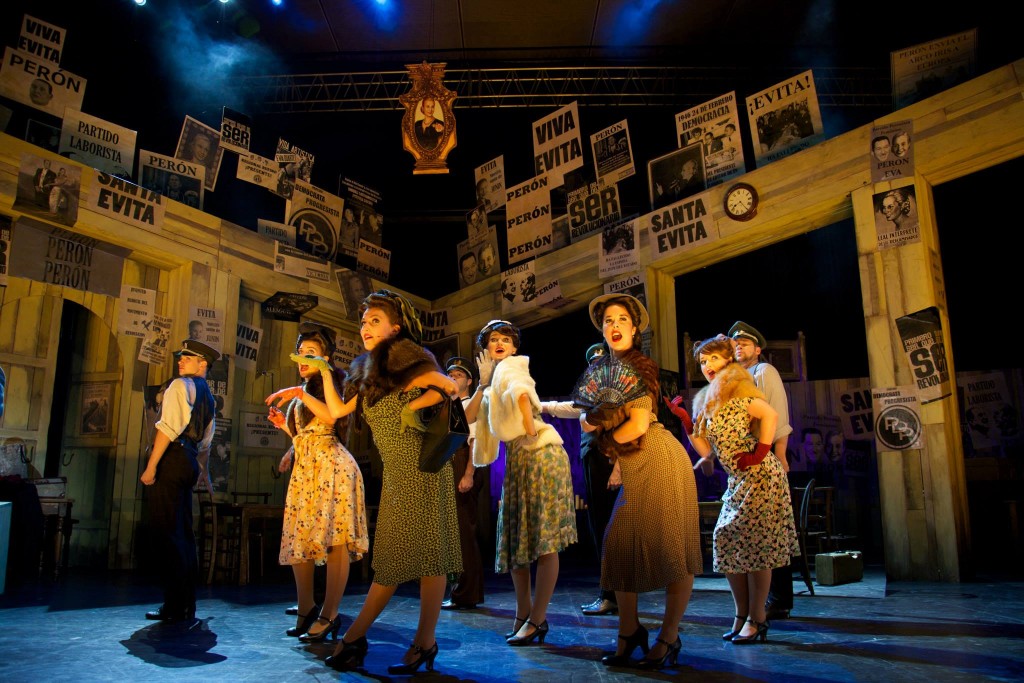
    Having turned freelance, David has since found himself working on some of the most exciting theatre productions both in the UK and across the globe. In the West End, he has lit, amongst others; A Comedy about A Bank Robbery, McQueen, Sweet Charity, The Last Five Years, Rent, A Christmas Carol, Bette & Joan, Birdsong and Seven Bridges for Seven Brothers. Most recently, he has lit the UK tour of Million Dollar Quartet (supplied by WL and out till June 2017). On Broadway, he has lit Private Lives, The Norman Conquests and recreated Primo and designed Opera in UK, Europe, USA and Asia. At Off West End venues his notable credits include Dead Sheep, An Audience with Jimmy Savile and The Curing Room. Judging from these alone, it’s safe to say that he has certainly been an extremely busy man! He comments: “What I really love about my role is the variety of projects I work on and the opportunities of working with many different collaborators. I believe theatre offers you the opportunity to do this more than any other profession”.

    So out of everything he’s worked on (and it really is an extensive list) which project is David the most proud of? Like virtually all of the LDs I’ve proposed this question to, he doesn’t offer one answer (“I can’t”). However, there are a couple of highlights that still make his face ignite. He recalls: “The Rocky Horror Show (European Tour) was quite special. Rather than your traditional theatres, we played predominately in stadiums. I remember one night just being stood at a console surrounded by 10,000 people. It was just a surreal moment”. Equally surreal for David was when he lit the Il Barbiere di Siviglia opera at the National Centre for Performing Arts in Beijing. He states: “I was just stood on stage and I remember looking around thinking: I’m lighting an opera in Beijing!”. Another highlight was his West End debut when he lit Forbidden Broadway at the Albery Theatre (Noel Coward) in 1999.

    Bank-Robbery

    A Comedy About a Bank Robbery which is currently running at the Criterion Theatre in London’s West End.

    True to the last few years, it seems that 2017 is going to be equally as busy for David, with shows opening at the Arcola, two at the Southwark Playhouse, a play in New York and even a Hong Kong Festival production of All My Sons. Before we say our goodbyes, I ask him what I ask everyone who’s been a part of Leading Light: what advice does he have for the future generations? He draws back on his experience with Paul Pyant: “Try to keep in contact with people you meet in the industry. This industry is all about connections and there is such competition that you need to ensure you remain relevant and noticed. Even if it’s just the occasional hello or a brief email, communication is key. No matter what our pathways were to where we are now in our careers, we want to be supportive of the next wave of creatives. It’s a tough world to get those first jobs. The fringe and smaller theatres are a great way of starting as you rig,focus and plot your own show allowing you to really experiment. You can try things and, dare I say, get them wrong! It’s more than ok to make mistakes and sometimes, when you do make one, this leads to discovering something you never would have found. Be confident with your work but respect and appreciate the input of others you are working with.  You need that freedom at the start of your career as you progress into becoming a professional LD. This really is a profession where you learn on the job and there is no better place”.

    Our time has come to an end and David has to head over to the Arcola for a production meeting. It’s regarding The Cherry Orchard that he is lighting. I say how this is a world away from the last show of his I saw: Dick Whittington at the New Wimbledon Theatre. Yet it once again highlights the variety of work that David embraces: “Whatever the production, I always have the same goal: to create a lighting design to accentuate the piece and make sure it achieves its potential.” And as I’ve learnt this afternoon, it’s an approach that’s served him extremely well…

    Photos courtesy of Chris Davis, Darren Bell, monkswellmanor, Oli Sones, Paul Pyant and Robert Workman.