White Light has supplied the lighting equipment for [BLANK] which
recently ran at the Donmar Warehouse.
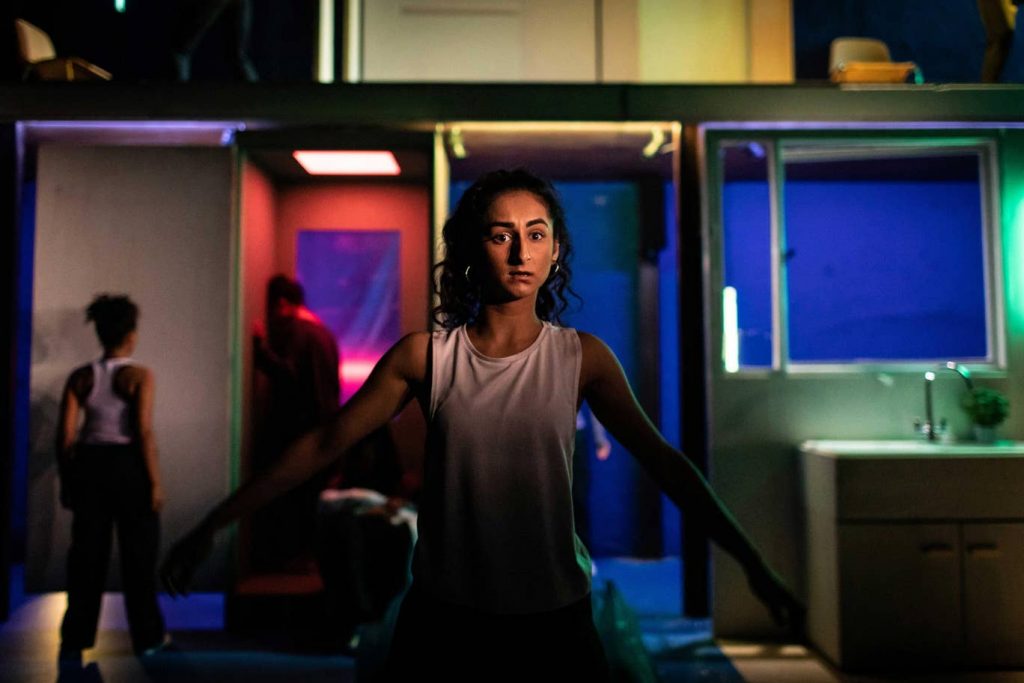
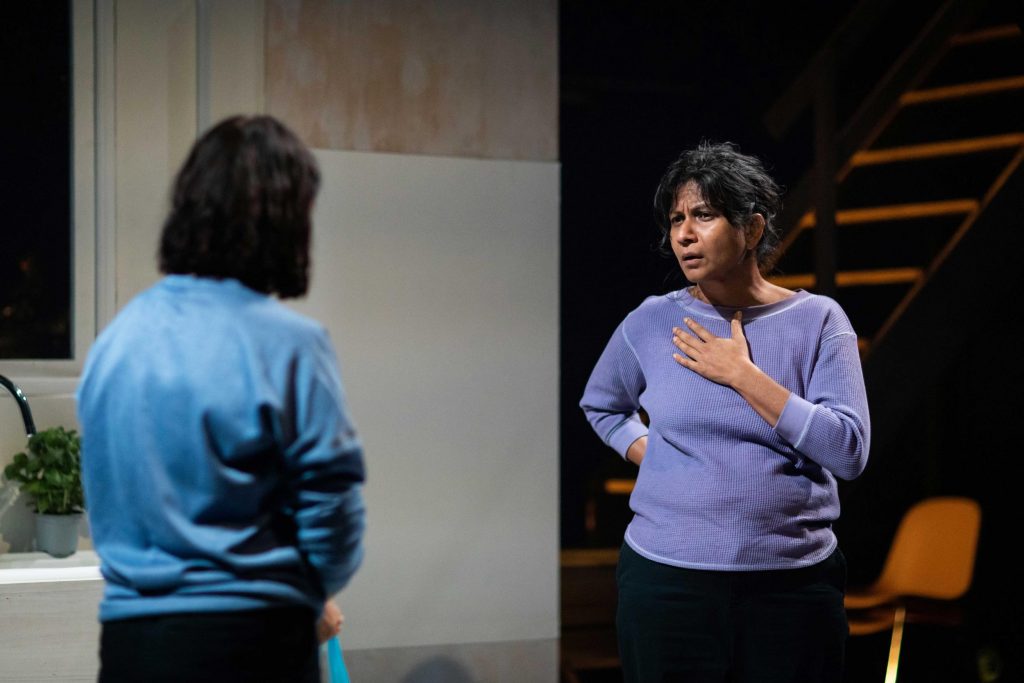
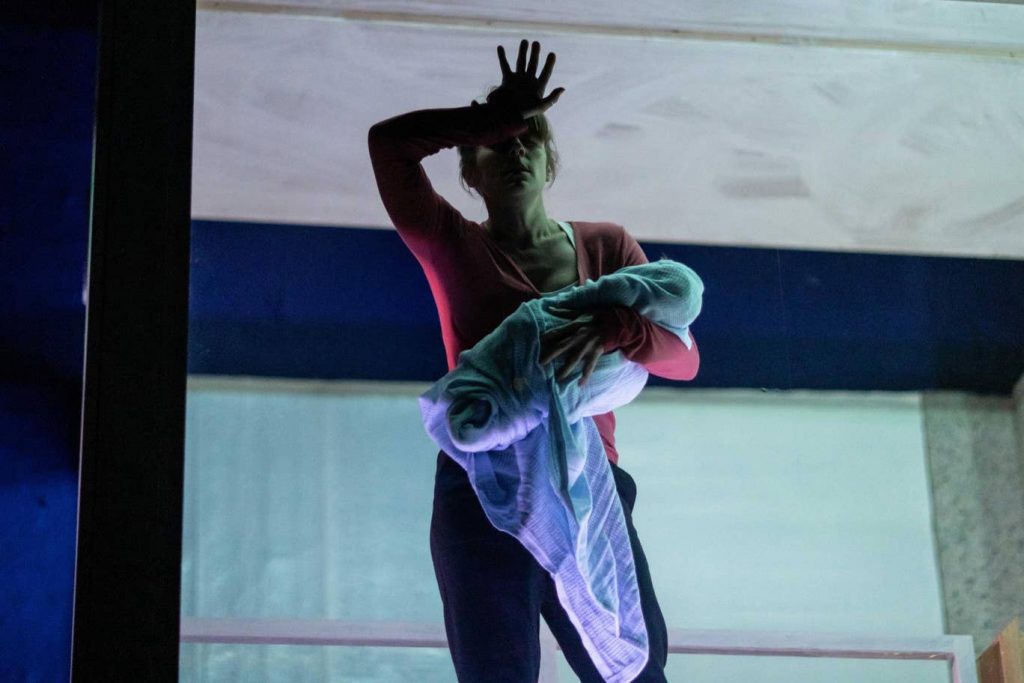
[BLANK] is a theatrical provocation which marks 40 years of Clean Break;
a theatre company that works with women affected by the criminal justice system.
Featuring over 100 unnamed scenes, [BLANK] sees the director Maria Aberg
choose thirty of these in order to create a unique production. Featuring an
all-female cast and creative team, the show has a lighting design by Jess
Bernberg. Jess comments: “After attending meetings with Maria and Rosie Elnile
(Set Designer), we came to the decision to keep the aesthetic quite open.
Whilst part of Rosie’s inspiration for the set was mother and baby units in
women’s prison, we didn’t want to create any literal space, instead choosing
practical lights to break up the space and adding a sense of uniformity to the
lighting design”.
With the production being such a unique construct, the layout was a factor Jess had to consider with her design. She explains: “We felt strongly the piece shouldn’t have an interval, so that it would deliver one strong theatrical punch. Maria had carefully arranged the scenes to achieve subtle narrative arcs that can be inferred by an audience but aren’t necessarily concrete, leaving it up to the audience to decide and hinting at the universality of the situations. We actually discovered that the scenes fell into blocks which had distinct feelings, rather than each scene having a ‘location’”.
Jess adds: “The first nine scenes felt stark and closed in; almost non-theatrical. A large-scene change then brings us into a new world with the full company of women on stage. Following this is the longest scene in the play: a 45 minute, meticulously-choreographed satirical dinner party. This felt like it needed a completely new feel as we enter into a world of relative luxury, Labneh and flatbreads. All the women you had seen before were on stage, some portraying characters completely different from what we had seen before. Maria and I had talked about Caravaggio-esque warmth and sculpting, but felt, in the space, this became too dreamlike and needed a sense of grounding and harsh reality”.
To achieve all of these very specific looks, Jess approached WL who have supplied a range of her shows this year, including Out of Water (Orange Tree), And the Rest of Me Floats (Bush Theatre) and The Crucible (The Yard). Jess explains: “Most of the rig was Ayrton Ghiblis and ETC Lustr 2s, as well as CP61 par cans forming a toplight grid. The Ghiblis are wonderful moving lights, super quiet in terms of ambient noise which is very important for a space like the Donmar where audiences are just metres away from the units and there were many quiet, delicate scenes that can’t be disturbed with rig hum. Their framing shutters can do a full swipe across the beam which came in very handy for an effect recreating an alarm beacon created by my wonderful programmer Elliot Smith”.
Jess used the Lustrs as a six part pipe end stage wash, and versatile crosslight on the upper level of the set where a projection screen position needed to be taken into account.
This was the first time that Jess has worked at the Donmar Warehouse. She explains: “The Donmar space acts as almost in the round due to the deep, wide thrust. This means crosslight in the space is quite a specific focus, and acting right up next to audience on a raised stage means facelight while playing upstage can be tough; especially when vomitorium sight-lines aren’t what they seem. The space is actually a lot smaller than it feels, meaning tungsten units can happily sit at 30% to adequately light a scene, or take heavy gel. The in house profiles in the space are unusually 575W lamps instead of 750W for this very reason”.
[BLANK] opened to rave reviews and played to sell out audiences before its run came to an end last weekend.
Jess concludes: “I’m extremely proud to have worked on such an important production with a theatre company that creates brilliant work and genuinely leaves a long-lasting impact with all of the women it works with. I’d like to thank the brilliant in-house team, all of the other creatives along with WL for once again supplying me with the fixtures I needed”.
Sankara is a new play telling the story of African hero and former President of Burkina Faso Thomas Sankara. Written and directed by Ricky Dujany, it recently ran at London’s Cockpit Theatre and featured a live music performance by Levi Roots. As a leading lighting supplier to London theatre, White Light was called upon to provide the equipment.
The Lighting and Set Designer for the show was Salomé Bazin. She comments: “Sankara is a very powerful play and paints an ambiguous portrait of a revolutionary leader and his complicated relationship with Africa and the rest of the world. I was involved in the very early stages of the creative process with Ricky. We had several conversations about the epic story we were telling and wanted to find the most appropriate way in which to do this. By having the play in the round, we were able to create a much more intimate feel for both the audience and actors. Similarly, as the play is almost told in a documentary-style, we wanted to use a range of mixed medias which included video projection, a specific use of lights as well as a minimal set”.
To achieve this, Salomé approached the Hire Team at WL. She explains: “I wanted to recreate an immersive and quite naturalistic look, taking inspiration from my travels in West Africa. As a result, I decided to go for a bare stage with sand on the floor, with only a couple of props, and use light as the most important scenic element. The biggest challenge was to create an all-round projection which I managed to achieve by hanging vertical cycloramas in three points around the stage: two of them being an entrance for the actors. This created a strong parallel between the words of the actors and the real footage.
She continues: “Regarding the lighting equipment, I decided to use a mix of traditional equipment such as par cans and fresnels for environmental and face lighting, as well as LED sources to give control of the environment colour. I then chose the SGM P5 for the quality of colour mixing and compactness. It was important to have versatile equipment, and the P5 proved to be a great tool to change the mood. Additional profiles and Source Fours were selected for effects in particular scenes whereas the use of strobes and smoke added a particularly dramatic tone”.
The fact that the play was in the round meant that Salomé had to configure her design accordingly. She comments: “Lighting in the round is challenging, especially with a dynamic play such as this which is rich with movement and effects. In addition, I had to ensure that the actors were well lit throughout whilst sustaining the dramatic urgency. That said, I decided to use this intimacy to my advantage and actually drew on the house lights for one scene in which Sankara delivers a heartfelt monologue”.
The show ran earlier this year to critical acclaim and is likely to return later in 2018.
Salomé comments: “This is a very special show and it was fantastic to be able to play a part in it. I am also very grateful to Simon Arnold and the rest of the WL team for their support throughout”.
Comments Off on Leading Light with…Prema Mehta – Part Two
The White Bear Theatre in Kennington.
Prema graduated and, like a lot of designers I’ve spoken to, started working in pub theatres and lighting shows on the fringe. The first show that Prema ever lit was a piece called I Live in Tribeca at the White Bear Theatre. It was directed by Michael Longhurst and she received some fantastic reviews – something she recalls as “not being bad for a first show!”. However, the dream of being a lighting designer soon clashed with the realities of it. She comments: “Whilst I was enjoying the experience of working on the fringe, I was literally earning next to nothing. I remember one of my first jobs was a profit share and the producer sent me a cheque for all of £15. I remember her saying that it would be enough for some chocolates and magazines. I replied that it wasn’t enough to cover my travel!”.
Not only was the money less than impressive but the lifestyle of being a lighting designer was something that Prema also found difficult. She explains: “Being a lighting designer can be quite isolating; especially when you have gaps between jobs. There are a lot of those in the early stages of your career so I needed to find something else in order to make ends meet”. For Prema, this came in the form of work for the NHS and the local government, where she was “literally the assistant to the assistant”. She continues: “Part of the attraction of working for a large organisation was that I’d be around people and wouldn’t feel so isolated. The irony then was that I’d spend five hours in a photocopy room by myself!”. Prema then found herself trying to balance her lighting design career with her other work. She recalls: “My colleagues at the office knew all about my theatre work, yet those in the theatre knew nothing about my 9-5 job. Therefore when I finished at the NHS or wherever, I’d go and get changed in the car into jeans or something similar before I’d nip off to a theatre meeting”.
Prema during her time at Saracens where she was a Project Manager and got to work closely with one or two well-known faces!
And whilst her theatre career was initially slow going, the part time work she’d taken on actually started to take off. She comments: “I went from corporate parenting to youth offending to health and social care integration. I then worked in prevention and well being and, whilst I was there, worked closely with consultants. Off the back of this, I was offered some work for Saracens Rugby Club. Now I’m not a rugby person at all but was headhunted to be a Project Manager there during the Rugby World Cup! It was a fantastic experience as I was suddenly in charge of managing projects, with an event held at the O2 Arena and holding my own within a very testosterone-fuelled environment”.
Alongside her work at Saracens, Prema was still working in theatre. However, she noticed how her two different careers were contrasting in terms of her progression. She recalls: “I couldn’t believe how quickly I’d gone from being an assistant at the NHS to a Project Manager at Saracens. Conversely, my theatre career had moved at a snail’s pace. Looking back, it makes me question how much theatre really allows people to grow. I think that I was able to move so quick in an industry I knew nothing about because I had that support whereas theatre seems to move at a slower pace where opportunities don’t come around that often”.
Prema had been working at Saracens for around a year and, despite her making waves in her new role, she still had a passion for theatre. She comments: “Theatre was where my heart lay and I was still doing projects on the side. There came a point where I thought to myself – I’ve been out of drama school for eight years and if I leave theatre now, I’ll have fallen to the side and not made anything of it. One thing that Saracens did in terms of character was make me a much more confidence person. So whilst I accepted that a sustainable career within theatre would be a challenge, I was ready now. It almost felt time to repeat my success at Saracens in theatre”. By leaving her job at Saracens, Prema was able to concentrate on her theatre work full time. She recalls: “I now just had more time to invest in my work. I could write to people, email them and get them on my radar. I was able to really sit down and think ‘right, what do I need to do next?’”.
Wipers at Leicester Curve Theatre is a highlight of Prema’s career (so far)
A turning point for Prema came when she had a meeting with Watford Palace Theatre’s Artistic Director Brigid Larmour. She comments: “I met with Brigid when I was in quite a frustrated mindset. I told her that I felt I wasn’t getting the right opportunities and that my work just needed a stage. Thankfully she listened to my concerns and was generous enough to give me a space to work in and experiment. Following this, I then designed three very different productions at Watford and it’s an opportunity I’m forever grateful for. It just felt great to be moving out of the pub fringe world and working on a much bigger scale; something which really helped me grow as a designer. Following this, I then worked at York Theatre Royal, Hull Truck and Latitude Festival. What it basically meant was my work could be seen on a much wider scale and people could really engage with my lighting. Everything just seemed to happen at once but it felt very much deserved – I’d been working away for several years by this point and felt that I’d earned some recognition (at long last!)”.
East is East at Northern Stage is another show which Prema is particularly proud of.
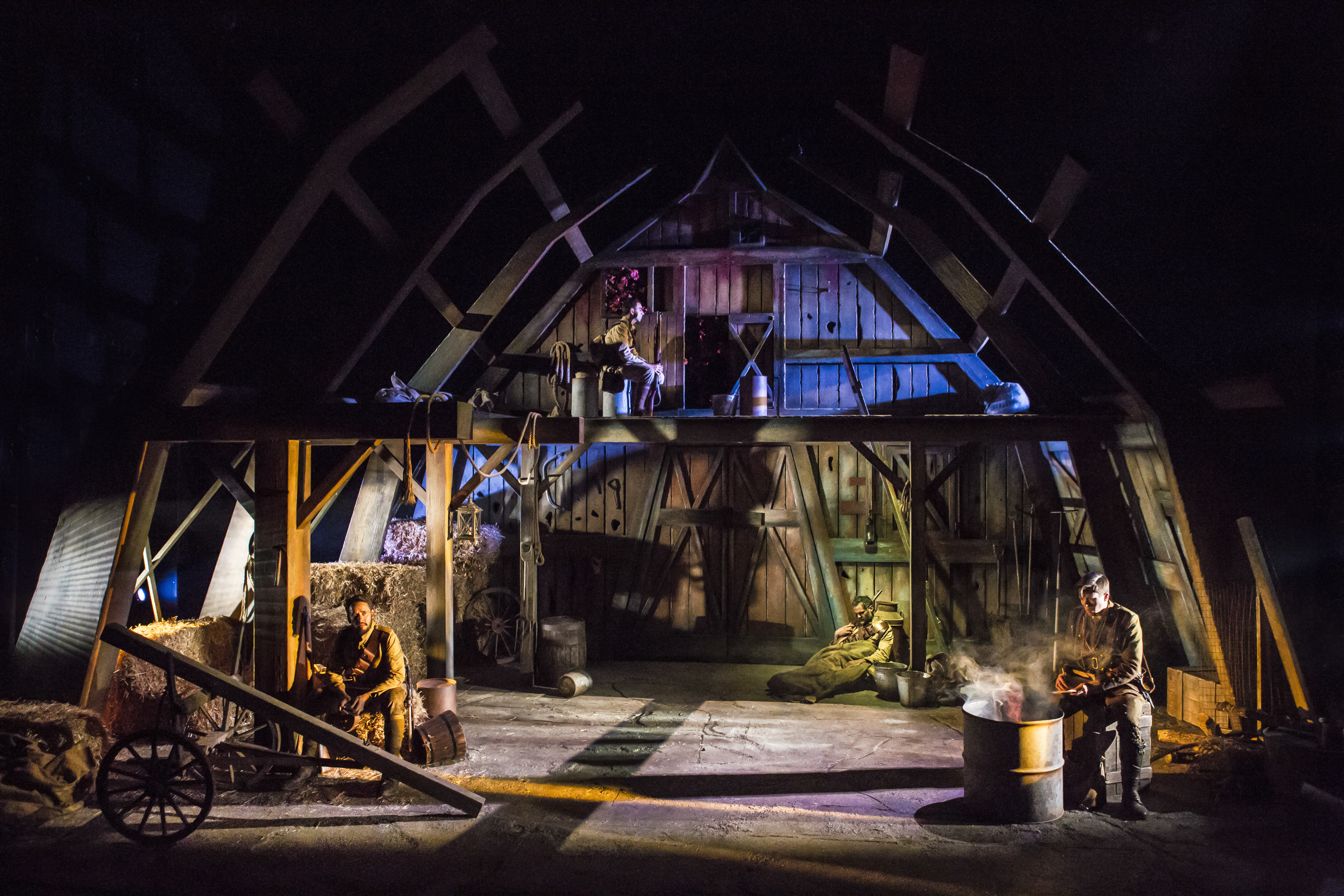
Looking through Prema’s CV, she’s been extremely busy. Whether it’s Sheffield Theatres, Bush Theatre, Leicester Curve, York Theatre Royal or Northern Stage, her designs have graced stages across the country. She jokes: “The irony is that I moved into a lovely flat not too long ago and I now spend my life on a train! At the end of last year, Trainline sent me an email saying I’d travelled 17.12 times the length of the UK – and that was just with them!”. So what is her proudest moment so far? She has a clear answer: “I worked on a play in 2016 called Wipers, written by Ishy Din and directed by Suba Das. It was designed by Isla Shaw who created this amazingly structured barn set. I then had this huge opportunity to bring this alive using the lighting, which I feel I did. It was one of those projects which ticked every box for me: new writing, brilliant creative team and a phenomenal set. It opened in Leicester before touring to Coventry and Watford and it felt really special to return to Watford Palace”. Other highlights for Prema include East is East at Northern Stage, her work at Hull Truck along with last year’s Of Kith and Kin (“I’ve always wanted to work with Rob Hastie and one of my favourite playwrights is Chris Thompson so it was like a dream come true!”). Last year also saw Prema work on her first ever panto: Beauty and the Beast at the Queen’s Theatre. She states: “I’d never even seen a panto before so I was able to approach the show with a fresh pair of eyes and even break the rules!”.
The cast and crew for Of Kith and Kin.
Alongside her work on-stage, Prema is an advocate for greater diversity off it. She comments: “I feel we in theatre could do more to reach out to larger pools of our community to widen our workforce. Whether it’s gender, race or class, we needed to be doing more to bring in new faces and personalities. A lot of people (like myself) didn’t even know this was an industry so we really need to ensure that we don’t lose what could be an untapped resource of talent”. As a result, Prema is working closely with the ALD, The Young Vic, Sheffield Theatres, UK Theatre and Arts Council England to explore the role of representation within the industry and ways in which theatrical organisations can be more proactive under the work of Stage Sight.
Our time together has come to an end and Prema has to run away to another meeting. She’s just finished on A Passage to India and is preparing to make another train journey tomorrow as she visits another theatre. She remarks: “It’s non-stop at the moment. I look forward to a quiet night in when I can remember what my flat looks like!”. From the sound of what she’s told me, Prema’s busy schedule won’t be quieting down any time soon.
Photos courtesy of the Andy Roberts, Olivier Awards, Pamela Raith, Prema Mehta, Sarah Hickson and the White Bear Theatre.
Comments Off on Leading Light with…Prema Mehta – Part One
Lighting Designer Prema Mehta
Today’s Leading Light has been a long time coming. I was meant to meet Prema mid-last year but her busy schedule (or as she describes it, “her life on a train”) meant we were unable to tie down a date. Therefore, when she emailed me at the start of the week saying she had a free afternoon, it was a case of dropping everything and ensuring that we finally sat down to have a chat.
As always with Leading Light, we start at the beginning. For Prema, this is Orpington in Kent – although her family’s origins extend far beyond the South East county. She explains: “Although I have Indian parents, the real irony is that they were both born in East Africa! I always remember asking as a child if that made me and my brother African! Mum lived in India for a short while before coming over to the UK. With dad, he was the first person of his family to come over to Britain. He made the journey with his father when he was only 16. Sadly, my grandfather died within two weeks of them arriving so you can imagine how daunting this was for him – a new country, a new language, a whole new culture and all by yourself”. Prema’s dad soon met Prema’s mother and they settled down in Orpington. Prema explains: “Although I was born in Orpington, I only lived there until I was six. When I was growing up, it was a completely different time and the area was slightly racist. Mum and dad tried their hardest to shield us from it but, in the end, they decided it was best to leave”. And their choice destination was the capital. Prema states: “Mum and dad chose London as it was much more multicultural and diverse. It was also a lot more welcoming and a much better place for me and my brother to grow up. That said, I do know that Orpington has changed dramatically since I was a child. It’s a very green area now and very much a commuter town”.
A very young Prema!
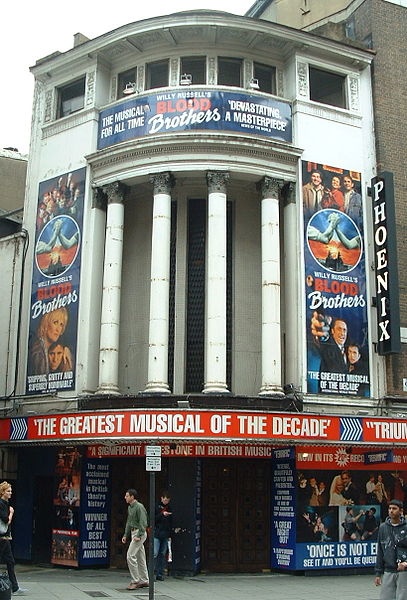
Growing up in London, there was a clear divide between Prema and her brother. She comments: “My brother was very medical and wanted to be a doctor whereas I was always the arty one. I loved painting and I loved art. That said, theatre was basically non-existent in my childhood”. In fact, Prema didn’t go to the theatre until she was 16. Her first experience was seeing Blood Brothers as part of a school trip. She recalls: “I had never stepped foot inside a theatre before but, come the end of the show, I was weeping! As an audience member, I had my world transformed and it completely blew away my expectations of what theatre was. It definitely sparked my interest so you could say that Willy Russell is the reason I’m sat here today!”. Although the show left a mark on Prema, it was mainly the performances as opposed to the technical aspects: “I wasn’t really aware of what was going on behind the scenes. But theatre was something I’d finally been introduced to”.
So what was Prema like at school? She’s quick to admit: “I was a bit of a teacher’s pet. I was one of those people who just got their head down and grafted – maybe I should have been a bit cooler! That said, I was never what you’d call a straight A student but I did work as hard as I could and gave it my all. That was an attitude that was instilled into me growing up; so long as I gave it my all and tried my best then that was more than enough”. During this time, it seems that the initial visit to Blood Brothers had begun to slowly influence Prema. She comments: “I decided to study Drama at GCSE and my interest continued to grow – to the point where I took Theatre Studies at A Level. I wasn’t exactly sure what interested me in theatre, but there was something about it. I was still quite interested in art and didn’t really know anything about the stage”.
Blood Brothers was Prema’s first theatre-going experience
But it seems that Prema’s fate may have been decided for her by the other students. She explains: “In Theatre Studies, everyone wanted to be an actor! Whilst I wasn’t entirely sure what I wanted to do, I knew for a fact I did not want to act. That said, I needed to get marks somehow. There was an opportunity to light and, without thinking, I just put my hand up! I didn’t realise it at the time but this was to be a key moment”. Prema soon became known as the course’s ‘go to lighting person’. She comments: “I ended up lighting everyone’s individual performances. For my own assessment, I lit a statue! My initial intrigue was encouraged by my tutor who was great. He gave me some money to hire five par cans, a couple of profiles, primary coloured gels and even a gobo! At the time, this was more than enough to play with and it really helped me experiment”. It seems that Prema’s interest in lighting stemmed from her early interest in art. She explains: “I felt that, with lighting, you had the opportunity to be creative. The stage was a canvas almost and you could bring your own style to it.
Prema was about to finish Sixth Form and had to decide what to do next. Her decision, similar to her first experience with lighting, was to come entirely by accident. She recalls: “I was sat at a computer and accidentally googled Guildhall – it genuinely was an accident! I had no idea what it was but the more I read about their Theatre Course, the more interested I became”. Yet this interest wasn’t met with support from those around her: “I was the Treasurer of the Student Union at my school (which was somewhat ironic as I hated maths). As a result, when the Principal heard that I was applying for drama school, she dragged me into her office and asked me what I was thinking! She said I should go into politics or economics which would lead to a ‘real job’”. That said, there was some support from Prema’s school: “My A Level tutor David Kinder was the one who said I should go to drama school. He clearly recognised something within me and wanted to encourage that. He also gave me some really great advice. He said in this industry, I needed to be like a shark. He said sharks always have to keep moving forward and, if they don’t, they sink. I think this is fantastic advice for anyone working in theatre and something that really stuck with me”.
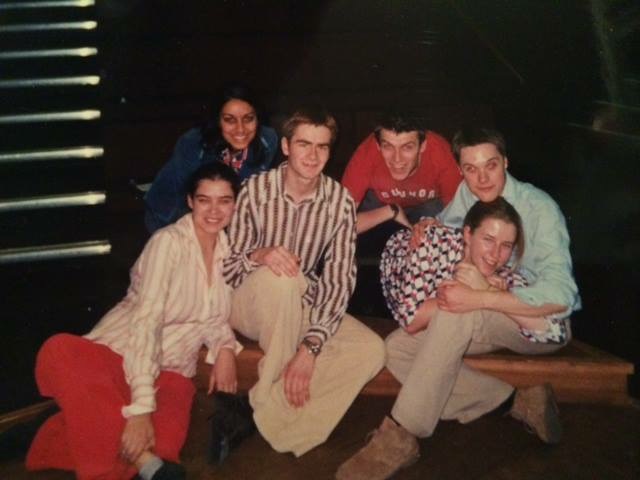
Prema during her time at Guildhall
Prema applied for Guildhall and was accepted. However, she still hadn’t made up her mind about lighting: “At the time, the course was very broad, which actually suited me. In all honesty, I didn’t know what careers existed in theatre and the course offered the opportunity to experiment in lighting, sound, stage management, props, wardrobe – basically everything!”. During her three years, Prema really found her feet – yet lighting was something that didn’t come naturally. She recalls: “There were a couple of guys in my year who were known as ‘the lighting people’. They were renowned for just being great”. Knowing she wanted to work in design, yet not sure in which field, Prema embarked on two work placements: one with renowned Set Designer Es Devlin and another with a certain Neil Austin (you can read his Leading Light here). Prema states: “I spent a week at the Donmar with Neil which was a very interesting experience. On the first day he said he was going to do his best to put me off lighting! What he actually meant was that he wanted to be completely honest and show me how tough this industry is and the reality of working in it. Looking back now, every word he said was the complete truth. Ultimately, this is a difficult career to carve, the money’s not amazing and you have to work exceptionally hard. Whilst I really appreciate what Neil said, it didn’t put me off! My problem (or possibly strength) is that when someone tells me how difficult something is, it usually makes me want to do it even more!”.
As a student, Prema went on a work placement with Neil Austin
While Prema’s placement with Neil was useful in terms of lighting, her placement with Es was to prove invaluable in terms of her approach to the rest of her career. Prema remarks: “When I worked with Es, she was just peaking. She taught me how to be both a freelancer and a woman in the industry. Yet this wasn’t by sitting me down and reeling off a list of guidelines. It was more through observation. I watched the way she behaved and dealt with situations and how she held herself. At the time, it was great training but I don’t think I realised that until much later on”.
However, set design wasn’t for Prema. She remarks: “My perception of set design was that you could put together a model prior to a production and know what it would look like from the get go. With lighting, it was a bit scarier. You don’t really know what a space is like and how this will respond until you’re in it. It was much more of a challenge and, when you’re 21, you’re all up for that. My opinion was the scarier the better as I had nothing to lose”. With this mentality, Prema returned to Guildhall where she would go on to light a couple of shows. She comments: “I was determined to light some productions and quickly became bitten by the bug. The more I lit, the more I realised that I now wanted to be a lighting designer. Come the end of the three years, I had learned an incredible amount and was ready to start building my career”.
We use cookies on our website to give you the most relevant experience by remembering your preferences and repeat visits. By clicking “Accept All”, you consent to the use of ALL the cookies. However, you may visit "Cookie Settings" to provide a controlled consent. View our View our Privacy Policy
This website uses cookies to improve your experience while you navigate through the website. Out of these, the cookies that are categorized as necessary are stored on your browser as they are essential for the working of basic functionalities of the website. We also use third-party cookies that help us analyze and understand how you use this website. These cookies will be stored in your browser only with your consent. You also have the option to opt-out of these cookies. But opting out of some of these cookies may affect your browsing experience.
Necessary cookies are absolutely essential for the website to function properly. These cookies ensure basic functionalities and security features of the website, anonymously.
Cookie
Duration
Description
cookielawinfo-checkbox-analytics
11 months
This cookie is set by GDPR Cookie Consent plugin. The cookie is used to store the user consent for the cookies in the category "Analytics".
cookielawinfo-checkbox-functional
11 months
The cookie is set by GDPR cookie consent to record the user consent for the cookies in the category "Functional".
cookielawinfo-checkbox-necessary
11 months
This cookie is set by GDPR Cookie Consent plugin. The cookies is used to store the user consent for the cookies in the category "Necessary".
cookielawinfo-checkbox-others
11 months
This cookie is set by GDPR Cookie Consent plugin. The cookie is used to store the user consent for the cookies in the category "Other.
cookielawinfo-checkbox-performance
11 months
This cookie is set by GDPR Cookie Consent plugin. The cookie is used to store the user consent for the cookies in the category "Performance".
viewed_cookie_policy
11 months
The cookie is set by the GDPR Cookie Consent plugin and is used to store whether or not user has consented to the use of cookies. It does not store any personal data.
Functional cookies help to perform certain functionalities like sharing the content of the website on social media platforms, collect feedbacks, and other third-party features.
Performance cookies are used to understand and analyze the key performance indexes of the website which helps in delivering a better user experience for the visitors.
Analytical cookies are used to understand how visitors interact with the website. These cookies help provide information on metrics the number of visitors, bounce rate, traffic source, etc.
Advertisement cookies are used to provide visitors with relevant ads and marketing campaigns. These cookies track visitors across websites and collect information to provide customized ads.


 Sankara is a new play telling the story of African hero and former President of Burkina Faso Thomas Sankara. Written and directed by Ricky Dujany, it recently ran at London’s Cockpit Theatre and featured a live music performance by Levi Roots. As a leading lighting supplier to London theatre, White Light was called upon to provide the equipment.
 To achieve this, Salomé approached the Hire Team at WL. She explains: “I wanted to recreate an immersive and quite naturalistic look, taking inspiration from my travels in West Africa. As a result, I decided to go for a bare stage with sand on the floor, with only a couple of props, and use light as the most important scenic element. The biggest challenge was to create an all-round projection which I managed to achieve by hanging vertical cycloramas in three points around the stage: two of them being an entrance for the actors. This created a strong parallel between the words of the actors and the real footage.
 The fact that the play was in the round meant that Salomé had to configure her design accordingly. She comments: “Lighting in the round is challenging, especially with a dynamic play such as this which is rich with movement and effects. In addition, I had to ensure that the actors were well lit throughout whilst sustaining the dramatic urgency. That said, I decided to use this intimacy to my advantage and actually drew on the house lights for one scene in which Sankara delivers a heartfelt monologue”.