

Leading Light with…James Farncombe – Part One
Comments Off on Leading Light with…James Farncombe – Part One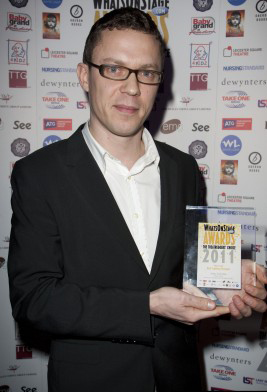
James Farncombe
Our Copywriter Adam went to meet James Farncombe…
It’s a blustery Monday morning as I exit the tube at Leicester Square. As I walk up the stairs, I find myself surrounded by posters for Yerma – the Olivier Award-winning play that ran at the Young Vic last year. It’s returning this summer and tickets sold out in a matter of hours. It strikes, as I emerge into daylight, that the lighting designer for the show is a certain James Farncombe – and that’s who I’m meeting for this month’s Leading Light.
As always with Leading Light, we start at the beginning. For James, this is in North Shropshire. James states: “I was born in Shropshire and lived there until I was around nine years old. Then my Dad changed jobs and we moved down to Reigate in Surrey”.
So how theatrical was James’ childhood? He explains: “Mum and dad were keen members of the Guildbury Players Amateur Dramatics Society. However, they had moved to the Midlands and mainly knocked all that on the head by the time I was born. That said, I have an early memory of seeing my dad in an am dram in my school hall. He was the villain and got shot in the final scene. He had a little red felt patch in his shirt pocket that he had to whip out to represent the bullet hole. I think he dropped it and I remember being in stitches. They also took me to see a fair few professional shows, so I was very much aware of the theatre as a child”.

A younger James prior to his lighting days…
There were some other early clues about James’s eventual vocation: “As a very small lad, I was obsessed with candles. I made endless, elaborate drawings of them and insisted that the family ate dinner by candlelight for as long as they could bear. When I couldn’t have real candles, I’d make my own out of toilet roll tubes with a bit of cotton wool stuffed in the top and position them in dark corners. I also remember having a little set of Lego bricks with lights in, powered by a little battery pack. You could build them into your own Lego house or spaceship or what-have-you. I loved the little shadowy worlds you could create”.
After three years in Surrey, there followed another significant alteration in James’ life: “We moved onto a narrow boat when I was 13 and lived aboard for two years, travelling the waterways of the UK. For me and my two younger brothers, it was quite an adventure. We were all home schooled. My folks used to say ‘if the weather’s bad, we’ll conjugate our verbs. If it’s sunny, we’ll go canoeing’. The second summer afloat was the hottest summer on record for 75 years – very few verbs were conjugated. It was quite something to see so much of the British Isles and, at a young age, I became accustomed to the idea of moving around and having this transient lifestyle”.

James’ uncle was a certain Paul Pyant
The narrowboat life wasn’t to last forever and James found himself back in North Shropshire by the time he was 15. This also meant a return to school; something which James embraced. He recalls: “I was ready to go back to school – I’d discovered girls and team sports”. It was also at school where James started to get involved with the school drama group. And similar to a lot of the other lighting designers I’ve interviewed, James started life on stage as opposed to behind it. He recalls: “I was a policeman in the school panto. I upstaged everyone by mugging dreadfully. Around this time I also started playing and singing in bands, so I must have had intentions of being onstage in some way. However, the following year, I found myself operating the lighting for the school production, using a little two preset desk, positioned on the fly floor. Our drama teacher, Mrs Hughes, sat in the hall and called out the channels. There was a handful of Patt 23s front of house and some coloured battens overhead. I have no idea what it looked like. But I remember the smell of hot gel and burning dust rising off the lights and the excitement backstage…”.
It was also around this time that James has his first encounters with professional theatre, courtesy of his uncle – a certain Paul Pyant. He recalls: “I knew Uncle Paul was a lighting designer so I was always aware that it was a job that people did. He was the cool uncle, always travelling to glamorous places”. James remembers: “One year, he came home with a little battery tester for the Christmas tree lights. We tested each bulb until we found the one that didn’t work and the tree lit up. It was a pivotal moment…” Due to Paul’s long association with Glyndebourne Opera, James saw a number of productions there during his childhood. This inevitably contributed to his interest in theatre; in particular what was happening backstage. He states: “When we went to see an opera at Glyndebourne, we had access to a secret world. We’d sit in seats behind the lighting operator. I remember staring at the Galaxy desk, the house lights going down, seeing the little red lights trickle up the desk as the cues ran and hearing the muffled voices of stage management over cans. I was mesmerised”.

Death in Venice at Glyndebourne was part of James’ work experience
One particular Glyndebourne Opera that James remembers was Oliver Knussen’s Where the Wild Things Are “back in something like 1984. Following the show, we were given our own private backstage tour. I remember a rabbit warren of backstage corridors in the old Glyndebourne building. I think at some stage we had to go outside to cross the roof. We encountered the massive Wild Things costumes hanging motionless in the darkened wings. The whole atmosphere was completely magical. It was hugely significant for me to return there last year to make my debut lighting for that company, albeit in the modern and, I think, more exquisite incarnation of that venue”.
In 1989, in his last year at secondary school, James embarked on a week’s work experience with Paul Pyant. He recalls: “Paul was lighting Street Scene at the ENO, Death in Venice at Glyndebourne and Strange Meeting for Northern Ballet up at Buxton Opera House. I sat in on lighting sessions for all three productions that week. There was a lot of travelling and I still don’t know how he managed that kind of schedule. It was an amazing experience though.
“I was 16 and while I had an interest in theatre, I wouldn’t say it was a passion yet. I was obsessed with playing guitar. My first band was called Burnt Offerings. We wrote lots of noisy songs but had no idea how to go about getting heard. My poor parents and our neighbours heard plenty, I’m sure”.
Since a young age, James always enjoyed drawing and painting. Theatre still hadn’t fully taken hold in his imagination, so he took Fine Art at A Level. He comments: “At the time, it seemed like a logical step, but I still had no long term plan. Meanwhile, I became friends with some of the students on the Drama course. When I mentioned I had an uncle who worked in theatre as an LD, I sort of became their lighting designer by default. I remember a rather confusing show featuring an octopus and a rather raucous version of Grease. I’ve never been so nervous as I was preparing to operate the lights for those productions!”.
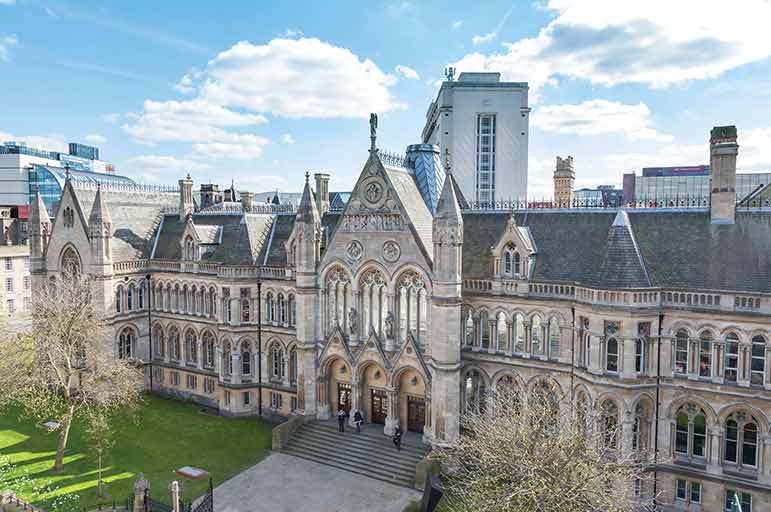
Nottingham Trent University where James studied Contemporary Art.
But still, James didn’t take lighting seriously as a career option. He soon found himself on his way to Nottingham to study Contemporary Art. Yet, even in Nottingham, it appears that the Gods of theatre were conspiring to get him back behind a lighting desk. James explains: “I had really taken to student life in Nottingham and I remember in our first year there was the Nottingham Dance Festival. Our tutor came in and said that they needed some volunteers to help with the technical setup. In a fit of enthusiasm, I put my hand up before looking around and realising there was just me and one other person. Despite there being only two volunteers, it was a really useful experience. We had a small venue on campus called the Powerhouse that hosted part of the festival. It had a little rig of Patt.23s, Silhouettes and Starlets along with a handful of Cantata profiles. Performers included the likes of Wayne McGregor, Russell Maliphant, DV8 and Javier de Frutos so real class acts. That’s where I also first encountered the work of people like Michael Hulls and Lucy Carter. I remember Lucy brought a show that was entirely side lit – I’d never seen anything like it. It was also the first time I had done any sort of rigging from a plan and I was learning from scratch on the job. I remember trying to plot for Lucy on a Strand MX desk and I think I wore out the little rubber cursor button! It was all rather a baptism of fire but I loved it”.
James would continue to help in his second year and eventually started taking on a more artistic role: “The technician there was an excellent chap called Pete Clifton. He taught me a lot of the basics, and it was really during this period that the theatre bug took hold. What Pete also gave me (and perhaps most importantly) was the freedom and time to experiment”. It was during this time that James would co-found a theatre company: “We called ourselves Eleventh Hour. I was co-writing shows, producing and performing as well. We all did a bit of everything”.
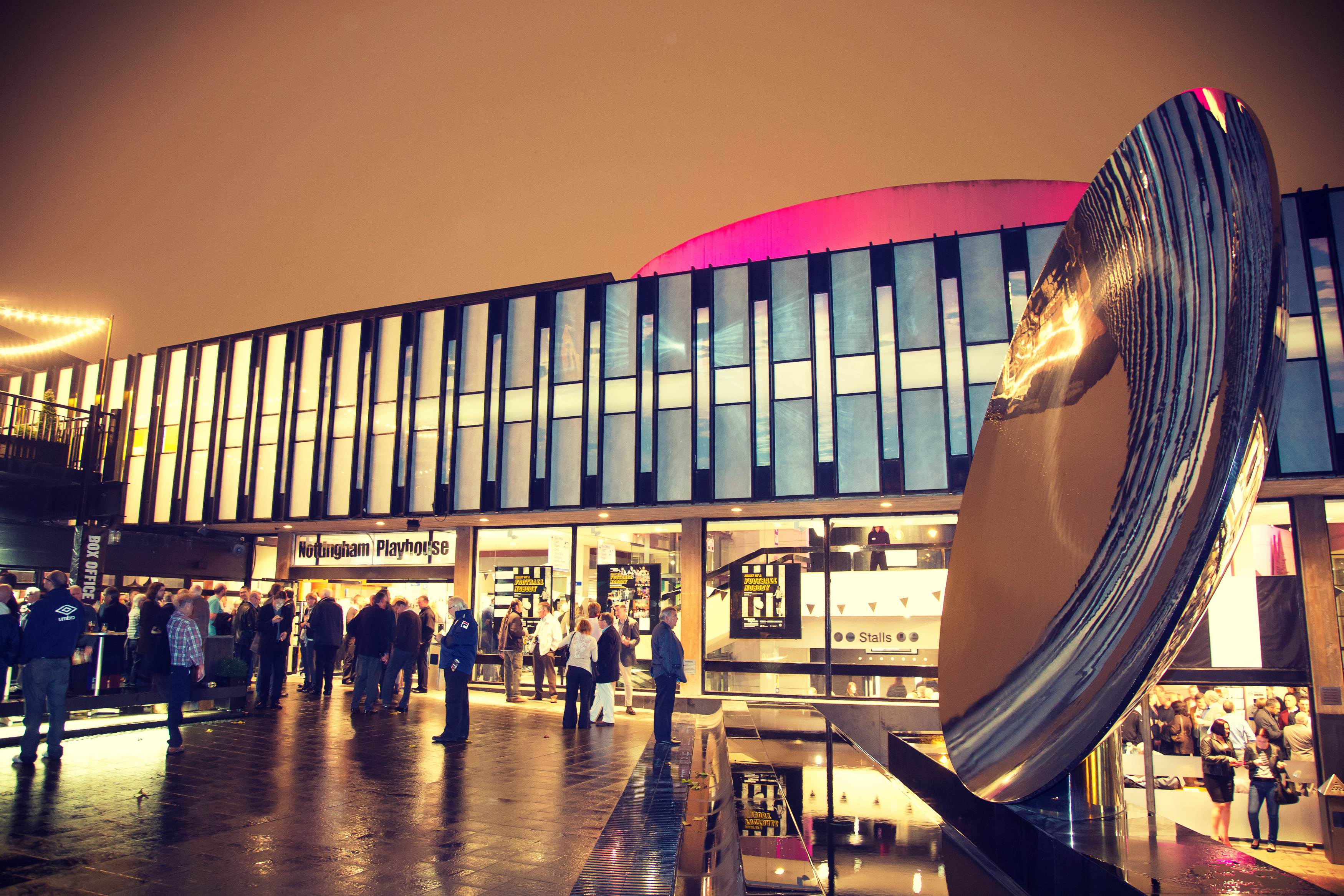
The Nottingham Playhouse would be James’ home for three years
James finished university and decided to stay in Nottingham. Thanks to some Arts Council funding, he continued to work on a couple more shows with Eleventh Hour “before we all went our separate ways”. Following his previous work at the Nottingham Dance Festival, he was asked to join as their Technical Manager. James comments: “I took the job at Nottingham Dance Festival but I honestly had no idea what a Technical Manager was!”. In this instance, it meant looking after the technical requirements of five venues across the city. Safe to say, it was another very steep learning curve. He was also given the opportunity to design for a couple of small shows as well. While James enjoyed working at the Dance Festival, he wanted to broaden his horizons slightly: “I remember my friend Jess had just started working at the Nottingham Playhouse. She said she knocked on a door, asked for work and they had something available. She told me I should do the same, so that’s what I did”.
It was here that James would meet the venue’s Chief Electrician Jeremy Roberts, who is now Regional Manager for ETC. Jeremy offered James some casual work; the first of which being the get-out of a pantomime. James recalls: “The interview went something like this: ‘Are you scared of heights? Are you unsure which of these pretty coloured wires can fry you? If the answer to either of these is yes, show yourself out’. But in the end it was great working for Jeremy. He ran a really tight ship, and I learned so much from him. But I was in at the deep end to start with. On my first day I learned the difference between 110v and 240v par cans the hard way. I set out a row of about 20 cans, rather quickly and efficiently, and feeling somewhat pleased with myself, I asked Jerry to flash the bar out. Somehow the whole lot blew immediately. My heart sank. But according to Jerry, my first real mistake was making a good coffee for everyone at tea break. Making the coffee quickly became my job for the next few months…”.
Click here to read Part Two.