

Leading Light with…Rick Fisher – Part One
Comments Off on Leading Light with…Rick Fisher – Part One
The man himself – Rick Fisher
It’s a cold winter’s morning in London outside the Playhouse Theatre. Flightcase after flightcase is being wheeled inside the venue which sits on the bank of the Thames, with this being the get-in for the latest revival of An Inspector Calls. The show is once again gracing the London stage in a completely new venue. What isn’t new, however, is the creative team which includes a certain Rick Fisher as Lighting Designer. It is Rick I’m here to speak to as part of our Leading Light feature. We make our way through the building and have to navigate across an extremely busy stage area. Rick is known to everyone here and beams with pride as the set is being constructed: “This was a magnificent show 25 years ago and is still as remarkable today. I never thought it would last this long but that’s theatre – it often takes you by surprise”. The biggest surprise for me though is Rick himself. With arguably some of the biggest theatre credits to his name, he is an extremely humble man. Yet the more he talks about his work ethic and past projects, the more I begin to appreciate why he has made his name as one of the world’s most renowned lighting designers.
Unlike most of the established lighting designers based in the UK, there is something fundamentally different about Rick: he’s American. He was born in Philadelphia, USA and grew up in the city’s suburbs. Despite living in suburbia, he still managed to engage with theatre from a very early age. He recalls: “Some of my earliest memories are seeing shows with my mother. She loved to go to the theatre and would always take me along”. It also seems that Rick’s home state of Philadelphia played a key role in his theatrical upbringing: “Philadelphia was known as a ‘try-out’ town, in the sense that many Broadway shows would come here first before heading over to New York. It would also receive a lot of regional touring productions, including big musicals”.
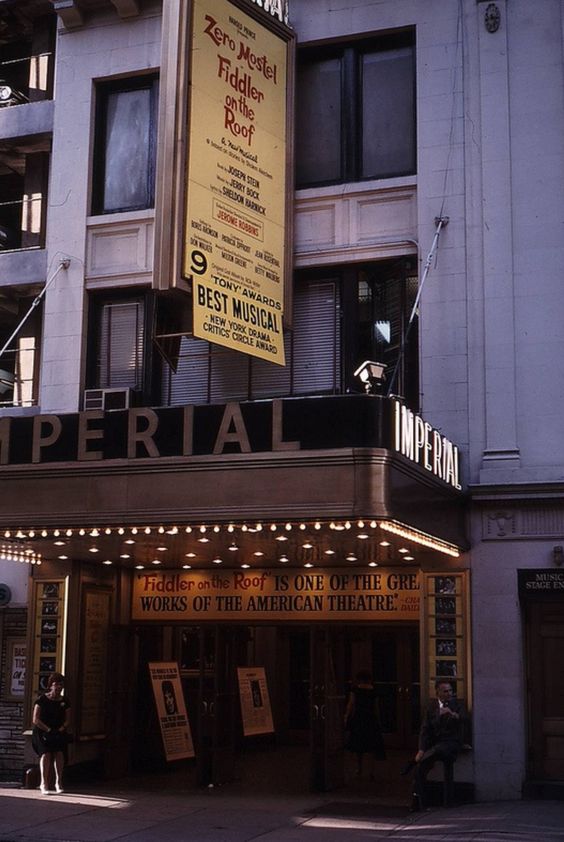
Fiddler on the Roof at the Imperial Theatre on Broadway.
Whereas Rick was regularly seeing shows close to home, it was one particular trip to New York that really cemented his passion for theatre. He comments: “I remember we went away for a family weekend in New York and saw two shows: Hello Dolly and Fiddler on the Roof. Although we were sat right at the back in what I’d call ‘nose-bleed seats’, there was something mesmerising about both shows. I really was captivated by the lights, the performance and the whole spectacle of it. I just loved to see a story being told well on stage (I still do!) and knew after that weekend that I really wanted to work in theatre in some capacity”.
Whereas most of the lighting designers I’ve spoken to have dreaded the notion of stepping out onto stage, this was something which Rick initially embraced. He comments: “For a while, I actually wanted to be an actor. I remember during my time at Dickinson College auditioning for numerous shows and, although I was frequently cast, this was either a non-speaking role or someone who spent the majority of the time stood to the side!”.
During his time at college, Rick decided to work in Summer Stock (equivalent to a weekly rep summer season in the UK). Here he worked with the backstage crew on a variety of shows. He recalls: “I was part of the backstage crew but we were essentially slaves! We used to work 80-90 hours per week and would do absolutely everything, from building the set to working the lights to washing the cast’s clothes. And whilst it was (very) hard work, we developed a family bond within the team; something I have experienced time and time again in theatre”.
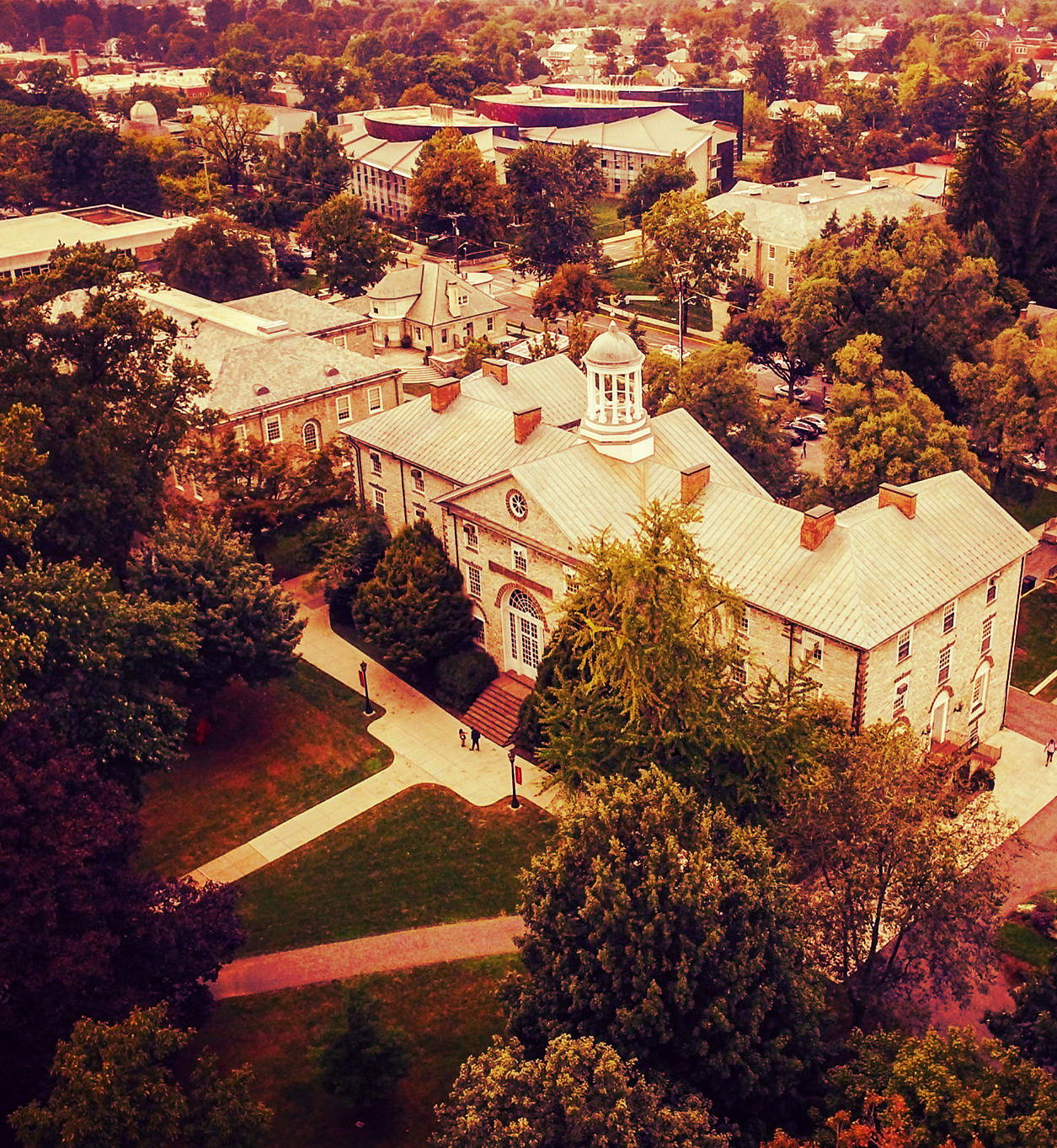
Dickinson College where Rick studied
After Summer Stock was over, Rick returned to college to continue with his studies. However, his experience of working within an actual theatre space completely altered his outlook towards academia. He states: “After Summer Stock, studying theatre seemed almost amateurish – an imitation after experiencing the real thing. What I loved about working was the hands-on experience I received. It was extremely practical and something we didn’t get the chance to receive at college”.
While Rick enjoyed his practical experience, he wasn’t enamoured by the notion of lighting: “I was actually quite resistant to getting involved with anything to do with lights. I found the gel numbers both confusing and overwhelming!”. As part of his college programme, Rick took part in an exchange programme which brought him over to London. He was meant to join the Stage Management course at LAMDA, confessing: “I knew I wanted to work in theatre and, at that moment, thought it might be through stage management”. However, the exchange programme with LAMDA wasn’t meant to be, with the course falling through soon after Rick’s arrival. Undeterred, he decided to take a Stage Management course at City Lit instead. It was during his time in the UK that Rick fell in love with British theatre. He recalls: “I just loved the diversity of theatre in London. Whether it was the West End, the fringe venues or the more obscure performance spaces, there was just such a variety that wasn’t available anywhere else”.
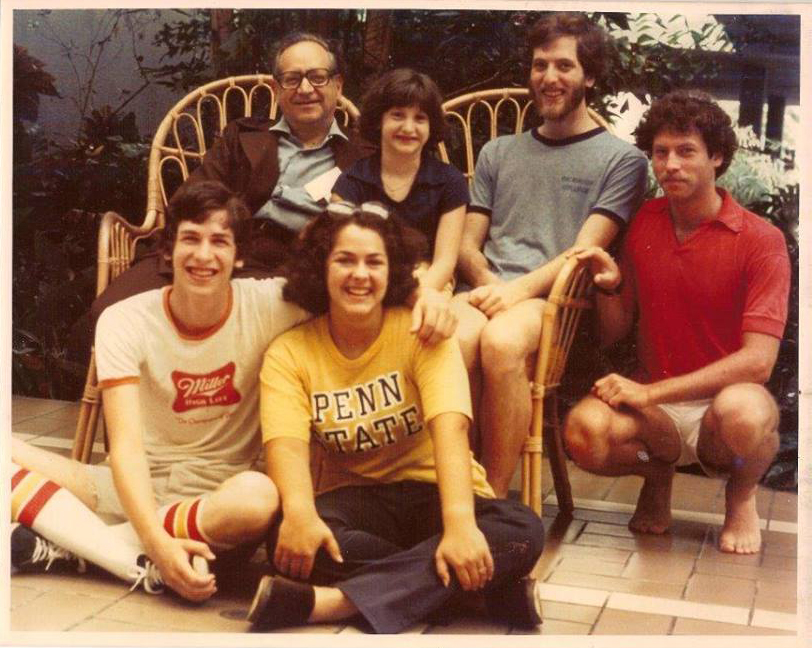
Rick (second from right) with his family back home in Philadelphia
Whilst in London, one of Rick’s first jobs included running a follow spot on Kidnapped at Christmas at the Shaw Theatre. He recalls: “Despite now gaining some experience with lights, I wasn’t fully converted to this world just yet!”. Following his six months in London, Rick returned to the States to finish his degree. Yet, back in his home country, Rick’s bias towards the city soon became palpable: “I basically told everyone how great London was and how its theatre scene was much better than ours!”.
Such was Rick’s passion for the London theatre scene that he quickly returned to the capital after graduating. The year was 1976 and his plan was to stay in the UK for six months in order to build on his previously established contacts. 40 years later… He recalls: “I started working on the fringe scene, doing whatever job I could find. This would include fit ups, props, lighting, scenery and even cleaning the loos. Whoever tells you it’s all glam is a liar!”. Some of the venues Rick worked at included the Overground in Kingston (which is no longer there), the Oval House and the Bush. It was in these venues that he started to develop a real interest in lighting. He comments: “Back then, unbelievably, freelance lighting designers were actually quite rare. Therefore when a production came into one of the venues, I would just help out with the lighting elements”.
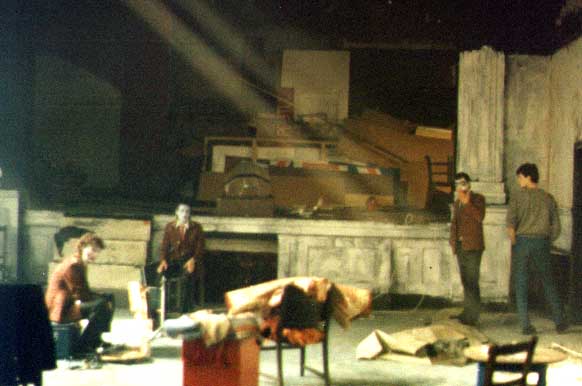
One of the few remaining photos of the Overground Theatre in Kingston
The other major difference in the world of theatre lighting was the equipment. Rick recalls: “We worked within very limited means with extremely clapped out equipment. Looking back, this was actually a good thing as it meant the lights had to do a lot of work. I really had to get the most out of the equipment which, on reflection, pushed me as a designer. At the Oval House in particular there were a lot of performance pieces where the lights had to tell a story and create an atmosphere so every show was an exciting challenge”.
During this time, Rick was officially still a stage manager. However, he noticed that lighting designers received a higher credit in the programme so insisted that he now received this billing! He comments: “Although I’m a lighting designer, I differ from the traditional definition in the sense that I don’t have the technical knowledge that most designers have. Similarly my knowledge of electronics (both then and now) was extremely limited and I certainly couldn’t programme a desk! But I knew what I wanted to achieve on stage, and I try to be a good collaborator which are the most important attribute to have”.