

Leading Light with…Lee Curran – Part One
Comments Off on Leading Light with…Lee Curran – Part One
Lighting Designer Lee Curran
Our Copywriter Adam sat down with lighting designer Lee Curran…
It’s a sweltering day in London as I walk along Baker Street in a desperate hunt for the Pret a Manger. I soon realise that I’m only a ten minute walk from Regent’s Park Open Air Theatre, where this year’s season has just begun. In a couple of months’ time, the stage will see the return of last year’s runaway success Jesus Christ Superstar which was nominated for a string of awards; including an Olivier nomination for Best Lighting Design. Today, I’m here to meet the Lighting Designer himself, Lee Curran, who has agreed to sit down and talk to me about his fascinating career.
As always, we start at the very beginning and, for Lee, this is Liverpool. Yet despite being born and raised in the city, at aged ten, he would move south to Norwich. He comments: “My dad was a civil servant and got promoted, so we upped sticks. While I was sad to leave Liverpool, my life may have been very different had we stayed – I’d just been offered a choirboy scholarship at the Liverpool Cathedral School”. That said, Lee wasn’t in Norwich for long. By the time he was 13, his father’s work saw them move once again; this time to Bristol. Whereas other designers I’ve spoken to had a lifelong affiliation with theatre, Lee confesses he was much more interested in football during his teenage years (he still supports Liverpool FC): “It’s often difficult being the new kid in class – something I experienced twice. It definitely reduced my confidence as it takes you longer to settle. But playing sports, especially football, was a good way to gain acceptance”.
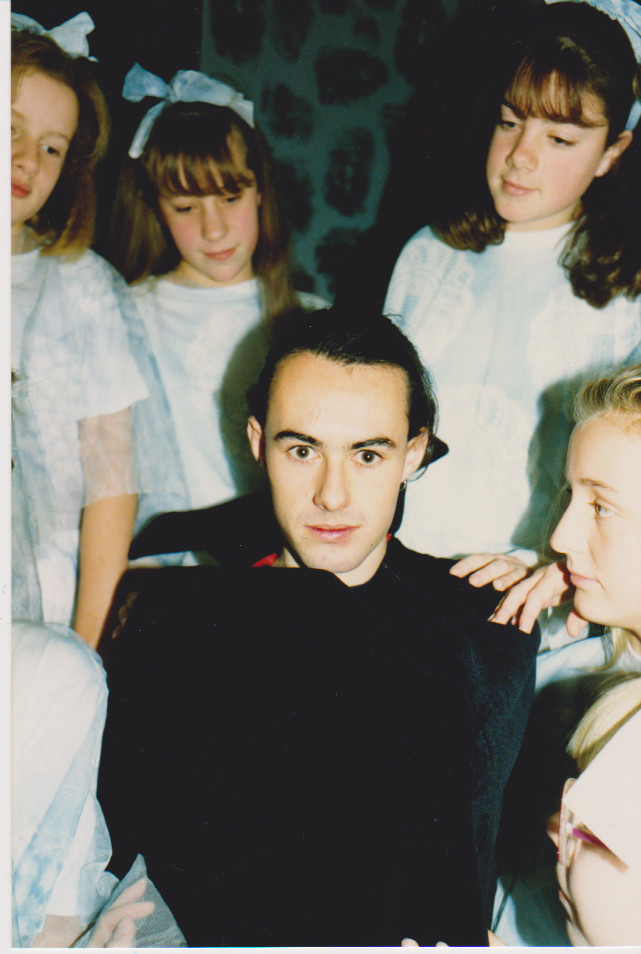
A young Lee starring in a school production of Dracula
Even approaching his A-levels, there was little sign of interest in theatre: “I think everyone expected me to go into science and computing. I was good at both as well as being a huge fan of computer games. I remember my school held a pre-Sixth Form week to give us a taste of life as an A Level student. You could try sample lessons of any subject the school offered, so I thought I should try as many I could, and I found myself more interested in the arts subjects than the sciences. My parents were actually quite supportive, if a bit concerned, but my teachers weren’t too pleased at all. As a result, I ended up taking on a ridiculous compromise of Physics, Maths, English and Theatre Studies. Inevitably, I didn’t do a lot of work on Maths and Physics…”. Part of his Theatre Studies course saw Lee make several trips to the Bristol Old Vic Theatre. He states: “My earliest memories of actually seeing a production are from A Long Day’s Journey Into Night starring Timothy West. Our group was lucky enough to go on stage and see the set. I have this vivid memory of looking through the huge window on set and seeing all of the lights used to create the various daylight effects. I had no idea what they were at the time, but now I know there were a lot of Patt 743s up there… Years later I did a bit of googling and found out it was lit by Mark Henderson”.
Lee soon finished his A Levels and university beckoned; having now decided that theatre was where his interests lay. He comments: “Thankfully my parents were extremely supportive of my decision; despite the fact none of us actually knew what my career was going to be”. Lee made the move to the Big Smoke and started a degree in English and Drama at Queen Mary University, London (then Queen Mary and Westfield College). He comments: “It was a strange course in many ways as it was a real mix of those who really wanted to be actors, those who didn’t and then people like myself who were still open to different career paths”. It was during this time that Lee had his first experience of lighting a show: “They had just opened a brand-new studio theatre and the students decided to start putting on their own productions. My mate was putting on a play he’d written called Free Beer, and I ended up doing the lighting more or less because no one else wanted to. I remember binge reading Francis Reid’s book in the library, and that was my first lighting design (it was also the start of my mate’s writing career – he moved to Australia after graduating and became a successful playwright!).
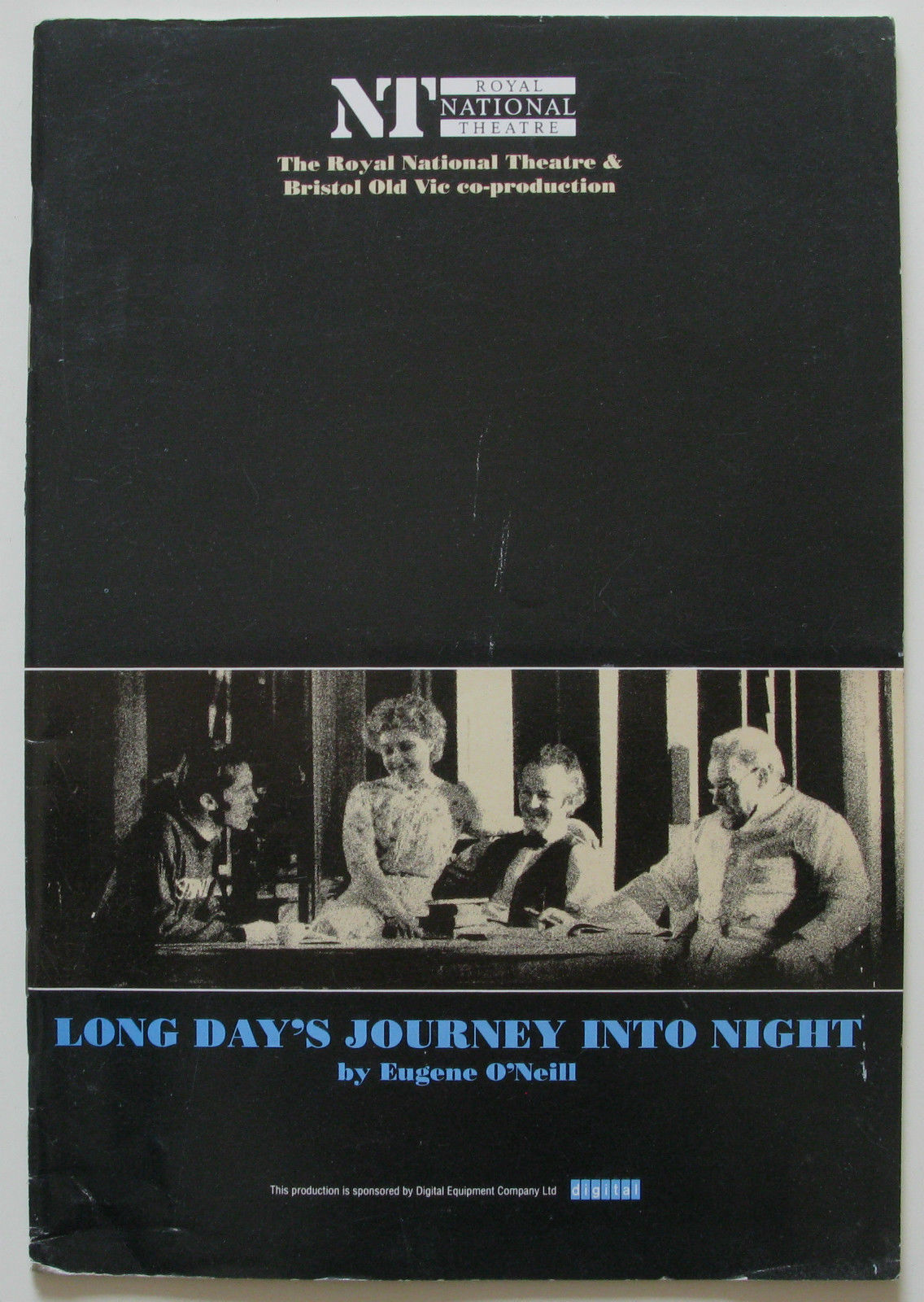
A Long Day’s Journey Into Night was Lee’s earliest memory of theatre.
Lee continues: “I must have done an ok-ish job as I was then asked to light other shows; something I kept doing throughout university”. It was during his second year at university when Lee lit a production of Equus at the National Student Drama Festival that he had a moment of realisation: “It occurred to me that lighting was the perfect intersection between art and science. It’s a combination of abstract creative thinking and practical considerations of angles, power, rigging, etc…”. University was also to offer more opportunities for Lee. In his final year, they employed a lighting technician, Gregor Turbyne, who had worked at the West Yorkshire Playhouse. Lee comments: “Gregor thought I had some talent for it. He gave me confidence and advice to make me realise, for the first time, that lighting could be a viable career path”.
However, there were still obstacles to overcome. He recalls: “Once I finished, I was in a bit of a quandary. What I had studied was a degree as opposed to a vocational course. I didn’t have a strong enough technical grounding to start working in a theatre’s LX department. As a result, finding opportunities was more difficult”. As a result, Lee had to seek out what work he could that related to lighting. He states: “The Laban Centre (now Trinity Laban) offered these posts called Graduate Technical Assistants. You received a bursary to work in the school, giving technical support to lectures and talks, lighting student shows and touring with the student company. You also got to work on incoming professional productions. It was a great learning curve as many professional dance companies used the theatre to preview shows. Prior to this, I knew nothing about contemporary dance so it was a bit of a baptism of fire!”. Towards the end of his year at Trinity Laban, a show called The Stop Quartet played in the space, which featured choreography by Jonathan Burrows and lighting by Michael Hulls. Following its London run, the show was to embark on a tour and the Technical Manager at Laban, Steve Munn, had a recommendation for the company: “Steve was a great mentor to me during that year and afterwards. He recommended that I go on tour with the show and I did. What happened next was a completely unplanned career excursion”.
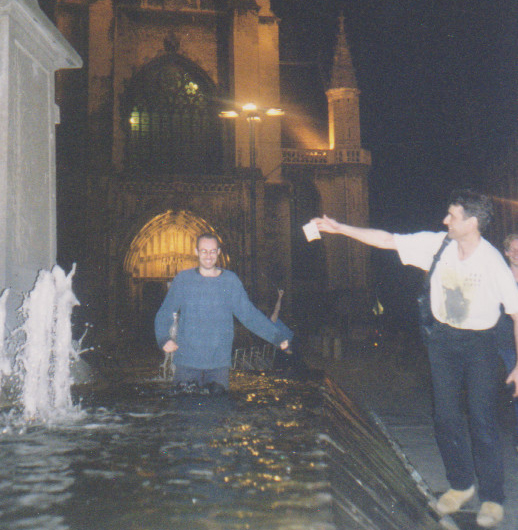
Lee having fun whilst on tour.
At the tender age of 22, Lee found himself travelling across Europe for the next four years. He comments: “It was just an amazing experience driving a van all over Europe. Not only did I learn about lighting but it was also character-building, visiting venues in places I’d never heard of! I remember one time we turned up at a festival in Estonia. We’d been negotiating requirements with them for weeks and though we toured some of our own lights (ETC Source Four Profiles which were some of the first in the UK, I believe), they needed to provide other fixtures. So we turned up at 11pm to do the overnight rig and focus. The Head of Lighting was sat there with a glass of red wine in his hands and casually told us the venue didn’t have any of the equipment we wanted. When we asked why, he simply shrugged his shoulders and offered us some wine instead! Trying to make the best of a bad situation, we walked on stage to see what kit they had. They had lights that looked like Patt 243s – except they were literally welded onto the bars with this weird tubing coming out of the back of them. They were like prehistoric moving lights, with very rudimentary pan, tilt and zoom mechanisms. So far, so interesting, but every time we attempted to zoom, the bulbs blew up…At the next venue, they had no access equipment and expected us to bounce-focus everything. As the design featured a very precise, Mondrian-esque pattern of lines, that really wasn’t an option. We came back after lunch to see these builders carrying scaff towers onto the stage. Apparently the local promoter had bribed them to let us use their towers to focus!”.
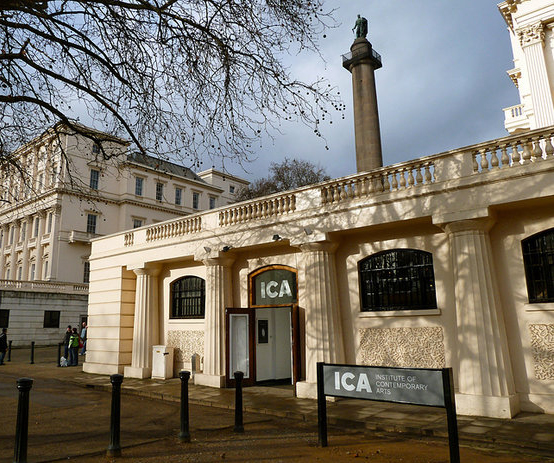
The Institute of Contemporary Arts where Lee worked as the Technical Co-ordinator for ten years.
Thankfully experiences like this were a rarity but touring life was extremely useful to Lee: “On tour, I saw completely different spaces, different approaches to working and different ways to use equipment to create certain effects. It was a fantastic learning experience”. Meanwhile, he continued to pick up the occasional lighting design gig for dance companies at venues such as The Place, Jackson’s Lane, and the Southbank Centre.
After a few years on the road, Lee had grown tired of touring: “I applied for a couple of permanent jobs in London. One was Lighting Technician at the Royal Court and the other was Technical Coordinator at ICA. The day after my ICA interview, they called me and offered me the job. I hadn’t heard back from the Royal Court yet, but for some reason I decided to take the ICA job anyway. Ever since I’d been at uni, I’d had the goal of working in the lighting department of a producing theatre, so I have no idea why I made that decision(!). However, I loved working there. We did theatre, live art, dance, club nights, gigs, digital interactive and telematic work, webcasts, installations and all sorts of experimental performances”. It would also turn out that the role at ICA was to be for the long term. Lee states: “I stayed there for twelve years and during that time became the Technical Manager. In hindsight, it was fantastic and fertile ground on which to be developing as a lighting designer. My experience here of working on such an eclectic mix of art showcased so many styles of lighting to me and demonstrated that there wasn’t just a singular way of doing things. At the same time, I was still lighting shows on the side and developing my own methods”.