We sat down with Production Crew Co-ordinator Caz Caddick to find out more about her role at White Light…
What does your role at White Light entail?
I am the Production Crew Co-ordinator at White Light which is pretty much what it says on the tin. Rather than supply the equipment for a job, I supply the people instead! I work within the Production Department and, as a team, we deliver the technical solutions to corporate events all across the country. We have a range of freelancers on book and, over the years, have assembled a group of people who we know have individual expertise and skills which can enhance our clients’ events. Prior to my role as Crew Co-ordinator, I was a Site Technician so I have a first-hand knowledge of where people’s skills lie; something which has proved beneficial on jobs with very specific briefs. Ultimately, by assembling the right team, I am able to make the job happen and the client happy.
What does a typical day look like for you?
There is a simple answer to this: busy! What normally happens is that a job comes in that we are asked to work on. Once the job is assigned an Account Manager, they will make a site visit and decide what equipment is required for the event. From this, we will be able to deduce what type of crew is needed to make such an event happen – which is where I come in. I’ll pick out the individuals who I know will be able to deliver the different disciplines required and inquire about their availability. From this, I will be able to assemble a team and send them off to work on an event. While it is the Project Manager who works on the actual event itself, I am always more or less a point of reference throughout. There is one aspect of every single working day that remains consistent – I seem to spend virtually all of my time on the phone! Whether it’s confirming crew, speaking to venues or contacting an on-site team, my ear always seems to be resting against a headset of some sort!
How long have you worked for White Light?
I’ve worked for WL for around three and a half years now. I originally wanted to be a stage manager but, after working on a few productions, I quickly realised that my passion was with lighting. My first role at WL was in Late Shift Returns. I then moved around slightly, working in Dispatch, Event Stores and then as a Site Technician. It was actually a really great experience working in such a range of departments as it allowed me to understand how all the different aspects of the company worked; something which is particularly useful as Production Crew Co-ordinator which quite often encompasses working with all of them!
What are some of the biggest jobs you’ve worked on at White Light?
As we are approved suppliers at the Historic Royal Palaces, Unique Venues of London, Tate, Saatchi and Southbank to name but a few, I find myself working on big jobs week in, week out. Some that stand out in particular though are my first ever job at WL where I was part of the crew for an event at Banqueting House (which was slightly daunting!). I worked on the Evening Standard Progress 1000 Awards at the then unopened Canary Wharf Crossrail which was still, essentially, a building site. We installed over 1,000 LED spheres and completely transformed the space. I also used to really enjoy working on-site at London Fashion Week as you worked at some beautiful venues all across the capital. It’s somewhat ironic then that, for this year’s showcase, I’m organising the crew for it!
Comments Off on Leading Light with…Mike Robertson – Part Two
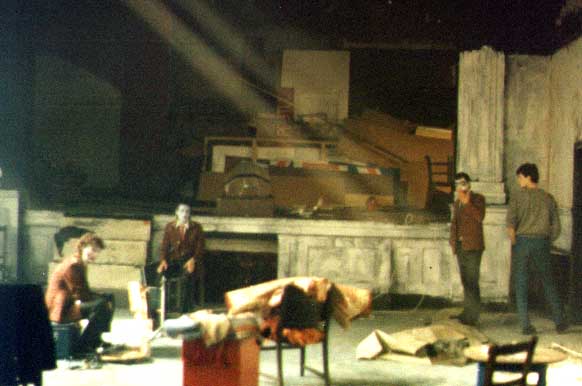
The Wood Demon by Chekhov marked Mike’s West End debut.
For the next few years, Mike continued to divide his time from the Phoenix to lighting shows on the side, commenting: “I would use all of my free time and holidays to light anything that was offered to me”. Mike’s next big break would come from his friend Felicity Field. He states: “She had been chosen by the new owners of the Playhouse to be the CSM for their inaugural productions and, bless her heart, she had them interview me for the LD role. I got the job! We opened with Chekhov’s The Wood Demon featuring a luminous cast and a cavernous timber set. It was my first show in the West End and a daunting one to begin with. That said, I was proud of what I did and it meant people saw my work and marked the beginning of creating a profile”.
Following this exposure, Mike found himself in popular demand and his work would soon take him across the globe. He states: “In 1999, we were asked to take an all-black version of The Magic Flute to the Harare International Festival of the Arts in Zimbabwe. There were venues there including Harare Gardens where we were to perform the opera outdoors. The organisers asked me if I would do a bit more than just light this one show and approached me to supervise the other venues as well as create infrastructures for other productions. The days were long with rehearsals and fit outs extending through the nights for weeks to come. Yet it was all worth it. Our show was magical and had an audience of thousands all sat on the grass of this vast arena as the Queen of the Night appeared high above the stage towering over everyone in the trees”.
Mike would also work at Det Norske Teatret in Oslo where he had developed a close working-relationship with Head of Lighting Terje Wolmer. Mike adds: “I began to feel extremely comfortable with both working on a scale far larger than I had in the UK as well as working in other countries. Wherever you find yourself, most people seem to be trying to achieve the same result, just with different methods. As the saying goes, travel really does expand the mind”.
Sunday in the Park with George saw Mike win an Olivier Award.
Despite his growing reputation abroad, Mike would achieve one of his biggest successes back in the UK following his work on Sunday in the Park with George at the Wyndham’s Theatre. He comments: “I co-designed Sunday in the Park with Natasha Chivers (you can read her Leading Light here) and we won the Olivier for it. It was fantastic to receive such recognition as well as have that ‘certificate of competence’ as it were. I see it as a glorious badge of honour to have both now and in the future and it’s something I’m very proud of. I’ve been lucky to also be nominated for others including Creative Scotland and WhatsOnStage Awards through the years too”.
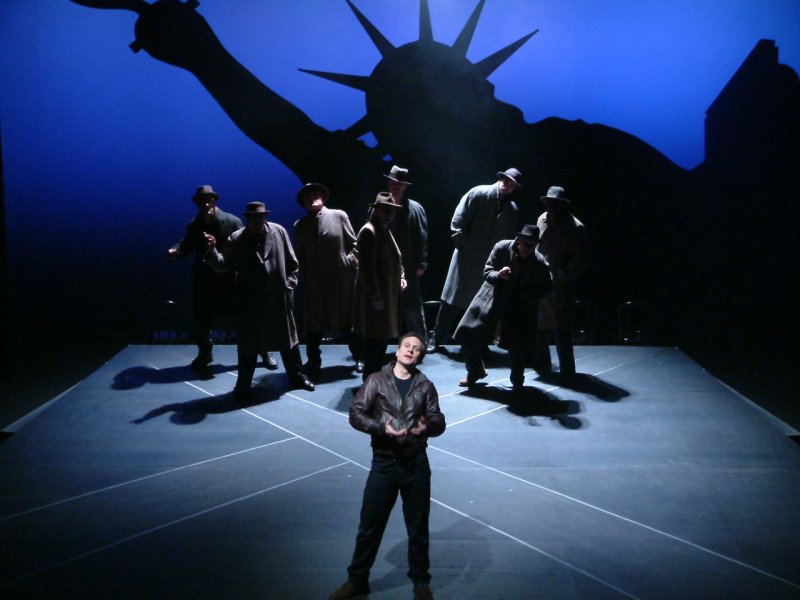
Looking through Mike’s impressive credits, whether it is Oedipus, Billy Liar, Honeymoon in Vegas, Fascinating Aida, The Philanthropist or Hairspray in the Far East or even the European premiere of The Perfect Life, it’s difficult to pick any one highlight. However, he himself has one show which stands out from the rest. Mike states: “I always remember the stage adaptation of On the Waterfront which was written by Steven Berkoff with whom I have collaborated on many productions. Performed on a very simple open stage, we worked together to make the lighting define the geography and emotion of the play. We started out in Nottingham Playhouse before tours, international outings and a London run. I saw the whole thing in my head as a three dimensional film noir. I designed it around a bunch of VL3500s that would produce coloured shapes to define places, objects, times or sentiments which, when transitioning from one scene to the next, would move and reshape in vision as continuously as the sprockets of film running through a projector. One reviewer said the lighting was the seventh character in the play”. Despite his amazing credits, Mike is keen to emphasise that there are certain shows that don’t bring back such fond memories. He states: “One show that stands out for the wrong reasons was All Bob’s Women. It has the proud mantle of being the only show in West End history to close in the interval. It was a remake of the original Italian version and it’s safe to say that something was most definitely lost in translation…”.
On the Waterfront is one of Mike’s proudest shows.
As Mike has worked on such a wide variety of productions across the globe, I ask him what his approach to lighting a show is. He has a very clear answer: “Truth. If I don’t believe what I’m looking at then I can’t expect an audience to. We live in a great age where older distinctions about how you approach certain genres has all but fallen away and you’re as likely to take an operatic or balletic approach to a play IF it feels like the right thing to do. I have little or no belief in an adherence to style but I have a completely unwavering view in how you approach the work. For me, it’s about finding that source of inspiration. For instance, I’ll trawl galleries until something pings and London is a magnificent city in which to do that. Years ago I was lighting an April De Angelis play about David Garrick’s acting company A Laughing Matter so I would immerse myself in the music of the time and made a visit to Sir John Soane’s museum to study Hogarth’s The Rake’s Progress. Even though the paintings are from an earlier time, the sentiment of decline and indeed the brief nature of a life helped me to find the truest light in which to reveal the play”. It is no surprise then that Mike describes his lighting style as “painterly”. He explains: “I almost always relate a play/scene/song back to a painting and then work it out from there. I avoid rigid concepts such as the Victorian ‘science’ of ‘Colour Music’ which advocated the notion that a pitch of note can be related symbiotically to a wavelength of light. This doesn’t ring true to me as it doesn’t take objectivity into account. If I said green, you might think of envy and I might think of parsley. Equally, if we were hearing a G Sharp, then one of us may see a purple light and the other a primary red. How you respond is what makes us all idiosyncratic. Ultimately, I think we create art because we doubt. By painting pictures with light, time and time again, I believe we get closer to the truth”.
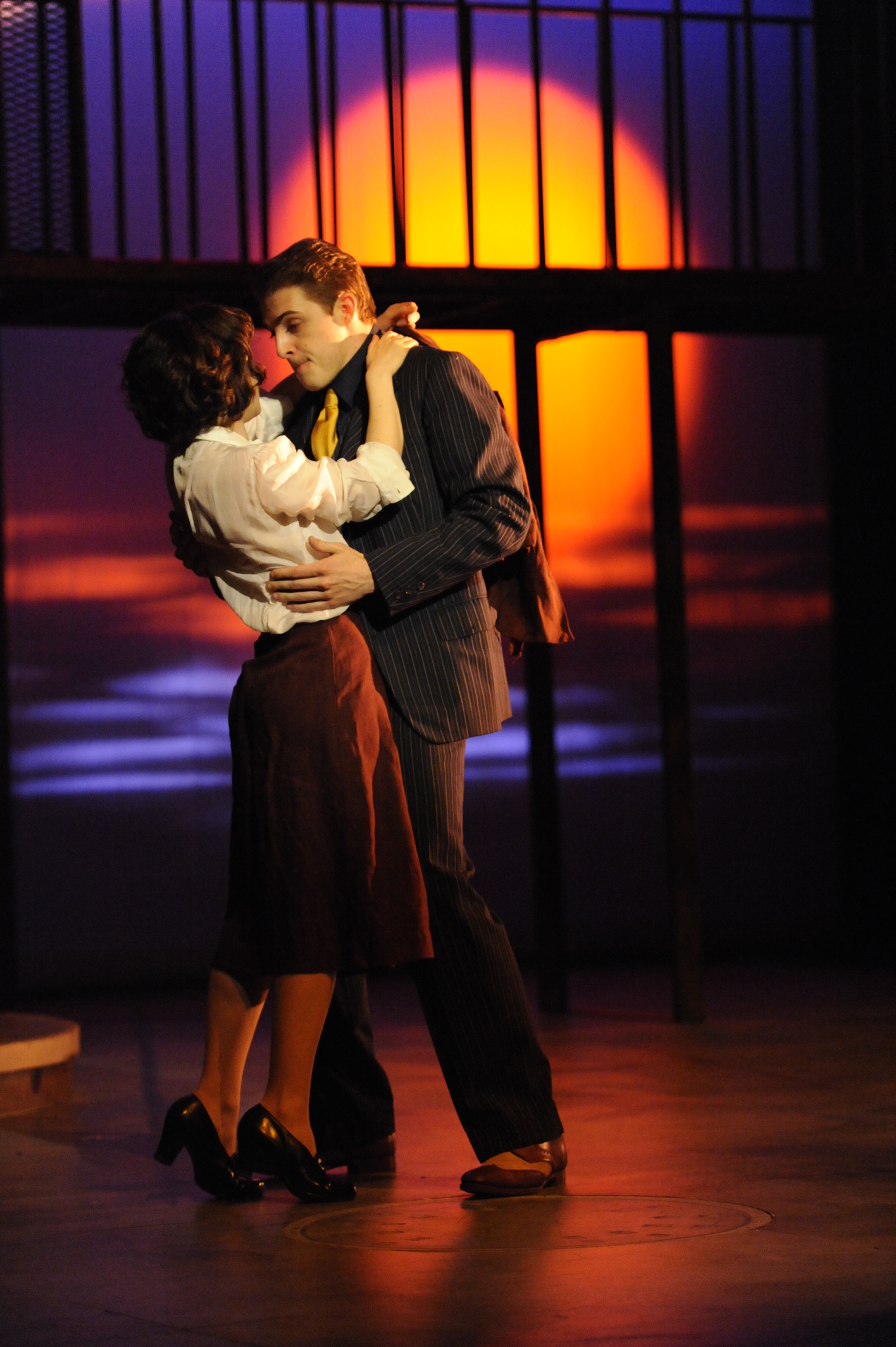
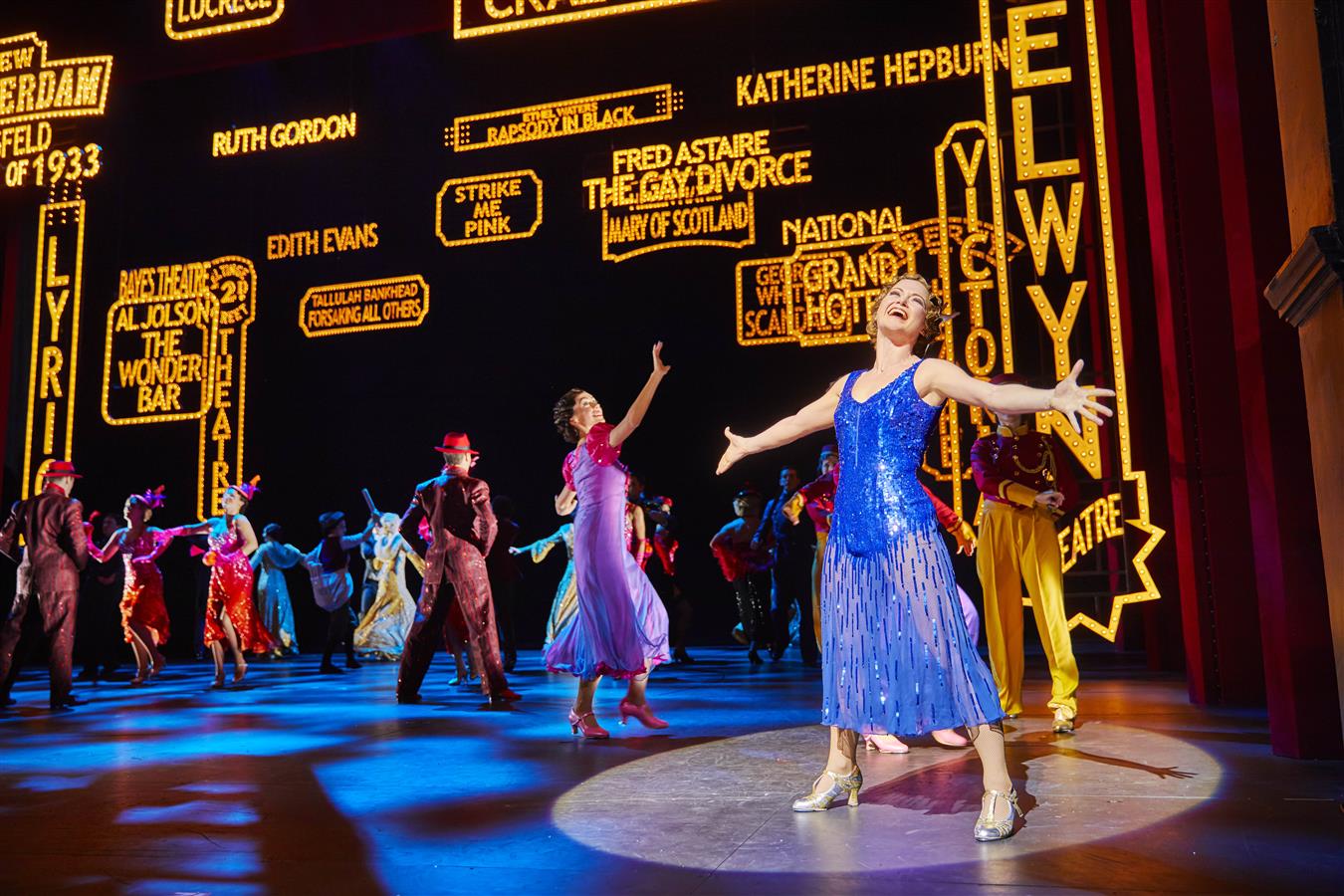
Guys and Dolls at Cambridge Arts Theatre
And so comes the point in Leading Light where I ask Mike the question I put to every Lighting Designer: what advice does he have for the next generation? He states: “This is a long game. If things don’t pan out straight away (and they may not), just keep smiling and do not despair because you can be doing this job in your 80s. No one will tell you to retire and, unlike other crafts, longevity is highly prized. For me, a stable home life is a good thing as are family and good friends. It’s also important to remember to have a life outside theatre. I try to travel as much as I can and I also love cooking which is my main passion (I’m always in the kitchen!). Similarly, while you might not be immediately lighting a big hit in the West End, there are other ways in which you can earn a living from lighting. There is always money to be made in the corporate sector to subsidise the progression of your career in theatre. Light anything and everything (within reason) and, often as not, you turn your back for five minutes and the career is sustaining itself. Frequently it also requires you to perform a nimble high wire act and jump from project to project or even give the appearance of being in two or more places at once. Many have done it and will continue in that vein. Not all of it will be great, some of it will be downright awful but why not make the lighting the best bit of it? As Sophocles wrote – ‘The journey’s good to teach us something’. I agree!”.
And on that philosophical note, it seems like an appropriate way to conclude this month’s Leading Light. Echoing his own advice, Mike is actually about to embark on a non-theatrical project. He states: “Alongside eight more shows this year, I’m designing the lighting for a Piccadilly Nightclub – something I’m very excited about. Whatever project I’m working on, for me, it’s about ensuring that the beauty and quality of light is the main focus and that we don’t lose this. We’re entering an increasingly digital age and we humans remain analogue machines, full of errors and imperfections and so much of our happiness in life and light comes from those qualities.”
Photos courtesy of ActDrop, Alastair Muir, Holly Poe Durbin, Julian Slade, Mike’s dad, Nicky Bunch and Tristram Kenton.
Comments Off on Leading Light with…Peter Mumford – Part Two
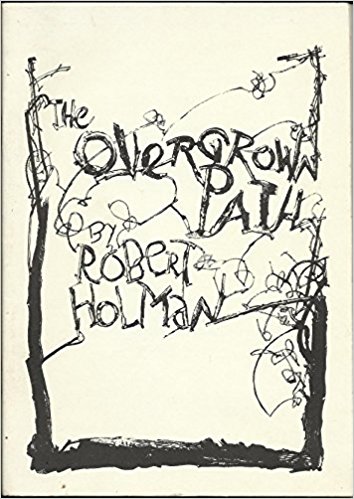
The Overgrown Path at the Royal Court was Peter’s first ‘play’.
The first London production of a play lit by Peter was The Overgrown Path by Robert Holman which premiered at the Royal Court in 1985. He states: “I’d worked with the designer Fotini Dimou before and we always had a great working relationship. Working on the play was great on a personal and professional level as the feedback we received from both critics and peers showed that I wasn’t going to be pigeon holed as the ‘dance man’. It showed that I could light a variety of shows”. For Peter, he has a very clear and insightful approach to lighting different mediums. He states: “ People often ask about the difference between lighting dance, opera and drama and there are different emphases in the different forms, although these days the styles crossover a great deal. However it can be said that dance is expressed primarily via the body and therefore illustrating the body form and its movement becomes a priority. Drama is much more reliant on facial expression and therefore ‘seeing’ the words and emotion is important. Opera tends to be more design-orientated and you’re looking much more at the bigger picture as it were – a more ‘wide screen’ epic event driven by the power of the music. Obviously these are generalisations and all performances have their exceptions and nuances”.
Over the next few years, Peter would continue to light a range of plays including The Shawl (Royal Court), Faust (Lyric Hammersmith) and As You Like It (Old Vic) However, not one for complacency, he soon found his career taking yet another interesting direction. He recalls: “Towards the late eighties, there was a lot of dance material being filmed for television. However, I, and many others, were dissatisfied with how this was being portrayed”. So much so that Peter decided to co-found his own company called Dancelines Productions which was committed to creating and producing dance work for television. He states: “I remember making a proposal to the then Commissioning Editor of Channel Four about this unbelievably ambitious project which entailed taking over Riverside Studios for five weeks where we would work with 11 dancers, 3 choreographers and 1 camera crew, and everything would be created with and for the camera. In the end, we had more than forty hours of footage, which resulted in a programme of one and a quarter hours which was called ‘Dancelines’.” Following on from this, Peter would go on to produce and direct numerous programmes for both Channel Four and BBC2 and win multiple awards including the OperaScreen IMZ Best New Opera Award (1991), DanceScreen Best Studio Adaptation (1992) and was even nominated for an Emmy for the TV adaptation of Matthew Bourne’s Swan Lake. In 2002, he worked on 48 Preludes and Fugues which were 48 short films (of which Peter directed half and was also lighting director on them all) which were widely screened on BBC2.
Peter formed Dancelines Productions to bring quality dance work to the television screen.
From the mid-nineties onward, Peter has focused solely on freelance projects. These include, among many others, Vincent in Brixton (National Theatre/West End/Broadway), Hedda Gabler (Almeida/West End), The Entertainer (Old Vic), The Seagull (Royal Court/Broadway), A View from the Bridge (Duke of York’s Theatre), Faust (English National Opera), Sucker Punch (Royal Court Theatre), Absent Friends (Harold Pinter Theatre) and Carmen (Miami City Ballet), Madama Butterfly, Peter Grimes, Carmen, Manon Lescaut and Werther (Metropolitan Opera NYC). This selection is taken from a multitude of projects that Peter has worked on over the past two decades (the list truly is impressive). As I browsed through, I attempted to select credits that justify his wide range of work but there is literally so much to choose from – something that Peter is extremely proud of: “I love collaborating on a range of projects. I made a conscious decision to just ‘be me’ and to light what I wanted to and try not to be pigeon-holed. I like to work on as many varied projects as possible and I love to work between drama, dance and opera in equal measure, as well as design, direct and work with film.
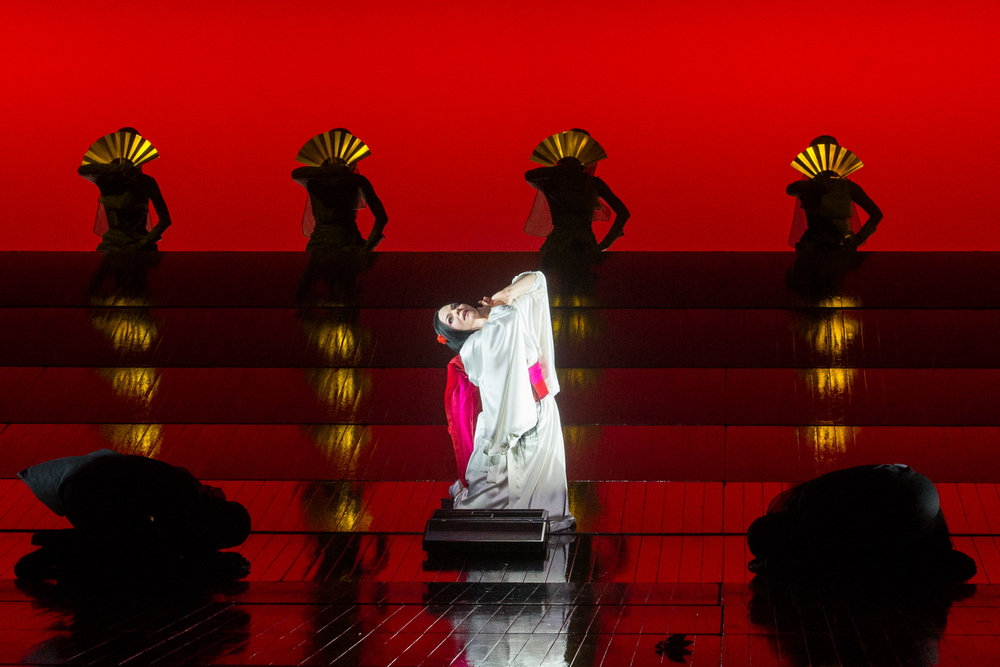
Madam Butterfly at ENO which Peter marks as a career highlight.
Whereas I have great difficulty choosing highlights from Peter’s career, I ask him to name a couple of projects that remain close to his heart. He immediately recalls: “Madam Butterly at the ENO was particularly special to me. I was working alongside director Anthony Minghella, set designer Michael Levine and fashion designer Han Feng and something just clicked. As a team, we gelled immediately and the production looked absolutely incredible (a reason it has been revived an unbelievable six times). It was as close to perfection as you can get for me and, every time I see it, it still feels very relevant”. Another highlight was the epic King Kong which ran at the Regent’s Theatre in Melbourne and featured the largest ever puppet on stage. Peter adds: “King Kong was this larger-than-life, epic production that doesn’t come round all that often. It had a cast of 49, a crew of 76, took five years of pre-production and four months of tech! It wasn’t like anything I’d ever worked on before but it was an unforgettable experience. It now looks like it’s going to open on Broadway next fall which is great.”
Currently running at Theatre Royal Drury Lane, 42nd Street is the latest show that Peter has lit.
And it’s experience I want to talk to Peter about now as I fall into the familiar trope of asking his advice for the next generation of lighting designers. As someone whose career has been based on the strength of collaborations, his answer isn’t too surprising: “Find your own generation of creatives. If you want to be a part of this world and firmly establish your position within it, you need to make sure people know who you are. Today’s director’s assistant might be tomorrow’s big thing so make sure you’re reaching out to people, whether it’s designers, choreographers or producers. You need to cement your place as the work isn’t going to seek you out. Ultimately, while it’s important to learn your craft and receive training, this industry isn’t about qualifications; it’s about communication and creative ability”.
And on that sound advice, Peter is summoned back into the Royal Court Downstairs space to run through a few changes before the show that evening. I end by asking him what else he’s working on, alongside the numerous shows he’s currently lighting in the West End. And as always with Peter, it’s a unique answer: “I’ve just finished directing, designing, lighting and creating the video for a four-part series of Wagner’s Ring Cycle for Opera North. I directed the film of the entire Cycle during its run at Opera North and, after nine weeks of editing, there’s more than fifteen hours worth which is currently available to view on BBC Arts Online!”. Just listening to those countless roles makes me feel exhausted. Yet it all seems to be a day’s work for Peter Mumford… Photos courtesy of Brinkhoff/Moegenburg, Digital Theatre, Little Queenies, Peter Mumford, Royal Court Theatre, Siobhan Davies Dance Company and Thomas Bowles.
Comments Off on White Light Hits the Right Notes for The Beggar’s Opera
Written by John Gay and with music arranged by Benjamin Britten, The Beggar’s Opera is one of the most renowned folk operas of all time. Since its first performance at Lincoln’s Inn Fields Theatre, London in 1728, there have been thousands of productions across the globe. The latest comes from Birmingham Conservatoire who recently performed the show at the city’s Crescent Theatre. As a leading lighting supplier to UK theatre, White Light was called upon to provide the lighting equipment.
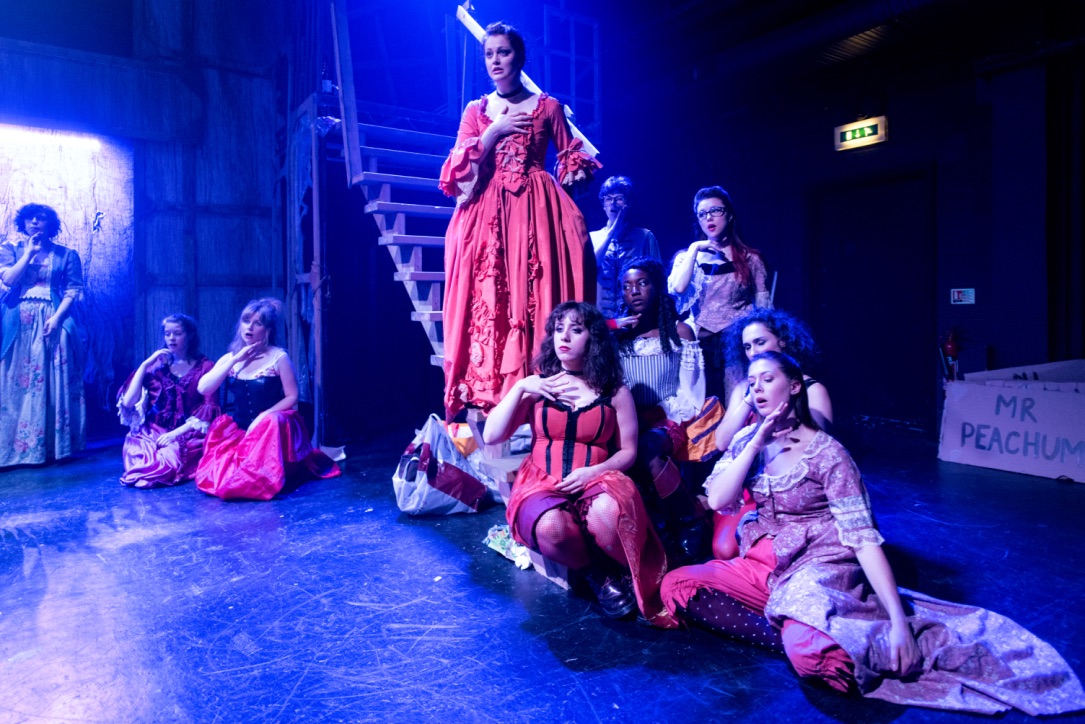
Upon its initial performance, The Beggar’s Opera parodied life in 18th century London and poked particular fun at the fashionable Handel operas of its day. This revival from Birmingham’s Conservatoire begins as a modernised version of the classic story and features a lighting design by Charlie Morgan Jones. Charlie comments: “This production of The Beggar’s Opera starts as an up-to-date retelling, offering something fresh and vibrant for its audience. For my design, I worked closely with Colin Judges (Set Designer), Matthew Sharp (Opera Director) and Jack Ramplin (Associate Lighting Designer) to create a feel which we felt served this story”.
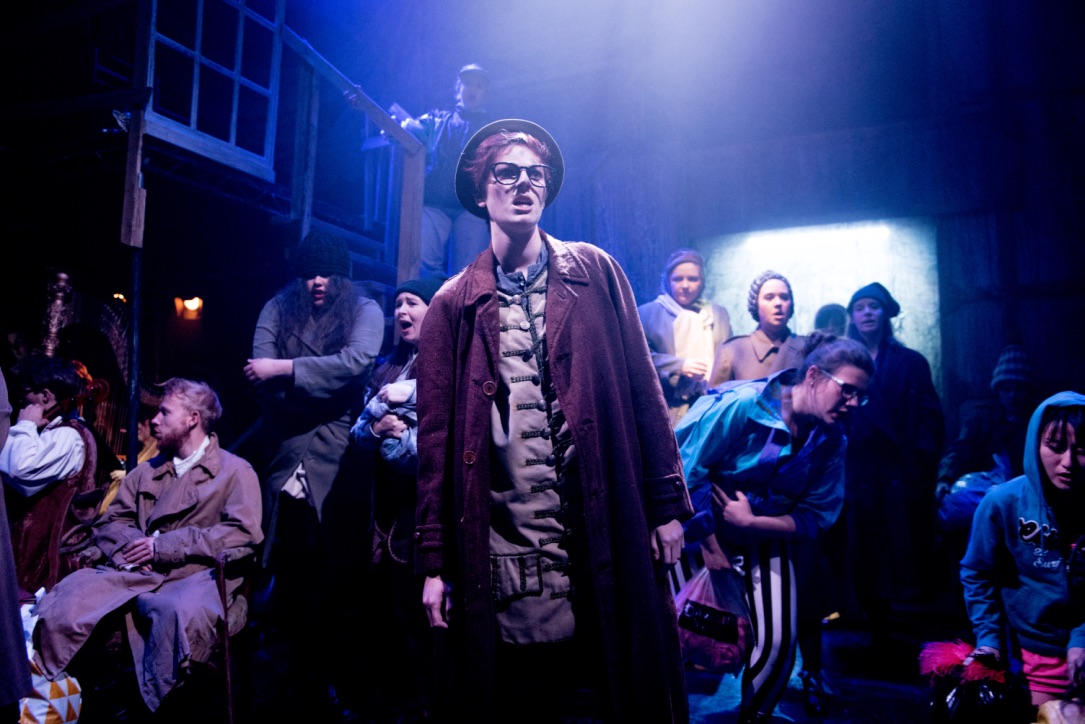
The creative team decided to embark on recreating the feel of a dilapidated theatre. Charlie states: “Colin created this incredible design which was essentially made up of theatrical flats and scattered rubbish. It really brought to life this sense of derelict and decay and this was something I wanted to highlight in my lighting”.
To achieve this, Charlie drew on WL’s extensive hire inventory. He states: “Whenever I light a show, it’s not so much about how I think it should look, but how I think it should feel. I wanted to create this sense of debauchery within Peachum’s Den and stamp my own vision on this. Similarly, with the Tavern scene, I used a range of deep red and deep orange lights which all felt appropriate for this particular interpretation of the show”.
Charlie drew on a range of GLP X4 Impression Bars, Martin MAC TW1s along with an ETC Ion Desk. He states: “This is the first time I’ve used the X4 Bars and they made such a huge difference on this show. We had two staircases in the piece and the Bars were positioned on the top of each. By doing so, they offered a swathe of light down each one, allowing complete coverage. They are also superb at dimming, colour and zoom giving me a whole host of options.
He adds: “With the TW1s, whilst this is always fantastic fixture in my mind, it was also a very practical one for this production. As we were in the Crescent’s studio space, I needed a moving light that was powerful, had a variety of colour options yet wasn’t too noisy – which it exactly what the TW1 offered”.
The Beggar’s Opera marks the ninth show that Charlie has lit with the Birmingham Conservatoire – an organisation he has grown close to over the years. He comments: “I have worked with the Conservatoire since 2014 and have developed a brilliant collaborative relationship with them; especially Michael Barry and Jack Ramplin. This was yet another great production from the company and an absolute joy to work on”.
Comments Off on A Day in the Life…Charlie Morgan Jones Joins Derren Brown: Underground
Charlie Morgan Jones
It’s a miserable day in the capital. Rain lashes down hard on a sea of hooded heads and a multitude of umbrellas. Embankment is particularly busy yet it seems to quieten somewhat towards the Charing Cross tunnel. The tunnel, along with a series of cafes, restaurants and even a nightclub, is home to the Charing Cross Theatre. Today marks the first preview of its latest show, Derren Brown: Underground. The production is a workshop collection of some of the very best of Derren’s previous stage work which he is developing for future overseas productions. We’re here to spend a day with the show’s lighting designer, Charlie Morgan Jones, who offers us an insight into what a day in his life looks like…
Upon entering the theatre, it’s all stations go. People are running round on stage, marking spots, moving props and making sure everything is just so. Charlie explains: “As it’s our first preview this evening, today is all about getting ready for that”. Charlie is positioned a few rows back from the stage on a custom-made lighting desk which is hosting a range of Starbucks coffee cups, several notepads and even an empty packet of grapes: “We decided to go healthy yesterday as it’s very easy to just constantly gorge on junk food when you’re in tech. As a result, when the crew came up to see if we had any treats, they were left feeling rather disappointed!”.
The theatre awaits…
Charlie is sat next to Paul Walmsley who is programming Derren Brown: Underground; with this show marking their 20th collaboration. He comments: “I work really well with Paul. He just gets me. When I see something on stage and I inherently pull a particular look, Paul knows what needs to be changed. We have a great working relationship and when I found out I was working on this show, I knew I wanted him on board”. Charlie was approached for the show by John Dalston, the General Manager, who has worked with him before. However, this is the first time that John has collaborated with Charlie as an LD. He comments: “When I worked with John it was a few years ago and I was a board operator. As I’ve managed to grow my portfolio over the past few years, I’ve almost grown up before his very eyes. Therefore, I was delighted when he asked me to light this show”.
As preparation, Charlie immersed himself into the world of Derren Brown. He spent hours online watching videos of the psychological illusionist and admits he was “utterly blown away by what I saw”. Yet how does he prepare to light a show filled with extraordinary moments , in comparison to say a traditional theatre production? For him, it’s exactly the same: “I don’t think of shows as completely separate entities i.e. this is theatre, this is opera, this is psychological illusion. Rather I approach each one with the same amount of flexibility”.
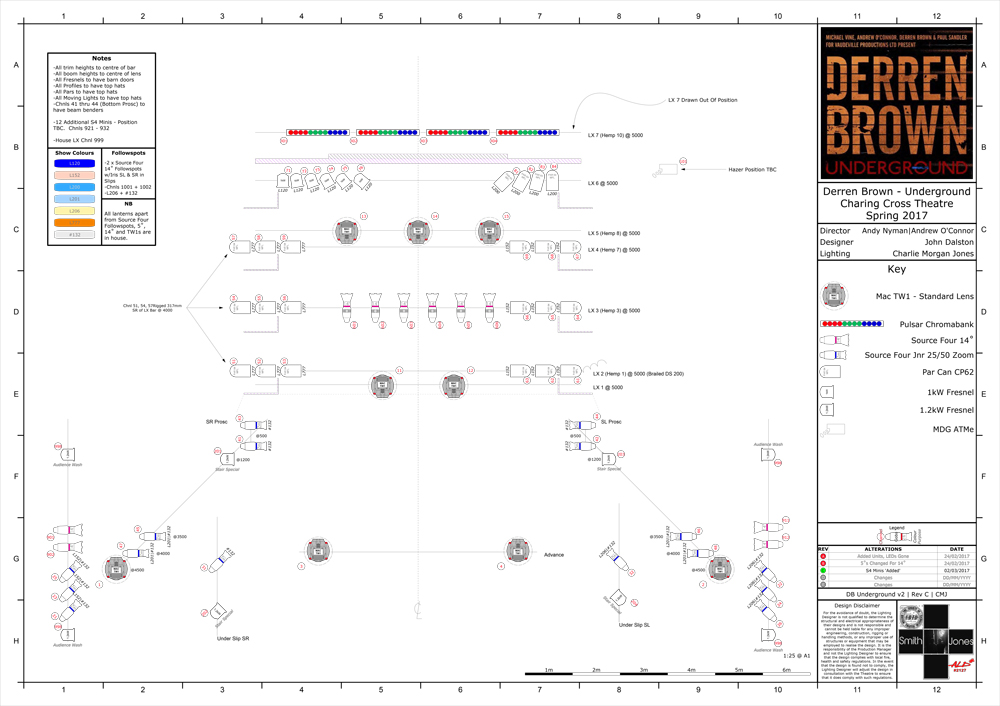
Charlie’s lighting plan for Derren Brown: Underground.
The rehearsals took place at the Dome Room above Her Majesty’s Theatre in London’s West End. Charlie attended a series of these along with a couple of run-throughs. He was also part of all of the production meetings. He comments: “The production meetings were just fantastic. As this is a show filled with crossroads, as opposed to working from a set script, there are so many avenues in which it can go. It was fantastic to hear all of the creative ideas flowing, as this ultimately had an influence on my own design”.
It seems as if being part of a team who regularly work create Derren’s work has been a good experience for Charlie. He notes: “One thing with Derren is that he is constantly trying to push himself. There is this perpetual strive to make their work better. As an artist, this is a level you should constantly be aiming towards”. This level of perfection has clearly transcended into the technical rehearsals in which the directors, Andrew O’Connor and Andy Nyman, find themselves sitting in various seats throughout the auditorium to ensure that everyone in attendance can see what’s taking place on stage. Charlie states: “It’s the surprise, confusion and the mystique that those attending a show want to experience. My role is helping to heighten this and ensure the audience are engaged with every single section of the show”.
The stage is set…
When we join Charlie, he has just finished the technical rehearsal and is about to embark on the dress run. He comments: “We got into the venue on Sunday (three days ago) and began to set everything up straight away. Once the fixtures were in place, we began to work through the show and recreate my design on stage”.
It was at this point where Charlie first realised the major difference between this and your more traditional theatre productions: “We’re essentially lighting the various moments on stage. When we notice something that needs amending or I spot something I would like to change, we adjust this and then have to run the scene from the top. However, as some of the sequences are ten, fifteen even twenty minutes long, this can be extremely time consuming when trying to run a tech”. Once everything is in place, Charlie then talks the director through his various plots as the show begins to take shape: “I sit down with both Andrew and Andy and run them through the cues to ensure they aren’t surprised by any of my sets as well as hear their own thoughts. Whereas I normally allow myself some flexibility with a rig, I did more so than usual on this particular production due to the fact that the entire production is so flexible; with the audience participation aspect meaning things are changing all of the time”.
Derren enthralls his audience from the very start.
Talk naturally moves onto the rig that Charlie has drawn on. Supplied by WL, it features a range of his favourite fixtures along with those he feels are needed on a show like this. He comments: “I have used the Martin MAC TW1s and they really do a lot of work on this show. For me, I just love this fixture. It’s reliable, flexible and the output is incredible. I also love the colour”. It’s at this point where Paul points out that he’s not their biggest fan but Charlie is adamant of their importance: “I was one of the many designers who was outraged when I heard they were discontinuing the units. Thankfully, I wasn’t the only one and the petition hundreds of LDs signed ensured that they continued making them”. Around the space is a series of ETC Source Four Minis which have been specifically chosen to illuminate certain props that are an integral part of the show (the fixtures being a suggestion of Production Electrician Andy Murrell). The entire front of house consists of ETC Source Fours whereas Par Cans are used as eye candy and for the pre-set. All of this is programmed on an ETC Ion Desk, something that Charlie says he “understands”: “It makes a difference using a desk that you are comfortable with and knowing, more or less, how it works”. Alongside this, there is are two followspots on Derren throughout the entire show. Charlie adds: “A lot of my role is creating a text and mood for each scene whilst keeping the focus on Derren. With the followspot permanently fixed on him, I have to ensure that the entire stage is brought to life and it all plays an integral part”.
As we’re speaking, Derren himself enters. And, as he does, he makes sure he acknowledges everyone present before immediately heading straight to the stage to rehearse some key moments for tonight’s show. Charlie adds: “Derren, and in fact everyone on this show, has been an absolute pleasure to work with. It really is an incredibly friendly company and I’m relishing every moment. The theatre itself is also a great venue for an LD. I particularly love the textured brick which forms the set. It’s a great canvas to work on”.
Charlie’s desk…
Derren and director Andrew run through certain sections and occasionally ask Charlie to light a certain moment or change something slightly. It’s the final moments of tweaking before a live audience arrives for the first ever live run through. Charlie notes: “This is a great show but it needs an audience. It’s 99% audience participation and we’ve only seen it with Derren so far. Today will be the real test to see how they respond to it”.
So after the quickest of lunch breaks, we find ourselves back to an invited audience who are eagerly awaiting the start of the show. The pre-set is the subtlest of oranges which perfectly sets the tone before the start of the show. Charlie states: “As an LD, I think you can tell different designer’s various work. With me, I have a specific colour palette which I work from in order to create a look that is unique to me”.
Another mind-blowing show from the psycholoical illusionist.
The show begins and while we obviously cannot give too much away, it’s exactly what you’d expect from Derren Brown. The whole 90 minutes are filled with gasps, awe and mesmerisation as the audience witnesses the seemingly impossible take place right in front of them. After dazzling everyone in attendance, Derren takes his final bow and exits the stage. The houselights come up and the audience begins to depart. And while they may get to leave, the crew’s work has only just begun; in particular Charlie’s. He is sat at the back going over his notes with Paul and Andrew, talking through the various sections and what their thoughts were. Once the auditorium is cleared, he finds himself on the stage, getting into positions and working out the best way to light these now an audience has participated.
He eventually stops and allows himself a post-show moment of contemplation: “Overall, thanks largely to the amazing team around me, that went really well for a dress. There were no major disasters and the audience’s reaction was exactly what we wanted. However, there are still some tweaks to be made. I’m not sure whether it’s my background in music but if a cue is one second long and would be better at 0.8 seconds then it should be changed. I’m not saying I’m a perfectionist – I just know when something works for me”. And judging by the look of the show and the audience’s reaction so far, a lot has definitely worked on this particular production…
Comments Off on Leading Light with…Rick Fisher – Part One
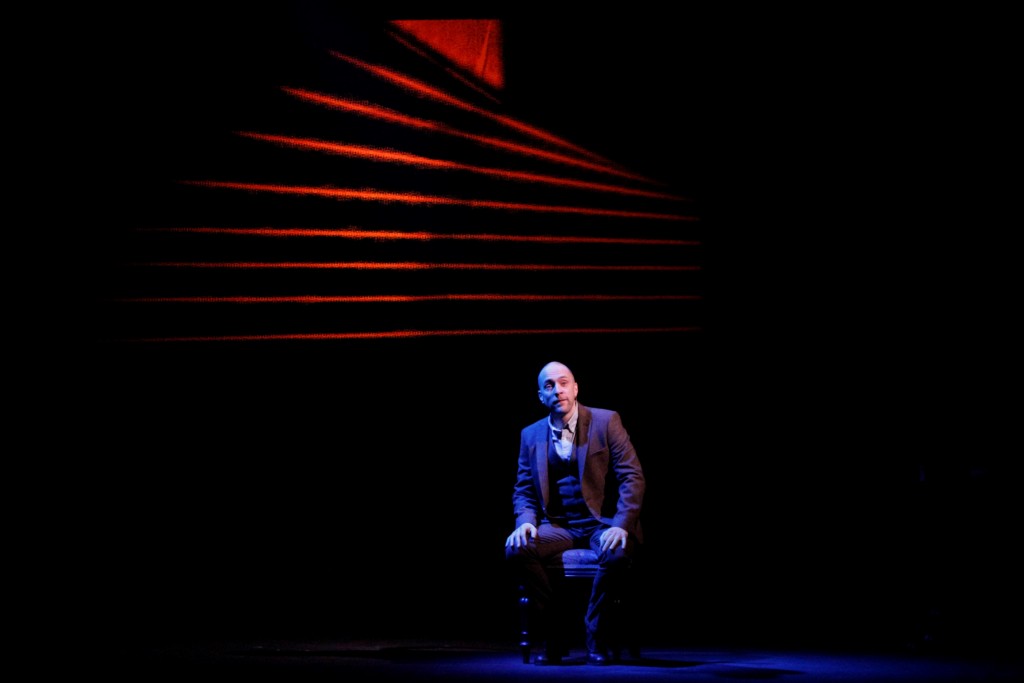
The man himself – Rick Fisher
It’s a cold winter’s morning in London outside the Playhouse Theatre. Flightcase after flightcase is being wheeled inside the venue which sits on the bank of the Thames, with this being the get-in for the latest revival of An Inspector Calls. The show is once again gracing the London stage in a completely new venue. What isn’t new, however, is the creative team which includes a certain Rick Fisher as Lighting Designer. It is Rick I’m here to speak to as part of our Leading Light feature. We make our way through the building and have to navigate across an extremely busy stage area. Rick is known to everyone here and beams with pride as the set is being constructed: “This was a magnificent show 25 years ago and is still as remarkable today. I never thought it would last this long but that’s theatre – it often takes you by surprise”. The biggest surprise for me though is Rick himself. With arguably some of the biggest theatre credits to his name, he is an extremely humble man. Yet the more he talks about his work ethic and past projects, the more I begin to appreciate why he has made his name as one of the world’s most renowned lighting designers.
Unlike most of the established lighting designers based in the UK, there is something fundamentally different about Rick: he’s American. He was born in Philadelphia, USA and grew up in the city’s suburbs. Despite living in suburbia, he still managed to engage with theatre from a very early age. He recalls: “Some of my earliest memories are seeing shows with my mother. She loved to go to the theatre and would always take me along”. It also seems that Rick’s home state of Philadelphia played a key role in his theatrical upbringing: “Philadelphia was known as a ‘try-out’ town, in the sense that many Broadway shows would come here first before heading over to New York. It would also receive a lot of regional touring productions, including big musicals”.
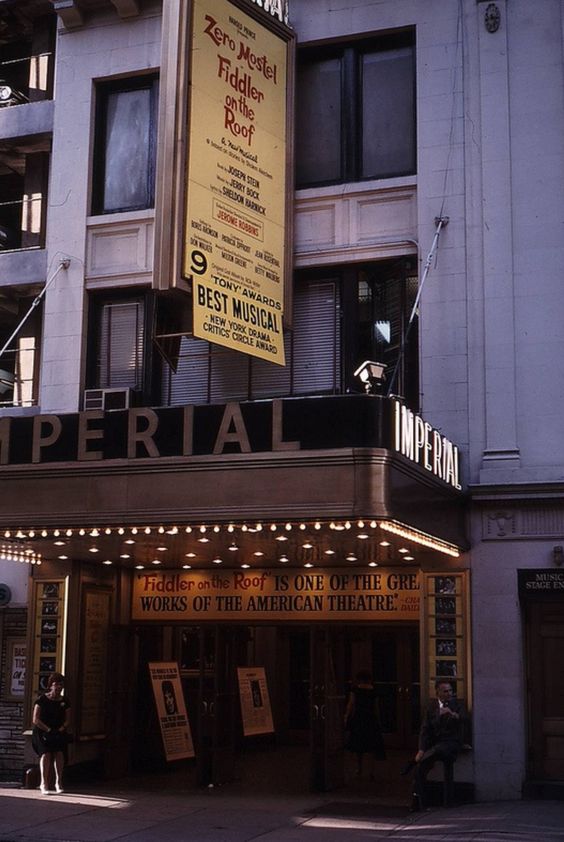
Fiddler on the Roof at the Imperial Theatre on Broadway.
Whereas Rick was regularly seeing shows close to home, it was one particular trip to New York that really cemented his passion for theatre. He comments: “I remember we went away for a family weekend in New York and saw two shows: Hello Dolly and Fiddler on the Roof. Although we were sat right at the back in what I’d call ‘nose-bleed seats’, there was something mesmerising about both shows. I really was captivated by the lights, the performance and the whole spectacle of it. I just loved to see a story being told well on stage (I still do!) and knew after that weekend that I really wanted to work in theatre in some capacity”.
Whereas most of the lighting designers I’ve spoken to have dreaded the notion of stepping out onto stage, this was something which Rick initially embraced. He comments: “For a while, I actually wanted to be an actor. I remember during my time at Dickinson College auditioning for numerous shows and, although I was frequently cast, this was either a non-speaking role or someone who spent the majority of the time stood to the side!”.
During his time at college, Rick decided to work in Summer Stock (equivalent to a weekly rep summer season in the UK). Here he worked with the backstage crew on a variety of shows. He recalls: “I was part of the backstage crew but we were essentially slaves! We used to work 80-90 hours per week and would do absolutely everything, from building the set to working the lights to washing the cast’s clothes. And whilst it was (very) hard work, we developed a family bond within the team; something I have experienced time and time again in theatre”.
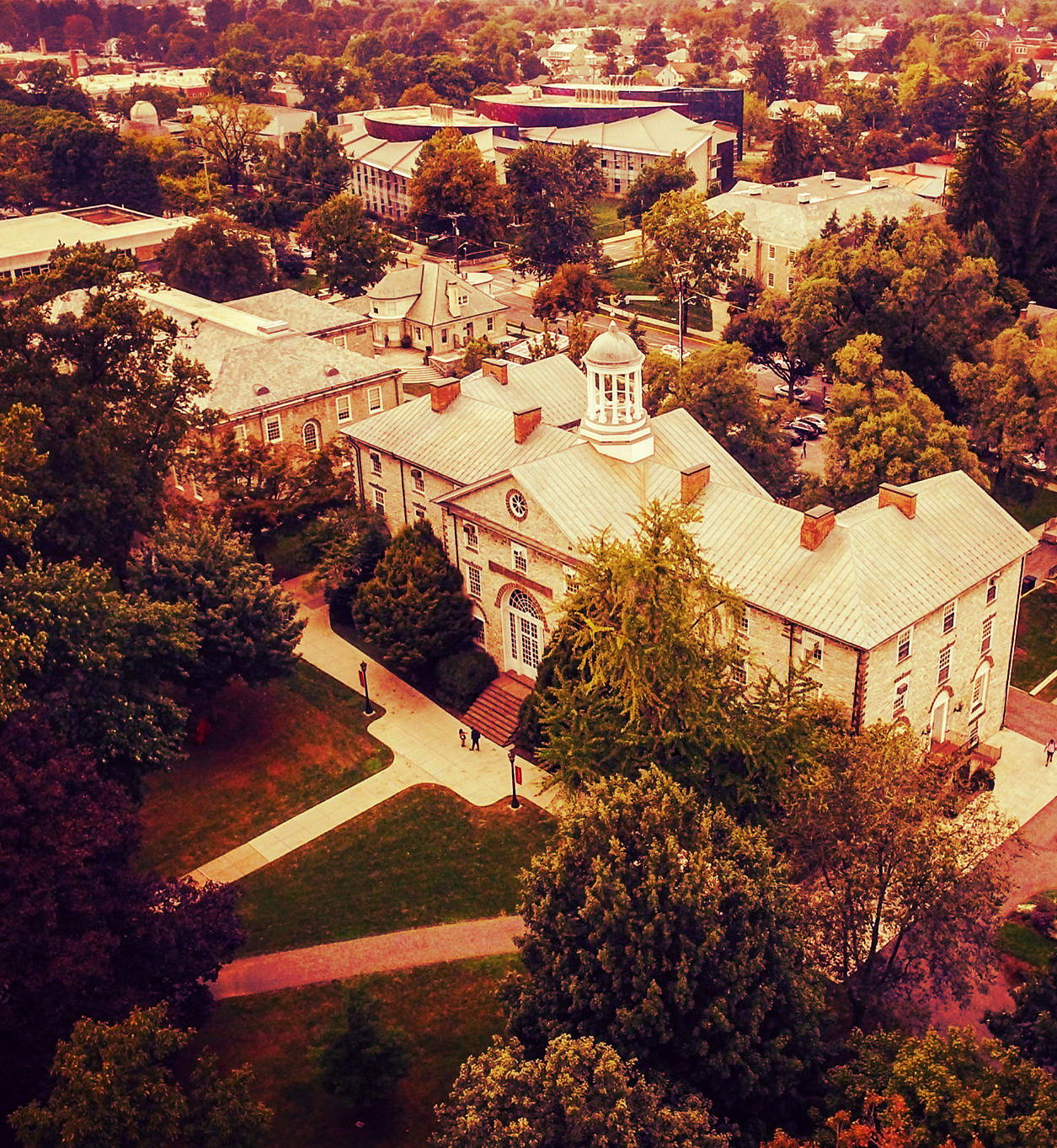
Dickinson College where Rick studied
After Summer Stock was over, Rick returned to college to continue with his studies. However, his experience of working within an actual theatre space completely altered his outlook towards academia. He states: “After Summer Stock, studying theatre seemed almost amateurish – an imitation after experiencing the real thing. What I loved about working was the hands-on experience I received. It was extremely practical and something we didn’t get the chance to receive at college”.
While Rick enjoyed his practical experience, he wasn’t enamoured by the notion of lighting: “I was actually quite resistant to getting involved with anything to do with lights. I found the gel numbers both confusing and overwhelming!”. As part of his college programme, Rick took part in an exchange programme which brought him over to London. He was meant to join the Stage Management course at LAMDA, confessing: “I knew I wanted to work in theatre and, at that moment, thought it might be through stage management”. However, the exchange programme with LAMDA wasn’t meant to be, with the course falling through soon after Rick’s arrival. Undeterred, he decided to take a Stage Management course at City Lit instead. It was during his time in the UK that Rick fell in love with British theatre. He recalls: “I just loved the diversity of theatre in London. Whether it was the West End, the fringe venues or the more obscure performance spaces, there was just such a variety that wasn’t available anywhere else”.
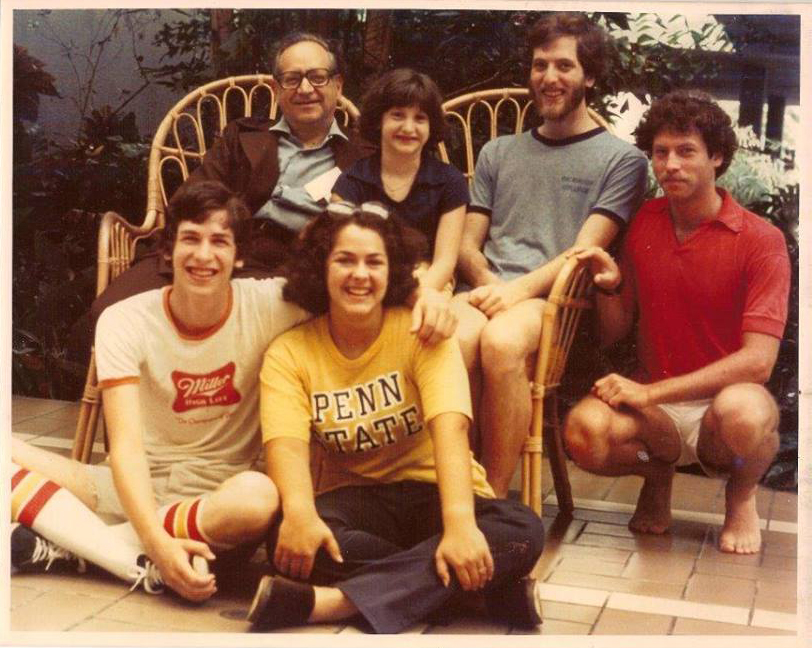
Rick (second from right) with his family back home in Philadelphia
Whilst in London, one of Rick’s first jobs included running a follow spot on Kidnapped at Christmas at the Shaw Theatre. He recalls: “Despite now gaining some experience with lights, I wasn’t fully converted to this world just yet!”. Following his six months in London, Rick returned to the States to finish his degree. Yet, back in his home country, Rick’s bias towards the city soon became palpable: “I basically told everyone how great London was and how its theatre scene was much better than ours!”.
Such was Rick’s passion for the London theatre scene that he quickly returned to the capital after graduating. The year was 1976 and his plan was to stay in the UK for six months in order to build on his previously established contacts. 40 years later… He recalls: “I started working on the fringe scene, doing whatever job I could find. This would include fit ups, props, lighting, scenery and even cleaning the loos. Whoever tells you it’s all glam is a liar!”. Some of the venues Rick worked at included the Overground in Kingston (which is no longer there), the Oval House and the Bush. It was in these venues that he started to develop a real interest in lighting. He comments: “Back then, unbelievably, freelance lighting designers were actually quite rare. Therefore when a production came into one of the venues, I would just help out with the lighting elements”.
One of the few remaining photos of the Overground Theatre in Kingston
The other major difference in the world of theatre lighting was the equipment. Rick recalls: “We worked within very limited means with extremely clapped out equipment. Looking back, this was actually a good thing as it meant the lights had to do a lot of work. I really had to get the most out of the equipment which, on reflection, pushed me as a designer. At the Oval House in particular there were a lot of performance pieces where the lights had to tell a story and create an atmosphere so every show was an exciting challenge”.
During this time, Rick was officially still a stage manager. However, he noticed that lighting designers received a higher credit in the programme so insisted that he now received this billing! He comments: “Although I’m a lighting designer, I differ from the traditional definition in the sense that I don’t have the technical knowledge that most designers have. Similarly my knowledge of electronics (both then and now) was extremely limited and I certainly couldn’t programme a desk! But I knew what I wanted to achieve on stage, and I try to be a good collaborator which are the most important attribute to have”.
We use cookies on our website to give you the most relevant experience by remembering your preferences and repeat visits. By clicking “Accept All”, you consent to the use of ALL the cookies. However, you may visit "Cookie Settings" to provide a controlled consent. View our View our Privacy Policy
This website uses cookies to improve your experience while you navigate through the website. Out of these, the cookies that are categorized as necessary are stored on your browser as they are essential for the working of basic functionalities of the website. We also use third-party cookies that help us analyze and understand how you use this website. These cookies will be stored in your browser only with your consent. You also have the option to opt-out of these cookies. But opting out of some of these cookies may affect your browsing experience.
Necessary cookies are absolutely essential for the website to function properly. These cookies ensure basic functionalities and security features of the website, anonymously.
Cookie
Duration
Description
cookielawinfo-checkbox-analytics
11 months
This cookie is set by GDPR Cookie Consent plugin. The cookie is used to store the user consent for the cookies in the category "Analytics".
cookielawinfo-checkbox-functional
11 months
The cookie is set by GDPR cookie consent to record the user consent for the cookies in the category "Functional".
cookielawinfo-checkbox-necessary
11 months
This cookie is set by GDPR Cookie Consent plugin. The cookies is used to store the user consent for the cookies in the category "Necessary".
cookielawinfo-checkbox-others
11 months
This cookie is set by GDPR Cookie Consent plugin. The cookie is used to store the user consent for the cookies in the category "Other.
cookielawinfo-checkbox-performance
11 months
This cookie is set by GDPR Cookie Consent plugin. The cookie is used to store the user consent for the cookies in the category "Performance".
viewed_cookie_policy
11 months
The cookie is set by the GDPR Cookie Consent plugin and is used to store whether or not user has consented to the use of cookies. It does not store any personal data.
Functional cookies help to perform certain functionalities like sharing the content of the website on social media platforms, collect feedbacks, and other third-party features.
Performance cookies are used to understand and analyze the key performance indexes of the website which helps in delivering a better user experience for the visitors.
Analytical cookies are used to understand how visitors interact with the website. These cookies help provide information on metrics the number of visitors, bounce rate, traffic source, etc.
Advertisement cookies are used to provide visitors with relevant ads and marketing campaigns. These cookies track visitors across websites and collect information to provide customized ads.


 We sat down with Production Crew Co-ordinator Caz Caddick to find out more about her role at White Light…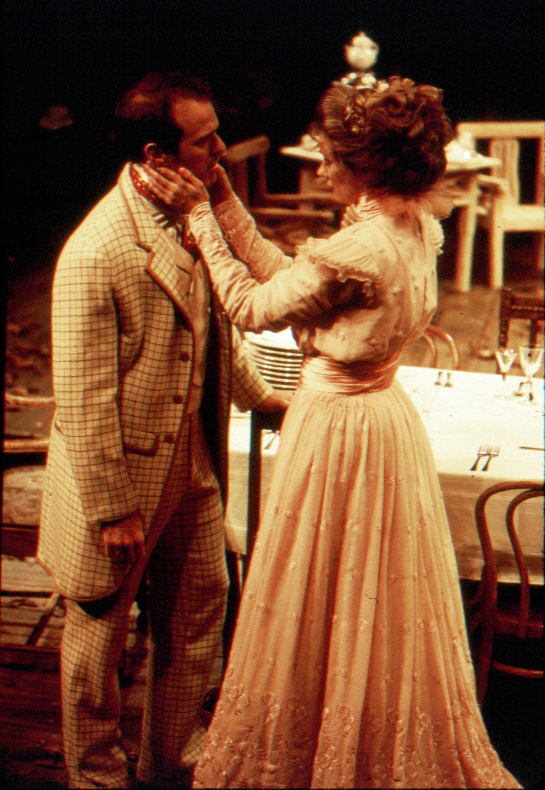


 Written by John Gay and with music arranged by Benjamin Britten, The Beggar’s Opera is one of the most renowned folk operas of all time. Since its first performance at Lincoln’s Inn Fields Theatre, London in 1728, there have been thousands of productions across the globe. The latest comes from Birmingham Conservatoire who recently performed the show at the city’s Crescent Theatre. As a leading lighting supplier to UK theatre, White Light was called upon to provide the lighting equipment.
 The creative team decided to embark on recreating the feel of a dilapidated theatre. Charlie states: “Colin created this incredible design which was essentially made up of theatrical flats and scattered rubbish. It really brought to life this sense of derelict and decay and this was something I wanted to highlight in my lighting”.