lighting hire Archives - White Light
Explore White Light: White Light | HireWL | SalesWL | ShopWL

Tag Archive: lighting hire

  1. White Light Celebrates Bryan Raven’s Outstanding Industry Contributions 

    Leave a Comment
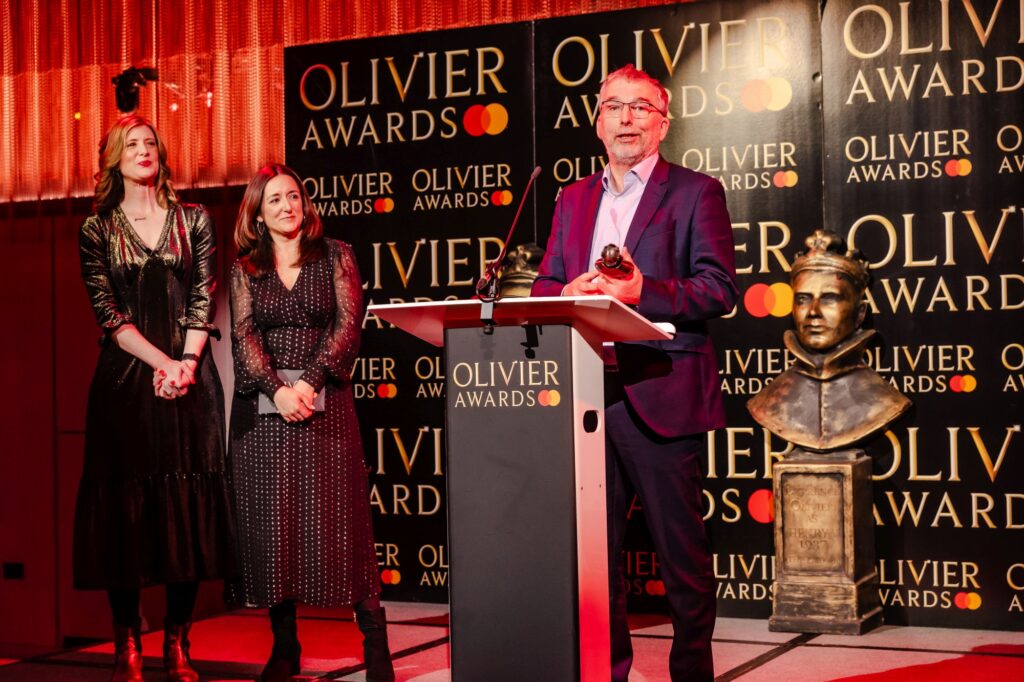
    White Light is delighted to honour the achievements of former Managing Director Bryan Raven, whose dedication to theatre, sustainability, and industry development has left a lasting impact. Though surprised by the recognition, Bryan has been deeply moved by the response, receiving hundreds of heartfelt messages from colleagues and peers acknowledging his leadership, reliability, and unwavering commitment to the industry. 

    Throughout his career, Bryan has been instrumental in driving industry-wide initiatives. He played a key role in White Light’s long-standing sponsorship of TheatreCraft, ensuring that aspiring off-stage theatre professionals have access to valuable career support. Reflecting on his involvement, Bryan recalls: “I was introduced to TheatreCraft over a decade ago through personal relationship and their mission resonated with me.  It is such a vital event for our industry as it allows the next generation a much-needed insight into the various resources available and the paths they may be able to take. It’s all about encouraging and making sure everything is completely accessible – hence the importance supporting them through sponsoring. One of my proudest achievements is to see that TheatreCraft has become an integral part of White Light’s annual calendar, championed internally by various team members.” Bryan’s commitment extended to helping with the development of TheatreCraft Next Generation, dedicated to 7-15 years old, held at the Science Museum in London in 2024. 

    Bryan has also been a driving force in nurturing new talent within the industry. His involvement in Skillscene since 2012 and his position as one of the founding directors of the National College Creative Industries (NCCI) led to the creation of White Light’s award-winning apprenticeship scheme, which has provided over 75 young people with a Creative Venue Technician apprenticeship since its inception in 2011. His advocacy work in government lobbying has ensured that technical theatre careers remain firmly on the agenda. 

    For over 15 years, Bryan has championed sustainability in the performing arts. He recalls: “In 2008, I collaborated with Julie’s Bicycle on the Greening London’s Theatres guide, a practical guide for the industry launched by the then Mayor of London, Ken Livingstone. It outlined how London theatres could cut carbon emissions and implement greener practices.” From his early involvement in the Green in London Theatre campaign to his recent work with the Theatre Green Book, Bryan has consistently pushed for environmental responsibility. His collaborations with sustainability leaders such as Julie’s Bicycle, Paule Constable (Lighting Designer), Paul Handley (Head of Production at the National Theatre), Juliet Hayes (Risk & Sustainability Manager at SOLT) to name but a few, highlight his unwavering commitment. Under his leadership, White Light achieved ISO14001 accreditation in 2022—an international standard for environmental management systems—followed by B Corp certification just months later. 

    Bryan reflects: “We were introduced to B Corp while working towards ISO14001, and we soon realised our existing practices aligned perfectly. It wasn’t about changing our approach but formalising it. B Corp’s mission resonated with us—to grow a profitable, sustainable business with a global reputation for excellence. This wasn’t a short-term sustainability initiative but a long-term commitment to accountability and responsible business practices.” 

    During the COVID-19 pandemic, Bryan played a pivotal role in the #WeMakeEvents campaign, advocating for the live events sector at a time of crisis. His efforts in lobbying MPs at the House of Commons helped bring the industry’s challenges to the forefront of government discussions. 

    Throughout his time at White Light, Bryan was supported by colleagues who enabled him to focus on these vital issues and help shape a better industry. He laughs: “Of course, not every idea of mine was a winner!” 

    Bryan’s legacy is deeply rooted in White Light’s values, inspired by founder John Simpson’s ethos of ‘doing the right thing.’ The company remains committed to integrity, innovation, and industry support. White Light’s Technical Director Dave Isherwood comments: “”We are proud to see this carried forward by our team, from Stuart Porter’s work with the ALPD to Jonathan Haynes’ advocacy for the Save the Beck Theatre campaign, and Liz Thompson and Sandra Tyler’s leadership of our apprenticeship programme, among many others. As we look to the future and the next generation of leaders, we remain dedicated to upholding these values. We are also pleased to announce Craig Bennett as our new General Manager, reinforcing our commitment to being the industry’s ‘Partner of Choice.’ Bryan’s contributions to White Light—and the wider industry—are truly invaluable, and we couldn’t be prouder of all he has contributed, continues to achieve, and the invaluable lessons he has shared with us.” 

    When asked what advice Bryan would offer to those looking to make a similar impact, he shares: “In today’s climate, making an impact is more challenging due to macroeconomic and geopolitical factors. However, it is now more critical than ever to pursue a responsible business strategy. The next generation of leaders recognises this, which gives me hope. Demonstrating the business case for sustainability and responsibility to external stakeholders is key to fostering a long-term, ethical approach. It will also help attract future talent, as young professionals increasingly seek to work for organisations that align with their values.” 

    Even as he embarks on new ventures, Bryan remains deeply connected to the industry. His upcoming projects include presenting a climate change paper at Showlight in Dijon (19–22 May), continuing his engagement with the Power of Events to inspire young talent, and working with Theatre Green Book to address embedded carbon in technical products. He is also mentoring business leaders on their career and organisational growth. 

    We extend our sincere congratulations to Bryan on this well-deserved recognition and look forward to his continued influence in shaping the future of the performing arts industry. 

  2. White Light Brings Rhythm and Ruse to Immersive Theatrical Experience

    Leave a Comment

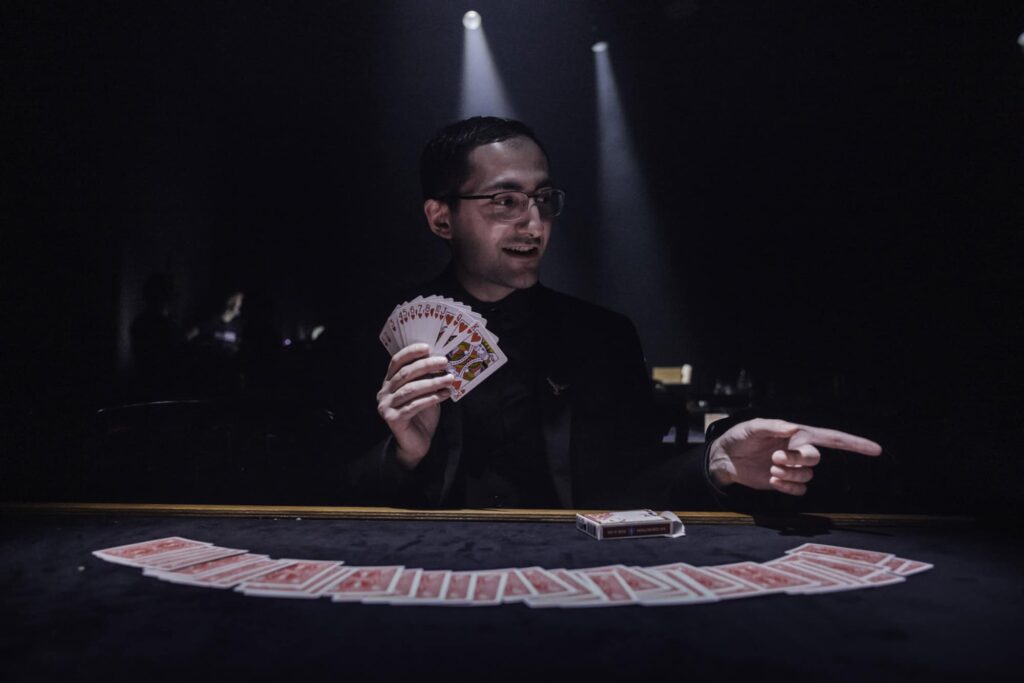
    Taking place at The Vaults beneath Waterloo Station, Rhythm and Ruse offered theatregoers the ultimate immersive night of magic, music and revelry. Harkening back to the prohibition era, the show took place in a ‘Speakeasy’ and allowed audiences to experience astounding close-up illusions from mere inches away, live music from a four-piece jazz band, a secret society of magicians devised by immersive theatre experts as well as food and drink across the entire evening. The show featured a lighting design by up-and-coming designer Skylar Turnbull Hurd, with this being her first time lighting a show of this scale and with a full LX team. With its strong reputation for both supporting young lighting designers, as well as supplying immersive theatrical productions, White Light (WL), a d&b solutions company, was called upon to provide the show’s lighting fixtures.

    The aim of Rhythm and Ruse was to offer London theatregoers a truly unique experience, in that from the minute they entered The Vaults, they stepped back in time to the 1920s and into ‘The Starling’ night-club where the immersive action takes place. Skylar explains: “I would describe this show as a single window that looks directly into a dolls house. There’s something going on everywhere in one collective swoop, but, on a miniature level, there’s so many subworlds and little hidden treasures. It was a case of audiences ‘not knowing where to look’ and they quickly made it an endeavour to try and experience them all!”.

    Given there were so many different elements to the show, how did this impact Skylar’s lighting design? She answers: “My creative lighting brief was to help create a bubble that patrons unexpectedly found themselves in, perhaps without even realising. The content had to be rich, but also timeless and not dictate the flow – we wanted a safe space that audience members could relax in and feel free to explore”.

    With this being her brief, when it came to the practicalities of her rig, Skylar knew she needed a lighting structure that could support all of the show’s numerous intricacies. She explains: “The cast, band members, set list and staffing was intended to rotate often, and so lighting could not dictate or complicate this further. We also had to ensure that all seven different areas of the tunnel space remained lit at all times. And whilst I indeed had to pay attention to the multiple spaces, it was actually the requirements of a whole spectrum of different necessities which forced me to see the whole show as one wider experience; as opposed to something that starts and ends at the wings of the stage.

    She continues: “I initially thought the show was going to be quite complex, with lots of snap cues and set electrics, though these turned out to be quite distracting ideas. Similarly, I thought I would need to use a lot of different colours to echo the cabaret style feeling of the show and keep the audience entertained, but discovered that I could maintain a colour narrative through different saturations of a limited colour palette instead. This is the type of show, given its nature, that truly comes alive when you have people within the space. As such, it was only during previews when we had the 16 tables of 12 people inside that I really saw how my design worked – which then gave me the opportunity to make tweaks before press night and the ‘official’ opening”.

    Throughout this entire process, Skylar was working closely with the WL team who supplied her lighting rig. She explains: “In terms of the actual fixtures used, we had MAC Quantum Washes and Profiles overhead, which were distributed across the space. We also had overhead LED ColourSource Specials for each table. These three fixture types gave a lot of flexibility to the different looks of the show, especially as it was staged in thrust. 

    On the stage iself, we had ColorBlaze LED Battens shining through the outstretched wings structure at the back and uplighting the beautiful velvet backdrop. Around this, we had birdies glowing the performers but also keeping the movement around the stage dynamic as the cast moved between them.

    She continues: “Through the entrance to the space and Front of House, we had ETC LED Source Four Minis. The main area was very glowy with tungsten, and these cooler fixtures offered a nice contrast to this; refreshing the audiences’ eyes before spending the evening inside. One of the reasons I believe we managed to accommodate all of the different styles within the show was by being consistent with what our cue structure was; managed by my sterling Associate Lighting Designer Abigail Sage. Our cue lists were entirely operated and controlled from Qlab, and how she took time and care to ensure our show file was fool-proof was absolutely brilliant”.

    Following rave reviews and having dazzled audiences, Rhythm and Ruse’s run at The Vaults came to a close last month.

    Skylar concludes: “This was a very unique show and one which I loved working on and taught me so much as a designer. I would love to say a huge thank you to the whole team from the cast to the magicians to the performers to the whole FOH and to the crew; especially Dominic Cook, our Lead Production Electrician, and his brilliant staff. I’d also like to say thank you again to WL for supplying my first ever large-scale production and being a huge support throughout the entire process”.

    Contact our Hire team for any further information 020 8254 4800.

  3. An Inspector Still Calls On White Light After Almost Thirty Years

    Leave a Comment
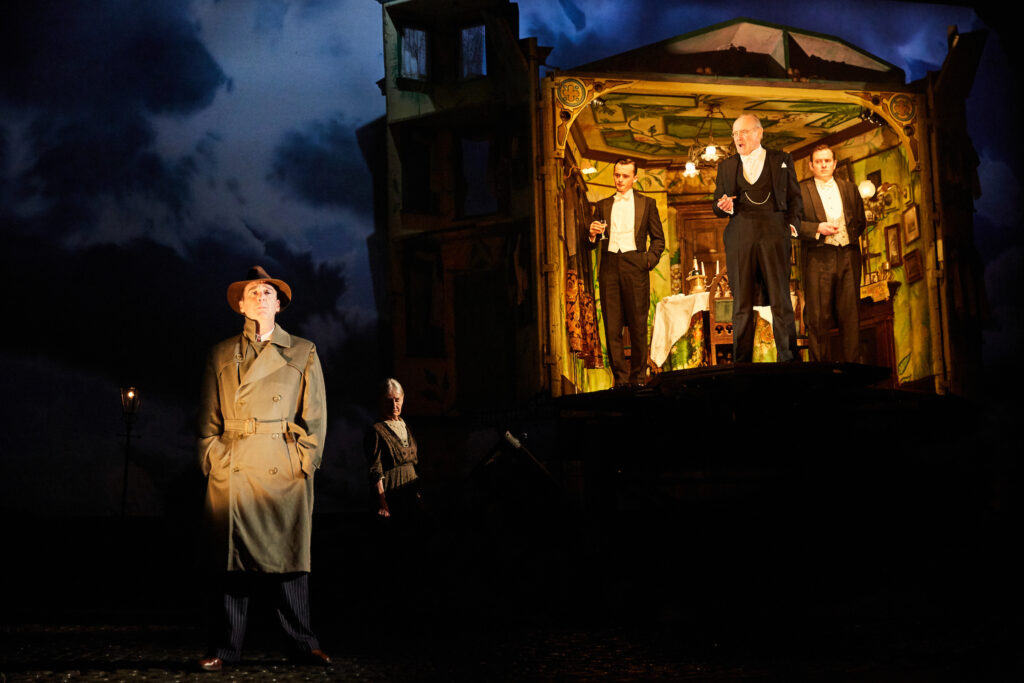
    Hailed by many as the theatrical event of its generation, Stephen Daldry’s multi-award winning National Theatre production of An Inspector Calls is a gripping and vivid adaptation of JB Priestley’s classic thriller. Having won numerous awards, including the Tony Award for Best Lighting Design, not to mention having played to over five million theatregoers, the show has now returned for a brand-new UK tour, with the previous one in 2022 being a record-breaking sell-out. Having lit the original production back in 1992, and all of its subsequent runs, Olivier and Tony Award-winning Lighting Designer Rick Fisher is once again part of the creative team and approached White Light (WL), a d&b solutions company, to supply his rig; with the company having worked on the show since its original West End debut in 1995.
     
    An Inspector Calls tells the story of Inspector Goole who arrives unexpectedly at the prosperous Birling family home where they are hosting a dinner party. Yet their evening is soon shattered by his revelations into the death of a young woman; ones that shake the very foundations of their lives… Whilst the show has been touring often since its 1992 premiere, it actually had a life before this. Rick explains: “The first incarnation of this show took place in 1989 at the York Theatre Royal as part of their rep season. It was still in its infancy and was definitely developed further for The National’s production three years later; though the essence of the piece remained the same. The same could be said about my lighting design. Despite us now having worked on this piece for over thirty years, my design is still based on the 1992 production, which itself was built around the original rep rig for the Lyttleton Theatre. As such, when we return to the show every year or so, it’s a case of looking at how the advancements in technology can help enhance the look and feel of what we’re trying to achieve – essentially making sure it looks the best it’s ever been”.
     
    When it comes to his design, there are three main side lighting positions which cover both the actors and the play’s action. Rick comments: “We have one position downstage of the proscenium arch, one upstage of the proscenium arch and then one further upstage from this. These positions were initially implemented due to the set design but we then realised, artistically, they created a very powerful look as well. We also light from above the Edwardian doll’s house and it’s important this has a cosy feel, to contrast the colder and somewhat alien ambience of when the actors are outside the house. Similarly, we also have to light the sky cloth as well as the rain curtain; both of which have very specific lighting specifications”.
     
    Once again for this tour, Rick approached the Hire Team at WL to supply his lighting fixtures; with this rig being the most technologically advanced yet. He states: “Looking back at the show’s lighting over the past few years, we are slowly but surely bringing in more and more moving lights. For instance, with the overhead rig, this is made up entirely of Aryton Diablos. We wanted to be consistent with one unit that would work for all our needs – something that the Diablo does. Interestingly, we don’t use gobos or strobes and most of these moving lights don’t actually move! Instead they’re used as better functionality conventional lights that can be focused remotely. Similarly, by having more automated lights overhead, this has massively helped with the set-up of the show when it visits each venue. Rather than having to stop the technical fit-up for the overhead focus (which has happened in the past), this can all take place simultaneously given the fixtures can be controlled remotely.
    Rick continues: “When it comes to lighting the sky cloth, the cloth itself is a beautifully hand-painted material, as opposed to something that’s printed; hence when you light it in certain ways, it can look incredibly different. For many years, we lit this using over 80 fresnels in a 6-7 colour wash and then mixed accordingly. Over time and various productions, this migrated down from 80 to 40 2K fresnels, before then changing again to about a dozen ETC Lustr 2s. Now is the first time it’s being lit by a selection of Diablos and looks the best it ever has in the show. Similarly, when it comes to the rain curtain, you could almost chart the history of lighting fixtures through what has lit this! We’ve moved from fresnels to Lekos to the original ETC Source Fours to PAR Battens and are now drawing on the GLP X4 Bars. Alongside the Diablos, these are the real workhorses of the rig and do a fantastic job”. 

    And whilst Rick’s aim on the show is to always “use the latest technology to ensure the show looks as good as possible”, that doesn’t mean the rig consists of entirely modern fixtures. He explains: “We still use the R&V Beam Light 500Ws which may now be venturing into the ‘classic fixture’’realm! That said, these offer a particularly special kind of light; one that is used to highlight the actors’ faces when it comes to crucial moments of the story, hence why I call them ‘confessional lights’. We also use a Patt 243 for another strong ‘work light’ effect. Thankfully, alongside their state-of-the-art fixtures, WL also has an extensive archive range which means I can then achieve the exact looks and feels I require”.

    An Inspector Calls opened its latest tour back in August where it had a four-week run at a specially- reconfigured Alexandra Palace. It is currently at the Aylesbury Waterside Theatre and will continue visiting venues until May 2025. For more information, please visit: https://aninspectorcalls.com/
     
    Rick concludes: “An Inspector Calls has always been a very special piece and continues to have incredible resonance right to this very day. Whether it’s the audience of over 2,000 at Liverpool’s Empire Theatre or the fact we’re visiting more venues than ever, it’s a play that continues to speak to people and we have a great responsibility in helping create a night audiences won’t forget. For this tour, I’d like to say a huge thank you to Will Evans (my Associate Lighting Designer), Alex Hannah (my Touring Relighter and Electrician) and Michael Fox who programmes the show as well as developed some of the bespoke rigging for the lighting. I’d also like to say thanks to the team at WL who continue to support this show after thirty years and always work incredibly hard to provide something that fulfils our budgetary, artistic and logistical needs. They truly understand the show and what it needs, and that long-standing relationship is greatly valued”.

    Contact our Hire team for any further information 020 8254 4800.
  4. White Light is the Perfect Medicine for Dr. Strangelove

    Leave a Comment

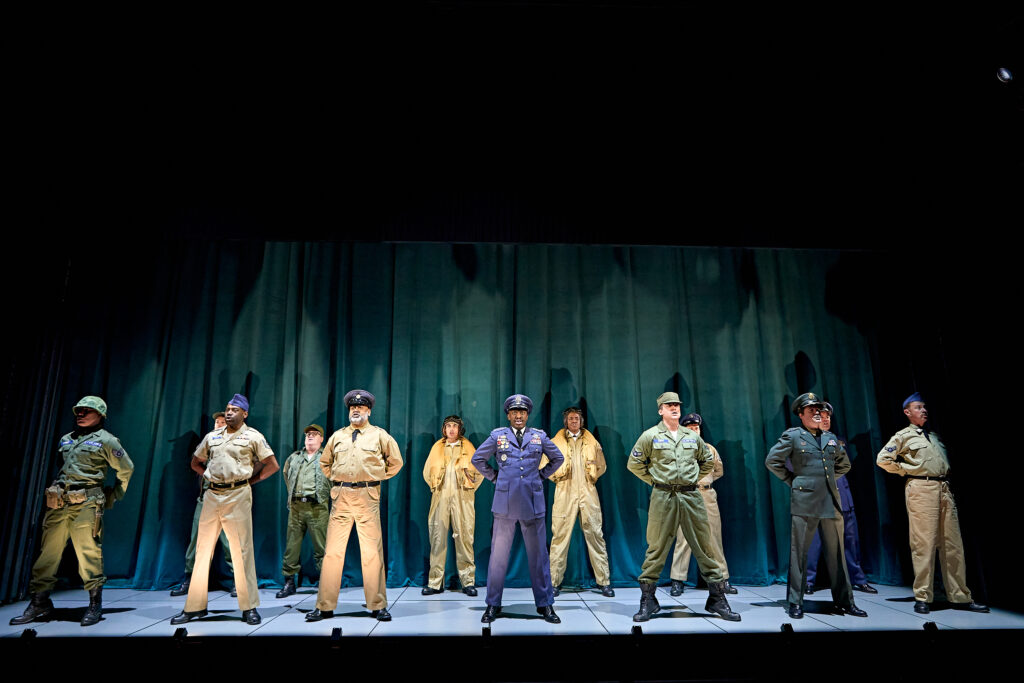
    Starring seven-time BAFTA Award-winner Steve Coogan, Dr. Strangelove is the first-ever theatrical adaptation of Stanley Kubrick’s comedy masterpiece. Written by Armando Iannucci and directed by Sean Foley, it tells the story of a US General who decides to go rogue and declare a nuclear attack on Russia; who, he discovers, have a Doomsday machine capable of destroying the world! The show features a lighting design by Olivier Award-winning Jessica Hung Han Yun who approached White Light (WL), a d&b solutions company, to supply her lighting rig.

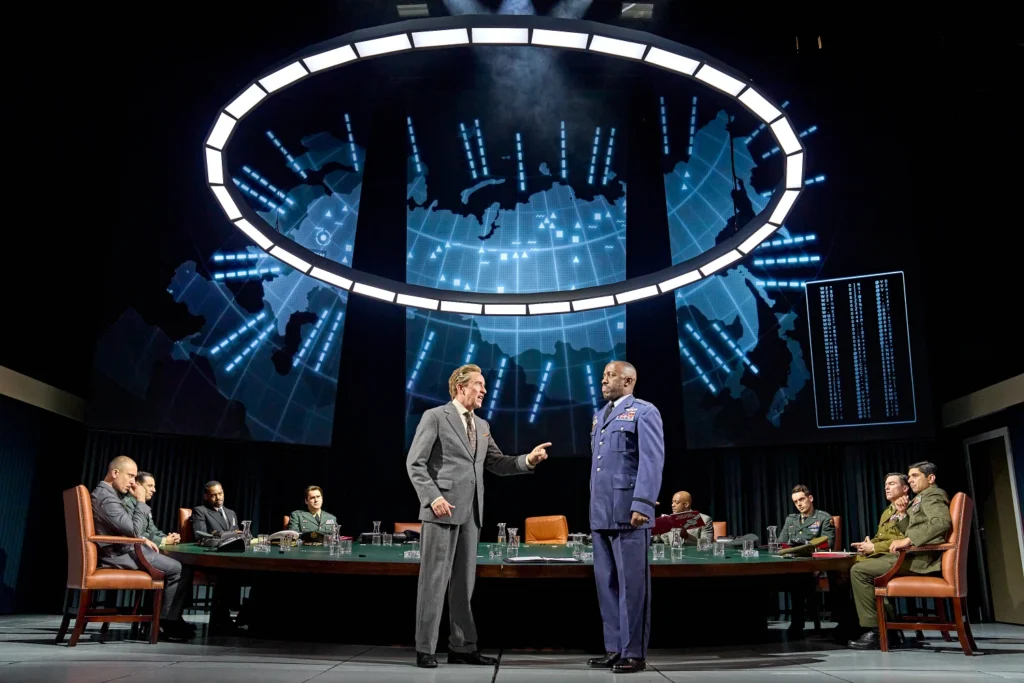
    Prior to its run at the Noel Coward Theatre, there was much anticipation leading up to the opening of Dr Strangelove; largely due to the cult status of the film. As such, did the movie version influence Jessica’s design? She answers: “I had in fact watched the film many years ago and remembered enjoying it and the lighting specifically. The iconic image of the war room light and the shafts of light in the background have always stayed with me. Similarly, the quality and texture of the light is so vivid in the film; largely due to its legendary cinematographer Gilbert Taylor who has a great eye for light and shadows. As such, when I was approached to be part of the production, it was a no brainer! And given I was so captivated by the film’s style and visual aspects, I was more than happy to allow this to have some influence on my design”.

    Once she agreed to come on board for the show, one of Jess’s biggest tasks was allowing the story to make the leap from screen to stage. She explains: “To state the obvious, theatre and film are two completely different mediums so there was always going to be a huge difference in the feel and look of the piece. However, I was keen to keep the essence of the original movie running throughout. Hence the challenge was how we could bring this to life in a theatrical sense without simply creating a carbon copy. This largely arouse through a focus on the various locations and creating transitional lighting that embodies that perpetual feeling of an unsettling environment as we move through the different set pieces”.

    Given the show’s ambitious nature, this meant that, despite knowing what she wanted to achieve, Jessica’s design kept evolving through both the rehearsal and technical period. She comments: “My main objective with the transactions was that they almost acted as storytelling actions in little tableaux. That said, we weren’t entirely sure how these would work until we saw them incorporated as part of the actual show. Similarly, the colour palette developed hugely throughout the production process. The original movie is black and white so having to bring it to stage was brand-new to all of us as we were adding colour to it for the first time. We initially looked at some photos from behind-the-scenes of the original film and it was quite fascinating to see how the pallet of the costumes evolved and what these eventually became for the stage version”.

    Knowing what she wanted to achieve with her lighting design, Jessica approached the Hire Department at WL to supply her fixtures. She explains: “My rig consists of a mixture of MAC Encore Colds, ETC Halcyons, MAC Aura XBs, Solaframes, Par Cans, ETC Source Four Lustr 2s and Rosco Pica Cubes. I actually had each one in a range of positions, mainly to help get around moving set pieces as well as static pieces such as the war room light. Specifically, the XBs were used as backlights, Halcyons were used as specials and cross light, whilst the Pica Cubes were utilised for footlights and for the plane in the bottom area as little backlight fixtures”.

    Of course, with a show as ambitious as this, there will no doubt be some obstacles. Jessica explains: “The biggest challenge was that each piece setting had its own obstacles. A prime example is the war room light as this huge item flew in and obviously took up a vast section of the stage. As such, it became a case of working out the right angles for the fixtures and where best to position them. Ironically, in this show, it was the most simple scenes, such as those that take place in Ripper’s office, which were often the most complicated!”.

    Dr Strangelove has now opened and will run until 25th January 2025.

    Jessica concludes: “I’m incredibly proud of what the creative and production teams have achieved on Dr Strangelove. I’d also like to say a huge thank you to the Hire Team at WL for their support throughout”.

    Contact our Hire team for any further information 020 8254 4800.

  5. Behind the Lights: White Light talks with Dale Driscoll, Associate LD of Burlesque

    Leave a Comment
    Credit: Johan Persson

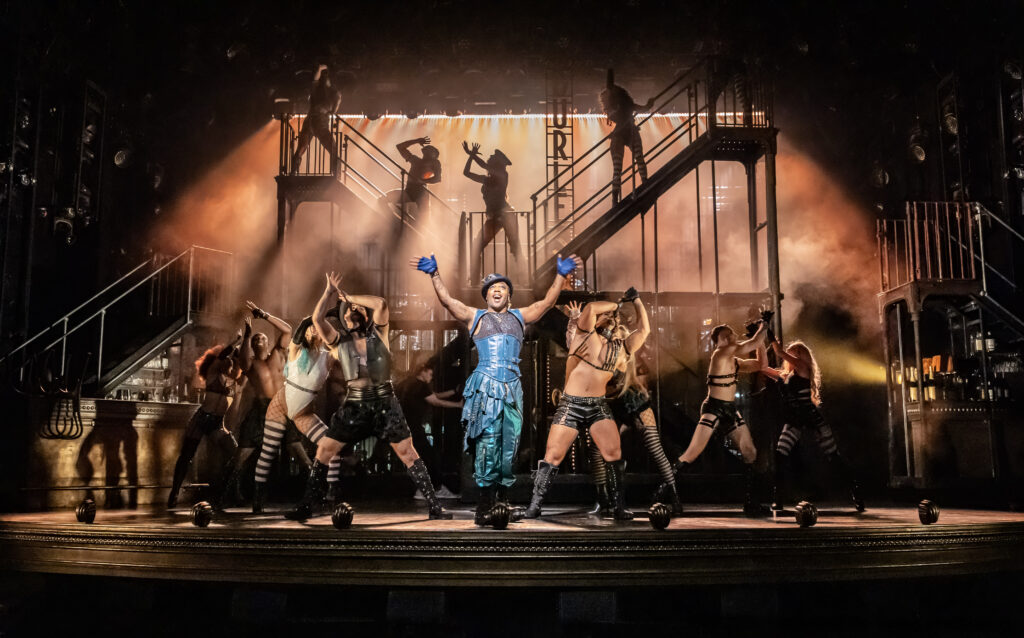
    Based on the smash-hit film starring Christina Aguilera, Cher and Stanley Tucci, Burlesque The Musical is a thrilling new adaptation which features songs from the movie, plus brand new numbers written especially for the stage production. The musical tells the story of Ali who heads to the bright lights of New York in search of her mother but soon finds herself drawn into a dazzling underground world where the beat of the music and the heat of the dance moves will change her life forever… The show originally opened for a sell-out season at the Manchester Opera House back in June and is about to return to the venue, having played at the Theatre Royal Glasgow for most of September. It features a lighting design by Jack Knowles, whose associate for the show was Dale Driscoll. Having supplied the lighting for the show, we spoke to Dale about what it means to be an Associate Lighting Designer, what his role entails and how he helped bring Jack’s vision to life.

    Directed by Nick Winton (Bonnie & Clyde), Burlesque The Musical has a book by Steven Antin, who also wrote the movie, and music and lyrics by Sia, Diane Warren and Christina Aguilera herself, Toderick hall and Jess Foley have also written songs for the show whilst staring as Sean and Ali in the show.

    Speaking to Dale about the position of Associate Lighting Designer, he comments: “My role is to support Jack at every stage of the design process. To start, Jack had several chats with director Nick Winston and writer/producer Steven Antin, to talk through their ideas about the show so everyone was on the same page. From this, Jack created a design that was incredibly beam-led and featured lots of atmospherics with lots of haze and smoke!  Jack and I then started our initial discussions, which were mainly about set electrics, practicals and what he wanted the followspots to do. So, as with any Associate, my first real task was to go off and prepare paperwork for the spot cue sheets and work with the set and practical builders such as Howard Eaton. This is almost an administrative exercise, which, in turn, frees up Jack to attend rehearsals and focus more on the creative aspect of his work”.

    Dale continues: “Another large part of my role is also to liaise with other departments before the fit-up period (and throughout tech and previews to) to ensure that anything lighting-related is being considered. Whether that’s collaborating with the audio team, making sure the fold back will fit in the lighting towers, working with props to work out which lamps in the set dressing need to light up or working with stage and production management to get a particular scene set on stage for the designer to work on”.

    Credit: Johan Persson

    All of this ground-work pays in dividends when the show enters perhaps the most crucial moment for any designer: the tech period. Dale explains: “The plotting and tech period of a production is actually quite a collaborative one for an Associate Designer. Working with both Jack and our hugely talented programmer Laura Howells, we were able to bounce ideas off one another as we worked out, practically, which fixtures would point where.  Often, this would involve me literally going onto the stage with wireless comms while Jack and Laura would be out front, so I could guide Laura for accurate shutter cuts or stand somewhere and yell ‘actually I think this unit might be best here as the other one can’t hit me!’. There has to be complete trust between the team as ultimately we all want the show to look as good as it can possibly be. What’s great about Jack too is that he allowed me to action notes without getting involved; which, ideally, is how the relationship should work”.


    The tech period also marks the busiest time on a show for an Associate Lighting Designer, with Dale explaining: “At this point of the process, I have to refine the followspot tracks and then call them during both tech and dress rehearsals. As the design naturally evolves, I work with the production electricians to keep on top of any changes as well as note any fixtures that need additional attention in regards to focus or say if they’re not serving their full purpose. I also make focus notes for the generic fixtures, tracking the position of every moving light, taking several photos of where fixtures should be rigged, as well as recording videos of the show cues of how the lighting should interact with the rest of the production. Essentially, I need to know the rig and Jack’s design inside out!”.

    Jack approached WL to supply his lighting rig for Burlesque The Musical, which consists of GLP X4 Bars, MAC Quantum Washes, MAC Aura XIPs, MAC Auras, Aryton Diablos, Halcyon, Solaframe 1000’s, VL Event pars, MAC Encore Warm Performances, MAC Encore Cold Washes, Q40’s, MAC Viper Smoke machines, Unique hazers, Astera AX3 & AX5’s and ETC Lustrs. Discussing the rig, Dale comments: “It has quite the mixture of equipment and all of it works extremely hard. In total, I believe there’s over 1,200 cues and around 436 presets! Thankfully, we have a great production Electrican team headed up by Adam Frost to ensure the rig will be ready for me to relight the show when we move venues back to Manchester!

    Another responsibility which Dale has as Associate Lighting Designer is stepping into Jack’s shoes when he’s unavailable. He explains: “Throughout the whole process, I have to be Jack’s eyes and ears when he’s not around, whether that was attending a tech rehearsal one afternoon or noting a preview performance. Then, when the show goes on the road, it is my job to relight the piece as it arrives in different venues. It’s quite a responsibility, which is why it’s so important to do all of the previous groundwork and ensuring you know precisely what the design should be”.

    Following its run in Glasgow, Burlesque The Musical returned to the Manchester Opera House and closed on November 2nd, before hopefully transferring into the west end sometime soon!

    Dale concludes: “It’s been a fantastic experience working as Associate on a show as ambitious and exciting as Burlesque. A huge thanks also needs to be given to the WL team for their continued support throughout the process”.

    Contact our Hire team for any further information 020 8254 4800.

  6. War Horse is a Tour de Horse with White Light…

    Leave a Comment

    Based on the novel by Michael Morpurgo, the National Theatre’s acclaimed production of War Horse is an unforgettable theatrical experience which takes audiences on an extraordinary journey from the fields of rural Devon to the trenches of World War One France. Filled with stirring music and songs, it has become renowned for its astonishing use of life-sized horses by South Africa’s Handspring Puppet Company, who help bring this thrilling story to life on stage. Having first been performed in 2007, the show is returning once again for an all-new UK and Ireland tour, featuring a lighting design by Rob Casey. Given the company’s long-term involvement with the show, White Light (WL), a d&b solutions company, was called upon to supply the touring lighting rig.

    The original production of War Horse was lit by Paule Constable, who would also light subsequent touring productions. For these, Rob initially served as one of her Associate Lighting Designers but is now taking full creative reigns for this latest tour. He explains: “Paule was extremely encouraging and said I was welcome to lean into her existing visuals. That said, given how I knew the show and the rig in particular would have to adapt now it was going on tour, I decided to start again with a completely fresh perspective. As this is a touring show, logistically, we had to trim down the lighting rig from what it previously was. As we would be moving to venues across the country and requiring a quick fit up in all of them, we had to think practically about what we could physically take with us”.

    Alongside the practical logistics of his lighting rig, Rob also had to consider the artistic brief he needed to achieve. He comments: “Tom Morris, the Director, wanted the lighting to have the ability to close space down and then quickly open up again. Rae Smith’s set design is beautifully minimalist, mainly consisting of one projection screen so the lighting had a big role to play. Also, this projection screen is essentially on a big curve and historically, the lighting positions were on a similar curvature. Of course, this simply isn’t possible for the tour as we knew that, in most venues, we could only use straight bars that ran parallel to the stage and also hung off house counter-weights”.

    Knowing the specifics of his design, Rob worked closely with the show’s Production Electrician to compile a list of appropriate fixtures, before taking this to the Hire Department at WL.

    He states: “The rig mainly consists of three components: the Martin MAC Ones, the Martin MAC Aura XIPs as well as the Macula Followspot System. In previous versions of the show, there were several Par Can units that were very much ‘in-view’ and became part of the show’s aesthetic. This look is continued with the MAC Ones, though I am trying to offer a newer, more fresh version of the in-view picture of the world of the show. The MAC Ones don’t necessarily look too ‘digital’ and thus contrast with the time period the show is set in, but they are definitely mor powerful, state-of-the-art units which deliver the looks I need.

    He continues: “The Viper XIPs are the workhorse of the rig and provide the lion’s share of the coverage. Given their output, these were included instead of lots of washes and profiles which were previously used – again as a result of streamlining and ensuring we could easily fit up in every venue. The Macula System was a design choice as we wanted to have all 40 MAC Ones follow the puppetry horses when they’re on stage. This was the only system which meant we could do just that using only one operator and which had the ability to do so whilst being completely brand-agnostic”.

    WL’s Hire Business Development Manager Stuart Porter comments: “It was great to be able to work with Rob and his team and continue our long-standing relationship with War Horse. With a hire like this, it was all about ensuring we supply the exact fixtures which could help streamline his rig and make it suitable for touring – something we’re proud to say we were able to do”.

    The War Horse UK tour opened at Wimbledon New Theatre on 5th September embarking on a nationwide tour. For more information, please visit: https://www.warhorseonstage.com/

    Contact our Hire team for any further information 020 8254 4800.

  7. White Light Supplies Lighting Rig for Hello, Dolly! West End Revival

    Leave a Comment

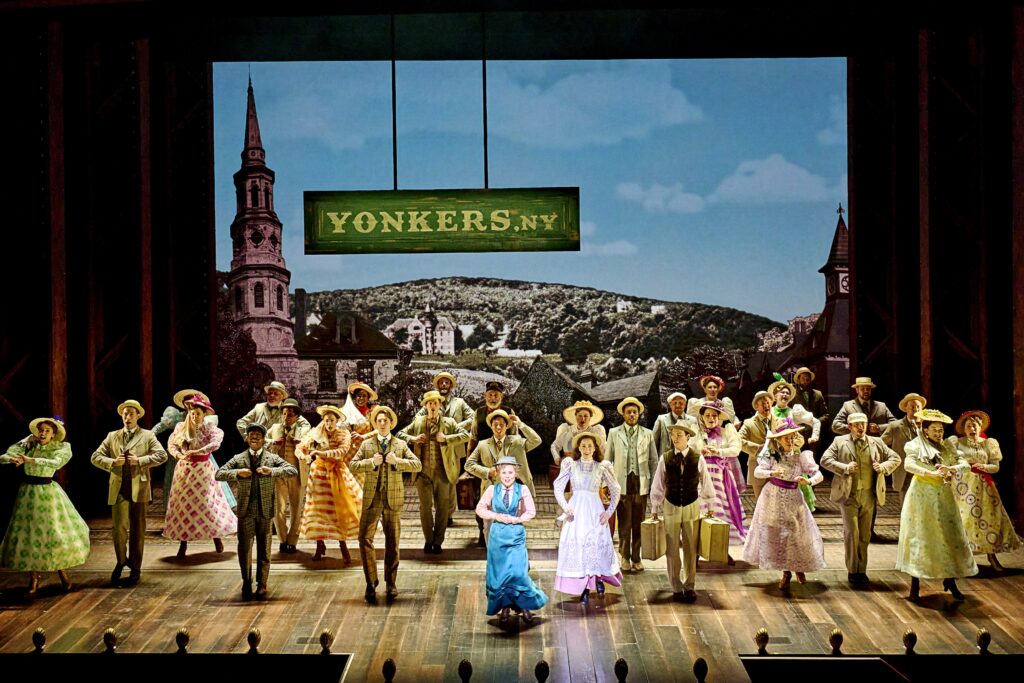
    Having first being performed on Broadway in 1964, in a production which won ten Tony Awards, Hello, Dolly! is the classic Jerry Herman musical about Dolly Levi, a strong-willed matchmaker who travels to New York to find a match for the miserly, unmarried Horace Vandergelder. It has been revived countless times over the years, having first arrived in the West End in 1965. Now, almost sixty years on, a new production has recently opened at the London Palladium, directed by Dominic Cooke and starring Imelda Staunton. It also features a lighting design by the Olivier Award-winning Jon Clark who approached White Light (WL) – a d&b solutions company, to supply his lighting rig.

    This latest production of Hello, Dolly! has been several years in the making. Initially intended to open in July 2020, it was postponed due to the Covid-19 pandemic and has only reached this summer the London stage. Talking about his role on the show, Jon comments: “Surprisingly, I’d never actually seen any previous reincarnations of Hello, Dolly!. As such, this meant I could approach this production with a fresh pair of eyes and almost treat it as a brand-new show; albeit one filled with classic showtunes which were immediately familiar! When discussing the look and feel of the piece initially, Dominic, the director, was really interested in exploring the notion of momentum. Dolly is a widow, tentatively returning to the real world, following the death of her husband. Each protagonist is essentially on a journey and looking to move forwards in life. As such, this theme of momentum informed the visual aspects of the production too.

    He continues: “The set features a travellator which occupies the full width of the Palladium stage and is seamlessly integrated into the choreography and movement of the musical. There is also a large, high definition LED screen upstage, with images scrolling across the screen that are synchronised with the travellator; reinforcing this sense of movement. I collaborated closely with set designer Rae Smith and video designer Finn Ross and, between us, found a language with which to blend the three dimensional world onstage with Finn’s brilliant kinetic photographic collage on the screen. This is an old musical which we’re bringing to a new audience. As such, it’s packed with amazing numbers and so the lighting needed to make these moments feel as emphatic as possible. That said, the overall approach was to keep the lighting strong but simple – to celebrate the colours and forms of Rae’s fantastic costume and set design”.

    Knowing what he wanted to achieve with his lighting design, Jon contacted WL and worked with the Hire Department to choose his fixtures. He explains: “I wanted to contrast the exterior world, backed by the LED screen and largely lit with LED lighting fixtures, against some warmer and more human, tungsten sources. As a result, a large portion of the rig is made up of an overhead grid of Par 64s interspersed with Martin MAC TW1s. We drew on 58 x TW1s in total; overhead and on the lighting ladders at the side of the stage. The tungsten bring a thickness and warmth, whilst the overhead Pars come to life in Act Two for the iconic Harmonia Garden restaurant scene, especially for Bill Deamer’s breath-taking choreography for ‘The Waiter’s Gallop’.

    He adds: “We also drew on ETC Halcyon Titaniums, Martin MAC Encore CLDs and WRMs FOH and overhead, with four overhead bars of Chauvet COLORado PXL Bars and GLP XBar 20s; the latter used mostly for the wider external scenes which provided a comprehensive base to fill the negative space”.

    Jon concludes: “The response from the audience has also been fantastic and I’m very proud of this show and everyone involved. It was a huge honour to light such a significant musical in such an iconic venue. We had a stellar lighting team, led by Production Electrician Ben Nichols, Associate LD Lucia Sanchez Rondan and Programmer Vic Brennan. The Palladium’s lighting department led by Mark Smith were first class and really made us incredibly welcome. When lighting a show like this, it’s not necessarily a case of defaulting to the very latest equipment but rather drawing on what is most suitable for the production. I am delighted to say that once again, Stuart Porter, Louise Houlihan and the WL Hire Department played a huge part in successfully achieving exactly that”.

    Hello, Dolly! Opened earlier this summer at the London Palladium and will run until 14th September.

    Contact our Hire team for any further information 020 8254 4800.

    – End –

    Lighting Team Credits

    Associate Lighting Designer: Lucia Sanchez Roldan
    Lighting Programmer: Vic Brennan
    Senior Production Electrician: Ben Nichols
    Production Electricians: Steve Andrews, Michael Scott and Rachel Moule
    Head of Lighting: Paul Turner
    Dep Head of Lighting: Charlie Hain
    Palladium Chief LX: Mark Smith
    Follow Spot Operators: Abi, Becs and Jason

    Photo courtesy of Hello Dolly © Manuel Harlan

  8. White Light Returns to ArtsEd for MA Season

    Leave a Comment

    ArtsEd is a world-renowned centre of excellence for training in the performing arts. As part of its diverse portfolio of training, it offers an MA acting course which focuses on building versatile performers by developing their voice and identity to become bold, brave and ready for the industry. As part of the programme, the students take part in what’s known as the MA Season; an opportunity for them to perform in productions to invited industry guests. Having worked with ArtsEd on several occasions, WL was asked to provide the lighting equipment for this year’s showcase. 

    The MA Season consisted of two shows: Fear and Misery in the Third Reich and katzenmusik, with both of these taking place in the Andrew Lloyd Webber Foundation Theatre. Fear and Misery in the Third Reich is made up of a series of playlets that portray 1930’s National Socialist Germany as a land of poverty, fear and violence; with Nazi anti-Semitism running through the core of the play. Conversely, katzenmusik is set in the modern-day fictional town of burnside, where the residents are being split by class divide and income inequality. An isolated crime sets off a chain reaction of social vengeance that results in a viral video of the most gruesome nature…  

    The lighting designer for the MA Season 2021 was Alex Musgrave, who explains: “Despite knowing both plays would be using the same lighting rig, I still approached this project as if I was lighting two different plays in separate venues. That way, I am allowing each production the space I need to explore the piece and discover what its needs are and what will aid with the storytelling. Following this, I can then merge the requirements of each piece to see which ideas overlap and what I can combine to make one rig. 

    He continues: “For kaztenmusik, the director Sean Linnen’s brief was to ensure it had a very contemporary feel. The play consists of 30+ small scenes in a variety of locations such as a pub, a train station bridge, a school changing room, a flat and even a shopping centre. Each change in location had to be clearly defined by the lighting so we decided to make the transitions as bold as possible, playing with a limitless palette of colour. When it came to Fear and Misery, this was directed by Lucy Sheen, who had a brief of a very stylised film noir type lighting, that could not only serve the narrative but also add an architectural element to the play”. 

    Alongside the specific directorial briefs for each play, Alex also had to work alongside the set design. He comments: “The set by Adrian Gee offered an incredible canvas to work on, featuring a high gloss floating square stage that breached the proscenium arch. This also had a flown roof piece that sat at the back of the deck and was angled into the space almost at 45 degrees. A major opening was placed in the roof piece and for Fear and Misery, this was made circular and swapped to square for katzenmusik. We would eventually use this to position practical lights that matched the era of the plays, with Fear and Misery featuring beautiful industrial hanging pendants and katzenmusik making use of fluorescent tube fittings”.  

    Alex then approached the Customer Service team at WL to draw on the fixtures he needed; ones he knew would have to be both flexible and practical to offer him the looks he required. He explains: “The set had a lot of practical elements such as LED surrounding the floating deck and an LED rim light around the roof piece. I knew that I wanted to continue the colour changeable theme and used some LED pars to provide light through the upstage aperture. As such, I drew on the Elation SixPar 200: a unit that provided the light output required along with fitting the budget we had for both shows. They were hung close together and created a beautiful light curtain that acted as backlight for both productions. The rest of the rig was comprised of Sola Frame 1000 units, ETC Lustr 2 Frensels, Lustr 2 profiles and various generic fixtures”.  

    Interestingly, it wasn’t just the fixtures that Alex used to differentiate between the two shows: “Another way in which I ensured both productions felt completely individual was through the cueing styles. Fear and Misery, apart from the odd occasion, had quite long fade times for cues. They often overlapped and had complex sequences with multiple parts, almost in the style of a ‘long shot’ in film terms. With katzenmusik, the cues were very quick and the establish cue into each scene was a snap, which gave the play that fast pace it needed”.   

    The ArtsEd MA Season ran at the end of the Summer to an industry-invited audience. 

    Alex concludes: “I would like to thank WL for its continued support, as well as the team at ArtsEd for their hard work in making this production happen. I would especially like to thank Chris Mould who programmed both plays for me as, without his speed and accuracy, we wouldn’t have been able to achieve the style of production we achieved”. 

    Photos courtesy of Robin Savage and Steve Gregson. 

  9. White Light Supplies GH Boy at Charing Cross Theatre

    Leave a Comment

    Back in September when it was announced that theatres could play to socially-distanced audiences, this saw a range of venues prepare for their re-opening. One of these included the Charing Cross Theatre which re-opened with the world premiere of GH Boy. The lighting designer was Tony Simpson, who approached White Light to supply the lighting equipment. 

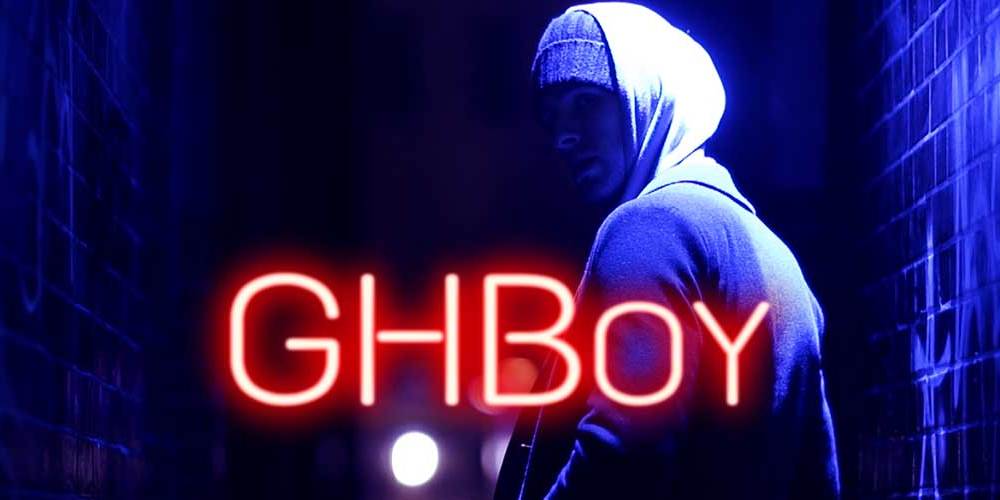
    GH Boy is a brand-new piece of writing which aims to tackle the misconceptions around gay culture and promiscuity. Set in the burgeoning party scene of East London, it focuses on Robert, who has to cope with tragedy and addiction, all whilst avoiding the wrath of an unnamed killer. Prior to its Charing Cross run, the show was originally going to play at The Vaults. Tony explains: “We were initially supposed to be opening in April and heading into the Waterloo tunnels. We had site visits, meetings and I’d even formulated a design. Then the outbreak of Covid happened and the entire production had to be pulled”. 

    Like many other freelance designers, Tony found his entire workload for the rest of the year suddenly disappear. He remarks: “It was an incredibly worry time as overnight my diary just emptied. Like most freelancers in the industry, I wasn’t sure where the next pay cheque was coming from and this continues to be the case for so many”. 

    It was in the second week of September that Tony would receive an email which would offer him his first project in months; one which would see him literally pick up where he finished back in March: “I got an email from Paul Harvard, the writer and lead producer of GH Boy. He told me he’d received some emergency fund money and that GH Boy had been chosen to re-open the Charing Cross Theatre. It was completely out-of-the-blue yet something I of course leapt at the chance to be a part of again”.  

    GH Boy would play at a stripped-down Charing Cross Theatre that would have 90 seats as opposed to the normal 250+. The company would have to rehearse in the space as well as comply to all of the government guidelines and be frequently tested. Tony explains: “We were all so keen to just get the work on but equally as keen to be safe. On day one, all of the company were given a Covid test. Similarly, everyone was wearing masks and maintained social distancing. It was incredibly well thought out and testament to the producer’s planning”.  

    The Charing Cross Theatre is the only theatre in Central London that is set up ‘in the round’. As such, it was perfect for GH Boy. Tony explains: “The Vaults show was going to be in traverse so thankfully it was a very similar set-up. My design has to change, mainly as at The Vaults you have to account for infrastructure, racks, rigging; all of which the Charing Cross had. As such, when it came to the hire, I was able to focus on obtaining the specific fixtures I needed to help tell this story”.  

    For his rig, Tony drew on Martin MAC Aura XBs, a fixture he regularly uses on smaller scale studio productions. For the crosslight positions, he used 4 x GLP Impressions X4 Bar 20s, which offered great coverage but were also very quiet; a necessity for the show. He also used a single Vari Light 2600, meaning his rig was all LED and incredibly flexible. He explains: “The play moves at a very fast pace and the director wanted the light to help steer where we were in terms of location. For instance, the main action takes place in a therapy studio so we wanted a warm, safe feel for these scenes. Whereas in the outdoor scenes, or those set in a nightclub, we wanted something much different. The lighting essentially became the backbone of the production and help guide the audience through the story”.  

    Tony and the team had a five-and-a-half-day technical rehearsal before their first preview on Wednesday 4th November. However, this first preview was going to be their last, with the government announcing a new national lockdown that was to begin the very next day. Tony explains: “We were all incredibly disappointed that after all of our hard work, the run was cut short by the new measures and that we were back to square one. However, putting on a show during a global pandemic is somewhat extraordinary and I’m so proud to be part of this production”. 

    GH Boy will actually re-open on 3rd December 2020 and run for the rest of that month. For more information, please click here.  

    Tony concludes: “While it’s been a slightly surreal year, and this production was no exception, what was fantastic was knowing that WL was there as a constant support throughout. I have a long-standing relationship with the company and want to thank them, particularly Dave Isherwood, for all of their support with GH Boy. It truly is a special project and we cannot wait to share it again with audiences next month”.  

    Photos courtesy of Bettina John.

  10. Howard Hudson Wins Best Lighting Design at WhatsOnStage Awards

    Leave a Comment

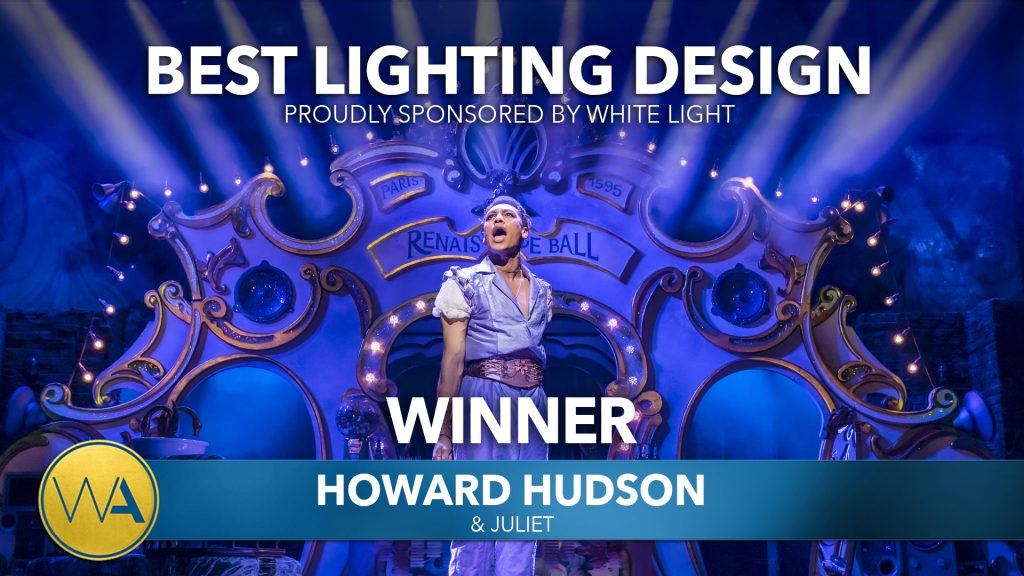
    The annual WhatsOnStage Awards took place at the Prince of Wales Theatre last night. Now in its 20th year, the Awards are the only major accolades in the UK where the audience choose the majority of winners. Alongside supplying the lighting equipment for the main ceremony, WL once again sponsored the Best Lighting Design Award which was won by Howard Hudson for & Juliet.

    This year’s WhatsOnStage Awards were the biggest yet, and for the first time, broadcast live on Radio 2 in a special show presented by Elaine Page and Paddy O’Connell. The biggest names from the worlds of theatre and showbiz were in attendance; as was WL who marked ten years of sponsoring the Best Lighting Design Award.

    This year’s Best Lighting Design Award was won by Howard Hudson for & Juliet. & Juliet looks at one of the most famous love stories of all time and asks what would happen if Julia decided to choose her own fate and if her famous ending was in fact just the beginning… The hilarious new musical uses the back catalogue of songs written by Swedish songwriter Max Martin, including ‘I Want It That Way’, ‘I Kissed A Girl’, ‘…Baby One More Time’ along with ‘It’s My Life’.

    Bryan comments: “We are absolutely delighted that Howard is this year’s recipient of the Best Lighting Design Award. A long-time friend of WL (we are currently supplying the 9 to 5 UK tour), we remember supplying some of the first shows he lit after graduating and have had the privilege of seeing him truly grow and develop to become a now award-winning lighting designer”.

    Howard has been a lighting designer for over ten years now, with select credits including 9 to 5 (Savoy Theatre), Strictly Ballroom (Piccadilly Theatre), Romeo and Juliet (Garrick Theatre), The Little Shop of Horrors (Regents Park Open Air Theatre) and Kiss Me Kate (Sheffield Crucible). He had twice previously been nominated for Best Lighting Design for his work on In The Heights (2016) and The Little Shop of Horrors (2019). Nominated alongside Howard for Best Lighting Design were Jon Clark (Evita), Ben Cracknell (Joseph and the Amazing Technicolor Dreamcoat), Jessica Hung Han Yun (Equus) and Tim Lutkin and Hugh Vanstone (Present Laughter).

    & Juliet was the biggest winner on the night, having won six awards in total which included all of the creative technical categories such as Best Sound, Best Lighting, Best Costume and Best Set Design, alongside Best Actress in a Musical for Miriam-Teak Lee.

    Other big winners included Come From Away, which won five awards including Best New Musical and Best Supporting Actress for Rachel Tucker, whereas the Old Vic took home three acting awards for Best Actress, Best Actor and Best Supporting Actress.

    WhatsOnStage’s COO Sita McIntosh said: “In our 20th year, we’d also like to say a particular thank you to the audiences who are the lifeblood of our Awards, voting in their thousands. Their support and championing of shows is what keeps our industry alive”.

    The WhatsOnStage Awards are one of several that WL sponsors, such as the upcoming Olivier Awards, OffWestEnd Awards and Tonic Theatre to name but a few.

    Bryan concludes: “As the leading lighting supplier to West End and UK touring theatre, we feel it’s important we celebrate the great work that is made up and down the country and recognise the brilliant individuals involved. From everyone at WL, we’d like to say a massive well done to Howard and all the other winners on what was another great evening for our industry”.