London Lighting Archives - White Light
Explore White Light: White Light | HireWL | SalesWL | ShopWL

Tag Archive: London Lighting

  1. White Light Keeps The American Clock Ticking at Old Vic

    Leave a Comment

    White Light has provided the lighting equipment for Arthur Miller’s The American Clock which recently opened at the Old Vic Theatre, London.

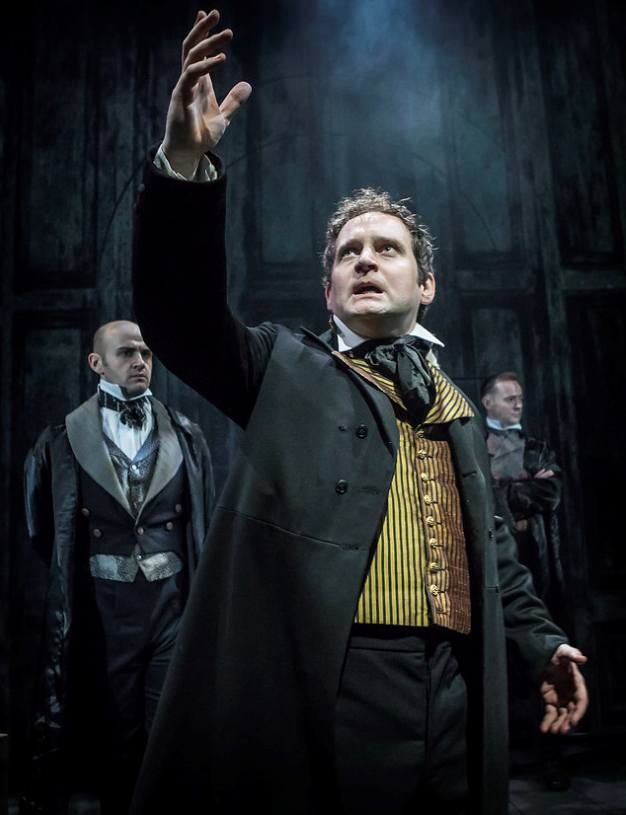
    The American Clock portrays the devastation that American citizens experienced when the stock market crashed and the Great Depression began in 1929. The play uses an ensemble cast to explore the lives of several families across several cities. It is directed by the renowned Rachel Chavkin and features a lighting design by Olivier Award-winning Natasha Chivers. Natasha comments: “This is an epic play that manages to tell a huge story about an entire nation. Rachel wanted to create something quite extraordinary in which we put the audience right into this extraordinary time in American history. Part of this included having audience members on stage. What this means is that the Old Vic stage has now been turned so that it’s practically ‘in the round’. When I’ve lit shows here before it’s always been ‘end on’ so this was a new experience for me. My brief then became to ensure I adapted my design to the space and that the lighting was strong from both sides”.

    To achieve this, Natasha looked at a range of different lighting options. She comments: “Initially, we toyed with the idea of using a tracking moving light system as well as followspots due to the fact that we needed to stay with the characters as they moved round the revolving stage. We eventually decided to go for one large moving light rig which would light everything. What’s really interesting about this play is that it’s a combination of your traditional Arthur Miller play coupled with music pieces (although it’s very much not a musical). As a result, it meant the design I created needed a mix of tungsten, LED and discharge lighting”.

    Natasha would use the tungsten lighting for the play’s more traditional scenes whereas LED was used for the sparkly musical numbers and the discharge was used to create a glossy feel. She worked closely with WL’s Senior Account Handler Jedd Hamilton to draw on her ideal rig. This included Martin MAC Viper Performances, ETC Series 2 Lustrs, ROBE Robin DL7S Profiles, ETC Revolutions and Martin MAC TW1s.

    Natasha explains: “I was really impressed with the ROBE DL7s which offered that perfect cross between serious moments and musical numbers. The TW1s provided me with the tungsten feeling I needed as did the Revolutions. I then drew on the Vipers to fill in for the longer shots”.

    With the show being performed in the round, this meant that Natasha had to ensure the lighting worked from all angles. She explains: “During the technical set-up, the first thing we did was go to the circle section as we had to ensure we were lighting actors from both the standard auditorium (front) yet that these were also lit for the audience sitting on the seats upstage. When focussing the moving lights, this meant we could clearly see where the shadows were on the floor in order to then ensure we were on target”.

    The American Clock has now opened and will run until March 30th 2019.

    Photos courtesy of Manual Harlan.
  2. White Light is Down and Out at the Orwell Foundation

    Leave a Comment

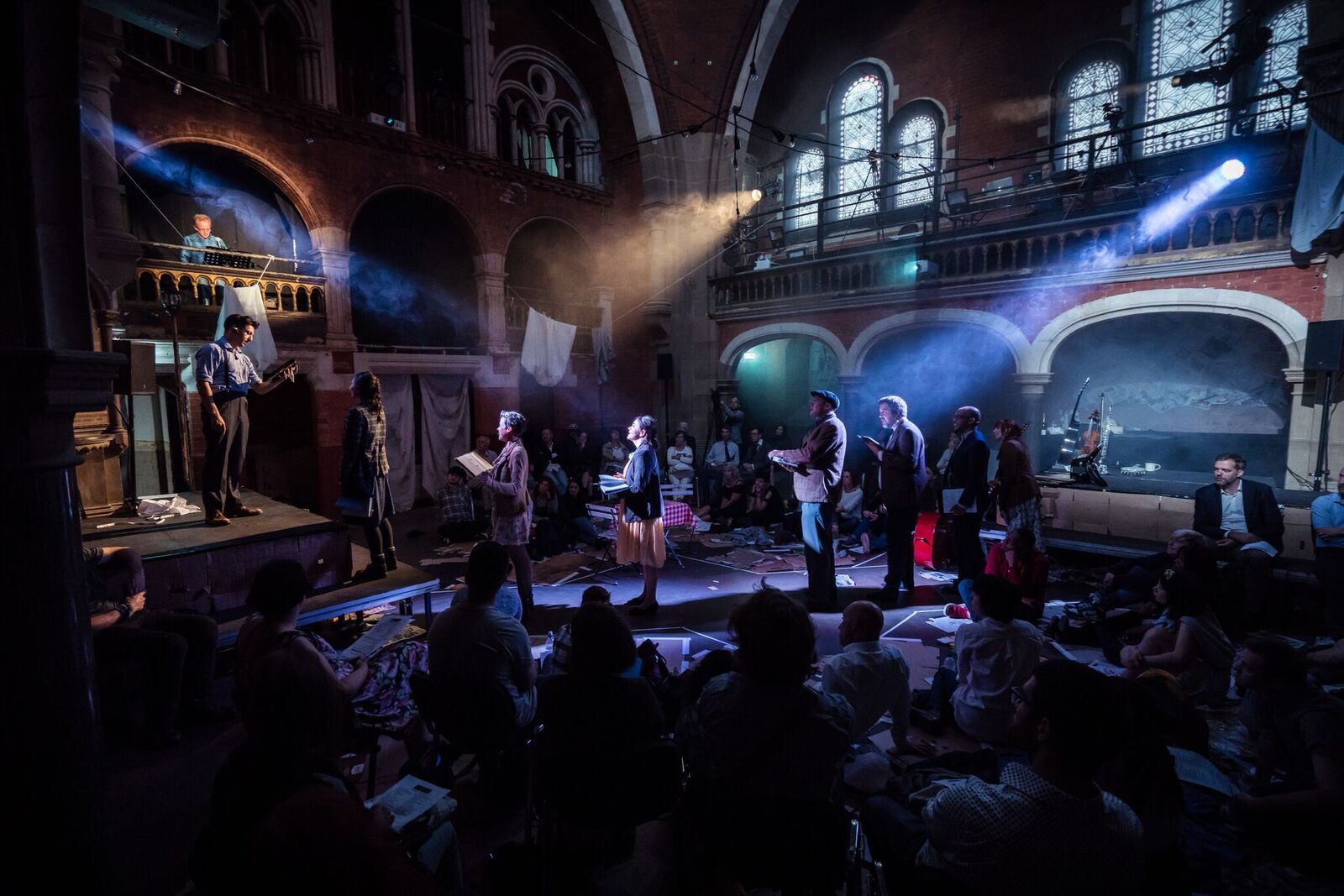
    On 6th June, George Orwell’s classic book Down and Out in Paris and London was brought to life in an immersive performance at Stone Nest in London’s West End. The event was a collaboration between The Orwell Foundation, the Joseph Rowntree Foundation, Libby Brodie Productions and UCL’s Festival of Culture. Having supplied last year’s unabridged reading of Orwell’s 1984: LIVE, White Light was called upon to provide the complete technical solutions on this occasion.

    Down and Out: LIVE was supported by Arts Council England and featured a lighting and projection design by Robbie Butler, who also designed 1984: LIVE. Robbie comments: “The brief for the show was focused heavily on the video design. I worked closely with the brilliant director Hannah Price who spoke to me about her thoughts on the type of projection she wanted to see, along with other concepts she wanted to experiment with throughout the five hour-long script”.

    Whereas 1984: LIVE was a reading of Orwell’s novel from start to finish, Down and Out: LIVE offered a slightly different interpretation. Robbie explains: “Whilst the project was constructed around extracts from Down and Out, these were interspersed with poetry and testimonies from people who are currently homeless; with the text still being extremely relevant in today’s society. Because it’s a marathon of an event, it’s quite difficult to plan intricately given the short lead-in period (we had a week of rehearsals for a five hour show). I had to devote most of my preparatory time making and rendering the video content. Additionally, because much of the action was improvised or potentially needed to be altered as a result of the immersive audience layout, the lighting rig had to be versatile; resulting in the show being busked from a bank of pre-defined presets”.
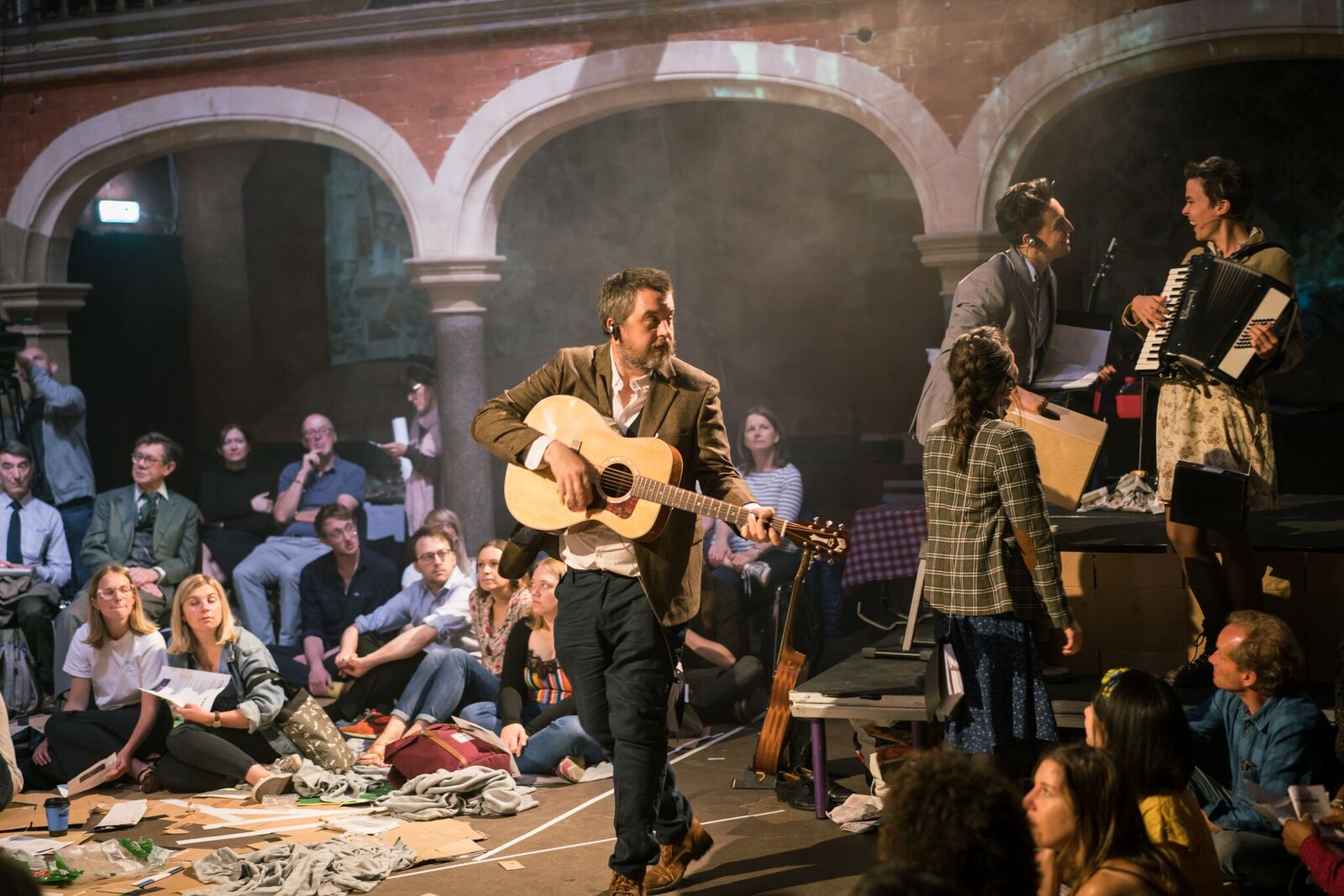
    Robbie approached WL to supply him with his perfect rig. He comments: “Versatility was key. I had two generic Source Fours for the readers and four Lustr 2s to act as a general wash in the centre of the room and cover the two platforms at either end. I used wireless uplighters to accentuate the building’s architecture and four JB A5s to help highlight certain areas of the playing space as needed. And, of course, there was also a Unique Hazer there for good measure – along with some festoons!”.

    WL also supplied the rigging, headsets, speakers, projection and sound desk. All of the equipment was delivered to Stone Nest the day prior to the event and was set-up on-site on the morning of performance.

    Robbie adds: “Stone Nest is an incredible venue. A former chapel, the interior features beautiful red brick walls and concrete gothic arches and windows. Architecturally, it’s a dream to light because it just looks like a really well built set. What isn’t ideal is that we had quite a large amount of light leakage on what turned out to be a sunny performance day. However, as a found space, you could really do some interesting things with it and it was great to work on a show there”.
    The event was completely free to attend and live-streamed to a global audience, whilst also being screened in libraries across the UK.

    Robbie concludes: “As always, WL were on top form and proved to be absolutely invaluable in getting this event off the ground. Their support really is second to none”.

    Photos courtesy of Robin Boot Photography.

  3. White Light Supplies Rothschild and Sons Musical

    Comments Off on White Light Supplies Rothschild and Sons Musical

    RC1Based on the Tony Award-winning musical The Rothschilds (1970), Rothschild and Sons tells the remarkable story of the Rothschild family and how their influence would eventually change the world. It recently opened at London’s Park Theatre and marks the musical’s UK premiere. The lighting designer is Jack Weir and the equipment was supplied by White Light.

    Jack comments: “For my design, I worked closely with the director, Jeff B.Moss, who was very keen for characters to appear out of nowhere, with a key sense of darkness constantly surrounding them. Traditionally, a lot of musicals are more suited to the look of vivid and saturated pictures with light beams cutting through haze in the air for sensory excitement. However, this differed slightly with this show due to a back wall”.

    The back wall, which was covered entirely in gauze, not only had to disappear when it wasn’t required during the show but also used as a projection surface throughout the show; meaning Jack had to avoid any form of light spill on it, whilst still achieving a sense of backlight to provide depth in each scene. He explains: “By trying to draw attention away from the back wall, alongside a predominately dark costume design, the show ultimately required a muted pallet of pastel colours, playing mostly with the use of black and white. Another practical aspect of my design was, owing to the Park Theatre’s thrust configuration space, there were only three main lighting positions, meaning everything was either on the circle front or overhead”.

    R&S2To bring his design to life, Jack approached WL, along with SGM, to supply him with the exact equipment he required. He explains: “I drew on a range of SGM units as they were small enough to position on the circle front, meaning that I had a moving light position, with zoom and full colour control in front of stage. This proved vital for cross lighting the cast in scenes which used full floor and wall projection. They also deliver a brilliant white, which nicely matched the look and feel of the video design by Louise Rhodes-Brown”.

    Jack also drew on the ETC Source 4 Lustr 2s and the Philips VL1100s. He adds: “The VL1100s are in constant use throughout the show, either as specials to define areas on the stage with the framing and diffusion features or as gobo washes. The Lustrs provided  a huge amount of pastel colour in a position which is as close to crosslight as I could get; particularly the minty green hue used in the number ‘Everything’. I also drew on an old favourite, the MAC TW1, which are still my favourite fixture and provided an invaluable injection of warm tungsten light in a defined and controlled way”.

    The show has now opened and will run until 17th February.

    Jack comments: “This is a really great show and I’m proud of the look we’ve managed to achieve. I’d like to thank SGM for their generous support of this production. I’d also like to thank WL’s Jonathan Haynes and Jim Dewhurst for their continued support, not only when delivering the kit but throughout the entire production period”.

    Follow Jack on Twitter – @weirdLX

    Photos courtesy of Pamela Raith.

  4. White Light Illuminates the Capital for London Lumiere Festival 2018

    Comments Off on White Light Illuminates the Capital for London Lumiere Festival 2018

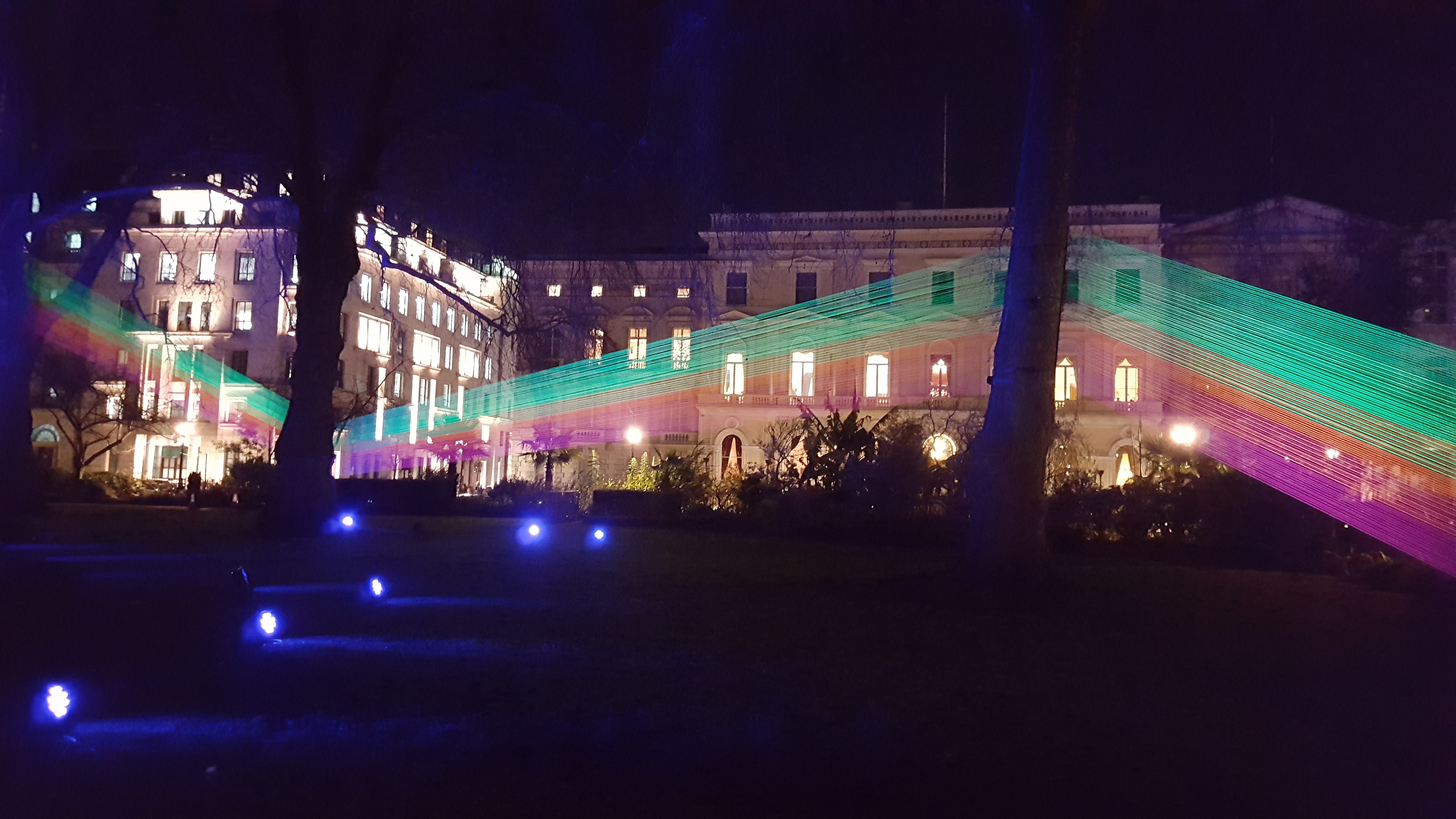
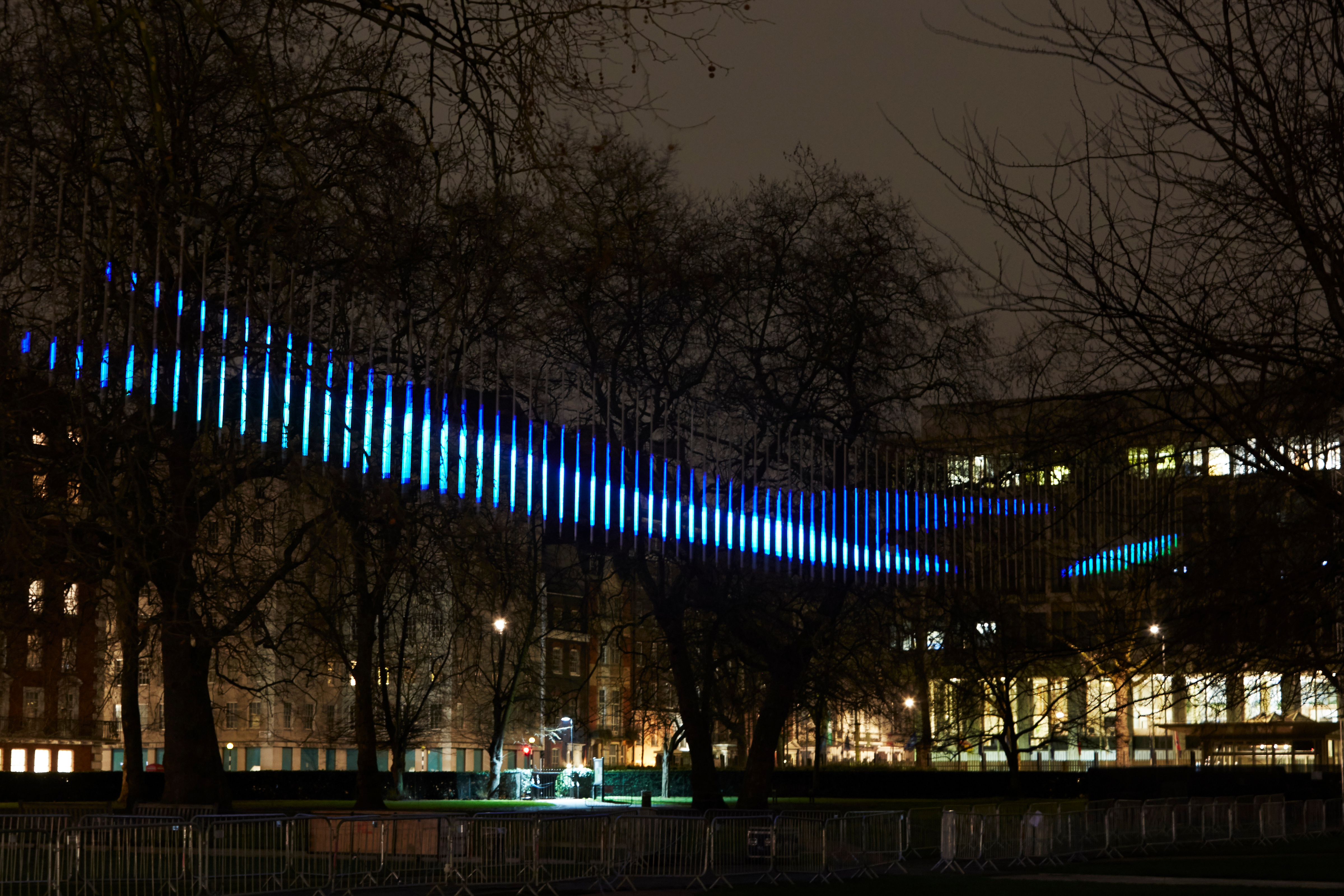
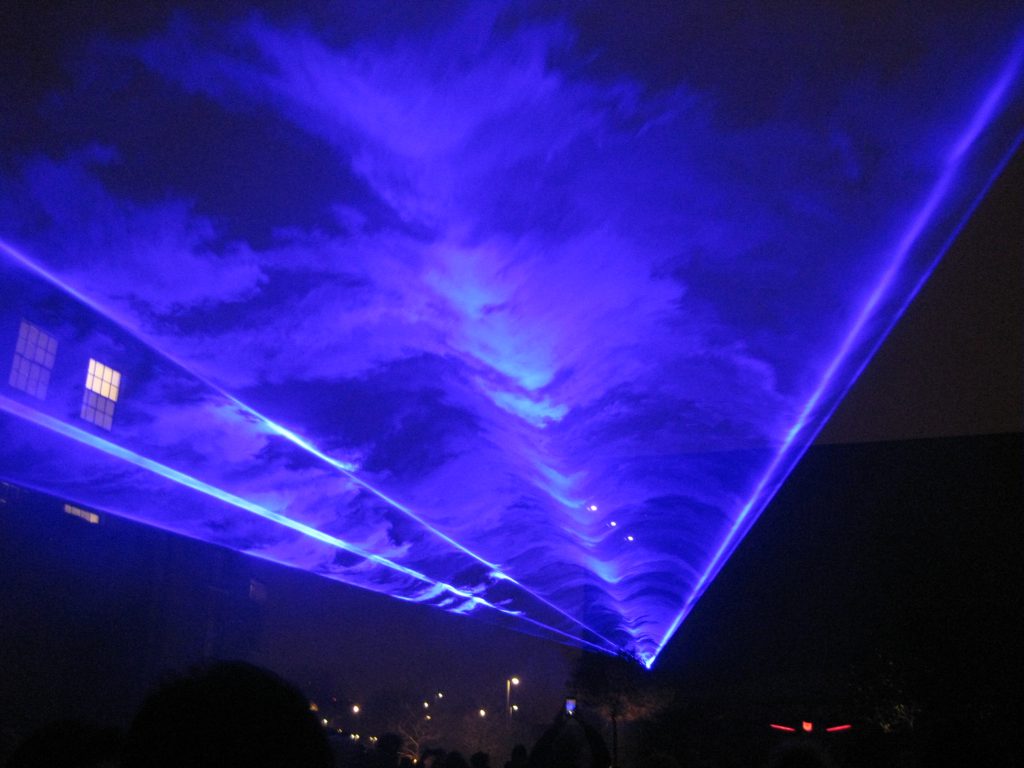
    Waterlicht © Caroline BanksThe Lumiere Festival sees famous landmarks across London brought to life with innovative lighting displays. It recently returned to London for the second time following the success of the first edition in January 2016. Following its work on the previous Festival, White Light was called upon to provide its services once again for the free outdoor light festival in 2018.

    The London Lumiere Festival showcases the capital’s spectacular and iconic architecture and streets, through the vision and work of UK and international artists. In 2016, it attracted an estimated 1.3 million visits over four nights. The year’s edition had an expanded footprint extending north to south, from Kings Cross, through Fitzrovia, Mayfair, and London’s West End, to Trafalgar Square, Westminster, Victoria, South Bank and Waterloo.

    Following the success of 2016’s Festival, along with WL’s extensive experience in lighting some of London’s most iconic buildings, the company was once again called upon by Unusual Services on behalf of Artichoke (arts charity and the UK’s leading producer of art in the public realm) to support this world-class festival.

    Spectral © Mishmash MediaWL provided lighting equipment and technical support to 11 projects across London.  The 11 individual installations were overseen by WL’s Senior Account Manager Dominic Yates and WL’s Senior Project Manager Martin Strods.

    Dominic comments: “We worked on the previous Lumiere Festival and were called upon to do so once again this year. This is largely due to our experience of working in a number of the iconic London venues where the Festival took place, along with our strong working relationship with the client and other suppliers involved”.

    The WL team spent two weeks at the company’s extensive pre-rig space in Wimbledon in order to prepare the equipment. Following this, the team moved into Central London where the on-site installation took six days.

    Northern Lights © Matthew AndrewsThe installations that WL worked on included ‘Waterlicht’ at Kings Cross, by Dutch artist and innovator Daan Roosegaarde.  ‘Waterlicht’ was inspired by people’s changing relationship to water and the risk faced if action is not taken to tackle global warming and rising sea levels. In Grosvenor Square. the public enjoyed interacting with ‘Northern Lights’ by Swedish Artist Aleksandra Stratimirovic. This was a dynamic light-art piece inspired by the enthralling experience of the Aurora Borealis.

    To bring each project to life, WL drew on a range of equipment including SGM P5 LED Floods, Elation Six Par 200s, ETC Source Fours, cabling and mains distribution infrastructure.

    Dominic concludes: “This year’s Lumiere Festival was the most ambitious yet and it was fantastic to play a role in bringing some of London’s most recognisable landmarks to life using the very latest lighting technology”.

    Photos courtesy of Caroline Banks, Matthew Andrews and Mishmash Media. 

  5. White Light Up On the Roof at Southbank Centre

    Comments Off on White Light Up On the Roof at Southbank Centre

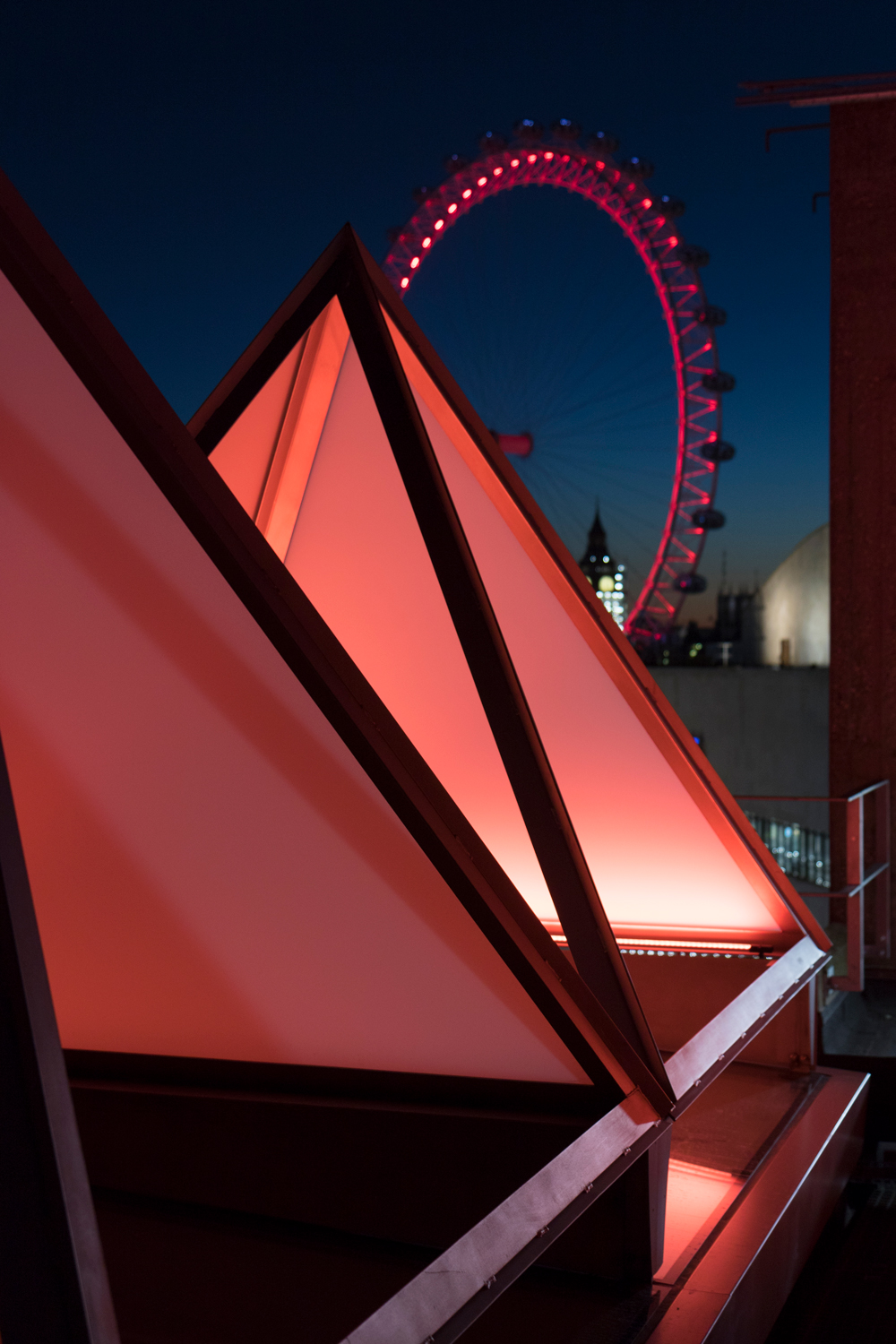
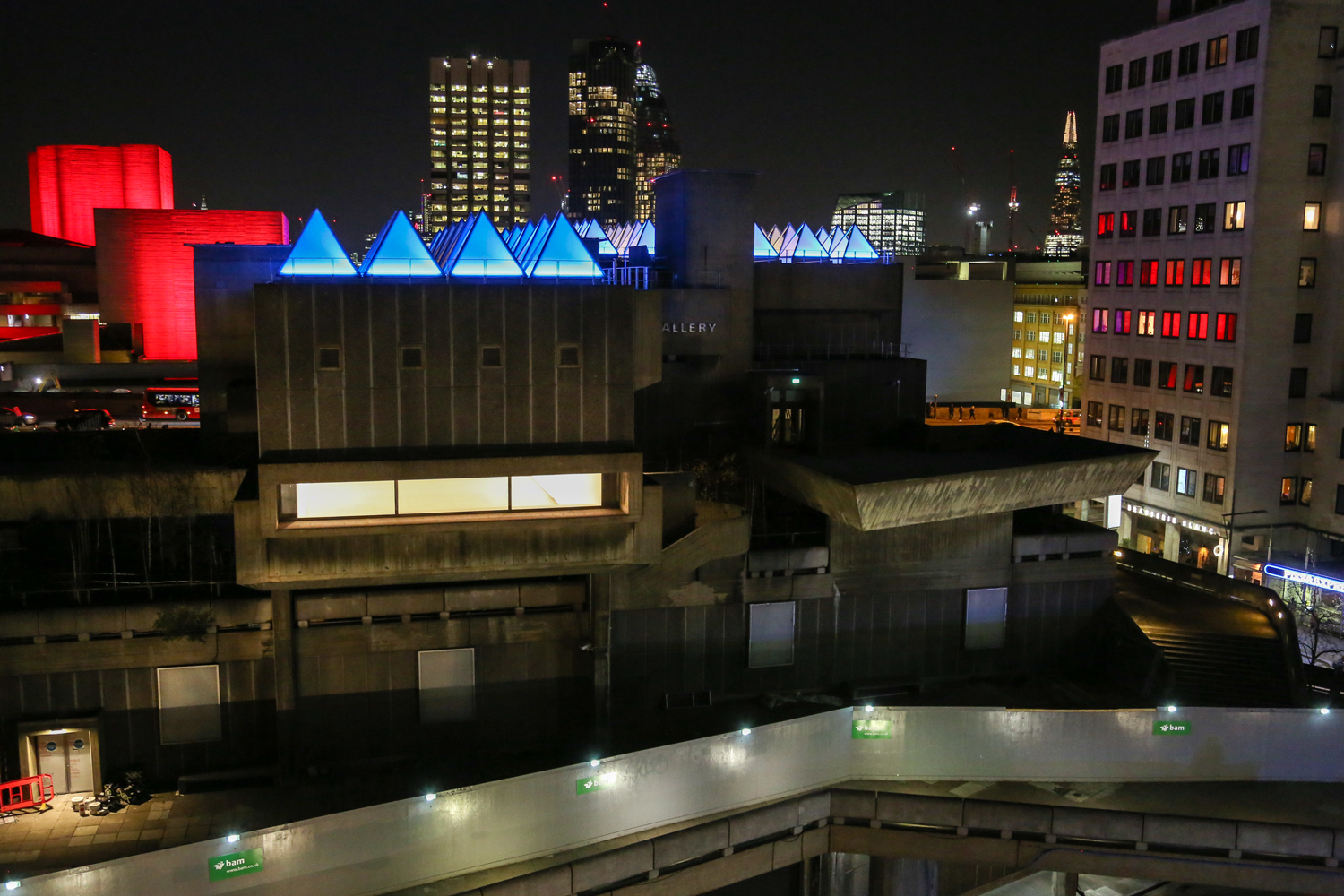
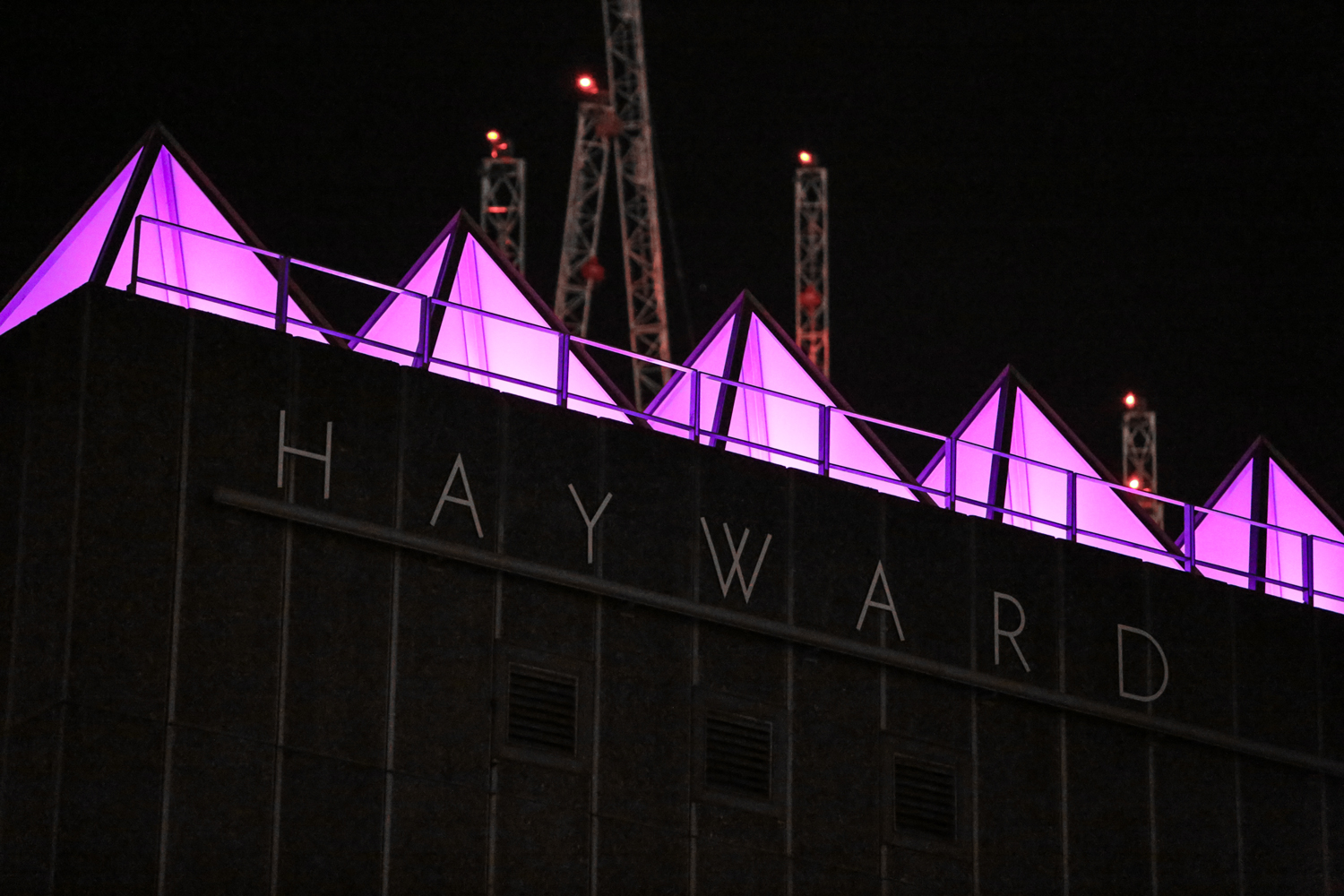
    Hayward Gallery 4 © Southbank CentreSouthbank Centre is a world-famous, multi-venue arts centre based in Central London. It’s a place where over 6.2 million people a year experience world-class art and culture that stimulates, inspires, educates and amazes. Southbank Centre’s Hayward Gallery recently commissioned renowned artist David Batchelor to create Sixty Minute Spectrum; an art installation which transforms the Hayward Gallery roof into a chromatic clock using dramatic colour. Having worked on numerous projects at Southbank Centre, White Light was approached to provide the technical solutions to make David’s design a reality.

    David comments: “I have worked with Ralph Rugoff, the Gallery’s Director, in the past and he wanted me to create something spectacular which would be a fitting way to celebrate the reopening of the Gallery. It had to be something extremely vivid that would draw people to the building”.

    To achieve this, David came up with the idea of a spectrum clock to showcase a range of colours over a certain period of time. He explains: “I wanted to use the gallery’s unique pyramid rooflights to move gradually though the entire visible chromatic spectrum every 60 minutes. Starting and ending the hour with a vivid red, I wanted solid colours to appear at different points throughout the cycle. In a city the size of London, there is so much competition visually in the sky at night. We needed something to truly stand out and solid colour is a great way to achieve this”.

    Hayward Gallery 3 © Southbank Centre

    With David’s concept finalised, WL was approached to provide the technical solutions. The project was overseen by WL’s Systems Design Engineer Ian Davies and the on-site Installations Team was led by WL’s Engineering Manager Patrick Lockwood. Ian comments: “David’s chromatic spectrum had to be LED programmed in order for the colours to change consistently. He provided us with a diagram of how he envisaged the roof looking and we had to formulate a technical concept in order to achieve this”.

    WL worked on the two roofs of Galleries 4 and 5 at the Hayward. Ian explains: “We initially had a demo running on site for three months on one pyramid to ensure we were happy with the output. Once we realised this offered enough brightness, we began with the larger install”. WL then light up the perimeter of the Hayward Gallery roofs, by lighting  38 of the 66 individual pyramids. This, in turn, gave the appearance that the whole roof was lit up.

    The pyramids were fitted with 76 x RGB LED battens which were created specifically for this project by WL. To control the fittings, WL installed a new equipment rack in the Switch Room along with 2 X ISTL Thor 36 LED channel drivers to control the LED. Cabling was ran to the rooftop to feed the LED. The LED drivers were driven using a Pharos LPC2. All LED was driven in 16 bit mode to consistently deliver the various colours and ensure the fade transitions were as smooth as possible.

    Hayward Gallery 2 © Southbank Centre

    Ian explains: “With David’s design being so specific and dependent on timings, we had to supply a technical set up that was completely reliable”.

    Following various site visits, the WL Installations Team spent two week on the rooftop to complete the technical install.

    David comments: “I am absolutely delighted with the support of WL in helping to bring my design to life. We have created something dramatically striking with Sixty Minute Spectrum and it hopefully provides an exciting countdown to when the building officially reopens in January 2018”.

    Photos courtesy of Southbank Centre.