Mark Henderson Archives - White Light
Explore White Light: White Light | HireWL | SalesWL | ShopWL

Tag Archive: Mark Henderson

  1. Leading Light with…Lee Curran – Part One

    Comments Off on Leading Light with…Lee Curran – Part One
    Lee-Curran

    Lighting Designer Lee Curran

    Our Copywriter Adam sat down with lighting designer Lee Curran…

    It’s a sweltering day in London as I walk along Baker Street in a desperate hunt for the Pret a Manger. I soon realise that I’m only a ten minute walk from Regent’s Park Open Air Theatre, where this year’s season has just begun. In a couple of months’ time, the stage will see the return of last year’s runaway success Jesus Christ Superstar which was nominated for a string of awards; including an Olivier nomination for Best Lighting Design. Today, I’m here to meet the Lighting Designer himself, Lee Curran, who has agreed to sit down and talk to me about his fascinating career.

    As always, we start at the very beginning and, for Lee, this is Liverpool. Yet despite being born and raised in the city, at aged ten, he would move south to Norwich. He comments: “My dad was a civil servant and got promoted, so we upped sticks. While I was sad to leave Liverpool, my life may have been very different had we stayed – I’d just been offered a choirboy scholarship at the Liverpool Cathedral School”. That said, Lee wasn’t in Norwich for long. By the time he was 13, his father’s work saw them move once again; this time to Bristol. Whereas other designers I’ve spoken to had a lifelong affiliation with theatre, Lee confesses he was much more interested in football during his teenage years (he still supports Liverpool FC): “It’s often difficult being the new kid in class – something I experienced twice. It definitely reduced my confidence as it takes you longer to settle. But playing sports, especially football, was a good way to gain acceptance”.
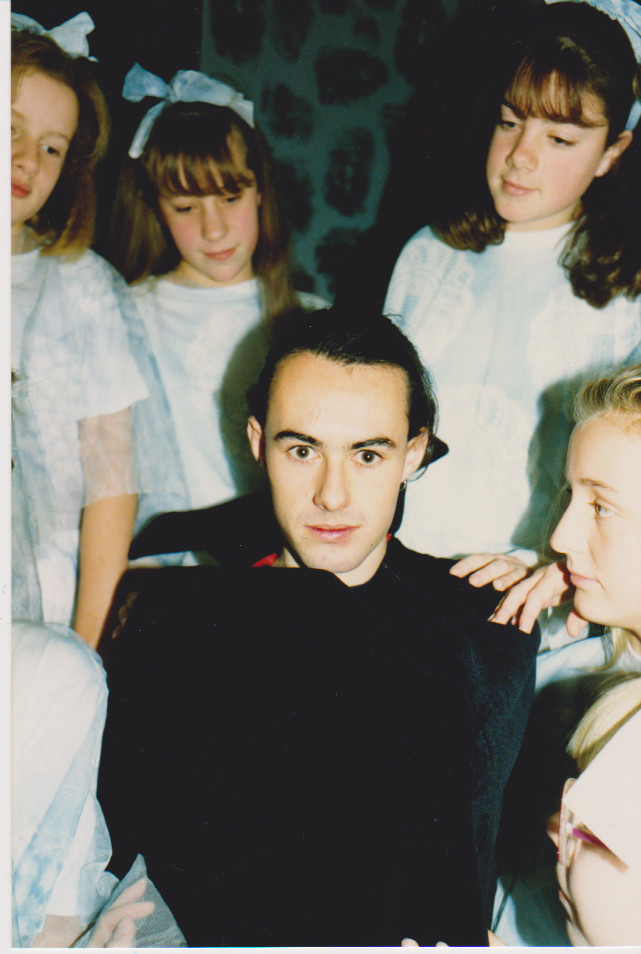
    Dracula

    A young Lee starring in a school production of Dracula

    Even approaching his A-levels, there was little sign of interest in theatre: “I think everyone expected me to go into science and computing. I was good at both as well as being a huge fan of computer games. I remember my school held a pre-Sixth Form week to give us a taste of life as an A Level student.  You could try sample lessons of any subject the school offered, so I thought I should try as many I could, and I found myself more interested in the arts subjects than the sciences. My parents were actually quite supportive, if a bit concerned, but my teachers weren’t too pleased at all. As a result, I ended up taking on a ridiculous compromise of Physics, Maths, English and Theatre Studies. Inevitably, I didn’t do a lot of work on Maths and Physics…”. Part of his Theatre Studies course saw Lee make several trips to the Bristol Old Vic Theatre. He states: “My earliest memories of actually seeing a production are from A Long Day’s Journey Into Night starring Timothy West. Our group was lucky enough to go on stage and see the set. I have this vivid memory of looking through the huge window on set and seeing all of the lights used to create the various daylight effects. I had no idea what they were at the time, but now I know there were a lot of Patt 743s up there… Years later I did a bit of googling and found out it was lit by Mark Henderson”.

    Lee soon finished his A Levels and university beckoned; having now decided that theatre was where his interests  lay. He comments: “Thankfully my parents were extremely supportive of my decision; despite the fact none of us actually knew what my career was going to be”. Lee made the move to the Big Smoke and started a degree in English and Drama at Queen Mary University, London (then Queen Mary and Westfield College). He comments: “It was a strange course in many ways as it was a real mix of those who really wanted to be actors, those who didn’t and then people like myself who were still open to different career paths”. It was during this time that Lee had his first experience of lighting a show: “They had just opened a brand-new studio theatre and the students decided to start putting on their own productions. My mate was putting on a play he’d written called Free Beer, and I ended up doing the lighting more or less because no one else wanted to. I remember binge reading Francis Reid’s book in the library, and that was my first lighting design (it was also the start of my mate’s writing career – he moved to Australia after graduating and became a successful playwright!).
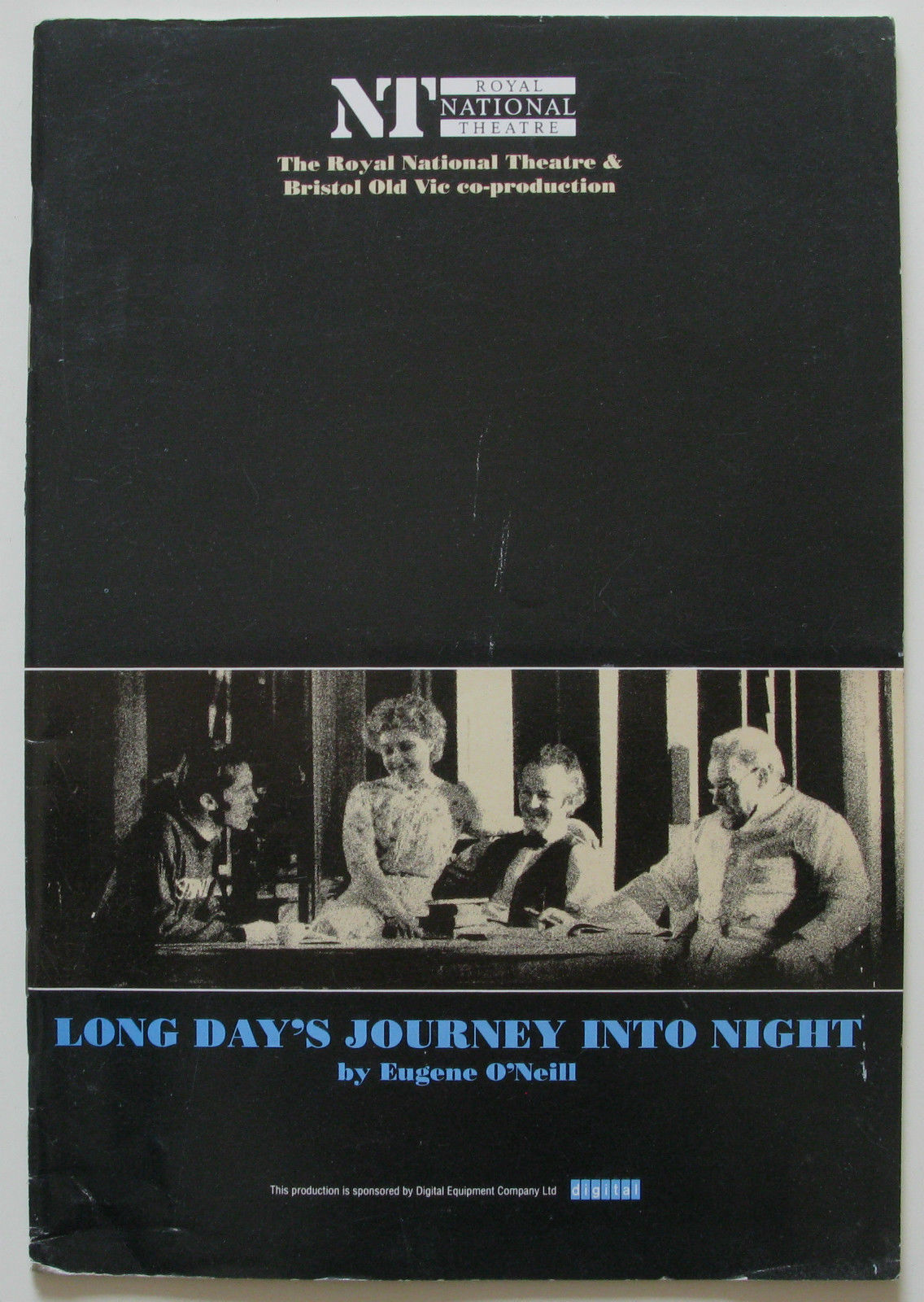
    s-l1600

    A Long Day’s Journey Into Night was Lee’s earliest memory of theatre.

    Lee continues: “I must have done an ok-ish job as I was then asked to light other shows; something I kept doing throughout university”. It was during his second year at university when Lee lit a production of Equus at the National Student Drama Festival that he had a moment of realisation: “It occurred to me that lighting was the perfect intersection between art and science. It’s a combination of abstract creative thinking and practical considerations of angles, power, rigging, etc…”. University was also to offer more opportunities for Lee. In his final year, they employed a lighting technician, Gregor Turbyne, who had worked at the West Yorkshire Playhouse. Lee comments: “Gregor thought I had some talent for it. He gave me confidence and advice to make me realise, for the first time, that lighting could be a viable career path”.

    However, there were still obstacles to overcome. He recalls: “Once I finished, I was in a bit of a quandary. What I had studied was a degree as opposed to a vocational course. I didn’t have a strong enough technical grounding to start working in a theatre’s LX department. As a result, finding opportunities was more difficult”. As a result, Lee had to seek out what work he could that related to lighting. He states: “The Laban Centre (now Trinity Laban) offered these posts called Graduate Technical Assistants. You received a bursary to work in the school, giving technical support to lectures and talks, lighting student shows and touring with the student company. You also got to work on incoming professional productions. It was a great learning curve as many professional dance companies used the theatre to preview shows. Prior to this, I knew nothing about contemporary dance so it was a bit of a baptism of fire!”. Towards the end of his year at Trinity Laban, a show called The Stop Quartet played in the space, which featured choreography by Jonathan Burrows and lighting by Michael Hulls. Following its London run, the show was to embark on a tour and the Technical Manager at Laban, Steve Munn, had a recommendation for the company: “Steve was a great mentor to me during that year and afterwards. He recommended that I go on tour with the show and I did. What happened next was a completely unplanned career excursion”.
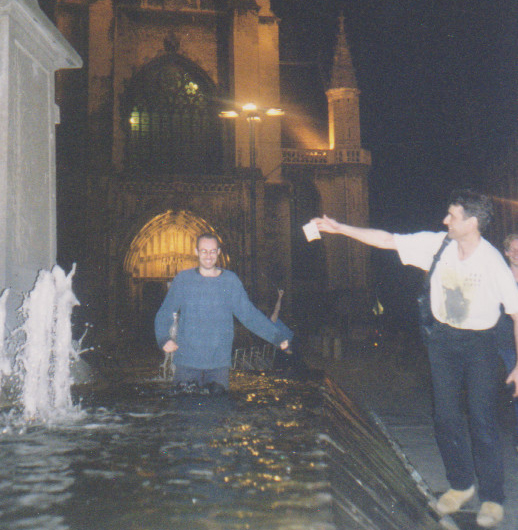
    on tour

    Lee having fun whilst on tour.

    At the tender age of 22, Lee found himself travelling across Europe for the next four years. He comments: “It was just an amazing experience driving a van all over Europe. Not only did I learn about lighting but it was also character-building, visiting venues in places I’d never heard of! I remember one time we turned up at a festival in Estonia. We’d been negotiating requirements with them for weeks and though we toured some of our own lights (ETC Source Four Profiles which were some of the first in the UK, I believe), they needed to provide other fixtures. So we turned up at 11pm to do the overnight rig and focus. The Head of Lighting was sat there with a glass of red wine in his hands and casually told us the venue didn’t have any of the equipment we wanted. When we asked why, he simply shrugged his shoulders and offered us some wine instead! Trying to make the best of a bad situation, we walked on stage to see what kit they had. They had lights that looked like Patt 243s – except they were literally welded onto the bars with this weird tubing coming out of the back of them. They were like prehistoric moving lights, with very rudimentary pan, tilt and zoom mechanisms. So far, so interesting, but every time we attempted to zoom, the bulbs blew up…At the next venue, they had no access equipment and expected us to bounce-focus everything. As the design featured a very precise, Mondrian-esque pattern of lines, that really wasn’t an option. We came back after lunch to see these builders carrying scaff towers onto the stage. Apparently the local promoter had bribed them to let us use their towers to focus!”.
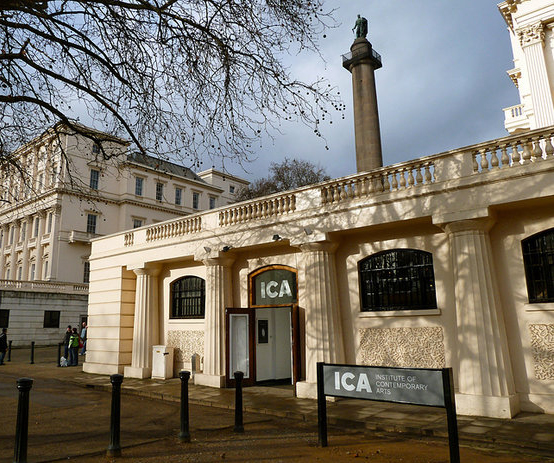
    england-london-trafalgar-square-institute-of-contemporary-arts

    The Institute of Contemporary Arts where Lee worked as the Technical Co-ordinator for ten years.

    Thankfully experiences like this were a rarity but touring life was extremely useful to Lee: “On tour, I saw completely different spaces, different approaches to working and different ways to use equipment to create certain effects. It was a fantastic learning experience”. Meanwhile, he continued to pick up the occasional lighting design gig for dance companies at venues such as The Place, Jackson’s Lane, and the Southbank Centre.

    After a few years on the road, Lee had grown tired of touring: “I applied for a couple of permanent jobs in London. One was Lighting Technician at the Royal Court and the other was Technical Coordinator at ICA. The day after my ICA interview, they called me and offered me the job. I hadn’t heard back from the Royal Court yet, but for some reason I decided to take the ICA job anyway. Ever since I’d been at uni, I’d had the goal of working in the lighting department of a producing theatre, so I have no idea why I made that decision(!). However, I loved working there. We did theatre, live art, dance, club nights, gigs, digital interactive and telematic work, webcasts, installations and all sorts of experimental performances”. It would also turn out that the role at ICA was to be for the long term. Lee states: “I stayed there for twelve years and during that time became the Technical Manager. In hindsight, it was fantastic and fertile ground on which to be developing as a lighting designer. My experience here of working on such an eclectic mix of art showcased so many styles of lighting to me and demonstrated that there wasn’t just a singular way of doing things. At the same time, I was still lighting shows on the side and developing my own methods”.

    Click here to read Part Two.

  2. Leading Light with…Malcolm Rippeth – Part Two

    Comments Off on Leading Light with…Malcolm Rippeth – Part Two
    Gainsborough - Geraint Lewis

    Emilia Fox and Ralph Fiennes in Richard II at the Gainsborough Studios. Malcolm was one of the Lighting Technicians for the season. 

    Malcolm was working on the London fringe scene for a good five years and he once again reached the point where he was left asking questions about his career: “I’d been working on the fringe for a while and, while it was great collaborating with so many people, I didn’t feel I was progressing”. The year was 2000 and Malcolm decided to take a year out to work at the Almeida’s temporary Gainsborough Studios space. The six month season included two Shakespeare productions starring Ralph Fiennes. He comments: “It was a really exciting project in a unique venue which is why I was so keen to get involved. I was one of the lighting technicians which meant I got to see first-hand the ins and outs of how everything worked. It was, again, a great learning curve”. The productions were to take on a life of their own and see Malcolm go on this journey with them. He comments: “The shows then went over to New York and Tokyo which was just an incredible experience. What made it even better was seeing someone such as Mark Henderson working in these vast spaces and managing to use the light as intricately yet effectively as possible. Having now not lit a show for nine months due to working on the production, this inspired me to not only get back in the game but push myself to take the next step in my career”.

    Romeo and Juliet - ETT

    Malcolm lit Romeo and Juliet for ETT.

    Malcolm soon found himself back in London and, using the contacts he’d made in Edinburgh and on the fringe, put himself forward for some relighting work. He comments: “I decided that relighting would give me the chance to work with established LDs and learn how to light shows on a bigger scale. I found myself doing relights for Bruno Poet, Ben Omerod, Mark Henderson and the ETT. What relighting shows really taught me was how to transfer ideas to bigger venues. Having worked on the fringe where spaces were so intimate, this was a real sense of stepping up in terms of scale yet also ambition”. And while Malcolm was technically relighting the work of others, it did offer him the opportunity to implement his own lighting design: “What you need to remember is that a show is never finished and a lot of those I relit were actually developing on tour. Therefore you have to bring your own creative vision to the piece when adapting to any amendments. It’s a fantastic bridge between working on the fringe and larger venues”. And this creative flair was noted by many of the companies that Malcolm worked with. He comments: “Having worked on several ETT relights, they offered me my first show as designer: Romeo and Juliet. It was directed by Stephen Unwin and toured the UK before travelling to the Hong Kong Arts Festival. This was a great opportunity for my work to be seen on a wider scale all across the country and it definitely felt that I’d made that next step”. It was around this time that Malcolm had what he deems to be his biggest career break. He recalls: “In 2002, Northern Stage approached me, asking if I would light my first show on their main stage. This was Pandora’s Box and it was a co-production with Kneehigh Theatre. I remember meeting with Emma Rice and the rest of the Kneehigh team early in rehearsals in Cornwall. We immediately hit it off and fifteen years later I’m still lighting their shows”.

    Brief Encounter - Jim Cox

    Brief Encounter for Kneehigh was an international success.

    As an Associate Artist of Kneehigh Theatre, Malcolm has worked on a range of the company’s productions including Tristan & Yseult, The Red Shoes, The Wild Bride, The Flying Lovers of Vitebsk and The Umbrellas of Cherbourg. He comments: “I love Kneehigh as a company. They are extremely ambitious in what they make and that pushes me as a designer. Whenever I’m lighting one of their shows, I find myself being part of the process from day one, through the planning and the chaos, eating and playing together. It’s a proper collaboration and I feel I’ve played a role in making that piece of work, not just lighting it”. Undoubtedly one of the biggest collaborations with Kneehigh is Brief Encounter, for which Malcolm won the White Light WhatsOnStage Award for Best Lighting Design and was nominated for the Outer Critics Circle Award in New York. He recalls: “Brief Encounter seemed to be one of those shows that just got bigger and bigger. It initially toured in 2007 before transferring to the West End in 2008. It then toured again in 2009, before transferring to Broadway in 2010, before another tour and then going to Australia in 2013. It’s a really special production. It was one of those situations where everything just came together as it were. We had a great team, great material and what resulted was a very memorable production. It was also one of those rare shows that it seemed everyone could go and see and get something from – proven by the fact that it’s one of the few shows I’ve taken my father to, and he loved it!”.

    Boudica - Steve Tanner

    Malcolm’s work at Shakespeare’s Glove is one of his proudest achievements. 

    Over the past ten years, Malcolm has worked on a whole range of productions which, together, produce a very enviable CV. These include The Empress at the RSC, Refugee Boy at the West Yorkshire Playhouse, Spring Awakening with Headlong, After Electra at Theatre Royal Plymouth, Only the Brave at Wales Millennium Centre and Pleasure at Opera North. I ask him if there is one show that he would class as a particular highlight. And while Brief Encounter was obviously a phenomenal success, it’s not an actual show which he’s most proud of. He comments: “One of the highlights of my career was the installation of the temporary lighting rig at Shakespeare’s Globe. When Emma Rice was appointed Artistic Director, she asked me to design a rig that would be suitable for the space; as discreet and sympathetic to the building as possible but also widely versatile for any number of lighting designers to explore. It provided an opportunity to discover this unique theatre in a new way, for creative teams and audiences alike. We’ve celebrated the fact that, for the majority of evening shows, you have natural light dominant for the first half and then our own lighting becoming dominant for the second. It’s the best of both worlds and it was thrilling for me to be the first lighting designer to work here. The response was extraordinary; overwhelmingly positive but also provoking hate mail and ultimately controversy which led to national news stories. Boudica will be the last show to be lit here this season, and the board have made it clear that there will be no place for theatrical lighting in the future. I’m incredibly proud of what our short-lived lighting department have achieved, on an exhilarating but all too brief journey”.

    DMlhIwAX4AMny0c

    The Tin Drum which has since opened to rave reviews.

    And so comes the point with every Leading Light where I ask Malcolm if he has any words of wisdom for the next generation of Lighting Designers. What he offers is obviously drawn from his own experience of working his way up:  “Whatever role you find yourself in on a production, try to engage with the lighting design. That sounds an obvious thing but it can be fascinating, whether you’re rigging lights, programming, attending a meeting or cutting colour, to try to figure out what the LD is up to, how you might approach the same production, the same set design. Whenever you walk into a room, consider the lighting and how this can be used creatively. I remember when I was working at the Almeida as a technician – I would always be thinking about the lighting in that space and how I would use it. If you’re lucky enough to work in theatre then listen in to the creative team’s conversation when you can and see what you find”. He also has some more general advice: “I try not to forget that everyone working on a show, and in the organisations and buildings that produce them, are essential to what we do. Also I don’t see any heirarchy between nominally creative and technical roles – good production electricians and programmers can be my closest collaborators and their work requires both great skill and creativity”.

    At that point, Malcolm’s phone vibrates and he has to dash off back to rehearsals. We walk along the Southbank and I ask him what he has coming up following Boudica. He informs me: “I’m about to get back into rehearsals for a new Kneehigh show called The Tin Drum. I’m really excited as I love working with Kneehigh. They are a truly collaborative company and everyone, director, actors and lighting designer, is a part of the entire creative process. This level of engagement is what I try to bring to every job I work on”. And looking at how much Malcolm has achieved in the past few years alone, it’s clearly an approach that’s worked extremely well.

    Photos courtesy of ETT, Geraint Lewis, Jim Cox, Malcolm Rippeth, Something Concrete, Steve Tanner and the University of Hull.

  3. White Light is Hopelessly Devoted to Grease UK Tour

    Comments Off on White Light is Hopelessly Devoted to Grease UK Tour

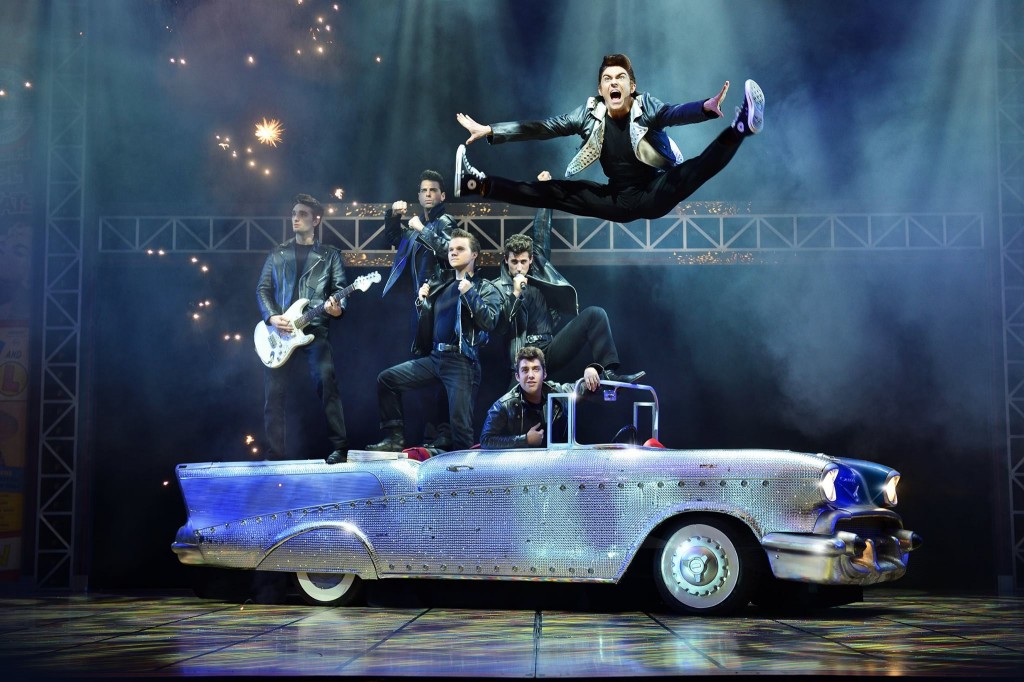
    Grease UK Tour 1 © Paul ColtasSince opening on Broadway in 1972 and being turned into a smash-hit movie starring John Travolta and Olivia Newton John, Grease has cemented its place in musical history. The original high school musical has played to millions across the world and features songs that have now become all-time classics. The unforgettable show is now back for a brand-new UK tour. Following its work on previous West End and touring runs of the show, WL has been called upon to supply the lighting equipment.

    This current production of Grease stars Tom Parker (The Wanted) as Danny Zuko, alongside Danielle Hope as Sandy and Darren Day as the Teen Angel. The show is being lit by Mark Henderson and the Associate Lighting Designer is Stuart Porter. Stuart comments: “I have worked on Grease since it was at the Piccadilly Theatre back in 2007. Mark has actually worked on it since it was at the Dominion Theatre back in 1993! As a result we both a strong connection to the piece.”

    Grease UK Tour 2 © Paul ColtasOne of Stuart’s main roles was to work alongside Mark in order to create a rig that would be tourable. Stuart adds: “Mark has lit this show so many times now so is aware of the feel and what he wants to achieve in certain sections. As the content never changes, our role with the lighting is to upgrade the previous set up and update it with the very latest equipment.”
    This upgrade included removing the previous scrollers and completely replacing these with Philips SL Par155 Zooms. Stuart comments: “We wanted to upgrade the rig to LED for both the look of the show and the benefits of reduced heat and energy. The PAR155 Zooms were recommended by WL’s Technical Director Dave Isherwood and they have been a fantastic addition. They have made the show look slightly brighter and given it a vibrant feel.”

    Grease UK Tour 3 © Paul ColtasAlongside this, the LX team removed a previous bar of tungsten fixtures and replaced these with the Vari*Lite 1000 TS. Stuart states: “The Vari*Lites are ideal for this show as they still retain that tungsten feel and are fairly weighty fixtures for a conventional rig. However they can be focused remotely which has been hugely beneficial on a show like this.”

    Other fixtures on the rig include Martin Aura LEDs, Martin MAC Viper Washes and Martin MAC Viper Profiles. There were also Unique 2.1 Haze Machines and Jem Glaciator X-Stream Smoke Machines, while the show was programmed on an ETC Eos 4K console by Nick Simmons.

    Stuart comments: “We were very conscious that this was a touring rig and, as such, we had to keep it as streamlined as possible. Therefore we ensured that we drew on fixtures that we knew could deliver powerful results yet didn’t require vast quantities in order to do so.”

    Grease UK Tour 4 © Paul Coltas

    The tour began in Manchester back in March. It will continue to travel the UK for the rest of the year, concluding at Brighton Theatre Royal where it will spend the Christmas season.

    Stuart adds: “It’s always a pleasure working on Grease as it really is a timeless show. We’ve been particularly lucky on this tour as we’ve worked with a brilliant team including Production Electrician Neil Anthony, Head of Touring Staff Andy Christie along with countless others. It’s also been great working with WL again who we have always used when lighting Grease and with whom we have a strong working relationship.”

    Images courtesy of Paul Coltas.

  4. Leading Light with…Johanna Town – Part One

    Comments Off on Leading Light with…Johanna Town – Part One
    Biog picture

    Johanna Town

    Throughout Leading Light, I’ve been fortunate enough to meet some of theatre’s most renowned lighting designers. Alongside this, almost every interview has taken place in somewhere fairly theatrical: the stalls at the Playhouse Theatre, the Soho Theatre bar, the Century Club along Shaftesbury Avenue and even the Jerwood Space rehearsal rooms. However, the venue of today’s meeting is slightly low key – it’s a coffee shop in Tooting. I’m here to meet Johanna Town and this is her local haunt; something which suits me just fine as it is literally up the road from WL HQ. While the coffee shop doesn’t appear to be the most dazzling of places from its exterior, once you’re inside and see just what they have on offer, you begin to realise why it’s so popular. The location is somewhat metaphoric of Johanna herself: she may appear unassuming but within five minutes of speaking to one another, her enduring passion for theatre becomes obvious; as does the reason why she’s had such a successful career as a lighting designer.Glancing over Johanna’s CV, she has probably had one of the most varied careers out of all the lighting designers I’ve spoken to. Not only is she an award-nominated lighting designer, but she spent 17 years as the Head of Lighting at the Royal Court Theatre, was awarded a Fellowship to the Guildhall School of Music & Drama and is now the Professional Rep for the Association of Lighting Designers. So how does someone manage to achieve so much in what is a relatively short time? I’m about to find out…

    98960

    A postcard from the seaside town of Lytham St. Annes where Johanna was raised.

    Johanna was born and raised in Lytham St. Annes – a small coastal town that is in close proximity to Blackpool and is renowned for having one of the world’s most famous golf courses. Whereas Johanna found herself surrounded by golf (she is still a big fan of the game), theatre was also ever-present. She recalls: “My parents were huge theatregoers. They loved theatre and spent their honeymoon in the West End catching as many shows as they could”. When Johanna sadly lost her father aged just 10, she found herself being frequently taken to the theatre by her mother. She states: “I think mum just didn’t want to pay for a babysitter! The outings were actually quite a learning curve as I managed to see a lot of shows; especially amateur dramatics where my mother acted and assisted. We spent many weekends away at amateur drama festivals around the north of England; something I loved”. Johanna’s passion for the world of theatre was encouraged by her mother who wanted her to become involved more with the acting side of things, to the point where Johanna took elocution lessons and went to Speech and Drama festivals. However, Johanna soon realized that her talents may lay off stage. She comments: “I think I was about 13 when I was first bitten by the lighting bug at one of the am drams. I wanted to see how lighting worked and the impact it could have on a piece. That said, I’d always been a very practical person. Even when I was very young, I would take my toys apart to see how they worked. What I was really interested in was colour and how coloured lights changed the world around us; something I think was influenced by the lights of Blackpool and my annual visit to the Illuminations. So, from 13 onwards, whenever I got the chance, I would jump on the lighting desk at the am dram society and see how things worked”.

    Pier

    The world-famous Blackpool Piers

    This passion soon transcended into Johanna’s academic life. Interestingly, unlike a lot of the other lighting designers I’ve spoken to, Johanna knew even from her high school days that she wanted to be a lighting designer. She states: “Any opportunity I had to work with lighting, I took. At school, I always wanted to work on the productions they were doing. Sadly, this was during a time when anything vaguely technical was deemed as strictly for boys only so there was a limit as to how far I could go at school”. Undeterred, Johanna turned to a place where theatre and live shows were its life blood –the Blackpool Piers: “I literally went down to the North Pier and asked for some work experience. To my complete surprise, they just said yes. Soon after, I found myself working on their entire season, follow spotting every show they had. From June to September, I spent my evenings working hard and learning my craft at the same time. To do this at 16 was a brilliant experience and simply reaffirmed that this was what I wanted to do with my life”.

    exchange2

    The Royal Exchange in 1976 shortly before it was opened.

    While working on the Pier, a few miles down the road in Manchester, the Royal Exchange Theatre was being built. To feed her theatrical appetite, Johanna bought a season ticket at the now renowned venue and her seat in the theatre was strategically positioned: “It was right next to the technical desk – to the point where you could literally lean over and touch it. What this meant was whenever I went to see a show, I actually spent more time staring at the desk than what was happening on stage!”. This proved to be another form of learning for Johanna who received no help or advice from her school. Similarly, with there being only a few drama schools around at that time, along with the fact that the majority only offered Stage Management courses, Johanna had to seek out her own lighting education. She comments: “One evening, after watching a show, I plucked up the courage to ask the person behind the desk how they got into their job. They told me they had undertaken an ABTT course – something I’d never even heard of. They also told me that the next apprenticeship was coming up that summer so I applied for it, read every copy of ‘Sightline’ and ‘Cue’ I could lay my hands on and went for an interview. To my complete surprise, I got accepted and found myself undergoing an ABTT apprenticeship at the Royal Exchange Theatre. At 18 years of age, I’d immediately gone from watching the shows to working on them! Geoff Joyce was then the Head of Lighting and to him I am eternally grateful – he gave me my first job and I never regretted one moment of my time there”.

    Me wiring REX touring theatre

    Johanna at the Royal Exchange Theatre.

    The apprenticeship lasted two years and meant that Johanna would receive an electrical qualification. However, it was working within the environment of the Exchange that she remembers so fondly: “The Exchange is a magnificent building. As there is no set as such, lighting is vital to every single production. Therefore, to be able to sit and watch lighting designers such as Mick Hughes, Mark Henderson, Joe Davies and Brian Harris,  to name but a few, work in that space was just brilliant”. As part of Johanna’s apprenticeship, she had to look after the lighting designers visiting the venue; something which she clearly embraced! She recalls: “I would spend tech weeks just sat next to these lighting icons, asking them questions, picking their brains. I had immediate access to some of the best lighting designers of all time – something I didn’t appreciate fully until much later in my career”.

    Yvonne-Arnaud-Theatre-at-night-700x455

    The Yvonne Arnaud Theatre where Johanna worked following her time in Manchester. 

    Following her apprenticeship, Johanna stayed on at the Exchange as Assistant Lighting Electrician. However, as an extremely ambitious person who had only ever worked in the round, she wanted to push herself and started applying for a range of jobs – one of them being at the Yvonne Arnaud Theatre in Guildford. She comments: “Working at the Yvonne Arnaud was great as it meant I got to see how proscenium arch shows were lit. That said, it was a completely different vibe to the Royal Exchange. Back in Manchester, there was a company and almost a family vibe. As the shows at Yvonne Arnaud were mainly touring productions, you’d have a show come in, be performed five times and then everyone would disappear!”. While Johanna only stayed at the Yvonne Arnaud for eight months, her time there led to another encounter with Joe Davies; something which proved to be an invaluable experience. Johanna states: “Joe gave me some great advice. He said follow your passion for the work you enjoy, not what you think you should be doing. I did just that and it was extremely liberating”.

    Click here to read Part Two.