

Leading Light with…Peter Mumford – Part Two
Comments Off on Leading Light with…Peter Mumford – Part Two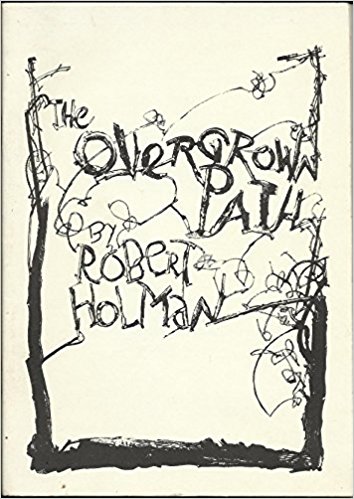
The Overgrown Path at the Royal Court was Peter’s first ‘play’.
The first London production of a play lit by Peter was The Overgrown Path by Robert Holman which premiered at the Royal Court in 1985. He states: “I’d worked with the designer Fotini Dimou before and we always had a great working relationship. Working on the play was great on a personal and professional level as the feedback we received from both critics and peers showed that I wasn’t going to be pigeon holed as the ‘dance man’. It showed that I could light a variety of shows”. For Peter, he has a very clear and insightful approach to lighting different mediums. He states: “ People often ask about the difference between lighting dance, opera and drama and there are different emphases in the different forms, although these days the styles crossover a great deal. However it can be said that dance is expressed primarily via the body and therefore illustrating the body form and its movement becomes a priority. Drama is much more reliant on facial expression and therefore ‘seeing’ the words and emotion is important. Opera tends to be more design-orientated and you’re looking much more at the bigger picture as it were – a more ‘wide screen’ epic event driven by the power of the music. Obviously these are generalisations and all performances have their exceptions and nuances”.
Over the next few years, Peter would continue to light a range of plays including The Shawl (Royal Court), Faust (Lyric Hammersmith) and As You Like It (Old Vic) However, not one for complacency, he soon found his career taking yet another interesting direction. He recalls: “Towards the late eighties, there was a lot of dance material being filmed for television. However, I, and many others, were dissatisfied with how this was being portrayed”. So much so that Peter decided to co-found his own company called Dancelines Productions which was committed to creating and producing dance work for television. He states: “I remember making a proposal to the then Commissioning Editor of Channel Four about this unbelievably ambitious project which entailed taking over Riverside Studios for five weeks where we would work with 11 dancers, 3 choreographers and 1 camera crew, and everything would be created with and for the camera. In the end, we had more than forty hours of footage, which resulted in a programme of one and a quarter hours which was called ‘Dancelines’.” Following on from this, Peter would go on to produce and direct numerous programmes for both Channel Four and BBC2 and win multiple awards including the OperaScreen IMZ Best New Opera Award (1991), DanceScreen Best Studio Adaptation (1992) and was even nominated for an Emmy for the TV adaptation of Matthew Bourne’s Swan Lake. In 2002, he worked on 48 Preludes and Fugues which were 48 short films (of which Peter directed half and was also lighting director on them all) which were widely screened on BBC2.

Peter formed Dancelines Productions to bring quality dance work to the television screen.
From the mid-nineties onward, Peter has focused solely on freelance projects. These include, among many others, Vincent in Brixton (National Theatre/West End/Broadway), Hedda Gabler (Almeida/West End), The Entertainer (Old Vic), The Seagull (Royal Court/Broadway), A View from the Bridge (Duke of York’s Theatre), Faust (English National Opera), Sucker Punch (Royal Court Theatre), Absent Friends (Harold Pinter Theatre) and Carmen (Miami City Ballet), Madama Butterfly, Peter Grimes, Carmen, Manon Lescaut and Werther (Metropolitan Opera NYC). This selection is taken from a multitude of projects that Peter has worked on over the past two decades (the list truly is impressive). As I browsed through, I attempted to select credits that justify his wide range of work but there is literally so much to choose from – something that Peter is extremely proud of: “I love collaborating on a range of projects. I made a conscious decision to just ‘be me’ and to light what I wanted to and try not to be pigeon-holed. I like to work on as many varied projects as possible and I love to work between drama, dance and opera in equal measure, as well as design, direct and work with film.
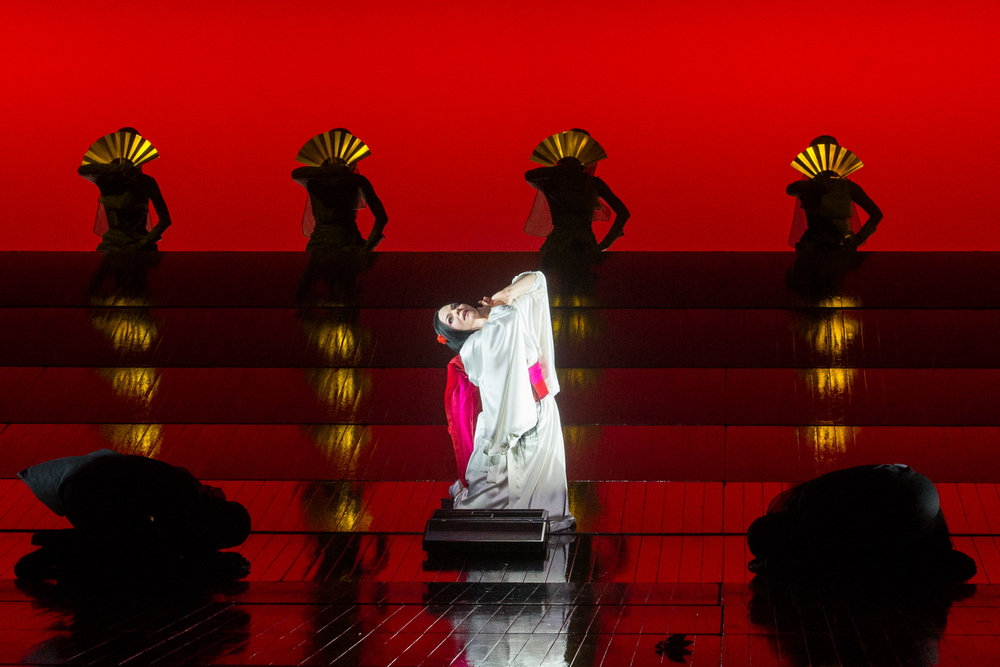
Madam Butterfly at ENO which Peter marks as a career highlight.
Whereas I have great difficulty choosing highlights from Peter’s career, I ask him to name a couple of projects that remain close to his heart. He immediately recalls: “Madam Butterly at the ENO was particularly special to me. I was working alongside director Anthony Minghella, set designer Michael Levine and fashion designer Han Feng and something just clicked. As a team, we gelled immediately and the production looked absolutely incredible (a reason it has been revived an unbelievable six times). It was as close to perfection as you can get for me and, every time I see it, it still feels very relevant”. Another highlight was the epic King Kong which ran at the Regent’s Theatre in Melbourne and featured the largest ever puppet on stage. Peter adds: “King Kong was this larger-than-life, epic production that doesn’t come round all that often. It had a cast of 49, a crew of 76, took five years of pre-production and four months of tech! It wasn’t like anything I’d ever worked on before but it was an unforgettable experience. It now looks like it’s going to open on Broadway next fall which is great.”
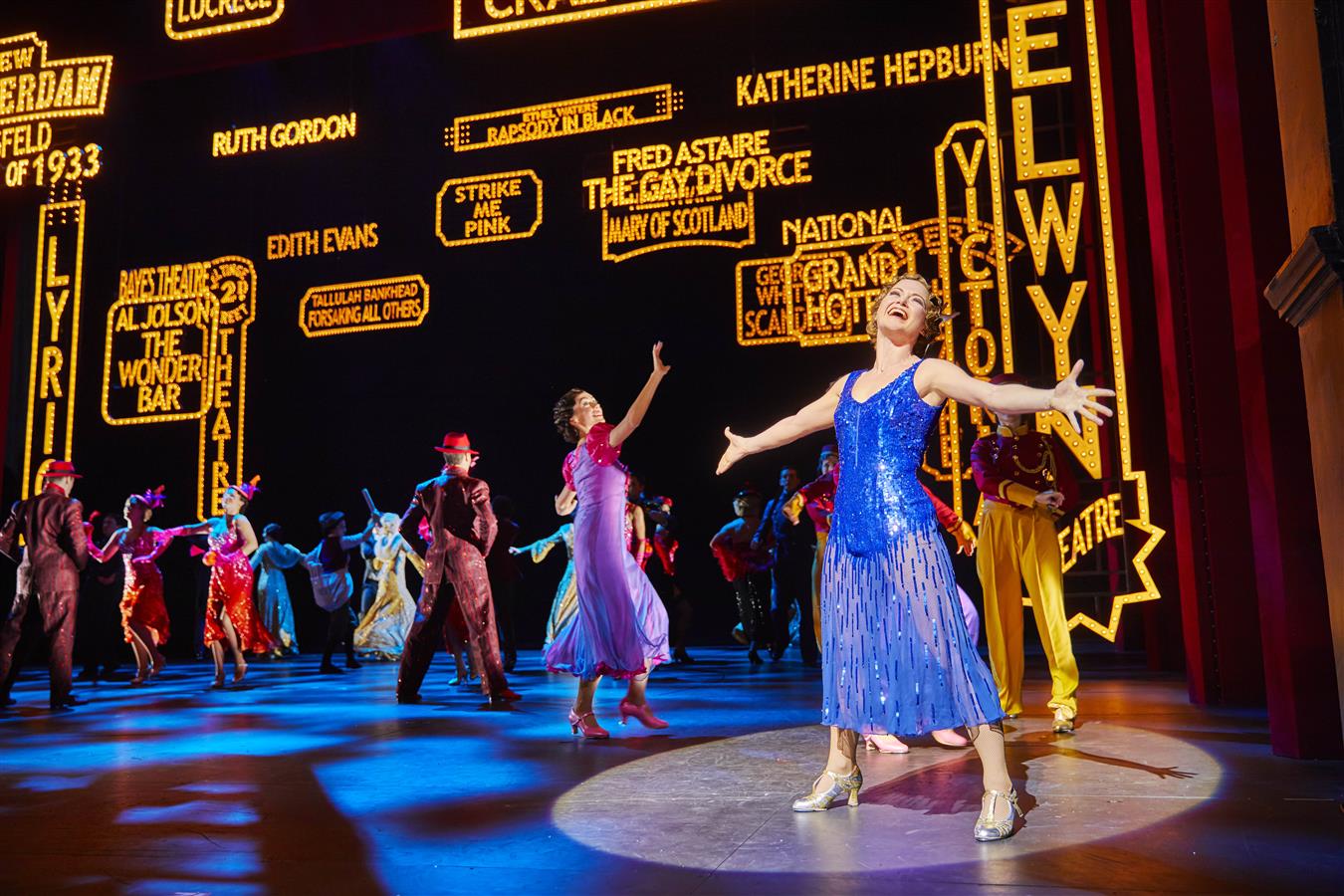
Currently running at Theatre Royal Drury Lane, 42nd Street is the latest show that Peter has lit.
And it’s experience I want to talk to Peter about now as I fall into the familiar trope of asking his advice for the next generation of lighting designers. As someone whose career has been based on the strength of collaborations, his answer isn’t too surprising: “Find your own generation of creatives. If you want to be a part of this world and firmly establish your position within it, you need to make sure people know who you are. Today’s director’s assistant might be tomorrow’s big thing so make sure you’re reaching out to people, whether it’s designers, choreographers or producers. You need to cement your place as the work isn’t going to seek you out. Ultimately, while it’s important to learn your craft and receive training, this industry isn’t about qualifications; it’s about communication and creative ability”.
And on that sound advice, Peter is summoned back into the Royal Court Downstairs space to run through a few changes before the show that evening. I end by asking him what else he’s working on, alongside the numerous shows he’s currently lighting in the West End. And as always with Peter, it’s a unique answer: “I’ve just finished directing, designing, lighting and creating the video for a four-part series of Wagner’s Ring Cycle for Opera North. I directed the film of the entire Cycle during its run at Opera North and, after nine weeks of editing, there’s more than fifteen hours worth which is currently available to view on BBC Arts Online!”. Just listening to those countless roles makes me feel exhausted. Yet it all seems to be a day’s work for Peter Mumford…
Photos courtesy of Brinkhoff/Moegenburg, Digital Theatre, Little Queenies, Peter Mumford, Royal Court Theatre, Siobhan Davies Dance Company and Thomas Bowles.