Olivier Award Lighting Design Archives - White Light
Explore White Light: White Light | HireWL | SalesWL | ShopWL

Tag Archive: Olivier Award Lighting Design

  1. White Light Supplies Leopoldstadt in the West End

    Leave a Comment

    White Light has supplied the lighting equipment for Leopoldstadt; which opened at the Wyndham’s Theatre in London’s West End last night.

    Written by legendary playwright Tom Stoppard, Leopoldstadt tells the story of three generations of the same Jewish family living in early 20th century Vienna. It is directed by Patrick Marber and features a lighting design by Olivier Award-winning Neil Austin. Neil comments: “Leopoldstadt is a truly exceptional play which encapsulates the experience of the Austrian Jews through one family’s journey.  Beginning in the period of cultural and scientific explosion in Vienna at the turn of the century, it spans a near sixty-year period ending in 1955.  To achieve the passing of time, it’s an abstract set of gauzes and items of furniture, which represent the one room through the years”.

    As such, Neil’s brief on the piece was to dress the set in a way which would guide the audience through the different time periods. He explains: “It was a question of looking at how the lighting could suggest the various changes in time-period, as Austria’s political landscape transforms through the piece. At the start, it highlights the opulence of the early 20th century, then moves into the post First World War period of the 1920s, before heading into the late 30s when Vienna was under Nazi control, before finally ending in 1955 when the room has become a de-nazified office. I needed to allow the lighting to capture the emotional temperature of the story.”

    The emotion captured in the piece was also another huge influence on Neil’s design. He explains: “Tom Stoppard has described this as his most personal play yet and there are some truly beautiful moments packed with raw emotion. As such I knew that my fixtures needed to be quiet to ensure each of these points in the play had moments to breathe and could be underpinned by silence”.

    Knowing what he had to achieve, Neil approached WL to supply him with the fixtures he required. He explains: “For this rig, I drew on a mix of ETC Revolutions, Vari*Lite VL1000AS ERS, ETC Source 4 Series 2 Lustrs, Bambino 5K Fresnels and standard Source Fours. The Vari*Lite VL1000AS ERS were used on booms in the wing, emulating the daylight through windows, and were brilliant playing to their natural colour temperature advantages. The 5Ks played a similar role as they were used to recreate sunlight. The Lustrs were used as general work-horse units while the Revolutions were used as specials”.

    Whilst there was a very limited set in the play, Neil’s design did have to contend with the gauzes that were present on stage. He explains: “In order to light the rear gauze and gauze legs, I asked for troughs to be buried in the raked stage which then housed a range of Chroma-Q Color Force 72 LED battens. These battens were used to skim up the gauzes to establish the difference between when they were lit in different colours and when they weren’t. In the final scene of the play, the gauzes are unlit for the first time and so the stage appears to be a black void”.

    Leopoldstadt opened yesterday evening and will run until 16th May 2020.

    Neil concludes: “It’s been a privilege lighting such a beautiful and poignant piece of theatre. I am really grateful to my brilliant team which includes Production LX Martin Chisnall, Programmer Tom Mulliner and Production Manager Paul Hennessey. As ever, thanks once again to WL for supplying me with the fixtures I needed and for their great support”.

    Photos courtesy of Marc Brenner.
  2. White Light Supplies Evita at Regent’s Park Open Air Theatre

    Leave a Comment

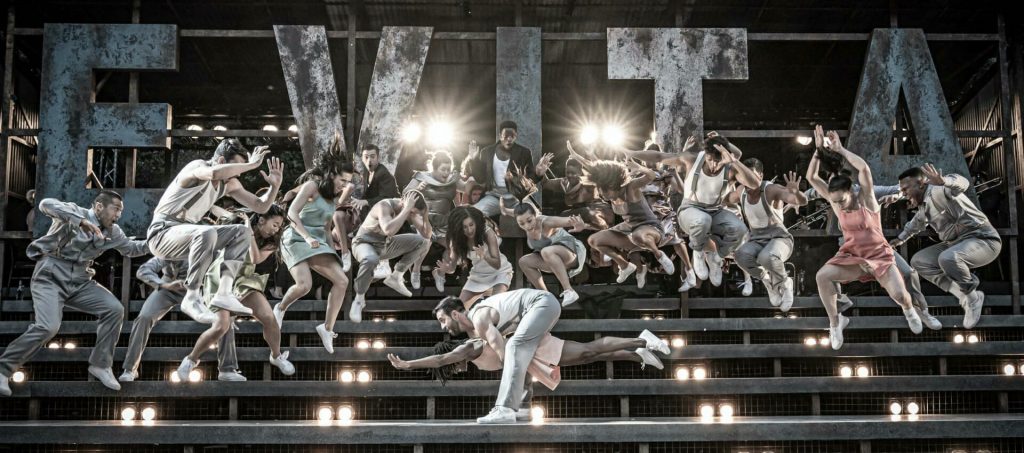
    White Light has once again supplied the lighting equipment for the entire Regent’s Park Open Air Theatre season, which recently culminated in a revival of Tim Rice and Andrew Lloyd Webber’s iconic musical Evita.

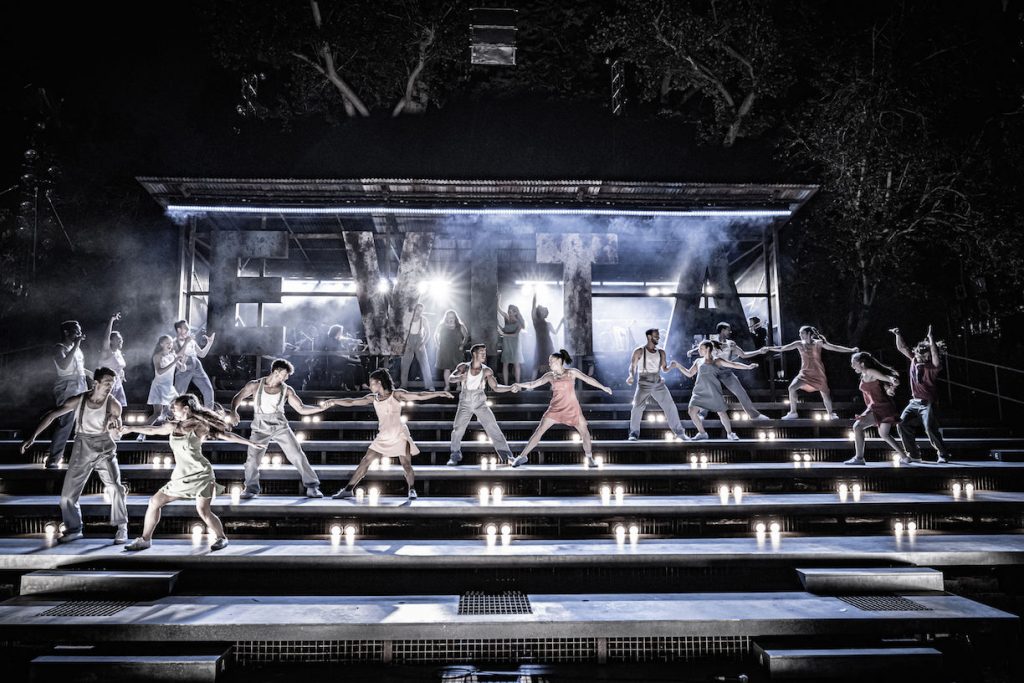
    Established in 1932, Regent’s Park Open Air Theatre is one of the largest theatres in London. Situated in the beautiful surroundings of a Royal Park, both its stage and auditorium are entirely uncovered and every year it hosts a season of bold and dynamic productions. This year was no exception, with productions of Our Town, Hansel and Gretel and A Midsummer Night’s Dream all achieving critical acclaim. The final show of the season was Evita which was directed by Jamie Lloyd, designed by Soutra Gilmour and lit by Oliver Award-winner Jon Clark.

    Jon explains: “Soutra and Jamie chose to set Evita on a dilapidated seating bleacher, which to all intents and purposes looks as though it may have been sat in Regent’s Park for the past eighty years! We wanted to make a direct connection between the outdoor environment and the production; one being informed by the other. The suggestion of a sports stadium echoes the environment of dictatorial political rallies of the past, which has a resonance with themes of Peronism highlighted in the production.

    He continues: “Jamie was keen that the production and lighting design harnessed the dynamism and energy of an outdoor music festival. We were particularly drawn to Beyonce’s iconic performance at Coachella last year. Contrasting with the music festival aesthetic is a starker, directional lighting language, more synonymous with contemporary European opera”.

    To achieve his design, Jon approached the WL Hires team, who have looked after the Regent’s Park Open Air Theatre all season.

    The lighting in the show plays with the tension between open white tungsten Par Cans and colder LED and Arc sources. The set comprises of eight wide steps rising from the front of stage which is unapologetically rectangular in its form. The key lighting positions are informed by this and much of the functional light is delivered as uplight, travelling up the rake of steps. 

    Jon explains: “We utilised the new GLP Fusion Stick 10s as the cold uplight source, which provides an intense controllable light in a very discreet sized unit and contrasts with a line of Par 64s in the same position. Upstage, nestled into the roof of the band structure are more Par 64s, arranged into clusters, which run the width of the set. This time the Pars contrast with two continuous runs of GLP Impression X-BAR 20s which describe the architectural form of the set and provide a colder, more dynamic look. Built into the risers between each step are 56 2-Cell Molefays, which act as blinders and are intended as rock n’ roll inspired abstraction of the classic Broadway 42nd Street aesthetic. They’re also used to evoke the feel of Evita arriving in a big city for the first time in the Buenos Aires number and create energy at other times. Under the set, the tungsten Molefays contrast with two banks of Martin Atomic LED Strobes and SGM X5 LED Strobes, which are used as intense and constant flood sources.

    Jon continues: “From the outset, I wanted to create a much higher backlight position than is normally achievable at the Park. Adam Squires and Andy Beardmore at the Theatre did a fantastic job of sourcing two 14m high truss towers, which enabled us to create two key backlight positions upstage of the set, nestled amongst the trees. Each tower supports a solitary MAC Viper Wash DX, utilised at various moments as a pseudo backlight follow spot, to suggest the scale of a stadium and to heighten the dictatorial protagonists. These are all key to delivering the final image of Evita, extracted from all that has gone before”.

    The show has now opened to critical acclaim and marks yet another successful season at Regent’s Park. It also marks a very busy summer for Jon who is currently working on the Broadway transfers of Pinter’s Betrayal (also directed by Jamie Lloyd) and The Inheritance, on which WL has supplied some of the equipment.

    Jon concludes: “I’m really proud of what we achieved with Evita. I’d like to thank Head of Lighting Adam Squire, programmer Vic Brennan, Assistant LD Tamykha Patterson, Charlie Jones and the whole lighting team at Regent’s Park. As ever, the support from WL has been first class.

    – End –

    Photos courtesy of Marc Brenner.

  3. White Light Keeps The American Clock Ticking at Old Vic

    Leave a Comment

    White Light has provided the lighting equipment for Arthur Miller’s The American Clock which recently opened at the Old Vic Theatre, London.

    The American Clock portrays the devastation that American citizens experienced when the stock market crashed and the Great Depression began in 1929. The play uses an ensemble cast to explore the lives of several families across several cities. It is directed by the renowned Rachel Chavkin and features a lighting design by Olivier Award-winning Natasha Chivers. Natasha comments: “This is an epic play that manages to tell a huge story about an entire nation. Rachel wanted to create something quite extraordinary in which we put the audience right into this extraordinary time in American history. Part of this included having audience members on stage. What this means is that the Old Vic stage has now been turned so that it’s practically ‘in the round’. When I’ve lit shows here before it’s always been ‘end on’ so this was a new experience for me. My brief then became to ensure I adapted my design to the space and that the lighting was strong from both sides”.

    To achieve this, Natasha looked at a range of different lighting options. She comments: “Initially, we toyed with the idea of using a tracking moving light system as well as followspots due to the fact that we needed to stay with the characters as they moved round the revolving stage. We eventually decided to go for one large moving light rig which would light everything. What’s really interesting about this play is that it’s a combination of your traditional Arthur Miller play coupled with music pieces (although it’s very much not a musical). As a result, it meant the design I created needed a mix of tungsten, LED and discharge lighting”.

    Natasha would use the tungsten lighting for the play’s more traditional scenes whereas LED was used for the sparkly musical numbers and the discharge was used to create a glossy feel. She worked closely with WL’s Senior Account Handler Jedd Hamilton to draw on her ideal rig. This included Martin MAC Viper Performances, ETC Series 2 Lustrs, ROBE Robin DL7S Profiles, ETC Revolutions and Martin MAC TW1s.

    Natasha explains: “I was really impressed with the ROBE DL7s which offered that perfect cross between serious moments and musical numbers. The TW1s provided me with the tungsten feeling I needed as did the Revolutions. I then drew on the Vipers to fill in for the longer shots”.

    With the show being performed in the round, this meant that Natasha had to ensure the lighting worked from all angles. She explains: “During the technical set-up, the first thing we did was go to the circle section as we had to ensure we were lighting actors from both the standard auditorium (front) yet that these were also lit for the audience sitting on the seats upstage. When focussing the moving lights, this meant we could clearly see where the shadows were on the floor in order to then ensure we were on target”.

    The American Clock has now opened and will run until March 30th 2019.

    Photos courtesy of Manual Harlan.

  4. Leading Light with…Mike Robertson – Part One

    Comments Off on Leading Light with…Mike Robertson – Part One

    Mikey (1)

    Lighting Designer Mike Robertson


    Our Copywriter Adam speaks to Mike Robertson…
    Over the past ten months, Leading Light has become one of the most popular features on the WL website and been read by thousands. For every interview, I have met with the designer and spoken to them face-to-face in order to hear about their journey and how they became one of the most renowned individuals in their profession. This month is slightly different in the sense that the interview is taking place virtually. I have been meaning to speak to Mike Robertson for some time yet his busy schedule has meant that he is never in one place for too long. However, from the sunny islands of Greece, he has finally found time to take part via the magic of the internet. And upon listening to his story, it soon becomes clear it was worth the wait…
    Mike’s story begins in the early Seventies where he was adopted from Norwegian extraction and grew up on the east coast of Scotland in a small town called Arbroath. He states: “It is a historically significant town whose eponymous declaration in 1320 defined an independent Scottish Sovereignty. Sadly, when I was growing up there, it was a less hopeful place with industries dwindling, EU quotas ensuring that fishing was a diminishing strain of income and one in every ten high street shops being given over to charity. Despite this, there was still verdant woodland, fields groaning with an abundance of colourful produce and always the stolid and majestic sea. It was also the land of Angus beef and fish so fresh a good vet could revive it!”. Mike’s father and his close friends were all painters yet, despite his love of art, Mike insists that his own skills failed to “extend beyond stick men and clouds that looked like legless sheep”. It was during these early days in Arbroath when Mike was first introduced to drama and performance. He recalls: “My first taste of theatre came at school when I was cast in The Pied Piper as ‘Surf Number Four’. I soon realised that the performing lark was most definitely not for me!”. Whereas acting might not have been Mike’s passion, he did have other interests: “My biggest hobby as a child was building. Machines, structures, contraptions; most of dubious quality and some even rather pyrotechnic as my earlier grasps on electricity were more theoretical than calculated. It was the desire to create that was foremost”.
     
    Mikey E

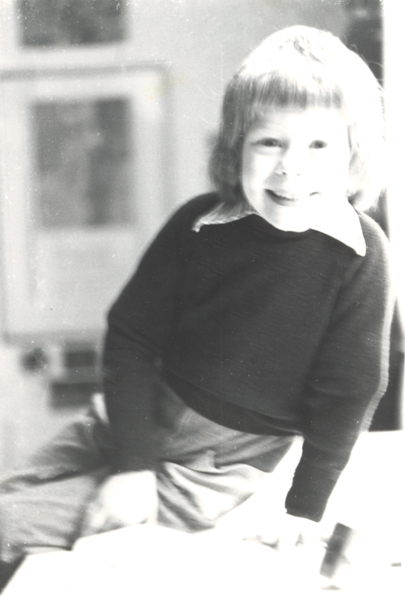
    A very young Mike!


    Whereas theatre did not play a huge role in Mike’s upbringing, it was certainly there in the background. He comments: “Just south of our town is Dundee and the Repertory Theatre which was a powerhouse of production. One of my earliest memories is their sensational production of The Snow Queen. I remember it was all icy blue and full of people of indeterminate gender! It was mesmeric. The following week was Blithe Spirit in a beautiful Art Deco setting. One thing I do remember was the lighting. Even now, I can see the Minuette Fresnels on the floor and thinking wow – the lights don’t all need to go up into the air?!”. Arbroath itself had two theatres: a playhouse for amateurs and a 700 seater for touring productions. Mike states: “I joined the amateur society as a precocious 11-year-old and adored poking around the tiny flies and attics of the old building. A few years later opportunities came to actually light at the bigger venue. We had a semaphore colour change system which I thought was the height of sophistication. The approach to lighting around those times was pipe ends and buckets of face. I started experimenting in side light, back light and suddenly the whole visage was more interesting. That was noted and the flurry of approval gave me a shot in the arm. Whilst I was still very much experimenting, I felt I was onto something…”. It was also during this time that Mike realised the true impact lighting could have. However, this experience wasn’t inside a theatre but, rather, on a family holiday: “We were on holiday in Copenhagen when we came across a sequence of interactive glass sculptures which you could rotate in the sunlight and form enchanting colourful shapes. I may not be able to paint with oils, but with light…”
     
    Younger-Mike

    Mike during his Guildhall days.


    During this time, Mike was continuing with his studies. He states: “I was a boarder at Merchiston Castle School for Boys which has the record of being one of the most eminent rugby schools in the world. That said, the headmaster was a visionary man and allowed us to individually excel in other areas. As luck would have it, the year after I arrived they started building a theatre and, following a suitable campaign of bargaining with the man, he must have conceded that my spare time should be spent working in there; for no reason other than to shut me up. It was a fantastic time and I really did have a ball. Academically I did quite well although I have no idea how as I never seemed to do much more than play with lights!”. It was also during this time that Mike would meet one of his biggest influences: Andy Collier at Strand. Mike recalls: “Andy was the kindest and most helpful man in the lighting game. He took such an early interest in my passion for the subject and never faltered in that for all the years I knew him. I’m afraid a lot of knowledge went with him and so I try and retain as much history of our craft to educate myself and preserve his memory”.
    At this point, Mike knew he wanted to pursue a career in theatre lighting. He applied for further education and, after a long conversation with Johanna Town (whose Leading Light you can read here), he decided to go to the Guildhall School of Music and Drama in London. Mike recalls: “The discipline at Guildhall when I studied bordered military! We worked mainly six days a week with short lunch and supper breaks every day from 8am in the morning to 9.30pm at night. It engendered such a work ethic that no professional engagement has ever seemed too drawn out. Even though most of the students knew the areas we wanted to target, the reality was that we were allocated to all departments equally. This was the best thing that could have happened as it gave us a working knowledge of every discipline which is the true empathy required to do your own specialism well”.
     
    julian

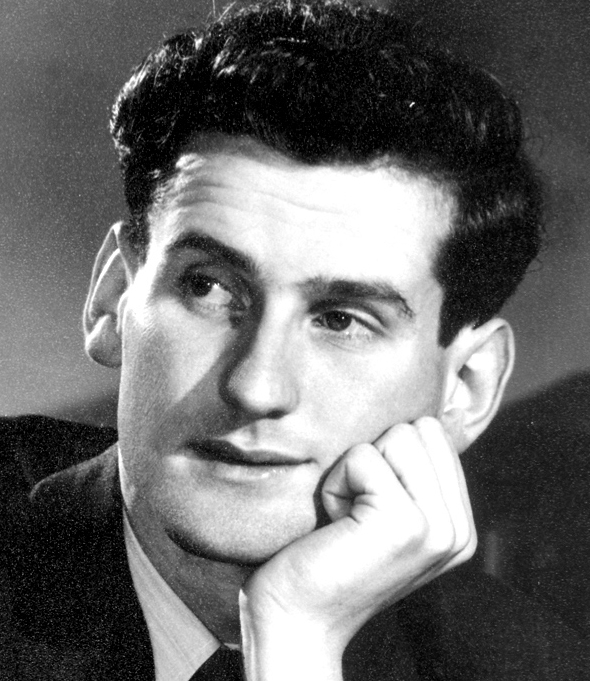
    The legendary Julian Slade who became a friend of Mike’s.


    That said, upon graduation, Mike was prepared for the realities of life as a freelance theatre practitioner: “The drama schools were chucking us all out at the same time and the opportunities, as ever, were disproportionate to the sheer volume of us. I think London can be a daunting place at any time but particularly when you’re starting out. That said, some early knock backs are in fact essential if you are going to pace a long freelance life”. To find work, Mike got in touch with relatives in Bushey Heath and negotiated to stay with them while doing various summer jobs such as an ASM. He recalls: “I actually moved back to Scotland for a short time until one chilly morning I was overcome with the spirit of Dick Whittington and packed hastily before buying a one way ticket back to old London Town. Once again, I was at the mercy of friends to put me up. I then touted around for a bit before fate intervened: I was asked if I would like to be Assistant Director on a musical adaptation of The Comedy of Errors. The music was by the much beloved Julian Slade (of Salad Days fame) who became a lifelong friend and it was directed by the fearsome Anthony Besch”.
    It was during The Comedy of Errors that Mike was to meet someone who influenced both his personal and professional life. He states: “My job on the show was mainly looking after the director – despite the fact I wanted to jump ship to the lighting department. The LD was Roger Frith, a legendary figure from Sadlers Wells and English National Opera. He lit it beautifully and was the most magnetic presence. Just as delightful was his wife, the actress Joyce Rae, who decided that the 21-year-old me needed ‘London Parents’ and she remains that to this day. Sadly Rog is no longer with us but those two were the seminal, central figures who started me out in the business”.
     
    Theatro_Technis,_Crowndale_Road_-_geograph.org.uk_-_1561161

    Mike become involved with Theatro Technis in Camden.


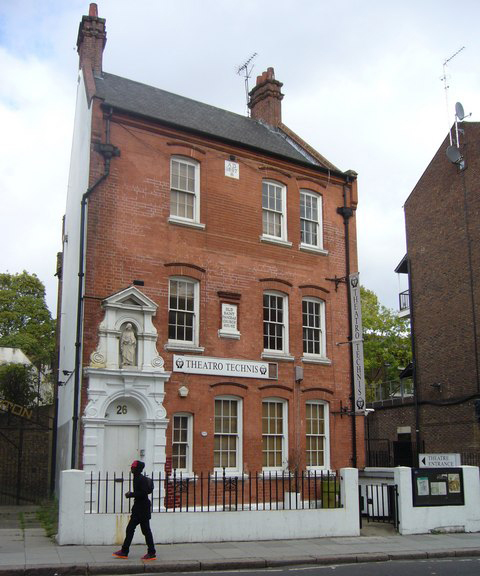
    And so under watchful eyes began Mike’s career in theatre. He took on various odd jobs on a variety of productions yet it was a brush with a certain Beatrix Potter to which he owes his first big break. He recalls: “Clare Fox got in touch to say that an actress called Rohan McCullough needed a technical bod to help her with a show about the author. I went to meet her in some funny old theatre space in Kensington and we hit it off straight away. Her partner was the iconic playwright Hugh Whitemore and I remember attending several parties at their place in Notting Hill. One morning, she rang me to say that they had been at a dinner the night before with a man called George Biggs whom she thought was part of the Great Train Robbery. Despite getting her wires severely crossed, George was indeed a highly significant figure in Maybox Entertainment (which would eventually become ATG). I arranged a meeting with him and, within half an hour, I was the new charge-hand sparks at The Phoenix Theatre in Charing Cross Road!”. Whereas the Phoenix would ensure that Mike would be kept busy for the next few years, he continued to light shows on the London fringe scene at venues such as the Kings Head, Islington, and the New End, Hampstead. He states: “One of the earliest shows I remember lighting was a Moliere called Two Precious Maidens Ridiculed – although I dread to think what it looked like! I also became involved with a group called Theatro Technis who were based in Camden. We did show after show and it was a lovely bit of retraining, particularly having the continuity of working on diverse pieces in the same building. You could refine methods, systems of light and ways of technically going about things without ever forgetting that this honing of technique was not in itself lighting design but, moreover, a sharper aide in achieving it”.
    Click here to read Part Two.