

White Light Supplies Lighting for 100: UnEarth Project
Leave a Comment
Commissioned by 14-18 NOW and The Lost Gardens of Heligan, 100: UnEarth is an outdoor promenade performance marking the First World War centenary. The production explores the aftermath of conflict and tells the homecoming stories of those who fought and lived through war. Having previously supplied a range of site-specific shows, White Light was called upon to provide the lighting equipment on this occasion.
The Lighting and Video Designer for the show was Joshua Pharo. He comments: “100: UnEarth is a really moving piece that examines the aftermath of war and how this affects soldiers, families and society as a whole. It is produced by Wildworks Theatre Company who work with their local community to layer real research and stories into their narratives. We had a cast of 120 community performers working on this production so it really did feel like it was part of the Cornish fabric; particularly as it took place in the beautiful Lost Gardens of Heligan near St Austell”.
 Joshua’s main brief was to find a visual journey for the light and video to work closely with the surrounding landscape. He comments: “Using a range of equipment and the natural light which the outdoor affords, I had to gradually create the visual aesthetic of the underworld; shifting the feel of the natural gardens into a visual palette that felt heightened and other worldly. This would ultimately return back to the real world at near dusk and then to the twinkling lights of Mevagissey and the ocean in the far distance. Working very closely with Production Designer Myriddin Pharo, we created seven different stages situated within the landscape of the gardens. Some were as big as 30m in diameter, embracing the rolling fields, whereas some were large metal stages with video walls, contrasting strongly with the landscape.
He adds: “We found a balance in each space for how present the lighting should be- artificial lighting in the landscape feels like it has to be acknowledged for what it is; the sunlight feels so natural in relation that there’s very little point trying to compete. It was such an enjoyable learning curve working in the context of varying sunlight levels. The design actually shifted around quite a lot during the previews and throughout the run, as we got to see how the natural light integrates with the designs and how I could work with or contrast the natural sunlight with my lighting design”.
 Joshua approached WL to draw on the fixtures he needed for his design. He comments: “WL provided a brilliant supply of Elation Six Par LED Pars which were a vital backbone to the design; allowing me to alter colour as the sunlight levels settled. There was a brilliant moment when the setting sun was cutting these very beautiful shafts of deep orange sunlight across one of the final stages, and I had filled the space with haze and a deep inky blue; the contrast of natural light and vivid LED light working together beautifully. Another important fixture was the humble IP Rated Par 64. The first and final scene was completely lit with these; in open white, with the tungsten supporting the golden sunlight for the opening scene and then creating the most gorgeous warm light for the final scene at dusk. Another vital fixture was the Rockwall LED video wall which was used as a giant operating theatre monitor. This allowed us to integrate images of contemporary warfare with the live performances – an important underlying subtext to the piece we were really keen to weave in”.
As the show was taking place outdoors, this meant that Joshua had to tailor his design accordingly. He comments: “I effectively only had one window each day to plot with the correct light levels; something which was always weather/schedule dependent! Rigging positions were another challenge as I couldn’t create or find a way to integrate these – mainly because there wouldn’t be a tree in that part of the space! That said, this simply made me become more imaginative and I eventually discovered some angles that worked beautifully. Getting atmospherics right was also a tricky job. Wind level and direction makes a massive difference, distributing the haze with some distance. We got around this using fans but had to re-position each day depending on what the wind was doing”.

The show ran from 3rd – 22nd July to both audience and critical acclaim.
Joshua concludes: “It was a real privilege to be part of making a piece of theatre that was not only a cathartic experience to commemorate the end of World War One, but also a beautiful journey for audiences to process all aspects of love and loss. A big thank you to WL for having complete understanding of what the project could achieve, from day one. The support and generosity were hugely felt by myself and the whole team”.
Photos courtesy of Steve Tanner.
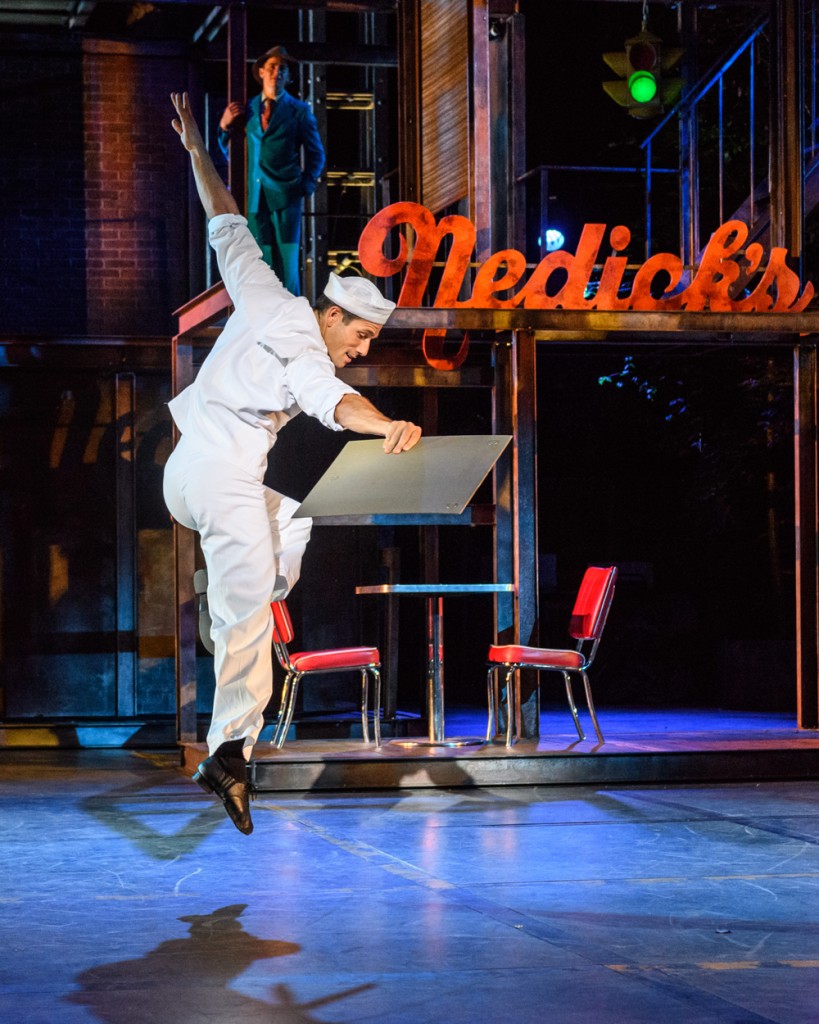 It’s a blistering day in Central London as I make my way over to Regent’s Park Open Air Theatre. Located in the heart of Regent’s Park, the venue is the oldest, permanent outdoor theatre in Britain. Every year, from May to September, it hosts a range of exciting work, including last year’s Olivier Award-winning Jesus Christ Superstar. Having supplied the lighting equipment for many years now, White Light has been called upon to do so again in 2017. One of the shows programmed this year is the Broadway classic On the Town which is being lit by Howard Hudson. I was invited along to spend the day with Howard to get an insight into his process and how he works on a show such as this.
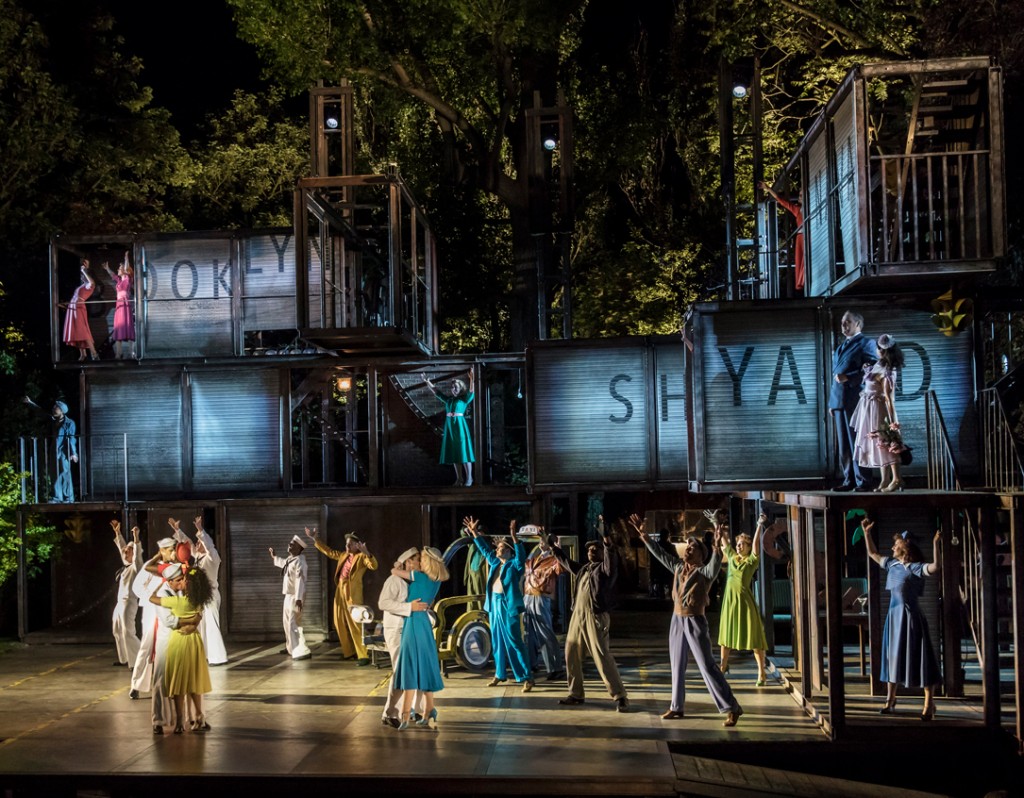 However, this is now a distant memory: the sun is shining and conditions couldn’t be any different to what Howard faced last week. He states: “Today is all about problem solving and refining. Drew McOnie, the director and choreographer, is changing certain sections that he wants to see amended. What this means is I have to work quickly on top of this session, mostly changing how sequences are cued and making small tweaks to positions and intensities.”
 And part of getting it right means preparation. Howard has already been on-site for over a week teching the show (weather permitting). That said, he has been fully immersed in the show for the past month at least. He states: “This is a huge production with so much going on that I wanted to be fully prepared. Ideally you’d normally spend as long as possible in rehearsals yet this is not always feasible due to your schedule and the tightness of dates surrounding other shows. For On the Town, my agent and I deliberately kept the few weeks before tech free so that I would have the time available to sit in on as much rehearsal as possible. My aim was to learn the dance aspects of the piece and really understand the material I was lighting; something you cannot do by simply watching the actors on stage and turning up a few days before”.
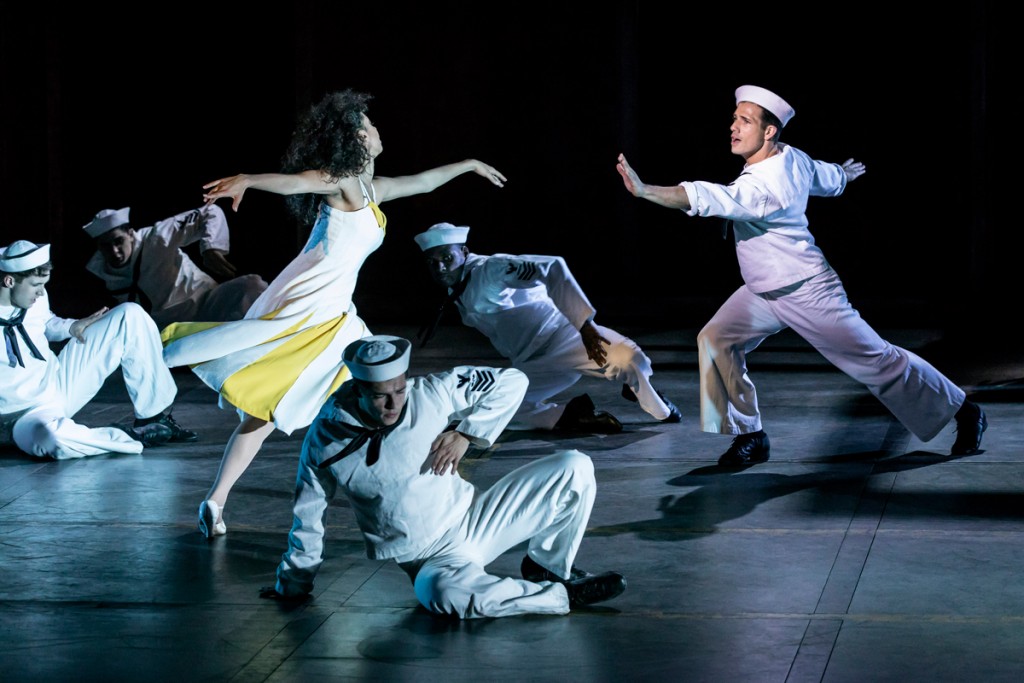 Due to the dance-heavy focus on the show, Howard found himself supplementing the existing rig with VL 3500 Washes in a lower, cross light position in order to accentuate the dance feel. With this show in particular, the lighting had to accommodate the fact that the production was taking place outside hence would have to change as the evening progresses. Howard states: “What we find is that, in order to make the lighting read more in the earlier part of the show, you’re using the rig at much higher levels. As the show moves into the second act, hence the latter part of the evening, you’re moving down to normal levels. A lot of this show has been about finding that balance and smoothing the change. At the moment, there’s a very definite point where the natural light changes and I know now that this will alter throughout the run. It’s my role to ensure this remains as seamless as possible. We’ve also been fortunate in that the piece is set over the course of 24 hours from early morning, through evening to sunrise, so the natural light works alongside the narrative.”