Peter Mumford Archives - White Light
Explore White Light: White Light | HireWL | SalesWL | ShopWL

Tag Archive: Peter Mumford

  1. White Light Hits the Right Notes at Garsington Opera

    Leave a Comment
    Fidelio at the Garsington Opera which ran earlier this month.

    Founded in 1989, Garsington Opera is one of the UK’s largest summer opera festivals, annually held in Wormsley Park, Buckinghamshire. Like so many other productions and festivals this year, the outbreak of Covid-19 saw its entire season cancelled, with the Festival being postponed until 2021. However, as some restrictions slowly lifted, this meant Garsington was able to present semi-staged performances of Beethoven’s Fidelio last month to a socially-distanced audience. For the run, White Light was asked to provide the lighting equipment.   

    Fidelio features direction, lighting and video design by Peter Mumford, who first created the piece very much in the style of his iconic Opera North Ring cycle performances. He explains: “The original Paris production was a co-production between Garsington Opera and Orchestre Chambre de Paris, conducted by Douglas Boyd who is Artistic Director of both companies. He and Laura Canning, Garsington’s Director of Artistic Administration, asked me to repeat the concept for a concert performance of Fidelio at Garsington, replacing the originally scheduled production that had been cancelled because of the pandemic. The original Paris concert production was very much constructed to emphasise the individual characters and much of the Fidelio opera concentrates on the thoughts and ambitions of those characters as much as the action and dramatic interplay.  In that production, although not strictly separated by regulations, the singers were much of the time both emotionally and, to some extent, physically distanced. It therefore seemed very possible to adapt that version to suit these extraordinary circumstances without actually compromising the concept or style. In both versions, the performance are backed by a continuous video which supports and illustrates the narrative”. 

    Peter was previously working in Vienna where he had to observe strict Covid guidelines.

    Prior to Fidelio, Peter had been working at the Vienna State Opera lighting Madama Butterfly, which was a restaging of the original ENO production. He explains: “It was great to be working out in Vienna in what was a very well organised set-up. The entire theatre staff were regularly tested, temperature checks taken at the stage door and a well-observed mask regime in corridors, offices and the canteen. This enabled us to rehearse and work in the theatre itself quite normally; all funded by the Austrian Government who were determined to see the Opera House reopened.  It almost felt like we had returned to normality for a couple of weeks!”.  

    Unfortunately while he was en-route to Vienna, Austria was put on to the quarantine list by Gov UK so the plan to fly direct to the UK following the premiere to start work at Garsington had to be abandoned. So, in tandem with Garsington, and in particular Technical Director Steve Hawkins, a plan was developed to make it possible to direct and light the show remotely via Zoom.  

    Peter’s set up in his office which allowed him to view both the production desk and the main stage.

    Having arrived back to his home in Greece, Peter created a set up in his studio in which he had two monitors: one showing Garsington’s main auditorium and another to communicate with the production desk. At Garsington itself, a large monitor was rigged in the auditorium so that the performers could see and hear Peter during rehearsals. He explains: “It was a very surreal way of working but the only choice we had. As I was wearing two different hats, I would be directing during the day and holding tech sessions in the evening. When working in these conditions, you have to have a great team on the ground and thankfully I did. I was able to communicate with Steve Parkinson, my brilliant Lighting and Video Programmer, who was effectively my eyes as I couldn’t always judge the light levels on stage through my monitor. Similarly, Will Reynolds, the Video Associate, did an equally great job in achieving the look and feel I wanted whilst, on stage, Sam Floyd led a great lighting team.”  

    The entire show was focussed, lit and cued up on Zoom, with Peter drawing up a clear plan and focus notes before sending these across. He comments: “The show features an ensemble of 14 players so it was an opportunity to light them individually in a way that you wouldn’t light a full orchestra. Of course they were very much a part of the overall stage picture and it was great to be able to achieve both a visual and musical blending between singers and players in a way that you can’t always do with a ‘fully’ staged opera. The lighting rig itself wasn’t actually that complex – a mixture of Lustr Profiles and MAC Encores which gave me a nice flexibility in terms of colour and also in achieving a fast focus”. 

    The show received acclaim from critics and audience members alike.

    Fidelio recently finished its run, for which it both sold out and received fantastic reviews. It proved to be a great opportunity for Peter to not only revisit a previous production but also work during a time when live performance has become a rarity. He comments: “It really was a brilliant experience to work at Garsington. I’ll be honest and say this is obviously not the way I would want to collaborate or work in the future but in this instance it was the only way we could make it happen. Thankfully, we had a brilliant team, both on and off stage, who created something quite special and unique in these perpetually trying times”. 

    Photos courtesy of Johan Persson and Peter Mumford.

  2. Leading Light with…Charlie Morgan Jones – Part 1

    Comments Off on Leading Light with…Charlie Morgan Jones – Part 1

    CMJ Headshot pic. Hywel Jones

    Lighting Designer Charlie Morgan Jones

    This month’s Leading Light is Charlie Morgan Jones. A previous nominee for the WhatsOnStage Best Lighting Design Award, his work spans the full theatrical spectrum, from multiple musical productions to the West End to immersive theatre to international operas. He’s currently at the Royal Court Theatre in Liverpool with Derren Brown Underground and has taken the time out to speak to us about his story so far.

    As always with Leading Light, we go back to the very beginning and for Charlie this is Barry, Vale of Glamorgan, which is in South Wales. He comments: “I was born and raised in Barry and lived there till I was 18. It’ll always be home for me. It’s very much a quiet town where the people are nice and everyone knows who you are. My bedroom window opened out onto the Bristol Channel and it really was a blissful place to grow up”. Charlie was an only child and lived with his mum and dad. He explains: “Mum is an English teacher and always took me to the theatre throughout my childhood. Dad is a photographer and my Grandparents loved classical music and I remember going to the Symphony Hall in Birmingham. Therefore I was certainly raised in a very ‘artsy’ family”.

    Having attended theatre from the point where he admits to being “the screaming baby at the back”, Charlie’s personal first memory of theatre comes from when he was aged four. He recalls: “The first thing I remember seeing was a production of Turandot at the Welsh National Opera. It was just incredible. I remember this corrugated set which featured hundreds of heads all across the stage. It was lit by a woman called Heather Carson and I randomly looked back at the production shots a couple of years ago and it still looked spectacular”.

    CMJ at School pic. Hywel Jones

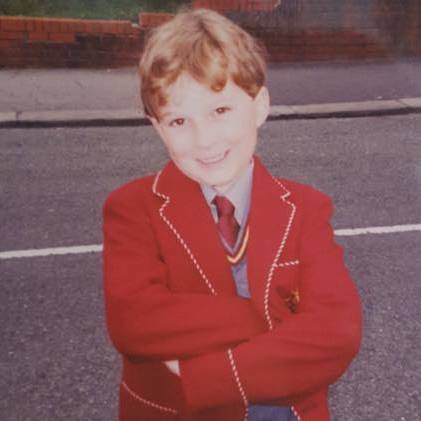
    Charlie in his Cathedral School Llandaff uniform

    Despite his mum being an English teacher, Charlie is the first to admit that he was far from academic. He comments: “I went to a lovely school in Llandaff which was about eight miles away in Cardiff. The teachers there were great and really pushed me. That said, I didn’t push back. I literally just wanted to spend every day larking around and making people laugh. I didn’t really put in the energy to apply myself to anything”.

    During his schooldays, Charlie continued to see a lot of shows. He comments: “With the New Theatre being based in Cardiff, this meant that they had a different show each week and whether it was am dram, musical, farce or panto, mum and dad would always take me”. Charlie also took part in the school plays which were held every summer and Christmas. His first ‘theatrical credit’ was his unforgettable portrayal of a Rabbit in Wind in the Willows at the age of 7. Yet school was to further Charlie’s passion for theatre when a new state-of-the-art theatre was built. Charlie recalls: “I was 13 years old and for some unknown reason, my parents had bought me a smoke machine. I told my Drama teacher who asked me if she could borrow it for a show. I said yes and then she asked if I wanted to light it as well. I didn’t really know what I was agreeing to but I just said yes!”. Charlie ended up making his lighting debut on what he describes as “Stars in Their Eyes extravangza”. He recalls: “I lit the show on a two scene desk so it was literally on off, on off. That said, I had a blast and my teacher let me light lots of other shows. I think I became the only designer in history to light Joseph without any colour! Then again I was just having a good time and enjoyed the whole lighting process”.

    gboac9

    Concorde would actually have a big influence on Charlie’s career choice.

    Yet Charlie didn’t want to be a designer just yet. Rather, he had other ambitions: “I wanted to be a pilot – something I wanted to be for as long as I can remember”. And there was one particular plane that Charlie has a somewhat unhealthy obsession with: “I was madly obsessed with Concorde. My aunt lived in Reading which was on the flightpath to Heathrow and at 5:30pm every evening, I would run into the garden as soon as I heard the plane up ahead. I was so obsessed that, when I was ten, I wrote to British Airways saying I love Concorde and they needed to help me. To my amazement, a chap called Claude Freeman wrote back who was then Head of British Airways Maintenance. He asked if I wanted to spend a day at our maintenance facility and I, of course, said yes! I spent the whole day on a Concorde but not just any Concorde – the flagship plane named G-BOAC. I even received a Blue Peter badge”.

    However, Charlie’s dream of flying Concorde was to be quickly dashed when he was just 15. He recalls: “They decommissioned Concorde which was a genuine blow to my piloting dreams. It felt like there was no end goal now as my ultimate ambition was to fly that plane”.

    CMJ on Work Experience at Wicked the Musical pic. Hywel Jones

    Charlie during his work experience days at Wales Millennium Centre. 

    While his Concorde dream was coming to an end, Charlie was still busy lighting shows at school. He recalls: “My Drama teacher, Claire Morgan, was very supportive. She would let me stand on chairs to rig lights and I even had a key to the drama studio (something I would use when I wanted to skip Chemistry). I used to spend all my time in there, playing with levels and cue timings. It was a very basic desk with 24 channels on top and 24 on bottom but it was my be all and end all”. Charlie soon became the school’s go to lighting designer and began to explore lighting outside of the drama studio. He recalls: “When I was 16, my mum introduced me to Perryn Leech, Welsh National Opera’s Technical Director. I soon embarked on work Experience on WNO Max’s Candide which was a fantastic experience. Perryn would also prove to be extremely supportive of me and introduced me to Dorset Opera – where I did two seasons as Assistant Lighting Designer. I was lucky enough to return in 2014 to light their 40th anniversary season as the fully fledged LD”.

    Charlie passed his GCSEs and continued with his A Levels, which included Drama, Physics, Maths Statistics and Geography. He comments: “I went to a college that was different to my high school and really didn’t enjoy it. The only fond memory I have is spending time in the theatre! I also used to host a show on the local radio station called Spotlight which was all about theatre”.

    During this time, Charlie continued his work experience at the Wales Millennium Centre, which included Acorn Antiques – the Musical.  It was here he met Technical Director Dicky Burgess who said if Charlie wanted a job as a followspotter, he should email Dicky when he was 18. Charlie comments: “The day after my 18th birthday I emailed him and was offered a job as a followspotter: something I did for five years. The first show I worked on there was White Christmas where I was lucky enough to meet Lighting Designer Ken Billington. I remember he told me: ‘Kid, if they walk and talk, they get a light'”.

    Rose-Bruford-College-700x455

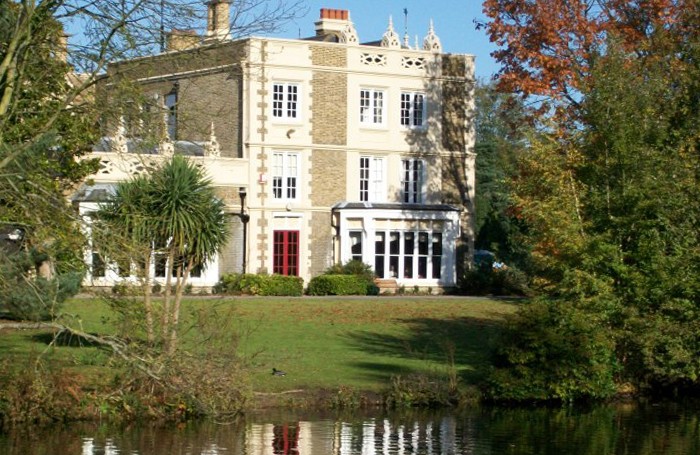
    Rose Bruford was a life-changing experience for Charlie.

    Yet all this focus on theatre meant Charlie’s studies were neglected and he failed his exams. However, he wasn’t giving up on education just yet: “Whilst I was working at the WMC, Chitty Chitty Bang Bang was visiting and the Chief LX was a chap called Chris Vaughn. He told me to apply to drama school as he felt it would be a great experience for me. So, I applied to Rose Bruford in secret – mainly as I didn’t think I’d get in. I was then invited to interview with Rachel Nicholson and to my complete and utter surprise, she offered me a place!”. Charlie soon left Barry and made his way to London; something he describes as “terrifying and great”. And it seems that Rose Bruford was the one educational institution where Charlie really felt at home. He comments: “I had the most incredible three years at Rose Bruford and really honed my craft. The Programme Director Hansjorg Schmidt was the most nurturing man and gave me some incredible support. I took the Lighting Design course although not everyone taking it wanted to be an LD (one is now a Royal Navy Officer!). That said, I knew for a fact that this was what I was going to do and that marked me out slightly”.

    During his time at Rose Bruford, Charlie began to work at the Vaudeville as a Board Operator. He recalls: “Working at the Vaudeville was also an education in itself as I got to see a new lighting designer’s work on a new show every three months. Peter Mumford lit the first show I worked on there (you can read Peter’s Leading Light here) whereas Mark Henderson lit the second one. You essentially had the dons of lighting design coming in and I was behind them in a dress rehearsal. It was at that point when I thought – I could be this guy”.

    Click here to read Part Two.

  3. Leading Light with…Jason Taylor – Part Two

    Comments Off on Leading Light with…Jason Taylor – Part Two

    Journeys-End--Broadway-2007

    Journey’s End on Broadway earned Jason a Tony nomination.

    During his early career, Regent’s Park offered Jason a good platform to work around. He states: “It was three shows during the summer so offered me a good base for the year. I also kept going back to Nottingham to do their Christmas production so made sure I had a handful of shows that kept me ticking over”. Following his work at Regent’s Park, it seems that Jason’s reputation began to slowly grow. He recalls: “I met a director called David Grindley who I would go on to work with extensively. Looking back, my first real big break came with him and Journey’s End”. Journey’s End is the now classic play by R.C.Sherriff which first premiered in London in 1928. Jason was brought on board as the lighting designer for the 2006 West End revival. He states: “The show initially entered the Harold Pinter Theatre and from there it literally just took off. We were only supposed to do eight weeks yet it received such a great reception that it extended. It then moved to the Duke of York’s before embarking on a UK tour. It then went back into The Playhouse in the West End before another tour and then into The Ambassadors!” As if a mini-tour of the West End wasn’t enough, this would only mark the beginning of the show’s journey…

    Pygmalion on Broadway.

    Having been watched by an American producer in London, they decided to take the show and transfer it onto Broadway. Jason recalls: “We discovered the show was going to run at the Belasco Theatre. This was my first Broadway show and it was a brilliant experience. We were fortunate as it was the same creative team as London, which included director David Grindley, sound designer Gregory Clarke and set designer Jonathan Fensom. We were all at similar stages of our career and all got on really well as mates”. But was taking a show to Broadway not a daunting prospect for Jason? Apparently not: “We knew the show and were confident in what we could do with it. As in London, it was really well received and nominated for a string of Tony Awards; including Best Lighting Design”.

    Similar to Regent’s Park, it would appear that Journey’s End would open more doors for Jason – yet now at the other side of the pond. He states: “We were asked by an American producer who had seen Journey’s End to go back and work on a revival of Pygmalion. It starred Homeland actress Claire Danes as Eliza”. While it was essentially the same team working on Pygmalion, this is where the similarities to Journey’s End finish. He states: “Whereas Journey’s End was well received but didn’t sell very well (probably because of its very dark subject matter), Pygmalion had terrible reviews but packed the place out every night!”. He adds: “I remember a review in the New York Times for Journey’s End that had a whole paragraph dedicated to the lighting, including a quote which stated: ‘Jason Taylor’s lighting beautifully summons the requisite claustrophobia’. Conversely, one review from Pygmalion kindly said: ‘Lighting Designer Jason Taylor thinks he’s still stuck in the WW1 bunker’. Safe to say you remember your bad reviews!”.

    Empire - Nobby Clark

    The Empire at the Royal Court which was a personal highlight for Jason. 

    And while his career was flourishing on Broadway, Jason was making similar waves back in the UK. He states: “Following Journey’s End, things just took off. At one point, I had three shows in the West End, one at the Old Vic and one on Broadway. The problem is you think this is how it’s going to be forever – and it really isn’t!” That said, Jason does possess a series of extremely impressive credits, ranging from The Boys from Syracuse, again directed by Judi Dench, Our Boys at the Duchess Theatre, an American tour of Sweet Sorrow and The Empire at the Royal Court to name but a few. He adds: “I made some great contacts early on and it just built from there, year on year. It’s been a healthy mix of commercial work, venues such as the Royal Exchange, Hampstead, along with other new writing theatres. Ultimately, unless you have a huge show bringing in royalties, you need to keep working and find sources of income – so I like to mix it up!”. Having lit such a wide range of work, I can’t help but ask Jason what his favourite type of show to work on is. He has a clear answer: there isn’t one: “When I was at the Royal Exchange, I wasn’t entirely sure as to what type of work to light early on. I spoke to the Deputy LX and they gave me some great advice: just light anything. This is particularly important when you’re just starting out. I genuinely believe this is something I embodied and perpetuated throughout my career. Obviously you can’t say yes to everything but you need to keep your options open”.

    HTOHL-Jason-Merrells-and-Jenny-Seagrove-c-Alastair-Muir-700x455

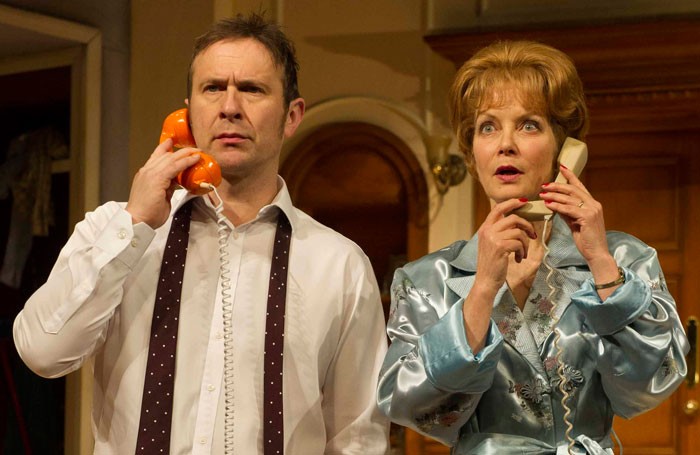
    How the Other Half Loves in the West End which Jason lit last year.

    Along with this open approach to his work, Jason also reiterates how important it is to ensure that contacts are not only established but sustained. He states: “I remember having a drink with Peter Mumford about ten years ago (you can read Peter’s Leading Light here). He was good friends with Gregory Clarke, the sound designer on Journey’s End. All three of us were stood round, chattTheing about what we were doing and Peter said he’d just been offered The Rivals with Peter Hall in Bath, which was also going into the Haymarket in the West End. Sadly, he wasn’t available but I mentioned that I was. Peter suggested I dropped Peter Hall a line to make him aware I was interested and available. I thought this was a bit cheeky but Peter was insistent I just do it. I followed his advice and Peter replied asking me to meet him for a coffee. I did and he offered me the job there and then. This was particularly special as it was one of my career highlights. It had the most stunning set design by Simon Higlett and it was a pleasure to light”.

    As with all of the Leading Lights I speak to, my final question to Jason is what advice does he have for the next generation? He has a couple of tips: “Personality is the most important aspect to being a lighting designer. You need to get the rig right, and obviously light the piece but you then have to work with other creatives and deploy as much diplomacy as possible. It’s important to remember to put your take and style on a show yet also remember that you’re part of something bigger and a large part is taking on board everyone’s opinion. It’s easier on some shows than it is on others but when you do work on that brilliant production where it’s a joyous collaboration (similar to Journey’s End) then you realise that it’s all worth it”. Jason’s pragmatic approach to lighting is also reflected in his other advice for young designers: “Ultimately, you just need to go out and get on with it. Take the plunge and become freelance. I do think it’s a lot harder than it was and there seems to be more LDs than ever now. However, it’s something you just need to do”.

    On that decisive note, Jason has to run back to the Garrick to work on the final tech of Gangsta Granny. He is only in London for a few days before returning to his native Lancashire where he now lives with his wife and three children. It is at this point when he offers his final words of wisdom: “I actually think one of the most important things for lighting designers is to strike a work/life balance. For me, I obviously love lighting shows but I equally love spending time with my family. There’s been times in the past where I’ve turned down big jobs so I can spend time with them. It’s important that you recognise what’s important to you personally. I made a conscious decision to have that balance and have never regretted it once”. And as I look over Jason’s credits and career one last time, it’s certainly obvious that this approach has worked very well for him.

    Photos courtesy of Alastair Muir, Jason Taylor, Joan Marcus, Nobby Clark and Sara Krulwich.

  4. Leading Light with…Peter Mumford – Part One

    Comments Off on Leading Light with…Peter Mumford – Part One

    shapeimage_2

    Peter Mumford

    Our Copywriter Adam went to meet Peter Mumford…

    It’s a blistering morning as I exit the tube at Sloan Square Station. Thankfully I only have to make the short walk to the Royal Court Theatre as it is here I am meeting Peter Mumford, one of the most renowned and respected lighting designers in the industry. Having just finished lighting the dazzling 42nd Street at Theatre Royal Drury Lane (you can read his interview here), Peter is now lighting The Ferryman which has just opened at the Royal Court Theatre to a multitude of five star reviews. Before he prepares for its transfer to the Gielgud Theatre, he’s managed to take some time out of his busy schedule to take part in this month’s Leading Light.

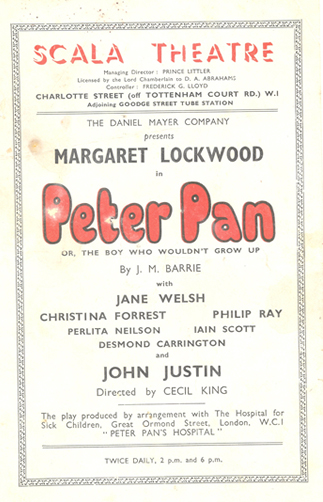
    In what’s now become somewhat of a cliché with Leading Light, we start at the very beginning. Peter’s story begins in London, or more specifically Sutton. He recalls: “I was raised in the suburbs in what was not a particularly theatrical family. My mother was a primary school teacher whereas my father was a gas showroom manager”. Whilst his family might not have worked in the industry, they still had an interest: “Both my parents became involved in amateur dramatics after the war. I remember being taken often to Wimbledon Theatre which wasn’t that far from where I lived. The first thing I recall ever seeing on stage was Peter Pan at the Scala Theatre, which was ultimately demolished in 1969. I was just nine at the time and still remember images from the show and I think it may have been Margaret Lockwood playing Pan!”.

    Peter Pan was Peter’s earliest theatrical memory.

    At secondary school, Peter became heavily involved in the art department and studied the subject at A Level. He recalls: “I really enjoyed Art and come the age of 15/16, I began helping out on school theatre productions where I would help design the set. I will always remember visiting my Careers Master and not having a clue what I wanted to do. The only two things that seemed relatively palatable were maybe a journalist or graphic designer – to which my Careers Master said he couldn’t stand either artists or journalists!”. Yet this didn’t deter Peter and he would go on to study at the Wimbledon School of Art. It was here he undertook a pre-diploma course where he studied “a bit of everything”. During this time, he would continue to see shows and work on college productions in the capacity of set designer. For a while, it seemed as if set design would be Peter’s calling as, once he finished at Wimbledon, he went to Central School of Art to study Stage Design under Ralph Koltai – a decision that would prove to be life changing. Peter states: “That first term at Central had a huge influence on me; particularly under the guidance of Ralph. We did a lot of work at the Cochrane Theatre which was a part of the Central School of Art building and Ralph would bring in all of these amazing directors and designers who he was involved with on his own projects. As a result, we got to work with people such as Charles Marovitz , Clifford Williams and John Bury, along with lighting designer Brian Benn who gave a lecture course in lighting which Ralph Koltai was very involved in. At the time there were no dedicated lighting design courses and indeed only three stage design courses throughout the UK. In retrospect, I realise just how fortunate we were to have immediate access to such influential individuals and the experience of those projects remains a great inspiration”.

    Ralph Koltai was a huge influence during Peter’s studies.

    During this time, Peter found himself seeing more and more shows, allowing his passion for theatre to grow. He states: “I was seeing a lot of shows – around three a week. I was slowly becoming obsessed and soaked up whatever I could. It was a time when Laurence Olivier was leading the National Theatre and Peter Brook was directing at the RSC so I was able to see the many famous productions of that time”. It was during these years that contemporary dance began emerging in Britain; an art form that would hugely influence Peter: “I was immediately fascinated by contemporary dance. I was lucky in the sense that Ballet Rambert’s London base was the Cochrane Theatre where annual collaborations with the design students and young choreographers took place. Norman Morris, the then artistic director of Rambert, led several projects within the design school which again furthered my interest in contemporary dance”. Peter continued studying for his diploma and soon found himself in his third and final year (“there were only seven of us left by that point!”). To make some money alongside his studies, Peter began working as a stagehand at the Palladium theatre. His first professional gig? “I remember it was in 1968 and I was paid to sweep the confetti from the stage in the original production of Hair!”. So not to interfere with his studies, Peter would work evenings and was paid a modest £5 a week, noting that you “got paid more if you wore ‘blacks’ for the in view scene changes”. And whilst this was initially seen as a way of earning some extra money, it actually proved to be another form of training. Peter states: “What my stagehand experience showed me was how all aspects of the theatre worked. I got to see the importance of every role – something which would prove extremely useful in my later career”.

    Peter’s first paid job in theatre was sweeping up confetti on the original production of Hair in 1968.

    Having gained his diploma, Peter entered the working world on a full-time basis and continued to assist at the Palladium. He states: “While I was working at the Palladium, Geoff Moore (then a young emerging director) was also working there at the same time. He told me that he was setting up his own company called Moving Being on the back of a commission from the newly created I.C.A. He asked me if I wanted to come on board and I jumped at the chance”. Moving Being was formed in 1968 and was known as an “experimental mixed media theatre group” incorporating text, film, projections and music with contemporary dancers and actors. The first project Peter worked on was a Festival in Berlin called London Now in Berlin. Peter recalls how they literally “threw everything in the back of van and hit the road”. However, Peter wouldn’t be hitting the road any time soon as he stayed with Moving Being for more than ten years. He recalls: “My role at the company was Set, Projection and Lighting Designer (effectively Technical Director). Essentially my work encompassed all of the visual elements which were vital in every show. The role also acted as my first real introduction to using lights. While using early projection equipment (nowhere near as bright as today!) I soon realised that this required lighting control as well, so lights began to play a much greater role in my artistic output”. Peter left London to move to Cardiff where the company was based and it would be his home for the next twenty years at least. He states: “We were fortunate in the sense that we received financial support from the Welsh Arts Council who were always very encouraging of our work. We were based at the Chapter Arts Centre in Cardiff which was an old school converted into an arts centre. He recalls: “Working with that company turned out to be a huge learning curve and was very formative for me. It was a huge influence on all of my work from there on.”

    The original Moving Being company. Guess which one is Peter…

    Peter stayed with the company until 1978 when he decided to move onto pastures new. While he continued to work with the company on individual projects, he found himself working on more and more shows as a freelancer; in particular dance productions. He states: “Following my extensive work with Moving Being, I naturally became involved with the contemporary dance world, teaching design and lighting at London Contemporary School of Dance at The Place in London. What’s important to remember is that, with a lot of dance and choreography, there was often no real set as such, hence light has to play an important role within the space. It has to become a part of the piece and takes on a much more scenic role”. During this time, Peter found himself lighting a lot of Siobhan Davies’ work along with many pieces with Richard Alston whilst he was artistic director of Rambert in the 80s. He marks these as two of the most important and influential creative relationships in his career. His continued involvement in dance saw Peter lighting many various dance works with several different choreographers around London, mainly at The Place Theatre but also at Sadler’s Wells.

    In 1982, Peter became a founding member of Second Stride Dance Company, along with Richard Alston, Siobhan Davies, Ian Spink and designer Antony MacDonald. Although the company was only supposed to run one season, their combined expertise and critically-acclaimed work saw them continue for some 15 years. Peter states: “I was very proud to be part of Second Stride – particularly during such an exciting time. It was an accumulation of the previous collaborations and productions I had worked on and it felt like what we were doing was creating innovative and profound dance pieces”. Across this period of time, Peter’s work also evolved into the opera world and whilst he continued to design sets from time to time, the emphasis had moved more into the area of lighting design.

    Click here for Part Two.

  5. Leading Light with…Peter Mumford – Part Two

    Comments Off on Leading Light with…Peter Mumford – Part Two

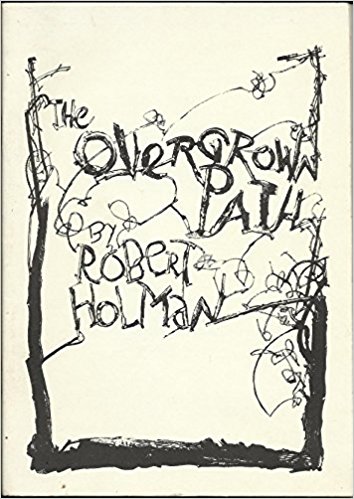
    The Overgrown Path at the Royal Court was Peter’s first ‘play’.

    The first London production of a play lit by Peter was The Overgrown Path by Robert Holman which premiered at the Royal Court in 1985. He states: “I’d worked with the designer Fotini Dimou before and we always had a great working relationship. Working on the play was great on a personal and professional level as the feedback we received from both critics and peers showed that I wasn’t going to be pigeon holed as the ‘dance man’. It showed that I could light a variety of shows”. For Peter, he has a very clear and insightful approach to lighting different mediums. He states: “ People often ask about the difference between lighting dance, opera and drama and there are different emphases in the different forms, although these days the styles crossover a great deal. However it can be said that dance is expressed primarily via the body and therefore illustrating the body form and its movement becomes a priority. Drama is much more reliant on facial expression and therefore ‘seeing’ the words and emotion is important. Opera tends to be more design-orientated and you’re looking much more at the bigger picture as it were – a more ‘wide screen’ epic event driven by the power of the music. Obviously these are generalisations and all performances have their exceptions and nuances”.
    Over the next few years, Peter would continue to light a range of plays including The Shawl (Royal Court), Faust (Lyric Hammersmith) and As You Like It (Old Vic) However, not one for complacency, he soon found his career taking yet another interesting direction. He recalls: “Towards the late eighties, there was a lot of dance material being filmed for television. However, I, and many others, were dissatisfied with how this was being portrayed”. So much so that Peter decided to co-found his own company called Dancelines Productions which was committed to creating and producing dance work for television. He states: “I remember making a proposal to the then Commissioning Editor of Channel Four about this unbelievably ambitious project which entailed taking over Riverside Studios for five weeks where we would work with 11 dancers, 3 choreographers and 1 camera crew, and everything would be created with and for the camera. In the end, we had more than forty hours of footage, which resulted in a programme of one and a quarter hours which was called ‘Dancelines’.” Following on from this, Peter would go on to produce and direct numerous programmes for both Channel Four and BBC2 and win multiple awards including the OperaScreen IMZ Best New Opera Award (1991), DanceScreen Best Studio Adaptation (1992) and was even nominated for an Emmy for the TV adaptation of Matthew Bourne’s Swan Lake. In 2002, he worked on 48 Preludes and Fugues which were 48 short films (of which Peter directed half and was also lighting director on them all) which were widely screened on BBC2.

    Peter formed Dancelines Productions to bring quality dance work to the television screen.

    From the mid-nineties onward, Peter has focused solely on freelance projects. These include, among many others, Vincent in Brixton (National Theatre/West End/Broadway), Hedda Gabler (Almeida/West End), The Entertainer (Old Vic), The Seagull (Royal Court/Broadway), A View from the Bridge (Duke of York’s Theatre), Faust (English National Opera), Sucker Punch (Royal Court Theatre), Absent Friends (Harold Pinter Theatre) and Carmen (Miami City Ballet), Madama Butterfly, Peter Grimes, Carmen, Manon Lescaut and Werther (Metropolitan Opera NYC). This selection is taken from a multitude of projects that Peter has worked on over the past two decades (the list truly is impressive). As I browsed through, I attempted to select credits that justify his wide range of work but there is literally so much to choose from – something that Peter is extremely proud of: “I love collaborating on a range of projects. I made a conscious decision to just ‘be me’ and to light what I wanted to and try not to be pigeon-holed. I like to work on as many varied projects as possible and I love to work between drama, dance and opera in equal measure, as well as design, direct and work with film.

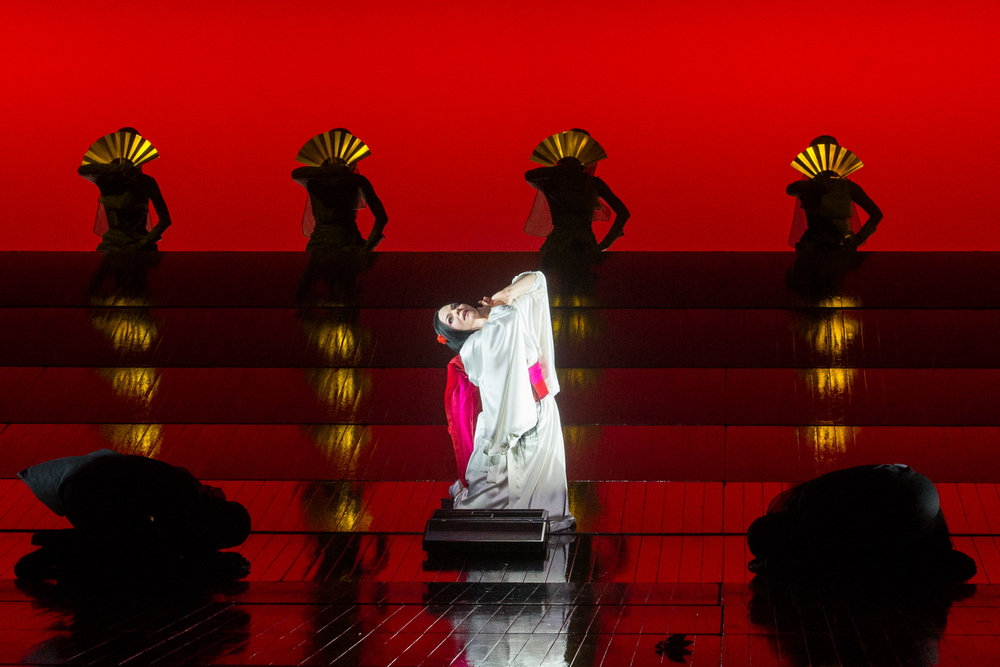
    Madam Butterfly at ENO which Peter marks as a career highlight.

    Whereas I have great difficulty choosing highlights from Peter’s career, I ask him to name a couple of projects that remain close to his heart. He immediately recalls: “Madam Butterly at the ENO was particularly special to me. I was working alongside director Anthony Minghella, set designer Michael Levine and fashion designer Han Feng and something just clicked. As a team, we gelled immediately and the production looked absolutely incredible (a reason it has been revived an unbelievable six times). It was as close to perfection as you can get for me and, every time I see it, it still feels very relevant”. Another highlight was the epic King Kong which ran at the Regent’s Theatre in Melbourne and featured the largest ever puppet on stage. Peter adds: “King Kong was this larger-than-life, epic production that doesn’t come round all that often. It had a cast of 49, a crew of 76, took five years of pre-production and four months of tech! It wasn’t like anything I’d ever worked on before but it was an unforgettable experience. It now looks like it’s going to open on Broadway next fall which is great.”

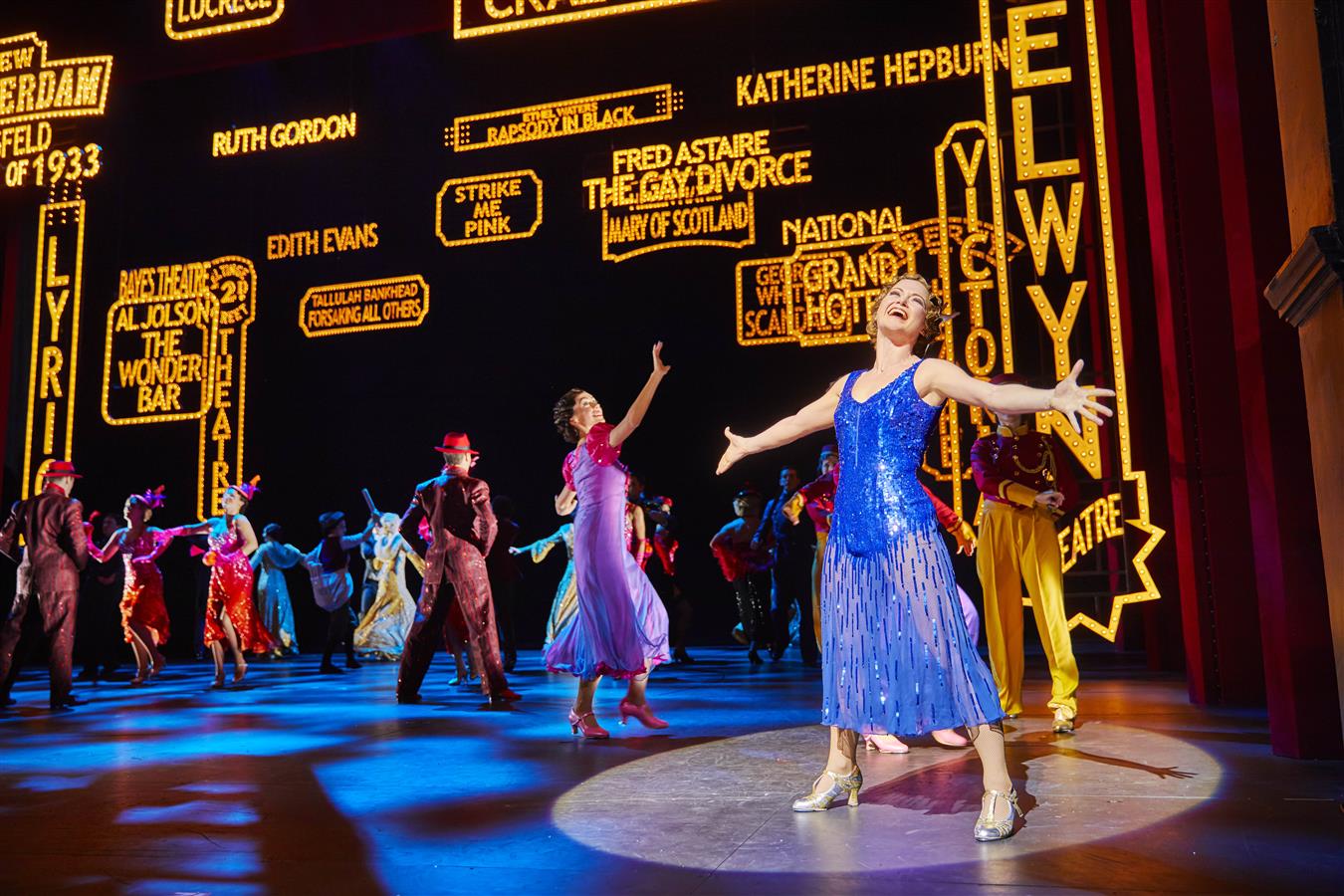
    Currently running at Theatre Royal Drury Lane, 42nd Street is the latest show that Peter has lit.

    And it’s experience I want to talk to Peter about now as I fall into the familiar trope of asking his advice for the next generation of lighting designers. As someone whose career has been based on the strength of collaborations, his answer isn’t too surprising: “Find your own generation of creatives. If you want to be a part of this world and firmly establish your position within it, you need to make sure people know who you are. Today’s director’s assistant might be tomorrow’s big thing so make sure you’re reaching out to people, whether it’s designers, choreographers or producers. You need to cement your place as the work isn’t going to seek you out. Ultimately, while it’s important to learn your craft and receive training, this industry isn’t about qualifications; it’s about communication and creative ability”.
    And on that sound advice, Peter is summoned back into the Royal Court Downstairs space to run through a few changes before the show that evening. I end by asking him what else he’s working on, alongside the numerous shows he’s currently lighting in the West End. And as always with Peter, it’s a unique answer: “I’ve just finished directing, designing, lighting and creating the video for a four-part series of Wagner’s Ring Cycle for Opera North. I directed the film of the entire Cycle during its run at Opera North and, after nine weeks of editing, there’s more than fifteen hours worth which is currently available to view on BBC Arts Online!”. Just listening to those countless roles makes me feel exhausted. Yet it all seems to be a day’s work for Peter Mumford…
    Photos courtesy of  Brinkhoff/Moegenburg, Digital Theatre, Little Queenies, Peter Mumford, Royal Court Theatre, Siobhan Davies Dance Company and Thomas Bowles.

  6. 42nd Street – Exclusive Interview with Peter Mumford

    Comments Off on 42nd Street – Exclusive Interview with Peter Mumford

    shapeimage_2Considered by many to be one of the biggest Broadway musicals of all time, 42nd Street has now arrived in London where it has received rave reviews from audiences and critics alike. Starring Grammy Award winner Sheena Easton, this all singing, high-kicking spectacle is currently playing at Theatre Royal Drury Lane – London’s biggest stage.  The show tells the story of young Peggy Sawyer who is fresh off the bus from small-town America and just another face in the chorus line on Broadway’s newest show. Yet when the leading lady gets injured, Peggy might just have the shot at stardom which she’s always dreamed off… The lighting design is by Olivier Award winner Peter Mumford and White Light has supplied the equipment. We sat down with Peter who told us about his approach to the show and how he achieved his design:

    42nd-Street-1188042nd Street is obviously an iconic show. Have you lit it before? If not, how do you approach a show as renowned as this?

    No, I’ve not lit 42nd Street previously or indeed seen it. You’re right – it is an iconic show with a long history since the early eighties. In this instance, I’d say that not having seen it was probably an advantage as I didn’t have too many preconceptions. There are some images that date right back to the original Gower Champion concept that ‘travel’ with the show, such as the dressing room scene at the start of Act Two which are unchangeable so just there to be reconstructed rather that re-imagined. Having said that, that particular scene is quite brilliant so one wouldn’t want to change it but rather reproduce it as beautifully as possible. Those instances aside,  there are plenty of opportunities to reinvent the look of much of the rest of the piece and I relished that opportunity and hopefully was able to bring new looks to lots of the show.

     42nd-street-04What was your brief when working on the production?

    As I said above, some parts are sacrosanct – Gower Champion died concurrent with the opening production on Broadway so these scenes remain as a tribute to his genius but much of the work has (in this production) been updated with more recent technology and there was plenty of space for invention as well. I’m pleased to say that Doug Schmidt, the designer, said that he’d never seen it sharper or more detailed in terms of both the lighting and the way his scenery looked. So, although the piece has a history which had to be respected, and I was working alongside much of the original creative team, it never felt too restricted creatively.

     42nd-Street-Clare-Halse-Stuart-Neal-Company-cBrinkhoff-MoegenburgHow much preparation did you do? What did this entail?

    Obviously a good look at early pictures of the scenic designs which are quite complex – there’s a lot of scenery in this show. There is also a huge number of beautifully painted cloths and structures (all repainted brilliantly by Andrew Greenfield). These cloths are painted in a variety of ways and on different material surfaces, so some are painted to be back lit and some front whereas some could be lit from both front and back. It was important to understand this and also get a clear idea of the rapid fire order of scenes. Studying the ground plans was pretty crucial as the grid is absolutely packed. This also meant that onstage lighting positions were very much defined by the hanging and order of scenery. My spot bar one was forced to be further upstage than I would normally have liked; hung under the large dressing room structure because that was the only place it would fit!

    There are also around five thousand light bulbs built into the design which feature heavily in some of the numbers – here we kept to the original design but updated the technology of the realisation.It was important not to lose the period feel of the piece which, of course, is set in the 1930’s.

    I had quite a bit of pre-communication with set designer Doug Schmidt and the writer and director Mark Bramble. Pre-production meetings involved quite a lot of conference calls between London, New York and the West Coast. It was quite a relief when we finally all got on the same stage at Drury Lane.


    42nd-street-stuart-neal-company-cbrinkhoff-moegenburg_67842789What kit did you draw on to achieve your design?

    In the end I went for a pretty much automated overhead rig comprised of Martin MAC Vipers, ETC Source 4 Lustr 2 Profiles and GLP Impression X4 Bar 20s. Out front, there were a lot of regular ETC Source Fours alogn with Philips Vari*Lite VL3500Qs  on the distant truss.

     Did any fixture prove particularly useful for this production?

    I was very impressed with the GLP Bars which we pixel mapped, meaning that each individual cell was available. I used complete bars of them on almost each onstage bar and they were very useful to both light cloths and, because of the tilt and flood facility, create a good punchy backlight wash too.

    The Vipers proved to be a versatile and constantly useful workhorse and created great flexibility in the many big numbers. It was a great combination.

     42nd-Street-Bruce-Montague-Sheena-Easton-cBrinkhoff-MoegenburgWhere there any obstacles with the show?

    I suppose the trickiest thing was the downstage lighting bar being quite a bit further upstage than I would have chosen. This is because there is simply so much scenery downstage there wasn’t room. Using an advance truss downstage of the proscenium did prove to be a way around this and, in the end, it worked well. We had to make quite a busy ‘track’ for some of the side booms which have to be frequently moved out of place during the show to allow scenery to get on stage. As a result, I was quite often asking ‘is bay 2 in position?’ and looking for ways to light a scene if it wasn’t. Ultimately, we created quite a complex system of pathways for scenery and all was resolved, but all credit to the onstage LX crew for managing this so well.

     Any other comments?

    Generally speaking I’m not a huge user of follow spots but my team at Drury Lane are the best you could wish for. That also goes for the entire in-house crew under the leadership of Steve McAndrew – great support and work throughout the five weeks of production. Special thanks too to my team: Declan Randall, my Associate, John Tapster, Production LX and Vic Brennan, my Programmer – all of them are just brilliant!

    Photos courtesy of Brinkhoff/Moegenburg.