After 21 years on Broadway and 20 years in London’s West End, Disney’s The Lion King is still roaring as one of the most popular musicals of all time. Since its Broadway premiere on November 13, 1997, The Lion King has had 25 global productions seen by more than 100 million people. Over the years, as the show has evolved, so has the lighting rig, and the latest UK-Ireland tour features the most green and energy-saving version of the lighting rig to date; a rig which has been supplied by White Light.
Click below the read the Live Design article with the show’s Lighting Designer Don Holder who discusses updating the rig to almost all current-generation LED automated fixtures, while maintaining the artistic and visual integrity of the original production.
Comments Off on Leading Light with…Charlie Morgan Jones – Part 2
3am at Leicester CURVE was Charlie’s first professional production after graduating.
Charlie graduated and was left to find his own way in the big wide world. It was here where his work at the Vaudeville would prove useful: “I emailed every single producer I knew, along with all the DSMs I’d worked with from my time at the Vaudeville. They were hugely supportive and told me who to get in touch with. It was in those early stages that I’d take unpaid leave to go and work on shows on the London fringe. It was a case of slowly, but surely, getting my name out there”.
Charlie’s first show out of university was 3am for the Curve Young Company at Leicester’s CURVE Theatre. He recalls: “I was put forward by Rachel Nicholson who was the Head of Creative Lighting Control and was immensely lucky to go straight into a show like that. I really felt like a ‘professional lighting designer’ as I had a programmer and stage management team”. Charlie would the continue to work wherever he could. He recalls: “I did a show at the Edinburgh Fringe called Jump which was a brilliant experience. I also lit a show at The Met in Bury and remember just jumping on a train, heading up to Manchester and saying ‘I’m here to light your show’. At that age, you just turn up and hope for the best. Then again, you need to have that go-getter attitude as people are only willing to employ those with experience and that was something I needed”.
It wouldn’t be long until Charlie got what he considers to be his first ‘big break’: “I worked on Dialogues des Carmelites at the Birmingham Conservatoire and the Director was Michael Barry. I was at his house for dinner and he showed me a prop from the Ring Cycle which he recently directed. As I knew very little about him, I presumed it was something he’d worked on at the Birmingham Local Opera. Fortunately I didn’t say anything out loud as Michael quickly informed me that it was a show he’d worked on at the Royal Opera House! A quick Google under the table and I realised he was quite a big name! We got on like a house on fire and Michael recommended me for various jobs including the Polish National Opera”. It was also at the Conservatoire where Charlie met Jack Ramplin who Charlie has used on lots of shows as his Associate. Charlie comments: “Michael foresaw a long creative relationship between Jack and I – he wasn’t wrong!”.
Charlie’s second ‘big break’ was to come shortly after at the Duchess Theatre in London’s West End. He recalls: “I was asked to light Cool Rider, which is the sequel to Grease. It was an all-singing, all-dancing musical with so much happening all the time – the first number had 80 lighting cues! For this show, I worked with an Associate called George Smith who was fantastic to bat ideas around with. It really changed my way of working and brought out the best in my lighting”. Shortly after this, Charlie and George formed Smith+Jones LX. Charlie comments: “We became friends but he sadly (for me) lives out in Macau now for work. That said, we’re still as close as ever, and I always visit him when I go to the Far East for work”.
Charlie lit Cool Rider at the Duchess Theatre in London’s West End.
The third break of Charlie’s was Avenue Q; the puppeted musical which is also one of Broadway’s longest running musicals. Charlie recalls: “I had worked with production company Selladoor Productions in their early days and remember touring Ibsen’s Ghost in the back of a van. They asked me back to light Avenue Q which was doing a three week run in Greenwich in April 2014. The run sold really well and got a lot of people talking – so much so that it turned into a six month tour. It then returned for a second tour in 2015, a third tour in 2016 and it’s recently been announced that it’s coming back next year. It was one of those shows that just ‘became a thing’ – when I told people I was lighting it, they were really impressed. It also got me an agent and opened so many doors for me as people were now able to see my work”.
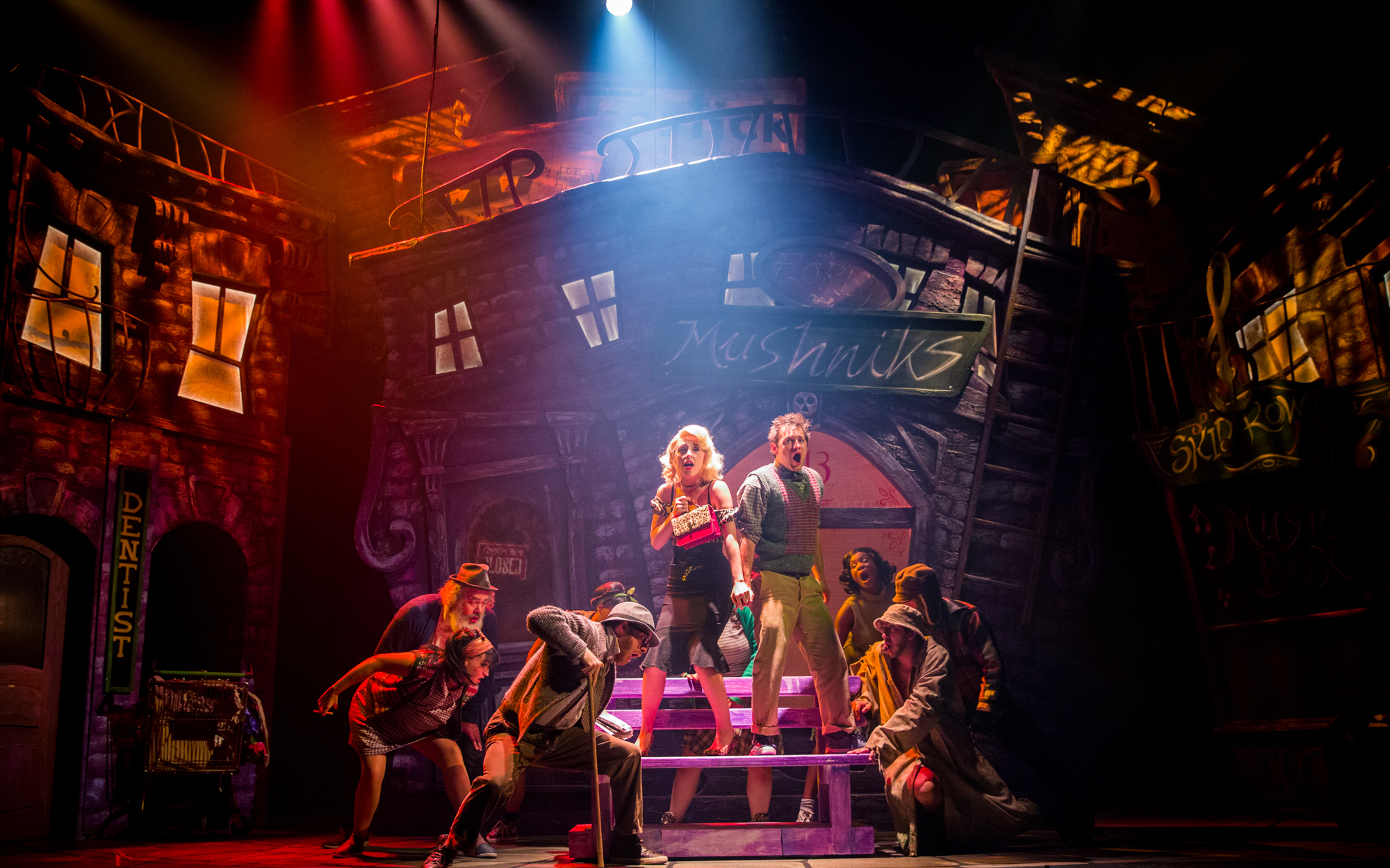
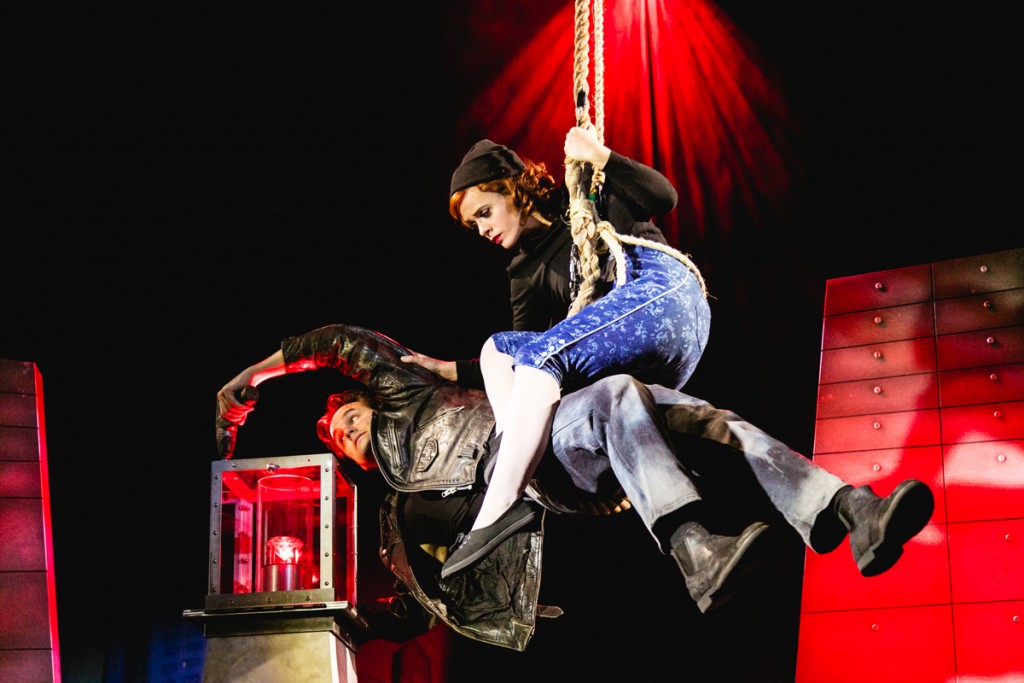
Little Shop of Horrors is a personal highlight for Charlie.
Whereas these are Charlie’s ‘big breaks’, I ask him if any other shows that standout. Safe to say, he has a fair few: “Little Shop of Horrors definitely sticks in the mind. Everything on this production just felt ‘right’ and all the creatives just clicked. We wanted the show to be zany, cartoony and over the top; similar to the feel of the film. I remember being sat in tech thinking this should be spectacular and it was. It was great to be a part of and the highlight was when it visited the New Theatre in Cardiff where I used to see shows as a kid. It was at that point when I was confident in telling people that I was a lighting designer”.
Other shows include Derren Brown: Underground which Charlie describes as “incredibly bizarre as it was a huge name and another show that everyone knows and recognises. It’s also amazing that it’s going to the Wales Millennium Centre which is where it all started in a sense – I can’t wait for mum and dad to see it!”. The Polish National Opera is another highlight of Charlie’s. He recalls: “I was the only non-Polish speaker so it was the case of being thrown in at the deep end. That said, I spent a lot of summers in Poland as a child and can understand the basics so was able to communicate with Mariusz the director”.
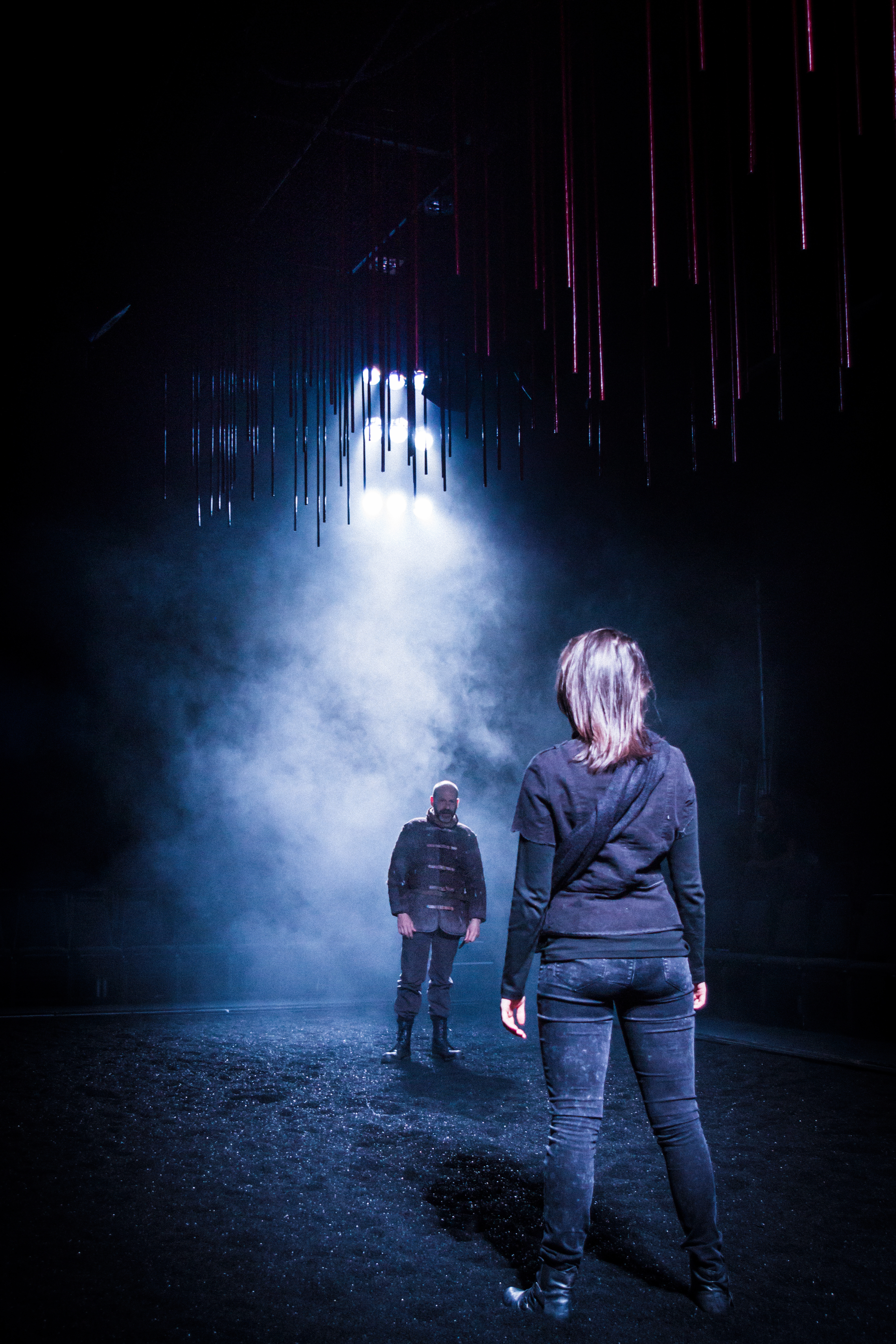
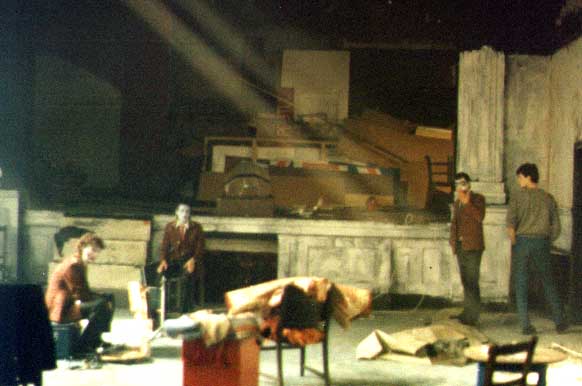
Macbeth at Theatre Severn was lit by Charlie.
Charlie has managed to achieve a lot in a short time and, while it’s largely down to a hard-working ethos, he has been lucky enough to have the support and influence of some lighting legends. He comments: “As part of my drama course at college, we went to see the National Theatre’s The Caucasian Chalk Circle which Paule Constable had lit (you can read her Leading Light here). I actually phoned my dad during the interval saying how amazing I thought the lighting was; it was a character within itself. Almost without realising, Paule had become an influence. Flash forward a few years and I was back at the Millennium Centre working in between uni terms. It was 2010 and I was followspotting on the new Les Misérables which Paule had lit. When I was back in Wales, I went over to the production desk and said hello and she was just the most approachable and friendly person. We went out for lunch and she told me everything I needed to know about lighting. Another person who’s been a huge help is Rick Fisher (you can read his Leading Light here). During my second year at Bruford, he gave a talk and was kind enough to give me his email address. I emailed him that night (very eager!) asking if I could come and work with him on a show. He was lighting The Fantasticks at the Duchess Theatre and I sat behind Rick and the programmer and learned so much. I even got credited in the programme as Assistant to the Lighting Designer! Ultimately, both Paule and Rick are incredibly talented and equally kind individuals and I also show the same level of support to anyone who approaches me for advice”.
Listening to Charlie talk about his journey and career, it’s easy to forget that he is still extremely young (not even 30). So what aims does he have for the future? He answers: “When I was 14/15, my main aim was to solely light West End shows. I’ve now had eight productions in the West End so my goals have changed slightly (as they should). I would like to light more dance and would definitely like to work at the English National Opera. I think it’s important to remember that the role of lighting designers is changing also. It’s no longer just theatre. For instance, last year I was asked to light the rainforest at the Eden Project – something I never thought I’d do. Ultimately, I want to continue my existing relationships with current designers, directors and production companies as well as push myself as a designer”.
If the last few years are anything to go by, it’s safe to say that Charlie will continue pushing himself and cement his reputation as one of the most exciting lighting designers this country has to offer.
Photos courtesy of Graeme Braidwood, Hywel Jones, Matt Martin, Pamela Raith, Rose Bruford College and Sven Worrow.
Comments Off on Leading Light with…Prema Mehta – Part One
Lighting Designer Prema Mehta
Today’s Leading Light has been a long time coming. I was meant to meet Prema mid-last year but her busy schedule (or as she describes it, “her life on a train”) meant we were unable to tie down a date. Therefore, when she emailed me at the start of the week saying she had a free afternoon, it was a case of dropping everything and ensuring that we finally sat down to have a chat.
As always with Leading Light, we start at the beginning. For Prema, this is Orpington in Kent – although her family’s origins extend far beyond the South East county. She explains: “Although I have Indian parents, the real irony is that they were both born in East Africa! I always remember asking as a child if that made me and my brother African! Mum lived in India for a short while before coming over to the UK. With dad, he was the first person of his family to come over to Britain. He made the journey with his father when he was only 16. Sadly, my grandfather died within two weeks of them arriving so you can imagine how daunting this was for him – a new country, a new language, a whole new culture and all by yourself”. Prema’s dad soon met Prema’s mother and they settled down in Orpington. Prema explains: “Although I was born in Orpington, I only lived there until I was six. When I was growing up, it was a completely different time and the area was slightly racist. Mum and dad tried their hardest to shield us from it but, in the end, they decided it was best to leave”. And their choice destination was the capital. Prema states: “Mum and dad chose London as it was much more multicultural and diverse. It was also a lot more welcoming and a much better place for me and my brother to grow up. That said, I do know that Orpington has changed dramatically since I was a child. It’s a very green area now and very much a commuter town”.
A very young Prema!
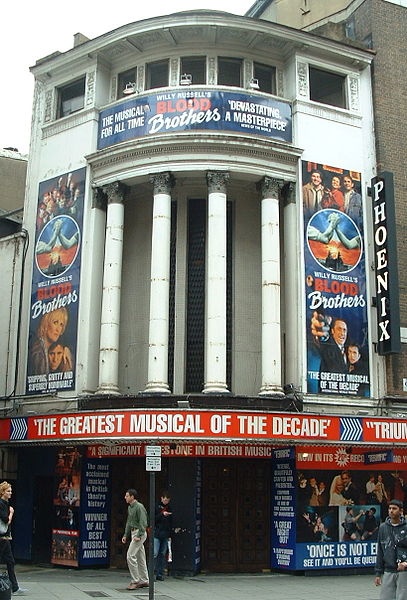
Growing up in London, there was a clear divide between Prema and her brother. She comments: “My brother was very medical and wanted to be a doctor whereas I was always the arty one. I loved painting and I loved art. That said, theatre was basically non-existent in my childhood”. In fact, Prema didn’t go to the theatre until she was 16. Her first experience was seeing Blood Brothers as part of a school trip. She recalls: “I had never stepped foot inside a theatre before but, come the end of the show, I was weeping! As an audience member, I had my world transformed and it completely blew away my expectations of what theatre was. It definitely sparked my interest so you could say that Willy Russell is the reason I’m sat here today!”. Although the show left a mark on Prema, it was mainly the performances as opposed to the technical aspects: “I wasn’t really aware of what was going on behind the scenes. But theatre was something I’d finally been introduced to”.
So what was Prema like at school? She’s quick to admit: “I was a bit of a teacher’s pet. I was one of those people who just got their head down and grafted – maybe I should have been a bit cooler! That said, I was never what you’d call a straight A student but I did work as hard as I could and gave it my all. That was an attitude that was instilled into me growing up; so long as I gave it my all and tried my best then that was more than enough”. During this time, it seems that the initial visit to Blood Brothers had begun to slowly influence Prema. She comments: “I decided to study Drama at GCSE and my interest continued to grow – to the point where I took Theatre Studies at A Level. I wasn’t exactly sure what interested me in theatre, but there was something about it. I was still quite interested in art and didn’t really know anything about the stage”.
Blood Brothers was Prema’s first theatre-going experience
But it seems that Prema’s fate may have been decided for her by the other students. She explains: “In Theatre Studies, everyone wanted to be an actor! Whilst I wasn’t entirely sure what I wanted to do, I knew for a fact I did not want to act. That said, I needed to get marks somehow. There was an opportunity to light and, without thinking, I just put my hand up! I didn’t realise it at the time but this was to be a key moment”. Prema soon became known as the course’s ‘go to lighting person’. She comments: “I ended up lighting everyone’s individual performances. For my own assessment, I lit a statue! My initial intrigue was encouraged by my tutor who was great. He gave me some money to hire five par cans, a couple of profiles, primary coloured gels and even a gobo! At the time, this was more than enough to play with and it really helped me experiment”. It seems that Prema’s interest in lighting stemmed from her early interest in art. She explains: “I felt that, with lighting, you had the opportunity to be creative. The stage was a canvas almost and you could bring your own style to it.
Prema was about to finish Sixth Form and had to decide what to do next. Her decision, similar to her first experience with lighting, was to come entirely by accident. She recalls: “I was sat at a computer and accidentally googled Guildhall – it genuinely was an accident! I had no idea what it was but the more I read about their Theatre Course, the more interested I became”. Yet this interest wasn’t met with support from those around her: “I was the Treasurer of the Student Union at my school (which was somewhat ironic as I hated maths). As a result, when the Principal heard that I was applying for drama school, she dragged me into her office and asked me what I was thinking! She said I should go into politics or economics which would lead to a ‘real job’”. That said, there was some support from Prema’s school: “My A Level tutor David Kinder was the one who said I should go to drama school. He clearly recognised something within me and wanted to encourage that. He also gave me some really great advice. He said in this industry, I needed to be like a shark. He said sharks always have to keep moving forward and, if they don’t, they sink. I think this is fantastic advice for anyone working in theatre and something that really stuck with me”.
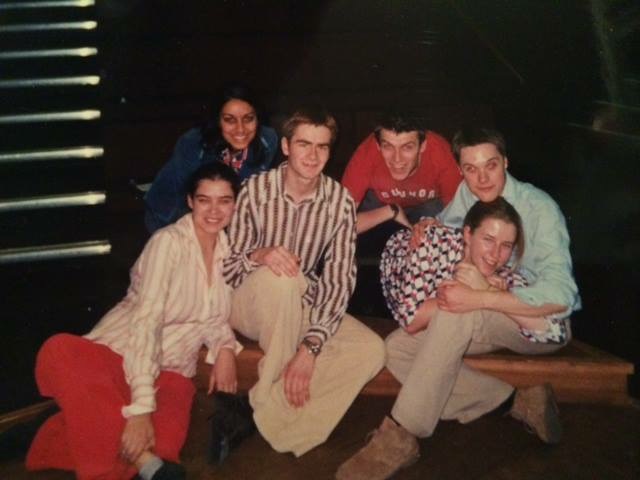
Prema during her time at Guildhall
Prema applied for Guildhall and was accepted. However, she still hadn’t made up her mind about lighting: “At the time, the course was very broad, which actually suited me. In all honesty, I didn’t know what careers existed in theatre and the course offered the opportunity to experiment in lighting, sound, stage management, props, wardrobe – basically everything!”. During her three years, Prema really found her feet – yet lighting was something that didn’t come naturally. She recalls: “There were a couple of guys in my year who were known as ‘the lighting people’. They were renowned for just being great”. Knowing she wanted to work in design, yet not sure in which field, Prema embarked on two work placements: one with renowned Set Designer Es Devlin and another with a certain Neil Austin (you can read his Leading Light here). Prema states: “I spent a week at the Donmar with Neil which was a very interesting experience. On the first day he said he was going to do his best to put me off lighting! What he actually meant was that he wanted to be completely honest and show me how tough this industry is and the reality of working in it. Looking back now, every word he said was the complete truth. Ultimately, this is a difficult career to carve, the money’s not amazing and you have to work exceptionally hard. Whilst I really appreciate what Neil said, it didn’t put me off! My problem (or possibly strength) is that when someone tells me how difficult something is, it usually makes me want to do it even more!”.
As a student, Prema went on a work placement with Neil Austin
While Prema’s placement with Neil was useful in terms of lighting, her placement with Es was to prove invaluable in terms of her approach to the rest of her career. Prema remarks: “When I worked with Es, she was just peaking. She taught me how to be both a freelancer and a woman in the industry. Yet this wasn’t by sitting me down and reeling off a list of guidelines. It was more through observation. I watched the way she behaved and dealt with situations and how she held herself. At the time, it was great training but I don’t think I realised that until much later on”.
However, set design wasn’t for Prema. She remarks: “My perception of set design was that you could put together a model prior to a production and know what it would look like from the get go. With lighting, it was a bit scarier. You don’t really know what a space is like and how this will respond until you’re in it. It was much more of a challenge and, when you’re 21, you’re all up for that. My opinion was the scarier the better as I had nothing to lose”. With this mentality, Prema returned to Guildhall where she would go on to light a couple of shows. She comments: “I was determined to light some productions and quickly became bitten by the bug. The more I lit, the more I realised that I now wanted to be a lighting designer. Come the end of the three years, I had learned an incredible amount and was ready to start building my career”.
Comments Off on Leading Light with…Malcolm Rippeth – Part One
Lighting Designer Malcolm Rippeth
Our Copywriter Adam went to meet Malcolm Rippeth.
Shakespeare’s Globe is undoubtedly one of London’s most iconic theatres; allowing audiences to experience the Bard’s work similar to how it would have first been performed. It sits on London’s Southbank and, as I walk to the main entrance, is being swarmed by tourists about to embark on a guided tour. As I enter the building, it strikes me that it was just over a year ago when WL supplied the first ever lighting rig to the venue. The person who designed the rig is the same individual lighting the last show of this current season. That person is a certain Malcolm Rippeth and he has agreed to become this month’s Leading Light.
I sit down with Malcolm who has taken an hour away from technical rehearsals of Boudica – the only new play of the season: “It’s a bit intense as we’re gearing up for the preview on Friday. I actually think this is one of the most ambitious shows to be performed in this space since I’ve been involved here”.
A very young Malcolm with his sisters.
As time is of the essence, we soldier on and, as always, start at the beginning. Malcolm explains: “I was born in Newcastle but raised in small towns & villages around the Darlington area. I was the youngest of three children, with my big sisters 11 and 8 years older than me so I was pretty much left to my own devices”. Malcolm did not come from a theatrical family – far from it in fact. His mother and father actually owned a corner shop which he lived above. He comments: “It was like something you’d see in Open All Hours! My parents would pick the goods from the shelves behind the counter and it was full of the village regulars. It was definitely of its time!”. And initially living in a small village meant that Malcolm had a somewhat restricted experience of the outside world. He recalls: “I had an enjoyable upbringing. That said, I didn’t really grasp that the rest of the world existed so it was a case of living in blissful ignorance”. Despite living in such a small community, this wasn’t going to stop Malcolm’s interest in lights. As a matter of a fact, he remembers two separate occasions, both when he was aged five, that would ignite his passion for lighting.
Billingham Forum was Malcolm’s first experience of theatre.
The first one, bizarrely enough, involves a Brownies group. He states: “It was the winter of 1978 and my mother was a Brownie leader. Part of her duty was taking the Brownies to the panto at Billingham Forum. The night she took them, she couldn’t find anyone to babysit so took me along as well. So there I was, my first time at a theatre, sat in my bright blue jumper among a crowd of 600 girls in Brownie uniforms. Rather inappropriately, when the panto dame came on and had to pick on one of the audience members to come on stage, I was the (un)lucky one! I remember being dragged on stage and my mum turning a new shade of red”. Yet, for all of his mum’s distress, it would prove to be a worthwhile embarrassment: “I remember being stood on the front of stage and looking back into the audience and not being able to see a thing other than the glare of the lights. I then looked down and stared at all of these fixtures beaming up at me and I was just wowed by them all”.
And it would appear that not long after this initial brush with lighting, Malcolm would soon be undergoing an equally influential experience. He states: “That winter was known as the winter of discontent. There were a lot of strikes going on at the time and, as a result, frequent power cuts. I was still living above the corner shop which was lit solely by one fluorescent tube; although my friends thought living above a shop was pretty cool it wasn’t a space which held any special charm for me. When the electricity went, however, my parents would light the shop with candles, paraffin lamps and torches. I remember walking down one night into the shop and being surrounded by this different array of lights and becoming mesmerised by the transformation of my everyday space into a magical one. I think I realised right then the power of lighting and what it could achieve”.
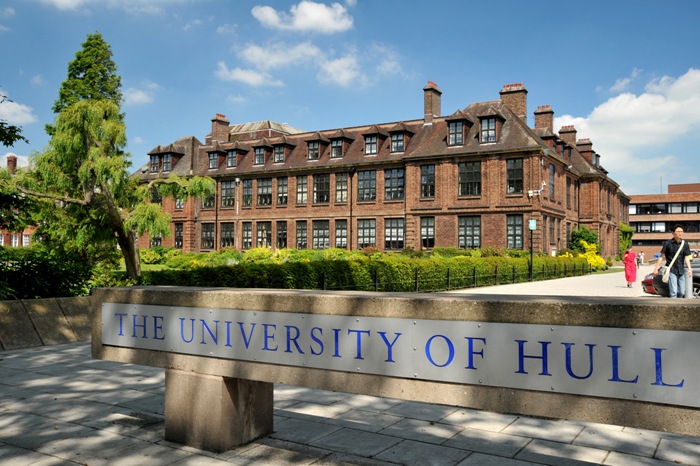
The University of Hull where Malcolm studied Drama.
The magic of the corner shop was soon to be a distant memory as Malcolm’s family were to up sticks and move to a nearby town. Malcolm’s father took a job as a school handyman whereas his mum became the assistant warden in an old people’s home. The move away from the corner shop was to be the first of many. Malcolm recalls: “It was strange as, every time I started a new stage in my academic life, I always seemed to move towns! For instance, just before starting primary school, I moved. Then it was secondary school and I moved again. And then it was sixth form and…well you can see the pattern emerging!”. Despite this frequent change in school, this didn’t disrupt Malcolm’s growing passion for lights. He comments: “Following my experience being on stage at the Brownie panto, I decided to try my hand behind the scenes. As a result, whenever my secondary school put on a play in the school hall, I volunteered to light it. All my school had were 12 lights – a mix of Patten 23s and 45s. It was a good starting point and I remember skivving out of class any opportunity I could to work on a show”.
As Malcolm approached Sixth Form, he admitted that he “more or less knew I wanted to be a designer”. Although his A Levels choices were not the most artistic. He recalls: “I chose Double Maths, Physics and Theatre Studies. I thought this would be a technical approach to lighting. That said, halfway through I realised that Further Maths wasn’t something that I really wanted to do so dropped this and took up English instead”. Malcolm’s education was certainly veering towards a more artistic selection and this was cemented when he decided to study Drama at the University of Hull. He states: “Despite studying Drama as a whole, I really wanted to specialise in lighting design. The course knew this and, as I was the only person on my course who wanted to light, I was essentially the resident designer for all shows. The university had a really good studio theatre and, as someone who had no formal training in lighting, I used both the space and productions to learn as I went along. It was a case of trial and error and it was hugely beneficial”.
The now-closed Man in the Moon Theatre on Kings Road, Chelsea where Malcolm worked as Technical Manager. It was demolished in 2003.
Having had what he describes as “an amazing three years”, Malcolm graduated from Hull and made the move straight to London aiming to become a freelance lighting designer. However, reality was about to hit the ambitious young graduate very hard. He comments: “I moved to London despite having absolutely no contacts whatsoever. I literally got a train down and got off with no advice and certainly no career plan. Looking back, there certainly is a fine line between brave and naive!”. So instead of lighting shows, Malcolm found himself working in a bar (with his previous jobs in Hull being at a nightclub and a fish factory). He worked in the bar for six months, during which time the lighting work seemed elusive. Thankfully, he had a flatmate who was able to offer him some sound advice: “As luck would have it, my flatmate was a careers advisor. Having seen me fall into a cocktail-making lull, he sat me down and said that my dreams of becoming a lighting designer would go nowhere fast at my current rate. He said I needed to have a plan; a feasible way for me to achieve my goal. Something must have worked as I began to start planning out the next steps there and then”. The first of these was to knock on the doors of venues to see if they had any lighting work available. One of these was the Man In The Moon Pub Theatre which was situated on King’s Road before being demolished in 2003. Malcolm comments: “I knocked on the door of Man in The Moon and the Artistic Director opened it. I spoke to them about my current predicament and they told me that they were in fact looking for a new Technical Manager. I got the job there and then!”. And following his appointment as Technical Manager, Malcolm not only began to light shows in the venue but also all across the London fringe. He states: “I’d decided I was really going to make a go at it now and lit as many shows as I could. I did a lot of work at the Battersea Arts Centre and the Gate Theatre. One of my highlights was lighting a version of The Tempest at the Grace Theatre in Battersea (now better known as Theatre503) in 1997. We managed to tell an epic story in what is an extremely intimate space with a tiny rig”. While Malcolm’s feet were firmly situated within the London fringe theatre scene, every summer he would work on the Edinburgh Fringe; in particular with a pair whose career hadn’t ‘risen’ as of yet: “In their early days, I worked on Mel and Sue’s shows both in Scotland and on tour. I was essentially their lighting and technical manager. We had a great time working together and none of us knew how big they were going to be back in the mid-nineties”.
Comments Off on Leading Light with…Jason Taylor – Part Two
Journey’s End on Broadway earned Jason a Tony nomination.
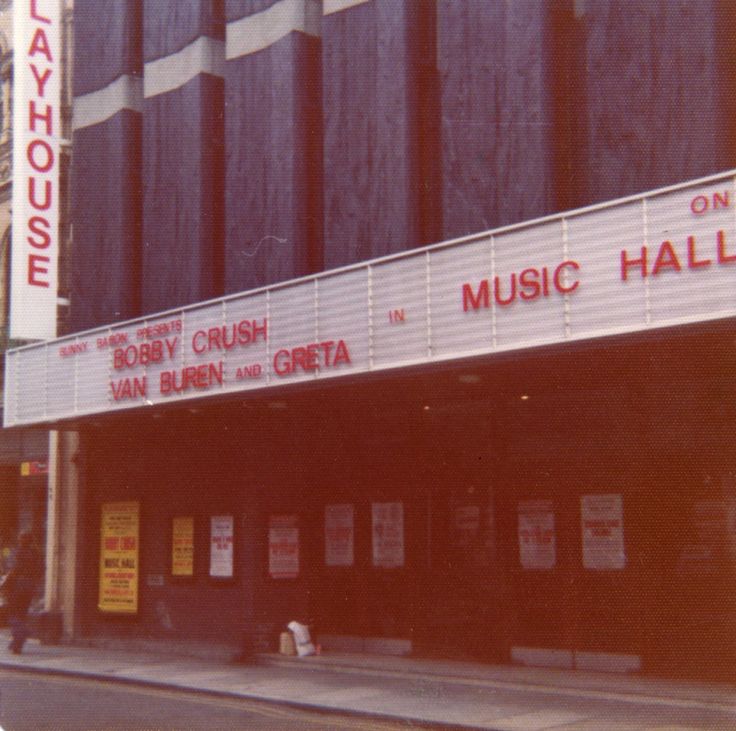
During his early career, Regent’s Park offered Jason a good platform to work around. He states: “It was three shows during the summer so offered me a good base for the year. I also kept going back to Nottingham to do their Christmas production so made sure I had a handful of shows that kept me ticking over”. Following his work at Regent’s Park, it seems that Jason’s reputation began to slowly grow. He recalls: “I met a director called David Grindley who I would go on to work with extensively. Looking back, my first real big break came with him and Journey’s End”. Journey’s End is the now classic play by R.C.Sherriff which first premiered in London in 1928. Jason was brought on board as the lighting designer for the 2006 West End revival. He states: “The show initially entered the Harold Pinter Theatre and from there it literally just took off. We were only supposed to do eight weeks yet it received such a great reception that it extended. It then moved to the Duke of York’s before embarking on a UK tour. It then went back into The Playhouse in the West End before another tour and then into The Ambassadors!” As if a mini-tour of the West End wasn’t enough, this would only mark the beginning of the show’s journey…
Pygmalion on Broadway.
Having been watched by an American producer in London, they decided to take the show and transfer it onto Broadway. Jason recalls: “We discovered the show was going to run at the Belasco Theatre. This was my first Broadway show and it was a brilliant experience. We were fortunate as it was the same creative team as London, which included director David Grindley, sound designer Gregory Clarke and set designer Jonathan Fensom. We were all at similar stages of our career and all got on really well as mates”. But was taking a show to Broadway not a daunting prospect for Jason? Apparently not: “We knew the show and were confident in what we could do with it. As in London, it was really well received and nominated for a string of Tony Awards; including Best Lighting Design”.
Similar to Regent’s Park, it would appear that Journey’s End would open more doors for Jason – yet now at the other side of the pond. He states: “We were asked by an American producer who had seen Journey’s End to go back and work on a revival of Pygmalion. It starred Homeland actress Claire Danes as Eliza”. While it was essentially the same team working on Pygmalion, this is where the similarities to Journey’s End finish. He states: “Whereas Journey’s End was well received but didn’t sell very well (probably because of its very dark subject matter), Pygmalion had terrible reviews but packed the place out every night!”. He adds: “I remember a review in the New York Times for Journey’s End that had a whole paragraph dedicated to the lighting, including a quote which stated: ‘Jason Taylor’s lighting beautifully summons the requisite claustrophobia’. Conversely, one review from Pygmalion kindly said: ‘Lighting Designer Jason Taylor thinks he’s still stuck in the WW1 bunker’. Safe to say you remember your bad reviews!”.
The Empire at the Royal Court which was a personal highlight for Jason.
And while his career was flourishing on Broadway, Jason was making similar waves back in the UK. He states: “Following Journey’s End, things just took off. At one point, I had three shows in the West End, one at the Old Vic and one on Broadway. The problem is you think this is how it’s going to be forever – and it really isn’t!” That said, Jason does possess a series of extremely impressive credits, ranging from The Boys from Syracuse, again directed by Judi Dench, Our Boys at the Duchess Theatre, an American tour of Sweet Sorrow and The Empire at the Royal Court to name but a few. He adds: “I made some great contacts early on and it just built from there, year on year. It’s been a healthy mix of commercial work, venues such as the Royal Exchange, Hampstead, along with other new writing theatres. Ultimately, unless you have a huge show bringing in royalties, you need to keep working and find sources of income – so I like to mix it up!”. Having lit such a wide range of work, I can’t help but ask Jason what his favourite type of show to work on is. He has a clear answer: there isn’t one: “When I was at the Royal Exchange, I wasn’t entirely sure as to what type of work to light early on. I spoke to the Deputy LX and they gave me some great advice: just light anything. This is particularly important when you’re just starting out. I genuinely believe this is something I embodied and perpetuated throughout my career. Obviously you can’t say yes to everything but you need to keep your options open”.
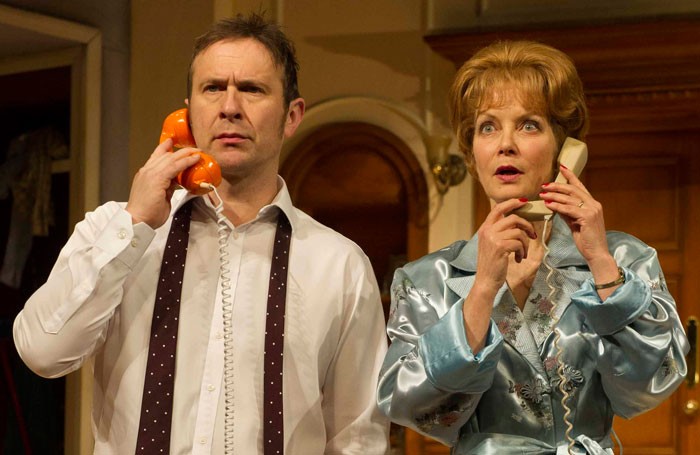
How the Other Half Loves in the West End which Jason lit last year.
Along with this open approach to his work, Jason also reiterates how important it is to ensure that contacts are not only established but sustained. He states: “I remember having a drink with Peter Mumford about ten years ago (you can read Peter’s Leading Light here). He was good friends with Gregory Clarke, the sound designer on Journey’s End. All three of us were stood round, chattTheing about what we were doing and Peter said he’d just been offered The Rivals with Peter Hall in Bath, which was also going into the Haymarket in the West End. Sadly, he wasn’t available but I mentioned that I was. Peter suggested I dropped Peter Hall a line to make him aware I was interested and available. I thought this was a bit cheeky but Peter was insistent I just do it. I followed his advice and Peter replied asking me to meet him for a coffee. I did and he offered me the job there and then. This was particularly special as it was one of my career highlights. It had the most stunning set design by Simon Higlett and it was a pleasure to light”.
As with all of the Leading Lights I speak to, my final question to Jason is what advice does he have for the next generation? He has a couple of tips: “Personality is the most important aspect to being a lighting designer. You need to get the rig right, and obviously light the piece but you then have to work with other creatives and deploy as much diplomacy as possible. It’s important to remember to put your take and style on a show yet also remember that you’re part of something bigger and a large part is taking on board everyone’s opinion. It’s easier on some shows than it is on others but when you do work on that brilliant production where it’s a joyous collaboration (similar to Journey’s End) then you realise that it’s all worth it”. Jason’s pragmatic approach to lighting is also reflected in his other advice for young designers: “Ultimately, you just need to go out and get on with it. Take the plunge and become freelance. I do think it’s a lot harder than it was and there seems to be more LDs than ever now. However, it’s something you just need to do”.
On that decisive note, Jason has to run back to the Garrick to work on the final tech of Gangsta Granny. He is only in London for a few days before returning to his native Lancashire where he now lives with his wife and three children. It is at this point when he offers his final words of wisdom: “I actually think one of the most important things for lighting designers is to strike a work/life balance. For me, I obviously love lighting shows but I equally love spending time with my family. There’s been times in the past where I’ve turned down big jobs so I can spend time with them. It’s important that you recognise what’s important to you personally. I made a conscious decision to have that balance and have never regretted it once”. And as I look over Jason’s credits and career one last time, it’s certainly obvious that this approach has worked very well for him.
Photos courtesy of Alastair Muir, Jason Taylor, Joan Marcus, Nobby Clark and Sara Krulwich.
Comments Off on Leading Light with…Mike Robertson – Part One
Lighting Designer Mike Robertson
Our Copywriter Adam speaks to Mike Robertson…
Over the past ten months, Leading Light has become one of the most popular features on the WL website and been read by thousands. For every interview, I have met with the designer and spoken to them face-to-face in order to hear about their journey and how they became one of the most renowned individuals in their profession. This month is slightly different in the sense that the interview is taking place virtually. I have been meaning to speak to Mike Robertson for some time yet his busy schedule has meant that he is never in one place for too long. However, from the sunny islands of Greece, he has finally found time to take part via the magic of the internet. And upon listening to his story, it soon becomes clear it was worth the wait…
Mike’s story begins in the early Seventies where he was adopted from Norwegian extraction and grew up on the east coast of Scotland in a small town called Arbroath. He states: “It is a historically significant town whose eponymous declaration in 1320 defined an independent Scottish Sovereignty. Sadly, when I was growing up there, it was a less hopeful place with industries dwindling, EU quotas ensuring that fishing was a diminishing strain of income and one in every ten high street shops being given over to charity. Despite this, there was still verdant woodland, fields groaning with an abundance of colourful produce and always the stolid and majestic sea. It was also the land of Angus beef and fish so fresh a good vet could revive it!”. Mike’s father and his close friends were all painters yet, despite his love of art, Mike insists that his own skills failed to “extend beyond stick men and clouds that looked like legless sheep”. It was during these early days in Arbroath when Mike was first introduced to drama and performance. He recalls: “My first taste of theatre came at school when I was cast in The Pied Piper as ‘Surf Number Four’. I soon realised that the performing lark was most definitely not for me!”. Whereas acting might not have been Mike’s passion, he did have other interests: “My biggest hobby as a child was building. Machines, structures, contraptions; most of dubious quality and some even rather pyrotechnic as my earlier grasps on electricity were more theoretical than calculated. It was the desire to create that was foremost”.
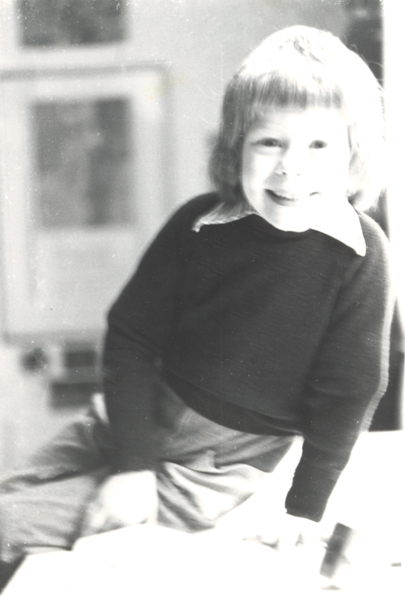
A very young Mike!
Whereas theatre did not play a huge role in Mike’s upbringing, it was certainly there in the background. He comments: “Just south of our town is Dundee and the Repertory Theatre which was a powerhouse of production. One of my earliest memories is their sensational production of The Snow Queen. I remember it was all icy blue and full of people of indeterminate gender! It was mesmeric. The following week was Blithe Spirit in a beautiful Art Deco setting. One thing I do remember was the lighting. Even now, I can see the Minuette Fresnels on the floor and thinking wow – the lights don’t all need to go up into the air?!”. Arbroath itself had two theatres: a playhouse for amateurs and a 700 seater for touring productions. Mike states: “I joined the amateur society as a precocious 11-year-old and adored poking around the tiny flies and attics of the old building. A few years later opportunities came to actually light at the bigger venue. We had a semaphore colour change system which I thought was the height of sophistication. The approach to lighting around those times was pipe ends and buckets of face. I started experimenting in side light, back light and suddenly the whole visage was more interesting. That was noted and the flurry of approval gave me a shot in the arm. Whilst I was still very much experimenting, I felt I was onto something…”. It was also during this time that Mike realised the true impact lighting could have. However, this experience wasn’t inside a theatre but, rather, on a family holiday: “We were on holiday in Copenhagen when we came across a sequence of interactive glass sculptures which you could rotate in the sunlight and form enchanting colourful shapes. I may not be able to paint with oils, but with light…”
Mike during his Guildhall days.
During this time, Mike was continuing with his studies. He states: “I was a boarder at Merchiston Castle School for Boys which has the record of being one of the most eminent rugby schools in the world. That said, the headmaster was a visionary man and allowed us to individually excel in other areas. As luck would have it, the year after I arrived they started building a theatre and, following a suitable campaign of bargaining with the man, he must have conceded that my spare time should be spent working in there; for no reason other than to shut me up. It was a fantastic time and I really did have a ball. Academically I did quite well although I have no idea how as I never seemed to do much more than play with lights!”. It was also during this time that Mike would meet one of his biggest influences: Andy Collier at Strand. Mike recalls: “Andy was the kindest and most helpful man in the lighting game. He took such an early interest in my passion for the subject and never faltered in that for all the years I knew him. I’m afraid a lot of knowledge went with him and so I try and retain as much history of our craft to educate myself and preserve his memory”.
At this point, Mike knew he wanted to pursue a career in theatre lighting. He applied for further education and, after a long conversation with Johanna Town (whose Leading Light you can read here), he decided to go to the Guildhall School of Music and Drama in London. Mike recalls: “The discipline at Guildhall when I studied bordered military! We worked mainly six days a week with short lunch and supper breaks every day from 8am in the morning to 9.30pm at night. It engendered such a work ethic that no professional engagement has ever seemed too drawn out. Even though most of the students knew the areas we wanted to target, the reality was that we were allocated to all departments equally. This was the best thing that could have happened as it gave us a working knowledge of every discipline which is the true empathy required to do your own specialism well”.
The legendary Julian Slade who became a friend of Mike’s.
That said, upon graduation, Mike was prepared for the realities of life as a freelance theatre practitioner: “The drama schools were chucking us all out at the same time and the opportunities, as ever, were disproportionate to the sheer volume of us. I think London can be a daunting place at any time but particularly when you’re starting out. That said, some early knock backs are in fact essential if you are going to pace a long freelance life”. To find work, Mike got in touch with relatives in Bushey Heath and negotiated to stay with them while doing various summer jobs such as an ASM. He recalls: “I actually moved back to Scotland for a short time until one chilly morning I was overcome with the spirit of Dick Whittington and packed hastily before buying a one way ticket back to old London Town. Once again, I was at the mercy of friends to put me up. I then touted around for a bit before fate intervened: I was asked if I would like to be Assistant Director on a musical adaptation of The Comedy of Errors. The music was by the much beloved Julian Slade (of Salad Days fame) who became a lifelong friend and it was directed by the fearsome Anthony Besch”.
It was during The Comedy of Errors that Mike was to meet someone who influenced both his personal and professional life. He states: “My job on the show was mainly looking after the director – despite the fact I wanted to jump ship to the lighting department. The LD was Roger Frith, a legendary figure from Sadlers Wells and English National Opera. He lit it beautifully and was the most magnetic presence. Just as delightful was his wife, the actress Joyce Rae, who decided that the 21-year-old me needed ‘London Parents’ and she remains that to this day. Sadly Rog is no longer with us but those two were the seminal, central figures who started me out in the business”.
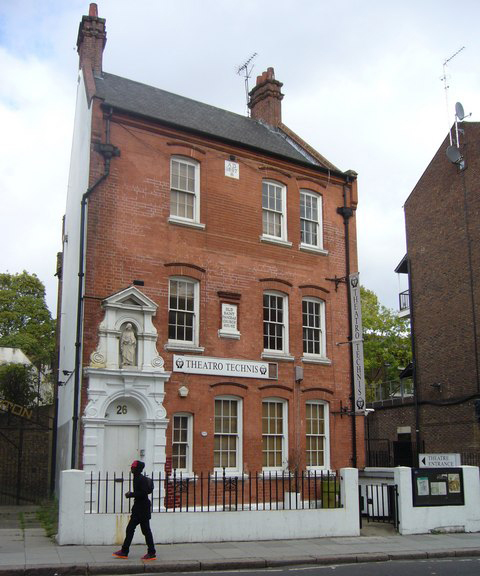
Mike become involved with Theatro Technis in Camden.
And so under watchful eyes began Mike’s career in theatre. He took on various odd jobs on a variety of productions yet it was a brush with a certain Beatrix Potter to which he owes his first big break. He recalls: “Clare Fox got in touch to say that an actress called Rohan McCullough needed a technical bod to help her with a show about the author. I went to meet her in some funny old theatre space in Kensington and we hit it off straight away. Her partner was the iconic playwright Hugh Whitemore and I remember attending several parties at their place in Notting Hill. One morning, she rang me to say that they had been at a dinner the night before with a man called George Biggs whom she thought was part of the Great Train Robbery. Despite getting her wires severely crossed, George was indeed a highly significant figure in Maybox Entertainment (which would eventually become ATG). I arranged a meeting with him and, within half an hour, I was the new charge-hand sparks at The Phoenix Theatre in Charing Cross Road!”. Whereas the Phoenix would ensure that Mike would be kept busy for the next few years, he continued to light shows on the London fringe scene at venues such as the Kings Head, Islington, and the New End, Hampstead. He states: “One of the earliest shows I remember lighting was a Moliere called Two Precious Maidens Ridiculed – although I dread to think what it looked like! I also became involved with a group called Theatro Technis who were based in Camden. We did show after show and it was a lovely bit of retraining, particularly having the continuity of working on diverse pieces in the same building. You could refine methods, systems of light and ways of technically going about things without ever forgetting that this honing of technique was not in itself lighting design but, moreover, a sharper aide in achieving it”. Click here to read Part Two.
Comments Off on Leading Light with…David Howe – Part One
David Howe – Lighting Designer
It’s a crisp sunny morning in London as I exit the tube at Piccadilly Circus. Today’s interview for Leading Light is taking place (conveniently) along Shaftesbury Avenue. Before heading into the heart of the West End, I stop near the Statue of Eros to make a quick call. As I stand on the phone, freezing, I look at the Criterion behind me and see a poster for The Comedy About a Bank Robbery. Looking down the list of credits I clock that the Lighting Design is credited to a certain David Howe – who just happens to be the person I am on my way to meet.
For those of you who’ve read the previous Leading Light articles you’ll have no doubt noticed a pattern: all of the lighting designers have a long relationship with White Light. David is no exception. Except, he is. David actually worked at WL for ten years before becoming a full-time lighting designer. And while he and I could talk about the old days all morning, we’re here to discuss his experience as a designer. And as always, we start at the beginning… David was born in Essex but moved to Weston-super-Mare at an early age. He describes his hometown as “a quiet sleepy town”. As a child, David was extremely musical. He recalls: “My passion for music stemmed from my mother who loved to sing”. He was a chorister in the local church and also played the piano, church organ, violin and viola.
Weston-super-Mare Playhouse where David saw his first show.
While David’s family weren’t avid theatregoers, they would make the annual trip to the local pantomime at Weston-super-Mare’s Playhouse. It was here where David, then aged 7, received his first experience of theatre – and was instantly hooked. He comments: “I remember watching the show and being amazed by all the theatrical tricks, how the scenery changed and people flew across the stage. It was two hours of pure bliss and I didn’t want it to end”. Imagine the excitement then when the theatre advertised that they were running a backstage open day; something David naturally leaped at the chance to attend: “I clearly remember being on that stage and walking up to the village set (which I previously thought was real) and seeing its construction, along with looking up into the fly tower and standing behind a follow spot. It was truly magical and, even at that age, I knew this was something that would play a big impact in my future life”.
From that moment on, David tried to immerse himself in as much theatrical activity as possible. He joined the local amateur operatic company, firstly on the stage as he could both “sing and move”. He comments: “I genuinely enjoyed being in the productions but was never entirely comfortable performing in front of others. However, I really enjoyed being backstage and helping the crew when I wasn’t on-stage, so things moved nicely in that direction”.
Paul Pyant who David assisted early in his career.
At the same time, David was at school and, unlike some of the other LDs I’ve spoken to, actually enjoyed his academic years. He recalls: “I went to school in Bristol and it had a great drama department; something, in hindsight, I was extremely lucky to be a part of. I spent a lot of my time stage-managing the various productions we put on. Funnily enough though, I never worked with the lights!”. During his A-Levels, he was fortunate to meet-up again with the Chief Electrician of the Western-super-Mare Playhouse, Pete Magor, who gave him his first job as a follow spot operator for a summer season. It turns out that Pete had been the Chief at the Ashcroft Theatre in Croydon and knew a certain other ‘leading light’ of the theatre world: Paul Pyant.
After his A-Levels, David made the move to London in the early 90s where he studied Technical Theatre at the Central School of Speech and Drama. It would be a two-year period that would impact the rest of his career. When starting his course, David was still unsure as to where his studies would take him, especially as he had come from a predominately stage manager background. He recalls: “The course was great as it covered all aspects of production, I actually really enjoyed stage management and being a DSM. Yet the more lighting work we did, the more I realised that this was a field in which I had a growing interest. In that regard, it wasn’t a Eureka moment where I thought this is what I want to do. It was more of a progressive passion”.
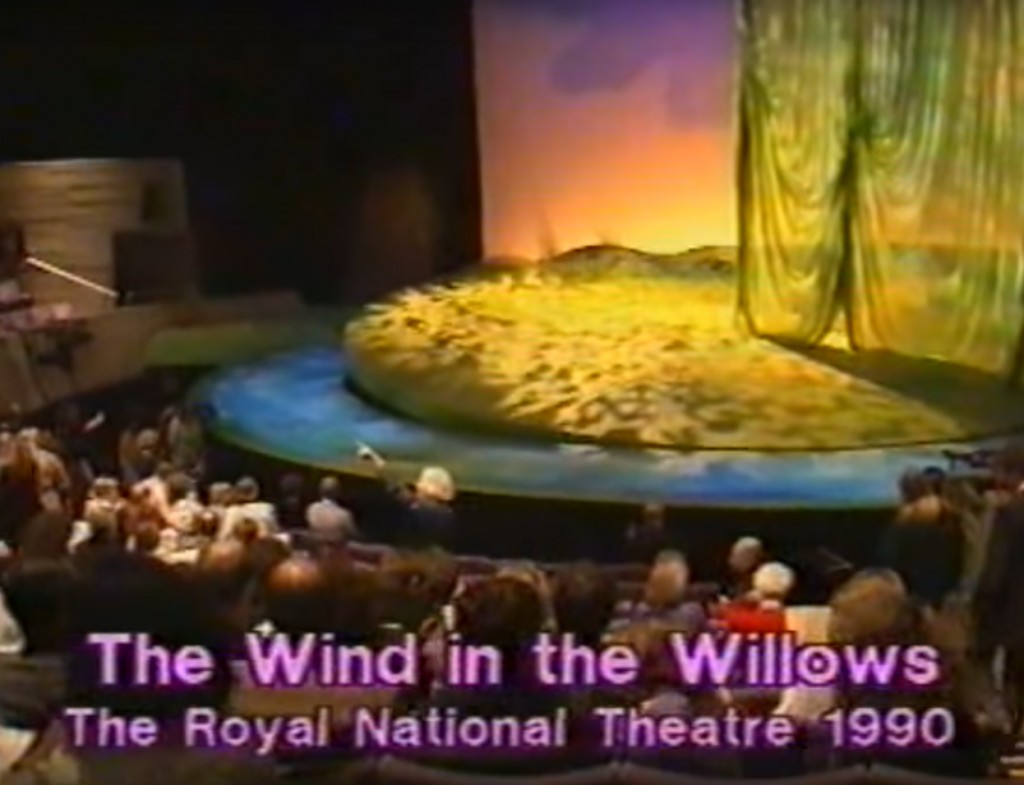
It was during his first year at Central that David had an experience that would prove vital for his career as an LD. He comments: “At Central, you would have outside creatives coming in to design the 3rd year acting shows, which included designers such as Rick Fisher and Mark Jonathan. As a class, we were taken to The Wind in the Willows at the Olivier Theatre and afterwards Mark mentioned that he knew Paul Pyant (there’s that name again) who lit it. It was a beautiful production – a perfect show for a lighting designer to create. Mark introduced me to Paul and, crazily, he invited me to come and observe another production: The Recruiting Officer“.
The Wind in the Willows at the Olivier Theatre.
David stayed in touch with Paul (“back in the days when you used to write letters!”) and, during the summer holiday, he visited Birmingham Rep to see a new musical called Radio Times being created. He said: “I was cheeky enough to ask Paul if he needed an Assistant as I was due a placement period at Central. And whilst I don’t think either of us fully knew the job description, he agreed and it seemed to work”. David then worked with Paul on the transfer Radio Times into the Queens Theatre, Assassins which was directed by Sam Mendes and the opening production at the Donmar Warehouse, an Opera at ENO called Princess Ida which was directed by Ken Russell, and a new production of Carousel at the National which was directed by Nicholas Hytner. David adds: “Back in the mid 90s, there was no real CAD for Lighting Designers, so Paul drew his own plans and I was got involved with that process. This meant I really could experience the process from the scratch of an ink-pen on a piece of tracing paper through to the light being hung focused and programmed into a show. I also called follows-spots on the musicals and took notes. That kind of experience, in any form, is true gold to a young, inspiring designer to see how designs work in the ‘real world’. It was something I truly relished”.
Comments Off on Leading Light with…David Howe – Part Two
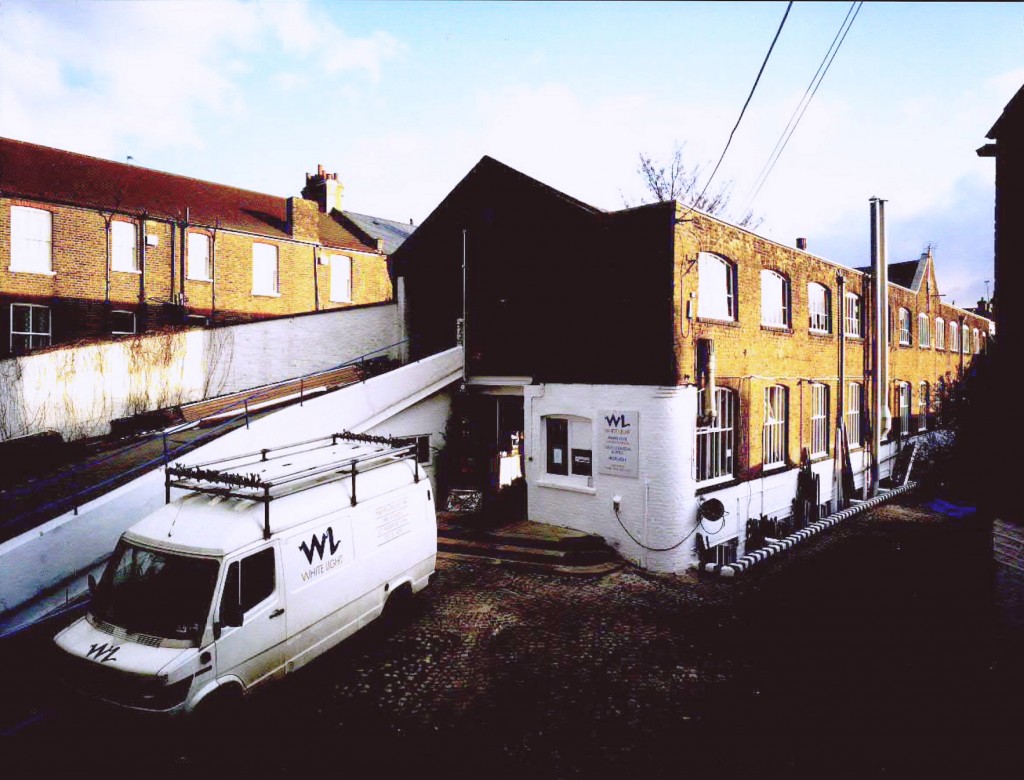
WL at Filmer Road in Fulham when David first joined.
Carousel was a special production in many ways, as at the end of its National run, Cameron Macintosh transferred the production into the West End and David was asked to join the paid creative team as Assistant Lighting Designer. However, once he had finished his work on the production, he had to move on and face: “the scary real world which was out there waiting for me”. Step forward WL, in the shape of Bryan Raven who supplied the show and liaised with David in the preparation of the rig, who made contact and asked David if he’d like to join their team. He recalls: “What could be better than working for a company who supplied equipment to shows. I initially worked in the Sales team, prepping colour-calls. As the company evolved, I was able to work more and more with designers and chief electricians of venues all over as the National Lottery funding started to roll out to new theatre development. WL was often called-upon to be involved with those capital projects where new technology was being ordered and tested. It was an amazing time to meet, not only the users of the equipment, but also the manufacturers. It was such a huge advantage to not only know about the equipment being used in the industry but how the hire and sales business works”.
The UK tour of Seven Brides for Seven Brothers
He adds: “WL were incredibly supportive of my lighting career and allowed me leave to develop my design work when I could – working in many fringe and Off-West End venues and productions where the challenge is to make the show you want within incredibly tight time-scales and small budgets. I was also continuing to assist other designers such as Paul Pyant, Howard Harrison and Hugh Vanstone”.
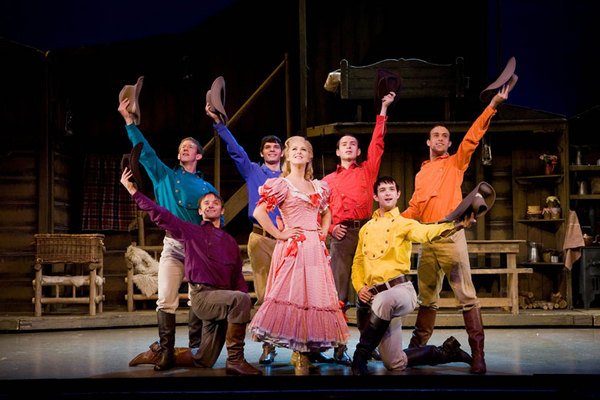
After a while the lighting design work began to increase, and David worked on UK tours of Fiddler on the Roof, Oklahoma, Singing in the Rain, South Pacific, Beauty and the Beast, 42nd Street, Seven Brides for Seven Brothers, to name but a few. He comments: “I was so lucky to work with amazing creatives, electricians and touring production staff during this period which really opened my eyes to the industry and the processes we need to think about to make any show happen, effectively and within budget”.
The more David worked, the more his reputation grew, resulting in him being in high demand. So much so that he reached the point where he had to make a decision: continue at WL or take the plunge and become a full time LD. It was a decision he didn’t take lightly: “I had worked at White Light for ten years (1993-2003) and really felt part of the family there. However, I thought to myself that if I don’t become a freelance lighting designer now then I never will”. David was now out in the big wide world of freelancing; something he describes as “unbelievably scary”. He recalls: “The thing about being freelance is that you’re on your own. If a show gets cancelled then you need to find another way of paying that month’s rent. That’s why you need to work really hard to keep in touch with people and build on relationships as you are only as good as your last job”.
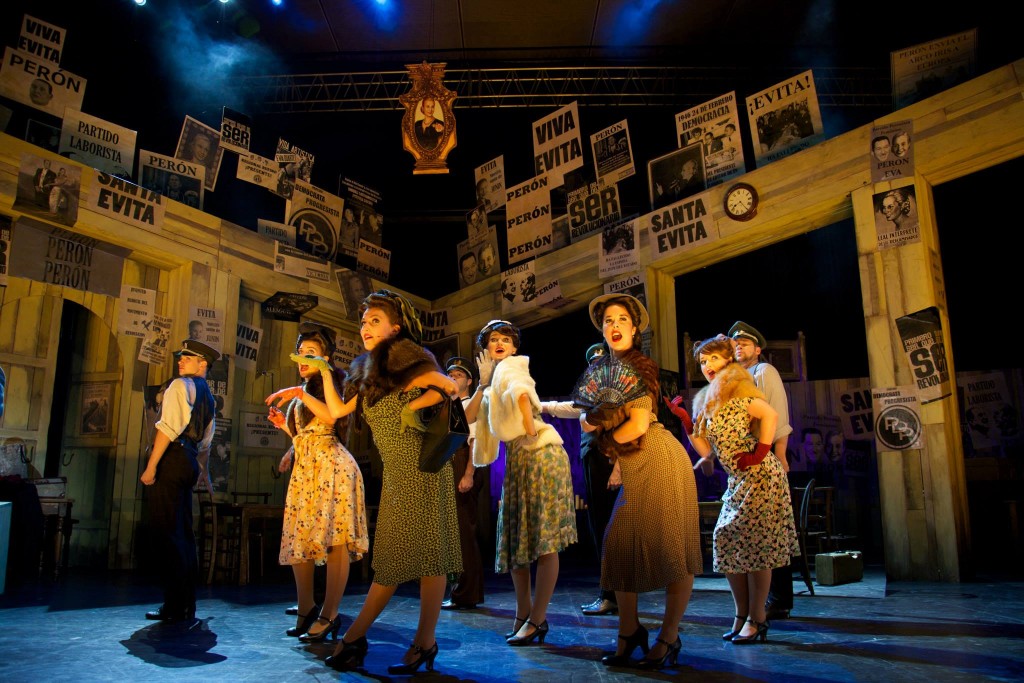
Evita at the Ljubljana Festival in Slovenia.
Having turned freelance, David has since found himself working on some of the most exciting theatre productions both in the UK and across the globe. In the West End, he has lit, amongst others; A Comedy about A Bank Robbery, McQueen, Sweet Charity, The Last Five Years, Rent, A Christmas Carol, Bette & Joan, Birdsong and Seven Bridges for Seven Brothers. Most recently, he has lit the UK tour of Million Dollar Quartet (supplied by WL and out till June 2017). On Broadway, he has lit Private Lives, The Norman Conquests and recreated Primo and designed Opera in UK, Europe, USA and Asia. At Off West End venues his notable credits include Dead Sheep, An Audience with Jimmy Savile and The Curing Room. Judging from these alone, it’s safe to say that he has certainly been an extremely busy man! He comments: “What I really love about my role is the variety of projects I work on and the opportunities of working with many different collaborators. I believe theatre offers you the opportunity to do this more than any other profession”.
So out of everything he’s worked on (and it really is an extensive list) which project is David the most proud of? Like virtually all of the LDs I’ve proposed this question to, he doesn’t offer one answer (“I can’t”). However, there are a couple of highlights that still make his face ignite. He recalls: “The Rocky Horror Show (European Tour) was quite special. Rather than your traditional theatres, we played predominately in stadiums. I remember one night just being stood at a console surrounded by 10,000 people. It was just a surreal moment”. Equally surreal for David was when he lit the Il Barbiere di Siviglia opera at the National Centre for Performing Arts in Beijing. He states: “I was just stood on stage and I remember looking around thinking: I’m lighting an opera in Beijing!”. Another highlight was his West End debut when he lit Forbidden Broadway at the Albery Theatre (Noel Coward) in 1999.
A Comedy About a Bank Robbery which is currently running at the Criterion Theatre in London’s West End.
True to the last few years, it seems that 2017 is going to be equally as busy for David, with shows opening at the Arcola, two at the Southwark Playhouse, a play in New York and even a Hong Kong Festival production of All My Sons. Before we say our goodbyes, I ask him what I ask everyone who’s been a part of Leading Light: what advice does he have for the future generations? He draws back on his experience with Paul Pyant: “Try to keep in contact with people you meet in the industry. This industry is all about connections and there is such competition that you need to ensure you remain relevant and noticed. Even if it’s just the occasional hello or a brief email, communication is key. No matter what our pathways were to where we are now in our careers, we want to be supportive of the next wave of creatives. It’s a tough world to get those first jobs. The fringe and smaller theatres are a great way of starting as you rig,focus and plot your own show allowing you to really experiment. You can try things and, dare I say, get them wrong! It’s more than ok to make mistakes and sometimes, when you do make one, this leads to discovering something you never would have found. Be confident with your work but respect and appreciate the input of others you are working with. You need that freedom at the start of your career as you progress into becoming a professional LD. This really is a profession where you learn on the job and there is no better place”.
Our time has come to an end and David has to head over to the Arcola for a production meeting. It’s regarding The Cherry Orchard that he is lighting. I say how this is a world away from the last show of his I saw: Dick Whittington at the New Wimbledon Theatre. Yet it once again highlights the variety of work that David embraces: “Whatever the production, I always have the same goal: to create a lighting design to accentuate the piece and make sure it achieves its potential.” And as I’ve learnt this afternoon, it’s an approach that’s served him extremely well…
Photos courtesy of Chris Davis, Darren Bell, monkswellmanor, Oli Sones, Paul Pyant and Robert Workman.
Comments Off on Leading Light with…Rick Fisher – Part Two
The 1987 Royal Court Production of Serious Money; with more than a few recognisable faces.
It was in 1980 that Rick decided to move away from specific venues and go freelance. He initially worked as part of the crew on rigging calls and lit shows with the small companies he’d previously worked at the Bush and Oval House. Whilst he was lighting his own shows, Rick was also asked to relight the work of others. He comments: “Relighting is a fantastic form of education for younger LDs. It really allows you to see what works and what doesn’t. It’s practical learning, on the job, and can often prove to be invaluable”.
Rick continued to freelance throughout London for a few years before he had what he terms as one of his lucky breaks. This was Serious Money by Caryl Churchill which premiered at the Royal Court Theatre in 1987. It then transferred to the Wyndham’s Theatre in the West End before opening on Broadway at the Royale Theatre the following year. Rick comments: “Serious Money was a fantastic show and one I was proud to work on. To see your work showcased on that scale was rather humbling”. That said, Rick also had a ‘lucky break’ that never was. He recalls: “While working at The Bush, there was a show on called Duet for One. Although I was billed as the Stage Manager on the show, I was actually also the lighting designer. When I found out it was transferring to the West End, they approached me to light it again. However, as lighting wasn’t something I was taking seriously at that time, I actually turned it down!”.
The original National Theatre production of An Inspector Calls.
Serious Money also meant serious progression for Rick’s career as he began to network and meet more and more people with more and more opportunities arising. One of these was in 1989 with An Inspector Calls. Rick recalls: “We initially worked on An Inspector Calls at the York Theatre Royal. I knew straight away from talking to Stephen Daldry (the director) and Ian MacNeil (the designer) that this was a special production; a complete re-imagining of a classic. After the run in York, we thought that was the end of it”. Yet it was only the beginning. The next year, Stephen was offered to direct a play at the National Theatre and whilst they weren’t a fan of his initial proposals, they were more receptive to An Inspector Calls. It would go on to become one of the theatre’s most successful productions. Rick states: “We were completely taken aback by the fantastic response the show received. It played in the Lyttelton and then the Olivier Theatre and sold out. It then went into the West End where it transferred to the Aldwych Theatre in 1993 before touring the UK and heading into the Garrick in 1995”. Since then, the show has constantly made reappearances in both the West End and theatres across the country. It has also toured Australia, the USA and ran on Broadway, where Rick received a Tony Award for his efforts. Rick adds: “It’s one of those special shows that will simply live forever. I think it resonates with a lot of people and I’m very pleased with the lighting in it. It’s visually quite extraordinary and I had to work hard to achieve that particular look”.
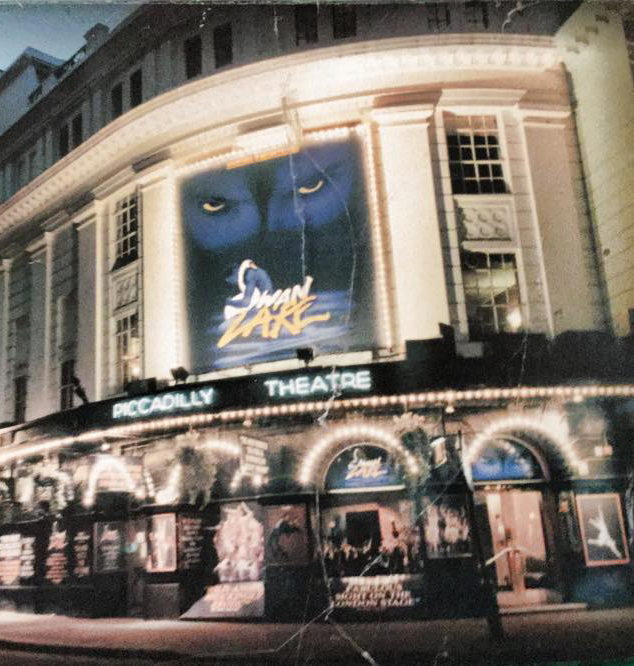
Swan Lake at the Piccadilly Theatre in 1996. This marked the first-ever ballet show that Rick lit.
Following the phenomenal success of An Inspector Calls, Rick found himself regularly working on some of the biggest shows in the West End. These included Jerry Springer the Opera, Sunny Afternoon, The Audience, Blue/Orange and Chariots of Fire. Rick also provided the lighting for Matthew Bourne’s classic Swan Lake – a show which he claims has “stood the test of time”. He claims: “Before Swan Lake, I’d only really lit theatre and some contemporary dance so this was my first ballet. However, it was such a breath-taking show and one where I really got to experiment with lighting; in particular shadows, which is something I still try to play with wherever I can”.
In 2005, Rick reunited with Stephen Daldry once again on what is arguably his most renowned show: Billy Elliot the Musical. Based upon the hit 2001 film, the musical adaptation had songs by Elton John and opened at London’s Victoria Palace Theatre. After winning five Olivier Awards, the show then transferred to Broadway where it won an unprecedented ten Tony Awards, including one for Best Lighting Design. It has since toured America and received productions in Toronto, Seoul and Australia! Safe to say, it’s a show that Rick is particularly proud of. He comments: “Often when you see a film on stage, it can be a retread of what’s gone before. Billy was different. Having that musical aspect and seeing the show performed live before you added something to the story. It took you there”. That said, there were some issues during pre-production. Rick recalls: “We were workshopping a lot and trying many different things. We were introducing new scenes, swapping around the various Billys – all because the musical was so ambitious! That said, the first time it hit an audience, we realised what a special show we had. It was a magical moment and, thankfully, it’s had the same resonance ever since”.
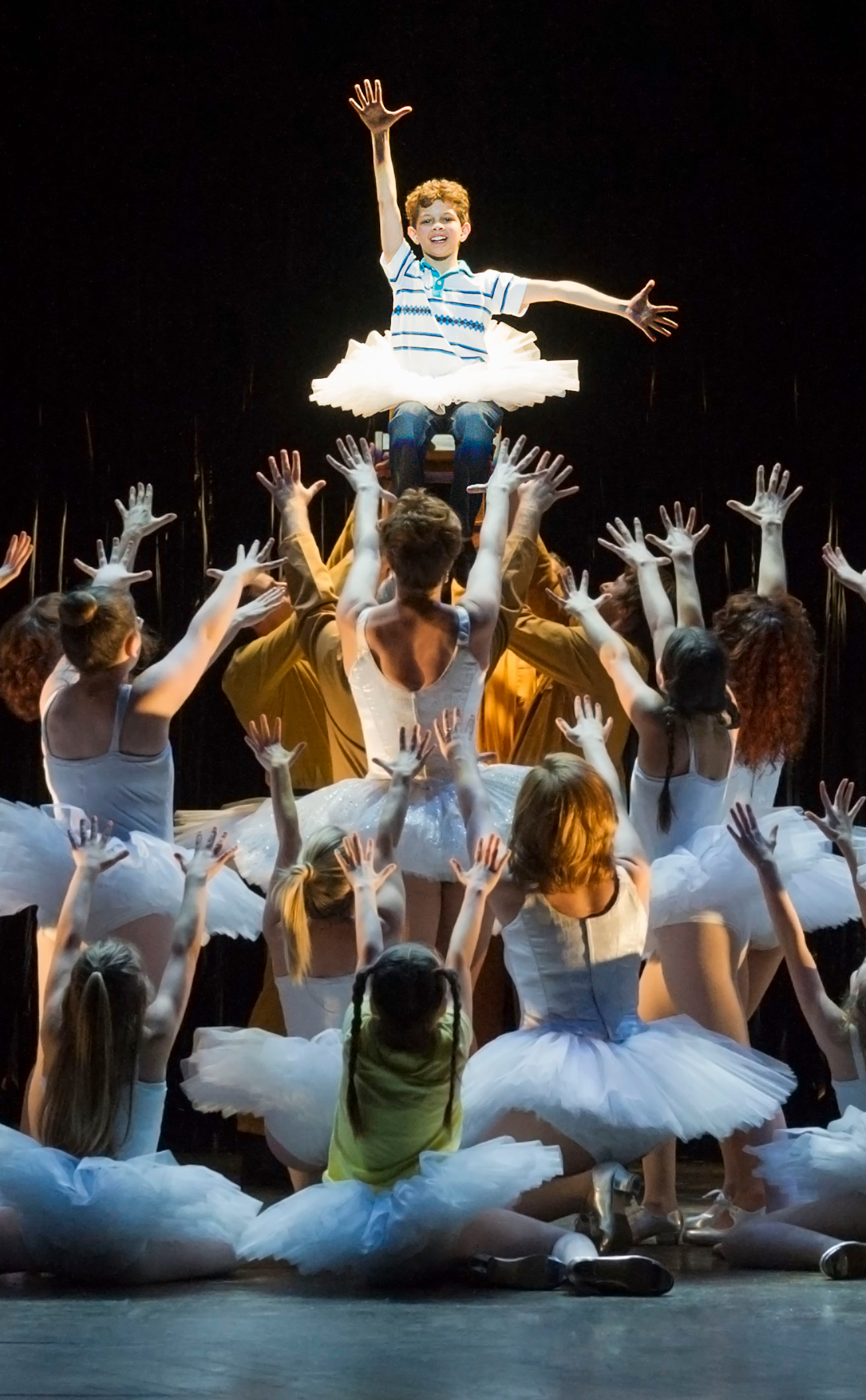
Billy Elliot – which ran in the West End for 10 years.
So why has Billy been such a huge success? Rick has his own opinion: “It’s a great story. It’s as simple as that. When I was lighting the show, it didn’t look like a musical and there were no flashy dance numbers or excessive lights just for the sake of it. It looked how I wanted it to which helped serve the story in the best way possible”.
While Rick has worked on a variety of shows during his extremely successful career, his approach to a piece remains consistent every time. He proclaims: “Whenever I light a show, I always imagine myself ‘fighting the stage’ as it were. What a lot of people don’t realise is that lighting takes up a lot of space and a huge part of my role is looking at how to get light in at the right time in the right place. My main aim is to create an atmosphere within a show”.
We’ve chatted for two hours now and Rick desperately needs to get back to An Inspector Calls which is opening later that week. Before he disappears, I ask him what I’ve asked every lighting designer who’s taken part in Leading Light so far: what advice does he have for the next generation of lighting designers? He has a simple answer: “See as much as you can, meet as many people as possible and talk to them. Despite what people may think, this isn’t a technical business. It’s a people business. You have to be a people person and make sure that others want to work with you on projects. At the end of the day, this industry is about collaboration and you need to embrace working with other artists”.
And as Rick embarks on yet another production of An Inspector Calls, it is no mystery as to why he remains at the top of his profession…
Comments Off on Leading Light with…Rick Fisher – Part One
The man himself – Rick Fisher
It’s a cold winter’s morning in London outside the Playhouse Theatre. Flightcase after flightcase is being wheeled inside the venue which sits on the bank of the Thames, with this being the get-in for the latest revival of An Inspector Calls. The show is once again gracing the London stage in a completely new venue. What isn’t new, however, is the creative team which includes a certain Rick Fisher as Lighting Designer. It is Rick I’m here to speak to as part of our Leading Light feature. We make our way through the building and have to navigate across an extremely busy stage area. Rick is known to everyone here and beams with pride as the set is being constructed: “This was a magnificent show 25 years ago and is still as remarkable today. I never thought it would last this long but that’s theatre – it often takes you by surprise”. The biggest surprise for me though is Rick himself. With arguably some of the biggest theatre credits to his name, he is an extremely humble man. Yet the more he talks about his work ethic and past projects, the more I begin to appreciate why he has made his name as one of the world’s most renowned lighting designers.
Unlike most of the established lighting designers based in the UK, there is something fundamentally different about Rick: he’s American. He was born in Philadelphia, USA and grew up in the city’s suburbs. Despite living in suburbia, he still managed to engage with theatre from a very early age. He recalls: “Some of my earliest memories are seeing shows with my mother. She loved to go to the theatre and would always take me along”. It also seems that Rick’s home state of Philadelphia played a key role in his theatrical upbringing: “Philadelphia was known as a ‘try-out’ town, in the sense that many Broadway shows would come here first before heading over to New York. It would also receive a lot of regional touring productions, including big musicals”.
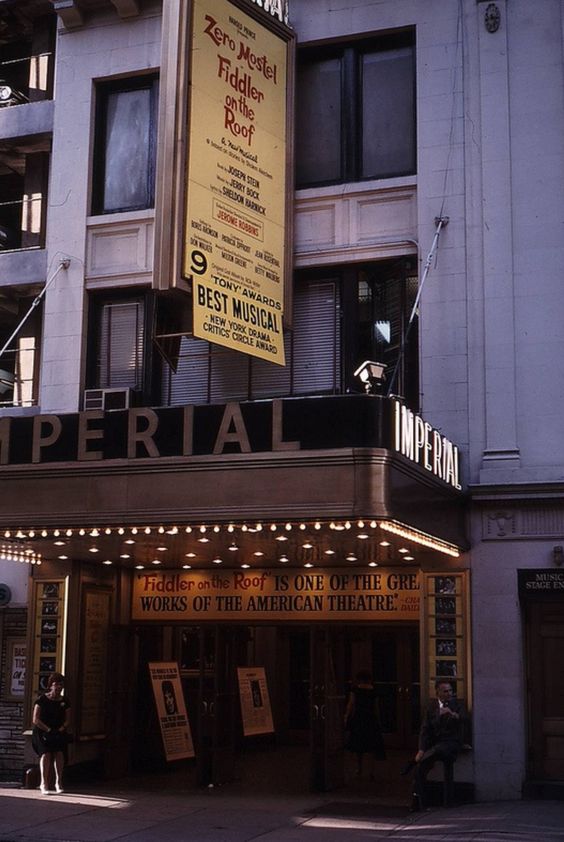
Fiddler on the Roof at the Imperial Theatre on Broadway.
Whereas Rick was regularly seeing shows close to home, it was one particular trip to New York that really cemented his passion for theatre. He comments: “I remember we went away for a family weekend in New York and saw two shows: Hello Dolly and Fiddler on the Roof. Although we were sat right at the back in what I’d call ‘nose-bleed seats’, there was something mesmerising about both shows. I really was captivated by the lights, the performance and the whole spectacle of it. I just loved to see a story being told well on stage (I still do!) and knew after that weekend that I really wanted to work in theatre in some capacity”.
Whereas most of the lighting designers I’ve spoken to have dreaded the notion of stepping out onto stage, this was something which Rick initially embraced. He comments: “For a while, I actually wanted to be an actor. I remember during my time at Dickinson College auditioning for numerous shows and, although I was frequently cast, this was either a non-speaking role or someone who spent the majority of the time stood to the side!”.
During his time at college, Rick decided to work in Summer Stock (equivalent to a weekly rep summer season in the UK). Here he worked with the backstage crew on a variety of shows. He recalls: “I was part of the backstage crew but we were essentially slaves! We used to work 80-90 hours per week and would do absolutely everything, from building the set to working the lights to washing the cast’s clothes. And whilst it was (very) hard work, we developed a family bond within the team; something I have experienced time and time again in theatre”.
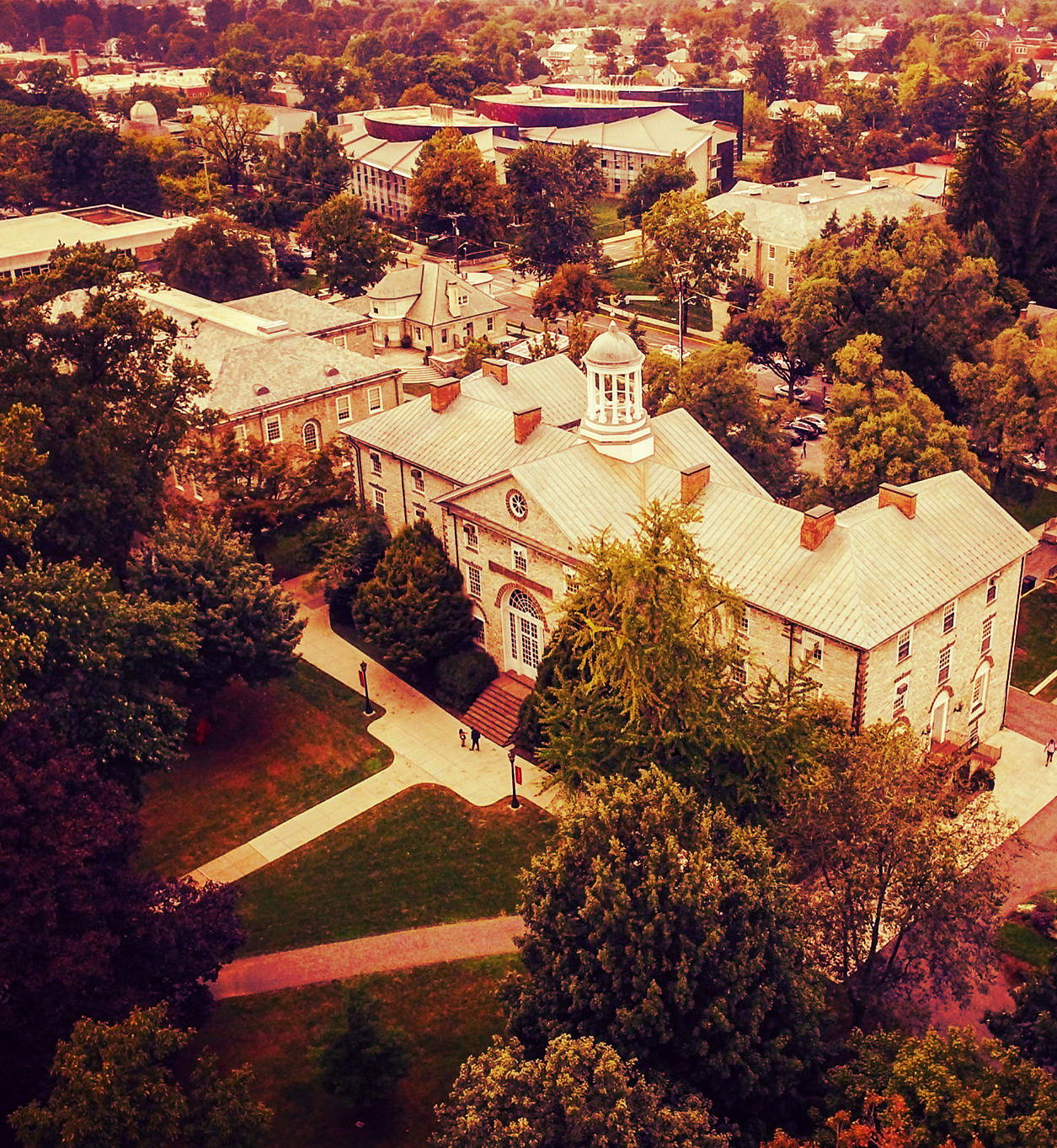
Dickinson College where Rick studied
After Summer Stock was over, Rick returned to college to continue with his studies. However, his experience of working within an actual theatre space completely altered his outlook towards academia. He states: “After Summer Stock, studying theatre seemed almost amateurish – an imitation after experiencing the real thing. What I loved about working was the hands-on experience I received. It was extremely practical and something we didn’t get the chance to receive at college”.
While Rick enjoyed his practical experience, he wasn’t enamoured by the notion of lighting: “I was actually quite resistant to getting involved with anything to do with lights. I found the gel numbers both confusing and overwhelming!”. As part of his college programme, Rick took part in an exchange programme which brought him over to London. He was meant to join the Stage Management course at LAMDA, confessing: “I knew I wanted to work in theatre and, at that moment, thought it might be through stage management”. However, the exchange programme with LAMDA wasn’t meant to be, with the course falling through soon after Rick’s arrival. Undeterred, he decided to take a Stage Management course at City Lit instead. It was during his time in the UK that Rick fell in love with British theatre. He recalls: “I just loved the diversity of theatre in London. Whether it was the West End, the fringe venues or the more obscure performance spaces, there was just such a variety that wasn’t available anywhere else”.
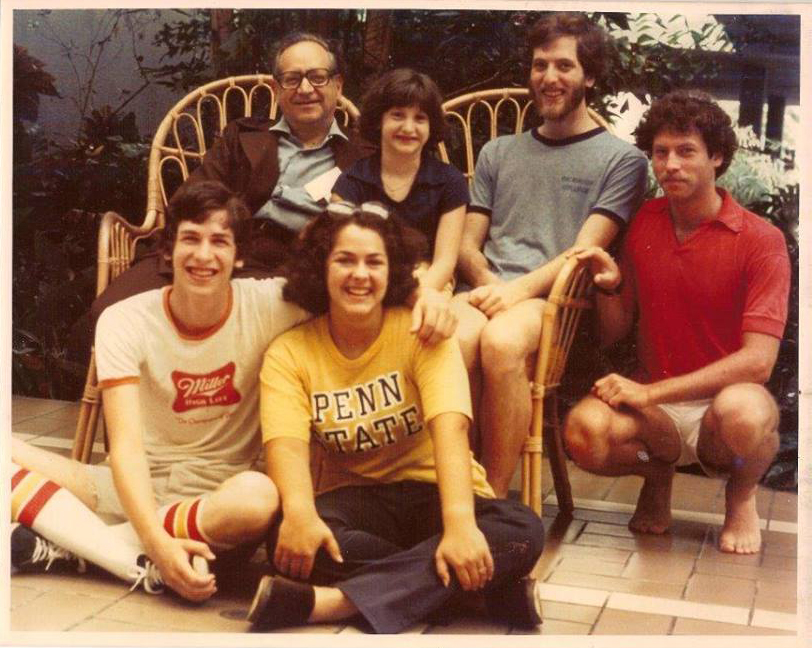
Rick (second from right) with his family back home in Philadelphia
Whilst in London, one of Rick’s first jobs included running a follow spot on Kidnapped at Christmas at the Shaw Theatre. He recalls: “Despite now gaining some experience with lights, I wasn’t fully converted to this world just yet!”. Following his six months in London, Rick returned to the States to finish his degree. Yet, back in his home country, Rick’s bias towards the city soon became palpable: “I basically told everyone how great London was and how its theatre scene was much better than ours!”.
Such was Rick’s passion for the London theatre scene that he quickly returned to the capital after graduating. The year was 1976 and his plan was to stay in the UK for six months in order to build on his previously established contacts. 40 years later… He recalls: “I started working on the fringe scene, doing whatever job I could find. This would include fit ups, props, lighting, scenery and even cleaning the loos. Whoever tells you it’s all glam is a liar!”. Some of the venues Rick worked at included the Overground in Kingston (which is no longer there), the Oval House and the Bush. It was in these venues that he started to develop a real interest in lighting. He comments: “Back then, unbelievably, freelance lighting designers were actually quite rare. Therefore when a production came into one of the venues, I would just help out with the lighting elements”.
One of the few remaining photos of the Overground Theatre in Kingston
The other major difference in the world of theatre lighting was the equipment. Rick recalls: “We worked within very limited means with extremely clapped out equipment. Looking back, this was actually a good thing as it meant the lights had to do a lot of work. I really had to get the most out of the equipment which, on reflection, pushed me as a designer. At the Oval House in particular there were a lot of performance pieces where the lights had to tell a story and create an atmosphere so every show was an exciting challenge”.
During this time, Rick was officially still a stage manager. However, he noticed that lighting designers received a higher credit in the programme so insisted that he now received this billing! He comments: “Although I’m a lighting designer, I differ from the traditional definition in the sense that I don’t have the technical knowledge that most designers have. Similarly my knowledge of electronics (both then and now) was extremely limited and I certainly couldn’t programme a desk! But I knew what I wanted to achieve on stage, and I try to be a good collaborator which are the most important attribute to have”.
We use cookies on our website to give you the most relevant experience by remembering your preferences and repeat visits. By clicking “Accept All”, you consent to the use of ALL the cookies. However, you may visit "Cookie Settings" to provide a controlled consent. View our View our Privacy Policy
This website uses cookies to improve your experience while you navigate through the website. Out of these, the cookies that are categorized as necessary are stored on your browser as they are essential for the working of basic functionalities of the website. We also use third-party cookies that help us analyze and understand how you use this website. These cookies will be stored in your browser only with your consent. You also have the option to opt-out of these cookies. But opting out of some of these cookies may affect your browsing experience.
Necessary cookies are absolutely essential for the website to function properly. These cookies ensure basic functionalities and security features of the website, anonymously.
Cookie
Duration
Description
cookielawinfo-checkbox-analytics
11 months
This cookie is set by GDPR Cookie Consent plugin. The cookie is used to store the user consent for the cookies in the category "Analytics".
cookielawinfo-checkbox-functional
11 months
The cookie is set by GDPR cookie consent to record the user consent for the cookies in the category "Functional".
cookielawinfo-checkbox-necessary
11 months
This cookie is set by GDPR Cookie Consent plugin. The cookies is used to store the user consent for the cookies in the category "Necessary".
cookielawinfo-checkbox-others
11 months
This cookie is set by GDPR Cookie Consent plugin. The cookie is used to store the user consent for the cookies in the category "Other.
cookielawinfo-checkbox-performance
11 months
This cookie is set by GDPR Cookie Consent plugin. The cookie is used to store the user consent for the cookies in the category "Performance".
viewed_cookie_policy
11 months
The cookie is set by the GDPR Cookie Consent plugin and is used to store whether or not user has consented to the use of cookies. It does not store any personal data.
Functional cookies help to perform certain functionalities like sharing the content of the website on social media platforms, collect feedbacks, and other third-party features.
Performance cookies are used to understand and analyze the key performance indexes of the website which helps in delivering a better user experience for the visitors.
Analytical cookies are used to understand how visitors interact with the website. These cookies help provide information on metrics the number of visitors, bounce rate, traffic source, etc.
Advertisement cookies are used to provide visitors with relevant ads and marketing campaigns. These cookies track visitors across websites and collect information to provide customized ads.