Theatre lighting hire Archives - Page 2 of 7 - White Light
Explore White Light: White Light | HireWL | SalesWL | ShopWL

Tag Archive: Theatre lighting hire

  1. Anything Goes for White Light at the Barbican

    Leave a Comment

    Originally performed on Broadway in 1934, Anything Goes is one of theatre’s most renowned and iconic musicals. Featuring music and lyrics by Cole Porter, the show is set on a cruise liner heading from New York to London and as the audience is introduced to the characters on board, it soon becomes clear it will be anything but smooth sailing. The show has been recently revived at the Barbican Centre in London and White Light was approached to provide the lighting.

    This latest production of Anything Goes features a 50 strong cast and ensemble, including Broadway stars Sutton Foster and Rachel York, stage and screen icon Robert Lindsay as well as West End Legend Gary Wilmot. The lighting design is by Tony and Olivier Award-winning Hugh Vanstone, who comments: “Anything Goes is a hugely enjoyable confection and you really cannot go wrong with Cole Porter songs. The show came to me via a circuitous route, originally due to be lit by Neil Austin who had to withdraw due to a clash caused by Covid reshuffles. When I came on board, he very kindly passed on to me all of his preparation to date so a good deal of homework had already been done. Working alongside production electrician Rich Mence I took the rig design from there and sprinkled a few of my usual eccentricities”.

    Once he had finalised the plan, Hugh spent a week in rehearsals, which he used to place all of the cues with DSM Steve Haighton. This meant that, come the end of the seven days, they had a ‘book’ and Hugh had a lighting synopsis. He explains: “I need to give a huge shout out to the show’s Production Managers Richard Bullimore and Tom McEvilly. Not only did they do a fantastic job, but when I asked for about 16 hours of dedicated lighting time before the cast came onstage, they generously gave it to me. My Programmer Tom Mulliner and Associate Sam Waddington and I were able to work in the evenings during the fit up and pre-light pretty much the entire show. When the cast joined, every department was on their best game and we teched the entire musical in two days, much to the surprise and delight of all concerned! This is living proof that there is a better way of doing things, rather than the stressful scramble we’ve all become used to!”. 

    In terms of the fixtures that were utilised, the rig mainly consists of Viper Performances and VL3000 washes. Hugh comments: “The area that needs to be lit is pretty vast so I needed arc lights to provide crisp, fresh daylight and good blues. I added a handful of Auras for dance crosslight and set dressing, as well as some Encores Warms to supplement the profiles which the Barbican provided front of house. There are also, of course, my customary bucketload of Source Four Pars on the ladders to bolster flesh tones under arc white”.

    The show also saw Hugh draw on a fixture he hasn’t previously used. He explains: “As with every show you work on, you are balancing your creative vision with the budget that is available to you. For this show, I worked closely with the Customer Service Team at WL to make the most out of the sum I had available and capitalise on the fixtures selection. This led to some happy discoveries, such as the RJ Dalis Units which I eventually used to light the cyclorama. These were recommended by Dave Isherwood and I was so impressed they have already found their way into some of my other shows!”.

    Anything Goes opened to a host of rave reviews and will run until 6th November 2021.

    Photos courtesy of Tristram Kenton.

  2. White Light Returns to ArtsEd for MA Season

    Leave a Comment

    ArtsEd is a world-renowned centre of excellence for training in the performing arts. As part of its diverse portfolio of training, it offers an MA acting course which focuses on building versatile performers by developing their voice and identity to become bold, brave and ready for the industry. As part of the programme, the students take part in what’s known as the MA Season; an opportunity for them to perform in productions to invited industry guests. Having worked with ArtsEd on several occasions, WL was asked to provide the lighting equipment for this year’s showcase. 

    The MA Season consisted of two shows: Fear and Misery in the Third Reich and katzenmusik, with both of these taking place in the Andrew Lloyd Webber Foundation Theatre. Fear and Misery in the Third Reich is made up of a series of playlets that portray 1930’s National Socialist Germany as a land of poverty, fear and violence; with Nazi anti-Semitism running through the core of the play. Conversely, katzenmusik is set in the modern-day fictional town of burnside, where the residents are being split by class divide and income inequality. An isolated crime sets off a chain reaction of social vengeance that results in a viral video of the most gruesome nature…  

    The lighting designer for the MA Season 2021 was Alex Musgrave, who explains: “Despite knowing both plays would be using the same lighting rig, I still approached this project as if I was lighting two different plays in separate venues. That way, I am allowing each production the space I need to explore the piece and discover what its needs are and what will aid with the storytelling. Following this, I can then merge the requirements of each piece to see which ideas overlap and what I can combine to make one rig. 

    He continues: “For kaztenmusik, the director Sean Linnen’s brief was to ensure it had a very contemporary feel. The play consists of 30+ small scenes in a variety of locations such as a pub, a train station bridge, a school changing room, a flat and even a shopping centre. Each change in location had to be clearly defined by the lighting so we decided to make the transitions as bold as possible, playing with a limitless palette of colour. When it came to Fear and Misery, this was directed by Lucy Sheen, who had a brief of a very stylised film noir type lighting, that could not only serve the narrative but also add an architectural element to the play”. 

    Alongside the specific directorial briefs for each play, Alex also had to work alongside the set design. He comments: “The set by Adrian Gee offered an incredible canvas to work on, featuring a high gloss floating square stage that breached the proscenium arch. This also had a flown roof piece that sat at the back of the deck and was angled into the space almost at 45 degrees. A major opening was placed in the roof piece and for Fear and Misery, this was made circular and swapped to square for katzenmusik. We would eventually use this to position practical lights that matched the era of the plays, with Fear and Misery featuring beautiful industrial hanging pendants and katzenmusik making use of fluorescent tube fittings”.  

    Alex then approached the Customer Service team at WL to draw on the fixtures he needed; ones he knew would have to be both flexible and practical to offer him the looks he required. He explains: “The set had a lot of practical elements such as LED surrounding the floating deck and an LED rim light around the roof piece. I knew that I wanted to continue the colour changeable theme and used some LED pars to provide light through the upstage aperture. As such, I drew on the Elation SixPar 200: a unit that provided the light output required along with fitting the budget we had for both shows. They were hung close together and created a beautiful light curtain that acted as backlight for both productions. The rest of the rig was comprised of Sola Frame 1000 units, ETC Lustr 2 Frensels, Lustr 2 profiles and various generic fixtures”.  

    Interestingly, it wasn’t just the fixtures that Alex used to differentiate between the two shows: “Another way in which I ensured both productions felt completely individual was through the cueing styles. Fear and Misery, apart from the odd occasion, had quite long fade times for cues. They often overlapped and had complex sequences with multiple parts, almost in the style of a ‘long shot’ in film terms. With katzenmusik, the cues were very quick and the establish cue into each scene was a snap, which gave the play that fast pace it needed”.   

    The ArtsEd MA Season ran at the end of the Summer to an industry-invited audience. 

    Alex concludes: “I would like to thank WL for its continued support, as well as the team at ArtsEd for their hard work in making this production happen. I would especially like to thank Chris Mould who programmed both plays for me as, without his speed and accuracy, we wouldn’t have been able to achieve the style of production we achieved”. 

    Photos courtesy of Robin Savage and Steve Gregson. 

  3. The Show Must Go On for White Light

    Leave a Comment

    Last month, the Palace Theatre in London’s West End played host to The Show Must Go On – a unique concert which celebrated the very best of the London theatre scene whilst raising vital funds for theatrical charities. The show featured select performances from over 18 West End shows, including The Lion King, Matilda, & Juliet, Come From Away, Back to the Future and many more, as well as having a 50 strong cast, crew and orchestra. This included Olivier Award-nominated Lighting Designer Howard Hudson who approached White Light (WL) to provide the lighting equipment. 

    The Show Must Go On was produced by Theatre Support Fund and MZG Theatre and all profits went to Acting For Others and the Fleabag Support Fund. Following a year in which theatres have been hit incredibly hard due to the Covid-19 pandemic, the production wanted to support the thousands of creatives who have not worked for several months as well as celebrate the shows that have recently been absent from our stage. Howard explains: “I was tasked with lighting each performance with different looks in order to give each show its own identity. Whilst we had to ensure the rig would work for every performance, we tried to give some unique colour identity, whether that was based on a particular moment or influenced by the production’s artwork, which acted as a subtle visual nod to the audience. 

    He continues: “The set comprised of a large LED Neon sign with a deck upstage for the choir and more LED strips within the orchestra, with featured logo-clad flightcases downstage right and left. The sign and the strips, along with the large curtain at the back of the stage, gave us our main elements with which to colour each performance and the strips provided eye candy for the more upbeat numbers. We decided to drop in the bars to give the stage a more concert vibe as the rig height for the show which normally plays at the Palace is very high”. 

    With the show only having a handful of live performances, this meant that there was a limited rehearsal and technical period. Howard explains: “We essentially only had one session in which to plot some initial looks for each performance. Following this, we had two tech sessions with the orchestra in which we’d run each number twice and then move on. As such, my brilliant programmer, Dan Haggerty, and I had to be very swift with our decision making and cross our fingers tightly that it would all work when we brought it together! As the final performance was going to be recorded and streamed across the globe by NT Live, we also had to work alongside the team who conducted some camera tests before we eventually went live”.   

    In terms of the fixtures utilised, Howard was able to largely draw on the existing rig currently in place at The Palace, which was supplied by WL. He explains: “The rig in situ at The Palace Theatre was thankfully very substantial. As such, we mainly used the VL3500s, XBar 20s and Lustr 2 systems and sporadically drew on some of the Revolutions which is the other main fixture there. We brought in some additional GLP XBar 20s to uplight our backcloth and also 7 Pickle Patts which we gelled as back of shot dressing. These were also useful as blinder type units for several moments. The 2 followspots were also vital for a concert with so little tech time, and the FOH follow spot position at the Palace is brilliantly angular and worked very well on camera”. 

    The show was performed live to a socially-distanced audience from Wednesday 2nd June to Sunday 6th June, with the final performance being recorded by NT Live. The live recording was then subsequently made available for a week afterwards. 

    Howard concludes: “With this production, it was just great to be back in the room with so many brilliantly talented people. I’ve really missed the community of our business and just to spend time with people I hadn’t seen for so long was excellent. It was also for a fantastic cause as well and has managed to offer some aid to those who have struggled, and continue to do so, due to the events of last year”. 

    Photos courtesy of Johan Persson.

  4. White Light Supplies You Are Here at Southwark Playhouse

    Leave a Comment

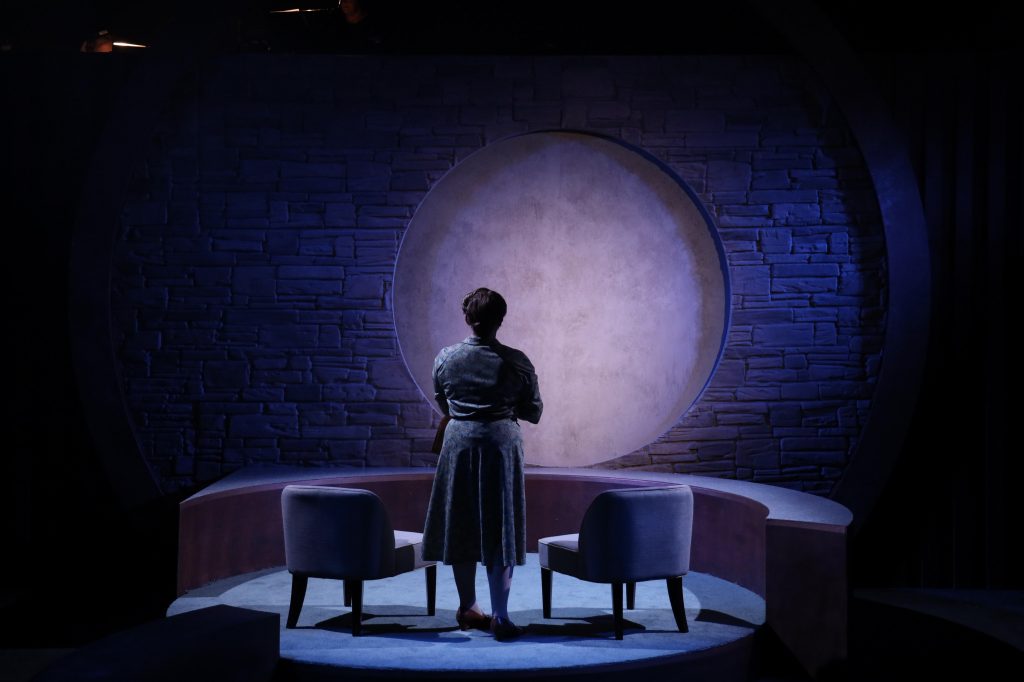
    Like many venues across the UK, the Southwark Playhouse recently reopened its doors to welcome a live-audience for the first time in months. The opening show was You Are Here, a brand-new musical set on the night of the moon landing. Featuring a lighting design by Alex Musgrave, he approached White Light to provide the lighting equipment. 

    Produced by Grey Area Theatre and starring Wendi Peters, You Are Here is set in Chicago and follows the story of Diana; a suburban housewife who leaves her comfortable life after seeing the moon-landing astronauts take their own giant leaps. By doing so, she enters a fast-changing world filled with unexpected encounters which make her realise just how exciting life can be. Lighting Designer Alex Musgrave comments: “My main brief for the show was to try and evoke the warm feeling of the late 60’s/ early 70’s American architecture whilst ensuring that Diana was always at the forefront of the narrative. I was also tasked with defining multiple different locations around the city of Chicago which Diana visits and my design had to make it clear to the audience where we physically were in the story”. 

    Although rehearsals took place in-person at the Southwark Playhouse’s rehearsal studio, the room capacity limit meant that Alex actually had to work entirely online. He explains: “For me, rehearsals were completely remote, either via Zoom or via videos of various sections of show. Working from the brief, I wanted to design a rig that was ultimately going to give me the greatest amount of flexibility possible. Knowing how many different locations within the story we were going to be visiting, I knew we would need a combination of moving lights and LED fixtures. The set design by Libby Todd is made up of two overlapping moons as the stage area, designed in the thrust configuration, along with a gorgeous wall that looks like every stone fireplace you would find in a 60/70’s era home”. 

    And while the production was going to be performed to a live audience, Alex and the team still had to adhere to the various restrictions in place. He explains: “One of the only major obstacles with this production was trying to mount a show whilst staying within the government guidelines. Singing to a live audience means the cast can’t be any closer than 3m. When you have audience on three sides, that immediately limits the stage area the cast can perform on. One of the many safety measures the Southwark Playhouse have in place are Perspex screens between each ticket booking, so the glare from these was something I had to consider when focusing the show. Similarly, like a lot of shows being made at the moment, there is also an option to live-stream the production so I had to take into account how the lighting would look on screen, as well as on stage”. 

    Knowing all of this, Alex reached out to WL’s Customer Service team to discuss the fixtures needed and the various options that were available. He explains: “After much discussion, I ended up using the ETC ColorSource profile range along with the JB Lighting – VaryLED A7 Zoom wash lights. The A7 Zooms had two uses. Some were allocated to provide backlight for the production and the others were placed in a front-of-house position and used in more of a follow-spot capacity. As such, they are able to track Diana throughout the entire show and are essentially in a different position for almost every single cue. They also zoom to a very nice half body size when I really needed to focus in on certain characters”.  

    He adds: “Because of the brief and the need for some distinction between things such as a lift and train carriages, I knew I needed a moving light with a framing system. I looked at various fixtures and decided to use the Robe DLS Profile fixture which was great as it fell below the weight limit for the rig at the Southwark Playhouse. The Robe DLS profile was placed fairly central as it was used for all of the specific moments which needed the framing system and also the times when I needed to add texture to a scene. In terms of the ColorSource Profiles, these were placed in a general pipe end position which gave me great flexibility and were able to be used as a full stage wash when needed”.     

    The show has now opened and will run until June 12th.  

    Alex concludes: “It’s been great to be back working on a live show and we’re delighted with the response we’re received from audiences. I’d just like to say a big thank you to WL for their continued support throughout this production and look forward to working with them again in the future”. 

    Photos © Callum Heinrich

  5. White Light Supplies Kipps and Ragtime at ArtsEd

    Leave a Comment
    Kipps: The Half a Sixpence Musical © Craig Fuller

    ArtsEd is one of the UK’s leading drama schools and for over a century has offered a range of Acting and Musical Theatre courses at a variety of levels. As part of its training, third year students take part in their renowned Graduate Shows, with two of this year’s productions being Kipps: The Half a Sixpence Musical and Ragtime. The lighting designer for both was Nic Farman, who approached White Light (WL) to supply the lighting equipment. 

    The Graduate Shows at ArtsEd were a much-welcomed return to theatre for Nic who, like so many other designers, had most of his work either cancelled or postponed due to the Covid-19 pandemic. He comments: “I  really enjoy working with the team at ArtsEd so was pleased to be asked back for these shows. Their response to the Covid situation has been really transparent and encouraging and they’ve allowed us to continue making work throughout the restrictions, such as the creative team and cast forming a working bubble for production week, as well as ensuring that we are all regularly being tested. When I found out I was lighting the shows, I immediately got in touch with WL who I have worked with on many occasions now, including when I lit Disney’s Newsies at ArtsEd back in 2019, and who I knew could provide what I needed”. 

    As Nic was lighting two shows that are stylistically very different, this meant he had to use the same rig in different ways. He explains: “Kipps was bright and sculpted for all the dance  ensemble numbers, whereas Ragtime was darker and  asymmetrical, often using only one section of sidelight to give us clean shadows and an imposing scale. ArtsEd operates on a semi-fixed rig basis which covers a lot of what I would put into it (I also have the added advantage of having a hand in designing the  fixed rig so it includes some of my stalwarts!). Because the shows play one after the other as opposed to in rep, the fixed rig gives us some flexibility, with time  to change gel and minor refocuses between productions. ArtsEd also have a good stock of ETC Lustr lanterns which means I can have an overhead wash and  sidelight that is completely flexible”. 

    He continues: “When it comes to dressing the set, I try to pair lanterns up across the productions. For example, on Kipps, we had a number of flown set pieces  which were lit from the low slips. Those lanterns were then repurposed to dress the girders in the set for Ragtime. On both shows we had a  beautiful layered cyc, courtesy of the designer, Frankie Bradshaw. It had two layers: a flat white cyc upstage which we lit from the bottom to give an  infinite skyline and a second, textured gauze downstage which took light scraping across it from all angles wonderfully. So as a team we  were able to create a vast number of looks with the cloths, from more realistic skylines for Kipps to abstract painting of colour across what almost  felt like a solid rock face for Ragtime”. 

    Ragtime © Steve Gregson

    Nic then approached the Customer Service team at WL and worked closely with Andy Cullen and Louise Houlihan to supplement the existing fixtures. He explains: “ArtsEd has a great stock of ETC Lustr Series 2 fixtures, with both profile lenses and the fresnel adapter, and I used these for sidelight and overhead fill. This is then supplemented by four High End Solaframe 1000 Profiles which give me flexible spot specials. We also hired units to light the layered cyc, which included the ETC Colorsource which l’m a  huge fan of due to how well they blend, along with their punchy output. We also brought in extra Lustr Series 2 fixtures with Fresnel adapters to light across the front of the  textured cloth with their barn doors giving me control of the abstract streaks of light we were after. For a project like this where you are working across two shows, having infinite colour options is vital as it allows you that much needed  flexibility”. 

    Following two months of online rehearsals, this year’s ArtsEd Third Year Graduate Show took place last month and played to a socially-distanced audience of staff and students. For many of the graduates, it was the first time they had performed in over a year and offered them the vital opportunity to showcase their skills before they embark on their professional careers. 

    Nic concludes: “It was great to be back in a theatre, making work in what hopefully marks a gradual return to normality. I’d like to say a massive thanks to the team at ArtsEd (Di, Phil, Chris, Molly, Alex, Roo, Joe, Caitlin and Russel) for facilitating a smooth and safe production. I’d also like to thank WL as always for their support throughout the entire process”.  

    Show Credits:

    Kipps

    Director – Joesph Pitcher
    Choreographer – Ashley Nottingham
    Musical Director – Nigel Lilley
    Set Designer – Frankie Bradshaw
    Costume Designer – Gregor Donnelly
    Lighting Designer – Nic Farman
    Sound Designer – Adam Fisher

    Ragtime

    Director – Stephen Whitson
    Choreographer – Stuart Winter
    Musical Director – James McKeon/Ben Cox
    Set Designer – Frankie Bradshaw
    Costume Designer – Natalie Pryce
    Lighting Designer – Nic Farman
    Sound Designer – Adam Fisher

  6. White Light Goes into Overflow at Bush Theatre

    Leave a Comment

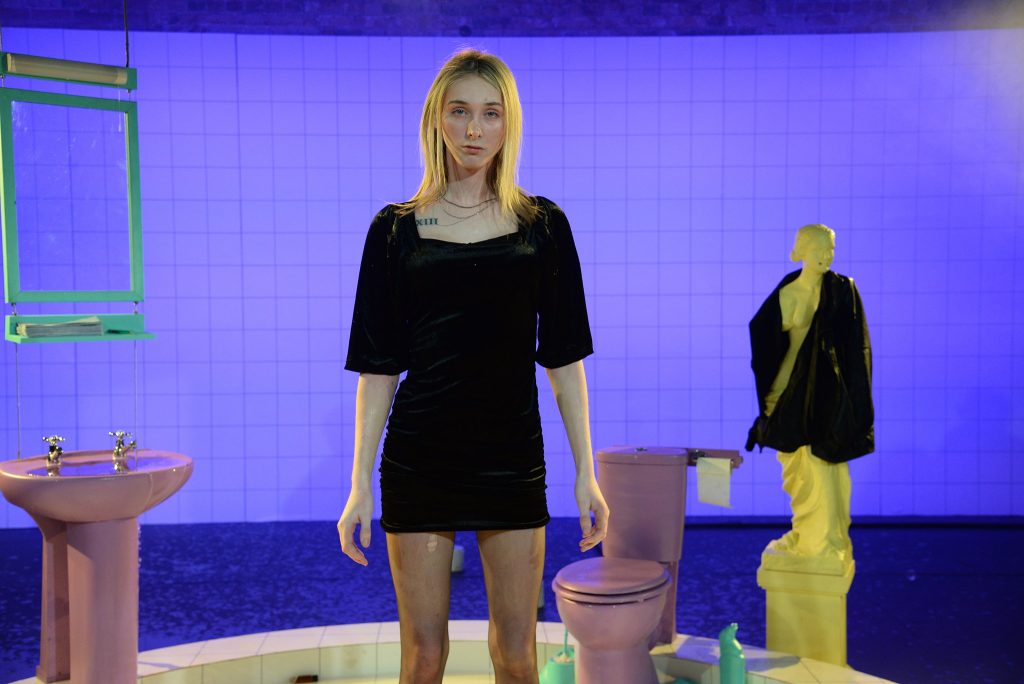
    Ever since it was founded in 1972, the Bush Theatre has become renowned for staging ground-breaking work from some of the world’s most exciting artists. Located in West London, it recently re-opened  with the world premiere of  Overflow, written by Travis Alabanza, one of the UK’s most prominent trans voices. Performed in the venue’s main Holloway space, it features a lighting design by Jess Bernberg who approached  White Light to provide the lighting equipment.   

    Overflow  is a welcome return to live performance for the iconic Bush Theatre, as well as Jess herself. She explains:  “Safe to say, it has been a slightly surreal few months.  Back in March, I was one day away from opening  Gulliver’s Travels  at the Unicorn when we went into lockdown. In the meantime, I  kept  myself busy by learning French  and  German  on Zoom with other designers,  as well as pushing my work with the ALD and their sustainability measures. I had  taken a break from theatre when, early last month, I  spoke to Overflow’s director Debbie Hannan who asked  me to light the show.  Knowing how wonderful the venue, the team and the script was, I became incredibly excited”.   

    Overflow  is  a hilarious and devastating tour of women’s bathrooms,  told through the story of Rosie who is  played by transgender actress, writer, and poet Reece Lyons. Jess comments:  ”From the early stages, Debbie and Max Johns, our designer, and I  knew  w e wanted to achieve a surreal vapourware aesthetic for our abstracted bathroom space. We were restricted to a thrust staging as this allowed the most capacity for a socially-distant audience. In terms of what I wanted to achieve artistically, Rosie is an extrovert who really pulls us through the story and this felt like the jumping off point for the lighting. We know Rosie would have no fear slamming us into a bright pink state, or the depths of a rave and so we wanted to make her memories vivid in colour. From there, I started with the muted colours of the set and we created a dramaturgy for Rosie’s colour world through tech – teal for childhood, acid green for the fear of the outside trying to get in, purple and acid yellow for her friend Zee and raves, bright pink for her friend Charlotte, orange for liberation and then back to neutral for the present day”.   

    As the show was being planned during a global pandemic, this meant that Jess’ normal preparation plans for a show had to adapt to the ever-changing circumstances. She explains: “As with so many shows being made during this period, there were many Zoom calls.  We had our first read through/meet and greet on Zoom, which was obviously quite a strange affair, but  great to hear the script out loud. We only had three weeks rehearsal and our wonderful Stage Manager Rike Berg needed 24 hours’ notice for those attending rehearsals to keep capacity down and enough distance. I made sure  I attended as many rehearsals as possible  (mask on, of course) and it was fantastic . Just to be sat in a space creating a show, was such a privilege and one I didn’t take for granted”.    

    Once Jess had decided what her lighting design needed to look like, she approached the Hires team at WL who assisted her in supplementing the Bush’s existing in-house rig. She explains: “I used ColorSource Profiles and various LED pars which could fit within a relatively small rig yet still pack a punch with colour and intensity. I’m an active environmentalist so was conscious to make the rig have as low carbon footprint as possible, with the energy consumption data being analysed by Rob Halliday and his PowerTrack software. Days before fit up, the set design changed to incorporate a back wall feature, which, although feeling very right for the space, left me with a 7m x 3m white wall to light! I ended up using ETC ColorSource Cyc units, which were absolutely perfect as they colour-matched well with the rest of the rig, were incredibly bright even over the wide span, and created soft, diffused light that gave me a backwall canvas to play with in vapourware style acidic and pastel block colour”.   

    The show opened last week to rave reviews across the board and immediately announced an extension into January 2021. Although, with the government’s announcement of London entering Tier 3, this means that all theatres within the city must now close and any live performance is unable to go ahead.    

    Jess concludes: “It is, of course, incredibly disheartening to hear that tonight will be the last performance we  have for the foreseeable future. As difficult as this is, I  am  incredibly proud of what we managed to achieve and how we overcame all of the  obstacles to put on a show that champions a voice and story we don’t see enough of on stage. I’d like to say a massive thank  you  to the Bush team and all of the other creatives I was lucky enough to work with on this show. I’d also like to say a big thanks to the WL team for their fantastic support once again and for providing such a brilliant service during what is a surreal time for everyone in our industry”.  

    Photos courtesy of Sharron Wallace.

  7. White Light Supplies GH Boy at Charing Cross Theatre

    Leave a Comment

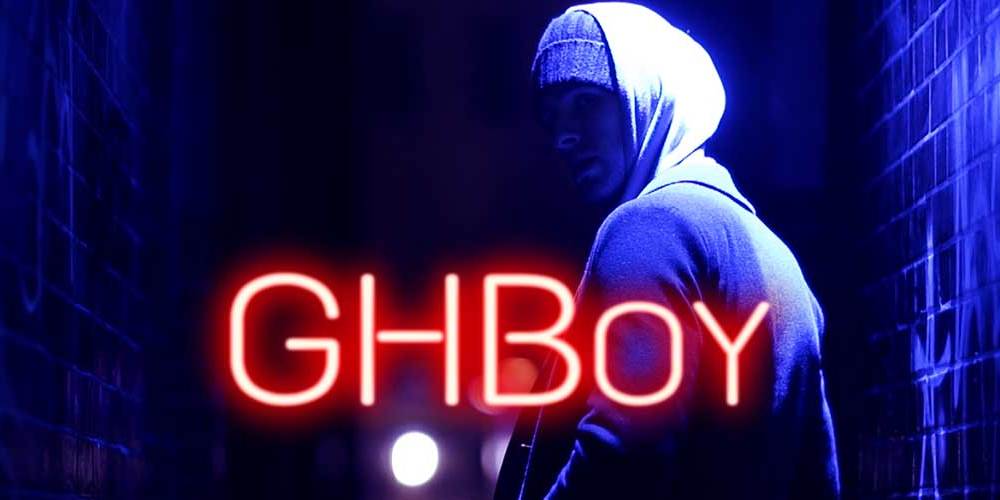
    Back in September when it was announced that theatres could play to socially-distanced audiences, this saw a range of venues prepare for their re-opening. One of these included the Charing Cross Theatre which re-opened with the world premiere of GH Boy. The lighting designer was Tony Simpson, who approached White Light to supply the lighting equipment. 

    GH Boy is a brand-new piece of writing which aims to tackle the misconceptions around gay culture and promiscuity. Set in the burgeoning party scene of East London, it focuses on Robert, who has to cope with tragedy and addiction, all whilst avoiding the wrath of an unnamed killer. Prior to its Charing Cross run, the show was originally going to play at The Vaults. Tony explains: “We were initially supposed to be opening in April and heading into the Waterloo tunnels. We had site visits, meetings and I’d even formulated a design. Then the outbreak of Covid happened and the entire production had to be pulled”. 

    Like many other freelance designers, Tony found his entire workload for the rest of the year suddenly disappear. He remarks: “It was an incredibly worry time as overnight my diary just emptied. Like most freelancers in the industry, I wasn’t sure where the next pay cheque was coming from and this continues to be the case for so many”. 

    It was in the second week of September that Tony would receive an email which would offer him his first project in months; one which would see him literally pick up where he finished back in March: “I got an email from Paul Harvard, the writer and lead producer of GH Boy. He told me he’d received some emergency fund money and that GH Boy had been chosen to re-open the Charing Cross Theatre. It was completely out-of-the-blue yet something I of course leapt at the chance to be a part of again”.  

    GH Boy would play at a stripped-down Charing Cross Theatre that would have 90 seats as opposed to the normal 250+. The company would have to rehearse in the space as well as comply to all of the government guidelines and be frequently tested. Tony explains: “We were all so keen to just get the work on but equally as keen to be safe. On day one, all of the company were given a Covid test. Similarly, everyone was wearing masks and maintained social distancing. It was incredibly well thought out and testament to the producer’s planning”.  

    The Charing Cross Theatre is the only theatre in Central London that is set up ‘in the round’. As such, it was perfect for GH Boy. Tony explains: “The Vaults show was going to be in traverse so thankfully it was a very similar set-up. My design has to change, mainly as at The Vaults you have to account for infrastructure, racks, rigging; all of which the Charing Cross had. As such, when it came to the hire, I was able to focus on obtaining the specific fixtures I needed to help tell this story”.  

    For his rig, Tony drew on Martin MAC Aura XBs, a fixture he regularly uses on smaller scale studio productions. For the crosslight positions, he used 4 x GLP Impressions X4 Bar 20s, which offered great coverage but were also very quiet; a necessity for the show. He also used a single Vari Light 2600, meaning his rig was all LED and incredibly flexible. He explains: “The play moves at a very fast pace and the director wanted the light to help steer where we were in terms of location. For instance, the main action takes place in a therapy studio so we wanted a warm, safe feel for these scenes. Whereas in the outdoor scenes, or those set in a nightclub, we wanted something much different. The lighting essentially became the backbone of the production and help guide the audience through the story”.  

    Tony and the team had a five-and-a-half-day technical rehearsal before their first preview on Wednesday 4th November. However, this first preview was going to be their last, with the government announcing a new national lockdown that was to begin the very next day. Tony explains: “We were all incredibly disappointed that after all of our hard work, the run was cut short by the new measures and that we were back to square one. However, putting on a show during a global pandemic is somewhat extraordinary and I’m so proud to be part of this production”. 

    GH Boy will actually re-open on 3rd December 2020 and run for the rest of that month. For more information, please click here.  

    Tony concludes: “While it’s been a slightly surreal year, and this production was no exception, what was fantastic was knowing that WL was there as a constant support throughout. I have a long-standing relationship with the company and want to thank them, particularly Dave Isherwood, for all of their support with GH Boy. It truly is a special project and we cannot wait to share it again with audiences next month”.  

    Photos courtesy of Bettina John.

  8. Paule Constable Wins Oliver Awards’ Best Lighting Design 2020

    Leave a Comment

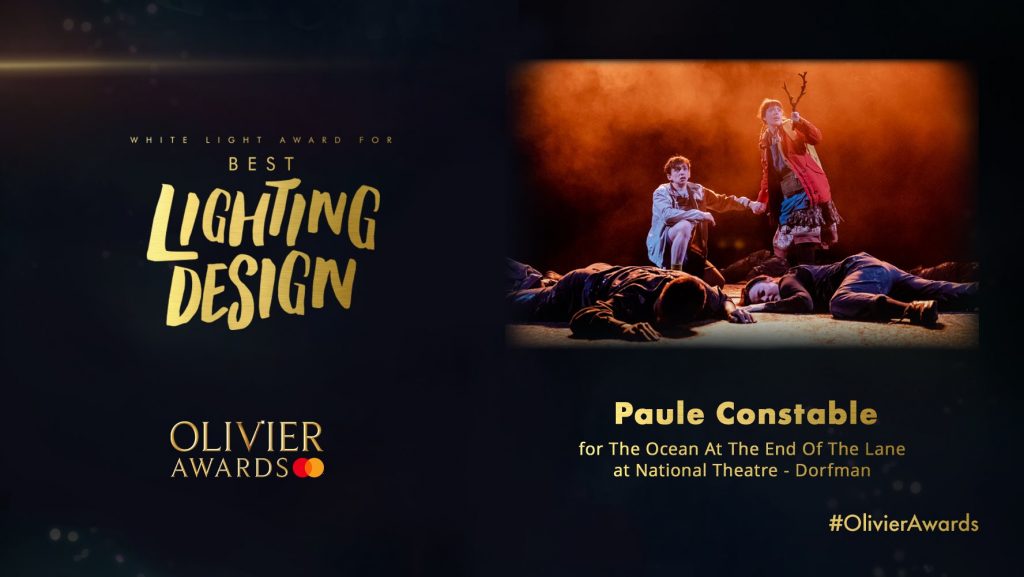
    Last night, the winners of this year’s Olivier Awards were announced in a special programme presented by Jason Manford at the London Palladium which was broadcast on ITV as well as streamed live on Official London Theatre’s Youtube channel. White Light once again sponsored the Best Lighting Design Award which was won by Paule Constable for her work on The Ocean at the End of the Sea at the National Theatre.

    Like most award ceremonies this year, the Oliviers have had to navigate around the current restrictions in which we all find ourselves. The nominations were initially announced in March, with the ceremony due to take place in April. However, this was postponed until it was eventually decided that the safest way forward was to host an online ceremony. WL’s Managing Director Bryan Raven comments: “The Oliviers are aways a huge occasion for us as a company; not only because we sponsor the Best Lighting Design Award but the fact that we also supply the lighting for the main ceremony as well as the production support for the after party. It’s one of the biggest events in the theatrical calendar so while, like so many others, we were disappointed it couldn’t physically go ahead, we were delighted that Official London Theatre and its partners found a way to make ‘the show go on’ in some way”.

    For Best Lighting Design, Paule Constable won her fifth award for her work on The Ocean at the End of the Sea. The other nominees included Howard Hudson for & Juliet, Neil Austin for Rosmersholm and Bruno Poet for Uncle Vanya; with the latter two shows supplied by WL. Bryan comments: “We are absolutely delighted for Paule who now takes her tally up to an incredible five Oliviers! Her design on the show was truly magnificent and it’s fantastic to see her brilliant work once again recognised. We’d also like to say a huge well done to the other designers whose nominations were all thoroughly deserved”.

    Other winners on the evening included Sharon D. Clarke who took home Best Actress for her performance in the Young Vic’s Death Of A Salesman. Present Laughter at The Old Vic won two awards, with Andrew Scott winning Best Actor and Indira Varma winning Best Supporting Actress. The Jamie Lloyd Company won Cunard Best Revival for its production of Cyrano De Bergerac whereas Emilia took home three awards, including the Noël Coward Award for Best Entertainment or Comedy Play for playwright Morgan Lloyd Malcolm, Best Costume Design for Joanna Scotcher and Best Sound Design for Emma Laxton.

    Ian McKellen was also honoured with his seventh Olivier Award for his 80th Birthday tour, whilst lyricist Don Black, received a Special Award from Lord Lloyd Webber and HRH The Duchess of Cornwall, who, like so many of the award winners, gave an impassioned speech about the importance and resilience of theatre.

    Bryan comments: “Whilst it was heartening to see such a wealth of talent recognised for what they do best, what was just as heartening was hearing so many artists acknowledge the plight facing our freelancers and the overall lack of clarity we still face as an industry. For me, the evening marked a celebration of colleagues, peers and friends yet also served as a reminder of how much we are all missing live performance and the huge void that theatre has left; something we hope will be resolved in the very near future”.

  9. White Light Supplies Blindness at Donmar Warehouse

    Leave a Comment

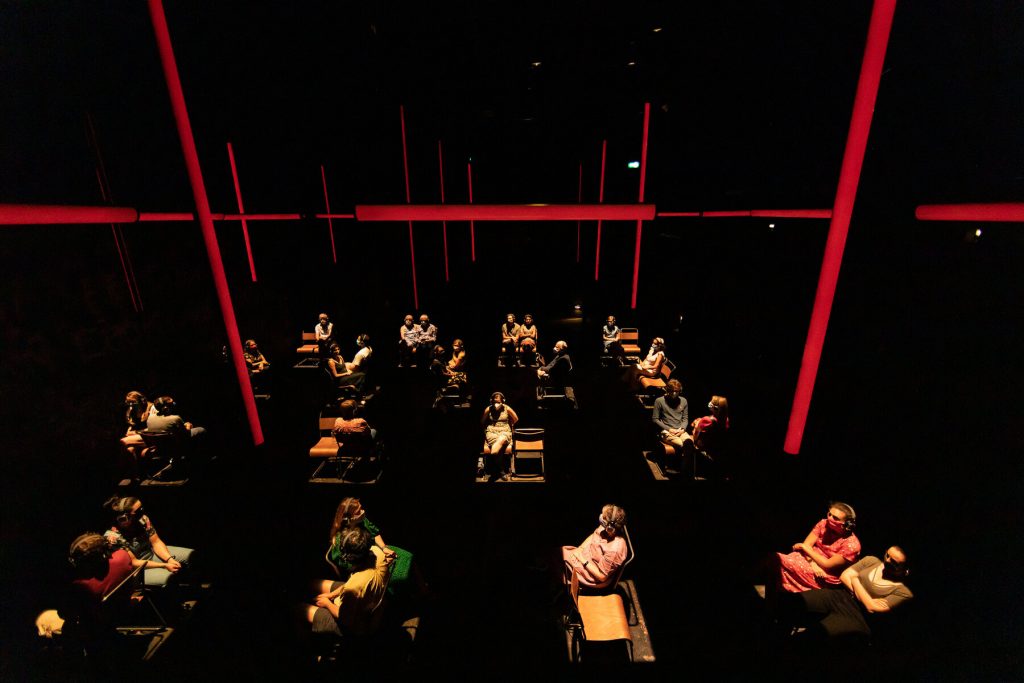
    Described as an immersive, socially-distanced sound installation, Blindness is a brand-new adaptation of Jose Saramago’s novel which recently re-opened London’s Donmar Warehouse. The production is one of the first to be staged post lockdown and White Light was called upon to supply the lighting equipment.   

    Adapted by Olivier Award-winning Simon Stephens, Blindness tells the story of when a contagious disease spreads through a city and renders its victims instantly blind. The production is incredibly unique, with no performers onstage. Instead, audience members are seated 2m apart across the Donmar stage and wear headphones through which they hear the story’s narration, provided by Juliette Stevenson. The lighting designer is Jessica Hung Han Yun, who comments: “This project is, unsurprisingly, unlike anything I’ve ever worked on before. My role was to help create an environment where the listeners feel the story is happening around them and that they’re full immersed in the action. This is a piece told through sound and visuals and the sound designers, Ben and Max Ringham, have created this amazing soundscape using binaural technology. For many audience members, it will be the first time they’ve experienced something like this and we wanted to ensure we took them on a genuinely captivating journey in which they were completely immersed”. 

    Jessica had to work closely with both the sound designers and set designer Lizzie Clachan in order to bring this world to life. She explains: “The configuration Lizzie came up with was genius. It makes the audience view one another constantly until the second part of the show. Regulation was an important theme that carried through the installation, both metaphorically and literally, so we focused on this a lot for the layout and design. For instance, as soon as you start queueing outside the venue, you have to be 2 metres apart and then when you enter the building, you must sanitise your hands etc. You are then instructed where to sit, (again, all socially distanced) and positioned in a grid system, similar to that of a city. In line with the theme of ’the system’, I wanted to illuminate the audience to make them aware of the bodies in the room and the community around them. That said, I also wanted to evoke a feeling of isolation, similar to that often experienced when living in a big city”. 

    As such, Jessica approached the team at WL to supply her with the equipment she needed. She explains: “With the feel I wanted to achieve, I knew this needed to be flexible in terms of both the colour and sharp in focus. As such, I drew largely on ETC ColorSources  as well as LED tubes. The LED tubes engulfed the space above the audience in order to symbolise a variety of locations, emotions and time. Similarly, underneath the island of chairs were small colour changing LEDs”. 

    This was the first production that Jessica had lit following lockdown and, as such, differed from her usually means of working. She explains: “We had a lot of our initial design discussions on Zoom which was very strange; particularly for someone who likes to have creative discussions in person! Of course, the biggest change was the huge emphasis on health and safety (and rightly so).  In both the rehearsal room and theatre, we were keeping 2ms apart, wearing masks and constantly hand sanitising. The Donmar were great at keeping everyone safe especially when we got to fit up and tech week. We did not have a big cast of 100 but simply one actor along with seven creatives, which made it much easier to be socially distanced in a large rehearsal room”. 

    Blindness opened earlier this month to critical acclaim. It has since announced an extension until 5thSeptember. It is one of several projects that WL is currently supplying across the UK, with the team working closely with various creatives in order to supply technical solutions specific to their needs. WL’s Head of Customer Service Craig Bennett comments: “While there are still many guidelines and restrictions in place for live performance, we are seeing many organisations and venues offer exciting alternatives to traditional formats; as seen with Blindness. We would encourage anyone working on a similar production, regardless of scale, venue or location, to contact our Customer Service team who will happily talk through their requirements and put together a bespoke package for their project”. 

    Photos courtesy of Helen Maybanks.

  10. White Light in Good Spirits for Ghost Stories UK Tour

    Leave a Comment

    White Light has provided the lighting equipment for the UK tour of Ghost Stories, having also supplied its recent West End run at the Ambassadors Theatre.

    Written by Jeremy Dyson and Andy Nyman, Ghost Stories has been terrifying theatregoers for over a decade. The show invites audience members to enter a nightmarish world, full of thrilling twists and turns, where their deepest fears and most disturbing thoughts are imagined live on stage; offering a theatrical experience like no other. The lighting designer for the show is James Farncombe, who comments: “What was clear from the outset was that the design needed to be as much about the absence of light as much as anything else. I really like this idea that it’s more of a darkness design and that, due to the nature of the staging and the various tricks therein, I had to hide as much as I revealed. Ultimately it’s all about creating that atmosphere for an audience”.

    It was this atmosphere that plays such an intrinsic role in what has given Ghost Stories its worldwide reputation of terrifying audiences. So how do you make lighting ‘scary’? James explains: “It’s a combination of things. The lighting works in tandem with Nick Manning’s extraordinary sound design. There is a slow, shadowy build-up of tension. then each jump moment is part release, part punchline, and all very much in the spirit of a B movie. To a large extent, Ghost Stories is about the anticipation of what might happen next, what might be lurking in the shadows. When the show is firing on all cylinders, it really creeps up on the audience. You could draw a parallel with Hitchcock’s idea that the suggestion of things left unseen is far more potent than anything we can reveal on stage or screen.  The scariest possible thing is always very particular to an individual so, to a large extent, we expect the audience to populate the shadows with their own fears”.

    James has worked on the show since it first started life at the Liverpool Playhouse in 2010. And whilst there have been significant advances in lighting since them, James has found himself drawing on more conventional fixtures ever since that initial run. He comments: “As the show is now a decade old, it actually predates my first encounter with LED fixtures such as Lustrs etc. Instead, the rig is actually made up on conventional units with no scrollers and no moving heads yet this is something that works to great effect. We spent a lot of time managing spill and flare, so Source Fours became essential for precise focussing, and they make up the bulk of the rig. In terms of other fixtures, there are a number of birdies hidden in the set, a series of little LED strips, a few practical lamps and three pinspots. Everything needed to be small as there is very little room in the fly plot, or in the nooks and crannies of the set pieces, so size was a big consideration”.

    This marks the first time that Ghost Stories has embarked on a UK Tour. As such, James had to ensure his rig was completely tourable. He comments: “With the show going up in two days in most venues, we have made a few nips and tucks here and there. That said, it’s still more or less the same lighting rig as was featured in last year’s Ambassadors run; largely thanks to Andy Taylor doing an amazing job of making the impossible possible. That said, the show has gone through almost ten years of slight development and distillation and we are now at a point where we know the most effective set-up in which to scare our audience members night after night…”.

    Ghost Stories began its tour at the Alexandra Theatre, Birmingham and is currently playing at the Grand Opera House, York. It will continue to tour across the UK before concluding at the Nuffield Theatre, Southampton in May 2020. 

    Photos courtesy of Chris Payne.