Tom Scutt Archives - White Light
Explore White Light: White Light | HireWL | SalesWL | ShopWL

Tag Archive: Tom Scutt

  1. White Light Opens a Little Shop of Horrors at Regent’s Park

    Leave a Comment

    First performed Off-Broadway in 1982, Little Shop of Horrors has gone on to become one of the most performed musicals of all time. Composed by Alan Menken and written by Howard Ashman, it tells the story of Seymour, a hapless florist shop worker who raises a plant that feeds on humans. Following numerous West End and Broadway runs, the musical is now the final show in the current Regent’s Park Open Air Theatre Season; a season for which White Light has supplied the entire lighting equipment.

    The Lighting Designer for this production is Howard Hudson, who also lit last season’s On the Town. He comments: “I’ve never seen Little Shop before but have absolutely loved the now iconic soundtrack for years. Having not seen any of the many previous versions meant that I was able to approach the show with a completely fresh perspective. In the build up to the show, we went to visit the Ben Kelly exhibition ‘Ruin’ at 180 The Strand which was a great source of visual ideas. I also watched quite a few B movies from the 50s and 60s which were helpful as another visual key into the world in which the musical is set”.

    Part of Howard’s brief was to work closely with Designer Tom Scutt’s set. Howard comments: “The set is very monochromatic, with most of its surfaces being a black and white print of New York buildings jumbled together at all different scales. So this was our ‘base’ world referencing a more monochromatic filmic visual language. As the plant starts to grow and take over the story and the space, the world gets more and more green – ultimately arriving at a highly saturated, more angular, green environment (a little like pouring a can of green paint over everything). The cinema billboard at the back was hugely useful to introduce a block of colour as a background for particular moments acting like a cyc. And, of course, the trees which surround the stage were also useful as a backdrop to suggest ‘Somewhere That’s Green’ which Audrey yearns for and sings about”.

    Howard liaised with WL to draw on the fixtures needed for his design. The rig consisted of VL3500 Washes, Martin MAC Viper Performances, Clay Paky Mythos 2s, Martin MAC IIIs and a range of LED tape. Howard comments: “The actual little shop itself has a mini lighting rig in its roof, complete with DJ-style LED spinning balls, smoke, fans, lots of LED fixtures and LED tape. This took some lengthy planning as it is required to track up and downstage, revolve as well as be stood on top of and house the plant. The show also had a huge amount of LED tape for the set elements; all of which had to withstand the frequent torrential downpour(s)”.

    As the Open Air Theatre is a completely outdoor space, this meant that Howard’s approach to Little Shop of Horrors differed to how he’d traditionally light a show. He explains: “The most vital part I’ve found with working outside is having your cue structure worked out in as much detail as possible prior to tech. So even if you’re teching in incorrect day light conditions (as is most often the case), you can rough in cues to at least have some lights you hope pointing in the right place. And then the tech sessions themselves are often like putting a blindfold on: you concentrate more on working with the DSM who is calling imaginary cues that don’t do anything with lights that aren’t on! It’s only when you have the first dress rehearsal that you see all your guesswork for the first time in the right light – and you spend most of that praying the lights come up in the right places at the right time in the right colour and at the right level! After each tech and preview, we will work until 2:30am in order to take advantage of the darkness. So we also work live over the previews which is gold-dust in terms of lighting time”.

    The show has now opened to critical acclaim achieving five stars from the Financial Times, WhatsOnStage, The Times and the Daily Express, with other critics claiming ‘You’d be mad to miss this uplifting revival’ (The Independent) and ‘a triumphant production’ (The Evening Standard). It has also announced an extension until September 22nd.

    Howard concludes: “It’s been amazing returning to Regent’s Park and working with WL once again on what’s an incredibly loud and fun show. I also want to thank Adam Squire, Joe Kirk and their utterly brilliant team along with Vic Brennan who programmed expertly as ever”.

    Photos courtesy of Johan Persson.
  2. Leading Light with…Lee Curran – Part Two

    Comments Off on Leading Light with…Lee Curran – Part Two
    sb-political-mother-line-arms-high_1000

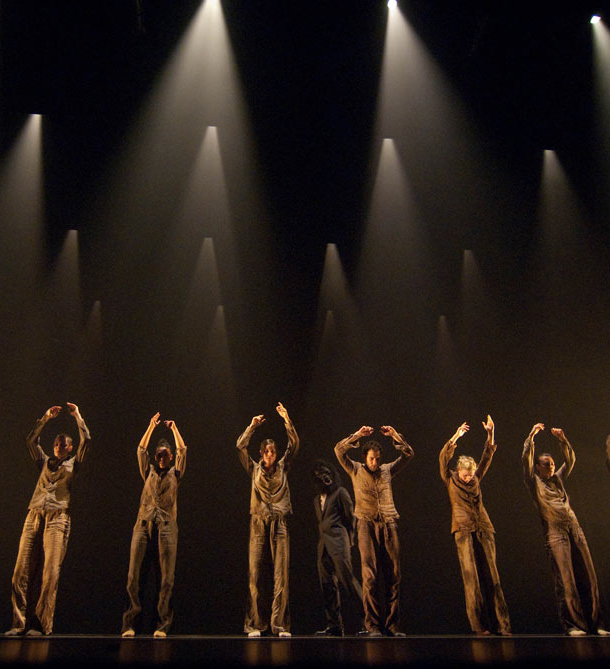
    Political Mother at Sadler’s Wells

    This approach saw Lee work with choreographer Rafael Bonachela, the current Artistic Director of the Sydney Dance Company. “At that time Raf was managed by my girlfriend (now wife) Kerry, who suggested me as lighting designer for a piece he was entering into the inaugural Place Prize for choreography. “They hit it off and Rafael asked Lee to light the piece, which went on to win the Prize. Lee adds: “I was completely taken aback by the success of the show but it was fantastic to receive such recognition for our hard work. We went on to make four more pieces together, including one for Rambert”.  However, the Place Prize would also lead to what Lee would describe as a defining collaboration of his career so far. He recalls: “Another one of the finalists in the Place Prize was a choreographer called Hofesh Shechter. He’d liked my work on Raf’s piece and asked if I wanted to light a new piece he was making.” That piece became Uprising, and was the first of several pieces Lee would light for Hofesh over the next few years, the most prominent being Political Mother.

    Political Mother premiered at the Dome in Brighton before going to Sadler’s Wells in London, and then toured the globe for several years, from New York to Tokyo, Paris to Rio, Berlin to Delhi. It returned to Sadler’s Wells in London several times, in its larger Choreographer’s Cut version featuring 24 live musicians and 16 dancers, and even played two nights at Brixton Academy. It is the piece which Lee feels opened several doors for him: “By having the show come back again, especially in London, it means as many people as possible could see my design and get a taste of my work”.

    RCTconstellations2012JP_01146-Edit

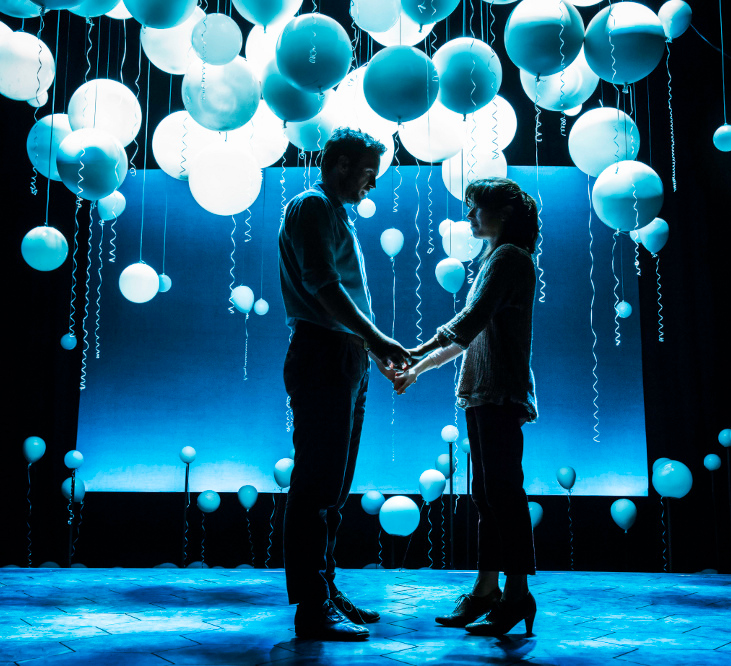
    Constellations would go on to have major international success.

    Following this exposure, Lee started to get more interest from the theatre sector. In 2009, he had lit a show called Unbroken at the Gate Theatre in Notting Hill, directed by Natalie Abrahami. The show was designed by Tom Scutt, who was not long into his own career. Lee continues: “I collaborated really well with Tom and I had a great time working on the show in general. Fast forward two years, and Political Mother was at Sadler’s Wells again. One night I was browsing through some of the show’s feedback on Twitter and saw Tom had tweeted how much he loved the show. I tweeted the usual thanks back to him, and he hadn’t realised I’d lit it…” Tom and Lee soon reacquainted and this was during a time when Tom was speaking to director Michael Longhurst about a new show they were working on at the Royal Court Upstairs. Having been so impressed by Lee’s work on Political Mother, Tom put him forward to Michael as a possible Lighting Designer for the piece. The play they were working on was a certain Constellations by Nick Payne. Lee states: “It was the perfect show for me to light. The set design was like an art installation and, as someone who lit dance, I was used to working with bodies in empty spaces”. Constellations would prove another major turning point in Lee’s career as the show would go on to have phenomenal success. Later that year, it transferred to the Duke of York’s in the West End, and a move to Broadway followed two years later; something which Lee describes as a career highlight: “For myself, and a lot of the team, this was the first time we’d worked on Broadway so it was a big moment. As we had managed to keep the same creative team from the original production, we were a really tight knit group and all ‘in it together’. It really was a great experience”.

    Ham4

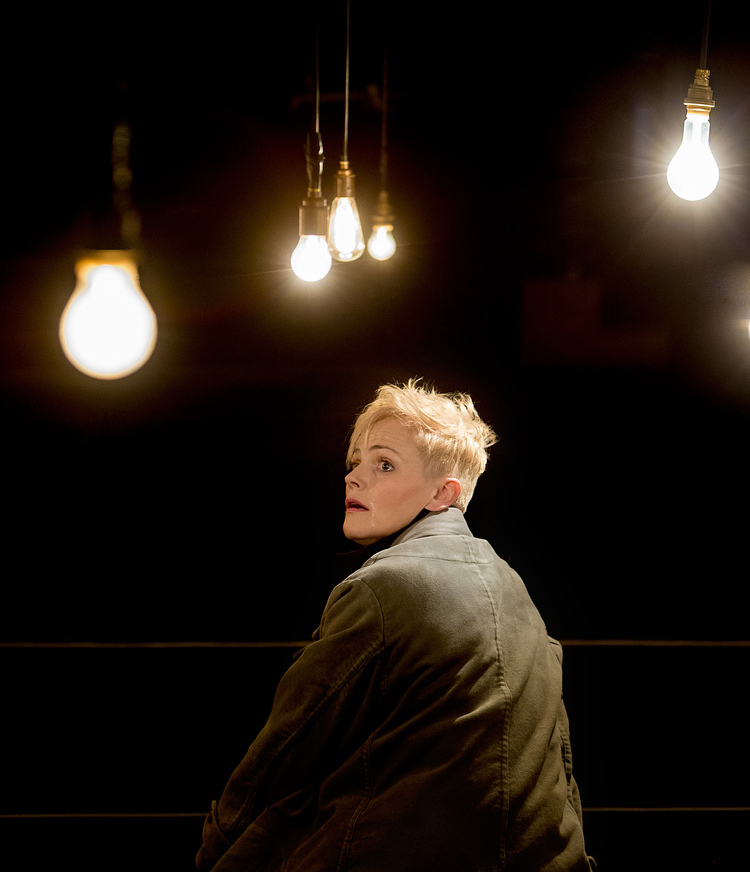
    Maxine Peake in Hamlet at the Royal Exchange

    That said, Lee’s memories of the show aren’t all idyllic. He comments: “My Programmer on the original show Upstairs at the Court was Jack Williams, and it was the last show on which the theatre used a Strand 520 before replacing it with an ETC Ion. I think Jack would be the first to admit that programming was never his strong point, and it would have been so much easier if we’d had an Ion!”.

    Following the exposure and acclaim of Constellations, the theatre doors flew open for Lee and the work came flooding in. These included Protest Song at the National Theatre, Blindsided and Hamlet at the Royal Exchange, Arden of Faversham at the RSC and shows for LIFT festival. Lee states: “Up until this point, I’d been predominately a dance lighting designer, so to get so many theatrical opportunities was a big shift, but obviously something I embraced”.

    And the more Lee began to light theatre, the more he was surprised by how few lighting designers worked in both theatre and dance. He recalls: “I think that there was a weird schism in this country between dance and theatre. You either worked in one or the other. However, I wanted to be active in both, and I think things are improving now; those barriers are starting to break down”.

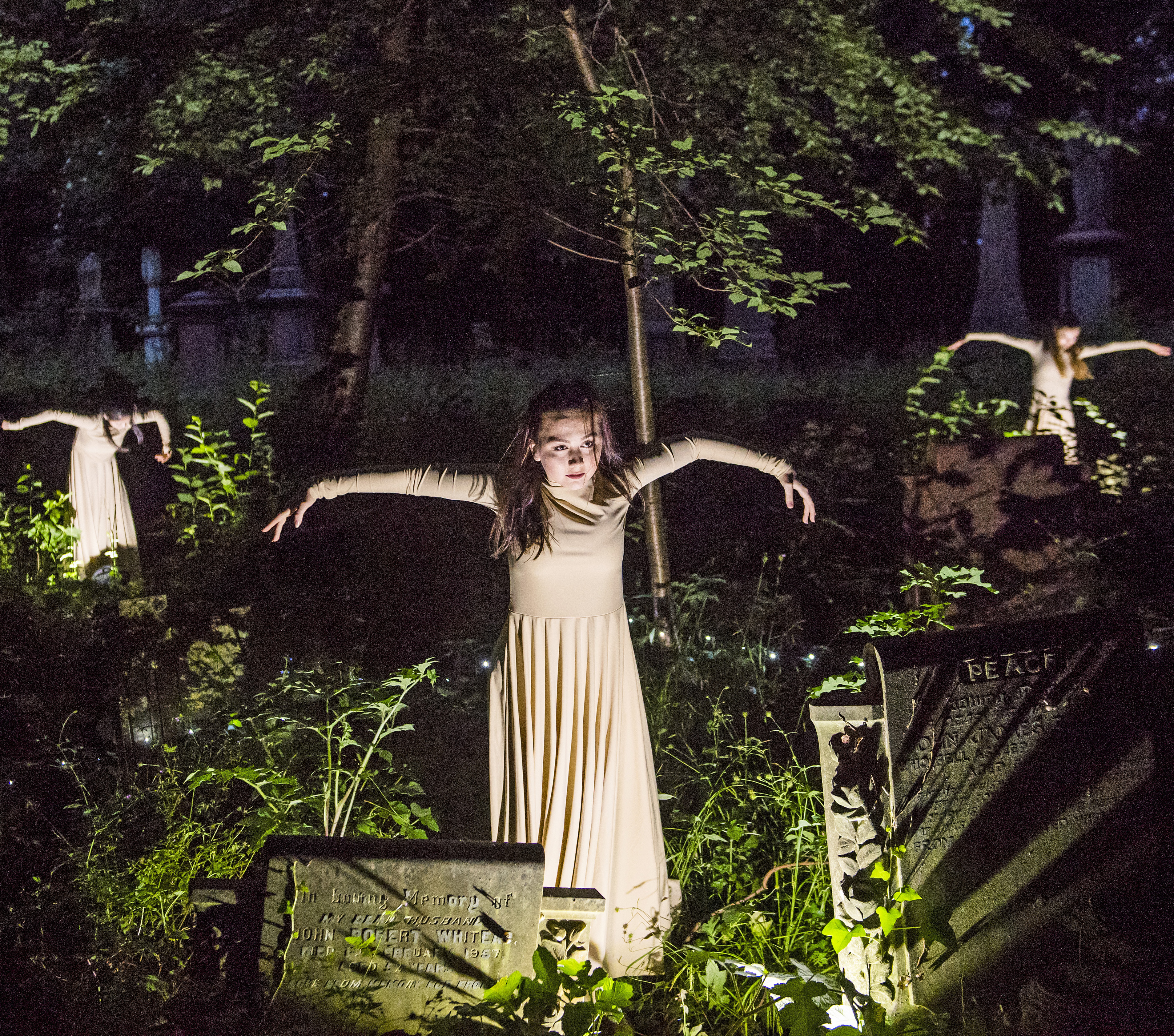
    Despite this wave of theatre shows, Lee was still conscious to keep his portfolio as varied as possible: “It was important for me to stay true to the path I’d taken into this industry, and try to keep plenty of variety in my work. As well as dance, I continue to work at different scales, lighting site-specific and devised work. For instance, every two years, I design a show for the LIFT Festival. Most recently, the show Depart was a promenade circus, choral and dance piece that took place in a cemetery. It was pretty surreal”.

    DEPART-by-Circa-photo-Tristram-Kenton-4

    Part of the LIFT Festival, Depart was a promenade circus, choral and dance piece that took place on-site in a cemetery.

    Listening to Lee discussing Depart, I can’t help but ask what other highlights stand out. A few immediately spring to mind: “I worked with the National Theatre of Wales on a show called Mametz. It was part of the WW1 centenary commemorations, about a particular battle near the Somme. It took place on farmland in Monmouthshire, mixing promenade and stages, scripted theatre and dance, and told an incredibly important story on a huge scale; something I genuinely believe we did justice to. Other highlights include Hamlet at the Royal Exchange which starred Maxine Peake where we made the ghost manifest through light and sound in a cloud of tungsten lightbulbs. Orphee et Eurydice at the Royal Opera House, with the orchestra on a massive platform onstage and the whole stage covered by an enormous ceiling, was fairly epic as well”.

    There is one rather obvious highlight in Lee’s CV that I wish to discuss… Jesus Christ Superstar. When I first mention it, he tells me something very surprising: “This is the first musical I’ve ever lit. That said, I’ll need to think carefully before lighting another as this couldn’t have gone any better! I had a lot of meetings with Timothy Sheader (the director) and Tom Scutt (the designer) and we all sat down and discussed what we wanted to achieve with the show. We really wanted it to have a contemporary feel rather than simply making it a period piece. Ultimately we wanted to achieve something that felt like it could have been written last month – something I believe we did”. This contemporary approach certainly worked as the show became a huge critical success; so much so that it returned again this year. Lee comments: “It’s one of those pieces of theatre that I’m truly proud of. It felt like we were making something special and I’m delighted by the response it received”.

    JCS. Photo Johan Persson

    Jesus Christ Superstar earned Lee an Olivier-nomination.

    It appears that Lee’s portfolio will simply continue growing as he works on a whole range of exciting projects over the next few months. Yet what is it that allows Lee to continue to work so flexibly across so many different types of show? He has a very knowledgeable answer: “You just need to find a way that works for you. Courses may offer a certain guideline or approach but ultimately you have to take your own experiences and ideas to define your individual style. I think it’s important to remember that there is no ‘right way’. If you look at how I arrived to where I currently am, it shows there’s no particular way of doing this. Just enjoy the journey and keep reminding yourself that this is your career path – nobody else’s”.

    Upon hearing such sound advice, it feels like a positive point on which to conclude our interview. Lee has to nip down the road to Regent’s Park and I have to make the way back to WL HQ in South Wimbledon. Upon departure, I tell Lee that I’m coming to see Jesus Christ Superstar but I initially double booked myself as I forgot I was seeing Road at the Royal Court on the same evening. He informs me: “I’m lighting that as well”. So whether it’s an all-time classic rock musical, or an ensemble Northern drama from the 80s, it appears that Lee’s pragmatic approach will see his designs grace the stage for a long time to come…

     Photos courtesy of ICA, Johan Persson, Jonathan Keenan, Lee Curran and Tristram Kenton.