

White Light Flies Broken Wings into Theatre Royal Haymarket
Leave a Comment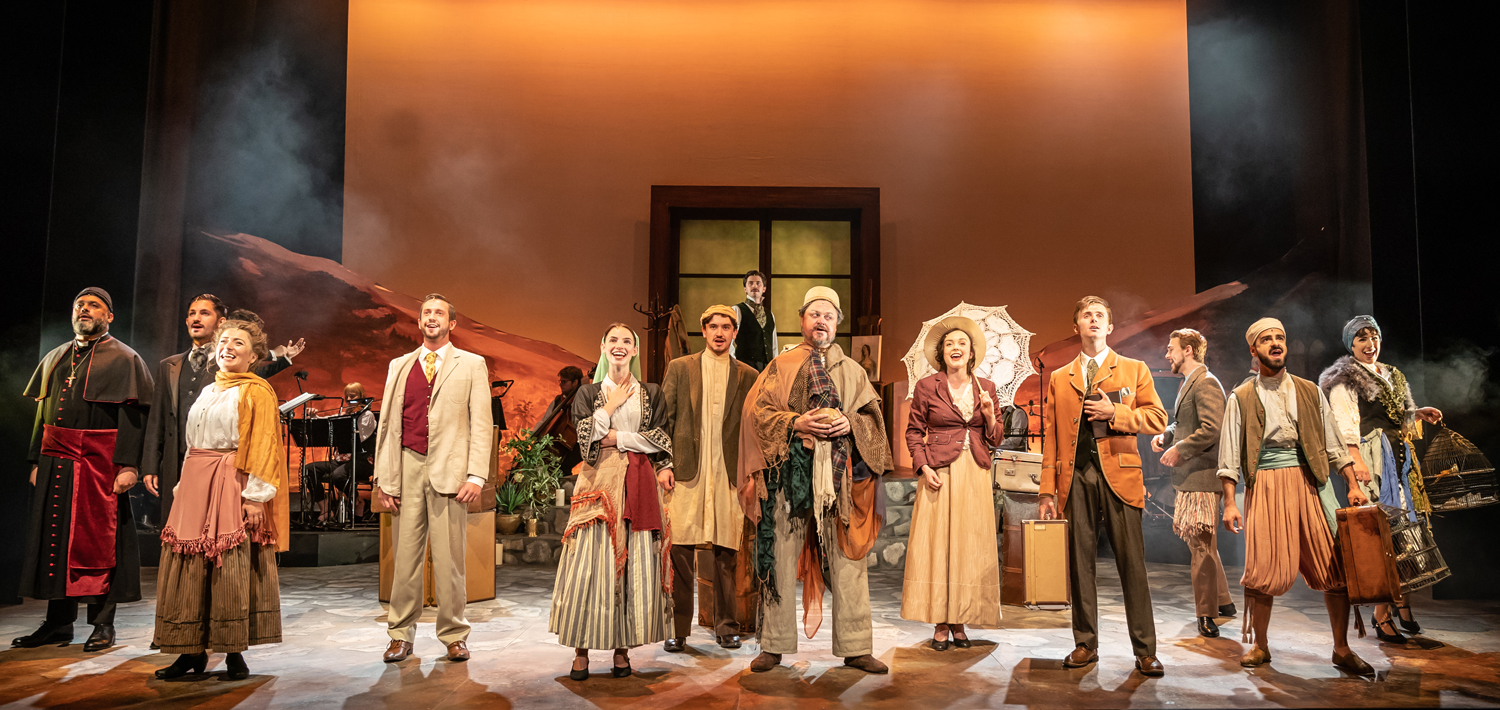
Broken Wings is a brand-new musical which recently premiered in the West End at the Theatre Royal Haymarket. Based on Lebanese-born poet Kahlil Gibran’s autobiographical tale of the same name, the show is written by Nadim Naaman (The Phantom of the Opera) and composer Dana Al Fardan. As a leading supplier to West End productions, White Light was called upon to supply the lighting equipment.
The show was lit by Lighting Designer Nic Farman, whose previous West End credits include The Toxic Avenger and 3Women. He comments: “For this particular production, the director Bronagh Lagan and I decided that light would be extremely helpful in conveying a sense of both location and time. The show features the older Gibran reflecting back on his life so the narrative switches to the past frequently. I worked closely with Bronagh to develop the palette for the show. We based the older Gibran scenes around cold blues and CTB which contrasted with hot, rich oranges, yellows and reds for Beirut. As the sorrow of the story develops, the warmth in the lighting is stripped out; culminating in the funeral of Selma.”
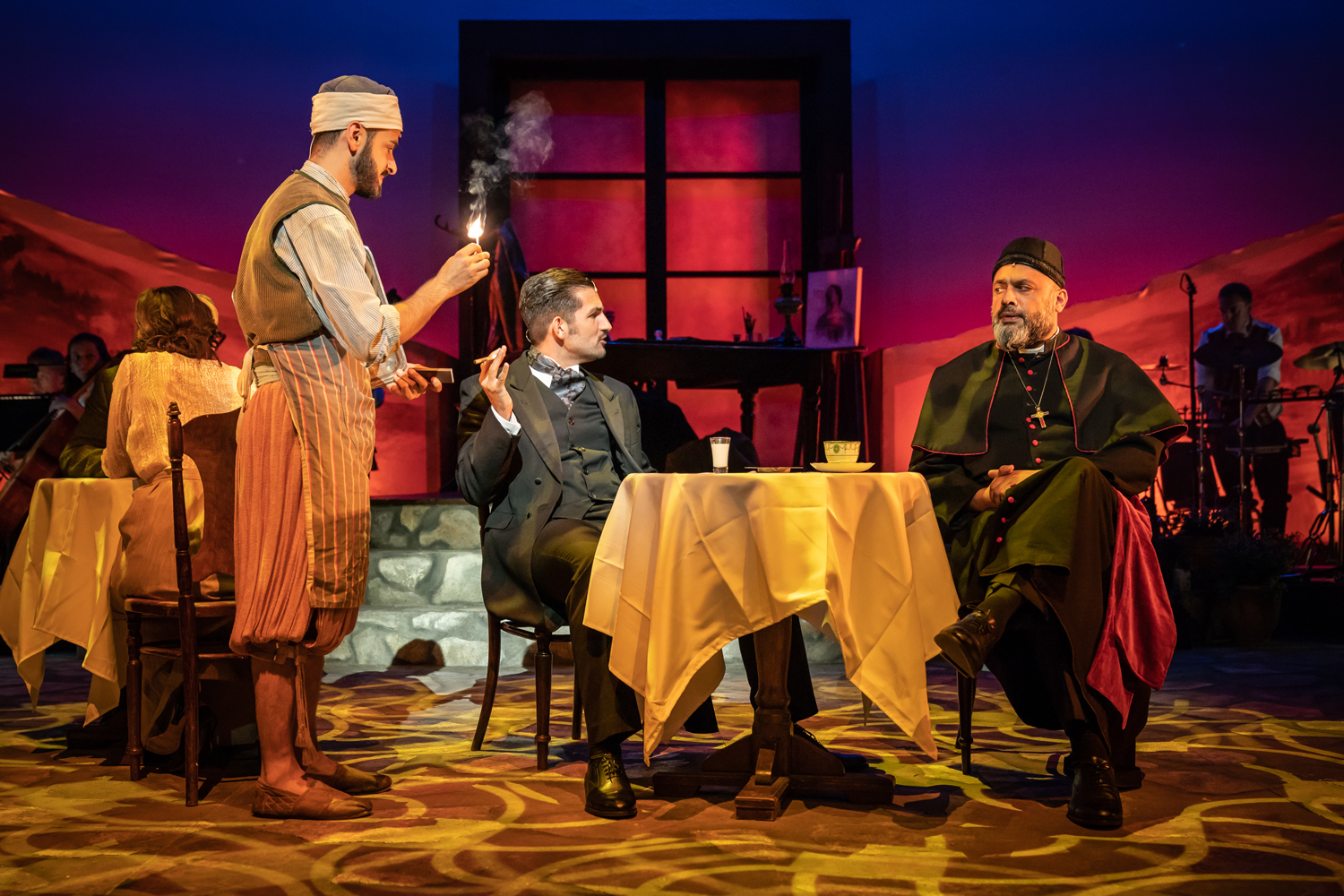
Nic adds: “When we were teching the production, it was important to work quickly so we created a number of looks which were refined during the dress rehearsal and first preview. Each location in the show is visually very striking: gardens, shady restaurants, a temple, the docks etc. As a result, we had a lot of fun developing a layered stage picture with the colour palette and texture from gobo washes”.
Having known what he wanted to achieve from his design, Nic approached WL to draw on a range of fixtures. He comments: “I had a majority moving light rig overhead, with a number of Chauvet Maverick MK2 Profiles and Maverick MK1 Spots to provide specials and gobo washes. These were supplemented with Martin TW1s grouped together in pairs for back washlight. The sidelight came from Chauvet Ovation E930VWs and Ovation E910FC Profiles. The combination of the variable white and full colour units meant I had flexibility to do both variable colour temperature and saturated washes.
 He continues: “The cyc was lit from top and bottom with ETC ColorSource units with the cyc lens attachment. These gave me the rich tones I needed to create the Middle Eastern sky, as well as the punch to fight over the stage wash. Completing the rig were a number of ETC Source Fours positioned front of house as well as two Super Korrigan Followspots”.
With the show being a limited run, this meant that Nic and his team had a limited period in which to get into the venue. He comments: “The show started going in on Monday morning and opened for first preview on the Wednesday evening. But I was able to design a rig that accommodated for this, with minimal overhead focussing needing to be done and side light at floor level so it could be focused without ladders. Then, when we got into tech, it became about working quickly and in broad brushstrokes that were refined over the dress rehearsal and first preview”.
 The production marks one of many that WL is currently supplying in the West End, with others including TINA – The Tina Turner Musical, 42ndStreet, Young Frankenstein, Imperium, Pressure, Harry Potter and The Cursed Child, The Importance of Being Earnest, The Jungle, The King and I, The Lieutenant of Inishmore and Aladdin to name but a few.
Nic comments: “I want to say a massive thanks to my Production Electrician Adam Mottley and his assistant Matt Harding, my follow spot operators Sam Hawkes and Rose Fraser, and all the team at Theatre Royal Haymarket for getting the show in and up in a very short space of time. Also a huge thank you to Jonathan Haynes and Jim Dewhirst at WL and Tom Wilkes at Chauvet for their continued support”.
Photos courtesy of Marc Brenner.
Full Credits:
Broken Wings
by Nadim Naaman & Dana Al Fardan
Director: Bronagh Lagan
Set Design: Claudio Rosa & Mira Abad
Costume Design: Nik Corrall
Lighting Design: Nic Farman
Sound Design: Ed Borgnis & Simon Hendry
Photos: Marc Brenner
 Considered by many to be one of the biggest Broadway musicals of all time, 42nd Street has now arrived in London where it has received rave reviews from audiences and critics alike. Starring Grammy Award winner Sheena Easton, this all singing, high-kicking spectacle is currently playing at Theatre Royal Drury Lane – London’s biggest stage. The show tells the story of young Peggy Sawyer who is fresh off the bus from small-town America and just another face in the chorus line on Broadway’s newest show. Yet when the leading lady gets injured, Peggy might just have the shot at stardom which she’s always dreamed off… The lighting design is by Olivier Award winner Peter Mumford and White Light has supplied the equipment. We sat down with Peter who told us about his approach to the show and how he achieved his design:
 42nd Street is obviously an iconic show. Have you lit it before? If not, how do you approach a show as renowned as this?
 What was your brief when working on the production?
 How much preparation did you do? What did this entail?
 What kit did you draw on to achieve your design?
 Where there any obstacles with the show?