

Leading Light with…David Howe – Part One
Comments Off on Leading Light with…David Howe – Part One
David Howe – Lighting Designer
It’s a crisp sunny morning in London as I exit the tube at Piccadilly Circus. Today’s interview for Leading Light is taking place (conveniently) along Shaftesbury Avenue. Before heading into the heart of the West End, I stop near the Statue of Eros to make a quick call. As I stand on the phone, freezing, I look at the Criterion behind me and see a poster for The Comedy About a Bank Robbery. Looking down the list of credits I clock that the Lighting Design is credited to a certain David Howe – who just happens to be the person I am on my way to meet.
For those of you who’ve read the previous Leading Light articles you’ll have no doubt noticed a pattern: all of the lighting designers have a long relationship with White Light. David is no exception. Except, he is. David actually worked at WL for ten years before becoming a full-time lighting designer. And while he and I could talk about the old days all morning, we’re here to discuss his experience as a designer. And as always, we start at the beginning… David was born in Essex but moved to Weston-super-Mare at an early age. He describes his hometown as “a quiet sleepy town”. As a child, David was extremely musical. He recalls: “My passion for music stemmed from my mother who loved to sing”. He was a chorister in the local church and also played the piano, church organ, violin and viola.
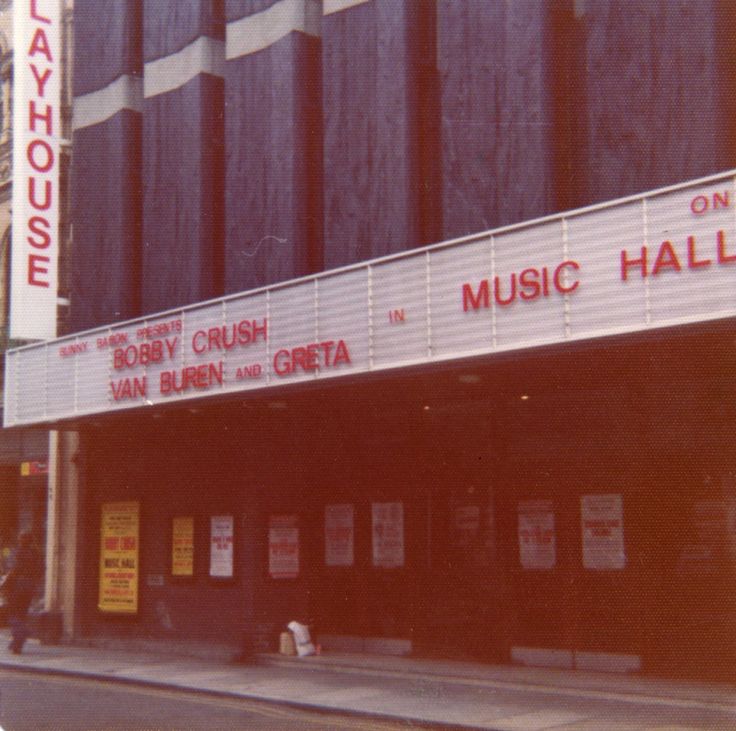
Weston-super-Mare Playhouse where David saw his first show.
While David’s family weren’t avid theatregoers, they would make the annual trip to the local pantomime at Weston-super-Mare’s Playhouse. It was here where David, then aged 7, received his first experience of theatre – and was instantly hooked. He comments: “I remember watching the show and being amazed by all the theatrical tricks, how the scenery changed and people flew across the stage. It was two hours of pure bliss and I didn’t want it to end”. Imagine the excitement then when the theatre advertised that they were running a backstage open day; something David naturally leaped at the chance to attend: “I clearly remember being on that stage and walking up to the village set (which I previously thought was real) and seeing its construction, along with looking up into the fly tower and standing behind a follow spot. It was truly magical and, even at that age, I knew this was something that would play a big impact in my future life”.
From that moment on, David tried to immerse himself in as much theatrical activity as possible. He joined the local amateur operatic company, firstly on the stage as he could both “sing and move”. He comments: “I genuinely enjoyed being in the productions but was never entirely comfortable performing in front of others. However, I really enjoyed being backstage and helping the crew when I wasn’t on-stage, so things moved nicely in that direction”.

Paul Pyant who David assisted early in his career.
At the same time, David was at school and, unlike some of the other LDs I’ve spoken to, actually enjoyed his academic years. He recalls: “I went to school in Bristol and it had a great drama department; something, in hindsight, I was extremely lucky to be a part of. I spent a lot of my time stage-managing the various productions we put on. Funnily enough though, I never worked with the lights!”. During his A-Levels, he was fortunate to meet-up again with the Chief Electrician of the Western-super-Mare Playhouse, Pete Magor, who gave him his first job as a follow spot operator for a summer season. It turns out that Pete had been the Chief at the Ashcroft Theatre in Croydon and knew a certain other ‘leading light’ of the theatre world: Paul Pyant.
After his A-Levels, David made the move to London in the early 90s where he studied Technical Theatre at the Central School of Speech and Drama. It would be a two-year period that would impact the rest of his career. When starting his course, David was still unsure as to where his studies would take him, especially as he had come from a predominately stage manager background. He recalls: “The course was great as it covered all aspects of production, I actually really enjoyed stage management and being a DSM. Yet the more lighting work we did, the more I realised that this was a field in which I had a growing interest. In that regard, it wasn’t a Eureka moment where I thought this is what I want to do. It was more of a progressive passion”.
It was during his first year at Central that David had an experience that would prove vital for his career as an LD. He comments: “At Central, you would have outside creatives coming in to design the 3rd year acting shows, which included designers such as Rick Fisher and Mark Jonathan. As a class, we were taken to The Wind in the Willows at the Olivier Theatre and afterwards Mark mentioned that he knew Paul Pyant (there’s that name again) who lit it. It was a beautiful production – a perfect show for a lighting designer to create. Mark introduced me to Paul and, crazily, he invited me to come and observe another production: The Recruiting Officer“.
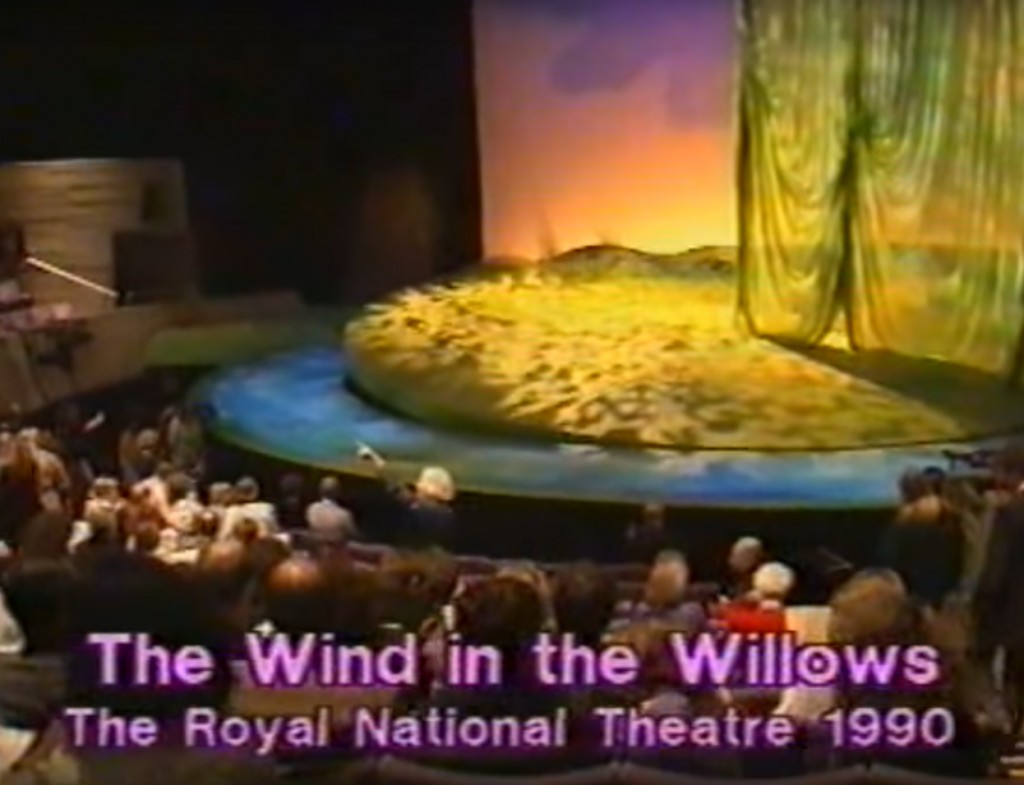
The Wind in the Willows at the Olivier Theatre.
David stayed in touch with Paul (“back in the days when you used to write letters!”) and, during the summer holiday, he visited Birmingham Rep to see a new musical called Radio Times being created. He said: “I was cheeky enough to ask Paul if he needed an Assistant as I was due a placement period at Central. And whilst I don’t think either of us fully knew the job description, he agreed and it seemed to work”. David then worked with Paul on the transfer Radio Times into the Queens Theatre, Assassins which was directed by Sam Mendes and the opening production at the Donmar Warehouse, an Opera at ENO called Princess Ida which was directed by Ken Russell, and a new production of Carousel at the National which was directed by Nicholas Hytner. David adds: “Back in the mid 90s, there was no real CAD for Lighting Designers, so Paul drew his own plans and I was got involved with that process. This meant I really could experience the process from the scratch of an ink-pen on a piece of tracing paper through to the light being hung focused and programmed into a show. I also called follows-spots on the musicals and took notes. That kind of experience, in any form, is true gold to a young, inspiring designer to see how designs work in the ‘real world’. It was something I truly relished”.