Originally performed on Broadway in 1934, Anything Goes is one of theatre’s most renowned and iconic musicals. Featuring music and lyrics by Cole Porter, the show is set on a cruise liner heading from New York to London and as the audience is introduced to the characters on board, it soon becomes clear it will be anything but smooth sailing. The show has been recently revived at the Barbican Centre in London and White Light was approached to provide the lighting.
This latest production of Anything Goes features a 50 strong cast and ensemble, including Broadway stars Sutton Foster and Rachel York, stage and screen icon Robert Lindsay as well as West End Legend Gary Wilmot. The lighting design is by Tony and Olivier Award-winning Hugh Vanstone, who comments: “Anything Goes is a hugely enjoyable confection and you really cannot go wrong with Cole Porter songs. The show came to me via a circuitous route, originally due to be lit by Neil Austin who had to withdraw due to a clash caused by Covid reshuffles. When I came on board, he very kindly passed on to me all of his preparation to date so a good deal of homework had already been done. Working alongside production electrician Rich Mence I took the rig design from there and sprinkled a few of my usual eccentricities”.
Once he had finalised the plan, Hugh spent a week in rehearsals, which he used to place all of the cues with DSM Steve Haighton. This meant that, come the end of the seven days, they had a ‘book’ and Hugh had a lighting synopsis. He explains: “I need to give a huge shout out to the show’s Production Managers Richard Bullimore and Tom McEvilly. Not only did they do a fantastic job, but when I asked for about 16 hours of dedicated lighting time before the cast came onstage, they generously gave it to me. My Programmer Tom Mulliner and Associate Sam Waddington and I were able to work in the evenings during the fit up and pre-light pretty much the entire show. When the cast joined, every department was on their best game and we teched the entire musical in two days, much to the surprise and delight of all concerned! This is living proof that there is a better way of doing things, rather than the stressful scramble we’ve all become used to!”.
In terms of the fixtures that were utilised, the rig mainly consists of Viper Performances and VL3000 washes. Hugh comments: “The area that needs to be lit is pretty vast so I needed arc lights to provide crisp, fresh daylight and good blues. I added a handful of Auras for dance crosslight and set dressing, as well as some Encores Warms to supplement the profiles which the Barbican provided front of house. There are also, of course, my customary bucketload of Source Four Pars on the ladders to bolster flesh tones under arc white”.
The show also saw Hugh draw on a fixture he hasn’t previously used. He explains: “As with every show you work on, you are balancing your creative vision with the budget that is available to you. For this show, I worked closely with the Customer Service Team at WL to make the most out of the sum I had available and capitalise on the fixtures selection. This led to some happy discoveries, such as the RJ Dalis Units which I eventually used to light the cyclorama. These were recommended by Dave Isherwood and I was so impressed they have already found their way into some of my other shows!”.
Anything Goes opened to a host of rave reviews and will run until 6th November 2021.
Comments Off on White Light Gets Into the Spirit with A Christmas Carol
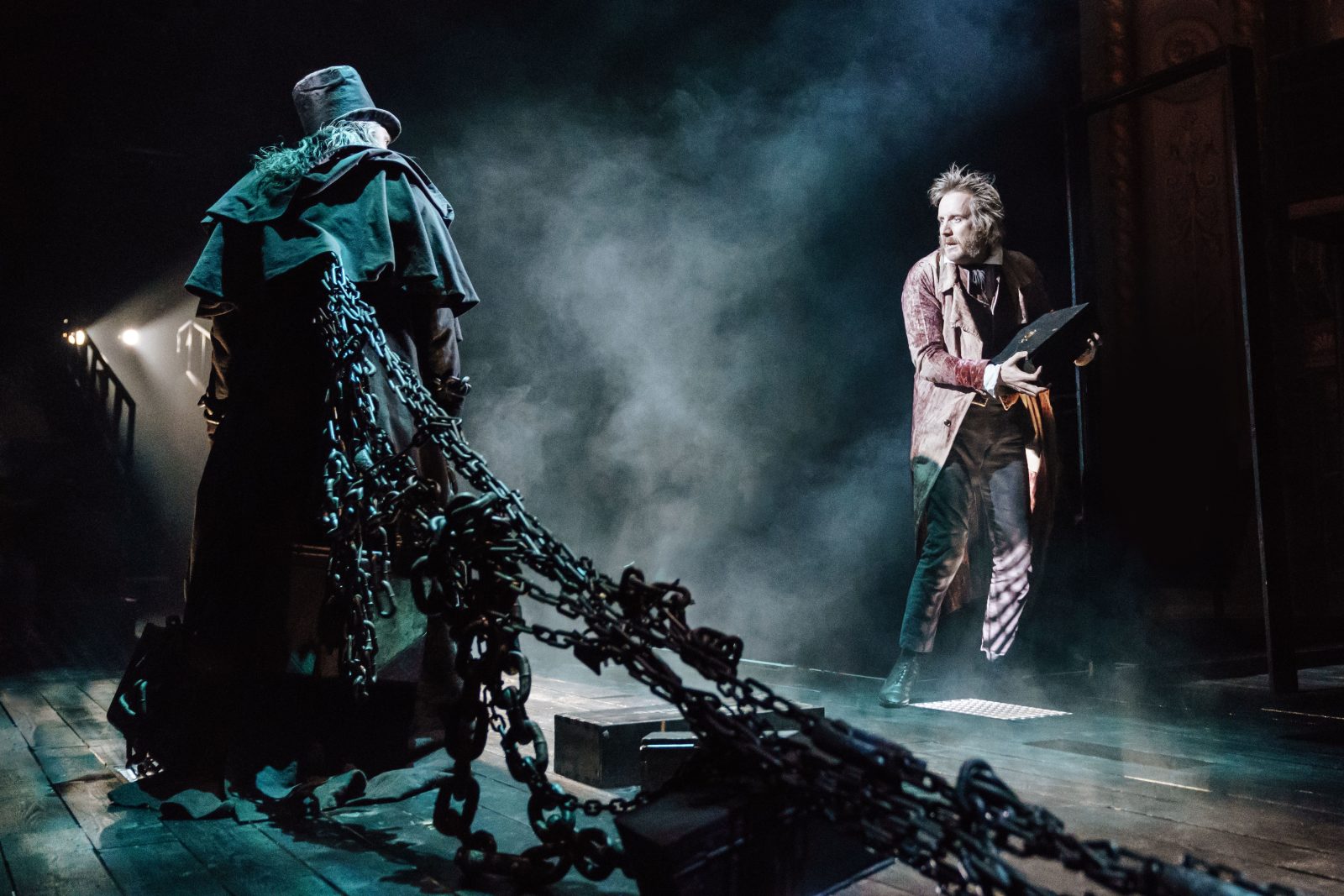
Written by Jack Thorne, the Old Vic’s A Christmas Carol is a brand-new adaptation of Charles Dickens’ timeless classic. It tells the iconic story of miserly Ebenezer Scrooge who is visited by four ghosts on Christmas Eve. Over the night, Scrooge is forced to confront his past and is given a final chance to see the error of his ways. The show opened last night to rave reviews and White Light provided the lighting equipment.
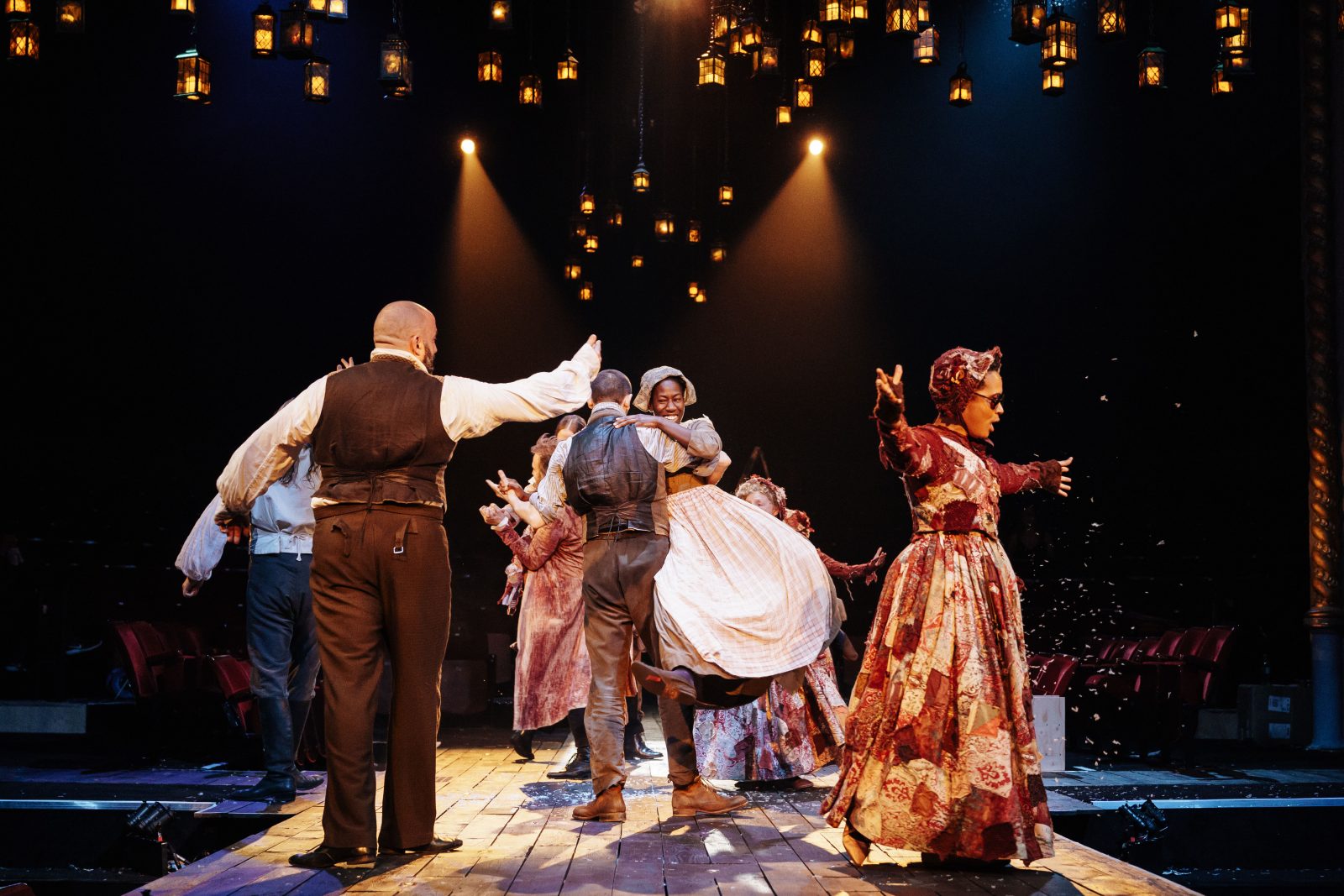
A Christmas Carol stars Rhys Ifans and features a lighting design by Hugh Vanstone. Hugh comments: “This is a thoughtful and innovative take on the Dickens classic rather than an expensive, flashy stage production. This is reflected in the staging, which places the action in a specially installed-environment rather than a conventional proscenium production. A giant planked walkway stretches from the back of the stalls all the way into the scene dock. Additionally, between the theatre’s traditional boxes, there is another intersecting walkway. These are used by the characters as they journey through scenes”.
In preparation for the show, Hugh met with director Matthew Warchus and designer Rob Howell to discuss the aesthetics of the production and how they would work together to create the space. Hugh explains: “There is virtually no scenery used in the show. There are four doorways which appear to define Scrooge’s office and bedroom but that’s more or less it”.
Despite the uncluttered stage, there was one element of the installation that would have a considerable influence on Hugh’s design. He comments: “Hovering about 3m above the walkway are 200 hanging lanterns. These give off a Dickensian feel and each contains a flickering candle. There is also an in-the round speaker system. Therefore the angles and positions I could utilise for lighting were extremely limited due to heavy air traffic!”.
Hugh approached WL to provide the equipment necessary to achieve his design. He comments: “I created a basic moving light rig to allow for isolation of areas and the odd special. The vast majority of the play takes place at night, or within Ghostly visions of Scrooge’s life; with only the final scene taking place in the daytime on Christmas morning. This led me toward reliable and silent arc sources for the night blues and crisp whites”.
To achieve this, Hugh drew on 12 x Philips VL1000 arcs. He continues: “I added a single MAC Viper Performance as I needed one bright, versatile light with animation effects capability in the middle of the acting area. Finally a basic cover of 12 x ETC Source Four Lustr 2s completed the hire package. These are used heavily throughout the show for cross-light and colourwashes”.
The show has now opened and will run until 20th January.
Hugh adds: “It’s been challenging exercise creating this fresh and entertaining take on a very well-known story. I hope my lighting goes some way toward creating an atmospheric environment which not many audience members will have experienced before”.
Comments Off on White Light Supplies Venus in Fur in West End
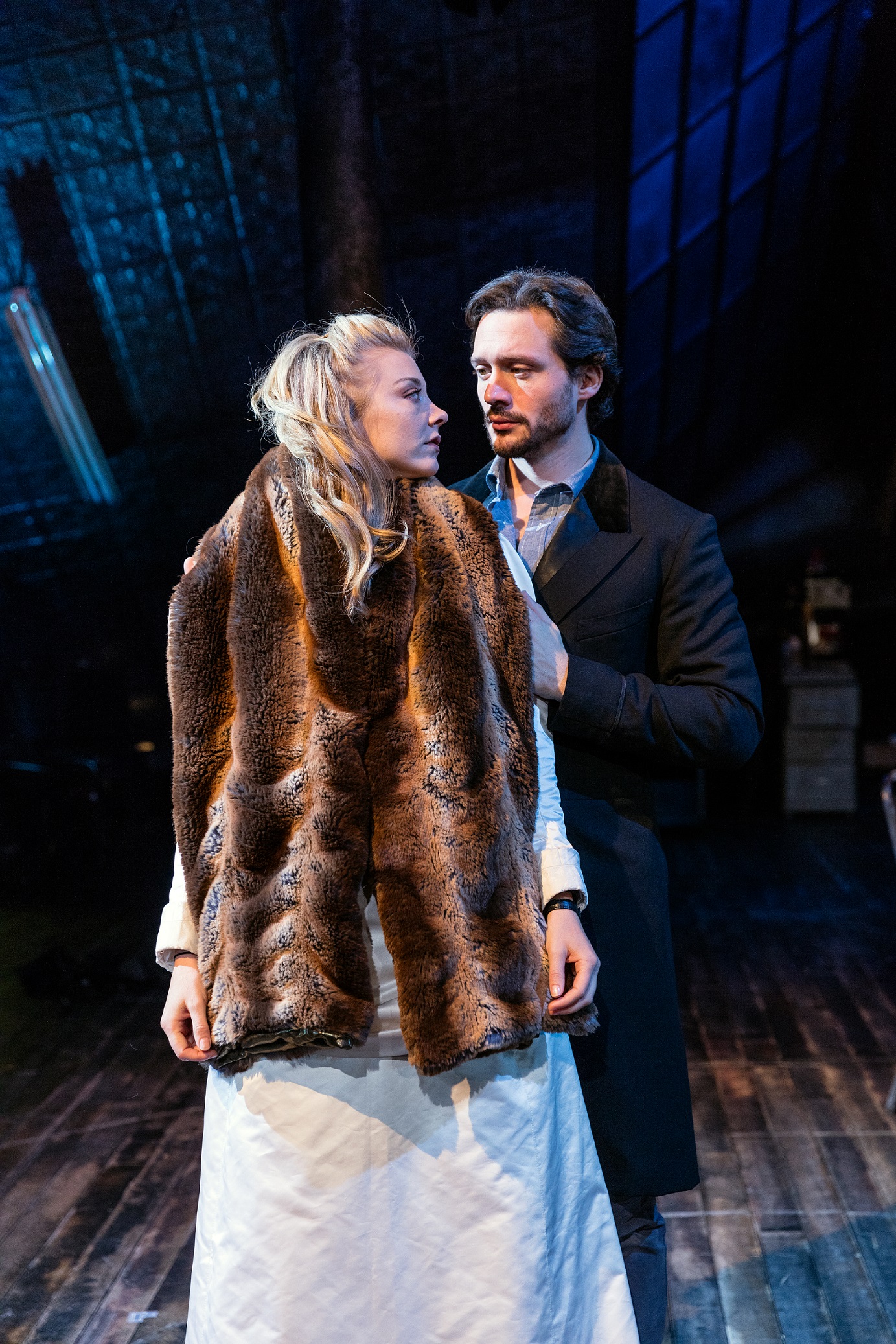
Following a Tony Award-winning run on Broadway, Venus in Fur has now made its London debut, opening at the Theatre Royal Haymarket. Starring Natalie Dormer and David Oakes, the critically-acclaimed two -hander follows a meeting between enigmatic actress Vanda Jordan and director Thomas Novachek, with Vanda determined to land the leading role in Thomas’ latest production. As a leading supplier to West End theatre, White Light was called upon to provide the lighting equipment.
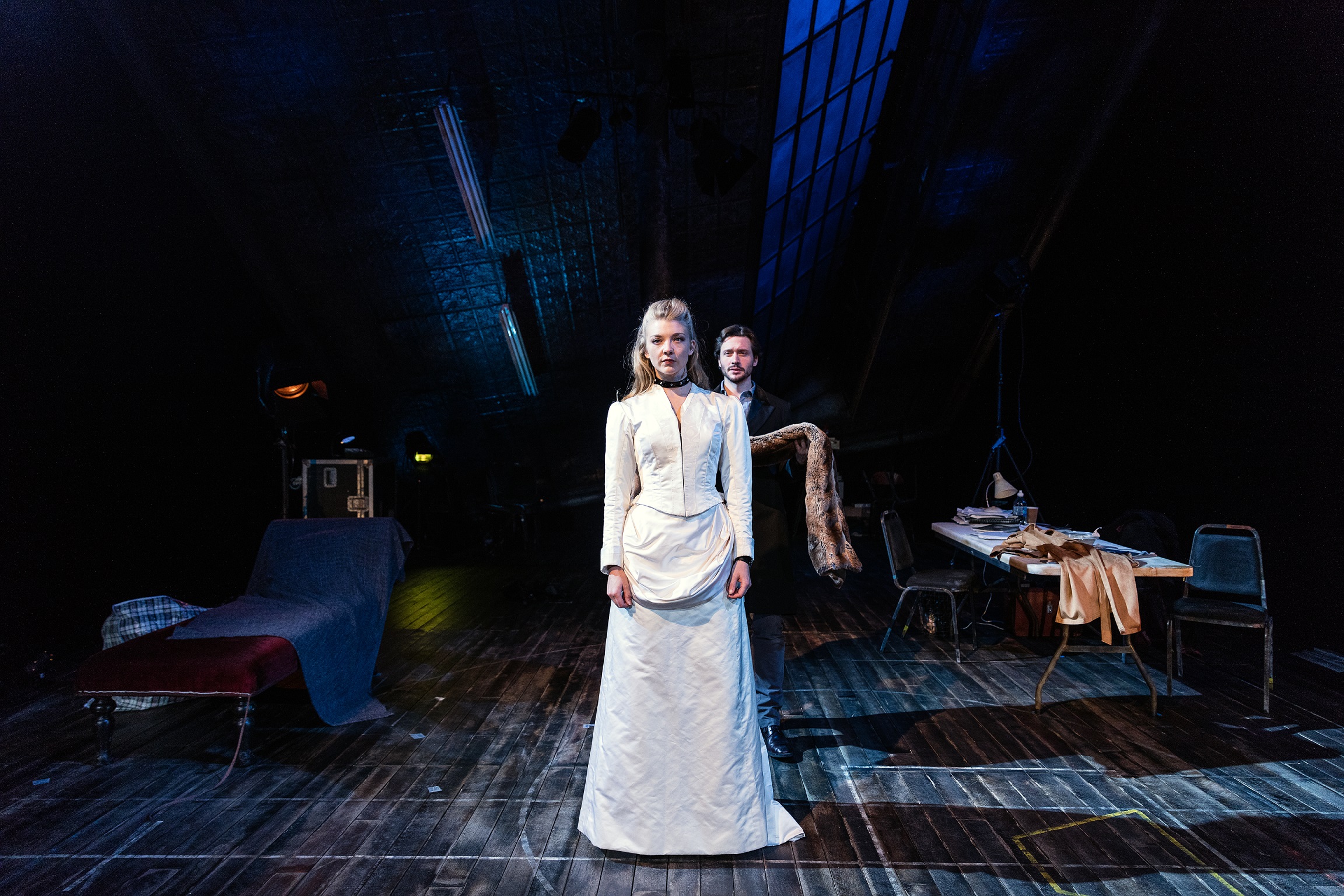
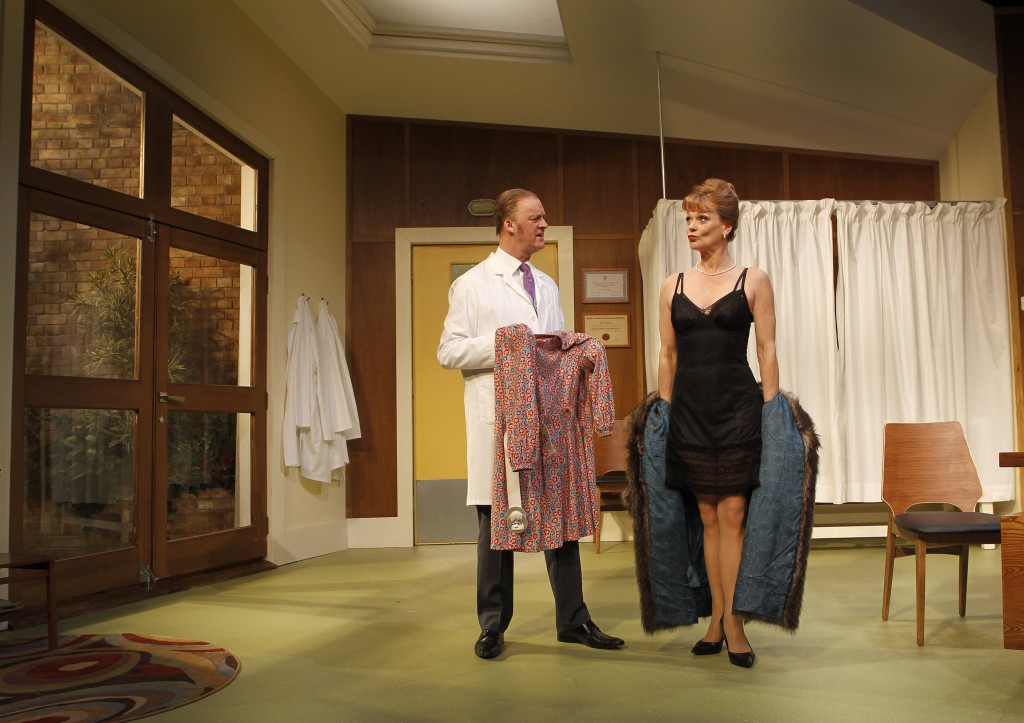
The lighting designer for the show is Hugh Vanstone, who comments: “The play itself dictates a lot about the setting and lighting as the action takes place in a New York rehearsal room whilst a thunderstorm rages outside. The room is initially lit with fluorescent strip lights but also has a small improvised lighting rig which the mysterious Vanda commandeers to soften the mood in her attempts to win over Thomas”.
This meant that Hugh had to implement two clear distinctions with his design: “The way I approached this play was to ensure there was a marked contrast between the blandly lit fluorescent room and the more atmospheric theatrical lighting. The first thing I did was install a version of the ‘rehearsal lighting rig’ in the actual rehearsal room which Natalie could use to set the mood”.
Hugh also worked alongside set and costume designer Rob Howell. He states: “It’s quite a striking set design featuring a raked floor pushing through the proscenium into the house with a steeply-angled ceiling overhead. As a result, there was no opportunity for overhead lighting; something I had to work around”.
Hugh drew on the Martin MAC Viper Washes to provide bright lightning effects along with a range of ETC Source 4 Lustr 2s, conventional Source 4s, fresnels and birdies. Perhaps most significantly, the rig also contained the recently launched Philips VL1100 LED; making Venus in Fur the first West End production to utilise this highly-anticipated product.
Hugh explains: “When I was designing the rig, I spoke to WL’s Technical Director Dave Isherwood who informed me that WL had become one of the first companies to invest in the VL1100s. I asked if I could try them for this show and he said yes. I used these fixtures to provide the tightly focused highlights for the actors during key moments – something they delivered with superb precision.
He adds: “Overall, I was really impressed with the VL1100s. It’s a great improvement on the conventional tungsten version as it’s brighter and the colour mixing and frost function are both improved. Because of the LED engine the beam intensity and consistency is much better. They are also virtually silent, making them perfect for a play like this, and I can see them becoming a very popular fixture for many lighting designers”.
Directed by Patrick Marber, Venus in Fur has now opened and will run until 9th December.
Hugh concludes: “I had a great experience working on Venus in Fur. The play gives the lighting designer carte blanche to really show off and WL once again proved to be the perfect choice to allow my design to shine”.
Photos courtesy of Darren Bell and Tristram Kenton.
Comments Off on Leading Light with…David Howe – Part Two
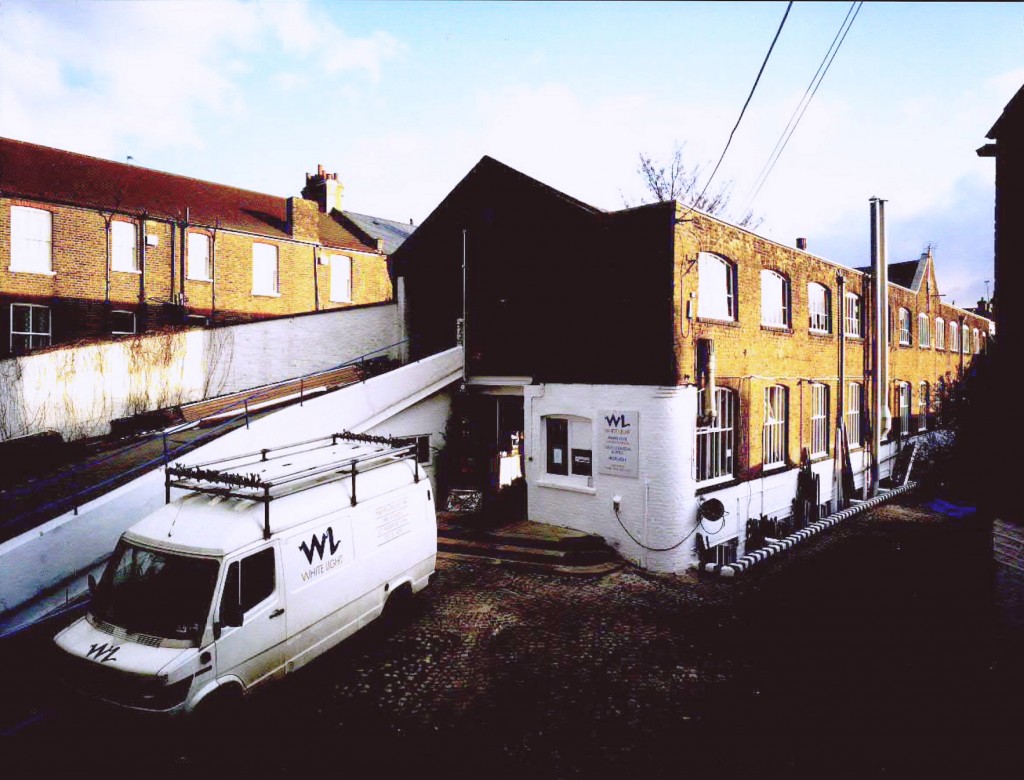
WL at Filmer Road in Fulham when David first joined.
Carousel was a special production in many ways, as at the end of its National run, Cameron Macintosh transferred the production into the West End and David was asked to join the paid creative team as Assistant Lighting Designer. However, once he had finished his work on the production, he had to move on and face: “the scary real world which was out there waiting for me”. Step forward WL, in the shape of Bryan Raven who supplied the show and liaised with David in the preparation of the rig, who made contact and asked David if he’d like to join their team. He recalls: “What could be better than working for a company who supplied equipment to shows. I initially worked in the Sales team, prepping colour-calls. As the company evolved, I was able to work more and more with designers and chief electricians of venues all over as the National Lottery funding started to roll out to new theatre development. WL was often called-upon to be involved with those capital projects where new technology was being ordered and tested. It was an amazing time to meet, not only the users of the equipment, but also the manufacturers. It was such a huge advantage to not only know about the equipment being used in the industry but how the hire and sales business works”.
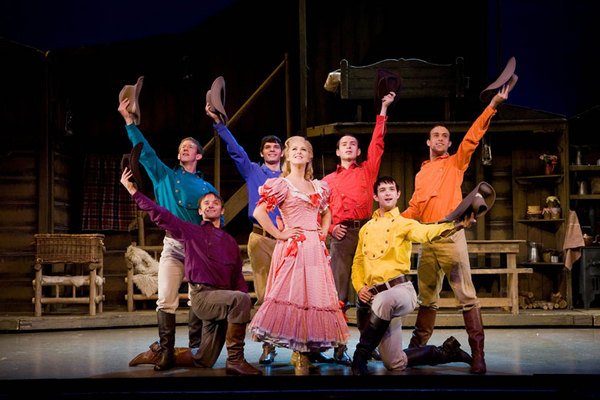
The UK tour of Seven Brides for Seven Brothers
He adds: “WL were incredibly supportive of my lighting career and allowed me leave to develop my design work when I could – working in many fringe and Off-West End venues and productions where the challenge is to make the show you want within incredibly tight time-scales and small budgets. I was also continuing to assist other designers such as Paul Pyant, Howard Harrison and Hugh Vanstone”.
After a while the lighting design work began to increase, and David worked on UK tours of Fiddler on the Roof, Oklahoma, Singing in the Rain, South Pacific, Beauty and the Beast, 42nd Street, Seven Brides for Seven Brothers, to name but a few. He comments: “I was so lucky to work with amazing creatives, electricians and touring production staff during this period which really opened my eyes to the industry and the processes we need to think about to make any show happen, effectively and within budget”.
The more David worked, the more his reputation grew, resulting in him being in high demand. So much so that he reached the point where he had to make a decision: continue at WL or take the plunge and become a full time LD. It was a decision he didn’t take lightly: “I had worked at White Light for ten years (1993-2003) and really felt part of the family there. However, I thought to myself that if I don’t become a freelance lighting designer now then I never will”. David was now out in the big wide world of freelancing; something he describes as “unbelievably scary”. He recalls: “The thing about being freelance is that you’re on your own. If a show gets cancelled then you need to find another way of paying that month’s rent. That’s why you need to work really hard to keep in touch with people and build on relationships as you are only as good as your last job”.
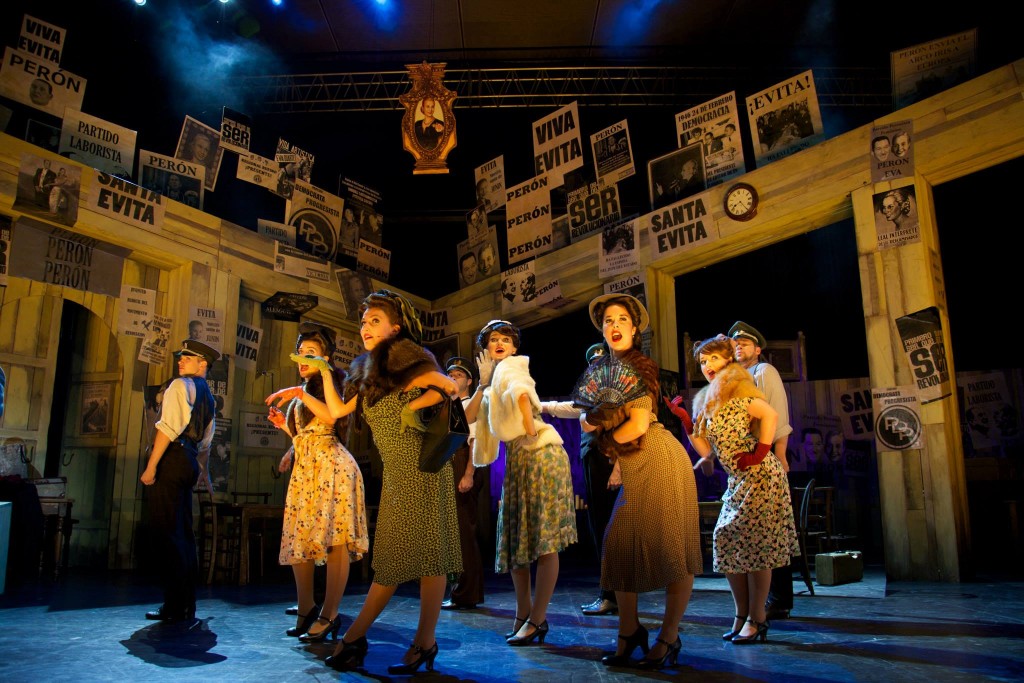
Evita at the Ljubljana Festival in Slovenia.
Having turned freelance, David has since found himself working on some of the most exciting theatre productions both in the UK and across the globe. In the West End, he has lit, amongst others; A Comedy about A Bank Robbery, McQueen, Sweet Charity, The Last Five Years, Rent, A Christmas Carol, Bette & Joan, Birdsong and Seven Bridges for Seven Brothers. Most recently, he has lit the UK tour of Million Dollar Quartet (supplied by WL and out till June 2017). On Broadway, he has lit Private Lives, The Norman Conquests and recreated Primo and designed Opera in UK, Europe, USA and Asia. At Off West End venues his notable credits include Dead Sheep, An Audience with Jimmy Savile and The Curing Room. Judging from these alone, it’s safe to say that he has certainly been an extremely busy man! He comments: “What I really love about my role is the variety of projects I work on and the opportunities of working with many different collaborators. I believe theatre offers you the opportunity to do this more than any other profession”.
So out of everything he’s worked on (and it really is an extensive list) which project is David the most proud of? Like virtually all of the LDs I’ve proposed this question to, he doesn’t offer one answer (“I can’t”). However, there are a couple of highlights that still make his face ignite. He recalls: “The Rocky Horror Show (European Tour) was quite special. Rather than your traditional theatres, we played predominately in stadiums. I remember one night just being stood at a console surrounded by 10,000 people. It was just a surreal moment”. Equally surreal for David was when he lit the Il Barbiere di Siviglia opera at the National Centre for Performing Arts in Beijing. He states: “I was just stood on stage and I remember looking around thinking: I’m lighting an opera in Beijing!”. Another highlight was his West End debut when he lit Forbidden Broadway at the Albery Theatre (Noel Coward) in 1999.
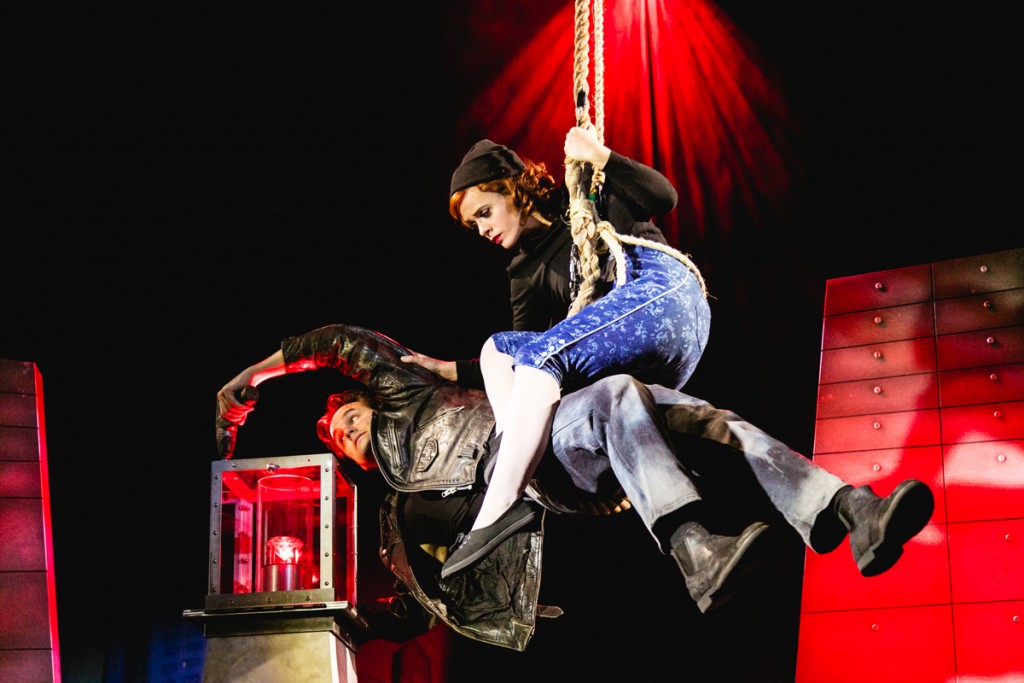
A Comedy About a Bank Robbery which is currently running at the Criterion Theatre in London’s West End.
True to the last few years, it seems that 2017 is going to be equally as busy for David, with shows opening at the Arcola, two at the Southwark Playhouse, a play in New York and even a Hong Kong Festival production of All My Sons. Before we say our goodbyes, I ask him what I ask everyone who’s been a part of Leading Light: what advice does he have for the future generations? He draws back on his experience with Paul Pyant: “Try to keep in contact with people you meet in the industry. This industry is all about connections and there is such competition that you need to ensure you remain relevant and noticed. Even if it’s just the occasional hello or a brief email, communication is key. No matter what our pathways were to where we are now in our careers, we want to be supportive of the next wave of creatives. It’s a tough world to get those first jobs. The fringe and smaller theatres are a great way of starting as you rig,focus and plot your own show allowing you to really experiment. You can try things and, dare I say, get them wrong! It’s more than ok to make mistakes and sometimes, when you do make one, this leads to discovering something you never would have found. Be confident with your work but respect and appreciate the input of others you are working with. You need that freedom at the start of your career as you progress into becoming a professional LD. This really is a profession where you learn on the job and there is no better place”.
Our time has come to an end and David has to head over to the Arcola for a production meeting. It’s regarding The Cherry Orchard that he is lighting. I say how this is a world away from the last show of his I saw: Dick Whittington at the New Wimbledon Theatre. Yet it once again highlights the variety of work that David embraces: “Whatever the production, I always have the same goal: to create a lighting design to accentuate the piece and make sure it achieves its potential.” And as I’ve learnt this afternoon, it’s an approach that’s served him extremely well…
Photos courtesy of Chris Davis, Darren Bell, monkswellmanor, Oli Sones, Paul Pyant and Robert Workman.
Comments Off on Leading Light with…Johanna Town – Part Two
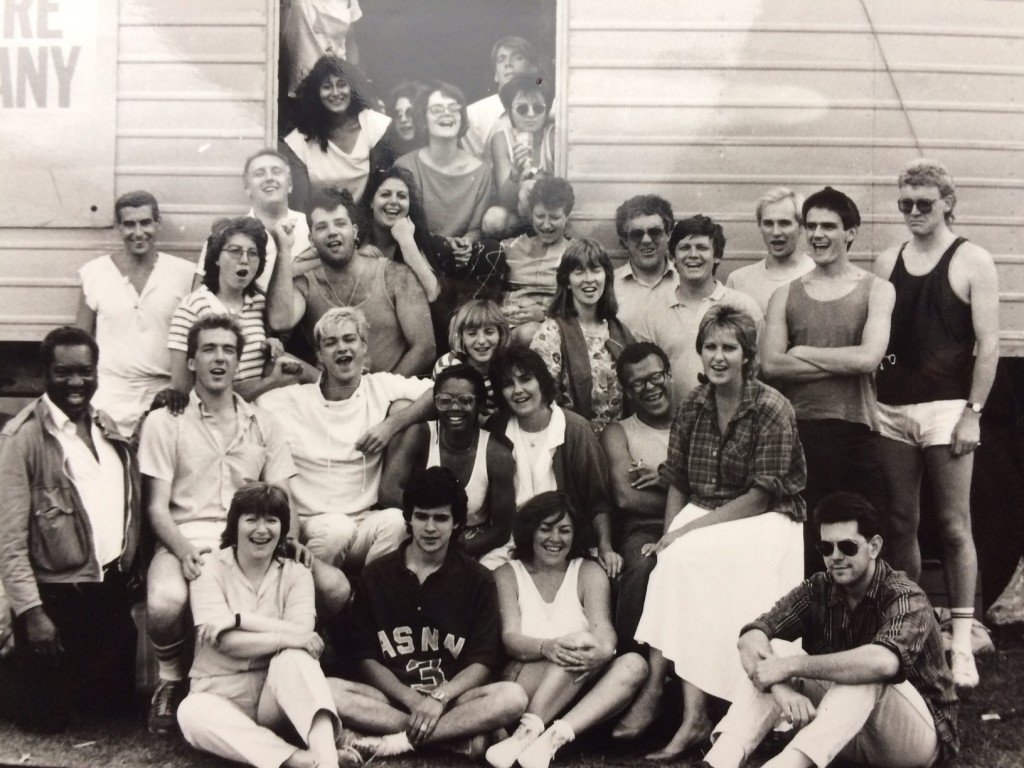
Johanna (third row, second from left) with London Bubble.
With Joe’s advice ringing in her ears, Johanna decided to look for a new job where she could make theatre again and immediately found one at the London Bubble where, aged 21, she began work as their Chief Electrician. She recalls: “London Bubble was a great experience for me. It essentially consisted of two tents – one was a bar and the other was a 100 seat performance space. We would visit parks across London and, in rep, perform four different shows over a week before taking it all down and moving on. There was a great camaraderie and it was a time when I’d make friends who I would know for the rest of my life”. It was also during her time with London Bubble that Johanna experienced what she calls “the true potential of theatre”. She comments: “By touring productions all across the capital, I saw how theatre could be about community and people. It made me an avid believer that theatre should be seen and enjoyed by as many as possible”.
This was only a summer job for Johanna though and the bubble soon burst (excuse the pun). She quickly moved onto her next endeavour – working for Opera 80 (now the English Touring Opera). Her Chief for the first year was a certain Hugh Vanstone (who’s Leading Light article can be read here). Johanna states: “Working with Hugh was great as he genuinely taught me a great deal. He was extremely ordered and showed me how to relight a show and what that entailed. It felt like I was moving on from simply playing with lights to genuinely analysing a designer’s work”.
Opera 80 toured all across the country and played everywhere from Sadler’s Wells to Carlisle Sports Centre. It would prove to be yet another learning curve for Johanna: “Wherever we visited, we had to use in-house kit. What this meant was I had to redesign the shows every single week to suit the particular venues. I had to think on my feet and really work within the limitations in front of me. In a way, it was better than a formal education as it was practical experience. That’s what I personally believe drama schools need more of. Theatre, especially lighting design, is a profession that you learn through practice as opposed to reading books. Also, by working, you get to meet some amazing professionals and make really useful contacts which stand you in great stead for the future”.
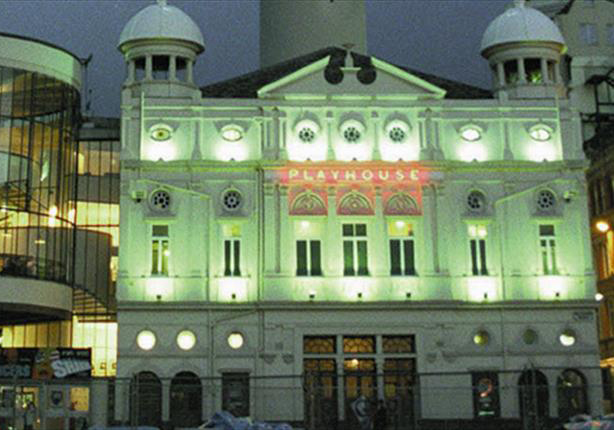
The Liverpool Playhouse where Johanna was Head of Lighting
After two seasons with Opera 80 in the winter and the London Bubble during the summer, Johanna was returning back to her North West roots as she accepted the role as Head of Lighting at the Liverpool Playhouse. This meant she would be lighting every show at the venue apart from the Christmas production and it’s a period which Johanna looks back on with fond admiration. She comments: “This was probably my favourite time during my entire career. I was literally able to experiment every month and try out ideas – from a new mad mix of colours – one of which is now used as an actual gel! – to experimenting with unusual light sources. I literally ‘had the keys’ to the building and could do whatever I wanted when I wanted”. This would often lead to Johanna becoming lost in her own world, experimenting into the night to the point where she would have to lock up by herself (she still firmly believes that the Playhouse is haunted). This period in Liverpool also allowed Johanna to grow as an artist, as she was able to test herself and push boundaries; including lighting a show in the theatre’s studio with just two lights! Johanna states: “Similar to the Royal Exchange, there was a real family feel to the Playhouse. Everyone knew one another and lived locally. We worked hard but played harder. It was also the first theatre where I had genuine support and a strong team of staff. Together we could really work to create something special”.
Johanna and co during her Royal Court days.
During her time at the Liverpool Playhouse, Johanna developed a reputation for being able to manage a technical team while simultaneously creating provocative, innovative work. So much so that when the position for Head of Lighting came up at the Royal Court Theatre in London, she was asked to apply for it. She recalls: “I actually missed the application deadline but I got a phone call to ask me to consider applying still. I did and for my interview, I had collated a full portfolio of design work. That said, they specifically told me that they weren’t looking for a lighting designer. So when I was offered the job, I initially turned it down as I very much wanted to focus on designing shows! Yet after several long conversations with the then Production Manager Bo Barton, I was persuaded to accept the position. Thanks to Bo’s insistence, I actually made the best move of my career. Initially I saw it as a short term move as the long-term goal was still to be a full-time lighting designer. 17 years later…”.
Johanna’s main role initially at the Court was to help maintain the building. In her spare time, she began to freelance on London’s fringe scene. In 1992, she worked on The Crackwalker by Judith Thompson at London’s Gate Theatre which starred Kathy Burke. It was a show that was to lead to Johanna’s big break. She recalls: “I was really happy with how the show went and it had received great reviews. Then one day Richard Wilson (best known for playing Victor Meldrew in One Foot in the Grave) walked into the Royal Court office saying he needed a lighting designer for a production called Women Laughing by Michael Wall that he was directing at the Royal Court Upstairs. He said he’d seen a show at the Gate where he thought the lighting design was very impressive yet he couldn’t remember the name of the play. When he started to describe it, I realised he was talking about The Crackwalker! At first I wasn’t sure if I should say anything. I then finally plucked up the courage to raise my hand and tell him it was my design! As soon as he heard that, he immediately offered me the role”. This was the start of a long collaboration with Richard, who called upon Johanna’s services for numerous shows, including seven more at the Royal Court and most recently Fracked! at Chichester Festival Theatre (which is about to tour the UK).
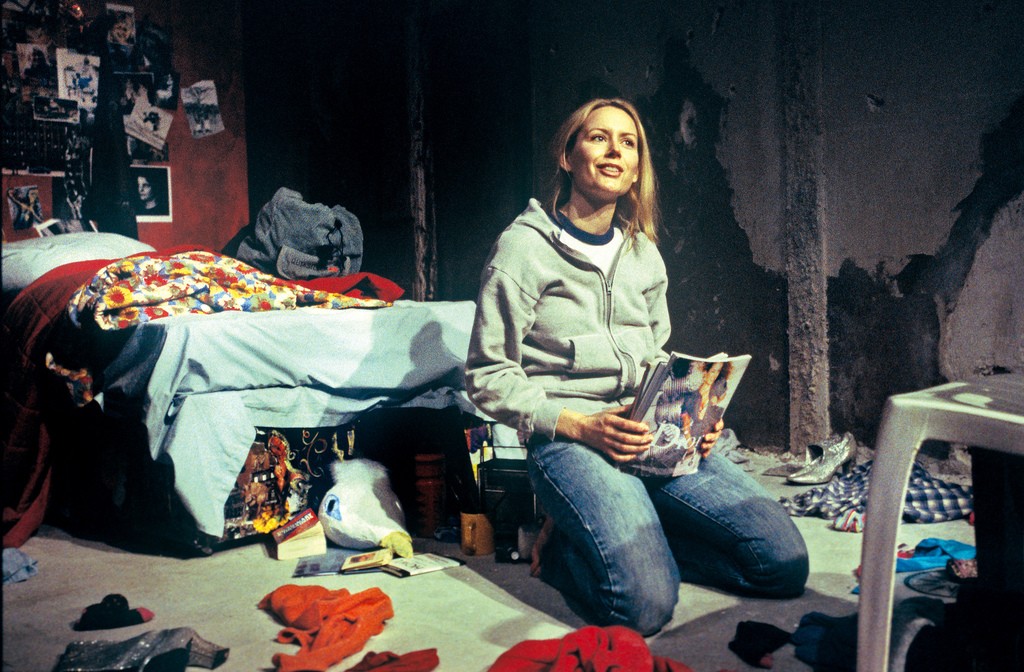
My Name is Rachel Corrie at the Royal Court Theatre, which transferred to the Playhouse Theatre in the West End.
Following her work on Women Laughing, Johanna began to light shows at the Court and during her time there would design more than 50 productions. During her tenure, she worked with four of the theatre’s most influential artistic directors: Max Stafford-Clark, Stephen Daldry, Ian Rickson, and Dominic Cooke. Of the various productions she worked on, she marks The Kitchen (directed by Daldry), Pale Horse (directed by Ian Rickson), The Steward of Christendom (directed by Stafford-Clark) and My Name is Rachel Corrie (directed by Alan Rickman) as her personal highlights. She comments: “Seeing how all of these directors worked was obviously a privilege as they create such provocative and memorable theatre. However what I really enjoyed was being part of the rehearsal process and watching how they all worked with actors differently and creatively”. Johanna was also at the Court during the late 90s when the venue was being refurbished and temporarily moved into two West End venues. Johanna states: “I was barely thirty and I was running two West End buildings split into three different venues as well as making a significant contribution to the design of both the main house and studio spaces at the new Royal Court. It was a great feeling to manage the lighting staff for three venues and oversea so many productions alongside designing a new building; especially at a time when theatre lighting technology was becoming so exciting. It was certainly a slightly surreal time in my career!”.
King Lear at the Royal Exchange which was broadcast on BBC Four
Similar to her predicament at the Liverpool Playhouse, Johanna eventually decided that she needed a new challenge and left the Royal Court in 2008. She comments: “It was definitely time to move on to pastures new. I’d had a brilliant time at the Court but I had only expected to be there for a couple of years. I wanted to move back into being freelance and to work on lighting a wider variety of shows, not just within one space. I told myself if I don’t do it now then I never will”. Johanna then went straight into lighting shows with directors she’d previously worked with. However, she was also very keen to work with up and coming new talent. She comments: “I told my agent that whilst I can work on bigger productions, it was important to me that I worked with younger directors who were just starting out in theatre. I’ve always found this inspiring; new younger directors and designers push you harder and make you look at theatre differently. It’s also important to remember that many of these people are the future of our industry”.
Over the next few years, Johanna found herself working on a whole host of shows. In the West End, she lit Dear Lupin, What the Butler Saw, Some Like it Hip Hop and Betrayal. She’s also ventured stateside to New York where she has lit productions of Haunted, My Name is Rachel Corrie and Guantanamo. She has worked extensively with Out of Joint theatre company and still works regularly with the Royal Exchange; her most recent credit there being King Lear, which was screened on BBC Four over the festive period. She comments: “Since leaving the Court, I’ve worked in some of the West End’s largest venues yet I have also lit shows for companies such as Pentabus who tour new writing in extremely rural areas that don’t normally receive theatre. I love the variety of productions I get to work on and the range of artists I get to collaborate with”.
Samantha Bond and Tim McInnerny in ‘What the Butler Saw’ at the Vaudeville Theatre.
As one of the leading lighting designers with an extraordinary wealth of experience, it only makes sense for me to ask Johanna what advice she has for all the budding lighting designers out there. It’s almost as if she has her answer prepared: “Get out there and get involved. Work for people under any circumstance and ensure you’re gaining experience all the time. Similarly, see as much theatre as you can. I still think back to shows I saw at the Royal Exchange when I was a teenager so you should never underestimate the influence a show can have on you. It’s also very important to remember that this is an industry you need to be passionate about. If you’re not passionate about theatre then you won’t last five minutes”.
Our meeting is now drawing to a close and Johanna has to go prepare her next show The Star which she’s working on at the Liverpool Playhouse of all places. As we depart, I cheekily ask at what age she thinks she’ll eventually stop focusing lights and start putting up her feet/hitting the fairways; especially considering the fact that she’s achieved positions and accolades that most budding LDs could only aspire towards. She comments: “I can’t imagine myself ever retiring. I know non theatre friends who are literally counting down the clock, waiting to retire. That’s not me. I want to work forever and keep pushing myself and creating original designs until I can’t anymore”. And from what I’ve gathered in my two hours with Johanna, that certainly won’t be any time soon….
Photos courtesy of Joel Ryan, Johanna Town, John Burke, Jonathan Keenan, Stephen Cummiskey, Visit Liverpool and Yvonne Arnaud.
We use cookies on our website to give you the most relevant experience by remembering your preferences and repeat visits. By clicking “Accept All”, you consent to the use of ALL the cookies. However, you may visit "Cookie Settings" to provide a controlled consent. View our View our Privacy Policy
This website uses cookies to improve your experience while you navigate through the website. Out of these, the cookies that are categorized as necessary are stored on your browser as they are essential for the working of basic functionalities of the website. We also use third-party cookies that help us analyze and understand how you use this website. These cookies will be stored in your browser only with your consent. You also have the option to opt-out of these cookies. But opting out of some of these cookies may affect your browsing experience.
Necessary cookies are absolutely essential for the website to function properly. These cookies ensure basic functionalities and security features of the website, anonymously.
Cookie
Duration
Description
cookielawinfo-checkbox-analytics
11 months
This cookie is set by GDPR Cookie Consent plugin. The cookie is used to store the user consent for the cookies in the category "Analytics".
cookielawinfo-checkbox-functional
11 months
The cookie is set by GDPR cookie consent to record the user consent for the cookies in the category "Functional".
cookielawinfo-checkbox-necessary
11 months
This cookie is set by GDPR Cookie Consent plugin. The cookies is used to store the user consent for the cookies in the category "Necessary".
cookielawinfo-checkbox-others
11 months
This cookie is set by GDPR Cookie Consent plugin. The cookie is used to store the user consent for the cookies in the category "Other.
cookielawinfo-checkbox-performance
11 months
This cookie is set by GDPR Cookie Consent plugin. The cookie is used to store the user consent for the cookies in the category "Performance".
viewed_cookie_policy
11 months
The cookie is set by the GDPR Cookie Consent plugin and is used to store whether or not user has consented to the use of cookies. It does not store any personal data.
Functional cookies help to perform certain functionalities like sharing the content of the website on social media platforms, collect feedbacks, and other third-party features.
Performance cookies are used to understand and analyze the key performance indexes of the website which helps in delivering a better user experience for the visitors.
Analytical cookies are used to understand how visitors interact with the website. These cookies help provide information on metrics the number of visitors, bounce rate, traffic source, etc.
Advertisement cookies are used to provide visitors with relevant ads and marketing campaigns. These cookies track visitors across websites and collect information to provide customized ads.