White
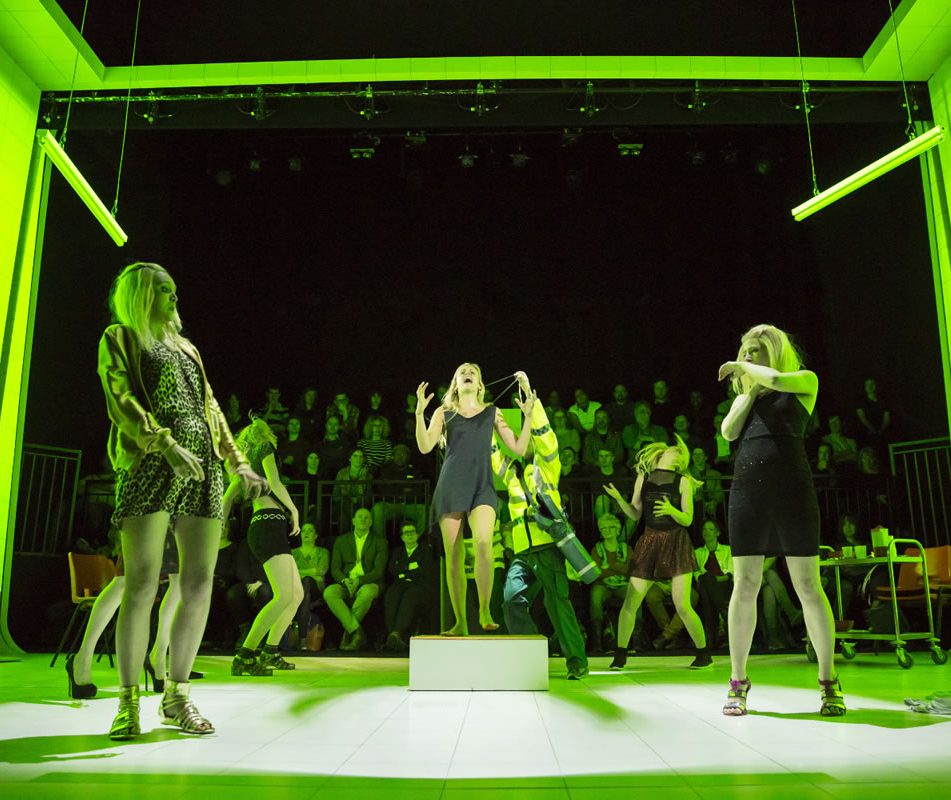
Light has provided the lighting equipment for the UK tour of Ghost Stories, having
also supplied its recent West End run at the Ambassadors Theatre.
Written
by Jeremy Dyson and Andy Nyman, Ghost Stories has been terrifying
theatregoers for over a decade. The show invites audience members to enter a
nightmarish world, full of thrilling twists and turns, where their deepest
fears and most disturbing thoughts are imagined live on stage; offering a
theatrical experience like no other. The lighting designer for the show is James
Farncombe, who comments: “What was clear from the outset was that the design
needed to be as much about the absence of light as much as anything else. I
really like this idea that it’s more of a darkness design and that, due to the
nature of the staging and the various tricks therein, I had to hide as much as
I revealed. Ultimately it’s all about creating that atmosphere for an
audience”.
It was this
atmosphere that plays such an intrinsic role in what has given Ghost Stories
its worldwide reputation of terrifying audiences. So how do you make lighting
‘scary’? James explains: “It’s a combination of things. The lighting works
in tandem with Nick Manning’s extraordinary sound design. There is a
slow, shadowy build-up of tension. then each jump moment is part release,
part punchline, and all very much in the spirit of a B movie. To a large
extent, Ghost Stories is about the anticipation of
what might happen next, what might be lurking in the
shadows. When the show is firing on all cylinders, it really creeps up on the
audience. You could draw a parallel with Hitchcock’s idea that the
suggestion of things left unseen is far more potent than anything we can reveal
on stage or screen. The scariest possible thing is always very particular
to an individual so, to a large extent, we expect the audience to populate
the shadows with their own fears”.
James
has worked on the show since it first started life at the Liverpool Playhouse
in 2010. And whilst there have been significant advances in lighting since
them, James has found himself drawing on more conventional fixtures ever since
that initial run. He comments: “As the show is now a decade old, it actually
predates my first encounter with LED fixtures such as Lustrs etc. Instead, the
rig is actually made up on conventional units with no scrollers and no moving
heads yet this is something that works to great effect. We spent a lot of time
managing spill and flare, so Source Fours became essential for precise
focussing, and they make up the bulk of the rig. In terms of other fixtures,
there are a number of birdies hidden in the set, a series of little LED strips,
a few practical lamps and three pinspots. Everything needed to be small as
there is very little room in the fly plot, or in the nooks and
crannies of the set pieces, so size was a big consideration”.
This marks
the first time that Ghost Stories has embarked on a UK Tour. As such,
James had to ensure his rig was completely tourable. He comments: “With the
show going up in two days in most venues, we have made a few nips and tucks
here and there. That said, it’s still more or less the same lighting rig as was
featured in last year’s Ambassadors run; largely thanks to Andy Taylor doing an
amazing job of making the impossible possible. That said, the show has gone
through almost ten years of slight development and distillation and we are now
at a point where we know the most effective set-up in which to scare our audience
members night after night…”.
Ghost Stories began its tour at the Alexandra Theatre, Birmingham and is currently playing at the Grand Opera House, York. It will continue to tour across the UK before concluding at the Nuffield Theatre, Southampton in May 2020.
Comments Off on Leading Light with…James Farncombe – Part One
James Farncombe
Our Copywriter Adam went to meet James Farncombe…
It’s a blustery Monday morning as I exit the tube at Leicester Square. As I walk up the stairs, I find myself surrounded by posters for Yerma – the Olivier Award-winning play that ran at the Young Vic last year. It’s returning this summer and tickets sold out in a matter of hours. It strikes, as I emerge into daylight, that the lighting designer for the show is a certain James Farncombe – and that’s who I’m meeting for this month’s Leading Light.
As always with Leading Light, we start at the beginning. For James, this is in North Shropshire. James states: “I was born in Shropshire and lived there until I was around nine years old. Then my Dad changed jobs and we moved down to Reigate in Surrey”.
So how theatrical was James’ childhood? He explains: “Mum and dad were keen members of the Guildbury Players Amateur Dramatics Society. However, they had moved to the Midlands and mainly knocked all that on the head by the time I was born. That said, I have an early memory of seeing my dad in an am dram in my school hall. He was the villain and got shot in the final scene. He had a little red felt patch in his shirt pocket that he had to whip out to represent the bullet hole. I think he dropped it and I remember being in stitches. They also took me to see a fair few professional shows, so I was very much aware of the theatre as a child”.
A younger James prior to his lighting days…
There were some other early clues about James’s eventual vocation: “As a very small lad, I was obsessed with candles. I made endless, elaborate drawings of them and insisted that the family ate dinner by candlelight for as long as they could bear. When I couldn’t have real candles, I’d make my own out of toilet roll tubes with a bit of cotton wool stuffed in the top and position them in dark corners. I also remember having a little set of Lego bricks with lights in, powered by a little battery pack. You could build them into your own Lego house or spaceship or what-have-you. I loved the little shadowy worlds you could create”.
After three years in Surrey, there followed another significant alteration in James’ life: “We moved onto a narrow boat when I was 13 and lived aboard for two years, travelling the waterways of the UK. For me and my two younger brothers, it was quite an adventure. We were all home schooled. My folks used to say ‘if the weather’s bad, we’ll conjugate our verbs. If it’s sunny, we’ll go canoeing’. The second summer afloat was the hottest summer on record for 75 years – very few verbs were conjugated. It was quite something to see so much of the British Isles and, at a young age, I became accustomed to the idea of moving around and having this transient lifestyle”.
James’ uncle was a certain Paul Pyant
The narrowboat life wasn’t to last forever and James found himself back in North Shropshire by the time he was 15. This also meant a return to school; something which James embraced. He recalls: “I was ready to go back to school – I’d discovered girls and team sports”. It was also at school where James started to get involved with the school drama group. And similar to a lot of the other lighting designers I’ve interviewed, James started life on stage as opposed to behind it. He recalls: “I was a policeman in the school panto. I upstaged everyone by mugging dreadfully. Around this time I also started playing and singing in bands, so I must have had intentions of being onstage in some way. However, the following year, I found myself operating the lighting for the school production, using a little two preset desk, positioned on the fly floor. Our drama teacher, Mrs Hughes, sat in the hall and called out the channels. There was a handful of Patt 23s front of house and some coloured battens overhead. I have no idea what it looked like. But I remember the smell of hot gel and burning dust rising off the lights and the excitement backstage…”.
It was also around this time that James has his first encounters with professional theatre, courtesy of his uncle – a certain Paul Pyant. He recalls: “I knew Uncle Paul was a lighting designer so I was always aware that it was a job that people did. He was the cool uncle, always travelling to glamorous places”. James remembers: “One year, he came home with a little battery tester for the Christmas tree lights. We tested each bulb until we found the one that didn’t work and the tree lit up. It was a pivotal moment…” Due to Paul’s long association with Glyndebourne Opera, James saw a number of productions there during his childhood. This inevitably contributed to his interest in theatre; in particular what was happening backstage. He states: “When we went to see an opera at Glyndebourne, we had access to a secret world. We’d sit in seats behind the lighting operator. I remember staring at the Galaxy desk, the house lights going down, seeing the little red lights trickle up the desk as the cues ran and hearing the muffled voices of stage management over cans. I was mesmerised”.
Death in Venice at Glyndebourne was part of James’ work experience
One particular Glyndebourne Opera that James remembers was Oliver Knussen’s Where the Wild Things Are “back in something like 1984. Following the show, we were given our own private backstage tour. I remember a rabbit warren of backstage corridors in the old Glyndebourne building. I think at some stage we had to go outside to cross the roof. We encountered the massive Wild Things costumes hanging motionless in the darkened wings. The whole atmosphere was completely magical. It was hugely significant for me to return there last year to make my debut lighting for that company, albeit in the modern and, I think, more exquisite incarnation of that venue”.
In 1989, in his last year at secondary school, James embarked on a week’s work experience with Paul Pyant. He recalls: “Paul was lighting Street Scene at the ENO, Death in Venice at Glyndebourne and Strange Meeting for Northern Ballet up at Buxton Opera House. I sat in on lighting sessions for all three productions that week. There was a lot of travelling and I still don’t know how he managed that kind of schedule. It was an amazing experience though.
“I was 16 and while I had an interest in theatre, I wouldn’t say it was a passion yet. I was obsessed with playing guitar. My first band was called Burnt Offerings. We wrote lots of noisy songs but had no idea how to go about getting heard. My poor parents and our neighbours heard plenty, I’m sure”.
Since a young age, James always enjoyed drawing and painting. Theatre still hadn’t fully taken hold in his imagination, so he took Fine Art at A Level. He comments: “At the time, it seemed like a logical step, but I still had no long term plan. Meanwhile, I became friends with some of the students on the Drama course. When I mentioned I had an uncle who worked in theatre as an LD, I sort of became their lighting designer by default. I remember a rather confusing show featuring an octopus and a rather raucous version of Grease. I’ve never been so nervous as I was preparing to operate the lights for those productions!”.
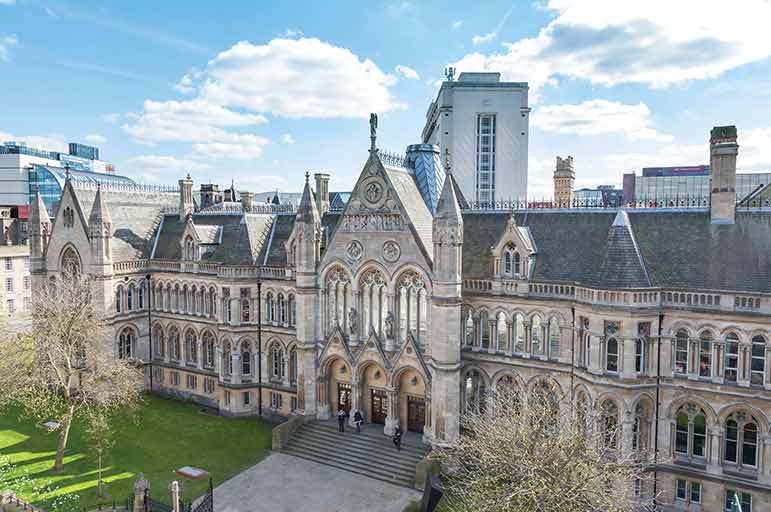
Nottingham Trent University where James studied Contemporary Art.
But still, James didn’t take lighting seriously as a career option. He soon found himself on his way to Nottingham to study Contemporary Art. Yet, even in Nottingham, it appears that the Gods of theatre were conspiring to get him back behind a lighting desk. James explains: “I had really taken to student life in Nottingham and I remember in our first year there was the Nottingham Dance Festival. Our tutor came in and said that they needed some volunteers to help with the technical setup. In a fit of enthusiasm, I put my hand up before looking around and realising there was just me and one other person. Despite there being only two volunteers, it was a really useful experience. We had a small venue on campus called the Powerhouse that hosted part of the festival. It had a little rig of Patt.23s, Silhouettes and Starlets along with a handful of Cantata profiles. Performers included the likes of Wayne McGregor, Russell Maliphant, DV8 and Javier de Frutos so real class acts. That’s where I also first encountered the work of people like Michael Hulls and Lucy Carter. I remember Lucy brought a show that was entirely side lit – I’d never seen anything like it. It was also the first time I had done any sort of rigging from a plan and I was learning from scratch on the job. I remember trying to plot for Lucy on a Strand MX desk and I think I wore out the little rubber cursor button! It was all rather a baptism of fire but I loved it”.
James would continue to help in his second year and eventually started taking on a more artistic role: “The technician there was an excellent chap called Pete Clifton. He taught me a lot of the basics, and it was really during this period that the theatre bug took hold. What Pete also gave me (and perhaps most importantly) was the freedom and time to experiment”. It was during this time that James would co-found a theatre company: “We called ourselves Eleventh Hour. I was co-writing shows, producing and performing as well. We all did a bit of everything”.
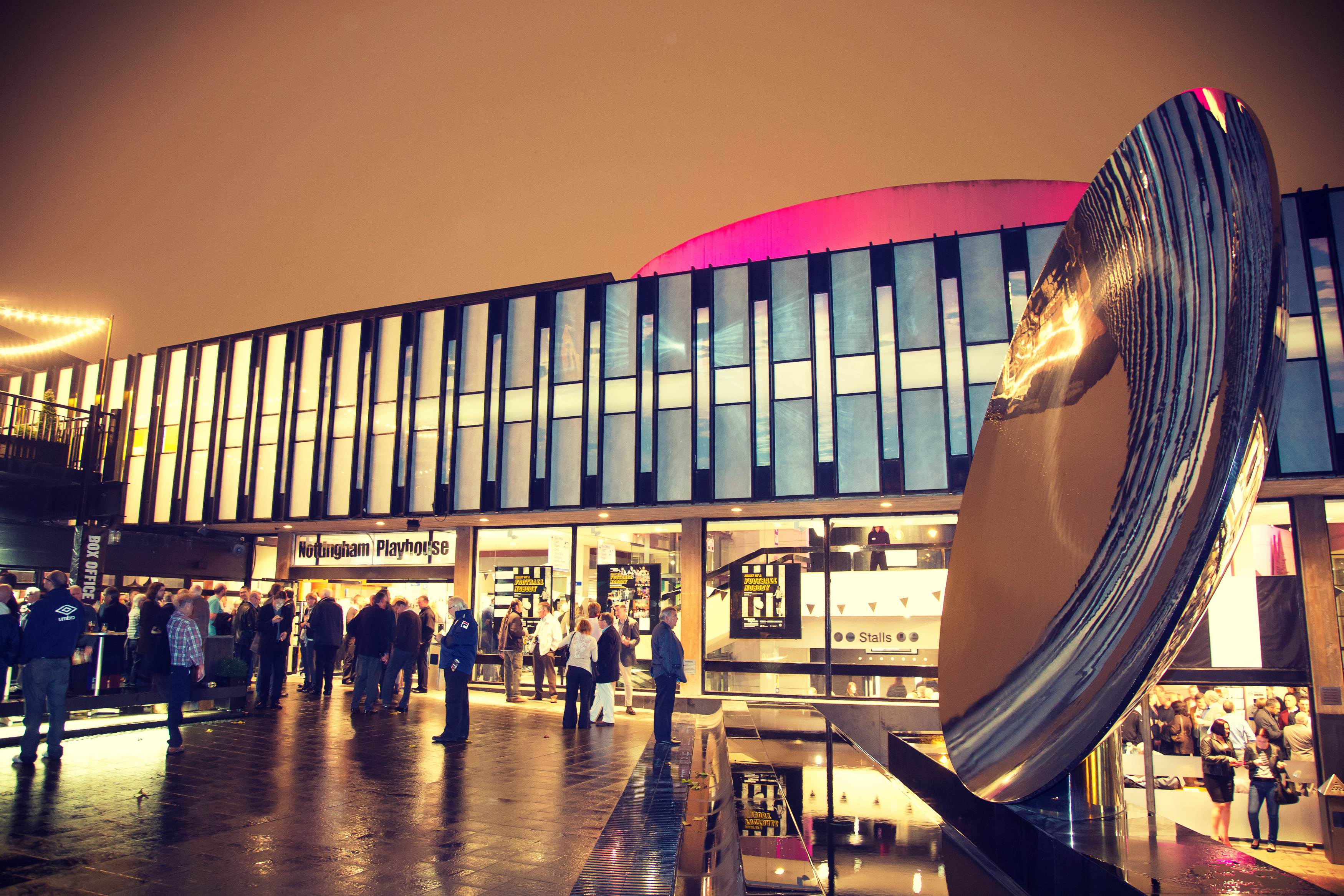
The Nottingham Playhouse would be James’ home for three years
James finished university and decided to stay in Nottingham. Thanks to some Arts Council funding, he continued to work on a couple more shows with Eleventh Hour “before we all went our separate ways”. Following his previous work at the Nottingham Dance Festival, he was asked to join as their Technical Manager. James comments: “I took the job at Nottingham Dance Festival but I honestly had no idea what a Technical Manager was!”. In this instance, it meant looking after the technical requirements of five venues across the city. Safe to say, it was another very steep learning curve. He was also given the opportunity to design for a couple of small shows as well. While James enjoyed working at the Dance Festival, he wanted to broaden his horizons slightly: “I remember my friend Jess had just started working at the Nottingham Playhouse. She said she knocked on a door, asked for work and they had something available. She told me I should do the same, so that’s what I did”.
It was here that James would meet the venue’s Chief Electrician Jeremy Roberts, who is now Regional Manager for ETC. Jeremy offered James some casual work; the first of which being the get-out of a pantomime. James recalls: “The interview went something like this: ‘Are you scared of heights? Are you unsure which of these pretty coloured wires can fry you? If the answer to either of these is yes, show yourself out’. But in the end it was great working for Jeremy. He ran a really tight ship, and I learned so much from him. But I was in at the deep end to start with. On my first day I learned the difference between 110v and 240v par cans the hard way. I set out a row of about 20 cans, rather quickly and efficiently, and feeling somewhat pleased with myself, I asked Jerry to flash the bar out. Somehow the whole lot blew immediately. My heart sank. But according to Jerry, my first real mistake was making a good coffee for everyone at tea break. Making the coffee quickly became my job for the next few months…”. Click here to read Part Two.
Comments Off on Leading Light with…James Farncombe – Part Two
The Lyric where James’ Production Management career began (and ended!).
The year was 1998 and, after three years at Nottingham Playhouse, James had started operating and plotting shows at the venue (“I was starting to find my feet”). However, as soon as James was settling, external factors would once again intervene: “My then girlfriend had just got a job at Birmingham Rep so she was set to leave Nottingham. At the same time, I received a phone call from the actor who had been the Dame in the Panto that year, Mark Chatterton . He was about to direct a show for LipService Theatre Company called King Arthur and the Knights of the Occasional Table. He asked if I’d be interested in relighting the tour.” James took the role and found himself travelling back and forth across the country. He states: “Relighting was another great opportunity to learn. We were doing one night stands in a huge variety of small scale venues. Some were little more than cowsheds, and often the lighting needed a lot of adaptation. I had to be inventive to preserve the spirit of the design. Very often I couldn’t fully recreate it. As I’d had no formal training as such, this really helped me understand why designers did what they did. There was a lot of trial and a lot of error but it was invaluable training”. LipService also took James on an Arts Council tour of Pakistan, “but that is another story entirely…”.
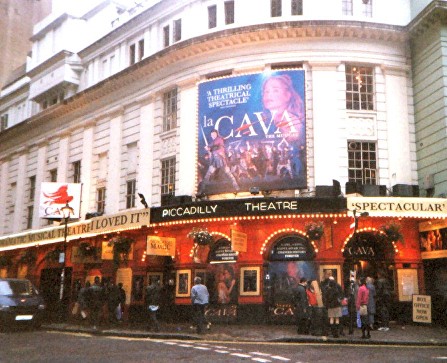
La Cava on which James assisted Chris Ellis
The tour finished and James found himself in the world of freelancing. Yet he was soon to step directly into another role: “I landed a job with Pilot Theatre Company in York. They had just finished a tour of Lord of the Flies and were looking for a Production Manager and someone to relight their second tour. It was a highly successful show, touring midscale venues across the UK, and represented a good progression for me. The tour ended at the Lyric Hammersmith in London”. It was at this point that James was rethinking his career path: “I was struggling to get enough work, and I thought being a production manager might be a useful string to my bow”.
So with the tour finished, James decided to stay in London. His brother was a student at Goldmith’s (where Lighting Designer Paule Constable studied – you can read her Leading Light here) and “he let me sleep rent-free in the cellar of his shared house in New Cross. I stayed much longer than originally intended”.
Having decided to pursue work as a production manager and having made contacts at the Lyric Hammersmith, James worked there on a show by The Right Size; a devised piece called Bewilderness: “It was a useful experience – in the sense that it taught me that I absolutely hated being a production manager! That show was hugely inventive and very challenging, but it almost finished me. It was my last job ever as a PM”. However, James eventually went on to work happily as LD for one half of The Right Size, Sean Foley, on several shows, including the Ladykillers and Jeeves and Wooster in the West End.
The Overcoat was one of James’ first big successes.
It was during these early days in London that James would start working as assistant to lighting designer Chris Ellis: “Chris was a big influence. He can be a fierce man and very business-like. He gave me a lot of work and taught me a lot. My first experience of the West End came from him. I was his assistant on La Cava which played at the Victoria Palace and then Piccadilly Theatre and was produced by Barbara Broccoli. Lighting aside, it was my first introduction to the politics of commercial theatre and managing the intervention of producers and so forth. Chris was passionate about his work and always determined to make the best show possible. He also put a lot of store by his team; the programmer, the production electrician, the DSM. He showed me what lighting design really entails, that it is very much a collaboration, relying on diplomacy, patience and the skill of a great many people. He also gave me a lot of confidence, encouraging me to have an opinion, to voice my ideas. He came to see my early work and his enthusiasm and evident pride in me were significant factors in my decision to pursue lighting as a career”.
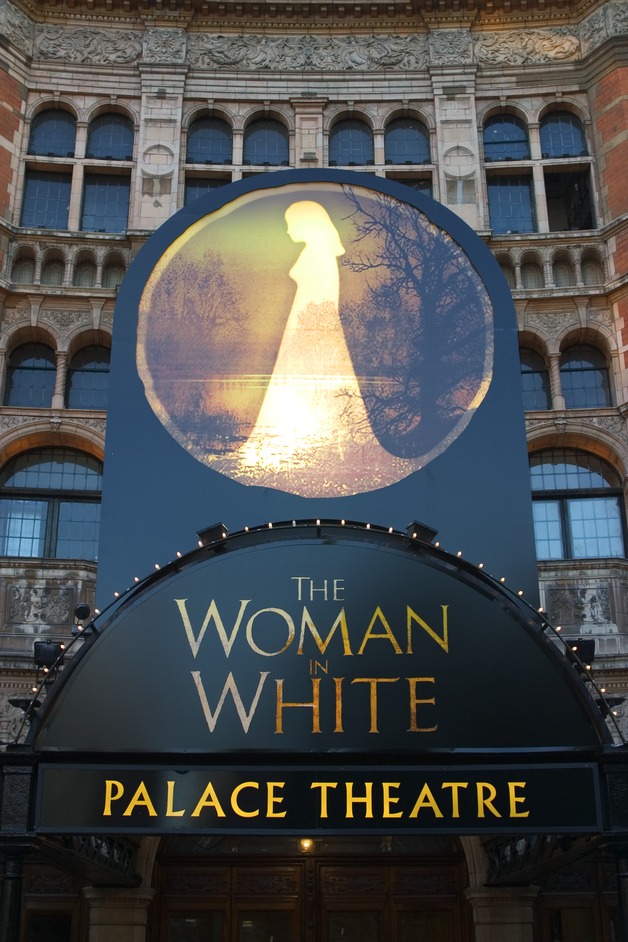
The Woman in White is the only professional collaboration James has with his uncle.
The year was now 2002 and James was contacted by Marcus Romer, the Artistic Director of Pilot, in what would turn out to be another fortunate intervention: “Following Lord of the Flies, Marcus had been offered a show at the Worcester Swan. It was a stage adaptation of The Elephant Man and he asked if I would be interested in lighting it. I said yes of course and I’m so glad I did. It was a tiny show in a tiny theatre, but it was a huge turning point. I started noticing the play of light everywhere”.
Following his work on The Elephant Man, James immediately went to work on Pilot’s next show, Rumblefish. He comments: “It’s that vicious cycle: you don’t get work until you’ve done work. But from that point on, I almost became Pilot’s default lighting designer. It meant people were starting to see my work”.
Alongside a fledgling design career, James continued working as assistant, most notably to Paul Pyant on Andrew Lloyd Webber’s The Woman in White: “It remains our only professional collaboration to date. I called the four followspots – they were hilarious! The things I learnt on that followspot ring…there was probably as much drama on cans as there was onstage!”.
Another regular role for James was at the Ipswich Wolsey Theatre. Here he met Pete Rowe, the Artistic Director: “Similar to Marcus at Pilot, I got on well with Pete – so much so that for a while I was the regular LD at the venue. I lit everything from Pinter to the Panto (I don’t think there was actually a Pinter, but you get the idea…)”.
There followed a long period, the best part of ten years, in which James worked up and down the country in regional repertory theatre including Nottingham Playhouse, Birmingham Rep, Leicester Haymarket, Scarborough Steven Joseph, Ipswich Wolsey, Exeter Northcott, Northampton Theatre Royal, Watford Palace and York Theatre Royal: “It was part livelihood, part apprenticeship, part endurance test. It was also an invaluable time. But I was never at home, and now I can’t abide a Virgin Pendolino”.
Men Should Weep, which was directed by Josie Rourke, marked James’ National Theatre debut.
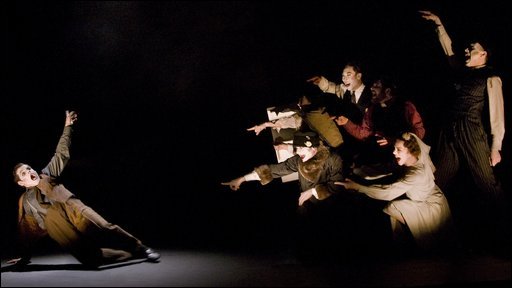
Pete Rowe put James in touch with Amit Lahav of Gecko who asked him to light their next show, The Overcoat. It toured before coming to the Lyric Hammersmith: “There was a buzz around Gecko and lots of people were coming to see it in London. I remember Nick Hytner and Tom Morris coming along. Paule Constable was particularly complimentary and has remained a generous champion of mine. It felt like people were finally recognising my work”. This was seemingly true, with Lynn Gardner noting “James Farncombe’s exquisite use of light and shadow is a show in its own right”.
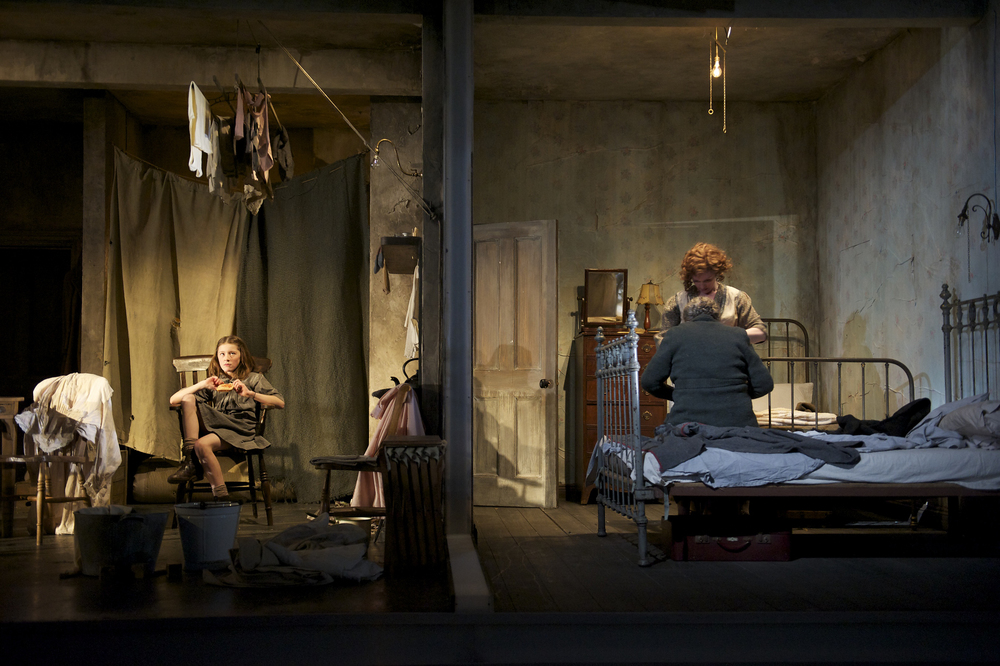
The show marked the beginning of James’ recognition as an emerging lighting designer: “It felt like long time coming, but when the break finally happened, things moved quickly. I had lit for Josie Rourke at the Bush Theatre and suddenly she was directing Men Should Weep at the National – which she asked me to light. This was a big moment in my career. I had wanted to work at that venue for ten years, but never came close. The set, designed by Bunny Christie, was beautiful but challenging to light. That said, I got on the right side of Laurie Clayton and Simon Fraulo, resident wizards of the Lyttelton lighting department, and with their colossal expertise and patience, we found a way through. It really pushed me, but was actually a real joy to work on. It gave me confidence and it opened a lot of doors”.
Following his National debut, James found himself in demand. Looking over his impressive CV, I inquire as to whether he has any favourite shows. Naturally, he doesn’t have just one: “Juno and the Paycock for the late, great Howard Davis was particularly memorable. I remember seeing Howard’s work when I first came to London, and thought, I’d like to work with someone like him one day. A decade later I found myself in pre-production meetings for Juno sat opposite him. People for Nick Hytner which was written by Alan Bennett and it was just magic to be in the room with that brilliant man. The Ladykillers was also a memorable production. It ran at the Gielgud in the West End, and was the first time I opened a royalty cheque and thought there must be a typo – too many noughts (that doesn’t happen very often!). I love working with Katie Mitchell and my favourites would be Pelleas et Melisande at the Aix-en-Provence International Festival and recently Anatomy of a Suicide at the Royal Court. Other highlights include People, Places and Things and London Road in the Olivier. And we haven’t even really started talking about the opera…”
People, Places and Things which James lit at the National and transferred to the West End. It is now on tour and about to transfer to Broadway.
So the time has come where I ask James that well-known question: what advice do you have for the next generation of lighting designers? James’ answer is actually both thoughtful and realistic: “Do your time. This industry is all about patience and climbing the ladder. You might spend years freelancing, relighting and probably doing jobs that you’d rather not. That said, working in different departments and knowing about all areas of the profession can’t be a bad thing.
“I also think it’s important to learn to say no. If you’re a freelance designer, you need to learn how to say no to certain projects and make intelligent decisions when it comes to your work. Mainly so you can do the job properly but also for the sake of your sanity and your integrity – not to mention your general health”.
James is also quick to remind me how, whilst theatre is his biggest passion, time away from the industry is vital. He comments: “You need to find something to do away from lighting. For me, I’m still love making music and I still write songs and play the piano. I’m also learning French at the moment. I can spend hours getting lost around art galleries too”. However, there is one other thing that’s keeping James extremely busy at the moment: “I’m now a dad. Having my daughter means I strive for a more healthy work/life balance, and she is my saving grace. She says one day she is going to come and ‘work in the dark with me’… I still work too much, but I’m slowly learning to get my priorities in the right order”.
And with the emergence of the next generation of the Farncombe family, it remains to be seen as to whether this theatrical family will produce yet another lighting designer…
Photos courtesy of BBC TV, Dan Wooler, David Baird, Manual Harlan, Nottingham Trent University, Paul Pyant, Richard Haughton, Stephen Keeling and Tom Lancaster.
We use cookies on our website to give you the most relevant experience by remembering your preferences and repeat visits. By clicking “Accept All”, you consent to the use of ALL the cookies. However, you may visit "Cookie Settings" to provide a controlled consent. View our View our Privacy Policy
This website uses cookies to improve your experience while you navigate through the website. Out of these, the cookies that are categorized as necessary are stored on your browser as they are essential for the working of basic functionalities of the website. We also use third-party cookies that help us analyze and understand how you use this website. These cookies will be stored in your browser only with your consent. You also have the option to opt-out of these cookies. But opting out of some of these cookies may affect your browsing experience.
Necessary cookies are absolutely essential for the website to function properly. These cookies ensure basic functionalities and security features of the website, anonymously.
Cookie
Duration
Description
cookielawinfo-checkbox-analytics
11 months
This cookie is set by GDPR Cookie Consent plugin. The cookie is used to store the user consent for the cookies in the category "Analytics".
cookielawinfo-checkbox-functional
11 months
The cookie is set by GDPR cookie consent to record the user consent for the cookies in the category "Functional".
cookielawinfo-checkbox-necessary
11 months
This cookie is set by GDPR Cookie Consent plugin. The cookies is used to store the user consent for the cookies in the category "Necessary".
cookielawinfo-checkbox-others
11 months
This cookie is set by GDPR Cookie Consent plugin. The cookie is used to store the user consent for the cookies in the category "Other.
cookielawinfo-checkbox-performance
11 months
This cookie is set by GDPR Cookie Consent plugin. The cookie is used to store the user consent for the cookies in the category "Performance".
viewed_cookie_policy
11 months
The cookie is set by the GDPR Cookie Consent plugin and is used to store whether or not user has consented to the use of cookies. It does not store any personal data.
Functional cookies help to perform certain functionalities like sharing the content of the website on social media platforms, collect feedbacks, and other third-party features.
Performance cookies are used to understand and analyze the key performance indexes of the website which helps in delivering a better user experience for the visitors.
Analytical cookies are used to understand how visitors interact with the website. These cookies help provide information on metrics the number of visitors, bounce rate, traffic source, etc.
Advertisement cookies are used to provide visitors with relevant ads and marketing campaigns. These cookies track visitors across websites and collect information to provide customized ads.