leading light Archives - White Light
Explore White Light: White Light | HireWL | SalesWL | ShopWL

Tag Archive: leading light

  1. Leading Light with…Charlie Morgan Jones – Part 1

    Comments Off on Leading Light with…Charlie Morgan Jones – Part 1
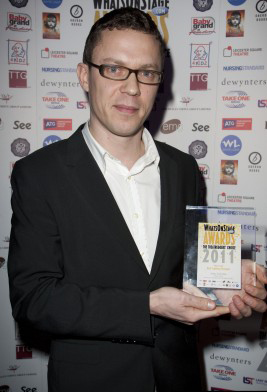
    CMJ Headshot pic. Hywel Jones

    Lighting Designer Charlie Morgan Jones

    This month’s Leading Light is Charlie Morgan Jones. A previous nominee for the WhatsOnStage Best Lighting Design Award, his work spans the full theatrical spectrum, from multiple musical productions to the West End to immersive theatre to international operas. He’s currently at the Royal Court Theatre in Liverpool with Derren Brown Underground and has taken the time out to speak to us about his story so far.

    As always with Leading Light, we go back to the very beginning and for Charlie this is Barry, Vale of Glamorgan, which is in South Wales. He comments: “I was born and raised in Barry and lived there till I was 18. It’ll always be home for me. It’s very much a quiet town where the people are nice and everyone knows who you are. My bedroom window opened out onto the Bristol Channel and it really was a blissful place to grow up”. Charlie was an only child and lived with his mum and dad. He explains: “Mum is an English teacher and always took me to the theatre throughout my childhood. Dad is a photographer and my Grandparents loved classical music and I remember going to the Symphony Hall in Birmingham. Therefore I was certainly raised in a very ‘artsy’ family”.

    Having attended theatre from the point where he admits to being “the screaming baby at the back”, Charlie’s personal first memory of theatre comes from when he was aged four. He recalls: “The first thing I remember seeing was a production of Turandot at the Welsh National Opera. It was just incredible. I remember this corrugated set which featured hundreds of heads all across the stage. It was lit by a woman called Heather Carson and I randomly looked back at the production shots a couple of years ago and it still looked spectacular”.
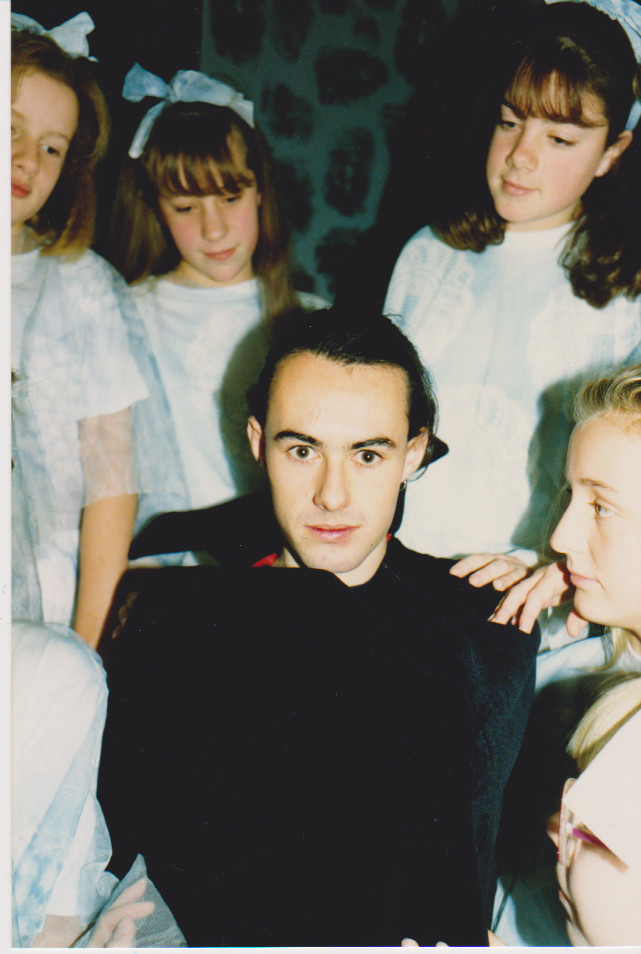
    CMJ at School pic. Hywel Jones

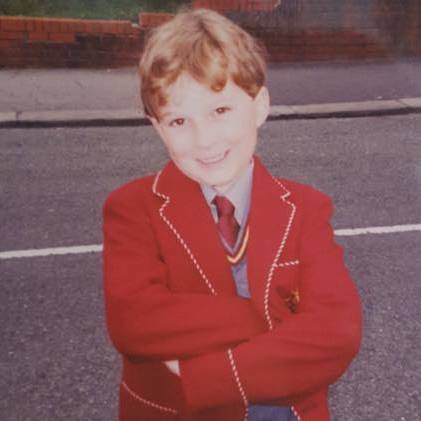
    Charlie in his Cathedral School Llandaff uniform

    Despite his mum being an English teacher, Charlie is the first to admit that he was far from academic. He comments: “I went to a lovely school in Llandaff which was about eight miles away in Cardiff. The teachers there were great and really pushed me. That said, I didn’t push back. I literally just wanted to spend every day larking around and making people laugh. I didn’t really put in the energy to apply myself to anything”.

    During his schooldays, Charlie continued to see a lot of shows. He comments: “With the New Theatre being based in Cardiff, this meant that they had a different show each week and whether it was am dram, musical, farce or panto, mum and dad would always take me”. Charlie also took part in the school plays which were held every summer and Christmas. His first ‘theatrical credit’ was his unforgettable portrayal of a Rabbit in Wind in the Willows at the age of 7. Yet school was to further Charlie’s passion for theatre when a new state-of-the-art theatre was built. Charlie recalls: “I was 13 years old and for some unknown reason, my parents had bought me a smoke machine. I told my Drama teacher who asked me if she could borrow it for a show. I said yes and then she asked if I wanted to light it as well. I didn’t really know what I was agreeing to but I just said yes!”. Charlie ended up making his lighting debut on what he describes as “Stars in Their Eyes extravangza”. He recalls: “I lit the show on a two scene desk so it was literally on off, on off. That said, I had a blast and my teacher let me light lots of other shows. I think I became the only designer in history to light Joseph without any colour! Then again I was just having a good time and enjoyed the whole lighting process”.

    gboac9

    Concorde would actually have a big influence on Charlie’s career choice.

    Yet Charlie didn’t want to be a designer just yet. Rather, he had other ambitions: “I wanted to be a pilot – something I wanted to be for as long as I can remember”. And there was one particular plane that Charlie has a somewhat unhealthy obsession with: “I was madly obsessed with Concorde. My aunt lived in Reading which was on the flightpath to Heathrow and at 5:30pm every evening, I would run into the garden as soon as I heard the plane up ahead. I was so obsessed that, when I was ten, I wrote to British Airways saying I love Concorde and they needed to help me. To my amazement, a chap called Claude Freeman wrote back who was then Head of British Airways Maintenance. He asked if I wanted to spend a day at our maintenance facility and I, of course, said yes! I spent the whole day on a Concorde but not just any Concorde – the flagship plane named G-BOAC. I even received a Blue Peter badge”.

    However, Charlie’s dream of flying Concorde was to be quickly dashed when he was just 15. He recalls: “They decommissioned Concorde which was a genuine blow to my piloting dreams. It felt like there was no end goal now as my ultimate ambition was to fly that plane”.
    CMJ on Work Experience at Wicked the Musical pic. Hywel Jones

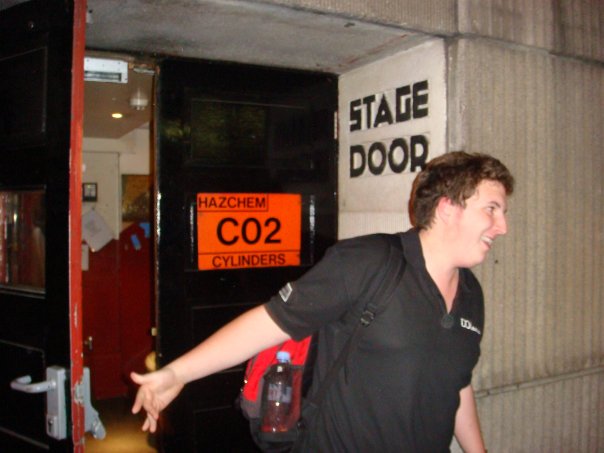
    Charlie during his work experience days at Wales Millennium Centre. 

    While his Concorde dream was coming to an end, Charlie was still busy lighting shows at school. He recalls: “My Drama teacher, Claire Morgan, was very supportive. She would let me stand on chairs to rig lights and I even had a key to the drama studio (something I would use when I wanted to skip Chemistry). I used to spend all my time in there, playing with levels and cue timings. It was a very basic desk with 24 channels on top and 24 on bottom but it was my be all and end all”. Charlie soon became the school’s go to lighting designer and began to explore lighting outside of the drama studio. He recalls: “When I was 16, my mum introduced me to Perryn Leech, Welsh National Opera’s Technical Director. I soon embarked on work Experience on WNO Max’s Candide which was a fantastic experience. Perryn would also prove to be extremely supportive of me and introduced me to Dorset Opera – where I did two seasons as Assistant Lighting Designer. I was lucky enough to return in 2014 to light their 40th anniversary season as the fully fledged LD”.

    Charlie passed his GCSEs and continued with his A Levels, which included Drama, Physics, Maths Statistics and Geography. He comments: “I went to a college that was different to my high school and really didn’t enjoy it. The only fond memory I have is spending time in the theatre! I also used to host a show on the local radio station called Spotlight which was all about theatre”.

    During this time, Charlie continued his work experience at the Wales Millennium Centre, which included Acorn Antiques – the Musical.  It was here he met Technical Director Dicky Burgess who said if Charlie wanted a job as a followspotter, he should email Dicky when he was 18. Charlie comments: “The day after my 18th birthday I emailed him and was offered a job as a followspotter: something I did for five years. The first show I worked on there was White Christmas where I was lucky enough to meet Lighting Designer Ken Billington. I remember he told me: ‘Kid, if they walk and talk, they get a light'”.
    Rose-Bruford-College-700x455

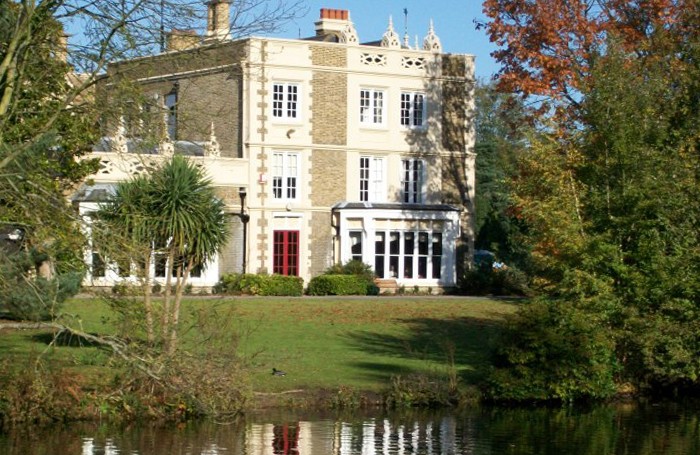
    Rose Bruford was a life-changing experience for Charlie.

    Yet all this focus on theatre meant Charlie’s studies were neglected and he failed his exams. However, he wasn’t giving up on education just yet: “Whilst I was working at the WMC, Chitty Chitty Bang Bang was visiting and the Chief LX was a chap called Chris Vaughn. He told me to apply to drama school as he felt it would be a great experience for me. So, I applied to Rose Bruford in secret – mainly as I didn’t think I’d get in. I was then invited to interview with Rachel Nicholson and to my complete and utter surprise, she offered me a place!”. Charlie soon left Barry and made his way to London; something he describes as “terrifying and great”. And it seems that Rose Bruford was the one educational institution where Charlie really felt at home. He comments: “I had the most incredible three years at Rose Bruford and really honed my craft. The Programme Director Hansjorg Schmidt was the most nurturing man and gave me some incredible support. I took the Lighting Design course although not everyone taking it wanted to be an LD (one is now a Royal Navy Officer!). That said, I knew for a fact that this was what I was going to do and that marked me out slightly”.

    During his time at Rose Bruford, Charlie began to work at the Vaudeville as a Board Operator. He recalls: “Working at the Vaudeville was also an education in itself as I got to see a new lighting designer’s work on a new show every three months. Peter Mumford lit the first show I worked on there (you can read Peter’s Leading Light here) whereas Mark Henderson lit the second one. You essentially had the dons of lighting design coming in and I was behind them in a dress rehearsal. It was at that point when I thought – I could be this guy”.

    Click here to read Part Two.

  2. Leading Light with…Charlie Morgan Jones – Part 2

    Comments Off on Leading Light with…Charlie Morgan Jones – Part 2
    3am (Curve Leicester) pic. Pamela Raith

    3am at Leicester CURVE was Charlie’s first professional production after graduating.

    Charlie graduated and was left to find his own way in the big wide world. It was here where his work at the Vaudeville would prove useful: “I emailed every single producer I knew, along with all the DSMs I’d worked with from my time at the Vaudeville. They were hugely supportive and told me who to get in touch with. It was in those early stages that I’d take unpaid leave to go and work on shows on the London fringe. It was a case of slowly, but surely, getting my name out there”.

    Charlie’s first show out of university was 3am for the Curve Young Company at Leicester’s CURVE Theatre. He recalls:  “I was put forward by Rachel Nicholson who was the Head of Creative Lighting Control and was immensely lucky to go straight into a show like that. I really felt like a ‘professional lighting designer’ as I had a programmer and stage management team”. Charlie would the continue to work wherever he could. He recalls: “I did a show at the Edinburgh Fringe called Jump which was a brilliant experience. I also lit a show at The Met in Bury and remember just jumping on a train, heading up to Manchester and saying ‘I’m here to light your show’. At that age, you just turn up and hope for the best. Then again, you need to have that go-getter attitude as people are only willing to employ those with experience and that was something I needed”.

    It wouldn’t be long until Charlie got what he considers to be his first ‘big break’: “I worked on Dialogues des Carmelites at the Birmingham Conservatoire and the Director was Michael Barry.  I was at his house for dinner and he showed me a prop from the Ring Cycle which he recently directed. As I knew very little about him, I presumed it was something he’d worked on at the Birmingham Local Opera. Fortunately I didn’t say anything out loud as Michael quickly informed me that it was a show he’d worked on at the Royal Opera House! A quick Google under the table and I realised he was quite a big name! We got on like a house on fire and Michael recommended me for various jobs including the Polish National Opera”. It was also at the Conservatoire where Charlie met Jack Ramplin who Charlie has used on lots of shows as his Associate. Charlie comments: “Michael foresaw a long creative relationship between Jack and I – he wasn’t wrong!”.

    Charlie’s second ‘big break’ was to come shortly after at the Duchess Theatre in London’s West End. He recalls: “I was asked to light Cool Rider, which is the sequel to Grease. It was an all-singing, all-dancing musical with so much happening all the time – the first number had 80 lighting cues! For this show, I worked with an Associate called George Smith who was fantastic to bat ideas around with. It really changed my way of working and brought out the best in my lighting”. Shortly after this, Charlie and George formed Smith+Jones LX. Charlie comments: “We became friends but he sadly (for me) lives out in Macau now for work. That said, we’re still as close as ever, and I always visit him when I go to the Far East for work”.

    Cool Rider (Duchess Theatre) pic. Pamela Raith

                                                   Charlie lit Cool Rider at the Duchess Theatre in London’s West End.

    The third break of Charlie’s was Avenue Q; the puppeted musical which is also one of Broadway’s longest running musicals. Charlie recalls: “I had worked with production company Selladoor Productions in their early days and remember touring Ibsen’s Ghost in the back of a van. They asked me back to light Avenue Q which was doing a three week run in Greenwich in April 2014. The run sold really well and got a lot of people talking – so much so that it turned into a six month tour. It then returned for a second tour in 2015, a third tour in 2016 and it’s recently been announced that it’s coming back next year. It was one of those shows that just ‘became a thing’ – when I told people I was lighting it, they were really impressed. It also got me an agent and opened so many doors for me as people were now able to see my work”.

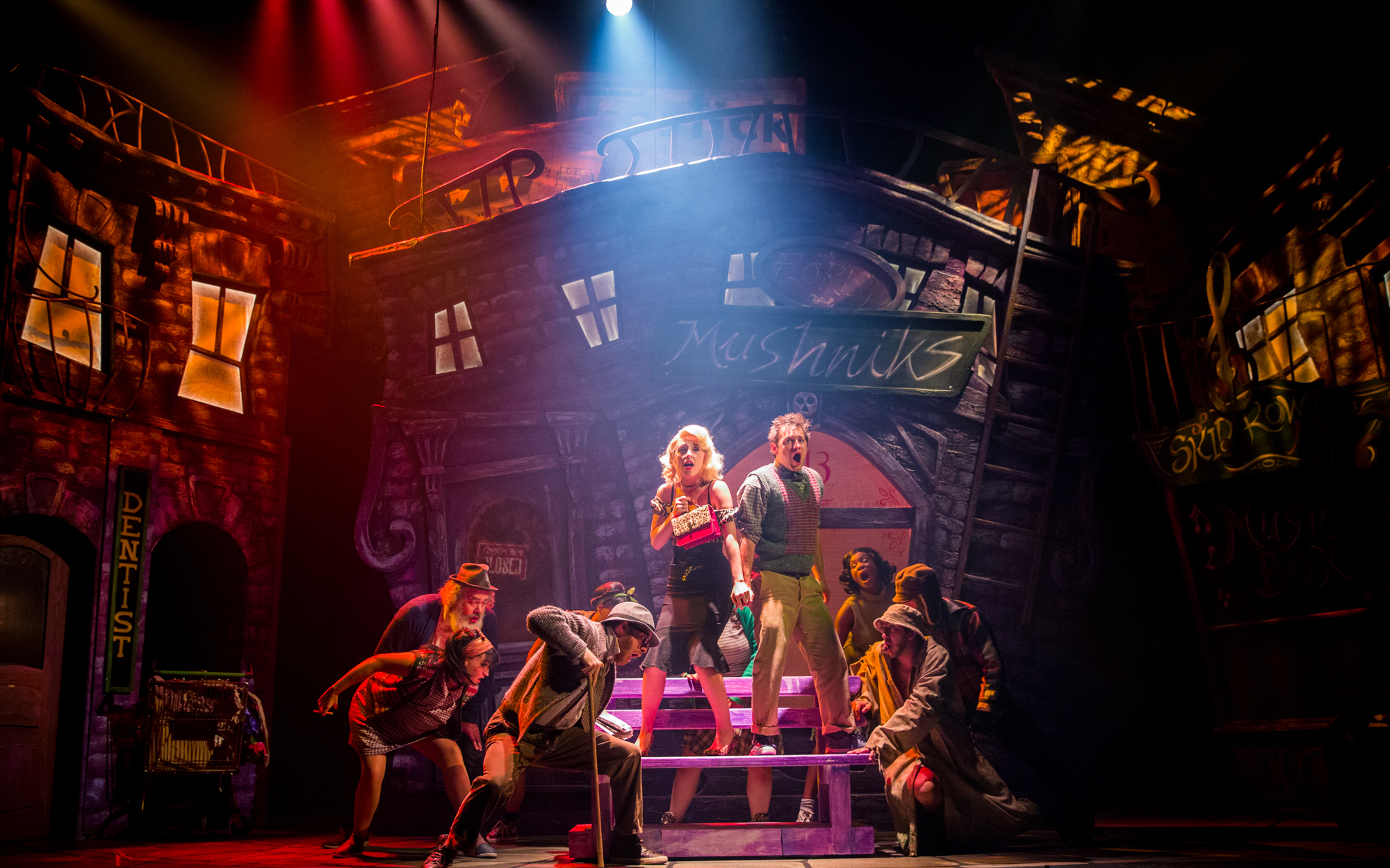
    Little Shop (UK Tour) pic. Matt Martin

                         Little Shop of Horrors is a personal highlight for Charlie.

    Whereas these are Charlie’s ‘big breaks’, I ask him if any other shows that standout. Safe to say, he has a fair few: “Little Shop of Horrors definitely sticks in the mind. Everything on this production just felt ‘right’ and all the creatives just clicked. We wanted the show to be zany, cartoony and over the top; similar to the feel of the film. I remember being sat in tech thinking this should be spectacular and it was. It was great to be a part of and the highlight was when it visited the New Theatre in Cardiff where I used to see shows as a kid. It was at that point when I was confident in telling people that I was a lighting designer”.

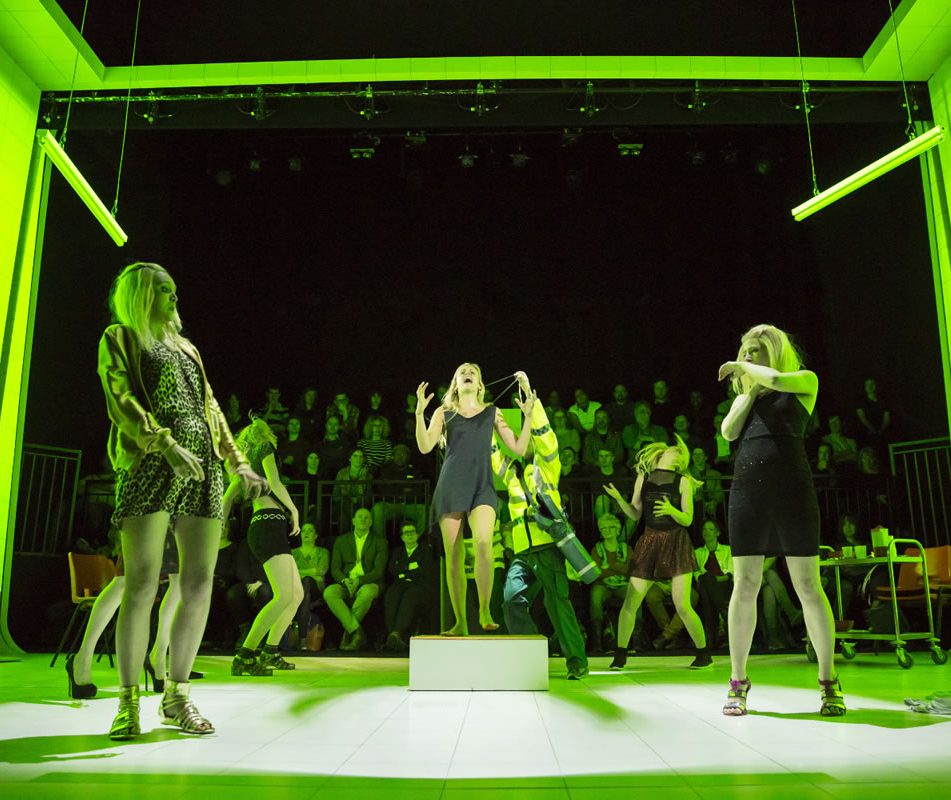
    Other shows include Derren Brown: Underground which Charlie describes as  “incredibly bizarre as it was a huge name and another show that everyone knows and recognises. It’s also amazing that it’s going to the Wales Millennium Centre which is where it all started in a sense – I can’t wait for mum and dad to see it!”. The Polish National Opera is another highlight of Charlie’s. He recalls: “I was the only non-Polish speaker so it was the case of being thrown in at the deep end. That said, I spent a lot of summers in Poland as a child and can understand the basics so was able to communicate with Mariusz the director”.

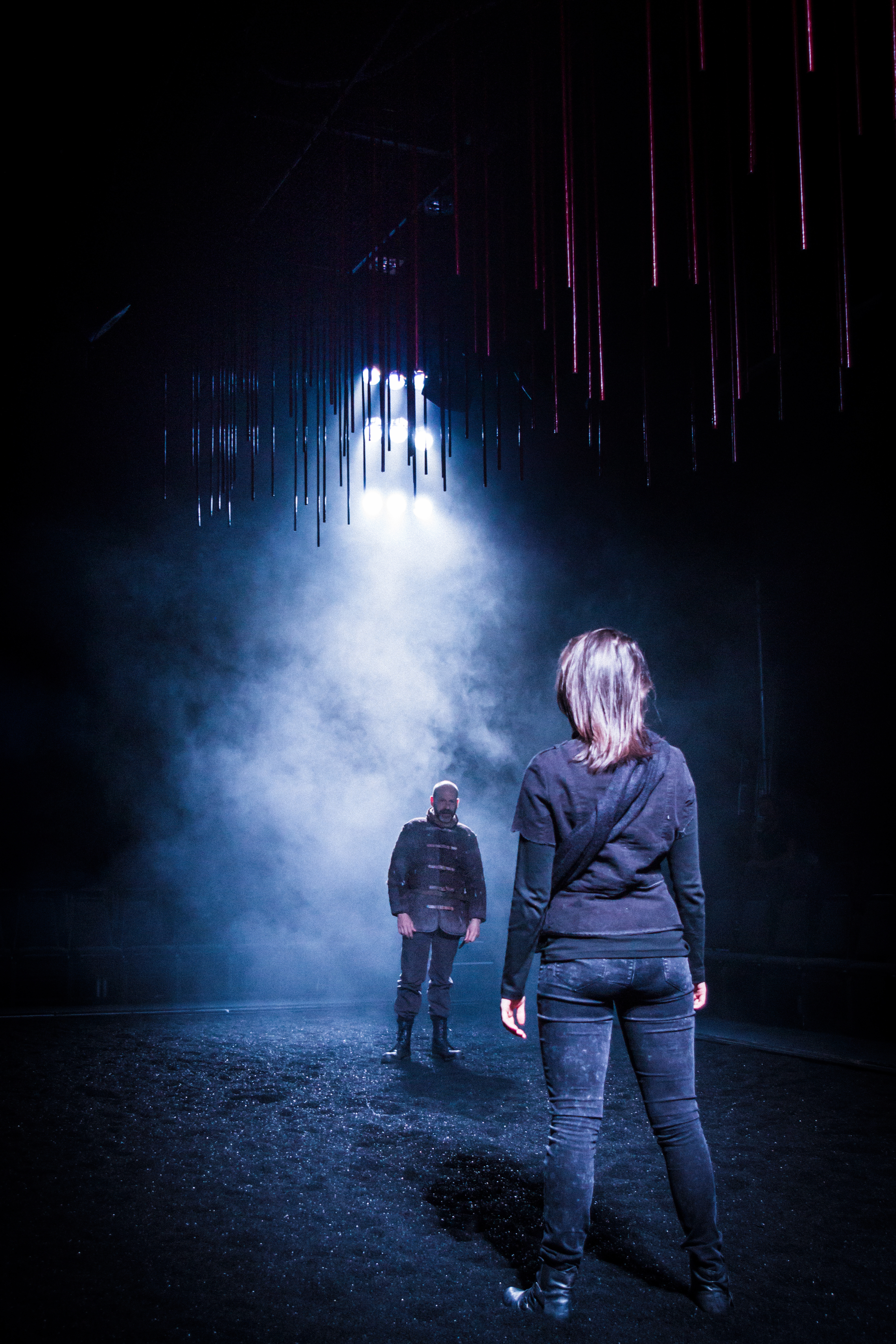
    Macbeth (Theatre Severn) pic. Sven Worrow

                      Macbeth at Theatre Severn was lit by Charlie.

    Charlie has managed to achieve a lot in a short time and, while it’s largely down to a hard-working ethos, he has been lucky enough to have the support and influence of some lighting legends. He comments: “As part of my drama course at college, we went to see the National Theatre’s The Caucasian Chalk Circle which Paule Constable had lit (you can read her Leading Light here). I actually phoned my dad during the interval saying how amazing I thought the lighting was; it was a character within itself. Almost without realising, Paule had become an influence. Flash forward a few years and I was back at the Millennium Centre working in between uni terms. It was 2010 and I was followspotting on the new Les Misérables which Paule had lit. When I was back in Wales, I went over to the production desk and said hello and she was just the most approachable and friendly person. We went out for lunch and she told me everything I needed to know about lighting. Another person who’s been a huge help is Rick Fisher (you can read his Leading Light here). During my second year at Bruford, he gave a talk and was kind enough to give me his email address. I emailed him that night (very eager!) asking if I could come and work with him on a show. He was lighting The Fantasticks at the Duchess Theatre and I sat behind Rick and the programmer and learned so much. I even got credited in the programme as Assistant to the Lighting Designer! Ultimately, both Paule and Rick are incredibly talented and equally kind individuals and I also show the same level of support to anyone who approaches me for advice”.

    Listening to Charlie talk about his journey and career, it’s easy to forget that he is still extremely young (not even 30). So what aims does he have for the future? He answers: “When I was 14/15, my main aim was to solely light West End shows. I’ve now had eight productions in the West End so my goals have changed slightly (as they should). I would like to light more dance and would definitely like to work at the English National Opera. I think it’s important to remember that the role of lighting designers is changing also. It’s no longer just theatre. For instance, last year I was asked to light the rainforest at the Eden Project – something I never thought I’d do. Ultimately, I want to continue my existing relationships with current designers, directors and production companies as well as push myself as a designer”.

    If the last few years are anything to go by, it’s safe to say that Charlie will continue pushing himself and cement his reputation as one of the most exciting lighting designers this country has to offer.

    Photos courtesy of Graeme Braidwood, Hywel Jones, Matt Martin, Pamela Raith, Rose Bruford College and Sven Worrow.

  3. Leading Light with…Prema Mehta – Part Two

    Comments Off on Leading Light with…Prema Mehta – Part Two
    white bear theatre

    The White Bear Theatre in Kennington.

    Prema graduated and, like a lot of designers I’ve spoken to, started working in pub theatres and lighting shows on the fringe. The first show that Prema ever lit was a piece called I Live in Tribeca at the White Bear Theatre. It was directed by Michael Longhurst and she received some fantastic reviews – something she recalls as “not being bad for a first show!”. However, the dream of being a lighting designer soon clashed with the realities of it. She comments: “Whilst I was enjoying the experience of working on the fringe, I was literally earning next to nothing. I remember one of my first jobs was a profit share and the producer sent me a cheque for all of £15. I remember her saying that it would be enough for some chocolates and magazines. I replied that it wasn’t enough to cover my travel!”.

    Not only was the money less than impressive but the lifestyle of being a lighting designer was something that Prema also found difficult. She explains: “Being a lighting designer can be quite isolating; especially when you have gaps between jobs. There are a lot of those in the early stages of your career so I needed to find something else in order to make ends meet”. For Prema, this came in the form of work for the NHS and the local government, where she was “literally the assistant to the assistant”. She continues: “Part of the attraction of working for a large organisation was that I’d be around people and wouldn’t feel so isolated. The irony then was that I’d spend five hours in a photocopy room by myself!”. Prema then found herself trying to balance her lighting design career with her other work. She recalls: “My colleagues at the office knew all about my theatre work, yet those in the theatre knew nothing about my 9-5 job. Therefore when I finished at the NHS or wherever, I’d go and get changed in the car into jeans or something similar before I’d nip off to a theatre meeting”.

    IMG_1514

    Prema during her time at Saracens where she was a Project Manager and got to work closely with one or two well-known faces!

    And whilst her theatre career was initially slow going, the part time work she’d taken on actually started to take off. She comments: “I went from corporate parenting to youth offending to health and social care integration. I then worked  in prevention and well being and, whilst I was there, worked closely with consultants. Off the back of this, I was offered some work for Saracens Rugby Club. Now I’m not a rugby person at all but was headhunted to be a Project Manager there during the Rugby World Cup! It was a fantastic experience as I was suddenly in charge of managing projects, with an event held at the O2 Arena and holding my own within a very testosterone-fuelled environment”.

    Alongside her work at Saracens, Prema was still working in theatre. However, she noticed how her two different careers were contrasting in terms of her progression. She recalls: “I couldn’t believe how quickly I’d gone from being an assistant at the NHS to a Project Manager at Saracens. Conversely, my theatre career had moved at a snail’s pace. Looking back, it makes me question how much theatre really allows people to grow. I think that I was able to move so quick in an industry I knew nothing about because I had that support whereas theatre seems to move at a slower pace where opportunities don’t come around that often”.

    Prema had been working at Saracens for around a year and, despite her making waves in her new role, she still had a passion for theatre. She comments: “Theatre was where my heart lay and I was still doing projects on the side. There came a point where I thought to myself – I’ve been out of drama school for eight years and if I leave theatre now, I’ll have fallen to the side and not made anything of it. One thing that Saracens did in terms of character was make me a much more confidence person. So whilst I accepted that a sustainable career within theatre would be a challenge, I was ready now. It almost felt time to repeat my success at Saracens in theatre”. By leaving her job at Saracens, Prema was able to concentrate on her theatre work full time. She recalls: “I now just had more time to invest in my work. I could write to people, email them and get them on my radar. I was able to really sit down and think ‘right, what do I need to do next?’”.

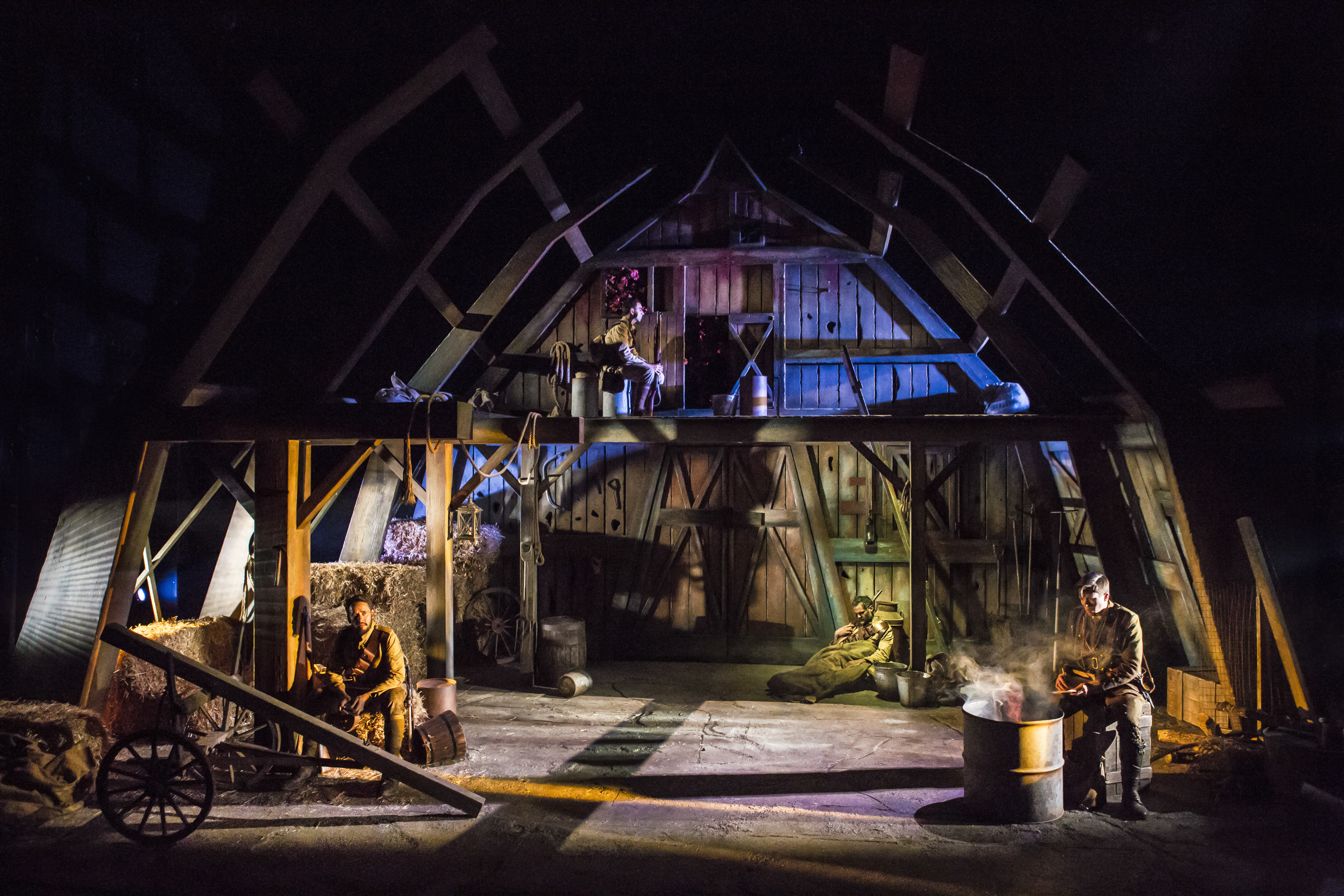
    simon-rivers-as-sadiq_waleed-akhtar-as-ayub-sartaj-garewal-as-ad-and-jassa-ahluwalia-as-thomas_pamela-raith-photography

    Wipers at Leicester Curve Theatre is a highlight of Prema’s career (so far)

    A turning point for Prema came when she had a meeting with Watford Palace Theatre’s Artistic Director Brigid Larmour. She comments: “I met with Brigid when I was in quite a frustrated mindset. I told her that I felt I wasn’t getting the right opportunities and that my work just needed a stage. Thankfully she listened to my concerns and was generous enough to give me a space to work in and experiment. Following this, I then designed three very different productions at Watford and it’s an opportunity I’m forever grateful for. It just felt great to be moving out of the pub fringe world and working on a much bigger scale; something which really helped me grow as a designer. Following this, I then worked at York Theatre Royal, Hull Truck and Latitude Festival. What it basically meant was my work could be seen on a much wider scale and people could really engage with my lighting. Everything just seemed to happen at once but it felt very much deserved – I’d been working away for several years by this point and felt that I’d earned some recognition (at long last!)”.


    IMG_1516

    East is East at Northern Stage is another show which Prema is particularly proud of.

    Looking through Prema’s CV, she’s been extremely busy. Whether it’s Sheffield Theatres, Bush Theatre, Leicester Curve, York Theatre Royal or Northern Stage, her designs have graced stages across the country. She jokes: “The irony is that I moved into a lovely flat not too long ago and I now spend my life on a train! At the end of last year, Trainline sent me an email saying I’d travelled 17.12 times the length of the UK  – and that was just with them!”. So what is her proudest moment so far? She has a clear answer: “I worked on a play in 2016 called Wipers, written by Ishy Din and directed by Suba Das. It was designed by Isla Shaw who created this amazingly structured barn set. I then had this huge opportunity to bring this alive using the lighting, which I feel I did. It was one of those projects which ticked every box for me: new writing, brilliant creative team and a phenomenal set. It opened in Leicester before touring to Coventry and Watford and it felt really special to return to Watford Palace”. Other highlights for Prema include East is East at Northern Stage, her work at Hull Truck along with last year’s Of Kith and Kin (“I’ve always wanted to work with Rob Hastie and one of my favourite playwrights is Chris Thompson so it was like a dream come true!”). Last year also saw Prema work on her first ever panto: Beauty and the Beast at the Queen’s Theatre. She states: “I’d never even seen a panto before so I was able to approach the show with a fresh pair of eyes and even break the rules!”.

    IMG_1518

    The cast and crew for Of Kith and Kin.

    Alongside her work on-stage, Prema is an advocate for greater diversity off it. She comments: “I feel we in theatre could do more to reach out to larger pools of our community to widen our workforce. Whether it’s gender, race or class, we needed to be doing more to bring in new faces and personalities. A lot of people (like myself) didn’t even know this was an industry so we really need to ensure that we don’t lose what could be an untapped resource of talent”. As a result, Prema is working closely with the ALD, The Young Vic, Sheffield Theatres, UK Theatre and Arts Council England to explore the role of representation within the industry and ways in which theatrical organisations can be more proactive under the work of Stage Sight.

    Our time together has come to an end and Prema has to run away to another meeting. She’s just finished on A Passage to India and is preparing to make another train journey tomorrow as she visits another theatre. She remarks: “It’s non-stop at the moment. I look forward to a quiet night in when I can remember what my flat looks like!”. From the sound of what she’s told me, Prema’s busy schedule won’t be quieting down any time soon.

    Photos courtesy of the Andy Roberts, Olivier Awards, Pamela Raith, Prema Mehta, Sarah Hickson and the White Bear Theatre.

  4. Leading Light with…Prema Mehta – Part One

    Comments Off on Leading Light with…Prema Mehta – Part One
    download

    Lighting Designer Prema Mehta

    Today’s Leading Light has been a long time coming. I was meant to meet Prema mid-last year but her busy schedule (or as she describes it, “her life on a train”) meant we were unable to tie down a date. Therefore, when she emailed me at the start of the week saying she had a free afternoon, it was a case of dropping everything and ensuring that we finally sat down to have a chat.

    As always with Leading Light, we start at the beginning. For Prema, this is Orpington in Kent – although her family’s origins extend far beyond the South East county. She explains: “Although I have Indian parents, the real irony is that they were both born in East Africa! I always remember asking as a child if that made me and my brother African! Mum lived in India for a short while before coming over to the UK. With dad, he was the first person of his family to come over to Britain. He made the journey with his father when he was only 16.  Sadly, my grandfather died within two weeks of them arriving so you can imagine how daunting this was for him – a new country, a new language, a whole new culture and all by yourself”. Prema’s dad soon met Prema’s mother and they settled down in Orpington. Prema explains: “Although I was born in Orpington, I only lived there until I was six. When I was growing up, it was a completely different time and the area was slightly racist. Mum and dad tried their hardest to shield us from it but, in the end, they decided it was best to leave”.  And their choice destination was the capital. Prema states: “Mum and dad chose London as it was much more multicultural and diverse. It was also a lot more welcoming and a much better place for me and my brother to grow up. That said, I do know that Orpington has changed dramatically since I was a child. It’s a very green area now and very much a commuter town”.

    IMG_1517

    A very young Prema!

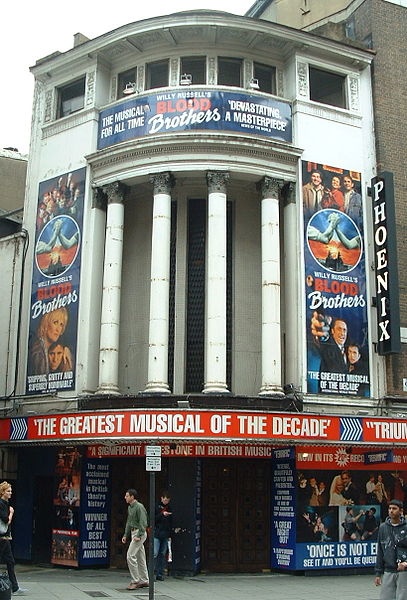
    Growing up in London, there was a clear divide between Prema and her brother. She comments: “My brother was very medical and wanted to be a doctor whereas I was always the arty one. I loved painting and I loved art. That said, theatre was basically non-existent in my childhood”. In fact, Prema didn’t go to the theatre until she was 16. Her first experience was seeing Blood Brothers as part of a school trip. She recalls: “I had never stepped foot inside a theatre before but, come the end of the show, I was weeping! As an audience member, I had my world transformed and it completely blew away my expectations of what theatre was. It definitely sparked my interest so you could say that Willy Russell is the reason I’m sat here today!”. Although the show left a mark on Prema, it was mainly the performances as opposed to the technical aspects: “I wasn’t really aware of what was going on behind the scenes. But theatre was something I’d finally been introduced to”.

    So what was Prema like at school? She’s quick to admit: “I was a bit of a teacher’s pet. I was one of those people who just got their head down and grafted – maybe I should have been a bit cooler! That said, I was never what you’d call a straight A student but I did work as hard as I could and gave it my all. That was an attitude that was instilled into me growing up; so long as I gave it my all and tried my best then that was more than enough”. During this time, it seems that the initial visit to Blood Brothers had begun to slowly influence Prema. She comments: “I decided to study Drama at GCSE and my interest continued to grow – to the point where I took Theatre Studies at A Level. I wasn’t exactly sure what interested me in theatre, but there was something about it. I was still quite interested in art and didn’t really know anything about the stage”.

    407px-London_Phoenix_Theatre_2007

    Blood Brothers was Prema’s first theatre-going experience

    But it seems that Prema’s fate may have been decided for her by the other students. She explains: “In Theatre Studies, everyone wanted to be an actor! Whilst I wasn’t entirely sure what I wanted to do, I knew for a fact I did not want to act. That said, I needed to get marks somehow. There was an opportunity to light and, without thinking, I just put my hand up! I didn’t realise it at the time but this was to be a key moment”. Prema soon became known as the course’s ‘go to lighting person’. She comments: “I ended up lighting everyone’s individual performances. For my own assessment, I lit a statue! My initial intrigue was encouraged by my tutor who was great. He gave me some money to hire five par cans, a couple of profiles, primary coloured gels and even a gobo! At the time, this was more than enough to play with and it really helped me experiment”. It seems that Prema’s interest in lighting stemmed from her early interest in art. She explains: “I felt that, with lighting, you had the opportunity to be creative. The stage was a canvas almost and you could bring your own style to it.

    Prema was about to finish Sixth Form and had to decide what to do next. Her decision, similar to her first experience with lighting, was to come entirely by accident. She recalls: “I was sat at a computer and accidentally googled Guildhall – it genuinely was an accident! I had no idea what it was but the more I read about their Theatre Course, the more interested I became”. Yet this interest wasn’t met with support from those around her: “I was the Treasurer of the Student Union at my school (which was somewhat ironic as I hated maths). As a result, when the Principal heard that I was applying for drama school, she dragged me into her office and asked me what I was thinking! She said I should go into politics or economics which would lead to a ‘real job’”. That said, there was some support from Prema’s school: “My A Level tutor David Kinder was the one who said I should go to drama school. He clearly recognised something within me and wanted to encourage that. He also gave me some really great advice. He said in this industry, I needed to be like a shark. He said sharks always have to keep moving forward and, if they don’t, they sink. I think this is fantastic advice for anyone working in theatre and something that really stuck with me”.

    IMG_1520

    Prema during her time at Guildhall

    Prema applied for Guildhall and was accepted. However, she still hadn’t made up her mind about lighting: “At the time, the course was very broad, which actually suited me. In all honesty, I didn’t know what careers existed in theatre and the course offered the opportunity to experiment in lighting, sound, stage management, props, wardrobe – basically everything!”. During her three years, Prema really found her feet – yet lighting was something that didn’t come naturally. She recalls: “There were a couple of guys in my year who were known as ‘the lighting people’. They were renowned for just being great”. Knowing she wanted to work in design, yet not sure in which field, Prema embarked on two work placements: one with renowned Set Designer Es Devlin and another with a certain Neil Austin (you can read his Leading Light here). Prema states: “I spent a week at the Donmar with Neil which was a very interesting experience. On the first day he said he was going to do his best to put me off lighting! What he actually meant was that he wanted to be completely honest and show me how tough this industry is and the reality of working in it. Looking back now, every word he said was the complete truth. Ultimately, this is a difficult career to carve, the money’s not amazing and you have to work exceptionally hard.  Whilst I really appreciate what Neil said, it didn’t put me off! My problem (or possibly strength) is that when someone tells me how difficult something is, it usually makes me want to do it even more!”.

    maxresdefault

    As a student, Prema went on a work placement with Neil Austin

    While Prema’s placement with Neil was useful in terms of lighting, her placement with Es was to prove invaluable in terms of her approach to the rest of her career. Prema remarks: “When I worked with Es, she was just peaking. She taught me how to be both a freelancer and a woman in the industry. Yet this wasn’t by sitting me down and reeling off a list of guidelines. It was more through observation. I watched the way she behaved and dealt with situations and how she held herself. At the time, it was great training but I don’t think I realised that until much later on”.

    However, set design wasn’t for Prema. She remarks: “My perception of set design was that you could put together a model prior to a production and know what it would look like from the get go. With lighting, it was a bit scarier. You don’t really know what a space is like and how this will respond until you’re in it. It was much more of a challenge and, when you’re 21, you’re all up for that. My opinion was the scarier the better as I had nothing to lose”. With this mentality, Prema returned to Guildhall where she would go on to light a couple of shows. She comments: “I was determined to light some productions and quickly became bitten by the bug. The more I lit, the more I realised that I now wanted to be a lighting designer. Come the end of the three years, I had learned an incredible amount and was ready to start building my career”.

    Click here to read Part Two

  5. Leading Light with…Lee Curran – Part One

    Comments Off on Leading Light with…Lee Curran – Part One
    Lee-Curran

    Lighting Designer Lee Curran

    Our Copywriter Adam sat down with lighting designer Lee Curran…

    It’s a sweltering day in London as I walk along Baker Street in a desperate hunt for the Pret a Manger. I soon realise that I’m only a ten minute walk from Regent’s Park Open Air Theatre, where this year’s season has just begun. In a couple of months’ time, the stage will see the return of last year’s runaway success Jesus Christ Superstar which was nominated for a string of awards; including an Olivier nomination for Best Lighting Design. Today, I’m here to meet the Lighting Designer himself, Lee Curran, who has agreed to sit down and talk to me about his fascinating career.

    As always, we start at the very beginning and, for Lee, this is Liverpool. Yet despite being born and raised in the city, at aged ten, he would move south to Norwich. He comments: “My dad was a civil servant and got promoted, so we upped sticks. While I was sad to leave Liverpool, my life may have been very different had we stayed – I’d just been offered a choirboy scholarship at the Liverpool Cathedral School”. That said, Lee wasn’t in Norwich for long. By the time he was 13, his father’s work saw them move once again; this time to Bristol. Whereas other designers I’ve spoken to had a lifelong affiliation with theatre, Lee confesses he was much more interested in football during his teenage years (he still supports Liverpool FC): “It’s often difficult being the new kid in class – something I experienced twice. It definitely reduced my confidence as it takes you longer to settle. But playing sports, especially football, was a good way to gain acceptance”.

    Dracula

    A young Lee starring in a school production of Dracula

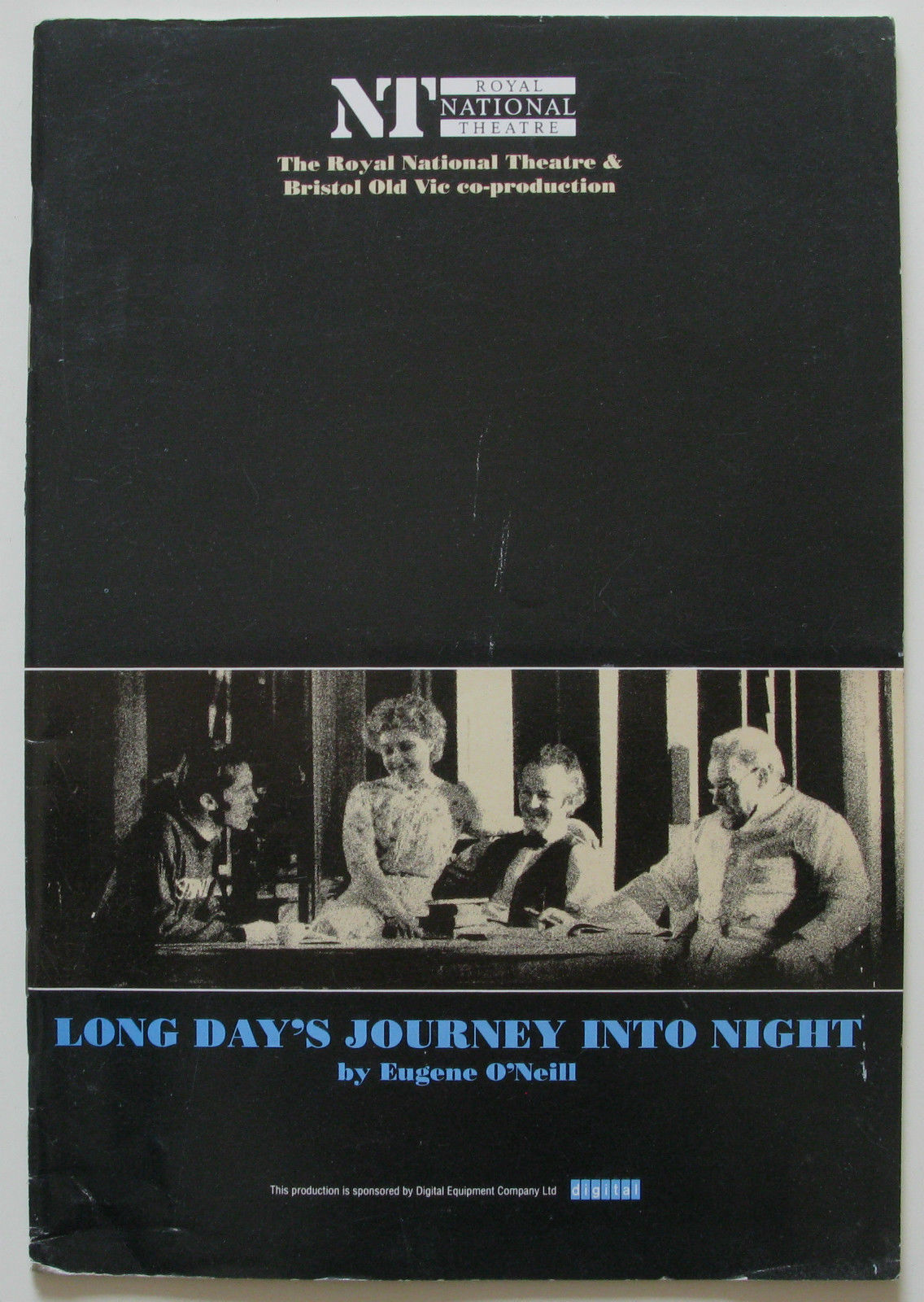
    Even approaching his A-levels, there was little sign of interest in theatre: “I think everyone expected me to go into science and computing. I was good at both as well as being a huge fan of computer games. I remember my school held a pre-Sixth Form week to give us a taste of life as an A Level student.  You could try sample lessons of any subject the school offered, so I thought I should try as many I could, and I found myself more interested in the arts subjects than the sciences. My parents were actually quite supportive, if a bit concerned, but my teachers weren’t too pleased at all. As a result, I ended up taking on a ridiculous compromise of Physics, Maths, English and Theatre Studies. Inevitably, I didn’t do a lot of work on Maths and Physics…”. Part of his Theatre Studies course saw Lee make several trips to the Bristol Old Vic Theatre. He states: “My earliest memories of actually seeing a production are from A Long Day’s Journey Into Night starring Timothy West. Our group was lucky enough to go on stage and see the set. I have this vivid memory of looking through the huge window on set and seeing all of the lights used to create the various daylight effects. I had no idea what they were at the time, but now I know there were a lot of Patt 743s up there… Years later I did a bit of googling and found out it was lit by Mark Henderson”.

    Lee soon finished his A Levels and university beckoned; having now decided that theatre was where his interests  lay. He comments: “Thankfully my parents were extremely supportive of my decision; despite the fact none of us actually knew what my career was going to be”. Lee made the move to the Big Smoke and started a degree in English and Drama at Queen Mary University, London (then Queen Mary and Westfield College). He comments: “It was a strange course in many ways as it was a real mix of those who really wanted to be actors, those who didn’t and then people like myself who were still open to different career paths”. It was during this time that Lee had his first experience of lighting a show: “They had just opened a brand-new studio theatre and the students decided to start putting on their own productions. My mate was putting on a play he’d written called Free Beer, and I ended up doing the lighting more or less because no one else wanted to. I remember binge reading Francis Reid’s book in the library, and that was my first lighting design (it was also the start of my mate’s writing career – he moved to Australia after graduating and became a successful playwright!).

    s-l1600

    A Long Day’s Journey Into Night was Lee’s earliest memory of theatre.

    Lee continues: “I must have done an ok-ish job as I was then asked to light other shows; something I kept doing throughout university”. It was during his second year at university when Lee lit a production of Equus at the National Student Drama Festival that he had a moment of realisation: “It occurred to me that lighting was the perfect intersection between art and science. It’s a combination of abstract creative thinking and practical considerations of angles, power, rigging, etc…”. University was also to offer more opportunities for Lee. In his final year, they employed a lighting technician, Gregor Turbyne, who had worked at the West Yorkshire Playhouse. Lee comments: “Gregor thought I had some talent for it. He gave me confidence and advice to make me realise, for the first time, that lighting could be a viable career path”.
    However, there were still obstacles to overcome. He recalls: “Once I finished, I was in a bit of a quandary. What I had studied was a degree as opposed to a vocational course. I didn’t have a strong enough technical grounding to start working in a theatre’s LX department. As a result, finding opportunities was more difficult”. As a result, Lee had to seek out what work he could that related to lighting. He states: “The Laban Centre (now Trinity Laban) offered these posts called Graduate Technical Assistants. You received a bursary to work in the school, giving technical support to lectures and talks, lighting student shows and touring with the student company. You also got to work on incoming professional productions. It was a great learning curve as many professional dance companies used the theatre to preview shows. Prior to this, I knew nothing about contemporary dance so it was a bit of a baptism of fire!”. Towards the end of his year at Trinity Laban, a show called The Stop Quartet played in the space, which featured choreography by Jonathan Burrows and lighting by Michael Hulls. Following its London run, the show was to embark on a tour and the Technical Manager at Laban, Steve Munn, had a recommendation for the company: “Steve was a great mentor to me during that year and afterwards. He recommended that I go on tour with the show and I did. What happened next was a completely unplanned career excursion”.

    on tour

    Lee having fun whilst on tour.

    At the tender age of 22, Lee found himself travelling across Europe for the next four years. He comments: “It was just an amazing experience driving a van all over Europe. Not only did I learn about lighting but it was also character-building, visiting venues in places I’d never heard of! I remember one time we turned up at a festival in Estonia. We’d been negotiating requirements with them for weeks and though we toured some of our own lights (ETC Source Four Profiles which were some of the first in the UK, I believe), they needed to provide other fixtures. So we turned up at 11pm to do the overnight rig and focus. The Head of Lighting was sat there with a glass of red wine in his hands and casually told us the venue didn’t have any of the equipment we wanted. When we asked why, he simply shrugged his shoulders and offered us some wine instead! Trying to make the best of a bad situation, we walked on stage to see what kit they had. They had lights that looked like Patt 243s – except they were literally welded onto the bars with this weird tubing coming out of the back of them. They were like prehistoric moving lights, with very rudimentary pan, tilt and zoom mechanisms. So far, so interesting, but every time we attempted to zoom, the bulbs blew up…At the next venue, they had no access equipment and expected us to bounce-focus everything. As the design featured a very precise, Mondrian-esque pattern of lines, that really wasn’t an option. We came back after lunch to see these builders carrying scaff towers onto the stage. Apparently the local promoter had bribed them to let us use their towers to focus!”.

    england-london-trafalgar-square-institute-of-contemporary-arts

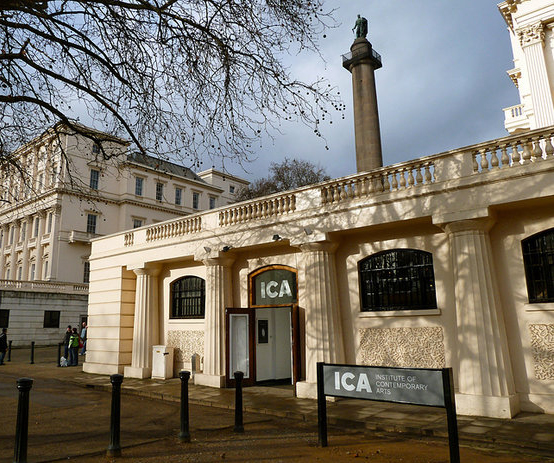
    The Institute of Contemporary Arts where Lee worked as the Technical Co-ordinator for ten years.

    Thankfully experiences like this were a rarity but touring life was extremely useful to Lee: “On tour, I saw completely different spaces, different approaches to working and different ways to use equipment to create certain effects. It was a fantastic learning experience”. Meanwhile, he continued to pick up the occasional lighting design gig for dance companies at venues such as The Place, Jackson’s Lane, and the Southbank Centre.

    After a few years on the road, Lee had grown tired of touring: “I applied for a couple of permanent jobs in London. One was Lighting Technician at the Royal Court and the other was Technical Coordinator at ICA. The day after my ICA interview, they called me and offered me the job. I hadn’t heard back from the Royal Court yet, but for some reason I decided to take the ICA job anyway. Ever since I’d been at uni, I’d had the goal of working in the lighting department of a producing theatre, so I have no idea why I made that decision(!). However, I loved working there. We did theatre, live art, dance, club nights, gigs, digital interactive and telematic work, webcasts, installations and all sorts of experimental performances”. It would also turn out that the role at ICA was to be for the long term. Lee states: “I stayed there for twelve years and during that time became the Technical Manager. In hindsight, it was fantastic and fertile ground on which to be developing as a lighting designer. My experience here of working on such an eclectic mix of art showcased so many styles of lighting to me and demonstrated that there wasn’t just a singular way of doing things. At the same time, I was still lighting shows on the side and developing my own methods”.

    Click here to read Part Two.

  6. Leading Light with…Lee Curran – Part Two

    Comments Off on Leading Light with…Lee Curran – Part Two
    sb-political-mother-line-arms-high_1000

    Political Mother at Sadler’s Wells

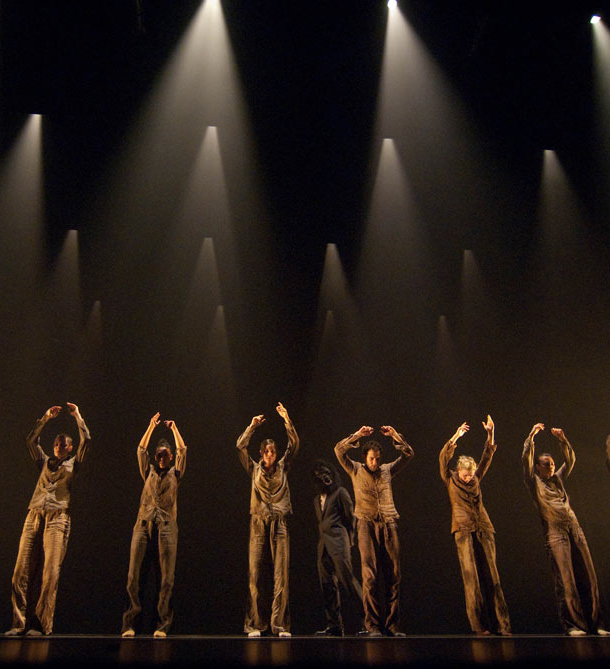
    This approach saw Lee work with choreographer Rafael Bonachela, the current Artistic Director of the Sydney Dance Company. “At that time Raf was managed by my girlfriend (now wife) Kerry, who suggested me as lighting designer for a piece he was entering into the inaugural Place Prize for choreography. “They hit it off and Rafael asked Lee to light the piece, which went on to win the Prize. Lee adds: “I was completely taken aback by the success of the show but it was fantastic to receive such recognition for our hard work. We went on to make four more pieces together, including one for Rambert”.  However, the Place Prize would also lead to what Lee would describe as a defining collaboration of his career so far. He recalls: “Another one of the finalists in the Place Prize was a choreographer called Hofesh Shechter. He’d liked my work on Raf’s piece and asked if I wanted to light a new piece he was making.” That piece became Uprising, and was the first of several pieces Lee would light for Hofesh over the next few years, the most prominent being Political Mother.

    Political Mother premiered at the Dome in Brighton before going to Sadler’s Wells in London, and then toured the globe for several years, from New York to Tokyo, Paris to Rio, Berlin to Delhi. It returned to Sadler’s Wells in London several times, in its larger Choreographer’s Cut version featuring 24 live musicians and 16 dancers, and even played two nights at Brixton Academy. It is the piece which Lee feels opened several doors for him: “By having the show come back again, especially in London, it means as many people as possible could see my design and get a taste of my work”.

    RCTconstellations2012JP_01146-Edit

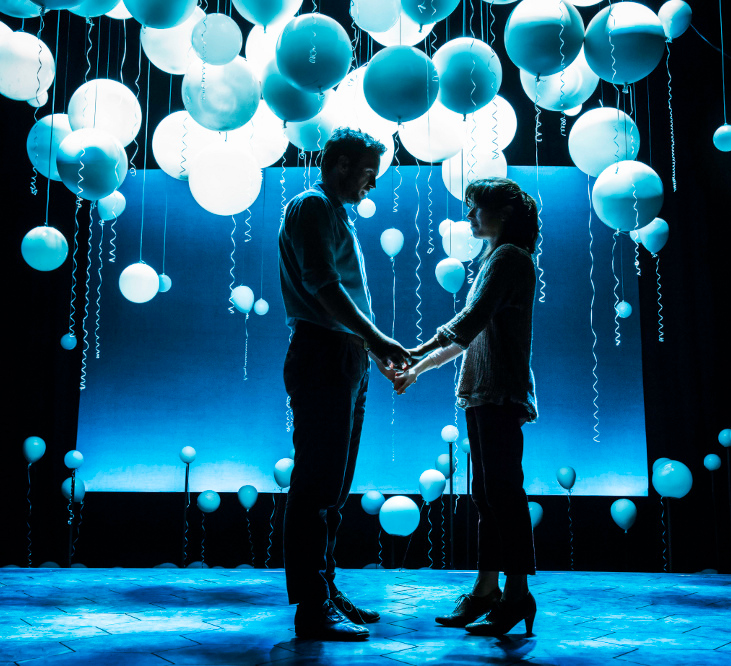
    Constellations would go on to have major international success.

    Following this exposure, Lee started to get more interest from the theatre sector. In 2009, he had lit a show called Unbroken at the Gate Theatre in Notting Hill, directed by Natalie Abrahami. The show was designed by Tom Scutt, who was not long into his own career. Lee continues: “I collaborated really well with Tom and I had a great time working on the show in general. Fast forward two years, and Political Mother was at Sadler’s Wells again. One night I was browsing through some of the show’s feedback on Twitter and saw Tom had tweeted how much he loved the show. I tweeted the usual thanks back to him, and he hadn’t realised I’d lit it…” Tom and Lee soon reacquainted and this was during a time when Tom was speaking to director Michael Longhurst about a new show they were working on at the Royal Court Upstairs. Having been so impressed by Lee’s work on Political Mother, Tom put him forward to Michael as a possible Lighting Designer for the piece. The play they were working on was a certain Constellations by Nick Payne. Lee states: “It was the perfect show for me to light. The set design was like an art installation and, as someone who lit dance, I was used to working with bodies in empty spaces”. Constellations would prove another major turning point in Lee’s career as the show would go on to have phenomenal success. Later that year, it transferred to the Duke of York’s in the West End, and a move to Broadway followed two years later; something which Lee describes as a career highlight: “For myself, and a lot of the team, this was the first time we’d worked on Broadway so it was a big moment. As we had managed to keep the same creative team from the original production, we were a really tight knit group and all ‘in it together’. It really was a great experience”.

    Ham4

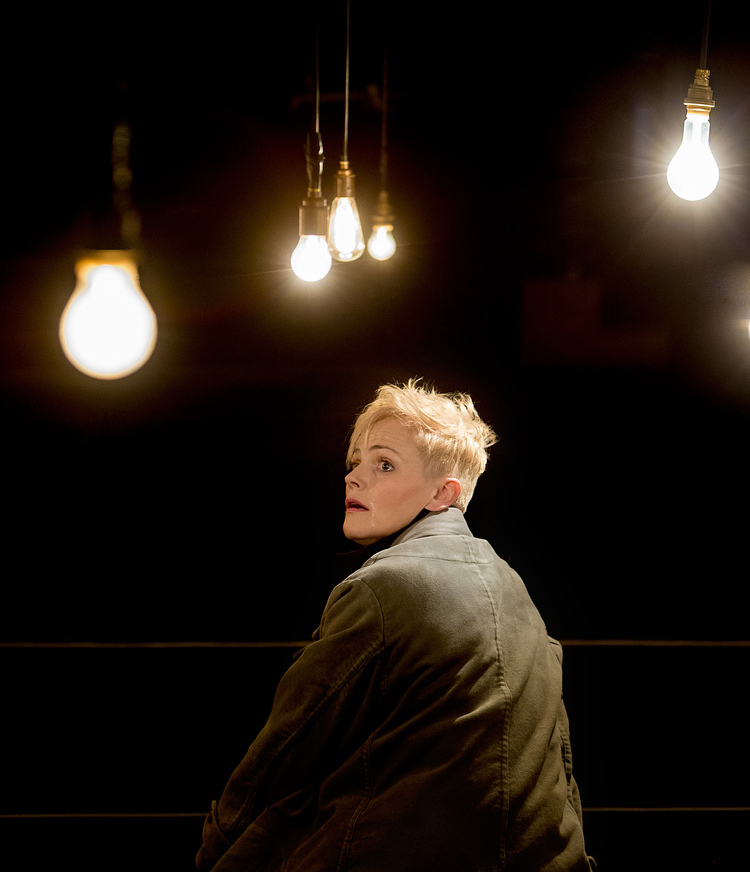
    Maxine Peake in Hamlet at the Royal Exchange

    That said, Lee’s memories of the show aren’t all idyllic. He comments: “My Programmer on the original show Upstairs at the Court was Jack Williams, and it was the last show on which the theatre used a Strand 520 before replacing it with an ETC Ion. I think Jack would be the first to admit that programming was never his strong point, and it would have been so much easier if we’d had an Ion!”.

    Following the exposure and acclaim of Constellations, the theatre doors flew open for Lee and the work came flooding in. These included Protest Song at the National Theatre, Blindsided and Hamlet at the Royal Exchange, Arden of Faversham at the RSC and shows for LIFT festival. Lee states: “Up until this point, I’d been predominately a dance lighting designer, so to get so many theatrical opportunities was a big shift, but obviously something I embraced”.

    And the more Lee began to light theatre, the more he was surprised by how few lighting designers worked in both theatre and dance. He recalls: “I think that there was a weird schism in this country between dance and theatre. You either worked in one or the other. However, I wanted to be active in both, and I think things are improving now; those barriers are starting to break down”.

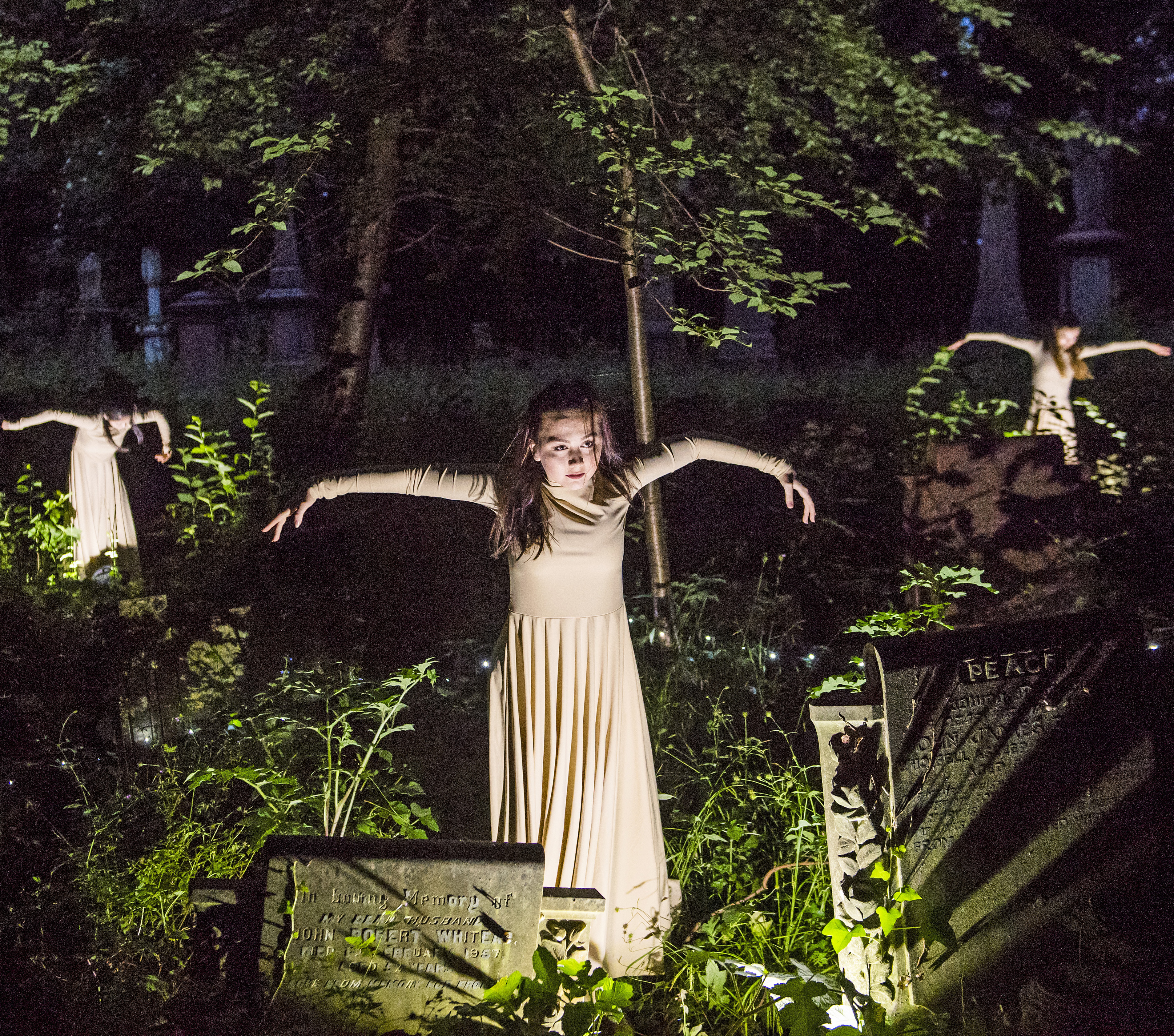
    Despite this wave of theatre shows, Lee was still conscious to keep his portfolio as varied as possible: “It was important for me to stay true to the path I’d taken into this industry, and try to keep plenty of variety in my work. As well as dance, I continue to work at different scales, lighting site-specific and devised work. For instance, every two years, I design a show for the LIFT Festival. Most recently, the show Depart was a promenade circus, choral and dance piece that took place in a cemetery. It was pretty surreal”.

    DEPART-by-Circa-photo-Tristram-Kenton-4

    Part of the LIFT Festival, Depart was a promenade circus, choral and dance piece that took place on-site in a cemetery.

    Listening to Lee discussing Depart, I can’t help but ask what other highlights stand out. A few immediately spring to mind: “I worked with the National Theatre of Wales on a show called Mametz. It was part of the WW1 centenary commemorations, about a particular battle near the Somme. It took place on farmland in Monmouthshire, mixing promenade and stages, scripted theatre and dance, and told an incredibly important story on a huge scale; something I genuinely believe we did justice to. Other highlights include Hamlet at the Royal Exchange which starred Maxine Peake where we made the ghost manifest through light and sound in a cloud of tungsten lightbulbs. Orphee et Eurydice at the Royal Opera House, with the orchestra on a massive platform onstage and the whole stage covered by an enormous ceiling, was fairly epic as well”.

    There is one rather obvious highlight in Lee’s CV that I wish to discuss… Jesus Christ Superstar. When I first mention it, he tells me something very surprising: “This is the first musical I’ve ever lit. That said, I’ll need to think carefully before lighting another as this couldn’t have gone any better! I had a lot of meetings with Timothy Sheader (the director) and Tom Scutt (the designer) and we all sat down and discussed what we wanted to achieve with the show. We really wanted it to have a contemporary feel rather than simply making it a period piece. Ultimately we wanted to achieve something that felt like it could have been written last month – something I believe we did”. This contemporary approach certainly worked as the show became a huge critical success; so much so that it returned again this year. Lee comments: “It’s one of those pieces of theatre that I’m truly proud of. It felt like we were making something special and I’m delighted by the response it received”.

    JCS. Photo Johan Persson

    Jesus Christ Superstar earned Lee an Olivier-nomination.

    It appears that Lee’s portfolio will simply continue growing as he works on a whole range of exciting projects over the next few months. Yet what is it that allows Lee to continue to work so flexibly across so many different types of show? He has a very knowledgeable answer: “You just need to find a way that works for you. Courses may offer a certain guideline or approach but ultimately you have to take your own experiences and ideas to define your individual style. I think it’s important to remember that there is no ‘right way’. If you look at how I arrived to where I currently am, it shows there’s no particular way of doing this. Just enjoy the journey and keep reminding yourself that this is your career path – nobody else’s”.

    Upon hearing such sound advice, it feels like a positive point on which to conclude our interview. Lee has to nip down the road to Regent’s Park and I have to make the way back to WL HQ in South Wimbledon. Upon departure, I tell Lee that I’m coming to see Jesus Christ Superstar but I initially double booked myself as I forgot I was seeing Road at the Royal Court on the same evening. He informs me: “I’m lighting that as well”. So whether it’s an all-time classic rock musical, or an ensemble Northern drama from the 80s, it appears that Lee’s pragmatic approach will see his designs grace the stage for a long time to come…

     Photos courtesy of ICA, Johan Persson, Jonathan Keenan, Lee Curran and Tristram Kenton.

  7. Leading Light with…Malcolm Rippeth – Part One

    Comments Off on Leading Light with…Malcolm Rippeth – Part One
    Malcolm Rippeth 1920x1080

    Lighting Designer Malcolm Rippeth

    Our Copywriter Adam went to meet Malcolm Rippeth.

    Shakespeare’s Globe is undoubtedly one of London’s most iconic theatres; allowing audiences to experience the Bard’s work similar to how it would have first been performed. It sits on London’s Southbank and, as I walk to the main entrance, is being swarmed by tourists about to embark on a guided tour. As I enter the building, it strikes me that it was just over a year ago when WL supplied the first ever lighting rig to the venue. The person who designed the rig is the same individual lighting the last show of this current season. That person is a certain Malcolm Rippeth and he has agreed to become this month’s Leading Light.

    I sit down with Malcolm who has taken an hour away from technical rehearsals of Boudica – the only new play of the season: “It’s a bit intense as we’re gearing up for the preview on Friday. I actually think this is one of the most ambitious shows to be performed in this space since I’ve been involved here”.

    Malcolm Rippeth

    A very young Malcolm with his sisters.

    As time is of the essence, we soldier on and, as always, start at the beginning. Malcolm explains: “I was born in Newcastle but raised in small towns & villages around the Darlington area. I was the youngest of three children, with my big sisters 11 and 8 years older than me so I was pretty much left to my own devices”. Malcolm did not come from a theatrical family – far from it in fact. His mother and father actually owned a corner shop which he lived above. He comments: “It was like something you’d see in Open All Hours! My parents would pick the goods from the shelves behind the counter and it was full of the village regulars. It was definitely of its time!”.  And initially living in a small village meant that Malcolm had a somewhat restricted experience of the outside world. He recalls: “I had an enjoyable upbringing. That said, I didn’t really grasp that the rest of the world existed so it was a case of living in blissful ignorance”. Despite living in such a small community, this wasn’t going to stop Malcolm’s interest in lights. As a matter of a fact, he remembers two separate occasions, both when he was aged five, that would ignite his passion for lighting.

    Billingham Forum - Something Concrete

    Billingham Forum was Malcolm’s first experience of theatre.

    The first one, bizarrely enough, involves a Brownies group. He states: “It was the winter of 1978 and my mother was a Brownie leader. Part of her duty was taking the Brownies to the panto at Billingham Forum. The night she took them, she couldn’t find anyone to babysit so took me along as well. So there I was, my first time at a theatre, sat in my bright blue jumper among a crowd of 600 girls in Brownie uniforms. Rather inappropriately, when the panto dame came on and had to pick on one of the audience members to come on stage, I was the (un)lucky one! I remember being dragged on stage and my mum turning a new shade of red”. Yet, for all of his mum’s distress, it would prove to be a worthwhile embarrassment: “I remember being stood on the front of stage and looking back into the audience and not being able to see a thing other than the glare of the lights. I then looked down and stared at all of these fixtures beaming up at me and I was just wowed by them all”.

    And it would appear that not long after this initial brush with lighting, Malcolm would soon be undergoing an equally influential experience. He states: “That winter was known as the winter of discontent. There were a lot of strikes going on at the time and, as a result, frequent power cuts. I was still living above the corner shop which was lit solely by one fluorescent tube; although my friends thought living above a shop was pretty cool it wasn’t a space which held any special charm for me. When the electricity went, however, my parents would light the shop with candles, paraffin lamps and torches. I remember walking down one night into the shop and being surrounded by this different array of lights and becoming mesmerised by the transformation of my everyday space into a magical one. I think I realised right then the power of lighting and what it could achieve”.

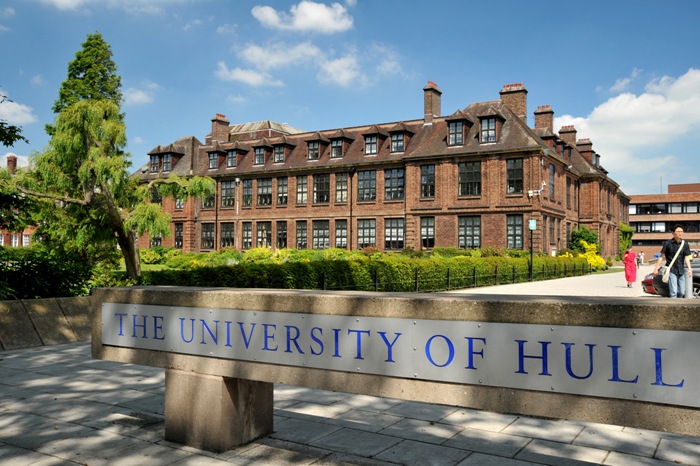
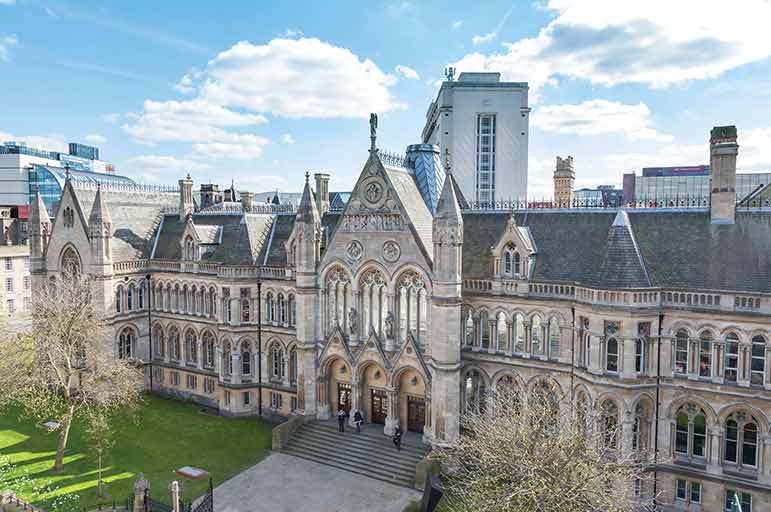
    The University of Hull where Malcolm studied Drama.

    The magic of the corner shop was soon to be a distant memory as Malcolm’s family were to up sticks and move to a nearby town. Malcolm’s father took a job as a school handyman whereas his mum became the assistant warden in an old people’s home. The move away from the corner shop was to be the first of many. Malcolm recalls: “It was strange as, every time I started a new stage in my academic life, I always seemed to move towns! For instance, just before starting primary school, I moved. Then it was secondary school and I moved again. And then it was sixth form and…well you can see the pattern emerging!”. Despite this frequent change in school, this didn’t disrupt Malcolm’s growing passion for lights. He comments: “Following my experience being on stage at the Brownie panto, I decided to try my hand behind the scenes. As a result, whenever my secondary school put on a play in the school hall, I volunteered to light it. All my school had were 12 lights – a mix of Patten 23s and 45s. It was a good starting point and I remember skivving out of class any opportunity I could to work on a show”.

    As Malcolm approached Sixth Form, he admitted that he “more or less knew I wanted to be a designer”. Although his A Levels choices were not the most artistic. He recalls: “I chose Double Maths, Physics and Theatre Studies. I thought this would be a technical approach to lighting. That said, halfway through I realised that Further Maths wasn’t something that I really wanted to do so dropped this and took up English instead”. Malcolm’s education was certainly veering towards a more artistic selection and this was cemented when he decided to study Drama at the University of Hull. He states: “Despite studying Drama as a whole, I really wanted to specialise in lighting design. The course knew this and, as I was the only person on my course who wanted to light, I was essentially the resident designer for all shows. The university had a really good studio theatre and, as someone who had no formal training in lighting, I used both the space and productions to learn as I went along. It was a case of trial and error and it was hugely beneficial”.

    sw3_maninthemoon

    The now-closed Man in the Moon Theatre on Kings Road, Chelsea where Malcolm worked as Technical Manager. It was demolished in 2003. 

    Having had what he describes as “an amazing three years”, Malcolm graduated from Hull and made the move straight to London aiming to become a freelance lighting designer. However, reality was about to hit the ambitious young graduate very hard. He comments: “I moved to London despite having absolutely no contacts whatsoever. I literally got a train down and got off with no advice and certainly no career plan. Looking back, there certainly is a fine line between brave and naive!”. So instead of lighting shows, Malcolm found himself working in a bar (with his previous jobs in Hull being at a nightclub and a fish factory). He worked in the bar for six months, during which time the lighting work seemed elusive. Thankfully, he had a flatmate who was able to offer him some sound advice: “As luck would have it, my flatmate was a careers advisor. Having seen me fall into a cocktail-making lull, he sat me down and said that my dreams of becoming a lighting designer would go nowhere fast at my current rate. He said I needed to have a plan; a feasible way for me to achieve my goal. Something must have worked as I began to start planning out the next steps there and then”. The first of these was to knock on the doors of venues to see if they had any lighting work available. One of these was the Man In The Moon Pub Theatre which was situated on King’s Road before being demolished in 2003. Malcolm comments: “I knocked on the door of Man in The Moon and the Artistic Director opened it. I spoke to them about my current predicament and they told me that they were in fact looking for a new Technical Manager. I got the job there and then!”. And following his appointment as Technical Manager, Malcolm not only began to light shows in the venue but also all across the London fringe. He states: “I’d decided I was really going to make a go at it now and lit as many shows as I could. I did a lot of work at the Battersea Arts Centre and the Gate Theatre. One of my highlights was lighting a version of The Tempest at the Grace Theatre in Battersea (now better known as Theatre503) in 1997. We managed to tell an epic story in what is an extremely intimate space with a tiny rig”. While Malcolm’s feet were firmly situated within the London fringe theatre scene, every summer he would work on the Edinburgh Fringe; in particular  with a pair whose career hadn’t ‘risen’ as of yet: “In their early days, I worked on Mel and Sue’s shows both in Scotland and on tour. I was essentially their lighting and technical manager. We had a great time working together and none of us knew how big they were going to be back in the mid-nineties”.

    Click here to read Part Two.

  8. Leading Light with…Malcolm Rippeth – Part Two

    Comments Off on Leading Light with…Malcolm Rippeth – Part Two
    Gainsborough - Geraint Lewis

    Emilia Fox and Ralph Fiennes in Richard II at the Gainsborough Studios. Malcolm was one of the Lighting Technicians for the season. 

    Malcolm was working on the London fringe scene for a good five years and he once again reached the point where he was left asking questions about his career: “I’d been working on the fringe for a while and, while it was great collaborating with so many people, I didn’t feel I was progressing”. The year was 2000 and Malcolm decided to take a year out to work at the Almeida’s temporary Gainsborough Studios space. The six month season included two Shakespeare productions starring Ralph Fiennes. He comments: “It was a really exciting project in a unique venue which is why I was so keen to get involved. I was one of the lighting technicians which meant I got to see first-hand the ins and outs of how everything worked. It was, again, a great learning curve”. The productions were to take on a life of their own and see Malcolm go on this journey with them. He comments: “The shows then went over to New York and Tokyo which was just an incredible experience. What made it even better was seeing someone such as Mark Henderson working in these vast spaces and managing to use the light as intricately yet effectively as possible. Having now not lit a show for nine months due to working on the production, this inspired me to not only get back in the game but push myself to take the next step in my career”.

    Romeo and Juliet - ETT

    Malcolm lit Romeo and Juliet for ETT.

    Malcolm soon found himself back in London and, using the contacts he’d made in Edinburgh and on the fringe, put himself forward for some relighting work. He comments: “I decided that relighting would give me the chance to work with established LDs and learn how to light shows on a bigger scale. I found myself doing relights for Bruno Poet, Ben Omerod, Mark Henderson and the ETT. What relighting shows really taught me was how to transfer ideas to bigger venues. Having worked on the fringe where spaces were so intimate, this was a real sense of stepping up in terms of scale yet also ambition”. And while Malcolm was technically relighting the work of others, it did offer him the opportunity to implement his own lighting design: “What you need to remember is that a show is never finished and a lot of those I relit were actually developing on tour. Therefore you have to bring your own creative vision to the piece when adapting to any amendments. It’s a fantastic bridge between working on the fringe and larger venues”. And this creative flair was noted by many of the companies that Malcolm worked with. He comments: “Having worked on several ETT relights, they offered me my first show as designer: Romeo and Juliet. It was directed by Stephen Unwin and toured the UK before travelling to the Hong Kong Arts Festival. This was a great opportunity for my work to be seen on a wider scale all across the country and it definitely felt that I’d made that next step”. It was around this time that Malcolm had what he deems to be his biggest career break. He recalls: “In 2002, Northern Stage approached me, asking if I would light my first show on their main stage. This was Pandora’s Box and it was a co-production with Kneehigh Theatre. I remember meeting with Emma Rice and the rest of the Kneehigh team early in rehearsals in Cornwall. We immediately hit it off and fifteen years later I’m still lighting their shows”.

    Brief Encounter - Jim Cox

    Brief Encounter for Kneehigh was an international success.

    As an Associate Artist of Kneehigh Theatre, Malcolm has worked on a range of the company’s productions including Tristan & Yseult, The Red Shoes, The Wild Bride, The Flying Lovers of Vitebsk and The Umbrellas of Cherbourg. He comments: “I love Kneehigh as a company. They are extremely ambitious in what they make and that pushes me as a designer. Whenever I’m lighting one of their shows, I find myself being part of the process from day one, through the planning and the chaos, eating and playing together. It’s a proper collaboration and I feel I’ve played a role in making that piece of work, not just lighting it”. Undoubtedly one of the biggest collaborations with Kneehigh is Brief Encounter, for which Malcolm won the White Light WhatsOnStage Award for Best Lighting Design and was nominated for the Outer Critics Circle Award in New York. He recalls: “Brief Encounter seemed to be one of those shows that just got bigger and bigger. It initially toured in 2007 before transferring to the West End in 2008. It then toured again in 2009, before transferring to Broadway in 2010, before another tour and then going to Australia in 2013. It’s a really special production. It was one of those situations where everything just came together as it were. We had a great team, great material and what resulted was a very memorable production. It was also one of those rare shows that it seemed everyone could go and see and get something from – proven by the fact that it’s one of the few shows I’ve taken my father to, and he loved it!”.

    Boudica - Steve Tanner

    Malcolm’s work at Shakespeare’s Glove is one of his proudest achievements. 

    Over the past ten years, Malcolm has worked on a whole range of productions which, together, produce a very enviable CV. These include The Empress at the RSC, Refugee Boy at the West Yorkshire Playhouse, Spring Awakening with Headlong, After Electra at Theatre Royal Plymouth, Only the Brave at Wales Millennium Centre and Pleasure at Opera North. I ask him if there is one show that he would class as a particular highlight. And while Brief Encounter was obviously a phenomenal success, it’s not an actual show which he’s most proud of. He comments: “One of the highlights of my career was the installation of the temporary lighting rig at Shakespeare’s Globe. When Emma Rice was appointed Artistic Director, she asked me to design a rig that would be suitable for the space; as discreet and sympathetic to the building as possible but also widely versatile for any number of lighting designers to explore. It provided an opportunity to discover this unique theatre in a new way, for creative teams and audiences alike. We’ve celebrated the fact that, for the majority of evening shows, you have natural light dominant for the first half and then our own lighting becoming dominant for the second. It’s the best of both worlds and it was thrilling for me to be the first lighting designer to work here. The response was extraordinary; overwhelmingly positive but also provoking hate mail and ultimately controversy which led to national news stories. Boudica will be the last show to be lit here this season, and the board have made it clear that there will be no place for theatrical lighting in the future. I’m incredibly proud of what our short-lived lighting department have achieved, on an exhilarating but all too brief journey”.

    DMlhIwAX4AMny0c

    The Tin Drum which has since opened to rave reviews.

    And so comes the point with every Leading Light where I ask Malcolm if he has any words of wisdom for the next generation of Lighting Designers. What he offers is obviously drawn from his own experience of working his way up:  “Whatever role you find yourself in on a production, try to engage with the lighting design. That sounds an obvious thing but it can be fascinating, whether you’re rigging lights, programming, attending a meeting or cutting colour, to try to figure out what the LD is up to, how you might approach the same production, the same set design. Whenever you walk into a room, consider the lighting and how this can be used creatively. I remember when I was working at the Almeida as a technician – I would always be thinking about the lighting in that space and how I would use it. If you’re lucky enough to work in theatre then listen in to the creative team’s conversation when you can and see what you find”. He also has some more general advice: “I try not to forget that everyone working on a show, and in the organisations and buildings that produce them, are essential to what we do. Also I don’t see any heirarchy between nominally creative and technical roles – good production electricians and programmers can be my closest collaborators and their work requires both great skill and creativity”.

    At that point, Malcolm’s phone vibrates and he has to dash off back to rehearsals. We walk along the Southbank and I ask him what he has coming up following Boudica. He informs me: “I’m about to get back into rehearsals for a new Kneehigh show called The Tin Drum. I’m really excited as I love working with Kneehigh. They are a truly collaborative company and everyone, director, actors and lighting designer, is a part of the entire creative process. This level of engagement is what I try to bring to every job I work on”. And looking at how much Malcolm has achieved in the past few years alone, it’s clearly an approach that’s worked extremely well.

    Photos courtesy of ETT, Geraint Lewis, Jim Cox, Malcolm Rippeth, Something Concrete, Steve Tanner and the University of Hull.

  9. Leading Light with…James Farncombe – Part One

    Comments Off on Leading Light with…James Farncombe – Part One
    DW_wos_concert_8451

    James Farncombe

    Our Copywriter Adam went to meet James Farncombe…
    It’s a blustery Monday morning as I exit the tube at Leicester Square. As I walk up the stairs, I find myself surrounded by posters for Yerma – the Olivier Award-winning play that ran at the Young Vic last year. It’s returning this summer and tickets sold out in a matter of hours. It strikes, as I emerge into daylight, that the lighting designer for the show is a certain James Farncombe – and that’s who I’m meeting for this month’s Leading Light.
    As always with Leading Light, we start at the beginning. For James, this is in North Shropshire. James states: “I was born in Shropshire and lived there until I was around nine years old. Then my Dad changed jobs and we moved down to Reigate in Surrey”.
    So how theatrical was James’ childhood? He explains: “Mum and dad were keen members of the Guildbury Players Amateur Dramatics Society. However, they had moved to the Midlands and mainly knocked all that on the head by the time I was born. That said, I have an early memory of seeing my dad in an am dram in my school hall. He was the villain and got shot in the final scene. He had a little red felt patch in his shirt pocket that he had to whip out to represent the bullet hole. I think he dropped it and I remember being in stitches. They also took me to see a fair few professional shows, so I was very much aware of the theatre as a child”.

    James Young

    A younger James prior to his lighting days…

    There were some other early clues about James’s eventual vocation: “As a very small lad, I was obsessed with candles. I made endless, elaborate drawings of them and insisted that the family ate dinner by candlelight for as long as they could bear. When I couldn’t have real candles, I’d make my own out of toilet roll tubes with a bit of cotton wool stuffed in the top and position them in dark corners.  I also remember having a little set of Lego bricks with lights in, powered by a little battery pack. You could build them into your own Lego house or spaceship or what-have-you. I loved the little shadowy worlds you could create”.
    After three years in Surrey, there followed another significant alteration in James’ life: “We moved onto a narrow boat when I was 13 and lived aboard for two years, travelling the waterways of the UK. For me and my two younger brothers, it was quite an adventure. We were all home schooled. My folks used to say ‘if the weather’s bad, we’ll conjugate our verbs. If it’s sunny, we’ll go canoeing’.  The second summer afloat was the hottest summer on record for 75 years – very few verbs were conjugated.  It was quite something to see so much of the British Isles and, at a young age, I became accustomed to the idea of moving around and having this transient lifestyle”.

    Paul Pyant

    James’ uncle was a certain Paul Pyant

    The narrowboat life wasn’t to last forever and James found himself back in North Shropshire by the time he was 15. This also meant a return to school; something which James embraced. He recalls: “I was ready to go back to school – I’d discovered girls and team sports”. It was also at school where James started to get involved with the school drama group. And similar to a lot of the other lighting designers I’ve interviewed, James started life on stage as opposed to behind it. He recalls: “I was a policeman in the school panto. I upstaged everyone by mugging dreadfully.  Around this time I also started playing and singing in bands, so I must have had intentions of being onstage in some way.  However, the following year, I found myself operating the lighting for the school production, using a little two preset desk, positioned on the fly floor. Our drama teacher, Mrs Hughes, sat in the hall and called out the channels. There was a handful of Patt 23s front of house and some coloured battens overhead. I have no idea what it looked like.  But I remember the smell of hot gel and burning dust rising off the lights and the excitement backstage…”.
    It was also around this time that James has his first encounters with professional theatre, courtesy of his uncle – a certain Paul Pyant. He recalls: “I knew Uncle Paul was a lighting designer so I was always aware that it was a job that people did.  He was the cool uncle, always travelling to glamorous places”. James remembers: “One year, he came home with a little battery tester for the Christmas tree lights. We tested each bulb until we found the one that didn’t work and the tree lit up.  It was a pivotal moment…”  Due to Paul’s long association with Glyndebourne Opera, James saw a number of productions there during his childhood.  This inevitably contributed to his interest in theatre; in particular what was happening backstage. He states: “When we went to see an opera at Glyndebourne, we had access to a secret world. We’d sit in seats behind the lighting operator. I remember staring at the Galaxy desk, the house lights going down, seeing the little red lights trickle up the desk as the cues ran and hearing the muffled voices of stage management over cans. I was mesmerised”.

    Death in Venice

    Death in Venice at Glyndebourne was part of James’ work experience

    One particular Glyndebourne Opera that James remembers was Oliver Knussen’s Where the Wild Things Are “back in something like 1984. Following the show, we were given our own private backstage tour. I remember a rabbit warren of backstage corridors in the old Glyndebourne building.  I think at some stage we had to go outside to cross the roof. We encountered the massive Wild Things costumes hanging motionless in the darkened wings.  The whole atmosphere was completely magical.  It was hugely significant for me to return there last year to make my debut lighting for that company, albeit in the modern and, I think, more exquisite incarnation of that venue”.
    In 1989, in his last year at secondary school, James embarked on a week’s work experience with Paul Pyant. He recalls: “Paul was lighting Street Scene at the ENO, Death in Venice at Glyndebourne and Strange Meeting for Northern Ballet up at Buxton Opera House.  I sat in on lighting sessions for all three productions that week. There was a lot of travelling and I still don’t know how he managed that kind of schedule. It was an amazing experience though.
    “I was 16 and while I had an interest in theatre, I wouldn’t say it was a passion yet. I was obsessed with playing guitar. My first band was called Burnt Offerings. We wrote lots of noisy songs but had no idea how to go about getting heard. My poor parents and our neighbours heard plenty, I’m sure”.
    Since a young age, James always enjoyed drawing and painting. Theatre still hadn’t fully taken hold in his imagination, so he took Fine Art at A Level. He comments: “At the time, it seemed like a logical step, but I still had no long term plan. Meanwhile, I became friends with some of the students on the Drama course. When I mentioned I had an uncle who worked in theatre as an LD, I sort of became their lighting designer by default.  I remember a rather confusing show featuring an octopus and a rather raucous version of Grease.  I’ve never been so nervous as I was preparing to operate the lights for those productions!”.

    Arkwright-building

    Nottingham Trent University where James studied Contemporary Art.

    But still, James didn’t take lighting seriously as a career option.  He soon found himself on his way to Nottingham to study Contemporary Art. Yet, even in Nottingham, it appears that the Gods of theatre were conspiring to get him back behind a lighting desk. James explains: “I had really taken to student life in Nottingham and I remember in our first year there was the Nottingham Dance Festival. Our tutor came in and said that they needed some volunteers to help with the technical setup.  In a fit of enthusiasm, I put my hand up before looking around and realising there was just me and one other person. Despite there being only two volunteers, it was a really useful experience. We had a small venue on campus called the Powerhouse that hosted part of the festival. It had a little rig of Patt.23s, Silhouettes and Starlets along with a handful of Cantata profiles. Performers included the likes of Wayne McGregor, Russell Maliphant, DV8 and Javier de Frutos so real class acts. That’s where I also first encountered the work of people like Michael Hulls and Lucy Carter.  I remember Lucy brought a show that was entirely side lit – I’d never seen anything like it.  It was also the first time I had done any sort of rigging from a plan and I was learning from scratch on the job. I remember trying to plot for Lucy on a Strand MX desk and I think I wore out the little rubber cursor button! It was all rather a baptism of fire but I loved it”.
    James would continue to help in his second year and eventually started taking on a more artistic role: “The technician there was an excellent chap called Pete Clifton. He taught me a lot of the basics, and it was really during this period that the theatre bug took hold. What Pete also gave me (and perhaps most importantly) was the freedom and time to experiment”. It was during this time that James would co-found a theatre company: “We called ourselves Eleventh Hour.  I was co-writing shows, producing and performing as well. We all did a bit of everything”.

    Nott-Gala-David_Baird-9391

    The Nottingham Playhouse would be James’ home for three years

    James finished university and decided to stay in Nottingham. Thanks to some Arts Council funding, he continued to work on a couple more shows with Eleventh Hour “before we all went our separate ways”.  Following his previous work at the Nottingham Dance Festival, he was asked to join as their Technical Manager. James comments: “I took the job at Nottingham Dance Festival but I honestly had no idea what a Technical Manager was!”. In this instance, it meant looking after the technical requirements of five venues across the city. Safe to say, it was another very steep learning curve.  He was also given the opportunity to design for a couple of small shows as well. While James enjoyed working at the Dance Festival, he wanted to broaden his horizons slightly: “I remember my friend Jess had just started working at the Nottingham Playhouse. She said she knocked on a door, asked for work and they had something available. She told me I should do the same, so that’s what I did”.

    It was here that James would meet the venue’s Chief Electrician Jeremy Roberts, who is now Regional Manager for ETC. Jeremy offered James some casual work; the first of which being the get-out of a pantomime. James recalls: “The interview went something like this: ‘Are you scared of heights?  Are you unsure which of these pretty coloured wires can fry you?  If the answer to either of these is yes, show yourself out’. But in the end it was great working for Jeremy.  He ran a really tight ship, and I learned so much from him. But I was in at the deep end to start with. On my first day I learned the difference between 110v and 240v par cans the hard way.  I set out a row of about 20 cans, rather quickly and efficiently,  and feeling somewhat pleased with myself, I asked Jerry to flash the bar out.  Somehow the whole lot blew immediately.  My heart sank.  But according to Jerry, my first real mistake was making a good coffee for everyone at tea break.  Making the coffee quickly became my job for the next few months…”.
    Click here to read Part Two.

  10. Leading Light with…James Farncombe – Part Two

    Comments Off on Leading Light with…James Farncombe – Part Two

    Lyric

    The Lyric where James’ Production Management career began (and ended!).


    The year was 1998 and, after three years at Nottingham Playhouse, James had started operating and plotting shows at the venue (“I was starting to find my feet”). However, as soon as James was settling, external factors would once again intervene: “My then girlfriend had just got a job at Birmingham Rep so she was set to leave Nottingham. At the same time, I received a phone call from the actor who had been the Dame in the Panto that year, Mark Chatterton . He was about to direct a show for LipService Theatre Company called King Arthur and the Knights of the Occasional Table. He asked if I’d be interested in relighting the tour.”  James took the role and found himself travelling back and forth across the country. He states: “Relighting was another great opportunity to learn. We were doing one night stands in a huge variety of small scale venues. Some were little more than cowsheds, and often the lighting needed a lot of adaptation. I had to be inventive to preserve the spirit of the design. Very often I couldn’t fully recreate it.  As I’d had no formal training as such, this really helped me understand why designers did what they did. There was a lot of trial and a lot of error but it was invaluable training”. LipService also took James on an Arts Council tour of Pakistan, “but that is another story entirely…”.
     
    La Cava

    La Cava on which James assisted Chris Ellis


    The tour finished and James found himself in the world of freelancing. Yet he was soon to step directly into another role: “I landed a job with Pilot Theatre Company in York. They had just finished a tour of Lord of the Flies and were looking for a Production Manager and someone to relight their second tour.  It was a highly successful show, touring midscale venues across the UK, and represented a good progression for me. The tour ended at the Lyric Hammersmith in London”. It was at this point that James was rethinking his career path: “I was struggling to get enough work, and I thought being a production manager might be a useful string to my bow”.
    So with the tour finished, James decided to stay in London.  His brother was a student at Goldmith’s (where Lighting Designer Paule Constable studied – you can read her Leading Light here) and “he let me sleep rent-free in the cellar of his shared house in New Cross.  I stayed much longer than originally intended”.
    Having decided to pursue work as a production manager and having made contacts at the Lyric Hammersmith, James worked there on a show by The Right Size; a devised piece called Bewilderness: “It was a useful experience – in the sense that it taught me that I absolutely hated being a production manager! That show was hugely inventive and very challenging, but it almost finished me.  It was my last job ever as a PM”. However, James eventually went on to work happily as LD for one half of The Right Size, Sean Foley, on several shows, including the Ladykillers and Jeeves and Wooster in the West End.
    _45620880_theovercoat_creditrichardhaughton2

    The Overcoat was one of James’ first big successes.


    It was during these early days in London that James would start working as assistant to lighting designer Chris Ellis: “Chris was a big influence. He can be a fierce man and very business-like.  He gave me a lot of work and taught me a lot. My first experience of the West End came from him. I was his assistant on La Cava which played at the Victoria Palace and then Piccadilly Theatre and was produced by Barbara Broccoli. Lighting aside, it was my first introduction to the politics of commercial theatre and managing the intervention of producers and so forth. Chris was passionate about his work and always determined to make the best show possible.  He also put a lot of store by his team; the programmer, the production electrician, the DSM.  He showed me what lighting design really entails, that it is very much a collaboration, relying on diplomacy, patience and the skill of a great many people.  He also gave me a lot of confidence, encouraging me to have an opinion, to voice my ideas.  He came to see my early work and his enthusiasm and evident pride in me were significant factors in my decision to pursue lighting as a career”.
    KT144419_942long

    The Woman in White is the only professional collaboration James has with his uncle.


    The year was now 2002 and James was contacted by Marcus Romer, the Artistic Director of Pilot, in what would turn out to be another fortunate intervention: “Following Lord of the Flies, Marcus had been offered a show at the Worcester Swan. It was a stage adaptation of The Elephant Man and he asked if I would be interested in lighting it. I said yes of course and I’m so glad I did. It was a tiny show in a tiny theatre, but it was a huge turning point. I started noticing the play of light everywhere”.
    Following his work on The Elephant Man, James immediately went to work on Pilot’s next show, Rumblefish. He comments: “It’s that vicious cycle: you don’t get work until you’ve done work. But from that point on, I almost became Pilot’s default lighting designer. It meant people were starting to see my work”.
    Alongside a fledgling design career, James continued working as assistant, most notably to Paul Pyant on Andrew Lloyd Webber’s The Woman in White: “It remains our only professional collaboration to date. I called the four followspots – they were hilarious! The things I learnt on that followspot ring…there was probably as much drama on cans as there was onstage!”.
    Another regular role for James was at the Ipswich Wolsey Theatre. Here he met Pete Rowe, the Artistic Director: “Similar to Marcus at Pilot, I got on well with Pete – so much so that for a while I was the regular LD at the venue. I lit everything from Pinter to the Panto (I don’t think there was actually a Pinter, but you get the idea…)”.
    There followed a long period, the best part of ten years, in which James worked up and down the country in regional repertory theatre including Nottingham Playhouse, Birmingham Rep, Leicester Haymarket, Scarborough Steven Joseph, Ipswich Wolsey, Exeter Northcott, Northampton Theatre Royal, Watford Palace and York Theatre Royal: “It was part livelihood, part apprenticeship, part endurance test. It was also an invaluable time. But I was never at home, and now I can’t abide a Virgin Pendolino”.
    Men+Should+Weep-008 - Manuel Harlan

    Men Should Weep, which was directed by Josie Rourke, marked James’ National Theatre debut.


    Pete Rowe put James in touch with Amit Lahav of Gecko who asked him to light their next show, The Overcoat. It toured before coming to the Lyric Hammersmith: “There was a buzz around Gecko and lots of people were coming to see it in London. I remember Nick Hytner and Tom Morris coming along. Paule Constable was particularly complimentary and has remained a generous champion of mine. It felt like people were finally recognising my work”. This was seemingly true, with Lynn Gardner noting “James Farncombe’s exquisite use of light and shadow is a show in its own right”.
    The show marked the beginning of James’ recognition as an emerging lighting designer:  “It felt like long time coming, but when the break finally happened, things moved quickly. I had lit for Josie Rourke at the Bush Theatre and suddenly she was directing Men Should Weep at the National – which she asked me to light. This was a big moment in my career. I had wanted to work at that venue for ten years, but never came close.  The set, designed by Bunny Christie, was beautiful but challenging to light. That said, I got on the right side of Laurie Clayton and Simon Fraulo, resident wizards of the Lyttelton lighting department, and with their colossal expertise and patience, we found a way through. It really pushed me, but was actually a real joy to work on. It gave me confidence and it opened a lot of doors”.
    Following his National debut, James found himself in demand. Looking over his impressive CV, I inquire as to whether he has any favourite shows. Naturally, he doesn’t have just one: “Juno and the Paycock for the late, great Howard Davis was particularly memorable.  I remember seeing Howard’s work when I first came to London, and thought, I’d like to work with someone like him one day. A decade later I found myself in pre-production meetings for Juno sat opposite him. People for Nick Hytner which was written by Alan Bennett and it was just magic to be in the room with that brilliant man. The Ladykillers was also a memorable production. It ran at the Gielgud in the West End, and was the first time I opened a royalty cheque and thought there must be a typo – too many noughts (that doesn’t happen very often!). I love working with Katie Mitchell and my favourites would be Pelleas et Melisande at the Aix-en-Provence International Festival and recently Anatomy of a Suicide at the Royal Court. Other highlights include People, Places and Things and London Road in the Olivier. And we haven’t even really started talking about the opera…”
    Denise-Gough-(Emma)&company-in-People,Places&Things-by-JohanPersson1200x800px

    People, Places and Things which James lit at the National and transferred to the West End. It is now on tour and about to transfer to Broadway.


    So the time has come where I ask James that well-known question: what advice do you have for the next generation of lighting designers? James’ answer is actually both thoughtful and realistic: “Do your time. This industry is all about patience and climbing the ladder. You might spend years freelancing, relighting and probably doing jobs that you’d rather not. That said, working in different departments and knowing about all areas of the profession can’t be a bad thing.
    “I also think it’s important to learn to say no. If you’re a freelance designer, you need to learn how to say no to certain projects and make intelligent decisions when it comes to your work. Mainly so you can do the job properly but also for the sake of your sanity and your integrity – not to mention your general health”.
    James is also quick to remind me how, whilst theatre is his biggest passion, time away from the industry is vital. He comments: “You need to find something to do away from lighting. For me, I’m still love making music and I still write songs and play the piano. I’m also learning French at the moment.  I can spend hours getting lost around art galleries too”. However, there is one other thing that’s keeping James extremely busy at the moment: “I’m now a dad. Having my daughter means I strive for a more healthy work/life balance, and she is my saving grace. She says one day she is going to come and ‘work in the dark with me’… I still work too much, but I’m slowly learning to get my priorities in the right order”.
    And with the emergence of the next generation of the Farncombe family, it remains to be seen as to whether this theatrical family will produce yet another lighting designer…
    Photos courtesy of BBC TV, Dan Wooler, David Baird, Manual Harlan, Nottingham Trent University, Paul Pyant, Richard Haughton, Stephen Keeling and Tom Lancaster.