White Light Provides Technical Installation for Ground-Breaking Safety Leadership Project
Leave a Comment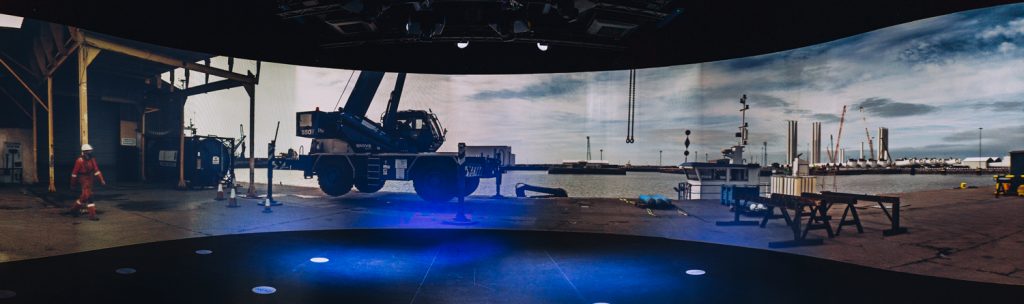
Taking place at a purpose-built centre on the Humber, Thrive is a fully-interactive, multi-media safety leadership programme that immerses participants in a real-time, live-action scenario. The concept was created by Active Team Training (ATT) and offers those taking part a truly ground-breaking training experience. Having collaborated with White Light (WL) on previous award-winning projects, ATT approached the company once again to supply the complete technical solutions.
Thrive has been created for renewable energy company Ørsted, who wanted an induction programme for their contractors and employees due to work on Hornsea Two. Situated in the North Sea, 89 km off the Yorkshire Coast, Hornsea Two is an off-shore wind farm that, once completed, will be the largest in the world. It will power over 1.3 million homes with green electricity and its 165 turbines will span across 462km2. For a project of this magnitude, Ørsted needed to ensure the most effective safety leadership training was implemented; hence they approached ATT.
Dermot Kerrigan, ATT Co-Director, comments: “Ørsted had seen EPIC, which is our award-winning safety leadership training experience that is specific to the Thames Tideway Tunnel Project. EPIC takes participants on a ‘day in the death’ of a worker who loses their life in a construction accident. The physical layout comprises a number of immersive, site-specific theatre sets, in which participants experience events leading to the fatality, as well as the fatality itself and its consequences. Participants discuss what went wrong and are then supplied with some safety leadership skills before being parachuted back into the scenario, where they apply these techniques and stop the accident from happening. Since its inception in 2015, EPIC has proved to be a game-changer in the way that the construction industry now goes about inducting its workforce. So, Ørsted wanted to do something similar with Thrive”.
It was down to the team at ATT to create a scenario in which those working on Hornsea 2 would be able to become more confident in maintaining a high health and safety standard– given the dangers of the off-shore working environment. Once ATT had decided on a narrative and user journey, they not only needed to find a suitable location to build the experience but ensure they had the technical infrastructure to deliver such an ambitious project; at which point they approached WL.
Lee Dennison, WL’s Head of Business Development, comments: “We travelled up to Grimsby with Dermot and the team where they had secured an appropriate space, which actually used to be an old engineering warehouse. We surveyed the building then drew up the various plans as to which spaces could be used for the various locations featured in the training. Essentially, ATT knew how they wanted the spaces to be utilised and it was our task to provide the technical overlay for each one”.

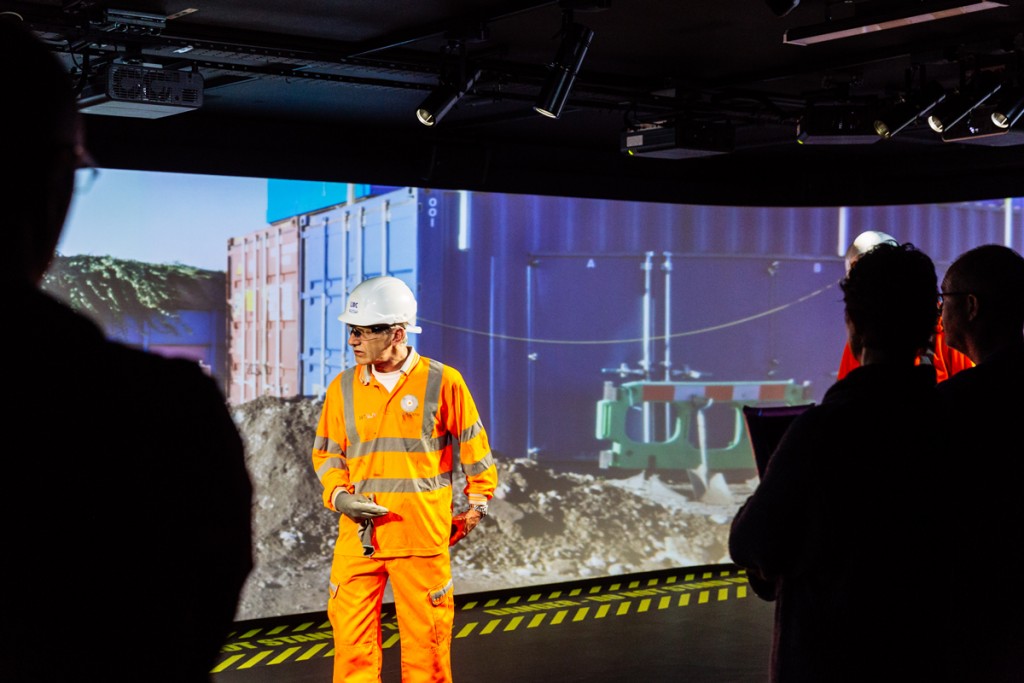
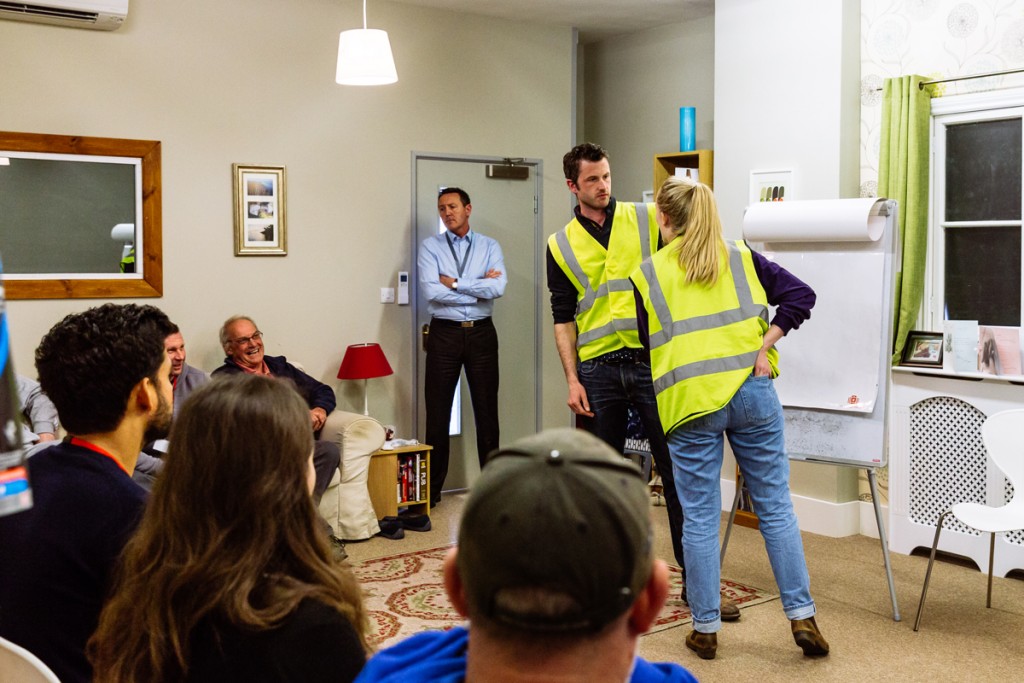
In total, there were five main creative spaces that would be used as part of the immersive training: the Site Office/HQ; the Flat; the Police Interview Suite; the Welfare Area; as well as the main Site Area itself. Lee explains: “Each one of these spaces had a very particular feel and specification and it was down to us to help create that. For the main Site Area, as this is the space in which participants find themselves at the start of the training, it was vital that they were able to feel fully immersed from the off. As such, we installed a 4m x 25m curved screen, onto which footage of the wind power dockside was projected, as well as an immersive soundscape which made them feel as if they were actually on site.
He continues: “The Flat was the home of the worker who was involved in the accident and we were able to create a pepper’s ghost effect where participants were able to see into the morgue as well as hear from the surviving child of the worker; ensuring the training was as emotionally impactful as possible. Similarly, the Police Interview Suite was where participants witness the repercussions of what happened through interviews so audio clarity was key. This was also the case for the Site Office, in which we had to create the feeling that we were ‘on-site’ at all times. Ultimately, we had to draw on our technical expertise and prior experience to create a set-up that was as realistic, and therefore as powerful, as possible: something we were able to achieve”.
Once the technical layout was decided, WL had four months to complete the installation and to ensure everything was in place prior to the first round of training. However, the outbreak of Covid-19 saw that this would have to be delayed. Dermot comments: “Similar to most organisations, the impact of Covid has been incredibly frustrating and meant that we’ve had to change our timeframes and the way we work. What was fantastic though was the way WL conducted themselves throughout the whole process. We worked closely with them to discuss what could be achieved within the guidelines, how long it would take and put together a real plan of action to move the project forward. So while it took slightly longer than expected, working together, we finally got to where we needed to be”.
The centre has now opened and, with Covid-regulations in place, means that 18 participants can attend each day. Once restrictions are lifted, this should rise to 39 and the facility will eventually be available to use for any organisation working in the Wind Power and related industries.
Lee concludes: “It was a privilege to build on our existing relationship with ATT and deliver this incredibly ambitious project in what continues to be surreal times. What ATT create is nothing short of extraordinary and we are proud to have been able to help them achieve their technical and creative vision on an important project which genuinely transforms the way people experience health and safety and creates a long-lasting impact in the process”.
Photos courtesy of ATT.






 Active Training Team (ATT) offers experiential and immersive training programmes in order to bring about behavioural change in people and organisations. The company was recently appointed by Tideway to create an immersive, one-day induction experience for all employees working on the Thames Tideway Tunnel – a multi billion-pound super-sewer being constructed beneath the river Thames. Tideway has a very clear aspiration to deliver transformational health and safety performance and to set new standards, and so it recruited ATT to develop the induction day. White Light was called upon to provide and install the complete technical solution for this award-winning and unique project.
 After initial talks with WL, Head of Business Development Lee Dennison and Technical Solutions Director Andy Hook visited EPIC’s London space to assess which equipment would be the most suitable. Lee states: “EPIC takes you through a variety of scenarios which take place in different rooms across their venue. Therefore it was vital we offered technical support that was perfectly suited to each one”. This included the main space which features a curved 180-degree custom built projection screen using 8 projectors that transport those in attendance onto the construction site. He adds: “The whole point of the training is to make it as realistic as possible. ATT had worked extremely hard to provide life-like, human content, in terms of both the writing and the actors, and we needed to ensure that the equipment complemented this”.
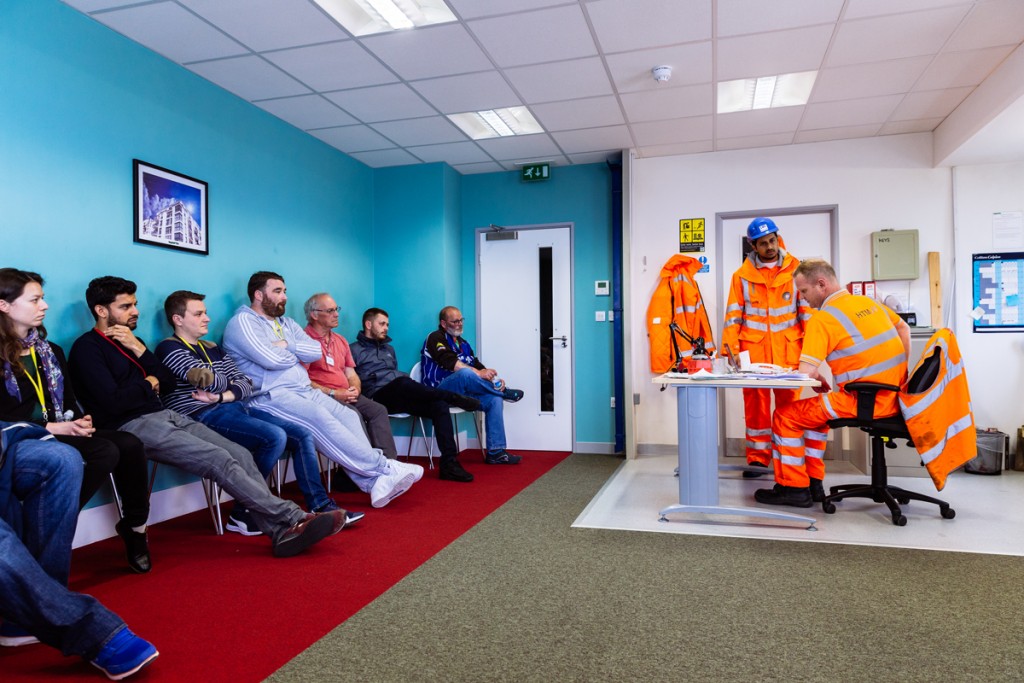 The audio was supplied as dedicated audio pieces played back from the d3 server using Dante DVS into the Yamaha MRX7-D processor which was then distributed out to 11 discreet EM Acoustics loudspeakers hidden within the space. This created a high impact surround sound environment which further enhanced the realism of the scenario.
 Another important aspect of the d3 platform was the Multi Transport feature, which allows users to have multiple timelines running simultaneously. Andy adds: “The Multi Transport feature has been unbelievably useful for this project. As EPIC uses several different areas of the building in which is located, this means that the pre-recorded content can be quickly triggered from a central server to suit activities in all zones.”
 The Royal Albert Hall is one of Europe’s most historic concert halls. It has housed over 150,000 live performances and has a capacity of up to 6,000. Alongside the main hall itself, the building boasts a series of several other unique spaces including the North Circle Bar. Whereas the Bar was traditionally used as a drinking area prior to performances in the main space, the venue wanted to transform it into a live music environment with a purposely designed audio system. They approached White Light to provide the complete technical solutions.
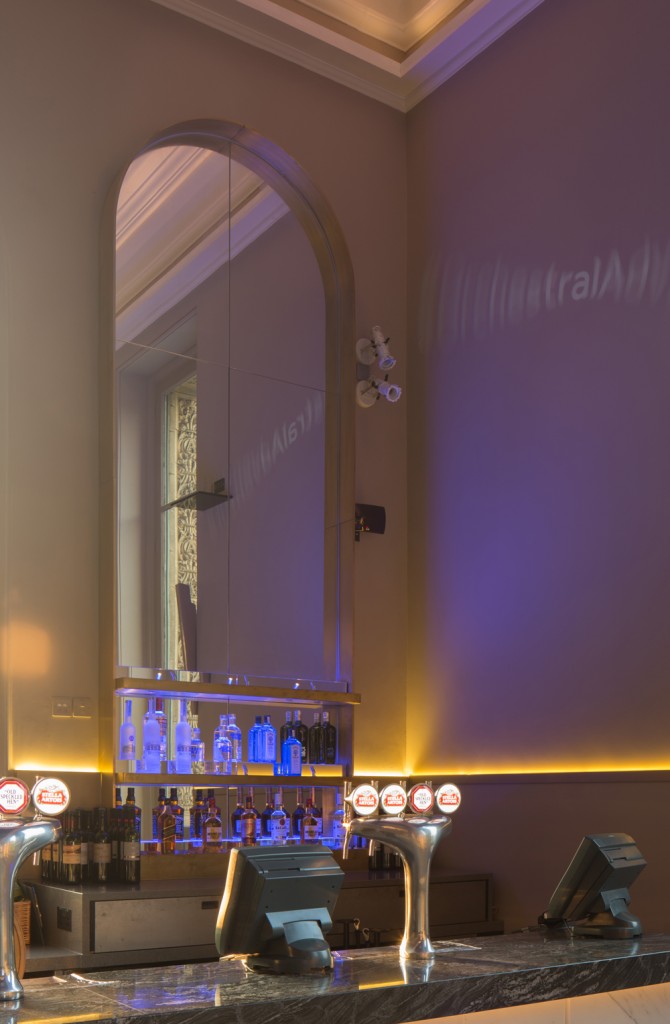 Lee made several visits to the Bar in order to fully assess the space and its requirements. This was then followed by a demonstration with some of the venue’s main stakeholders, in which Lee showcased some of the very latest audio equipment taken from WL’s inventory.
 WL installed the audio system over a three-week period and also oversaw the lighting installation within the space. The North Circle Bar is now being used as a live performance venue, with every act assured that they will receive the greatest audio support possible.