Nottingham Playhouse Archives - White Light
Explore White Light: White Light | HireWL | SalesWL | ShopWL

Tag Archive: Nottingham Playhouse

  1. Leading Light with…James Farncombe – Part Two

    Comments Off on Leading Light with…James Farncombe – Part Two

    Lyric

    The Lyric where James’ Production Management career began (and ended!).


    The year was 1998 and, after three years at Nottingham Playhouse, James had started operating and plotting shows at the venue (“I was starting to find my feet”). However, as soon as James was settling, external factors would once again intervene: “My then girlfriend had just got a job at Birmingham Rep so she was set to leave Nottingham. At the same time, I received a phone call from the actor who had been the Dame in the Panto that year, Mark Chatterton . He was about to direct a show for LipService Theatre Company called King Arthur and the Knights of the Occasional Table. He asked if I’d be interested in relighting the tour.”  James took the role and found himself travelling back and forth across the country. He states: “Relighting was another great opportunity to learn. We were doing one night stands in a huge variety of small scale venues. Some were little more than cowsheds, and often the lighting needed a lot of adaptation. I had to be inventive to preserve the spirit of the design. Very often I couldn’t fully recreate it.  As I’d had no formal training as such, this really helped me understand why designers did what they did. There was a lot of trial and a lot of error but it was invaluable training”. LipService also took James on an Arts Council tour of Pakistan, “but that is another story entirely…”.
     
    La Cava

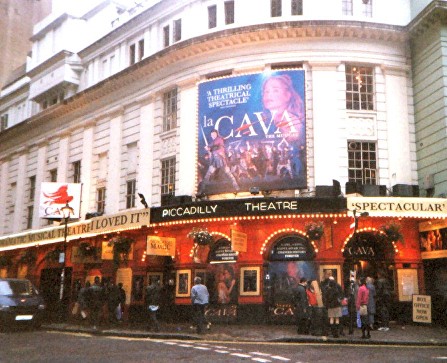
    La Cava on which James assisted Chris Ellis


    The tour finished and James found himself in the world of freelancing. Yet he was soon to step directly into another role: “I landed a job with Pilot Theatre Company in York. They had just finished a tour of Lord of the Flies and were looking for a Production Manager and someone to relight their second tour.  It was a highly successful show, touring midscale venues across the UK, and represented a good progression for me. The tour ended at the Lyric Hammersmith in London”. It was at this point that James was rethinking his career path: “I was struggling to get enough work, and I thought being a production manager might be a useful string to my bow”.
    So with the tour finished, James decided to stay in London.  His brother was a student at Goldmith’s (where Lighting Designer Paule Constable studied – you can read her Leading Light here) and “he let me sleep rent-free in the cellar of his shared house in New Cross.  I stayed much longer than originally intended”.
    Having decided to pursue work as a production manager and having made contacts at the Lyric Hammersmith, James worked there on a show by The Right Size; a devised piece called Bewilderness: “It was a useful experience – in the sense that it taught me that I absolutely hated being a production manager! That show was hugely inventive and very challenging, but it almost finished me.  It was my last job ever as a PM”. However, James eventually went on to work happily as LD for one half of The Right Size, Sean Foley, on several shows, including the Ladykillers and Jeeves and Wooster in the West End.
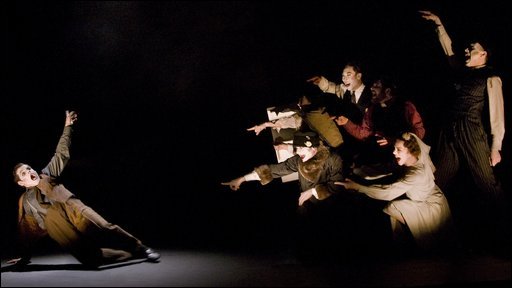
    _45620880_theovercoat_creditrichardhaughton2

    The Overcoat was one of James’ first big successes.


    It was during these early days in London that James would start working as assistant to lighting designer Chris Ellis: “Chris was a big influence. He can be a fierce man and very business-like.  He gave me a lot of work and taught me a lot. My first experience of the West End came from him. I was his assistant on La Cava which played at the Victoria Palace and then Piccadilly Theatre and was produced by Barbara Broccoli. Lighting aside, it was my first introduction to the politics of commercial theatre and managing the intervention of producers and so forth. Chris was passionate about his work and always determined to make the best show possible.  He also put a lot of store by his team; the programmer, the production electrician, the DSM.  He showed me what lighting design really entails, that it is very much a collaboration, relying on diplomacy, patience and the skill of a great many people.  He also gave me a lot of confidence, encouraging me to have an opinion, to voice my ideas.  He came to see my early work and his enthusiasm and evident pride in me were significant factors in my decision to pursue lighting as a career”.
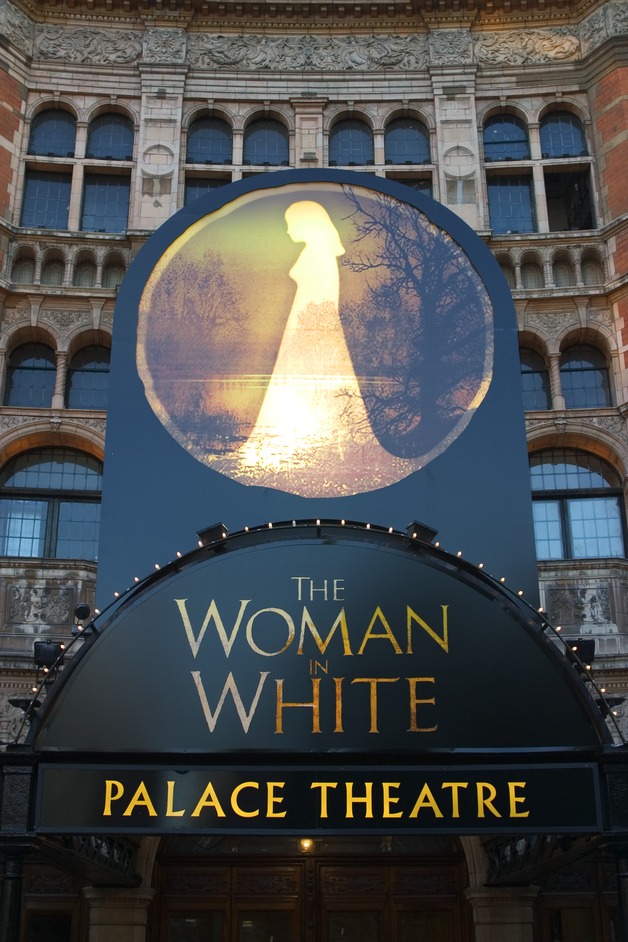
    KT144419_942long

    The Woman in White is the only professional collaboration James has with his uncle.


    The year was now 2002 and James was contacted by Marcus Romer, the Artistic Director of Pilot, in what would turn out to be another fortunate intervention: “Following Lord of the Flies, Marcus had been offered a show at the Worcester Swan. It was a stage adaptation of The Elephant Man and he asked if I would be interested in lighting it. I said yes of course and I’m so glad I did. It was a tiny show in a tiny theatre, but it was a huge turning point. I started noticing the play of light everywhere”.
    Following his work on The Elephant Man, James immediately went to work on Pilot’s next show, Rumblefish. He comments: “It’s that vicious cycle: you don’t get work until you’ve done work. But from that point on, I almost became Pilot’s default lighting designer. It meant people were starting to see my work”.
    Alongside a fledgling design career, James continued working as assistant, most notably to Paul Pyant on Andrew Lloyd Webber’s The Woman in White: “It remains our only professional collaboration to date. I called the four followspots – they were hilarious! The things I learnt on that followspot ring…there was probably as much drama on cans as there was onstage!”.
    Another regular role for James was at the Ipswich Wolsey Theatre. Here he met Pete Rowe, the Artistic Director: “Similar to Marcus at Pilot, I got on well with Pete – so much so that for a while I was the regular LD at the venue. I lit everything from Pinter to the Panto (I don’t think there was actually a Pinter, but you get the idea…)”.
    There followed a long period, the best part of ten years, in which James worked up and down the country in regional repertory theatre including Nottingham Playhouse, Birmingham Rep, Leicester Haymarket, Scarborough Steven Joseph, Ipswich Wolsey, Exeter Northcott, Northampton Theatre Royal, Watford Palace and York Theatre Royal: “It was part livelihood, part apprenticeship, part endurance test. It was also an invaluable time. But I was never at home, and now I can’t abide a Virgin Pendolino”.
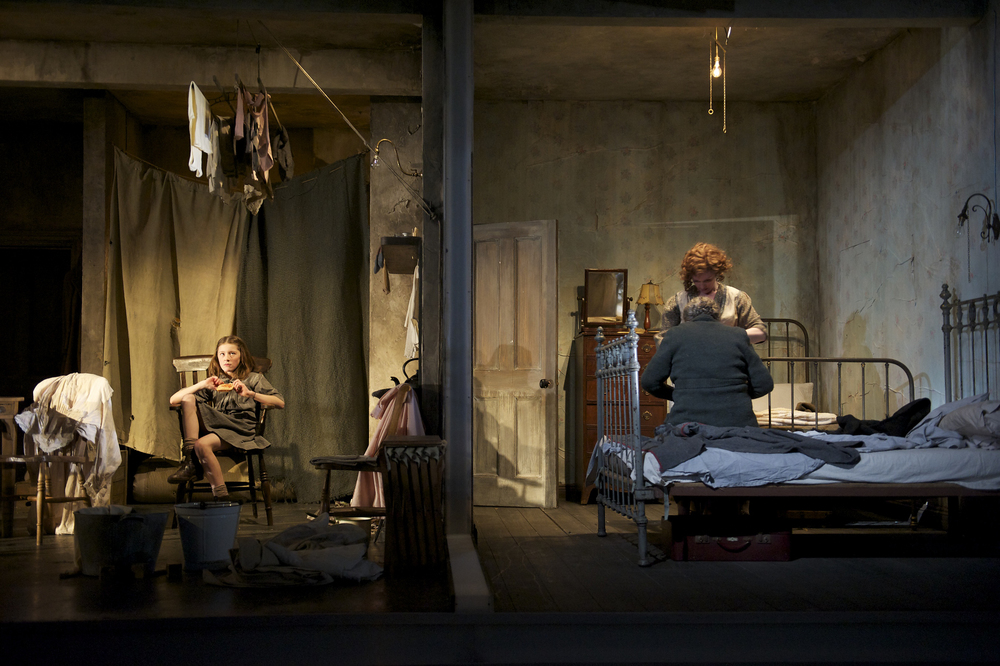
    Men+Should+Weep-008 - Manuel Harlan

    Men Should Weep, which was directed by Josie Rourke, marked James’ National Theatre debut.


    Pete Rowe put James in touch with Amit Lahav of Gecko who asked him to light their next show, The Overcoat. It toured before coming to the Lyric Hammersmith: “There was a buzz around Gecko and lots of people were coming to see it in London. I remember Nick Hytner and Tom Morris coming along. Paule Constable was particularly complimentary and has remained a generous champion of mine. It felt like people were finally recognising my work”. This was seemingly true, with Lynn Gardner noting “James Farncombe’s exquisite use of light and shadow is a show in its own right”.
    The show marked the beginning of James’ recognition as an emerging lighting designer:  “It felt like long time coming, but when the break finally happened, things moved quickly. I had lit for Josie Rourke at the Bush Theatre and suddenly she was directing Men Should Weep at the National – which she asked me to light. This was a big moment in my career. I had wanted to work at that venue for ten years, but never came close.  The set, designed by Bunny Christie, was beautiful but challenging to light. That said, I got on the right side of Laurie Clayton and Simon Fraulo, resident wizards of the Lyttelton lighting department, and with their colossal expertise and patience, we found a way through. It really pushed me, but was actually a real joy to work on. It gave me confidence and it opened a lot of doors”.
    Following his National debut, James found himself in demand. Looking over his impressive CV, I inquire as to whether he has any favourite shows. Naturally, he doesn’t have just one: “Juno and the Paycock for the late, great Howard Davis was particularly memorable.  I remember seeing Howard’s work when I first came to London, and thought, I’d like to work with someone like him one day. A decade later I found myself in pre-production meetings for Juno sat opposite him. People for Nick Hytner which was written by Alan Bennett and it was just magic to be in the room with that brilliant man. The Ladykillers was also a memorable production. It ran at the Gielgud in the West End, and was the first time I opened a royalty cheque and thought there must be a typo – too many noughts (that doesn’t happen very often!). I love working with Katie Mitchell and my favourites would be Pelleas et Melisande at the Aix-en-Provence International Festival and recently Anatomy of a Suicide at the Royal Court. Other highlights include People, Places and Things and London Road in the Olivier. And we haven’t even really started talking about the opera…”
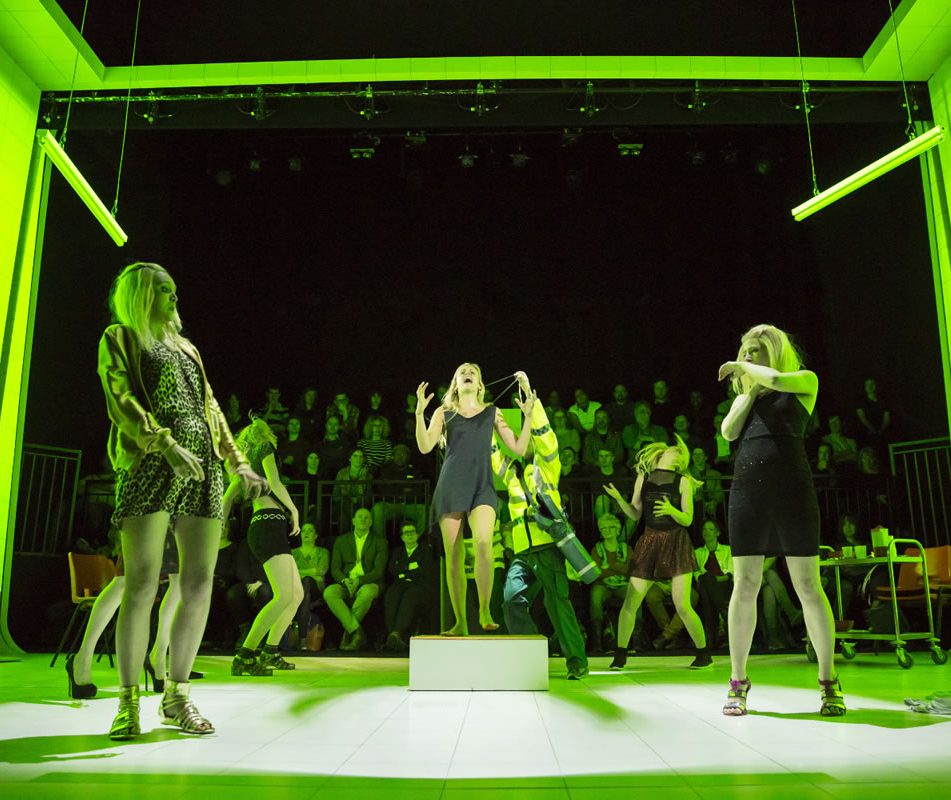
    Denise-Gough-(Emma)&company-in-People,Places&Things-by-JohanPersson1200x800px

    People, Places and Things which James lit at the National and transferred to the West End. It is now on tour and about to transfer to Broadway.


    So the time has come where I ask James that well-known question: what advice do you have for the next generation of lighting designers? James’ answer is actually both thoughtful and realistic: “Do your time. This industry is all about patience and climbing the ladder. You might spend years freelancing, relighting and probably doing jobs that you’d rather not. That said, working in different departments and knowing about all areas of the profession can’t be a bad thing.
    “I also think it’s important to learn to say no. If you’re a freelance designer, you need to learn how to say no to certain projects and make intelligent decisions when it comes to your work. Mainly so you can do the job properly but also for the sake of your sanity and your integrity – not to mention your general health”.
    James is also quick to remind me how, whilst theatre is his biggest passion, time away from the industry is vital. He comments: “You need to find something to do away from lighting. For me, I’m still love making music and I still write songs and play the piano. I’m also learning French at the moment.  I can spend hours getting lost around art galleries too”. However, there is one other thing that’s keeping James extremely busy at the moment: “I’m now a dad. Having my daughter means I strive for a more healthy work/life balance, and she is my saving grace. She says one day she is going to come and ‘work in the dark with me’… I still work too much, but I’m slowly learning to get my priorities in the right order”.
    And with the emergence of the next generation of the Farncombe family, it remains to be seen as to whether this theatrical family will produce yet another lighting designer…
    Photos courtesy of BBC TV, Dan Wooler, David Baird, Manual Harlan, Nottingham Trent University, Paul Pyant, Richard Haughton, Stephen Keeling and Tom Lancaster.
  2. Leading Light with…Jason Taylor – Part One

    Comments Off on Leading Light with…Jason Taylor – Part One
    Jason-Taylor

    Lighting Designer Jason Taylor

    Our Copywriter Adam went to meet Jason Taylor…

    It’s a busy morning as I attempt to make my way along Charing Cross Road. Steering my way strategically between tourists and pedestrians, I eventually find myself at my chosen destination: the Garrick Theatre. The bright red posters adorned outside indicate that the next show to open is David Walliam’s Gangsta Granny. Looking down the list of credits on the main poster, I notice that it states Lighting Design by Jason Taylor; and that’s just the man I am here to meet today.

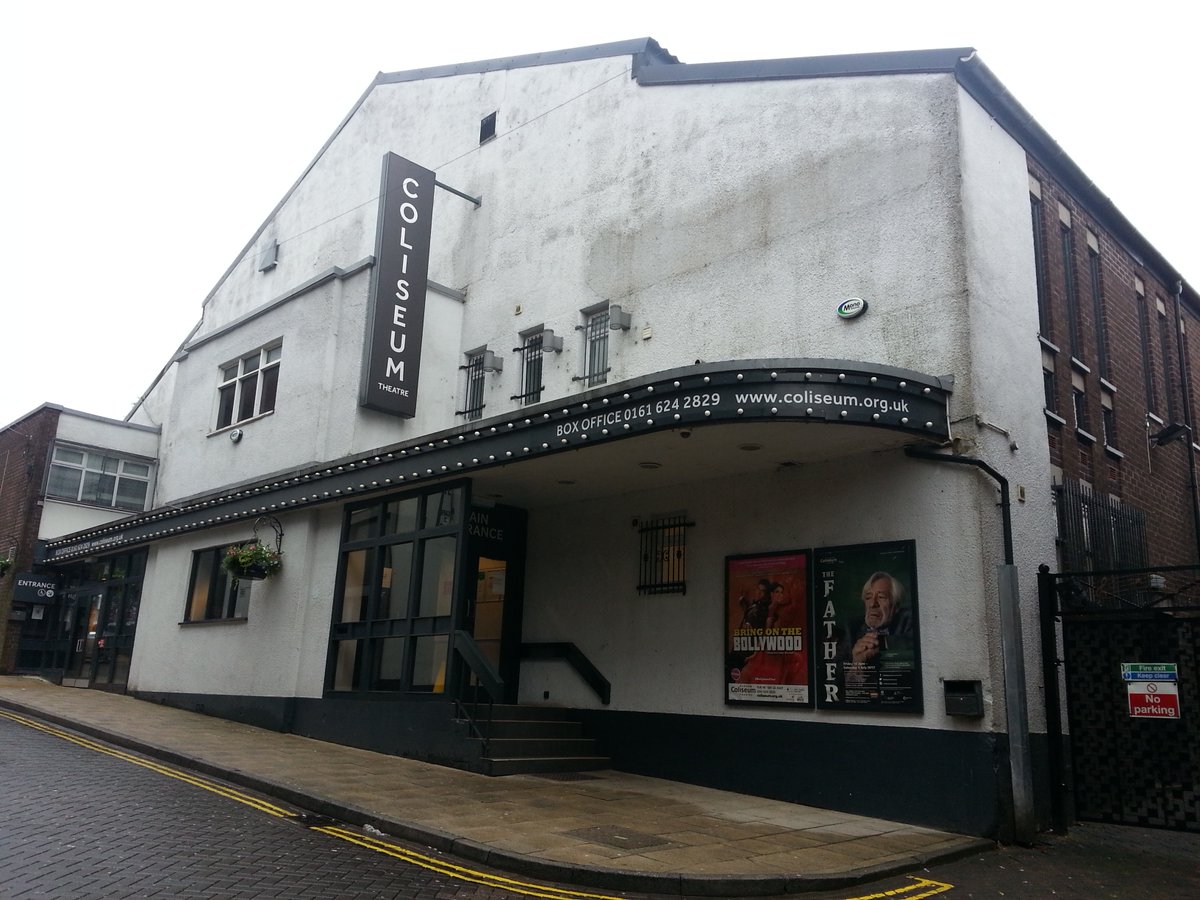
    Jason is a somewhat unique entry in the Leading Light series as, unlike the others I’ve spoken to, it seems that theatre played a significant role in his life from as early as he can recall. He states: “I was born in Oldham, Lancashire, and I came from an extremely theatrical family. My father is Kenneth Alan Taylor, former artistic director of Nottingham Playhouse, whereas my mum is Judith Barker who played Janet Barlow in Coronation Street for 8 years and has just been in Stepping Out at the Vaudeville Theatre so you could certainly say I have the entertainment industry in my blood!”. Jason’s parents met when his mother was in rep at Oldham Coliseum where his father was a director. This was during the days when a company of in-house actors would perform a different show each week. Due to his parent’s profession, Jason would often find himself in theatrical surroundings; which is where he can trace his passion for lighting back to. He recalls: “I remember from around the age of six, I would be sat in the auditorium at Oldham and just fascinated by the beams of light that would hit the stage. It really had a huge impact on me very early on”. However, this huge impact was to land Jason in a spot of trouble: “I must have been about ten and I remember my mum was playing Mother Courage in a show. However, I didn’t think the lighting was particularly good so I went into the auditorium during a show with a torch and shone it directly at her. Safe to say the crew, in particular the lighting designer, weren’t very happy!”.
     

    Jason-Baby

    Jason is his very early days…


    Somewhat inevitably, theatre became a major interest for Jason growing up.  He comments: “I wasn’t particularly sporty nor did I have any other main hobbies apart from theatre. My sister and I were just immersed in this world and it was literally all we knew. My dad built me a model theatre where I essentially had to create the sets themselves (in miniature, of course). I remember building the sets for Oliver and then re-enacting the entire piece with the cast album playing next to me on the vinyl record player. I would perform all the scene changes and alter the lighting colour using sweet wrappers. You could say that was the first big musical I designed!”. When I ask Jason about his memories of school, his enthusiasm quickly wanes: “It was alright. The school I went to was literally round the corner from the Oldham Coliseum where my dad was Artistic Director at the time. I remember being sat in class wishing I was in the theatre instead. I was just eager to get stuck in; so much so that when I was 14 I was already working the followspots”. Unsurprisingly then, when the summer holidays came, Jason found himself virtually living in the theatre. He recalls: “During the summer, and when the theatre had some ‘downtime’, I found myself doing all of the maintenance jobs. This included such glamorous tasks as cleaning Patt 223 lenses and servicing 264s! Strangely enough, I really enjoyed doing it. I also knew by this point that I really wanted to pursue a career in lighting”.
    Jason left school at 16 and immediately went to the Royal Exchange in Manchester to join the stage crew: “That was interesting as I was only about five foot four and extremely scrawny. However my passion and desire to get stuck in overcame any physical struggles I had”.  During his time here, Jason learned of a programme that the Royal Exchange ran called Theatre’s Own Training, which was in conjunction with the ABTT. He states: “It was the same one that Jo Town did, except she was two years ahead of me (you can read her Leading Light here). So when I arrived, Jo was just finishing the last year of her training”. Jason started on the crew but knew his actual passion lay with lighting and he was desperate to embark on the training.  He states: “I started badgering the Chief LX saying I want to do that. To my delight, aged 17, they took me on. Sadly, the funding collapsed as the ABTT lost some of theirs. Thankfully the Exchange then paid for it themselves; something for which I’m eternally grateful”. By this point, Jo had completed her training and become assistant. Mirroring Jo’s path, this was a role that Jason would also fulfil following his training. He recalls: “During this period, not a lot of regional theatres had lighting designers who were visiting them on a regular basis. Thankfully, the Royal Exchange did. I learned a lot from simply observing designers at first before plucking up the nerve to ask if I could plot for them. One of my earliest memories was when Nick Chelton came in and did a couple of shows. Brian Harris also visited a few times. I was very fortunate to be surrounded by such established people and it was a great time to learn”.
     
    Jasons Parents

    Jason’s parents Kenneth and Judith came from a theatrical background.


    Jason decided to leave the Exchange when he was 19; something he describes as a conscious decision: “I always knew there would be limited design opportunities there. As there were lots of visiting shows with their own LDs, it was difficult to break through on the design front. Also, as the Exchange job was so full on, I didn’t even have time to light shows on the side which is what I really wanted to do. My secret dream was to move on and only come back to light a show – something I was able to achieve”. Upon leaving Manchester, Jason moved to Nottingham where he became Deputy LX at the Nottingham Playhouse. The move was driven by the fact that Jason knew there would be more lighting opportunities over at Nottingham – something which would prove to be true: “Effectively, a year into the job I became their Resident Lighting Designer. The first show I lit there was the stage adaptation of Kes. It was a great experience as I had to learn very fast. We were doing a show every three weeks so you’d open on say a Wednesday or a Thursday and then the following Monday it would be straight into rehearsals for a new show. You had to work quick and I think I’ve taken this skill throughout my career of having to think fast and get on with it, as opposed to having endless discussions”. Nottingham would also offer Jason his West End lighting debut – at the tender age of 20. He recalls: “My first West End show was Rosencrantz and Guildenstern. It started at the Playhouse before transferring to the Piccadilly Theatre in London. I had literally gone from working as part of a crew to lighting a show in the West End in the space of a few months – it was certainly a surreal experience!”.
     
    DDeqbGAXYAE6dz9

    Oldham Coliseum would offer Jason his first taste of theatre.


    Along with career opportunities, Nottingham also provided Jason a fresh approach to lighting his shows. He states: “Before joining Nottingham, I hadn’t really learned the theory of lighting design and studied what this was. I had copied things I’d initially seen and tried to replicate tropes. At the Playhouse, this gave me the opportunity to experiment and learn from my mistakes”. While Jason swears this was invaluable for his own development, he believes that similar opportunities are no longer available today: “The problem is that the chances to get it wrong and learn from this simply aren’t there now. There are a lot of large regional theatres, such as Nottingham, that don’t have any in-house opportunities. That said, this isn’t all down to budgetary factors. Rather, lighting design has achieved a much higher status in recent years. Lighting design, and general lighting jobs in theatre, have become much more specialised – to the point where you have individuals who are experts in their fields. Back in the day you used to have a production electrician who would just do some lighting on the side hence they could play around with certain techniques”.
     
    Open Air - Alastair Muir

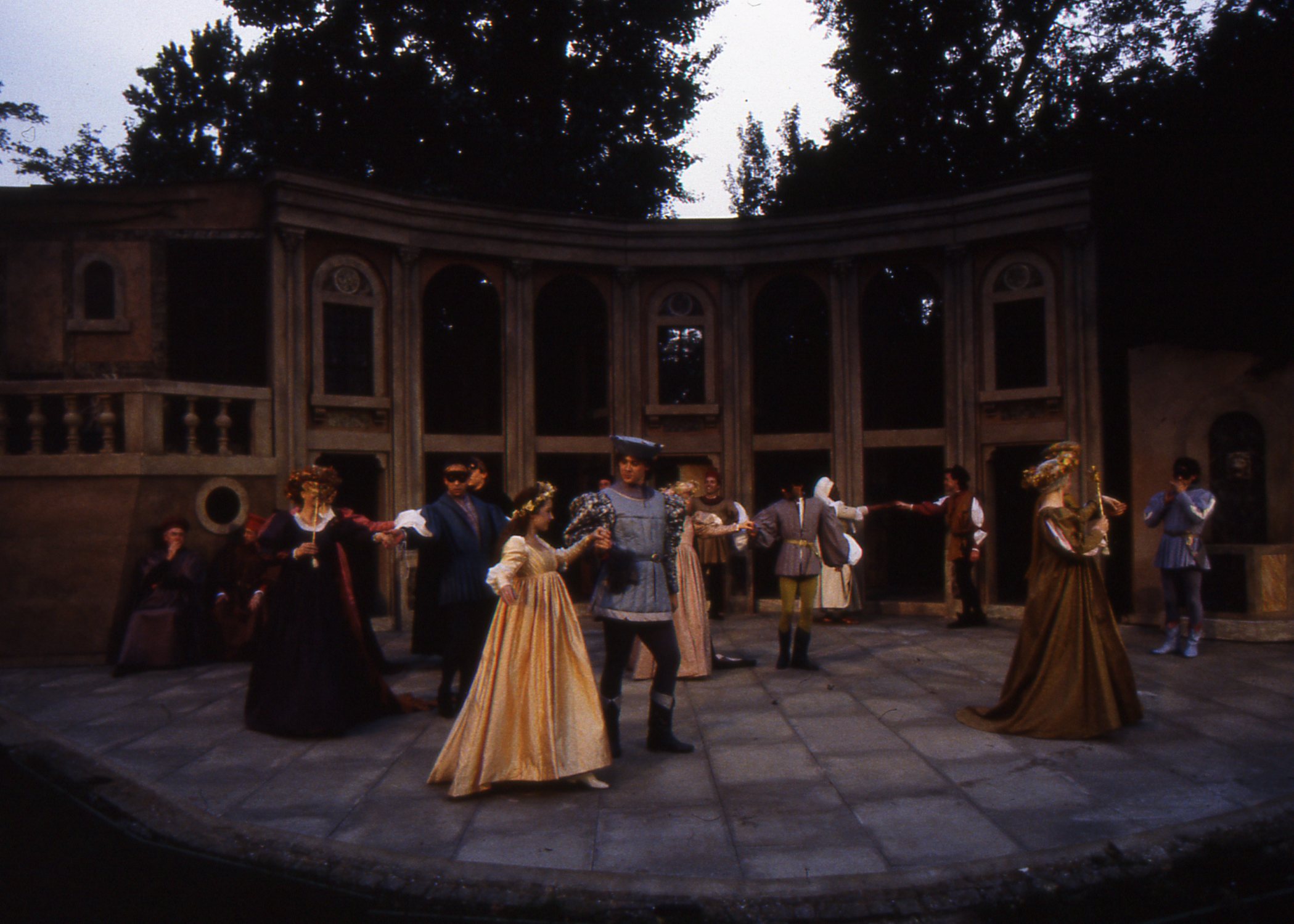
    Romeo and Juliet at Open Air Theatre. It was directed by a certain Judi Dench.


    Jason was in Nottingham for four years and left aged just 23. He comments: “I felt at this point that the next natural step was to go out and be a freelance lighting designer. So I left, expecting to be inundated with opportunity after opportunity. Imagine my surprise when I then hardly worked for 12 months!”. Jason remained in Nottingham during this time yet a move to London was soon to be on the cards. He recalls: “I got offered an amazing gig at the Regent’s Park Open Air Theatre from a director called Caroline Smith who I’d worked with in Nottingham. The year was 1990 and the show as Julius Caesar. It went really well and I was very proud of my design. The then Artistic Director Ian Talbot came up to me afterwards and asked if I’d come back next year. I of course said yes. However, I was quite surprised when he said he didn’t just want me to light one show but the entire season!”. And it wasn’t just the 1991 season that Jason returned for. He would go on to light the next twenty and work on productions such as Romeo and Juliet, directed by Judi Dench, Richard III, directed by Brian Cox, and Hamlet, directed by Tim Piggot-Smith.
     
    During his time at Regent’s Park, Jason would see the theatre transform rapidly: “When I first started, the theatre was very basic. It was literally a raised stage and a seating block with four lighting positions and some rickety scaff towers left and right, along with a handful of battered, rusty par cans. Very slowly, year on year, they managed to build this up (I remember the first time we bought 12 x waterproof scrollers and how impressed we were!). In 2000, we received National Lottery money so more technical facilities were added and more money spent. As a result, I felt like I took the venue on a journey and really saw it grow”. Jason’s first season at Regent’s Park also marks the first time he lit outside. He comments: “I think of lighting outside as creating broad brushstrokes. It’s not something you can do subtly and you need to accept that you can’t fight the elements of daylight. That said, I remember one director on a production of Macbeth saying I need you to turn daylight into night. When I said this was physically impossible, he couldn’t comprehend why not. To this day, I’ve still not found a fixture that’s capable of this…”.
    Click here to read Part Two.

  3. Leading Light with…Jason Taylor – Part Two

    Comments Off on Leading Light with…Jason Taylor – Part Two
    Journeys-End--Broadway-2007

    Journey’s End on Broadway earned Jason a Tony nomination.

    During his early career, Regent’s Park offered Jason a good platform to work around. He states: “It was three shows during the summer so offered me a good base for the year. I also kept going back to Nottingham to do their Christmas production so made sure I had a handful of shows that kept me ticking over”. Following his work at Regent’s Park, it seems that Jason’s reputation began to slowly grow. He recalls: “I met a director called David Grindley who I would go on to work with extensively. Looking back, my first real big break came with him and Journey’s End”. Journey’s End is the now classic play by R.C.Sherriff which first premiered in London in 1928. Jason was brought on board as the lighting designer for the 2006 West End revival. He states: “The show initially entered the Harold Pinter Theatre and from there it literally just took off. We were only supposed to do eight weeks yet it received such a great reception that it extended. It then moved to the Duke of York’s before embarking on a UK tour. It then went back into The Playhouse in the West End before another tour and then into The Ambassadors!” As if a mini-tour of the West End wasn’t enough, this would only mark the beginning of the show’s journey…

    Pygmalion on Broadway.

    Having been watched by an American producer in London, they decided to take the show and transfer it onto Broadway. Jason recalls: “We discovered the show was going to run at the Belasco Theatre. This was my first Broadway show and it was a brilliant experience. We were fortunate as it was the same creative team as London, which included director David Grindley, sound designer Gregory Clarke and set designer Jonathan Fensom. We were all at similar stages of our career and all got on really well as mates”. But was taking a show to Broadway not a daunting prospect for Jason? Apparently not: “We knew the show and were confident in what we could do with it. As in London, it was really well received and nominated for a string of Tony Awards; including Best Lighting Design”.

    Similar to Regent’s Park, it would appear that Journey’s End would open more doors for Jason – yet now at the other side of the pond. He states: “We were asked by an American producer who had seen Journey’s End to go back and work on a revival of Pygmalion. It starred Homeland actress Claire Danes as Eliza”. While it was essentially the same team working on Pygmalion, this is where the similarities to Journey’s End finish. He states: “Whereas Journey’s End was well received but didn’t sell very well (probably because of its very dark subject matter), Pygmalion had terrible reviews but packed the place out every night!”. He adds: “I remember a review in the New York Times for Journey’s End that had a whole paragraph dedicated to the lighting, including a quote which stated: ‘Jason Taylor’s lighting beautifully summons the requisite claustrophobia’. Conversely, one review from Pygmalion kindly said: ‘Lighting Designer Jason Taylor thinks he’s still stuck in the WW1 bunker’. Safe to say you remember your bad reviews!”.

    Empire - Nobby Clark

    The Empire at the Royal Court which was a personal highlight for Jason. 

    And while his career was flourishing on Broadway, Jason was making similar waves back in the UK. He states: “Following Journey’s End, things just took off. At one point, I had three shows in the West End, one at the Old Vic and one on Broadway. The problem is you think this is how it’s going to be forever – and it really isn’t!” That said, Jason does possess a series of extremely impressive credits, ranging from The Boys from Syracuse, again directed by Judi Dench, Our Boys at the Duchess Theatre, an American tour of Sweet Sorrow and The Empire at the Royal Court to name but a few. He adds: “I made some great contacts early on and it just built from there, year on year. It’s been a healthy mix of commercial work, venues such as the Royal Exchange, Hampstead, along with other new writing theatres. Ultimately, unless you have a huge show bringing in royalties, you need to keep working and find sources of income – so I like to mix it up!”. Having lit such a wide range of work, I can’t help but ask Jason what his favourite type of show to work on is. He has a clear answer: there isn’t one: “When I was at the Royal Exchange, I wasn’t entirely sure as to what type of work to light early on. I spoke to the Deputy LX and they gave me some great advice: just light anything. This is particularly important when you’re just starting out. I genuinely believe this is something I embodied and perpetuated throughout my career. Obviously you can’t say yes to everything but you need to keep your options open”.

    HTOHL-Jason-Merrells-and-Jenny-Seagrove-c-Alastair-Muir-700x455

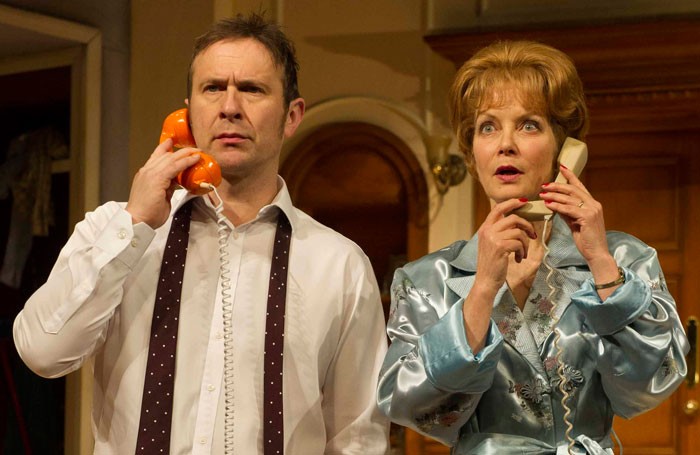
    How the Other Half Loves in the West End which Jason lit last year.

    Along with this open approach to his work, Jason also reiterates how important it is to ensure that contacts are not only established but sustained. He states: “I remember having a drink with Peter Mumford about ten years ago (you can read Peter’s Leading Light here). He was good friends with Gregory Clarke, the sound designer on Journey’s End. All three of us were stood round, chattTheing about what we were doing and Peter said he’d just been offered The Rivals with Peter Hall in Bath, which was also going into the Haymarket in the West End. Sadly, he wasn’t available but I mentioned that I was. Peter suggested I dropped Peter Hall a line to make him aware I was interested and available. I thought this was a bit cheeky but Peter was insistent I just do it. I followed his advice and Peter replied asking me to meet him for a coffee. I did and he offered me the job there and then. This was particularly special as it was one of my career highlights. It had the most stunning set design by Simon Higlett and it was a pleasure to light”.

    As with all of the Leading Lights I speak to, my final question to Jason is what advice does he have for the next generation? He has a couple of tips: “Personality is the most important aspect to being a lighting designer. You need to get the rig right, and obviously light the piece but you then have to work with other creatives and deploy as much diplomacy as possible. It’s important to remember to put your take and style on a show yet also remember that you’re part of something bigger and a large part is taking on board everyone’s opinion. It’s easier on some shows than it is on others but when you do work on that brilliant production where it’s a joyous collaboration (similar to Journey’s End) then you realise that it’s all worth it”. Jason’s pragmatic approach to lighting is also reflected in his other advice for young designers: “Ultimately, you just need to go out and get on with it. Take the plunge and become freelance. I do think it’s a lot harder than it was and there seems to be more LDs than ever now. However, it’s something you just need to do”.

    On that decisive note, Jason has to run back to the Garrick to work on the final tech of Gangsta Granny. He is only in London for a few days before returning to his native Lancashire where he now lives with his wife and three children. It is at this point when he offers his final words of wisdom: “I actually think one of the most important things for lighting designers is to strike a work/life balance. For me, I obviously love lighting shows but I equally love spending time with my family. There’s been times in the past where I’ve turned down big jobs so I can spend time with them. It’s important that you recognise what’s important to you personally. I made a conscious decision to have that balance and have never regretted it once”. And as I look over Jason’s credits and career one last time, it’s certainly obvious that this approach has worked very well for him.

    Photos courtesy of Alastair Muir, Jason Taylor, Joan Marcus, Nobby Clark and Sara Krulwich.