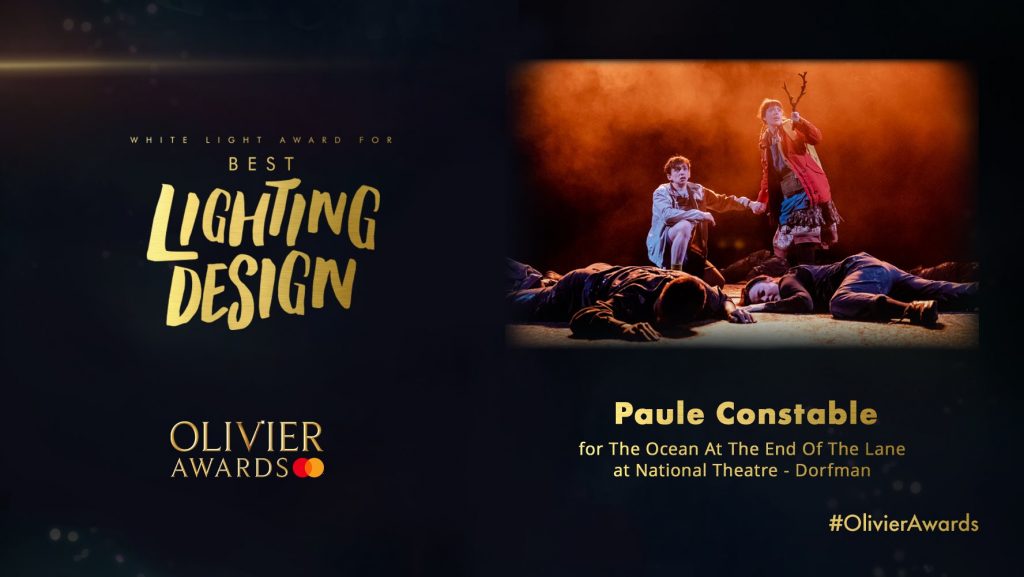
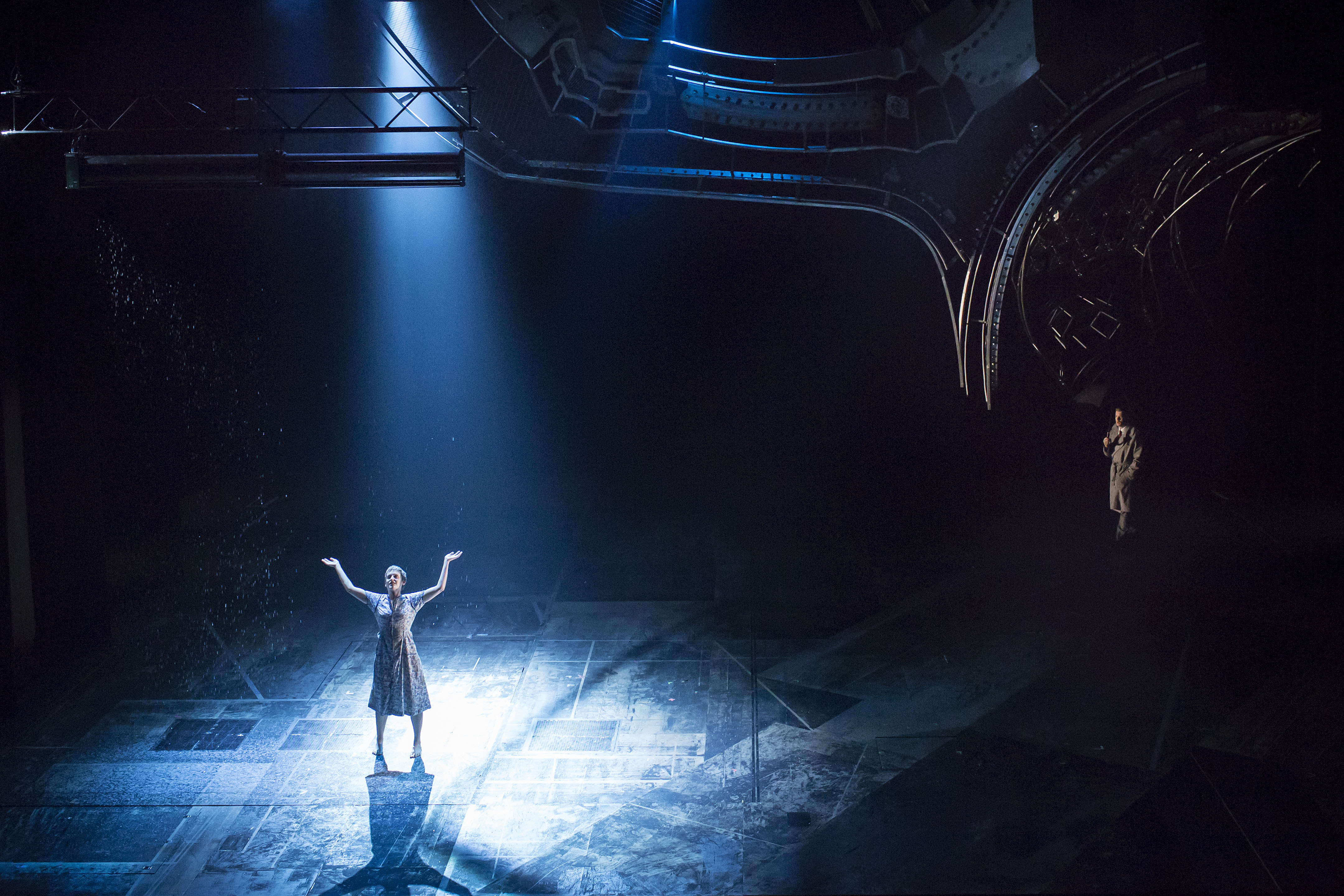
Last night, the winners of this year’s Olivier Awards were announced in a special programme presented by Jason Manford at the London Palladium which was broadcast on ITV as well as streamed live on Official London Theatre’s Youtube channel. White Light once again sponsored the Best Lighting Design Award which was won by Paule Constable for her work on The Ocean at the End of the Sea at the National Theatre.
Like most award ceremonies this year, the Oliviers have had to navigate around the current restrictions in which we all find ourselves. The nominations were initially announced in March, with the ceremony due to take place in April. However, this was postponed until it was eventually decided that the safest way forward was to host an online ceremony. WL’s Managing Director Bryan Raven comments: “The Oliviers are aways a huge occasion for us as a company; not only because we sponsor the Best Lighting Design Award but the fact that we also supply the lighting for the main ceremony as well as the production support for the after party. It’s one of the biggest events in the theatrical calendar so while, like so many others, we were disappointed it couldn’t physically go ahead, we were delighted that Official London Theatre and its partners found a way to make ‘the show go on’ in some way”.
For Best Lighting Design, Paule Constable won her fifth award for her work on The Ocean at the End of the Sea. The other nominees included Howard Hudson for & Juliet, Neil Austin for Rosmersholm and Bruno Poet for Uncle Vanya; with the latter two shows supplied by WL. Bryan comments: “We are absolutely delighted for Paule who now takes her tally up to an incredible five Oliviers! Her design on the show was truly magnificent and it’s fantastic to see her brilliant work once again recognised. We’d also like to say a huge well done to the other designers whose nominations were all thoroughly deserved”.
Other winners on the evening included Sharon D. Clarke who took home Best Actress for her performance in the Young Vic’s Death Of A Salesman.Present Laughter at The Old Vic won two awards, with Andrew Scott winning Best Actor and Indira Varma winning Best Supporting Actress. The Jamie Lloyd Company won Cunard Best Revival for its production of Cyrano De Bergerac whereas Emilia took home three awards, including the Noël Coward Award for Best Entertainment or Comedy Play for playwright Morgan Lloyd Malcolm, Best Costume Design for Joanna Scotcher and Best Sound Design for Emma Laxton.
Ian McKellen was also honoured with his seventh Olivier Award for his 80th Birthday tour, whilst lyricist Don Black, received a Special Award from Lord Lloyd Webber and HRH The Duchess of Cornwall, who, like so many of the award winners, gave an impassioned speech about the importance and resilience of theatre.
Bryan comments: “Whilst it was heartening to see such a wealth of talent recognised for what they do best, what was just as heartening was hearing so many artists acknowledge the plight facing our freelancers and the overall lack of clarity we still face as an industry. For me, the evening marked a celebration of colleagues, peers and friends yet also served as a reminder of how much we are all missing live performance and the huge void that theatre has left; something we hope will be resolved in the very near future”.
Les Misérables in 1986, shortly after opening at the Palace Theatre.
This is an article about the iconic Les Misérablesand White Light’s long-running relationship with the show…
This weekend marks the final performance of the iconic Les Misérablesat the Queen’s Theatre in London’s West End. The theatre will close temporarily as it undergoes some much-needed restoration work. It will reopen on 18th December as the Sondheim Theatre with a brand-new production of Les Misérablesas it embarks on its 35th world record-breaking year.
It would be fair to say that Les Misérablesis one of the most well-known musicals of all time. With productions taking place across the globe, it has won virtually every theatre accolade and has created a host of iconic songs and characters. WL’s relationship with the show goes back over thirty years. The English-language version first opened at the Barbican Arts Centre in October 1985 and only two months later transferred to the Palace Theatre. WL initially didn’t supply the West End run due to the fact that the producer owned the lighting rig. That said, we became involved with the show when it first toured the UK seven years later in 1992, opening at the Palace Theatre, Manchester. We also supplied the second tour in 1997 which opened at the Theatre Royal Plymouth, and have continued to do so ever since, including the latest touring production which features a design by Paule Constable.
Matthew Shephard as Enjolras in the 1997 UK tour.
Following the initial tour, our involvement extended to the West End where we oversaw the upgrade of the Palace’s lighting rig. The rig was updated due to Lighting Designer David Hersey introducing DHA Digital Lighting Curtains and ETC Source Fours to the existing set-up. Our next major involvement in the West End production would come in 2004 when it moved from the Palace Theatre to its current home of the Queen’s. We were asked to supply the entire lighting rig within the Queen’s and our equipment has been used up until this weekend.
Whilst the Queen’s Theatre now closes for refurbishment, the show will certainly go on for Les Misérablesitself. There is currently a UK tour travelling up and down the country, which we have supplied and features a lighting design by Paule Constable. Not only that but, next month, Les Misérables:The All-Star Staged Concert will open at the Gielgud. Running until 30th November, this star-studded show features Michael Ball, Alfie Boe, Carrie Hope Fletcher and Matt Lucas in a spectacular and intimate staging of the legendary concert previously seen at the Royal Albert Hall.
Les Misérables: The All-Star Staged Concert opens next month.
As a company, it’s been a privilege to play a small part in the journey of Les Misérables and we are really excited to continue doing so as it enters its latest chapter.
Comments Off on Leading Light with…Charlie Morgan Jones – Part 2
3am at Leicester CURVE was Charlie’s first professional production after graduating.
Charlie graduated and was left to find his own way in the big wide world. It was here where his work at the Vaudeville would prove useful: “I emailed every single producer I knew, along with all the DSMs I’d worked with from my time at the Vaudeville. They were hugely supportive and told me who to get in touch with. It was in those early stages that I’d take unpaid leave to go and work on shows on the London fringe. It was a case of slowly, but surely, getting my name out there”.
Charlie’s first show out of university was 3am for the Curve Young Company at Leicester’s CURVE Theatre. He recalls: “I was put forward by Rachel Nicholson who was the Head of Creative Lighting Control and was immensely lucky to go straight into a show like that. I really felt like a ‘professional lighting designer’ as I had a programmer and stage management team”. Charlie would the continue to work wherever he could. He recalls: “I did a show at the Edinburgh Fringe called Jump which was a brilliant experience. I also lit a show at The Met in Bury and remember just jumping on a train, heading up to Manchester and saying ‘I’m here to light your show’. At that age, you just turn up and hope for the best. Then again, you need to have that go-getter attitude as people are only willing to employ those with experience and that was something I needed”.
It wouldn’t be long until Charlie got what he considers to be his first ‘big break’: “I worked on Dialogues des Carmelites at the Birmingham Conservatoire and the Director was Michael Barry. I was at his house for dinner and he showed me a prop from the Ring Cycle which he recently directed. As I knew very little about him, I presumed it was something he’d worked on at the Birmingham Local Opera. Fortunately I didn’t say anything out loud as Michael quickly informed me that it was a show he’d worked on at the Royal Opera House! A quick Google under the table and I realised he was quite a big name! We got on like a house on fire and Michael recommended me for various jobs including the Polish National Opera”. It was also at the Conservatoire where Charlie met Jack Ramplin who Charlie has used on lots of shows as his Associate. Charlie comments: “Michael foresaw a long creative relationship between Jack and I – he wasn’t wrong!”.
Charlie’s second ‘big break’ was to come shortly after at the Duchess Theatre in London’s West End. He recalls: “I was asked to light Cool Rider, which is the sequel to Grease. It was an all-singing, all-dancing musical with so much happening all the time – the first number had 80 lighting cues! For this show, I worked with an Associate called George Smith who was fantastic to bat ideas around with. It really changed my way of working and brought out the best in my lighting”. Shortly after this, Charlie and George formed Smith+Jones LX. Charlie comments: “We became friends but he sadly (for me) lives out in Macau now for work. That said, we’re still as close as ever, and I always visit him when I go to the Far East for work”.
Charlie lit Cool Rider at the Duchess Theatre in London’s West End.
The third break of Charlie’s was Avenue Q; the puppeted musical which is also one of Broadway’s longest running musicals. Charlie recalls: “I had worked with production company Selladoor Productions in their early days and remember touring Ibsen’s Ghost in the back of a van. They asked me back to light Avenue Q which was doing a three week run in Greenwich in April 2014. The run sold really well and got a lot of people talking – so much so that it turned into a six month tour. It then returned for a second tour in 2015, a third tour in 2016 and it’s recently been announced that it’s coming back next year. It was one of those shows that just ‘became a thing’ – when I told people I was lighting it, they were really impressed. It also got me an agent and opened so many doors for me as people were now able to see my work”.
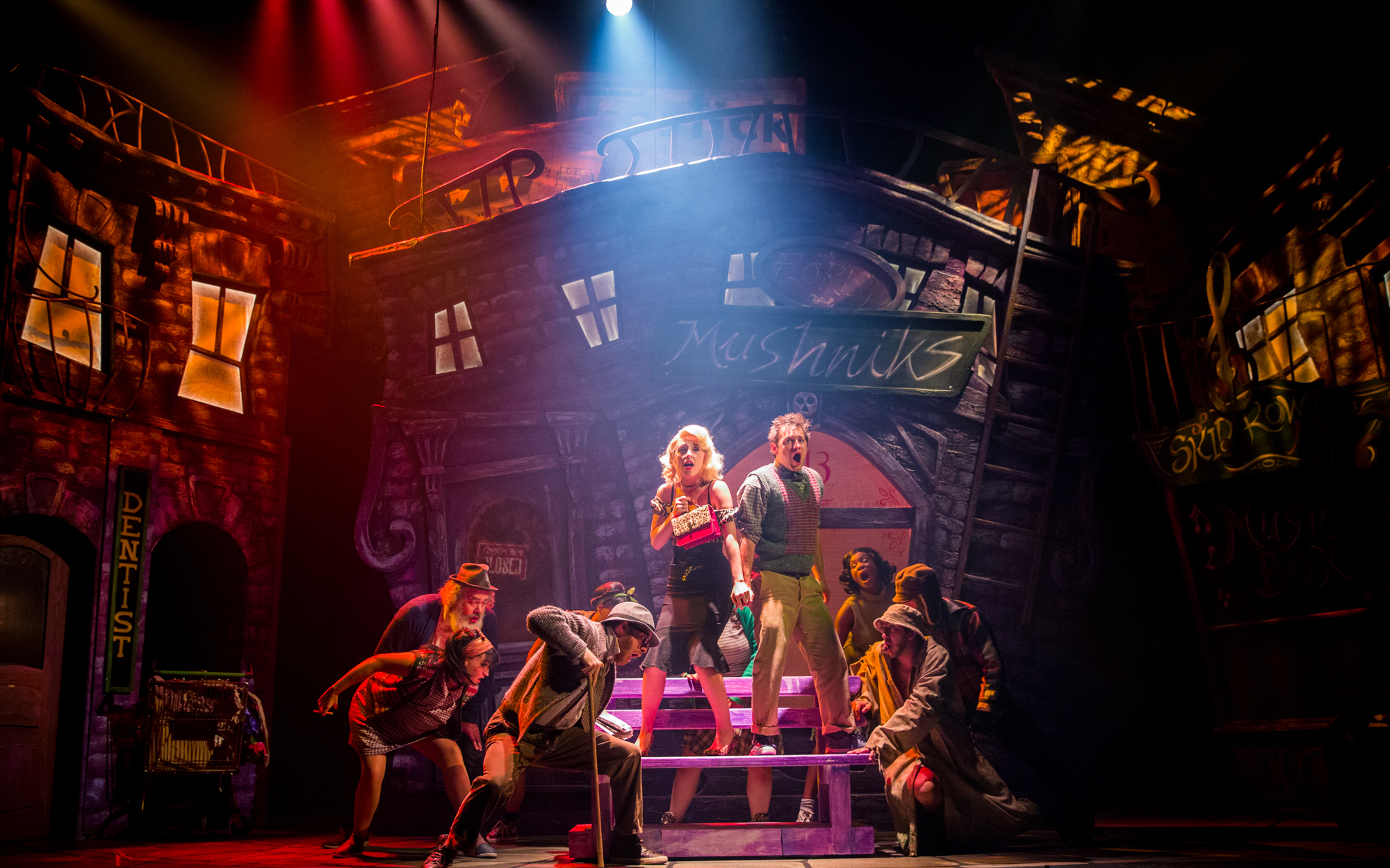
Little Shop of Horrors is a personal highlight for Charlie.
Whereas these are Charlie’s ‘big breaks’, I ask him if any other shows that standout. Safe to say, he has a fair few: “Little Shop of Horrors definitely sticks in the mind. Everything on this production just felt ‘right’ and all the creatives just clicked. We wanted the show to be zany, cartoony and over the top; similar to the feel of the film. I remember being sat in tech thinking this should be spectacular and it was. It was great to be a part of and the highlight was when it visited the New Theatre in Cardiff where I used to see shows as a kid. It was at that point when I was confident in telling people that I was a lighting designer”.
Other shows include Derren Brown: Underground which Charlie describes as “incredibly bizarre as it was a huge name and another show that everyone knows and recognises. It’s also amazing that it’s going to the Wales Millennium Centre which is where it all started in a sense – I can’t wait for mum and dad to see it!”. The Polish National Opera is another highlight of Charlie’s. He recalls: “I was the only non-Polish speaker so it was the case of being thrown in at the deep end. That said, I spent a lot of summers in Poland as a child and can understand the basics so was able to communicate with Mariusz the director”.
Macbeth at Theatre Severn was lit by Charlie.
Charlie has managed to achieve a lot in a short time and, while it’s largely down to a hard-working ethos, he has been lucky enough to have the support and influence of some lighting legends. He comments: “As part of my drama course at college, we went to see the National Theatre’s The Caucasian Chalk Circle which Paule Constable had lit (you can read her Leading Light here). I actually phoned my dad during the interval saying how amazing I thought the lighting was; it was a character within itself. Almost without realising, Paule had become an influence. Flash forward a few years and I was back at the Millennium Centre working in between uni terms. It was 2010 and I was followspotting on the new Les Misérables which Paule had lit. When I was back in Wales, I went over to the production desk and said hello and she was just the most approachable and friendly person. We went out for lunch and she told me everything I needed to know about lighting. Another person who’s been a huge help is Rick Fisher (you can read his Leading Light here). During my second year at Bruford, he gave a talk and was kind enough to give me his email address. I emailed him that night (very eager!) asking if I could come and work with him on a show. He was lighting The Fantasticks at the Duchess Theatre and I sat behind Rick and the programmer and learned so much. I even got credited in the programme as Assistant to the Lighting Designer! Ultimately, both Paule and Rick are incredibly talented and equally kind individuals and I also show the same level of support to anyone who approaches me for advice”.
Listening to Charlie talk about his journey and career, it’s easy to forget that he is still extremely young (not even 30). So what aims does he have for the future? He answers: “When I was 14/15, my main aim was to solely light West End shows. I’ve now had eight productions in the West End so my goals have changed slightly (as they should). I would like to light more dance and would definitely like to work at the English National Opera. I think it’s important to remember that the role of lighting designers is changing also. It’s no longer just theatre. For instance, last year I was asked to light the rainforest at the Eden Project – something I never thought I’d do. Ultimately, I want to continue my existing relationships with current designers, directors and production companies as well as push myself as a designer”.
If the last few years are anything to go by, it’s safe to say that Charlie will continue pushing himself and cement his reputation as one of the most exciting lighting designers this country has to offer.
Photos courtesy of Graeme Braidwood, Hywel Jones, Matt Martin, Pamela Raith, Rose Bruford College and Sven Worrow.
Comments Off on Congratulations to Olivier Awards Nominees!
WL’s Bryan Raven with last year’s Best Lighting Design Award winner Neil Austin.
The Olivier Awards are presented annually by SOLT (the Society of London Theatre) and recognise excellence in professional theatre in London. For the past several years, White Light has sponsored the Olivier Award for Best Lighting Design and will do so again in 2018. This year’s nominees include Howell Binkley for Hamilton, Paule Constable for Angels in America and Follies and Jan Versweyveld for Network.
This year the ceremony will take place at the Royal Albert Hall on Sunday 8th April. The critically-acclaimed Hamilton, which has now arrived in the West End following its Broadway run, received a record number of 11 nominations; including Best Director, Best New Musical, Best Actor in a Musical, Best Supporting Actor in a Musical, Best Supporting Actress in a Musical and, of course, Best Lighting Design.
The lighting design for Hamilton is by Howell Binkley whose work on the show has already won a Tony Award in 2016. Jan Versweyveld is nominated for his work on Network, which recently opened at the National Theatre and stars Bryan Cranston. Jan’s other notable credits include Lazarus at the Kings Cross Theatre along with the Young Vic’s production of A View from the Bridge at the Wyndham’s Theatre; both of which were supplied by WL.
Paule Constable, who has already won an Olivier Award on four separate occasions, has been nominated twice in 2018. The productions are Angels in America and Follies, both of which ran at the National Theatre. You can read her Leading Light here, in which she spoke to us about her career as a lighting designer.
Paule Constable is nominated for two shows: Angels in America (pictured) and Follies.
WL’s Managing Director Bryan Raven comments: “As the leading lighting supplier to West End and London theatre, we are delighted to once again be sponsoring the Olivier Award for Best Lighting Design. For many, the Oliviers mark the highlight in the theatrical calendar. It’s always a magical evening which celebrates the greatest talent within our industry. It’s great to see such a range of work be nominated for Best Lighting Design and we wish each nominee the very best of luck”.
Previous recipients of the Olivier Award for Best Lighting Design include Neil Austin for Harry Potter and the Cursed Child (2017), Mark Henderson for Gypsy (2016), Howard Harrison for City of Angels (2015), Tim Lutkin and Finn Ross for Chimerica and Paul Pyant and Jon Driscoll for Charlie and the Chocolate Factory (2014).
The Olivier Awards is another example of WL recognising the range of talent in the theatre industry, with the company also sponsoring the WhatsOnStage and OffWestEnd Awards.
Bryan adds: “As a company, it’s important we help to recognise achievements all across the theatre industry. Our sponsorship at award ceremonies throughout the year shows our commitment to supporting lighting designers and theatre practitioners at all levels and we’re very proud to once again be returning to the Oliviers”.
Comments Off on White Light is a Certain Choice for Heisenberg
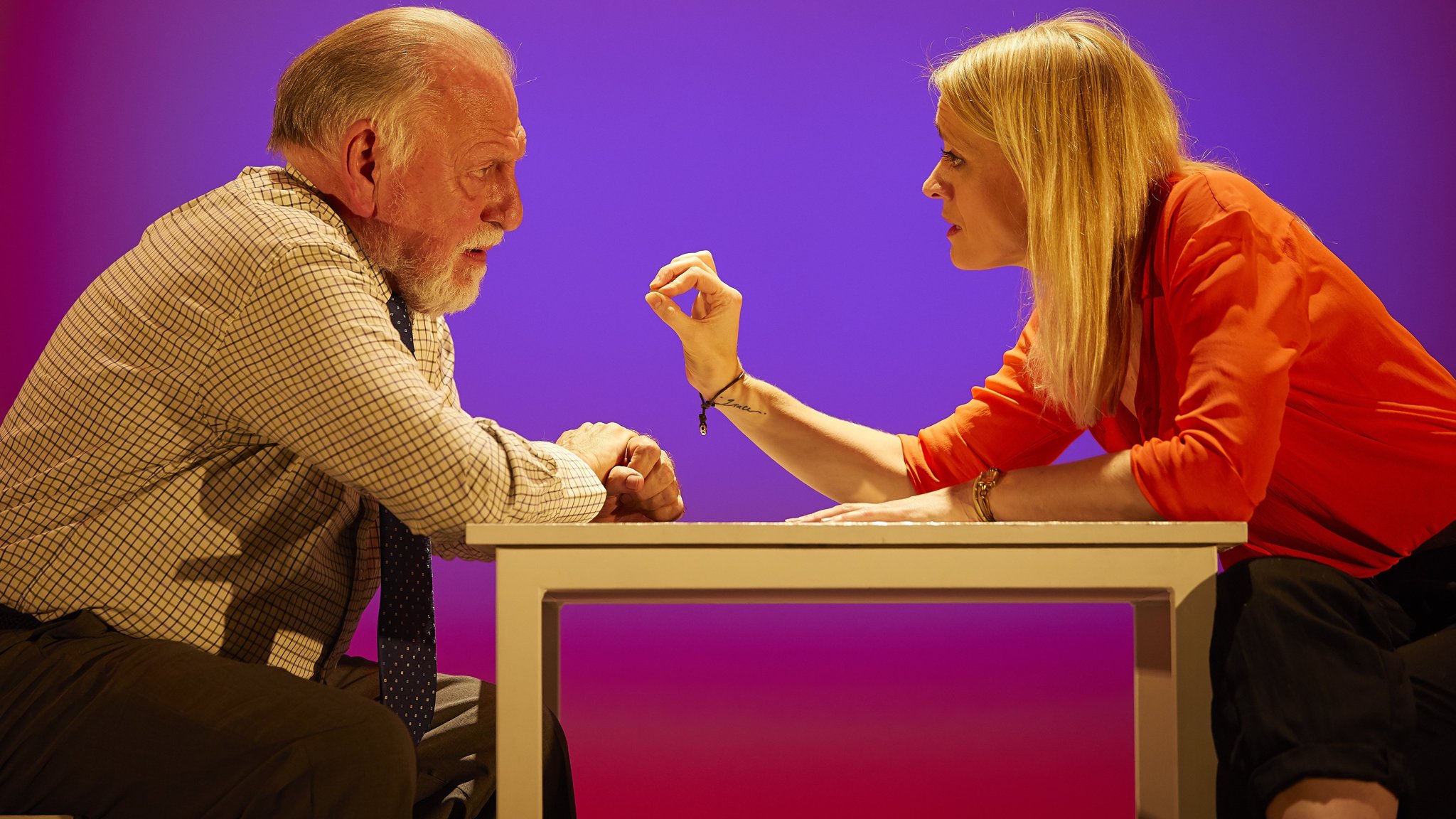
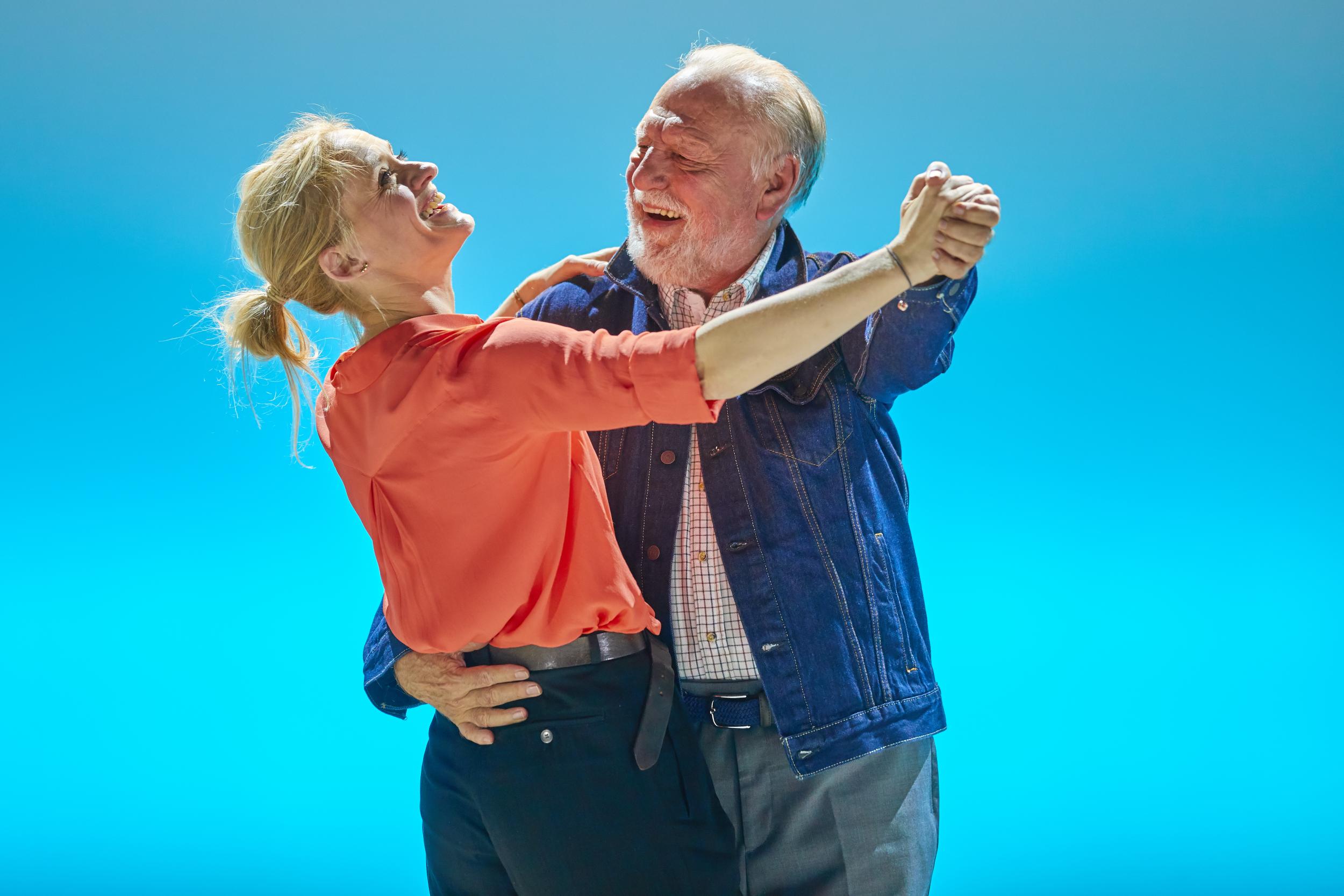
Following its acclaimed run on Broadway in 2016, Heisenberg: The Uncertainty Principle made its West End premiere last week. Opening at the Wyndham’s Theatre, the show marks the inaugural production for Elliot and Harper Productions. It is written by Tony and Olivier-Award winning playwright Simon Stephens and stars Kenneth Cranham and Anne-Marie Duff. White Light has been called upon the supply the lighting equipment.
Heisenberg: The Uncertainty Principle tells the story of two strangers who meet by chance at a crowded London train station and whose lives are changed forever. The show is lit by the award-winning Paule Constable. She comments: “I read the play and was immediately fascinated by what it had to say about relationships and people in general. The director Marianne Elliot and the Designer Bunny Christie developed a visual concept that drew parallels to the uncertainty principle. What they created was something not at all naturalistic but almost reflecting an arts installation/science experiment”.
Once the set design was established, Paule created a lighting design that would work alongside this as well as tell the play’s story. Paule explains: “It’s a very stripped back show and feels very exposed. Sometimes this can be quite risky but it worked extremely well for this production. As it’s only two actors on stage throughout, my role was to ensure that their actions resonated and that we used the lighting to pinpoint certain moments”.
Bunny Christie’s set means that the action is played against what is a huge backlight at the back of stage. Paule comments: “To achieve this effect, I drew on EvenLED panels. Despite it being released almost a decade ago, I don’t think there’s another product out there that can achieve the looks of an EvenLED. For a backdrop of this size, if we didn’t have the EvenLED, then we would have had to build hundreds of LED light bulbs which is obviously not very practical!”.
The unique set design also meant that Paule had very limited positions in which to hang the lighting. She comments: “There are essentially only four places within the theatre in which you can position fixtures. As a result, I have to draw on a range of moving lights. These include ETC Revolutions, Martin MAC Aura XBs, Martin MAC Vipers, Vari*Lite VL1000 and ETC Source 4 Series 2 Lustrs”.
Paule also drew on the GLP Impression X4 Bar 20s and the show was programmed on an ETC Gio Console.
Heisenberg: The Uncertainty Principle has now opened in the West End and will run until January 2018.
Paule states: “This is a very unique show and a brilliant production to be a part of. I’m proud of what we’ve managed to achieve with such a unique set, especially through the use of EvenLED, and I’m grateful to WL for their support throughout”.
Comments Off on Leading Light with…James Farncombe – Part Two
The Lyric where James’ Production Management career began (and ended!).
The year was 1998 and, after three years at Nottingham Playhouse, James had started operating and plotting shows at the venue (“I was starting to find my feet”). However, as soon as James was settling, external factors would once again intervene: “My then girlfriend had just got a job at Birmingham Rep so she was set to leave Nottingham. At the same time, I received a phone call from the actor who had been the Dame in the Panto that year, Mark Chatterton . He was about to direct a show for LipService Theatre Company called King Arthur and the Knights of the Occasional Table. He asked if I’d be interested in relighting the tour.” James took the role and found himself travelling back and forth across the country. He states: “Relighting was another great opportunity to learn. We were doing one night stands in a huge variety of small scale venues. Some were little more than cowsheds, and often the lighting needed a lot of adaptation. I had to be inventive to preserve the spirit of the design. Very often I couldn’t fully recreate it. As I’d had no formal training as such, this really helped me understand why designers did what they did. There was a lot of trial and a lot of error but it was invaluable training”. LipService also took James on an Arts Council tour of Pakistan, “but that is another story entirely…”.
La Cava on which James assisted Chris Ellis
The tour finished and James found himself in the world of freelancing. Yet he was soon to step directly into another role: “I landed a job with Pilot Theatre Company in York. They had just finished a tour of Lord of the Flies and were looking for a Production Manager and someone to relight their second tour. It was a highly successful show, touring midscale venues across the UK, and represented a good progression for me. The tour ended at the Lyric Hammersmith in London”. It was at this point that James was rethinking his career path: “I was struggling to get enough work, and I thought being a production manager might be a useful string to my bow”.
So with the tour finished, James decided to stay in London. His brother was a student at Goldmith’s (where Lighting Designer Paule Constable studied – you can read her Leading Light here) and “he let me sleep rent-free in the cellar of his shared house in New Cross. I stayed much longer than originally intended”.
Having decided to pursue work as a production manager and having made contacts at the Lyric Hammersmith, James worked there on a show by The Right Size; a devised piece called Bewilderness: “It was a useful experience – in the sense that it taught me that I absolutely hated being a production manager! That show was hugely inventive and very challenging, but it almost finished me. It was my last job ever as a PM”. However, James eventually went on to work happily as LD for one half of The Right Size, Sean Foley, on several shows, including the Ladykillers and Jeeves and Wooster in the West End.
The Overcoat was one of James’ first big successes.
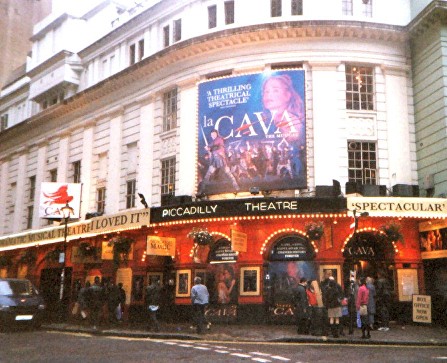
It was during these early days in London that James would start working as assistant to lighting designer Chris Ellis: “Chris was a big influence. He can be a fierce man and very business-like. He gave me a lot of work and taught me a lot. My first experience of the West End came from him. I was his assistant on La Cava which played at the Victoria Palace and then Piccadilly Theatre and was produced by Barbara Broccoli. Lighting aside, it was my first introduction to the politics of commercial theatre and managing the intervention of producers and so forth. Chris was passionate about his work and always determined to make the best show possible. He also put a lot of store by his team; the programmer, the production electrician, the DSM. He showed me what lighting design really entails, that it is very much a collaboration, relying on diplomacy, patience and the skill of a great many people. He also gave me a lot of confidence, encouraging me to have an opinion, to voice my ideas. He came to see my early work and his enthusiasm and evident pride in me were significant factors in my decision to pursue lighting as a career”.
The Woman in White is the only professional collaboration James has with his uncle.
The year was now 2002 and James was contacted by Marcus Romer, the Artistic Director of Pilot, in what would turn out to be another fortunate intervention: “Following Lord of the Flies, Marcus had been offered a show at the Worcester Swan. It was a stage adaptation of The Elephant Man and he asked if I would be interested in lighting it. I said yes of course and I’m so glad I did. It was a tiny show in a tiny theatre, but it was a huge turning point. I started noticing the play of light everywhere”.
Following his work on The Elephant Man, James immediately went to work on Pilot’s next show, Rumblefish. He comments: “It’s that vicious cycle: you don’t get work until you’ve done work. But from that point on, I almost became Pilot’s default lighting designer. It meant people were starting to see my work”.
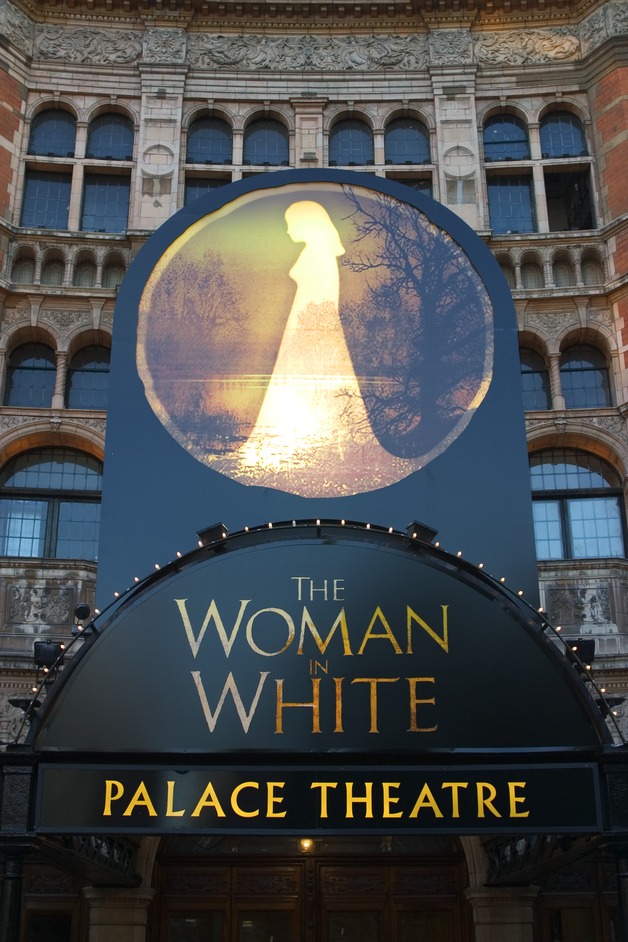
Alongside a fledgling design career, James continued working as assistant, most notably to Paul Pyant on Andrew Lloyd Webber’s The Woman in White: “It remains our only professional collaboration to date. I called the four followspots – they were hilarious! The things I learnt on that followspot ring…there was probably as much drama on cans as there was onstage!”.
Another regular role for James was at the Ipswich Wolsey Theatre. Here he met Pete Rowe, the Artistic Director: “Similar to Marcus at Pilot, I got on well with Pete – so much so that for a while I was the regular LD at the venue. I lit everything from Pinter to the Panto (I don’t think there was actually a Pinter, but you get the idea…)”.
There followed a long period, the best part of ten years, in which James worked up and down the country in regional repertory theatre including Nottingham Playhouse, Birmingham Rep, Leicester Haymarket, Scarborough Steven Joseph, Ipswich Wolsey, Exeter Northcott, Northampton Theatre Royal, Watford Palace and York Theatre Royal: “It was part livelihood, part apprenticeship, part endurance test. It was also an invaluable time. But I was never at home, and now I can’t abide a Virgin Pendolino”.
Men Should Weep, which was directed by Josie Rourke, marked James’ National Theatre debut.
Pete Rowe put James in touch with Amit Lahav of Gecko who asked him to light their next show, The Overcoat. It toured before coming to the Lyric Hammersmith: “There was a buzz around Gecko and lots of people were coming to see it in London. I remember Nick Hytner and Tom Morris coming along. Paule Constable was particularly complimentary and has remained a generous champion of mine. It felt like people were finally recognising my work”. This was seemingly true, with Lynn Gardner noting “James Farncombe’s exquisite use of light and shadow is a show in its own right”.
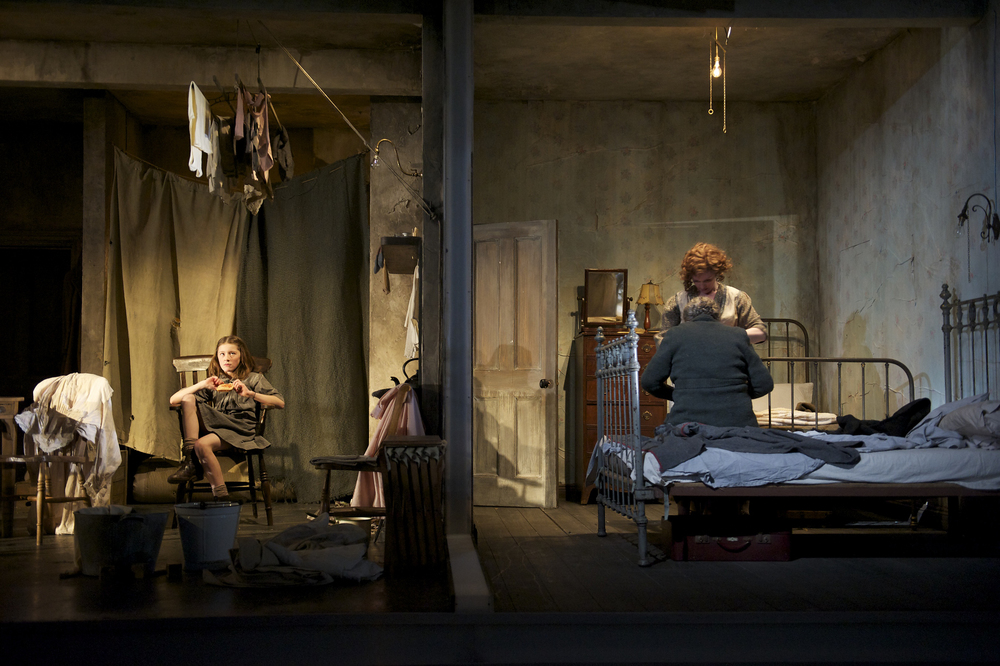
The show marked the beginning of James’ recognition as an emerging lighting designer: “It felt like long time coming, but when the break finally happened, things moved quickly. I had lit for Josie Rourke at the Bush Theatre and suddenly she was directing Men Should Weep at the National – which she asked me to light. This was a big moment in my career. I had wanted to work at that venue for ten years, but never came close. The set, designed by Bunny Christie, was beautiful but challenging to light. That said, I got on the right side of Laurie Clayton and Simon Fraulo, resident wizards of the Lyttelton lighting department, and with their colossal expertise and patience, we found a way through. It really pushed me, but was actually a real joy to work on. It gave me confidence and it opened a lot of doors”.
Following his National debut, James found himself in demand. Looking over his impressive CV, I inquire as to whether he has any favourite shows. Naturally, he doesn’t have just one: “Juno and the Paycock for the late, great Howard Davis was particularly memorable. I remember seeing Howard’s work when I first came to London, and thought, I’d like to work with someone like him one day. A decade later I found myself in pre-production meetings for Juno sat opposite him. People for Nick Hytner which was written by Alan Bennett and it was just magic to be in the room with that brilliant man. The Ladykillers was also a memorable production. It ran at the Gielgud in the West End, and was the first time I opened a royalty cheque and thought there must be a typo – too many noughts (that doesn’t happen very often!). I love working with Katie Mitchell and my favourites would be Pelleas et Melisande at the Aix-en-Provence International Festival and recently Anatomy of a Suicide at the Royal Court. Other highlights include People, Places and Things and London Road in the Olivier. And we haven’t even really started talking about the opera…”
People, Places and Things which James lit at the National and transferred to the West End. It is now on tour and about to transfer to Broadway.
So the time has come where I ask James that well-known question: what advice do you have for the next generation of lighting designers? James’ answer is actually both thoughtful and realistic: “Do your time. This industry is all about patience and climbing the ladder. You might spend years freelancing, relighting and probably doing jobs that you’d rather not. That said, working in different departments and knowing about all areas of the profession can’t be a bad thing.
“I also think it’s important to learn to say no. If you’re a freelance designer, you need to learn how to say no to certain projects and make intelligent decisions when it comes to your work. Mainly so you can do the job properly but also for the sake of your sanity and your integrity – not to mention your general health”.
James is also quick to remind me how, whilst theatre is his biggest passion, time away from the industry is vital. He comments: “You need to find something to do away from lighting. For me, I’m still love making music and I still write songs and play the piano. I’m also learning French at the moment. I can spend hours getting lost around art galleries too”. However, there is one other thing that’s keeping James extremely busy at the moment: “I’m now a dad. Having my daughter means I strive for a more healthy work/life balance, and she is my saving grace. She says one day she is going to come and ‘work in the dark with me’… I still work too much, but I’m slowly learning to get my priorities in the right order”.
And with the emergence of the next generation of the Farncombe family, it remains to be seen as to whether this theatrical family will produce yet another lighting designer…
Photos courtesy of BBC TV, Dan Wooler, David Baird, Manual Harlan, Nottingham Trent University, Paul Pyant, Richard Haughton, Stephen Keeling and Tom Lancaster.
Comments Off on Leading Light with…Paule Constable – Part One
Our Copywriter Adam sits down with Tony and Olivier Award winner Paule Constable.
Paule Constable
Ask anyone interested in theatre to name five lighting designers and you can guarantee that Paule Constable will appear on the list. Not only is Paule one of the most successful lighting designers this country has ever produced but is also a pioneer for female artists in the industry. We’ve been meaning to meet for a while yet her extremely busy schedule has meant that this hasn’t come into fruition. Thankfully, she’s back in London working on a production of Seventeen at the Lyric Hammersmith which allows us to finally sit down and chat. That said, we have only an hour before she goes into a second preview; and it’s an hour in which I intend to hear all about her fascinating journey.
As always with Leading Light, we start at the beginning. For Paule, this is North Devon; although the West Country was only a temporary abode. She comments: “My dad was a hunter pilot in the military. As a result, we moved all across the world. I lived in Germany, Belgium and even the Middle East. I wasn’t really used to anything else so it didn’t seem that unusual”. When Paule began her education, she attended boarding school, where a lot of other children were also part of RAF families. She adds: “I went away when I was 8 and remained so for all my education. It never seemed a big deal to me. All the other officers’ kids were away at school. When we came home in the holidays, we immediately formed a tight community”. It might come as a surprise that, during her formative years, Paule had no interest in theatre. Rather, she was more interested in climbing trees and the great outdoors. She states: “I was a bit of a tomboy. My older brother was an academic whereas my father was very sporty so this was something I did with him. I was very active and preferred to be on my feet”.
Goldsmiths University Students Protesting in 1986.
Whereas Paule shared her father’s passion for all things outdoors, he made sure that this was the only thing they shared: “Dad was very clear – he told me specifically that I could be anything I wanted but he didn’t want me to be a fighter pilot. I wasn’t sure what I wanted to do but I was made clear it wasn’t to be this!”. At this point though, theatre was yet to make a big impact on Paule’s life. She adds: “Although theatre still didn’t really interest me, I did start to get involved at school. My initial reasons for doing this weren’t artistically motivated – if we used the theatre at school it meant we could sneak out for a smoke!”. So the arts didn’t really strike Paule as a career choice at that point. She still remained very academic yet she reached a crossroads at college. She comments: “My A Levels were a real eclectic mix. I picked Maths, Physics, History of Art and English – therefore it was an extremely random choice! Yet it was also one without a very definite sense of direction”. This didn’t prevent Paule from continuing with her studies and she soon found herself on the way to London where she studied English at Goldsmiths University. It would be a move that would influence the rest of her career and personal life.
The original Angels in America at the National Theatre (which Paule is currently lighting at the National).
When Paule attended Goldsmiths University, this was run by Peter Hoggett and it was a very left-wing, radical institution. She recalls: “I attended university in 1986 and this marked the end of the miners strike. I remember going down to Wapping and standing on the picket lines. There was a lot of political activity at that time. It was also very exciting for me personally as I had received a very traditional upbringing in a very enclosed world. Suddenly, this was burst open and I was introduced to people I’d never come across before. It was also great as I lived in East London when it was still the East End. There was a real sense of community where people genuinely knew one another, which is sadly no longer there”. Whilst in London, this meant that Paule got to see more theatre and soon her interest grew. So much so that she changed her course from solely English to English and Drama; a decision she made due to the fact that “you didn’t study plays with just English”. With her change of course and the fact that she was seeing more plays than ever before, it seemed that Paule had finally discovered the direction she was lacking; albeit by accident.
During her university years, Paule saw lots at the ENO, productions by Cheek by Jowl and even the original Angels in America. She recalls: “My passion just seemed to slowly grow with the more I saw. It was a very natural progression and I just enjoyed engaging with new work”. During her degree, Paule would work part time to make ends meet like most students. It was her flatmate’s persuing of romance that would lead to Paule’s first experience of working in theatre. She comments: “My flatmate was a stage manager and would work on a range of shows. Then one day she fell in love and moved to Spain (as you do!). At the time, she was a follow spotter at Hackney Empire where she was working on Black Heroes in The Hall of Fame. One morning the phone went and someone said that Jackie needed to be at the theatre by ten. As I was completely broke, I said that she’d be there – only she was me!”. Paule then made her way over to the Hackney Empire: “To this day I still don’t really know why I said yes or what I was expecting. I remember turning up and not knowing what I was doing. However, it wasn’t as disastrous as it could have been. Thankfully, the other followspotter, Fiona Simpson, was extremely approachable and talked me through the various steps”.
Black Heroes in The Hall of Fame was Paule’s first professional lighting job.
Paule must have made an impact in her inaugural attempts at followspotting as she was then asked by Midnight Design to work on a rock ‘n’ roll show – something she jumped at the chance to do. She recalls: “I was asked to work on this show and the guys there needed someone to climb up on the rig. I think they were surprised at how eager I was to do this – a part of my inner tree- climbing child must have reemerged!”. Paule continued to work for Midnight Design on a range of rock ‘n’ roll concerts alongside her studies. It was during this time that she met Dave Bryant, who was resident Lighting Designer at the London Astoria Theatre (which has since been demolished). Paule comments: “Dave was a huge influence and really showed me the ins and outs of lighting as it were. We worked on everything from Acid House clubs to live gigs. Dave offered advice to Paule who began lighting her own shows in the third year of university. She states: “There wasn’t a particular moment where I thought I am now going to be a lighting designer. I actually just liked getting my hands on kit!”.
The Astoria Theatre where Paule met Dave Byrant
Paule soon graduated and continued to freelance and light shows when and where she could. It was also during this time that she met her partner, Ian, who worked at People Show – an immersive, experimental theatre company who Paule worked with. Paule also worked on the Festival of Circus on the Southbank and continued to work alongside Midnight Design. She also began to work for established lighting designers, which not only saw her gain valuable experience but offered her first-hand insight into their methods. She states: “I remember carrying Ben Ormerod’s bags while I was lighting his shows! I was never afraid to get stuck in and when I worked on a production I always made sure I helped out as much as I could”. Paule continued to relight a lot of other shows, including those of Stevie Whitson; a lighting designer from New York. Stevie worked closely with DV8 and was renowned for working in experimental theatre. Paule recalls: “Stevie was this larger than life figure who was just so passionate about theatre. He had a really interesting way of working and he managed to create some stunning looks on stage”. It was Stevie who made Paule really think about her career and the direction she wanted to take. She recalls: “Stevie would always call me up to get lamps for the show but stopped asking me to relight them. This upset me as I thought I was doing a pretty decent job. So when I pressed as to why he didn’t ask me anymore, he literally turned around and said ‘Just f*ck off and do your own work!’. Although this might sound incredibly rude, it was actually really inspiring as it made me think that I could actually work in this industry on my own designs, as opposed to imitating the work of others”.
Comments Off on Leading Light with…Paule Constable – Part Two
The Street of Crocodiles at the National Theatre.
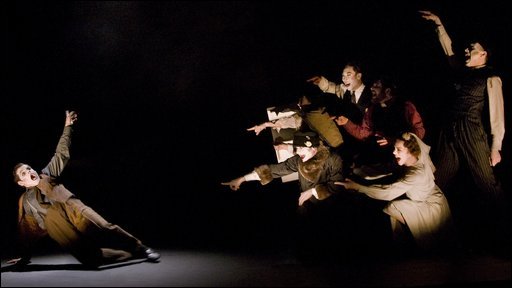
This was the motivation that Paule needed and she soon found herself taking on her first paid gig with 784 Scotland. It was here she met renowned designer Rae Smith who Paule would work with numerous times over the years. She states: “It was fantastic meeting with Rae as the way she talked about theatre made real sense to me. It wasn’t jargon or numbers or technical terms; it was her own language. This inspired me to develop my own way of talking about theatre; one which made sense to me”. Following 784 Scotland, Paule then lit and toured shows with Complicite. One of these was The Street of Crocodiles which she deems as her “big break”. She comments: “Street was a huge success; much bigger than I anticipated. It ran at the National and then I found myself at aged 26 being nominated for an Olivier. It was quite surreal!”. It also meant that Paule was now recognised as an emerging lighting designer and her work was finally being viewed on a bigger scale: “The show opened so many doors for me. I was taken on by an agent meaning I had someone to represent me for this first time. It also meant that I went from being a relatively unknown to having people now want to work with me – they were even returning my letters!”.
The Dark Materials won Paule her first Olivier.
Paule continued working closely with Complicite as well as branching out into other productions. This included operatic shows and she worked extensively at the Royal Opera House, with her first design being Rigoletto for David McVicar. Since then, she has continued to work in opera and has even co-directed productions. She states: “I love opera as it gives you a freedom that traditional theatre simply doesn’t afford. Opera seems to be less scared of designers that aren’t a big name as such. They are less worried about the credits and more interested in the artist and what they can bring to the role. Similarly, opera allows a much wider scale of expression. You can be really bold aesthetically and this potential has had a huge influence on the rest of my design”.
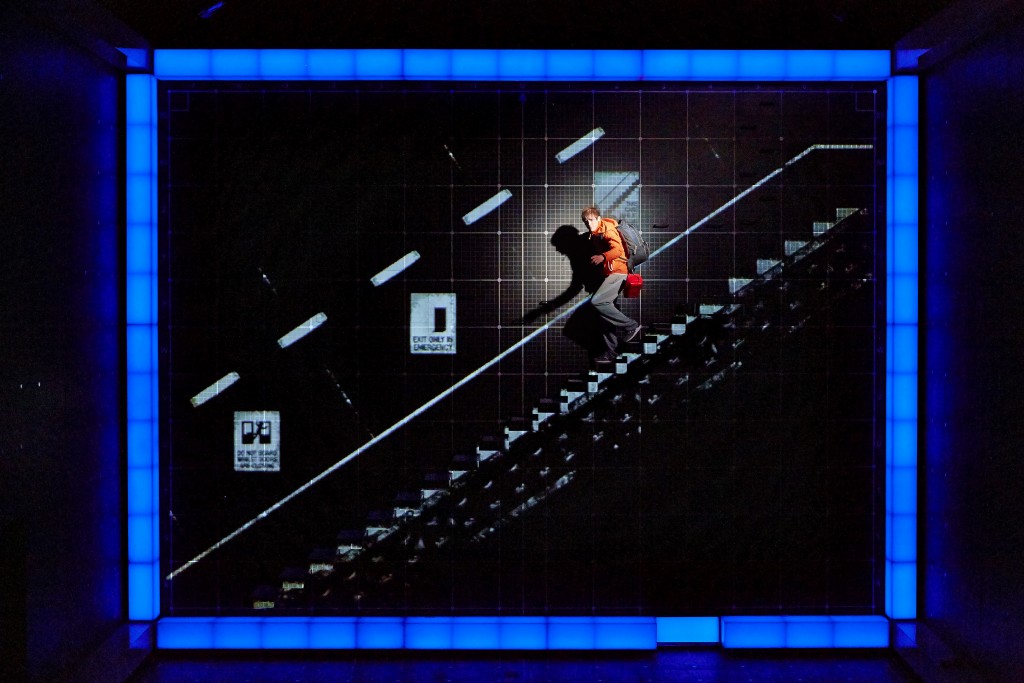
The Curious Incident of the Dog in the Night-Time has earned Paule an Olivier and Tony Award.
Across her career, Paule has won four Olivier Awards, two Tony Awards as well as the LA Drama Critics Circle Award. Her extensive list of credits include The Curious Incident of the Dog in the Night-Time, War Horse, Sleeping Beauty, This House, The Cripple of Inishmaan, The Weir, Elegy, Happy Days, Herons, Blasted, Red Shoes, Clybourne Park, The Chalk Garden, Waves, His Dark Materials, RSC Wolf Hall and Bring up the Bodies. Looking at a CV like Paule’s, it reflects the dream résumé for any lighting designer; she’s done it all and then done it again. Yet what has allowed her to take on so many incredible productions and achieved the highest recognition in the industry time and time again? For her, there’s no big secret: “It’s all about relationships. My entire career has been based on a handful of relationships: with Complicite, Rae Smith, Katie Mitchell (theatre director), Vicky Mortimer (Designer), Marianne Elliott, Michael Grandage, Rufus Norris and David McVicar. It’s all about building those strong working partnerships and singling out people who you want to work with time and time again. With all of these, we’ve grown as artists together and we seem to be able to get the most out of each other. Whoever I work with, whether it’s Rufus Norris or Marianne Elliot, we have a strong working relationship and that’s fundamental to me and my work”.
Paule with WL’s Managing Director Bryan Raven at this year’s Tonic Awards
Alongside her obvious lighting talents, there is another thing that Paule is renowned for: promoting the role of women in theatre. She is only one of two women to have received an Olivier Award for Best Lighting Design (the other being Natasha Chivers’ whose Leading Light you can read here) and has always advocated the role of women in theatre. She comments: “Women still aren’t represented as well as they should be in theatre. It’s a very male-dominated industry and we need to change that. When I began working in the business, I started in rock ‘n’ roll gigs. For a young woman, this was just awful. You were constantly cat-called and it really was an intimidating environment. Moving into theatre, people’s attitudes improved mildly but it was still uncomfortable”. Earlier this month, Paule was presented with a Tonic Theatre Award – an awards ceremony that celebrates women’s role in theatre. It was presented to her by WL’s Managing Director Bryan Raven. So now that there is an organisation championing women in the arts, is the industry no longer sexist? Paule has an answer: “Not at all. It has got better but certain attitudes and prejudices still exist, sadly. A lot of it is subconscious sexism that might leak through a particular comment or in a conversation with a certain individual. All we can keep doing is raising the issue, making sure people are aware of it and making sure we call it out when it does happen”.
There’s also another area in which Paule remains passionate: politics. Following her politically geared education, she still believes that theatre can do more to engage with the world around us. She states: “There is a huge lack of politics within contemporary theatre. The stories we tell on stage really matter and it needs to be a space where we can have some sort of debate. The best type of theatre is that which makes you think and I actively seek out projects that have an important political and social matter behind them”.
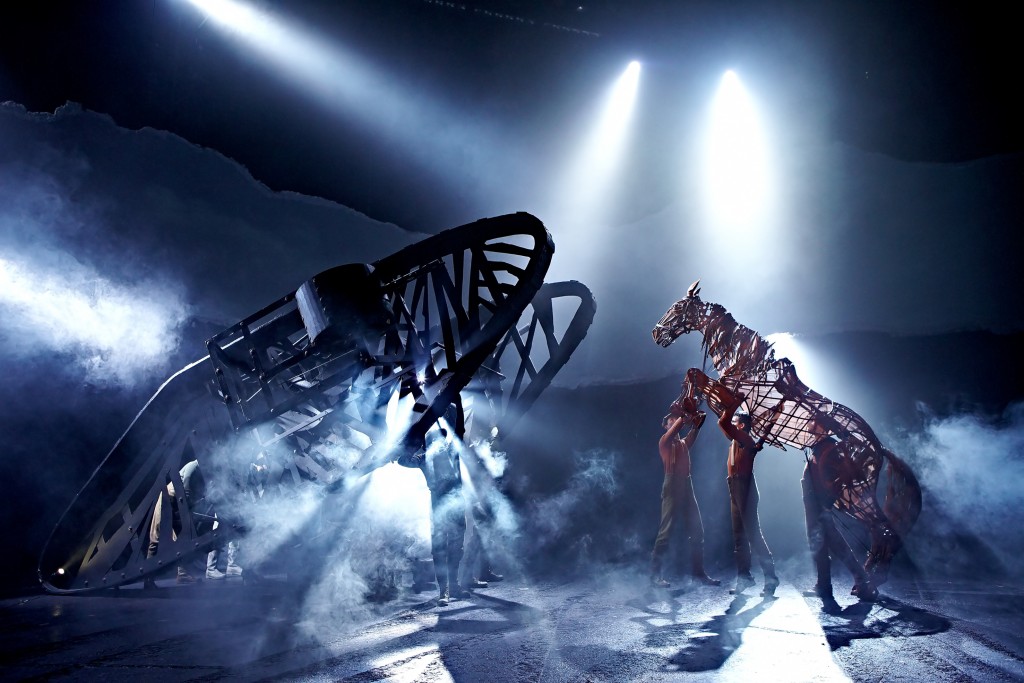
The iconic War Horse, for which Paule won a Tony Award.
Paule is now being called back into the tech box as Seventeen is about to start. It’s one of the first shows she’s lighting this year, before she begins work on the highly anticipated Angels in America which will run at the National Theatre. Add this to the fact that Curious Incident and Red Shoes are currently on tour then it seems that Paule is in for yet another busy year. Before we run, she leaves me with some words of wisdom for the next generation of LDs: “Find your safe space. By this I don’t mean somewhere safe where you can be complacent and not be challenged. Rather, I mean somewhere where you can be who you want to be. Where you feel it’s safe to experiment and you aren’t worried about being judged or mocked. Once you find this, you’ll progress as an artist and really achieve your potential”. I don’t ask where Paule’s ‘safe space’ is. However, wherever it is, it’s seen the birth of some of the most original and innovative lighting designs ever seen on stage.
Photos courtesy of Adam Bennett, Brinkhoff/Mögenburg, Cinema Treasures, Ivan Kyncl, John Haynes, Joan Marcus and Simon Annand.
Comments Off on White Light Sponsors Inaugural Tonic Awards
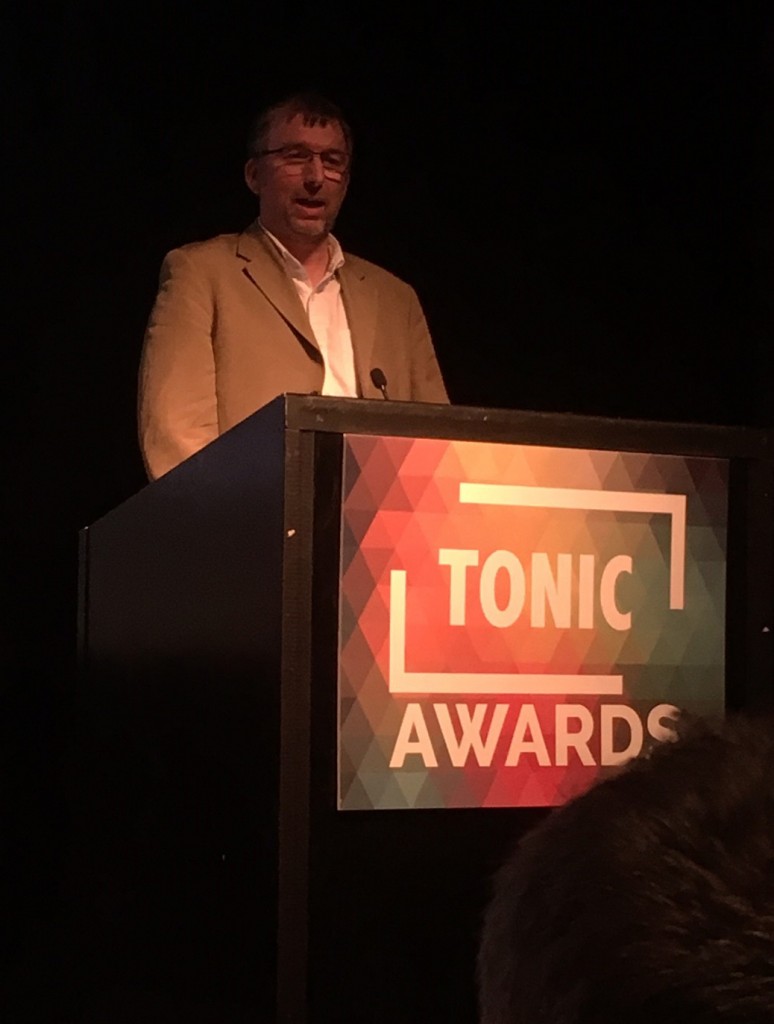
Last night saw the first ever Tonic Awards take place at the May Fair Theatre in London. Hosted by Jenni Murray, the awards celebrate the work of women in the theatre industry. Set up by Tonic Theatre, there were nine awards, seven of which were given to individuals, and two which were given to groups. Having supported a range of theatrical organisations for numerous years, White Light was one of the sponsors for the Tonic Theatre Awards.
Tonic Theatre was created in 2011 to support the theatre industry to achieve greater gender equality in its workforces and repertoires. The company’s approach involves getting to grips with the principles that lie beneath how the theatre industry functions and identifying how, in its current form, barriers can be created. It partners with leading theatre companies around the UK on a range of projects and also works within the wider creative industries such as dance, opera, literature, art and music.
The winners included Rosemary Squire, co-founder of ATG, Emma Rice, artistic director of Shakespeare’s Globe, Indhu Rubasingham, artistic director of the Tricycle, Dawn Walton, artistic director of Eclipse Theatre, Jenny Sealey, artistic director of Graeae Theatre Company and theatre director Anna Newell who all received awards for their work in their respective areas. Another recipient was lighting designer Paule Constable who was presented her award by WL’s Managing Director Bryan Raven.
Bryan comments: “We have known Paule for many years now and it was fantastic to see her brilliant work achieve recognition. The whole evening was a long overdue celebration of the theatre’s leading female figures and, as a company, this is something we’re delighted to support”.
A further two awards were given to groups: Phyllida Lloyd, Harriet Walter and Kate Pakenham for the all-female Shakespeare Trilogy at the Donmar Warehouse and Vicky Featherstone, the National Theatre of Scotland and Live Theatre for Our Ladies of Perpetual Succour.
Lucy Kerbel, Founder and Director of Tonic Theatre, states: “I am thrilled that our inaugural Tonic Awards have been so warmly embraced by the industry. There is clearly a great desire for the contributions women are making to theatre to be recognised more widely and for them to be rightly celebrated for their achievements. I’m delighted that the Tonic Awards can form just part of this.”
Sita McIntosh, chair of Tonic’s board of trustees, said: “The Awards were the culmination of months of planning and I am delighted by the positive response and feedback that we have had from awardees, presenters, guests and the industry in general”.
We use cookies on our website to give you the most relevant experience by remembering your preferences and repeat visits. By clicking “Accept All”, you consent to the use of ALL the cookies. However, you may visit "Cookie Settings" to provide a controlled consent. View our View our Privacy Policy
This website uses cookies to improve your experience while you navigate through the website. Out of these, the cookies that are categorized as necessary are stored on your browser as they are essential for the working of basic functionalities of the website. We also use third-party cookies that help us analyze and understand how you use this website. These cookies will be stored in your browser only with your consent. You also have the option to opt-out of these cookies. But opting out of some of these cookies may affect your browsing experience.
Necessary cookies are absolutely essential for the website to function properly. These cookies ensure basic functionalities and security features of the website, anonymously.
Cookie
Duration
Description
cookielawinfo-checkbox-analytics
11 months
This cookie is set by GDPR Cookie Consent plugin. The cookie is used to store the user consent for the cookies in the category "Analytics".
cookielawinfo-checkbox-functional
11 months
The cookie is set by GDPR cookie consent to record the user consent for the cookies in the category "Functional".
cookielawinfo-checkbox-necessary
11 months
This cookie is set by GDPR Cookie Consent plugin. The cookies is used to store the user consent for the cookies in the category "Necessary".
cookielawinfo-checkbox-others
11 months
This cookie is set by GDPR Cookie Consent plugin. The cookie is used to store the user consent for the cookies in the category "Other.
cookielawinfo-checkbox-performance
11 months
This cookie is set by GDPR Cookie Consent plugin. The cookie is used to store the user consent for the cookies in the category "Performance".
viewed_cookie_policy
11 months
The cookie is set by the GDPR Cookie Consent plugin and is used to store whether or not user has consented to the use of cookies. It does not store any personal data.
Functional cookies help to perform certain functionalities like sharing the content of the website on social media platforms, collect feedbacks, and other third-party features.
Performance cookies are used to understand and analyze the key performance indexes of the website which helps in delivering a better user experience for the visitors.
Analytical cookies are used to understand how visitors interact with the website. These cookies help provide information on metrics the number of visitors, bounce rate, traffic source, etc.
Advertisement cookies are used to provide visitors with relevant ads and marketing campaigns. These cookies track visitors across websites and collect information to provide customized ads.




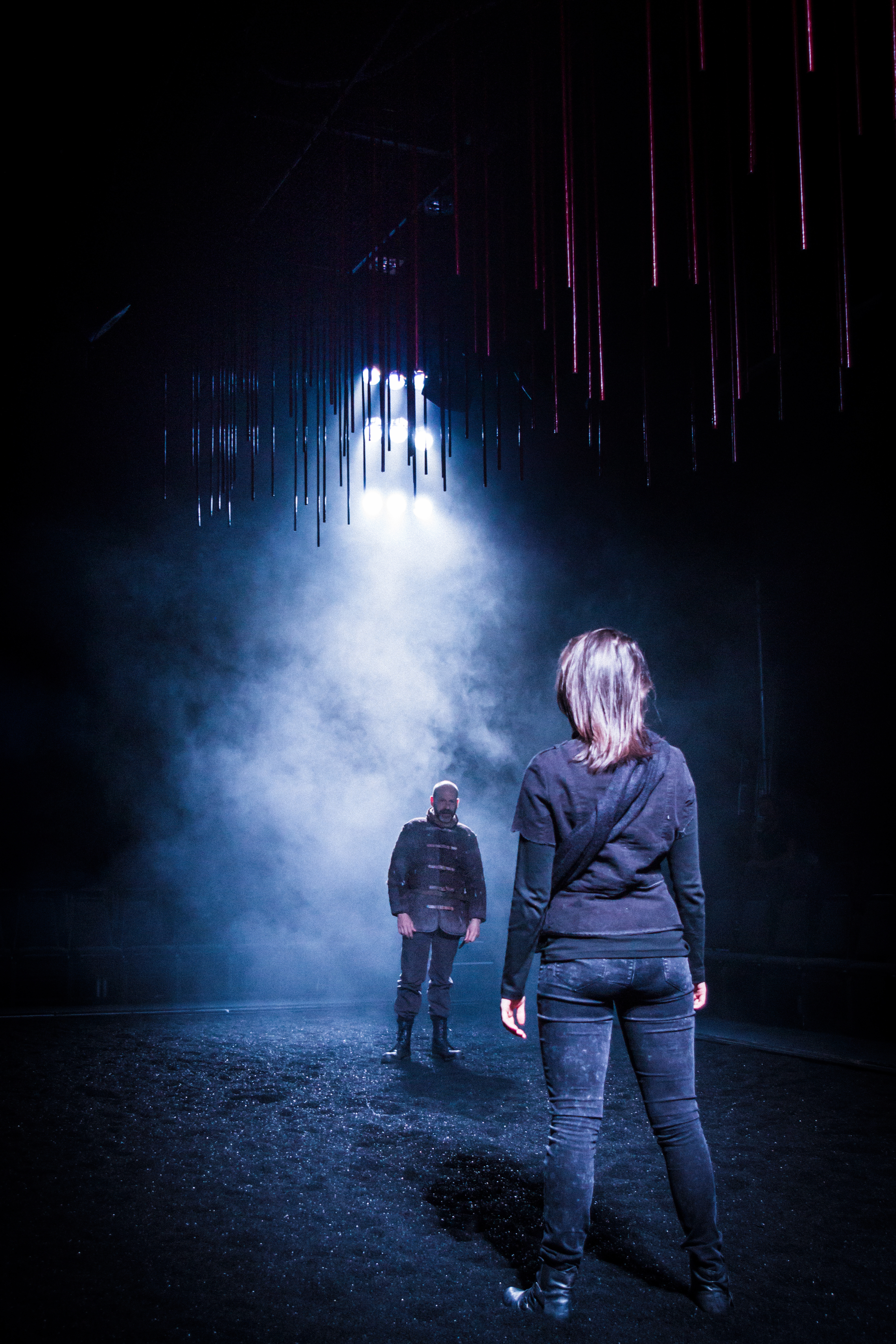






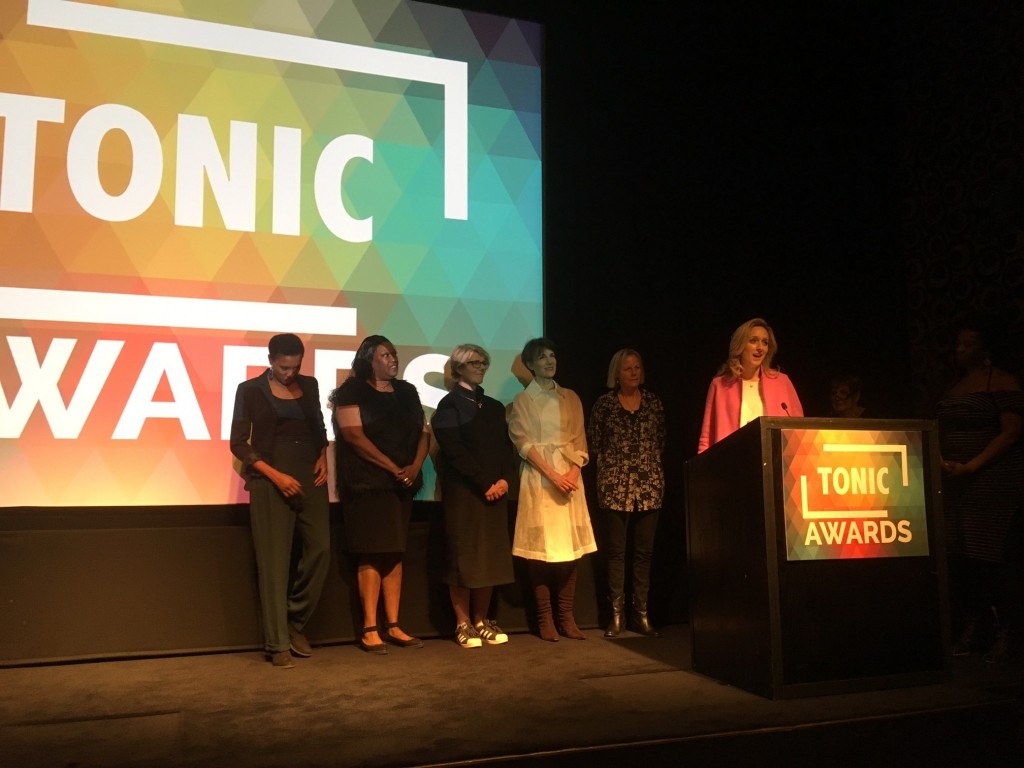 Last night saw the first ever Tonic Awards take place at the May Fair Theatre in London. Hosted by Jenni Murray, the awards celebrate the work of women in the theatre industry. Set up by Tonic Theatre, there were nine awards, seven of which were given to individuals, and two which were given to groups. Having supported a range of theatrical organisations for numerous years, White Light was one of the sponsors for the Tonic Theatre Awards.
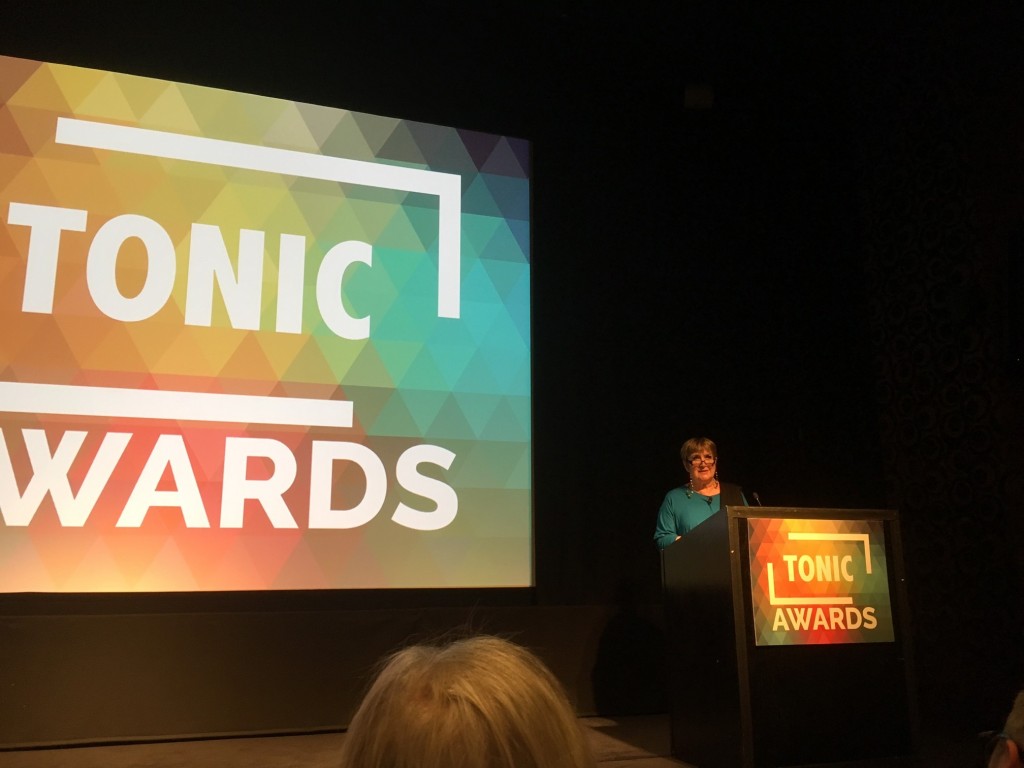 The winners included Rosemary Squire, co-founder of ATG, Emma Rice, artistic director of Shakespeare’s Globe, Indhu Rubasingham, artistic director of the Tricycle, Dawn Walton, artistic director of Eclipse Theatre, Jenny Sealey, artistic director of Graeae Theatre Company and theatre director Anna Newell who all received awards for their work in their respective areas. Another recipient was lighting designer Paule Constable who was presented her award by WL’s Managing Director Bryan Raven.