West End Lighting Archives - White Light
Explore White Light: White Light | HireWL | SalesWL | ShopWL

Tag Archive: West End Lighting

  1. The Show Must Go On for White Light

    Leave a Comment

    Last month, the Palace Theatre in London’s West End played host to The Show Must Go On – a unique concert which celebrated the very best of the London theatre scene whilst raising vital funds for theatrical charities. The show featured select performances from over 18 West End shows, including The Lion King, Matilda, & Juliet, Come From Away, Back to the Future and many more, as well as having a 50 strong cast, crew and orchestra. This included Olivier Award-nominated Lighting Designer Howard Hudson who approached White Light (WL) to provide the lighting equipment. 

    The Show Must Go On was produced by Theatre Support Fund and MZG Theatre and all profits went to Acting For Others and the Fleabag Support Fund. Following a year in which theatres have been hit incredibly hard due to the Covid-19 pandemic, the production wanted to support the thousands of creatives who have not worked for several months as well as celebrate the shows that have recently been absent from our stage. Howard explains: “I was tasked with lighting each performance with different looks in order to give each show its own identity. Whilst we had to ensure the rig would work for every performance, we tried to give some unique colour identity, whether that was based on a particular moment or influenced by the production’s artwork, which acted as a subtle visual nod to the audience. 

    He continues: “The set comprised of a large LED Neon sign with a deck upstage for the choir and more LED strips within the orchestra, with featured logo-clad flightcases downstage right and left. The sign and the strips, along with the large curtain at the back of the stage, gave us our main elements with which to colour each performance and the strips provided eye candy for the more upbeat numbers. We decided to drop in the bars to give the stage a more concert vibe as the rig height for the show which normally plays at the Palace is very high”. 

    With the show only having a handful of live performances, this meant that there was a limited rehearsal and technical period. Howard explains: “We essentially only had one session in which to plot some initial looks for each performance. Following this, we had two tech sessions with the orchestra in which we’d run each number twice and then move on. As such, my brilliant programmer, Dan Haggerty, and I had to be very swift with our decision making and cross our fingers tightly that it would all work when we brought it together! As the final performance was going to be recorded and streamed across the globe by NT Live, we also had to work alongside the team who conducted some camera tests before we eventually went live”.   

    In terms of the fixtures utilised, Howard was able to largely draw on the existing rig currently in place at The Palace, which was supplied by WL. He explains: “The rig in situ at The Palace Theatre was thankfully very substantial. As such, we mainly used the VL3500s, XBar 20s and Lustr 2 systems and sporadically drew on some of the Revolutions which is the other main fixture there. We brought in some additional GLP XBar 20s to uplight our backcloth and also 7 Pickle Patts which we gelled as back of shot dressing. These were also useful as blinder type units for several moments. The 2 followspots were also vital for a concert with so little tech time, and the FOH follow spot position at the Palace is brilliantly angular and worked very well on camera”. 

    The show was performed live to a socially-distanced audience from Wednesday 2nd June to Sunday 6th June, with the final performance being recorded by NT Live. The live recording was then subsequently made available for a week afterwards. 

    Howard concludes: “With this production, it was just great to be back in the room with so many brilliantly talented people. I’ve really missed the community of our business and just to spend time with people I hadn’t seen for so long was excellent. It was also for a fantastic cause as well and has managed to offer some aid to those who have struggled, and continue to do so, due to the events of last year”. 

    Photos courtesy of Johan Persson.

  2. White Light Up to Mischief Movie Nights

    Leave a Comment

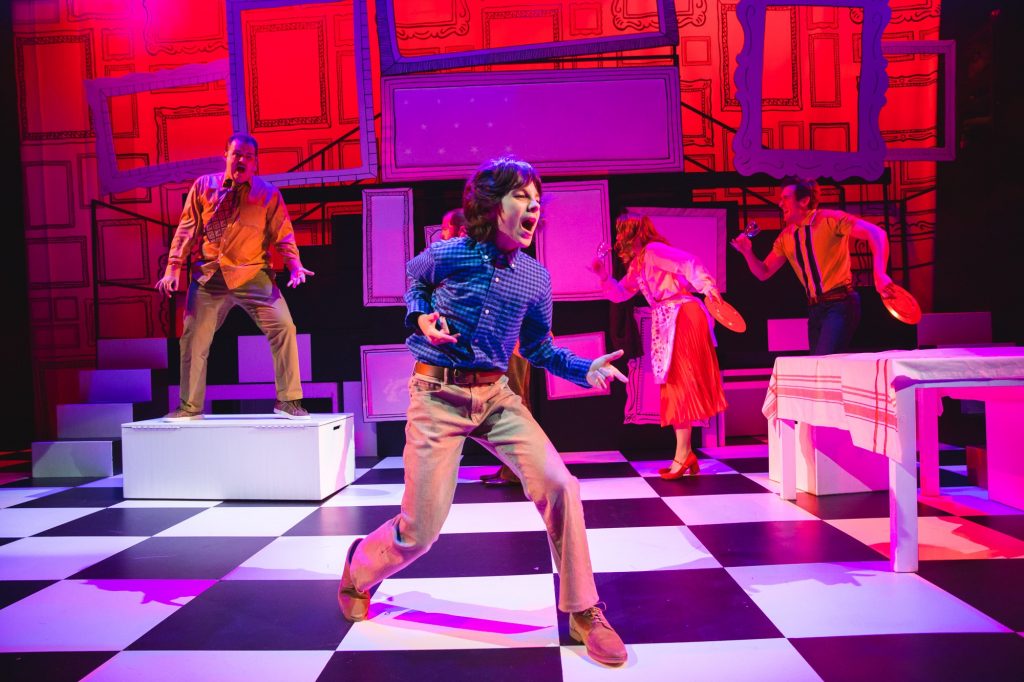
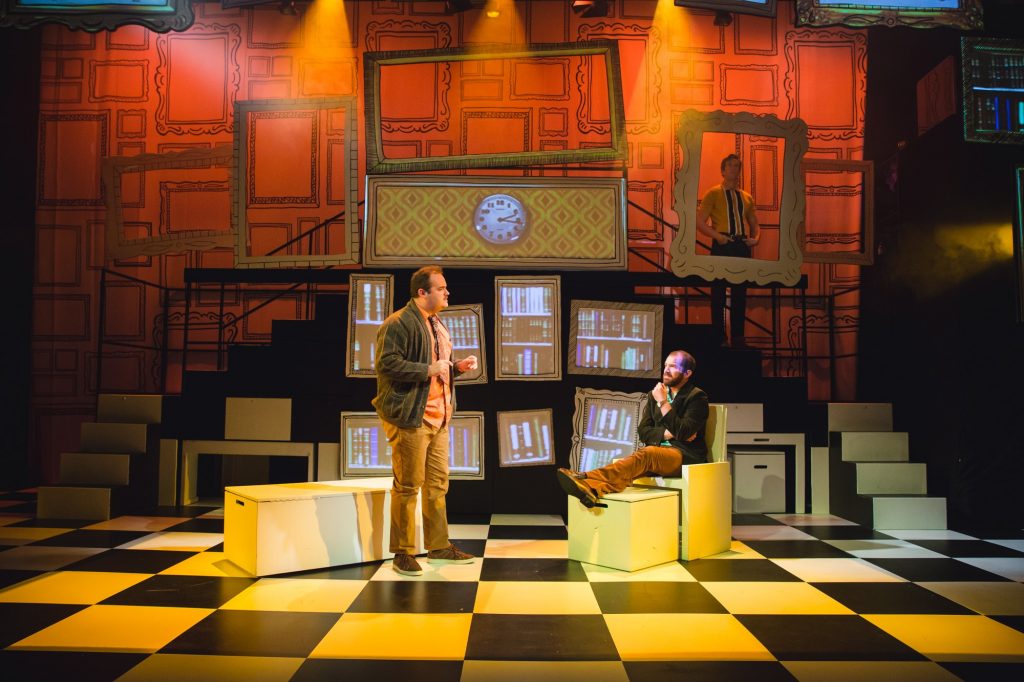
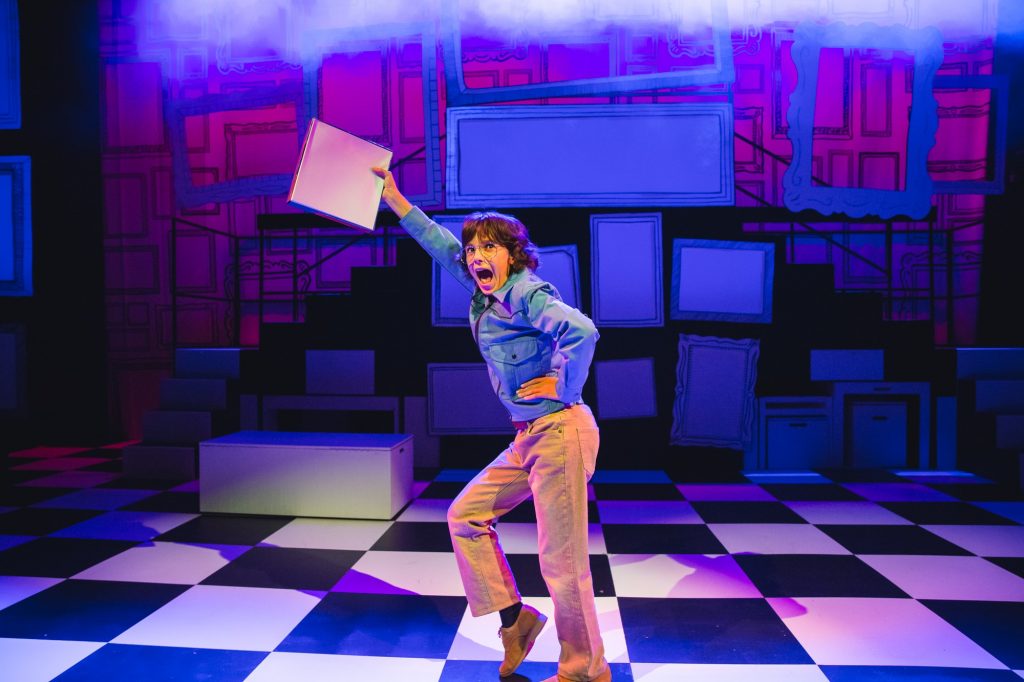
    Created by the Olivier Award-winning Mischief Theatre, Mischief Movie Nights recently made its much-anticipated return to London’s West End. Opening at the Vaudeville Theatre, this fully improvised show sees audience members suggest a film genre, location and title, which the Mischief team then use to bring the ‘live movie’ to life before their eyes. The lighting designer is David Howe who approached White Light to supply the lighting equipment. 

    Mischief Theatre is one of the most prominent theatre companies in London’s West End, having created The Play That Goes Wrong, Peter Pan Goes Wrong, Magic Goes Wrong and The Comedy About A Bank Robbery. Mischief Movie Nights is the first of their productions to open following the Covid-19 outbreak. David comments: “We had initially hoped that Magic Goes Wrong, which has been playing at the Vaudeville since last December, would be able to re-open; albeit with a few tweaks for the current times we’re living in. That said, as the situation evolved, it was proving difficult to keep adapting the show to match the ever-changing guidelines. As such, it was decided that Mischief Movie Nights would be a better option as it is an improvised show, meaning less rehearsal time, along with the fact that it was much easier to make any last-minute changes if needed”.    

    Mischief Movie Nights was first performed back in 2009, under its original title of Lights! Camera! Improvise! at the Edinburgh Festival Fringe. It has developed over the years and David joined the creative team when it made its West End debut at The Arts Theatre in 2017. He explains: “Movie Nights is essentially centred around a film director who asks the audience at the start of each performance what type of film they want to see. This is then performed by the cast who are ‘controlled’ by the Director’s remote control, meaning he is free to hit pause, comment on the action or rewind/fast forward to other sections. The improv possibilities are endless, and it’s even been known to jump to a ‘Director’s Cut’, behind-the-scenes documentary footage or even deleted scenes, such is the nature of the show.  

    As this is an improvised production which changes every single evening, this obviously impacts David’s design. He explains: “With the show having no set structure apart from the welcome to the audience, this means that the type of film they choose to watch dictates what design is required. As a company of actors, Mischief are an incredibly tight group and visual comedy is an important theme running through their work so it would have been hugely dissatisfying to present the show with a single ‘look’. Therefore, the rig I designed needed to have many options to add to their performance as well allow for bold, clear choices that clearly define space and location for everyone. Similarly, colour is important, and we have a Gauze Cyc that we can dial-up any variation of colour we need along with a range of gobo textures.  We also have a large range of specials focused around the set that the cast are aware of and often move scenes into these prepared areas, which then allows us to close the lighting down around them and focus the attention. 

    He continues: “It goes without saying that the operator is a key (not to mention busy!) member of the team as the programming has to allow for the director’s frequent pauses as well as have the ability to rewind, fast forward through action and then re-call a state that perhaps had been used a few minutes before. As such, the programming is intense and has many cross-referencing macros giving us the options and flexibility we need.  We use an ETC-Gio console with a customised Magic Sheet and a fully loaded sub-master fader wing for manual control. Production Electrician and Programmer Ed Locke has programmed the show since 2017 so it has evolved a great deal as we’ve seen more and more of the ‘films’ performed and added to our store of locations and choices”. 

    Once he discovered that Mischief Movie Nights was being revived at the Vaudeville, David approached the Hires Team at WL to achieve the exact fixtures he required. His rig includes a mixture of ETC Source Fours, ColorForce Battens, MAC Auras and MAC Encores. He explains: “The moving lights provide the intensity and impact I needed for the bold looks. There can’t be too much movement as there is no-knowing what might come next in the show and therefore nothing can be pre-set in advance. That said, I’m really pleased with the package we have and it’s great to see the operator and cast in total synchronicity, telling a story that uses the building blocks of light I’ve designed”. 

    As Mischief Movie Nights was taking place during a global pandemic, this obviously meant for a slightly surreal rehearsal and tech process for David and the team. He comments: “Mischief and our producer Kenny Wax with Nimax Theatres spent a lot of time and effort in making sure that the theatre felt like a place we could all be in at the same time for long periods; something which we were incredibly appreciate of. The cast and crew were also all having regular Covid tests with quick results within 15 minutes, so we all knew we were safe to work. The turnaround was fast: we loaded-in on Monday morning, focused mid-afternoon and had a few states in the desk by the end of Monday night. Tuesday morning, we were all sent for Covid tests and then back to the theatre for a lighting and tech session. Since the opening three minutes of the show are really the only fixed point, it was then a matter of giving Helen, our Operator, the console and letting her rehearse with the cast as they refined their timings and I was able to make adjustments to focuses, colour palettes and timings. Helen has worked with us before on this show, so I watched in amazement as looks came and went with great panache. She deservedly gets a Bow in the curtain call”.

    The show opened earlier this month and was originally intended to run until 31st January 2021. However, with London having now entered Tier 3, Nimax Theatres have announced that all shows within its venues will be suspended from today until 8th January 2021. 

    David concludes: “It was a fantastic experience to be in a theatre once again, working with some brilliant individuals and creating a truly unique and equally hilarious show. It’s a shame that we find ourselves in this situation once again; particularly as everyone was so safe and cautious and the appropriate measures were all in place. It’s a scary and unpredictable time for so many of us in our industry and I am just hopeful that in the new year, we can return to some sort of normality and get back to entertaining audiences and doing what we love”.  

    Photos courtesy of Pamela Raith.

  3. White Light Goes [BLANK] at the Donmar Warehouse

    Leave a Comment

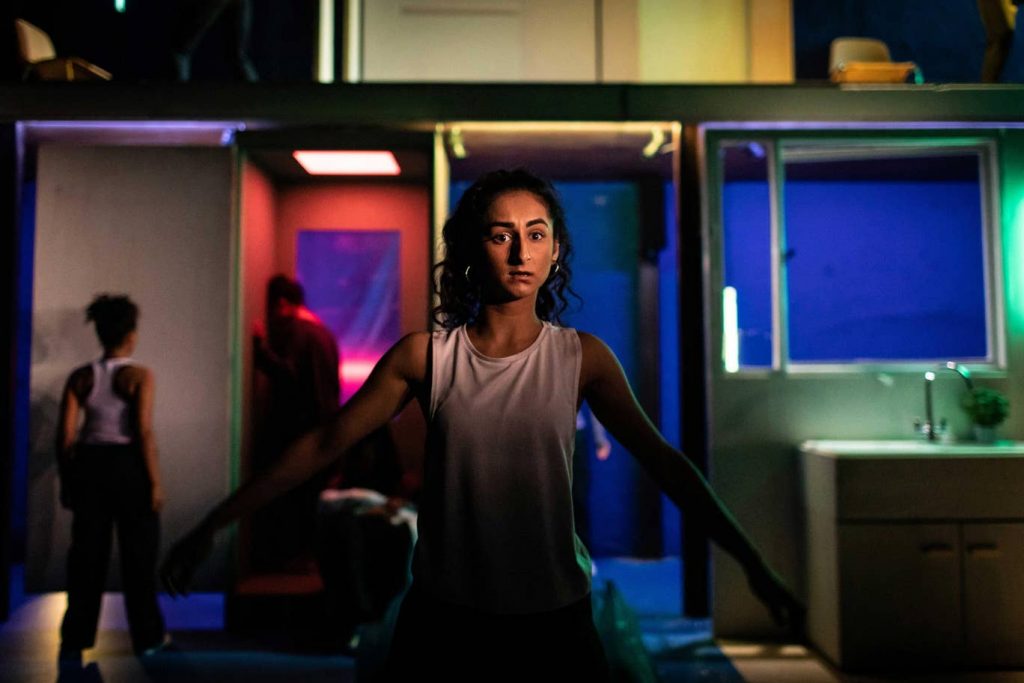
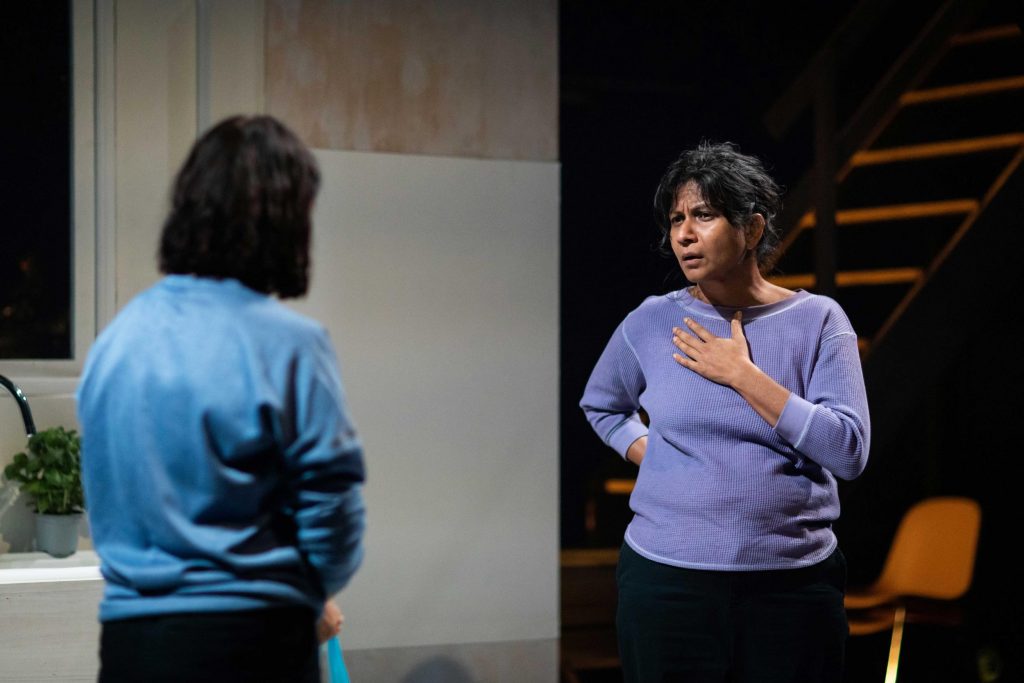
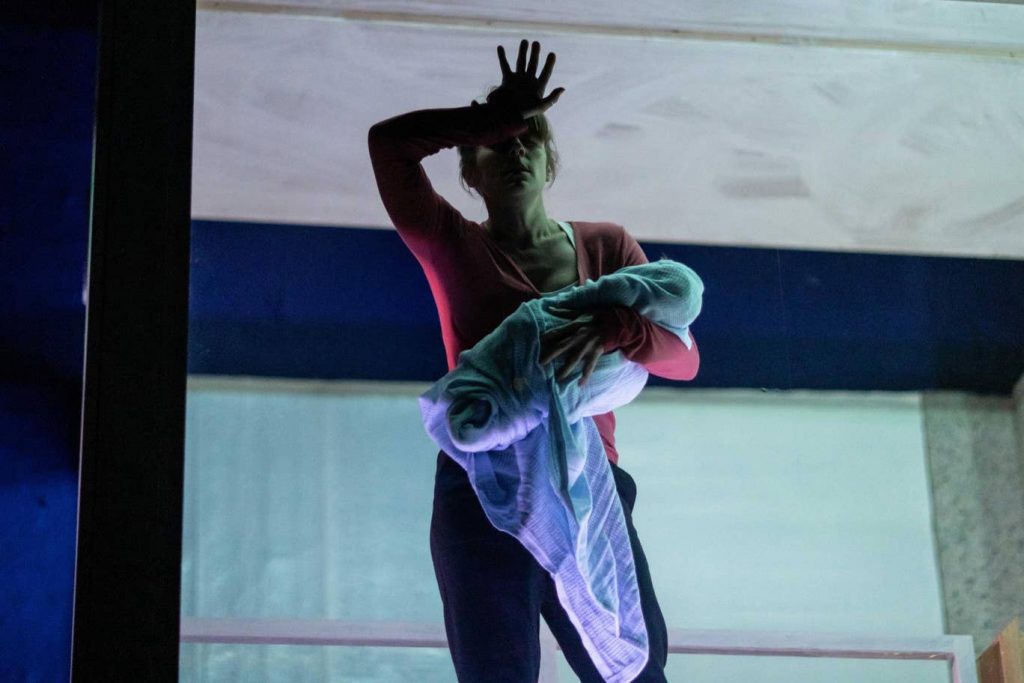
    White Light has supplied the lighting equipment for [BLANK] which recently ran at the Donmar Warehouse.

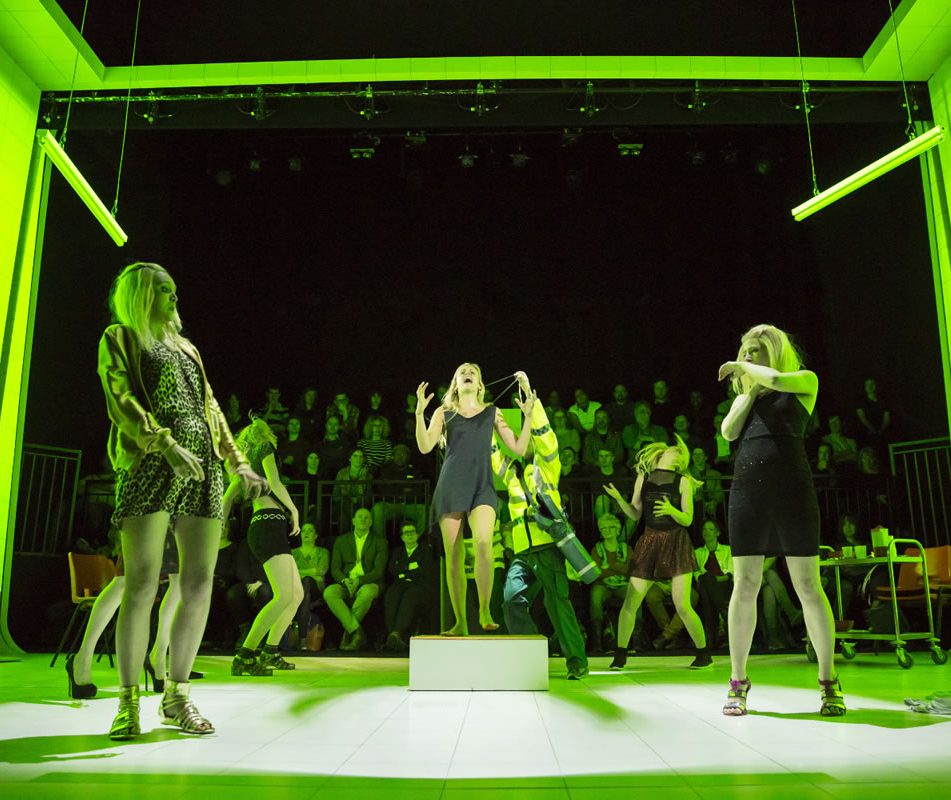
    [BLANK] is a theatrical provocation which marks 40 years of Clean Break; a theatre company that works with women affected by the criminal justice system. Featuring over 100 unnamed scenes, [BLANK] sees the director Maria Aberg choose thirty of these in order to create a unique production. Featuring an all-female cast and creative team, the show has a lighting design by Jess Bernberg. Jess comments: “After attending meetings with Maria and Rosie Elnile (Set Designer), we came to the decision to keep the aesthetic quite open. Whilst part of Rosie’s inspiration for the set was mother and baby units in women’s prison, we didn’t want to create any literal space, instead choosing practical lights to break up the space and adding a sense of uniformity to the lighting design”.

    With the production being such a unique construct, the layout was a factor Jess had to consider with her design. She explains: “We felt strongly the piece shouldn’t have an interval, so that it would deliver one strong theatrical punch. Maria had carefully arranged the scenes to achieve subtle narrative arcs that can be inferred by an audience but aren’t necessarily concrete, leaving it up to the audience to decide and hinting at the universality of the situations.  We actually discovered that the scenes fell into blocks which had distinct feelings, rather than each scene having a ‘location’”.

    Jess adds: “The first nine scenes felt stark and closed in; almost non-theatrical. A large-scene change then brings us into a new world with the full company of women on stage. Following this is the longest scene in the play: a 45 minute, meticulously-choreographed satirical dinner party. This felt like it needed a completely new feel as we enter into a world of relative luxury, Labneh and flatbreads. All the women you had seen before were on stage, some portraying characters completely different from what we had seen before. Maria and I had talked about Caravaggio-esque warmth and sculpting, but felt, in the space, this became too dreamlike and needed a sense of grounding and harsh reality”.

    To achieve all of these very specific looks, Jess approached WL who have supplied a range of her shows this year, including Out of Water (Orange Tree), And the Rest of Me Floats (Bush Theatre) and The Crucible (The Yard). Jess explains: “Most of the rig was Ayrton Ghiblis and ETC Lustr 2s, as well as CP61 par cans forming a toplight grid. The Ghiblis are wonderful moving lights, super quiet in terms of ambient noise which is very important for a space like the Donmar where audiences are just metres away from the units and there were many quiet, delicate scenes that can’t be disturbed with rig hum. Their framing shutters can do a full swipe across the beam which came in very handy for an effect recreating an alarm beacon created by my wonderful programmer Elliot Smith”.

    Jess used the Lustrs as a six part pipe end stage wash, and versatile crosslight on the upper level of the set where a projection screen position needed to be taken into account.

    This was the first time that Jess has worked at the Donmar Warehouse. She explains: “The Donmar space acts as almost in the round due to the deep, wide thrust. This means crosslight in the space is quite a specific focus, and acting right up next to audience on a raised stage means facelight while playing upstage can be tough; especially when vomitorium sight-lines aren’t what they seem. The space is actually a lot smaller than it feels, meaning tungsten units can happily sit at 30% to adequately light a scene, or take heavy gel. The in house profiles in the space are unusually 575W lamps instead of 750W for this very reason”.

    [BLANK] opened to rave reviews and played to sell out audiences before its run came to an end last weekend.

    Jess concludes: “I’m extremely proud to have worked on such an important production with a theatre company that creates brilliant work and genuinely leaves a long-lasting impact with all of the women it works with. I’d like to thank the brilliant in-house team, all of the other creatives along with WL for once again supplying me with the fixtures I needed”.

    Photos courtesy of Helen Maybanks.  


  4. White Light Hits the Right Notes for Falsettos

    Leave a Comment

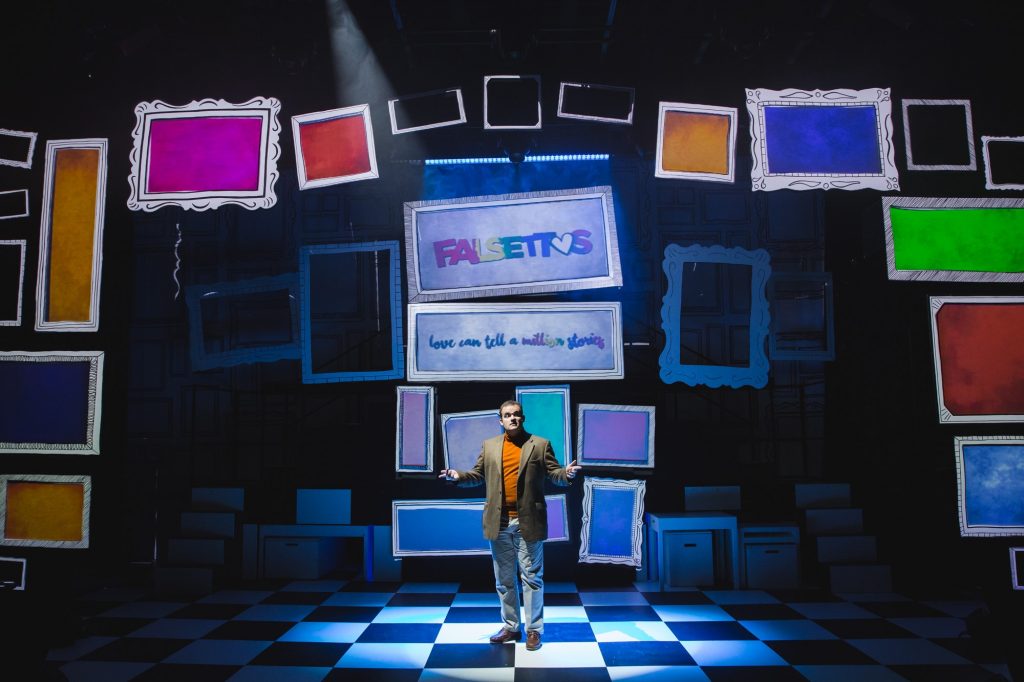
    White Light has supplied the lighting equipment for Falsettos which is currently running at London’s Other Palace Theatre.

    Originally performed on Broadway in 1992, Falsettos is a double Tony Award-winning musical which offers a poignant look at the life of one family as they live through the AIDS crisis. Despite other productions across the globe, this is the first time the show has been performed in its entirety in London. It features a lighting design by Nic Farman, who comments: “For Falsettos I knew I would be working closely with PJ McEvoy, the set, costume and projection designer, who I’ve worked with a number of times before. Our brief was to be bold with the colour and the stage pictures we were creating to aid telling the narrative of the story. Projection is used heavily throughout so I had to be very specific with how I was lighting scenes to avoid washing out the image and to build a cohesive stage picture. Together we worked on building a vivid colour palette, bold colours denoting each of the characters in the show track through as an element within the projection, costume and lighting”. 

    Whilst preparing for the show, Nic approached it as he would with any project: by responding to the script and music. He explains: “I was able to do a lot of work based on PJ’s initial storyboards of the projection content, alongside working with the director, Tara, to develop the concept. In rehearsals we started developing detailed blocking notes as we knew we didn’t have followspots on the show, but wanted to have the clarity of tightly spotting the cast which was to be achieved through the moving light rig alone. Once we were in to tech we had to work quickly and in broad brushstrokes initially to get a feel for the show as a whole. Falsettos is entirely sung through (39 songs in total), so there’s a lot of numbers to get through and we wanted to be detailed with the way we lit the show. Needless to say a lot of time was spent over previews finessing the design”.

    Having supplied several of Nic’s shows already this year, he approached WL to hire the equipment once again on this occasion. He explains: “Having a shuttering, moving profile was really important to give us flexibility from Front of House when it came to creating specific spot specials so I called upon the Martin MAC Viper Performances. We also developed a concept of building ‘rooms’ of light on stage which the characters inhabited and worked with the set’s checkerboard floor. An additional overhead grid of Viper Performances gave me a bright option for that role.

    He continues: “The rich colour palette we were aiming for meant I wanted a sidelight rig of LED profiles which came in the form of ETC Lustr 2s. It was also my first time using the Colorsource Cyc units which were brilliant, due to their brightness and colour depth. Finishing off the rig were Martin Mac Auras which gave me a flexible pipe end wash and GLP X4 Bar 20s as an impact backlight, which were used in pixel mode to add extra effects into some of the bigger show numbers”.

    Falsettos has now opened to rave reviews and will run until 23rd November.

    Nic concludes: “This is a very technical, ambitious show and one which I was proud to be a part of. I’d like to say thanks to my Production LX Anthony Hannah, LX technicians Dan Farr and Jordan Lightfoot and the team at The Other Palace and Selladoor. It was wonderful to work with WL as ever and a big thanks to Jonathan Haynes, Chris Delaney and Andy Cullen for the stellar service they provided”.

    Photos courtesy of The Standout Company

    Full Credits:
    Director & Choreography: Tara Overfield Wilkinson
    Musical Director: Richard John
    Musical Supervisor: Mark Crossland
    Set, Costume & Projection Design: PJ McEvoy
    Lighting Design: Nic Farman 
    Sound Design: Chris Whybrow
    Producer: Selladoor

  5. White Light Flies Broken Wings into Theatre Royal Haymarket

    Leave a Comment

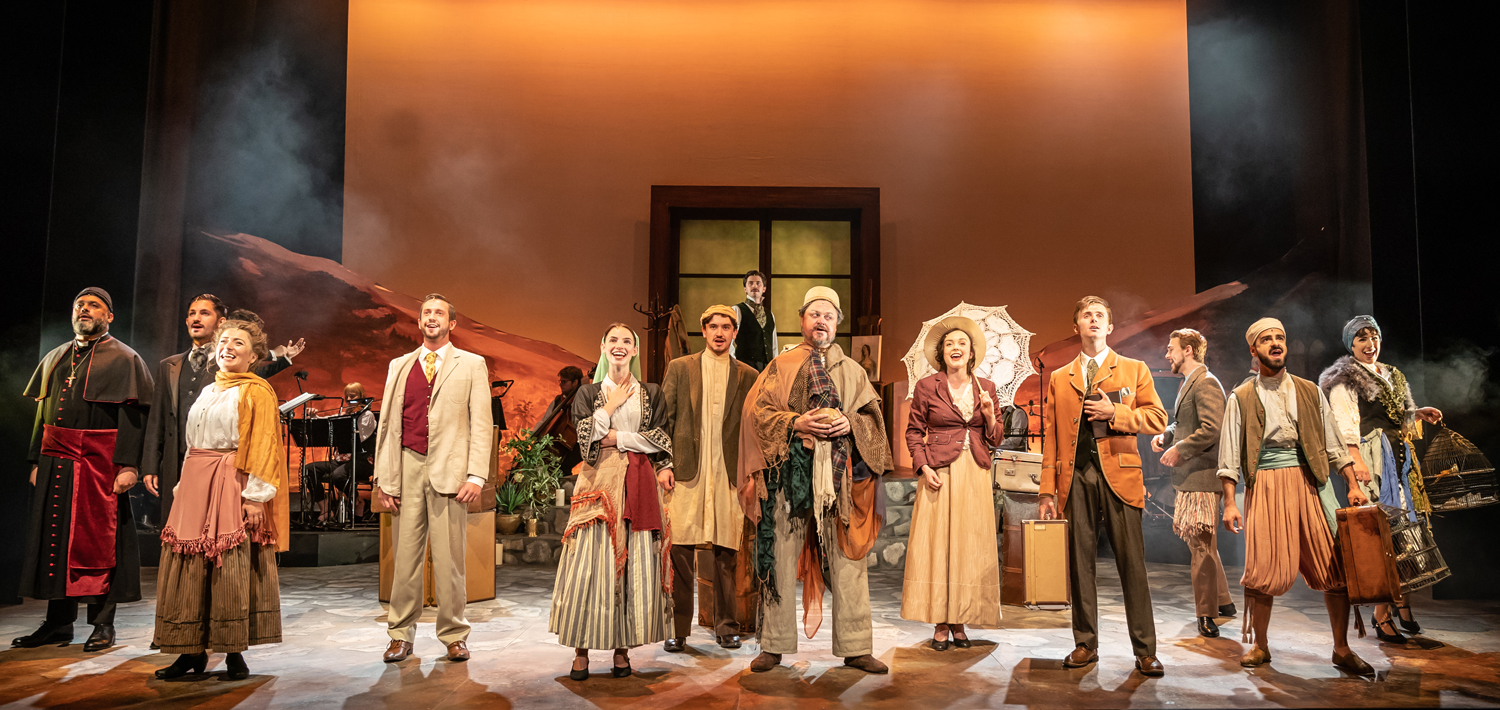
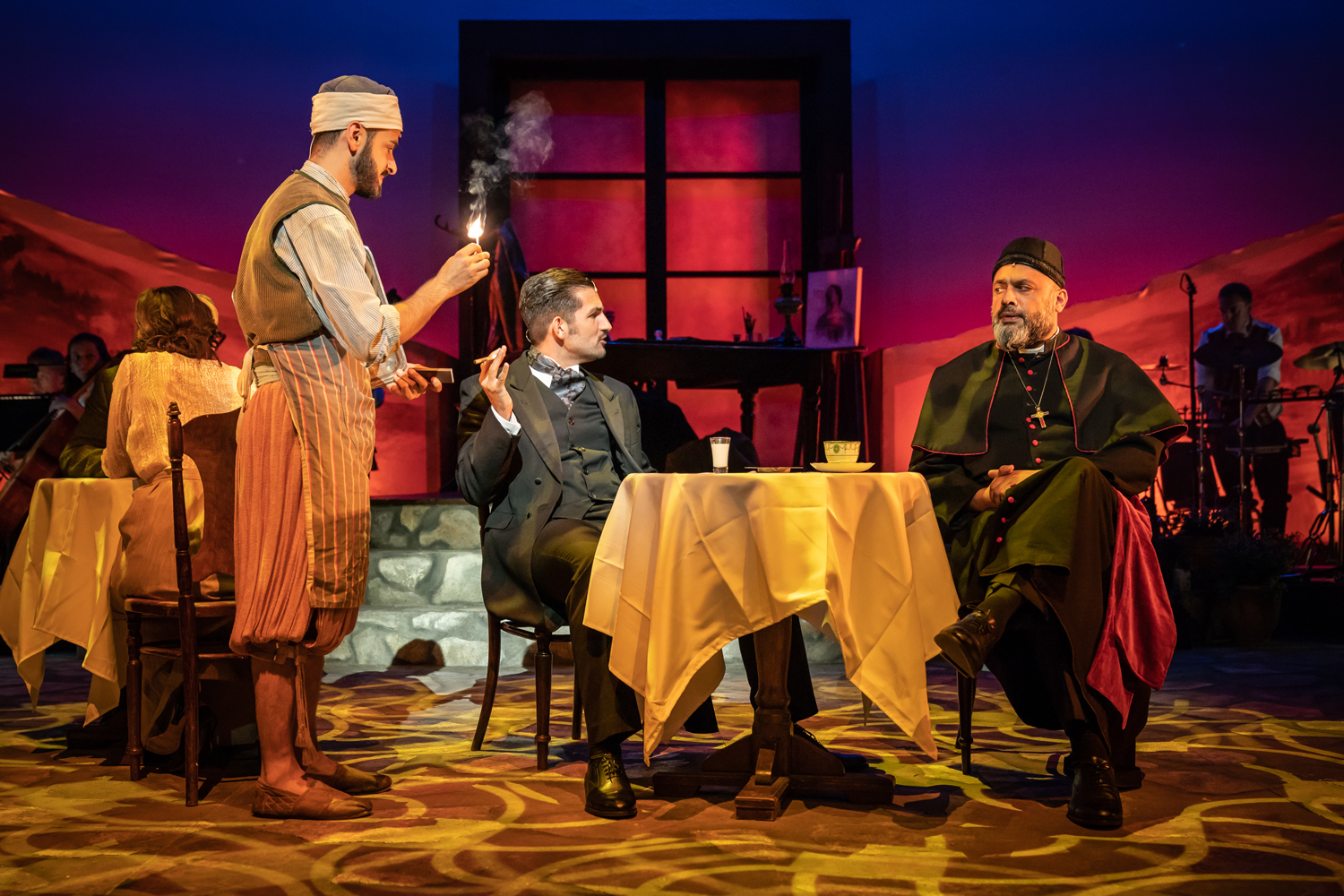
    Broken Wings is a brand-new musical which recently premiered in the West End at the Theatre Royal Haymarket. Based on Lebanese-born poet Kahlil Gibran’s autobiographical tale of the same name, the show is written by Nadim Naaman (The Phantom of the Opera) and composer Dana Al Fardan. As a leading supplier to West End productions, White Light was called upon to supply the lighting equipment.

    The show was lit by Lighting Designer Nic Farman, whose previous West End credits include The Toxic Avenger and 3Women. He comments: “For this particular production, the director Bronagh Lagan and I decided that light would be extremely helpful in conveying a sense of both location and time. The show features the older Gibran reflecting back on his life so the narrative switches to the past frequently. I worked closely with Bronagh to develop the palette for the show. We based the older Gibran scenes around cold blues and CTB which contrasted with hot, rich oranges, yellows and reds for Beirut. As the sorrow of the story develops, the warmth in the lighting is stripped out; culminating in the funeral of Selma.”

    Nic adds: “When we were teching the production, it was important to work quickly so we created a number of looks which were refined during the dress rehearsal and first preview. Each location in the show is visually very striking: gardens, shady restaurants, a temple, the docks etc. As a result, we had a lot of fun developing a layered stage picture with the colour palette and texture from gobo washes”.

    Having known what he wanted to achieve from his design, Nic approached WL to draw on a range of fixtures. He comments: “I had a majority moving light rig overhead, with a number of Chauvet Maverick MK2 Profiles and Maverick MK1 Spots to provide specials and gobo washes. These were supplemented with Martin TW1s grouped together in pairs for back washlight. The sidelight came from Chauvet Ovation E930VWs and Ovation E910FC Profiles. The combination of the variable white and full colour units meant I had flexibility to do both variable colour temperature and saturated washes.

    He continues: “The cyc was lit from top and bottom with ETC ColorSource units with the cyc lens attachment. These gave me the rich tones I needed to create the Middle Eastern sky, as well as the punch to fight over the stage wash. Completing the rig were a number of ETC Source Fours positioned front of house as well as two Super Korrigan Followspots”.

    With the show being a limited run, this meant that Nic and his team had a limited period in which to get into the venue. He comments: “The show started going in on Monday morning and opened for first preview on the Wednesday evening. But I was able to design a rig that accommodated for this, with minimal overhead focussing needing to be done and side light at floor level so it could be focused without ladders. Then, when we got into tech, it became about working quickly and in broad brushstrokes that were refined over the dress rehearsal and first preview”.

    The production marks one of many that WL is currently supplying in the West End, with others including TINA – The Tina Turner Musical, 42ndStreet, Young Frankenstein, Imperium, PressureHarry Potter and The Cursed Child, The Importance of Being Earnest, The Jungle, The King and I, The Lieutenant of Inishmore and Aladdin to name but a few.
    Nic comments: “I want to say a massive thanks to my Production Electrician Adam Mottley and his assistant Matt Harding, my follow spot operators Sam Hawkes and Rose Fraser, and all the team at Theatre Royal Haymarket for getting the show in and up in a very short space of time. Also a huge thank you to Jonathan Haynes and Jim Dewhirst at WL and Tom Wilkes at Chauvet for their continued support”.

    Photos courtesy of Marc Brenner.

    Full Credits:

    Broken Wings
    by Nadim Naaman & Dana Al Fardan

    Director: Bronagh Lagan
    Set Design: Claudio Rosa & Mira Abad
    Costume Design: Nik Corrall
    Lighting Design: Nic Farman
    Sound Design: Ed Borgnis & Simon Hendry
    Photos: Marc Brenner

  6. White Light is Simply the Best for TINA – The Tina Turner Musical

    Leave a Comment

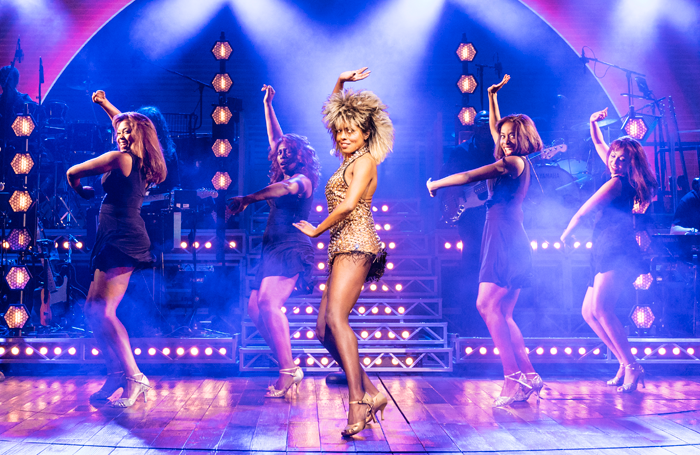
    One of the best-selling artists of all time, Tina Turner’s fascinating life story has now been turned into a stage show with TINA – The Tina Turner Musical. Written by Olivier Award-winning playwright Katori Hall, the show charts Tina’s humble beginnings in Nutbush, Tennesee to her transformation into the global Queen of Rock ‘n’ Roll. The show is playing at the Aldwych Theatre in London’s West End and as a leading lighting supplier to some of the biggest shows in the country, White Light was called upon to provide the lighting equipment.

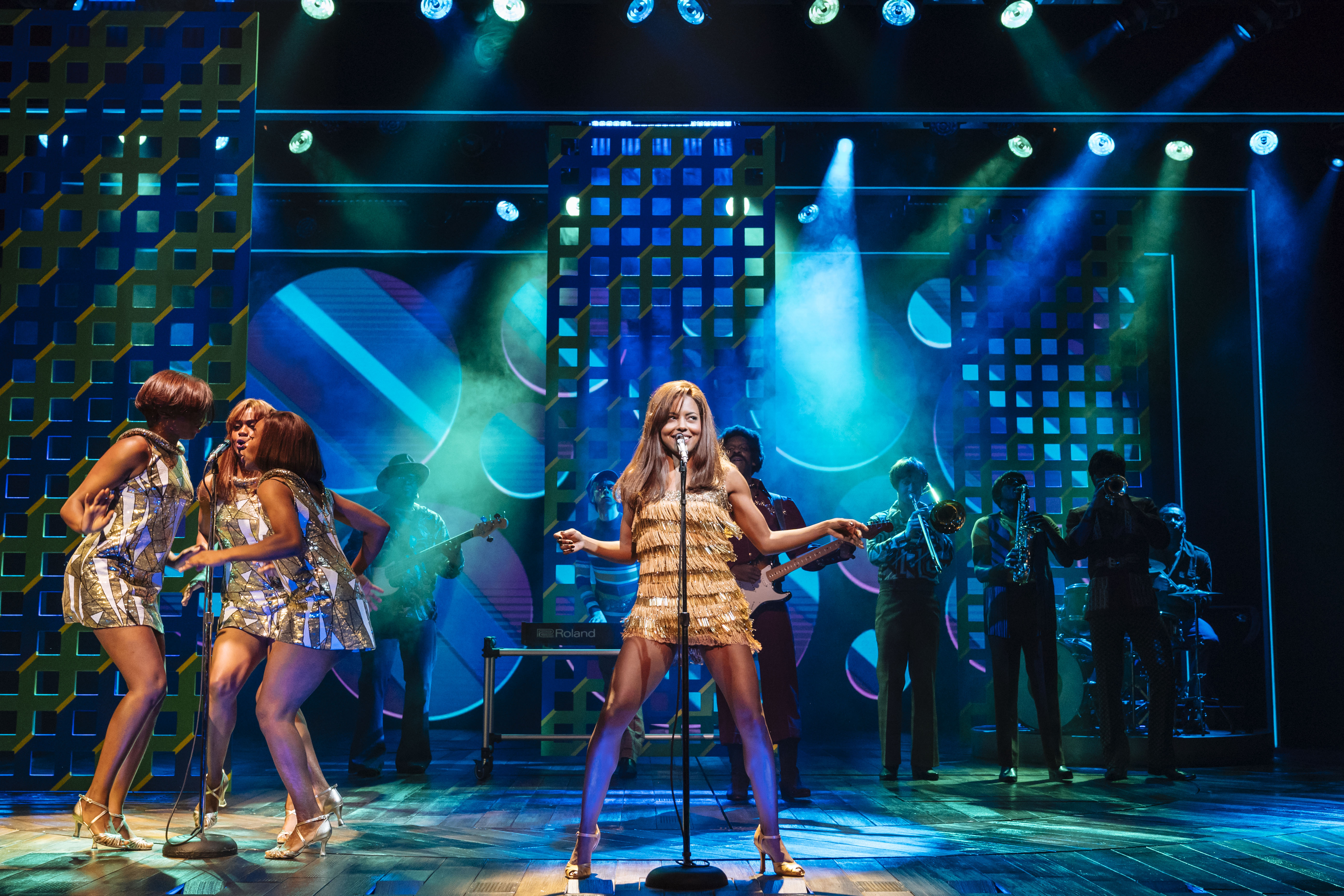
    TINA – The Tina Turner Musical is directed by the internationally-acclaimed Phyllida Lloyd and features a lighting design by Bruno Poet. Bruno comments: “My brief for the show was to help tell this extraordinary story and make the performers come alive within Mark Thompson’s elegant design. The set frames the actors beautifully and is very stripped back, with the focus being on the characters’ emotional journeys. There are also around 40 scenes in different locations, and the lighting needs to support that sense of time and place. Added to this were several concert scenes so I had to create a design that matched this energy”.

    To achieve this, Bruno approached WL in order to draw on his ideal rig. He explains: “It was a combination of experimenting with new units that I felt might be useful in combination with tried and tested favourites. I was really keen to move away from discharge light sources and more towards the latest LED fixtures. I also needed a really flexible rig that could offer a full-on concert experience at the end of the show, but also work with the more nuanced, delicate scenes.  I was also determined to have a very quiet rig. Even a musical has quiet moments and hearing fan noise is a personal pet hate of mine!”.

    The equipment Bruno drew on included the MAC Encore Performance CLD, the VL550, the MAC Aura XB, GLP X4 Battens and the ETC Source 4 Lustr 2s. He explains: “With the MAC Encore CLD, this is the first LED source I’ve found that gives the cold discharge look of something like a MAC Viper but can also do a convincing tungsten warm. With the Auras, these have great zoom range, brilliant colours and can be used for punchy, beamy looks. The set design cried out for curtains of light and the GLP X4 Battens allowed me to achieve this, while taking up virtually no space on the grid.  I also drew on Portman P2s for the big concert finale, along with Clay Paky Sharpys. The desk I drew on was an EOS which I often use for theatre productions”.

    The decision as to what type of lighting equipment should be used was much discussed in the show’s pre-production stages. Bruno explains: “As the musical spans several decades, we did contemplate using equipment and styles that would be accurate from certain points along that timeline. However, looking at this in detail, we realised that this could be very dull for a modern audience! That said, I did make myself some ground rules. For instance, you don’t see moving lights move until we get to the late 1980s”.
    TINA – The Tina Turner Musical has now opened to critical acclaim and has already been extended to February 2019. Bruno comments: “This was a fantastic production to be a part of. I was supported by an amazing team which included Max Narula as Associate, Warren Letton as Programmer and Sam Floyd as Production Electrician. I really enjoyed collaborating with Jeff Sugg, the Video and Projection Designer, as this was one of those shows where lights and projection worked as one. Similarly, I was surrounded by a brilliant stage management team, especially Sarah Seymour our DSM whose calling of the finale is poetic and a masterclass in timing”.

    Photos courtesy of Manuel Harlan.

  7. White Light Supplies Venus in Fur in West End

    Comments Off on White Light Supplies Venus in Fur in West End

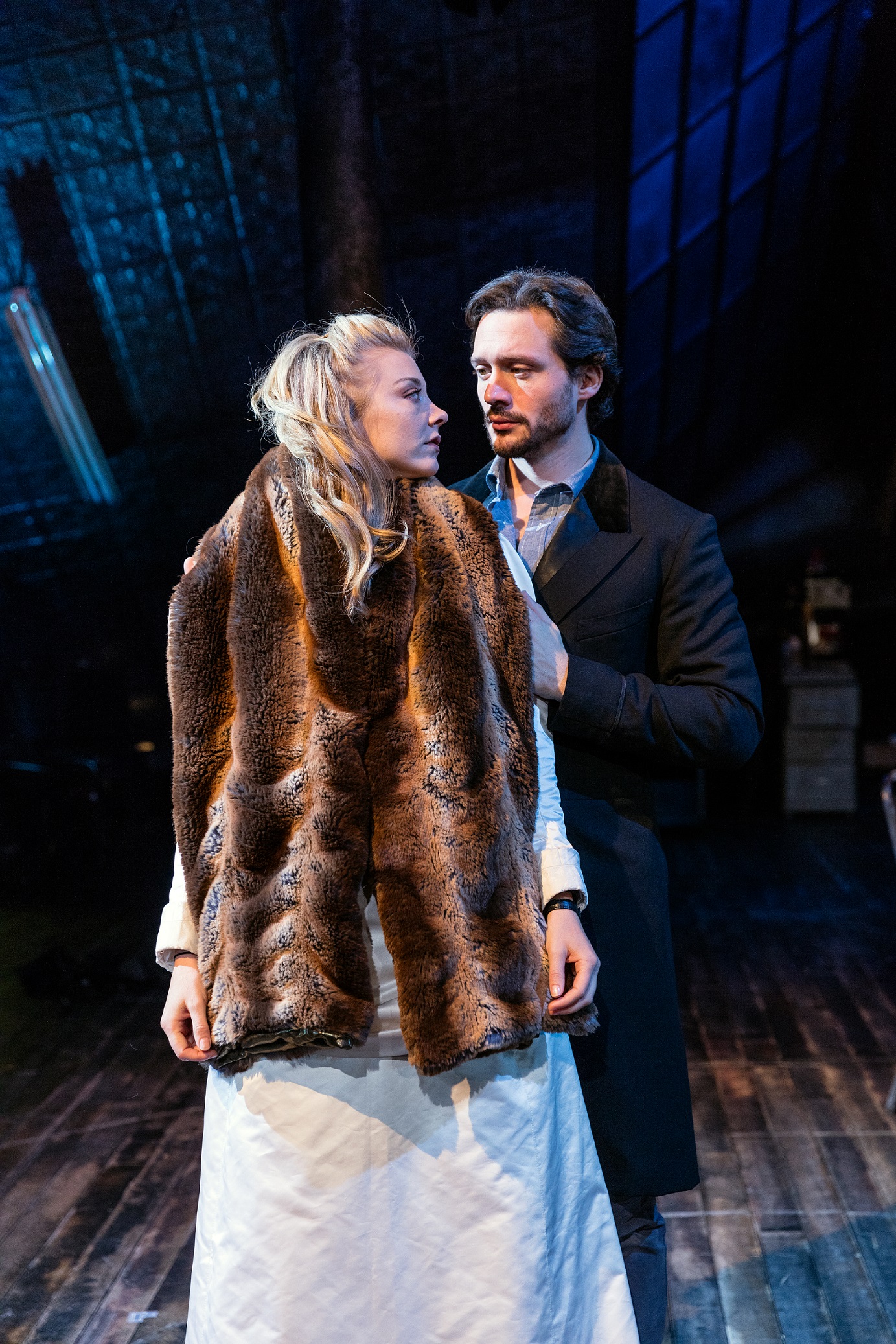
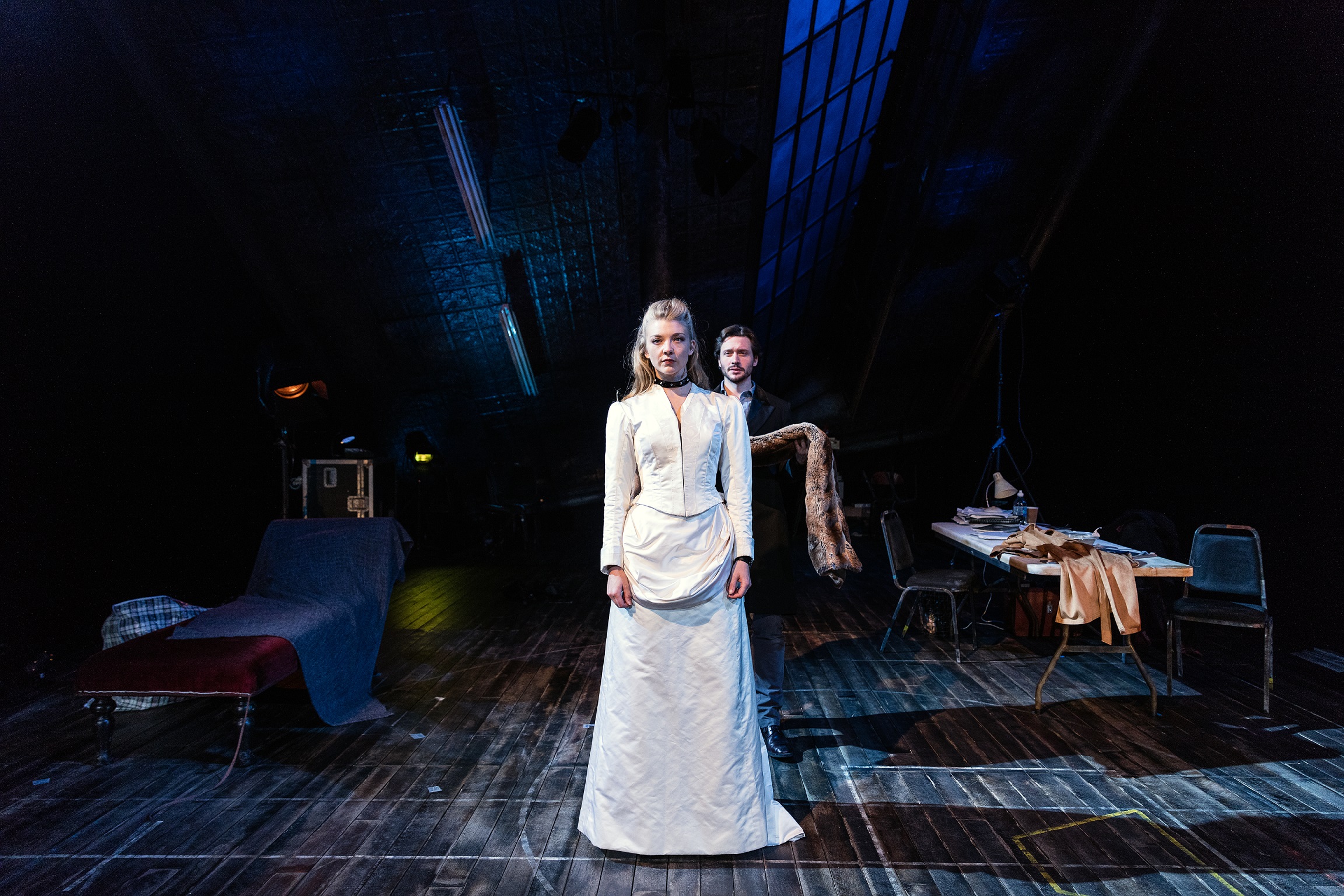
    Natalie-Dormer-and-David-Oakes-in-Venus-in-Fur-at-Theatre-Royal-Haymarket.-Credit-Tristram-KentonFollowing a Tony Award-winning run on Broadway, Venus in Fur has now made its London debut, opening at the Theatre Royal Haymarket. Starring Natalie Dormer and David Oakes, the critically-acclaimed two -hander follows a meeting between enigmatic actress Vanda Jordan and director Thomas Novachek, with Vanda determined to land the leading role in Thomas’ latest production. As a leading supplier to West End theatre, White Light was called upon to provide the lighting equipment.

    The lighting designer for the show is Hugh Vanstone, who comments: “The play itself dictates a lot about the setting and lighting as the action takes place in a  New York rehearsal room whilst a thunderstorm rages outside. The room is initially lit with fluorescent strip lights but also has a small improvised lighting rig  which the mysterious Vanda commandeers to soften the mood in her attempts to win over Thomas”.

    xA3A8213B-D004-0210-5E40ACA60BDC8F64.jpg.pagespeed.ic.wjKyiBalYH

    This meant that Hugh had to implement two clear distinctions with his design: “The way I approached this play was to ensure there was a marked contrast between the blandly lit fluorescent room and the more atmospheric theatrical lighting. The first thing I did was install a version of the  ‘rehearsal lighting rig’ in the actual rehearsal room which Natalie could use to set the mood”.

    Hugh also worked alongside set and costume designer Rob Howell. He states: “It’s quite a striking set design featuring a raked floor pushing through the proscenium into the house with a steeply-angled ceiling overhead. As a result, there was no opportunity for overhead lighting; something I had to work around”.

    Hugh drew on the Martin MAC Viper Washes to provide bright lightning effects along with a range of ETC Source 4 Lustr 2s, conventional Source 4s, fresnels and birdies. Perhaps most significantly, the rig also contained the recently launched Philips VL1100 LED; making Venus in Fur the first West End production to utilise this highly-anticipated product.

    Hugh explains: “When I was designing the rig, I spoke to WL’s Technical Director Dave Isherwood who informed me that WL had become one of the first companies to invest in the VL1100s. I asked if I could try them for this show and he said yes. I used these fixtures to provide the tightly focused highlights for the actors during key moments – something they delivered with superb precision.

    natalie-dormer-and-david-oakes-in-venus-in-fur-at-theatre-royal-haymarket-credit-darren-bell

    He adds: “Overall, I was really impressed with the VL1100s. It’s a great improvement on the conventional tungsten version as it’s brighter and the colour mixing and frost function are both improved. Because of the LED engine the beam intensity and consistency is much better. They are also virtually silent, making them perfect for a play like this, and I can see them becoming a very popular fixture for many lighting designers”.

    Directed by Patrick Marber, Venus in Fur has now opened and will run until 9th December.

    Hugh concludes: “I had a great experience working on Venus in Fur. The play gives the lighting designer carte blanche to really show off and WL once again proved to be the perfect choice to allow my design to shine”.

    Photos courtesy of Darren Bell and Tristram Kenton.

  8. White Light Puts on Horror Show with Toxic Avenger

    Comments Off on White Light Puts on Horror Show with Toxic Avenger

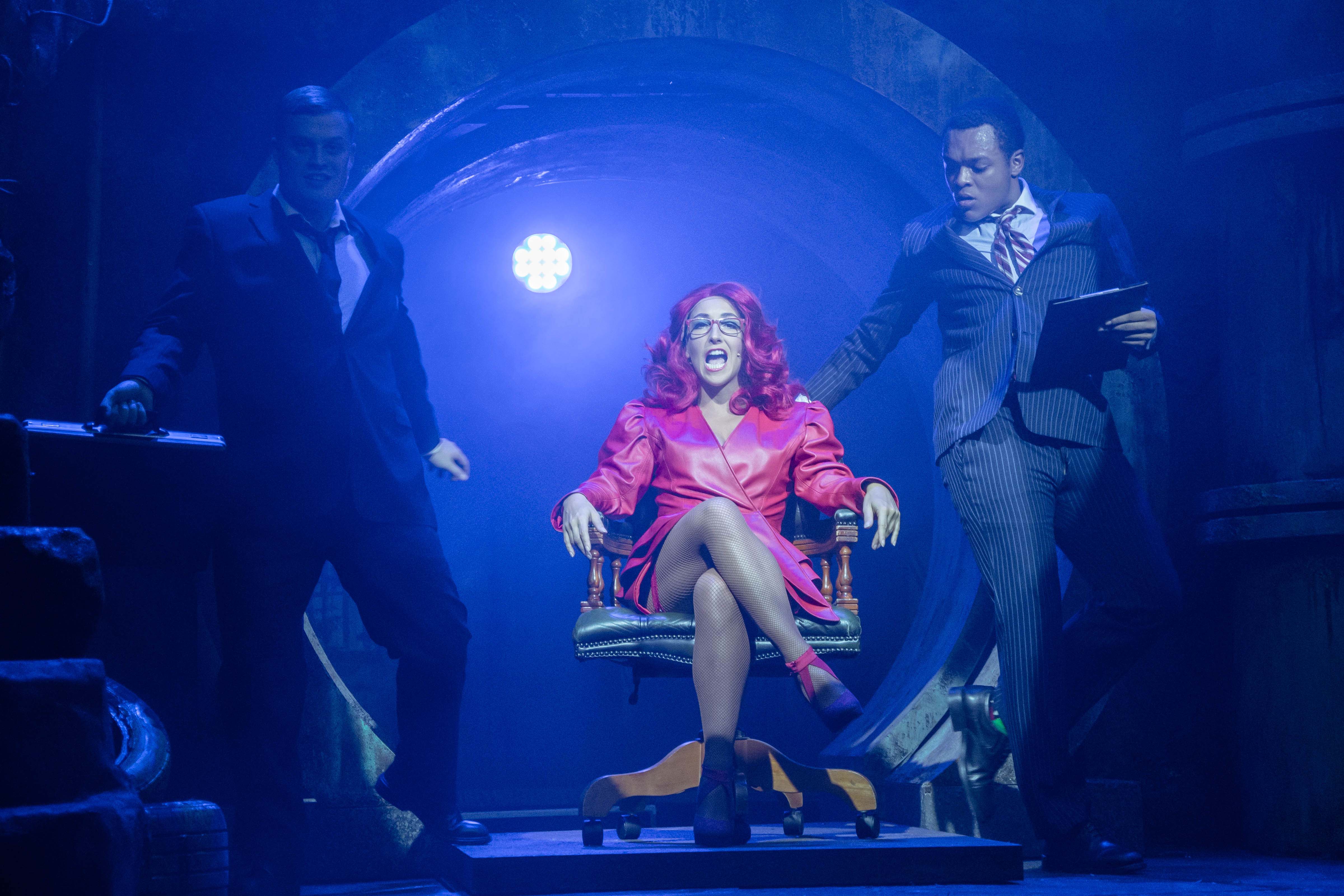
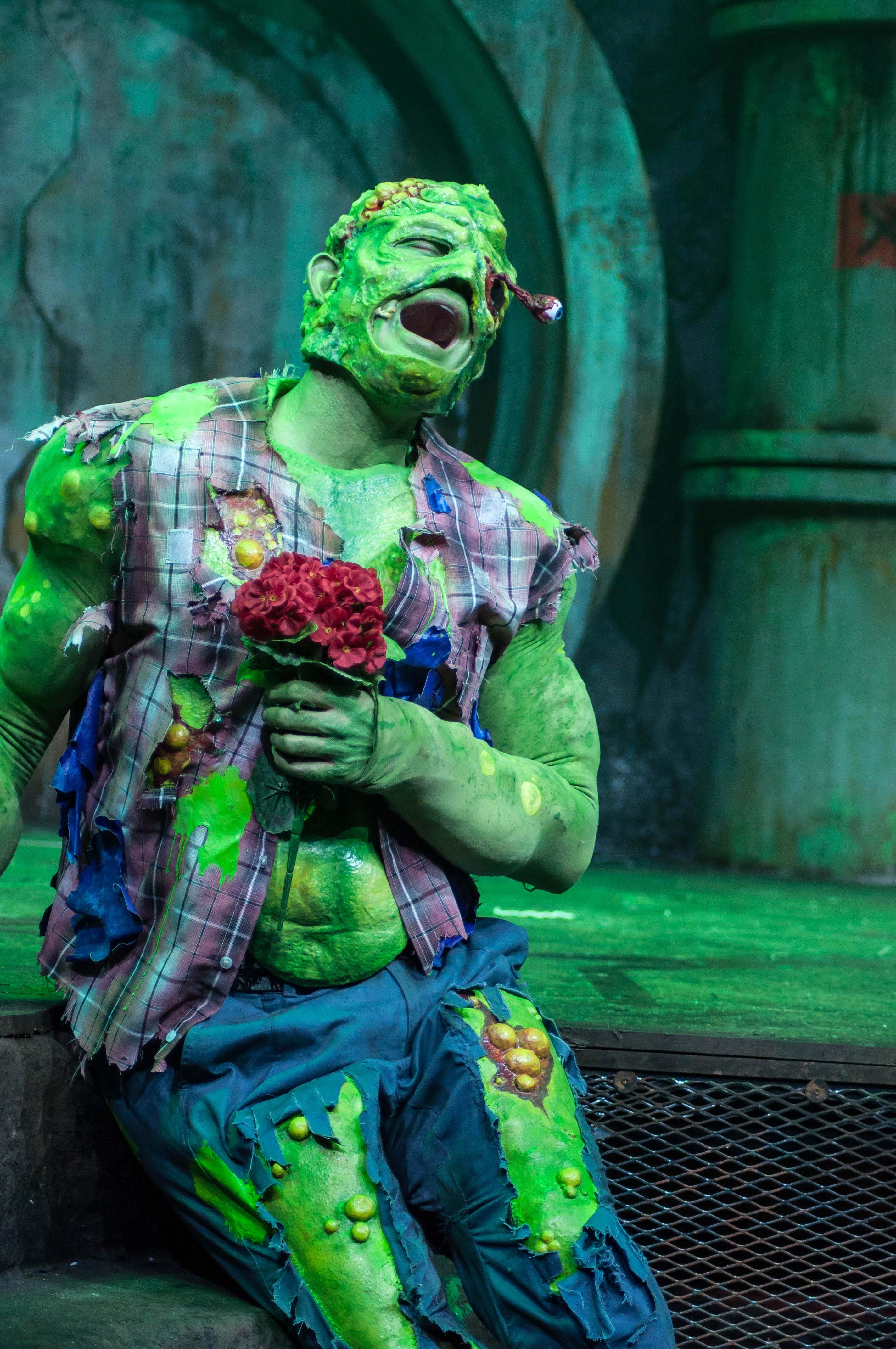
    THE TOXIC AVENGER THE MUSICAL 1 Mark Anderson as Toxie Phorto Irina ChiraBased on the 1984 cult classic, The Toxic Avenger tells the story of the citizens of Tromaville who are crying out for a hero. Enter Melvin Ferd the Third who is tossed into a vat of toxic waste and transformed into The Toxic Avenger, New Jersey’s first superhero! Following sold-out runs at Southwark Playhouse and Edinburgh Festival, the show is making its West End debut at the Arts Theatre. White Light has been called upon to provide the lighting equipment.

    The Toxic Avenger is written by Joe DiPietro and David Bryan who are the Tony Award-winning team before the hit West End musical Memphis. It is lit by Nic Farman, who has worked on the show since its first London run. He comments: “I’ve worked with the director, Benji Sperring, many times before and my brief for this production was to have a lot of fun and be brave with my design. We often like to create bold stage pictures filled with colour and, for this show, it was especially important to create the cartoon style world in which the musical is set”.

    THE TOXIC AVENGER THE MUSICAL 16 Oscar Conlen-Morrey Natalie Hope Ché Francis Photo Irina ChiraThe show first opened at the Southwark Playhouse last year and Nic believes that the musical still embraces its B-Movie origins. He comments: “For the West End version, we wanted to ramp up the rock feel of the show and add more gig lighting to a rocky soundtrack. Similarly, the Southwark version was in thrust, whereas the Arts is in a proscenium arch, meaning we had to think about how to keep the audience as fully engaged as they were in the smaller space. As a result, takis, the designer, gave us a low apron to help get the cast down to the audience levels and I was allowed to light right out into the crowd”.

    This change in space meant that Nic had to make some additions to his previous rig. He comments: “I have drawn on a lot of Chauvet Professional units, who have been particularly supportive of me and the show. We have Maverick Mk2 spots, Maverick Hybrids, Ovation FC profiles and Ovation battens which all allow us to create great impact with colour and beam work. We also hired in some GLP X4s and X4 Bar 20s, with the bars working really well as backlight blinders. I also spec’d Elation Six PAR’s which have become my go to LED par because of their high output.

    THE TOXIC AVENGER THE MUSICAL 13 Mark Anderson as Toxie Photo Irina ChiraHe continues: “The other facet of the design is that we inlaid sections of the floor and pipework that makes the set up with pixel tape. Clancy Flynn, my Production Electrician and Programmer, built a system around my design”. Clancy explains: “We have 50 universes of Enttec pixel tape in the set, all controlled over ArtNet from a HippoCritter triggered by the lighting console. The control system was designed to maximise animations over the tape while keeping DMX channel requirements to an absolute minimum. WL supplied the Hippocritter media server that manages the images played over the tape, as well as the Pixelators that act as the LED drivers. They also sorted out the sale of the tape, PLink injectors and drivers we required.”

    The show, which has now opened to critical acclaim, marks Nic’s official West End debut. He comments: “Seeing the show grow from the fringe to the West End has been brilliant and doing that with a great team around me has been a joy. I couldn’t have picked a better show to be my first West End musical as the lighting plays an important role in the story telling, as well as reinforcing the music and managing to do a couple of jokes of its own.

    He adds: “I couldn’t have got the show off the ground without Clancy, who oversaw all of the load in, prep work and designed the network to run the pixel mapping. David and Jamie at the Arts were incredible at facilitating putting in a tricky show and couldn’t have been more helpful, as were Chauvet Professional who helped make the show look how I hoped it would. As always, a massive thanks to WL for their support, especially Jonathan Haynes and Jim Dewhurst, who helped us spec the show from the pixels through to the rig”.

    Photos courtesy of Irina Chira.

  9. White Light is a Certain Choice for Heisenberg

    Comments Off on White Light is a Certain Choice for Heisenberg

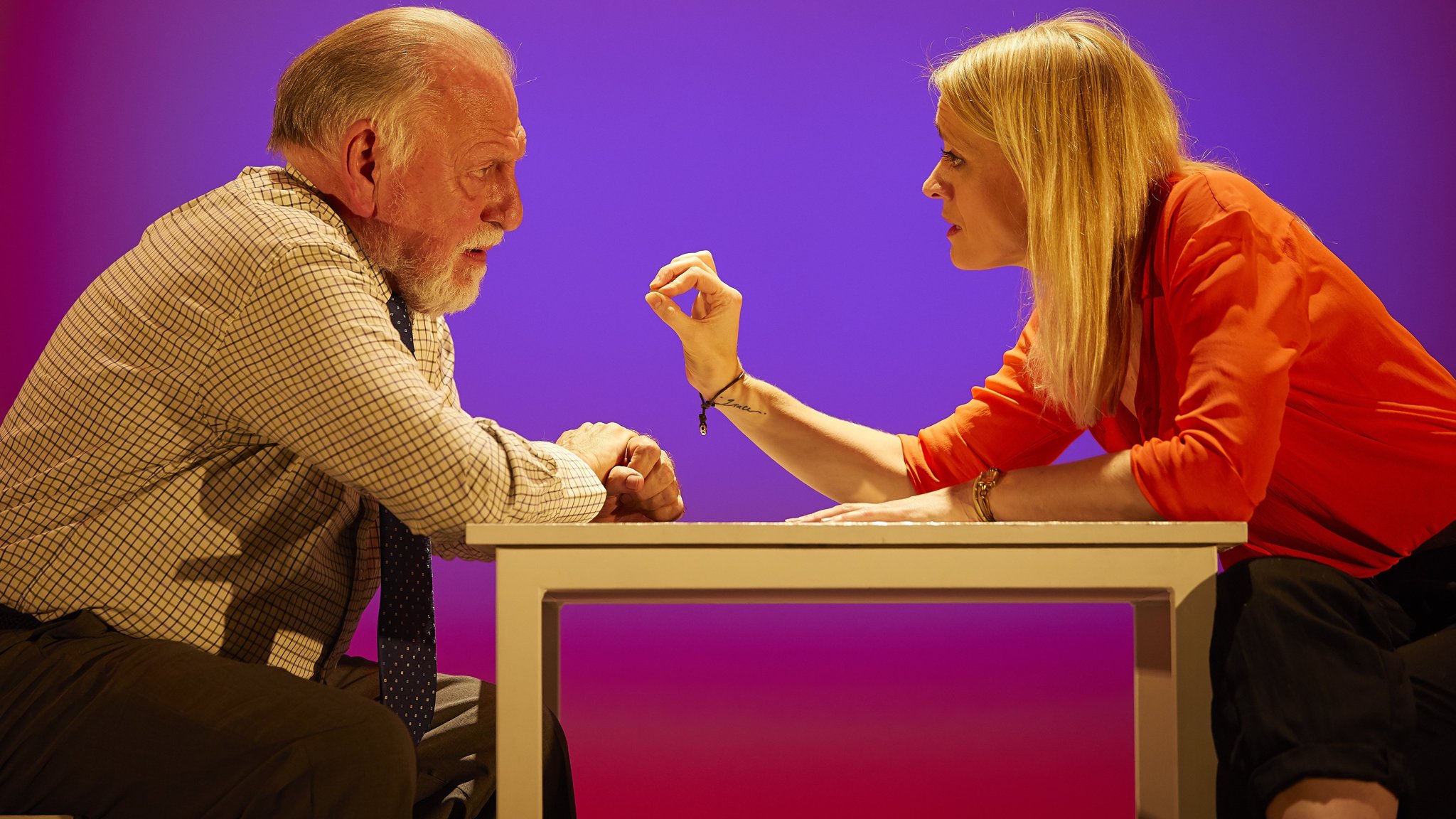
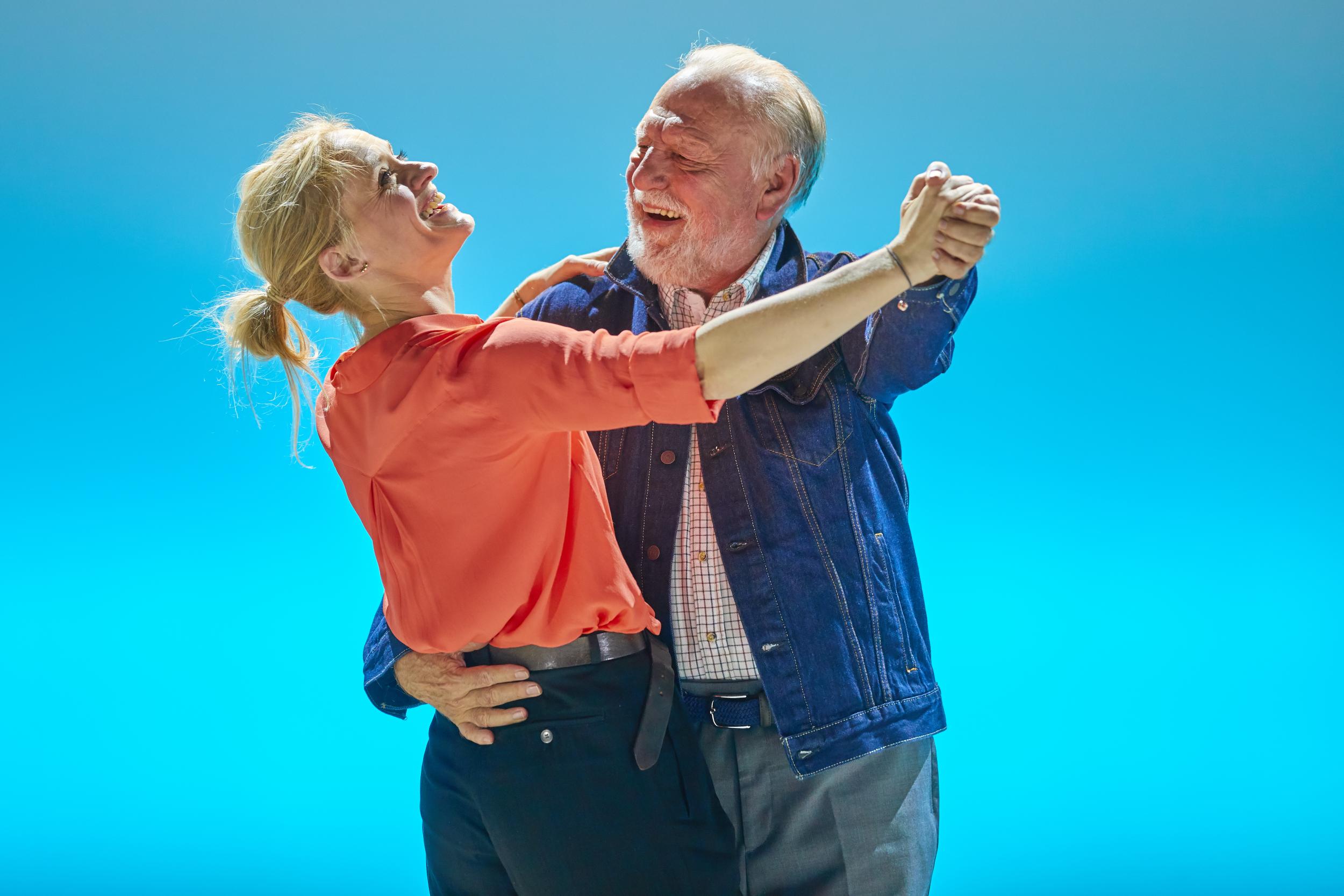
    c9f3607a-ae75-11e7-8076-0a4bdda92ca2Following its acclaimed run on Broadway in 2016, Heisenberg: The Uncertainty Principle made its West End premiere last week. Opening at the Wyndham’s Theatre, the show marks the inaugural production for Elliot and Harper Productions. It is written by Tony and Olivier-Award winning playwright Simon Stephens and stars Kenneth Cranham and Anne-Marie Duff. White Light has been called upon the supply the lighting equipment.

    Heisenberg: The Uncertainty Principle tells the story of two strangers who meet by chance at a crowded London train station and whose lives are changed forever. The show is lit by the award-winning Paule Constable. She comments: “I read the play and was immediately fascinated by what it had to say about relationships and people in general. The director Marianne Elliot and the Designer Bunny Christie developed a visual concept that drew parallels to the uncertainty principle. What they created was something not at all naturalistic but almost reflecting an arts installation/science experiment”.

    Heisenberg-The-Uncertainty-Principle-13628Once the set design was established, Paule created a lighting design that would work alongside this as well as tell the play’s story. Paule explains: “It’s a very stripped back show and feels very exposed. Sometimes this can be quite risky but it worked extremely well for this production. As it’s only two actors on stage throughout, my role was to ensure that their actions resonated and that we used the lighting to pinpoint certain moments”.

    Bunny Christie’s set means that the action is played against what is a huge backlight at the back of stage. Paule comments: “To achieve this effect, I drew on EvenLED panels. Despite it being released almost a decade ago, I don’t think there’s another product out there that can achieve the looks of an EvenLED. For a backdrop of this size, if we didn’t have the EvenLED, then we would have had to build hundreds of LED light bulbs which is obviously not very practical!”.

    heisenberg

    The unique set design also meant that Paule had very limited positions in which to hang the lighting. She comments: “There are essentially only four places within the theatre in which you can position fixtures. As a result, I have to draw on a range of moving lights. These include ETC Revolutions, Martin MAC Aura XBs, Martin MAC Vipers, Vari*Lite VL1000 and ETC Source 4 Series 2 Lustrs”.

    Paule also drew on the GLP Impression X4 Bar 20s and the show was programmed on an ETC Gio Console.

    Heisenberg: The Uncertainty Principle has now opened in the West End and will run until January 2018.

    Paule states: “This is a very unique show and a brilliant production to be a part of. I’m proud of what we’ve managed to achieve with such a unique set, especially through the use of EvenLED, and I’m grateful to WL for their support throughout”.

    Photos courtesy of Brinkhoff-Moegenburg.

  10. Leading Light with…James Farncombe – Part Two

    Comments Off on Leading Light with…James Farncombe – Part Two

    Lyric

    The Lyric where James’ Production Management career began (and ended!).


    The year was 1998 and, after three years at Nottingham Playhouse, James had started operating and plotting shows at the venue (“I was starting to find my feet”). However, as soon as James was settling, external factors would once again intervene: “My then girlfriend had just got a job at Birmingham Rep so she was set to leave Nottingham. At the same time, I received a phone call from the actor who had been the Dame in the Panto that year, Mark Chatterton . He was about to direct a show for LipService Theatre Company called King Arthur and the Knights of the Occasional Table. He asked if I’d be interested in relighting the tour.”  James took the role and found himself travelling back and forth across the country. He states: “Relighting was another great opportunity to learn. We were doing one night stands in a huge variety of small scale venues. Some were little more than cowsheds, and often the lighting needed a lot of adaptation. I had to be inventive to preserve the spirit of the design. Very often I couldn’t fully recreate it.  As I’d had no formal training as such, this really helped me understand why designers did what they did. There was a lot of trial and a lot of error but it was invaluable training”. LipService also took James on an Arts Council tour of Pakistan, “but that is another story entirely…”.
     
    La Cava

    La Cava on which James assisted Chris Ellis


    The tour finished and James found himself in the world of freelancing. Yet he was soon to step directly into another role: “I landed a job with Pilot Theatre Company in York. They had just finished a tour of Lord of the Flies and were looking for a Production Manager and someone to relight their second tour.  It was a highly successful show, touring midscale venues across the UK, and represented a good progression for me. The tour ended at the Lyric Hammersmith in London”. It was at this point that James was rethinking his career path: “I was struggling to get enough work, and I thought being a production manager might be a useful string to my bow”.
    So with the tour finished, James decided to stay in London.  His brother was a student at Goldmith’s (where Lighting Designer Paule Constable studied – you can read her Leading Light here) and “he let me sleep rent-free in the cellar of his shared house in New Cross.  I stayed much longer than originally intended”.
    Having decided to pursue work as a production manager and having made contacts at the Lyric Hammersmith, James worked there on a show by The Right Size; a devised piece called Bewilderness: “It was a useful experience – in the sense that it taught me that I absolutely hated being a production manager! That show was hugely inventive and very challenging, but it almost finished me.  It was my last job ever as a PM”. However, James eventually went on to work happily as LD for one half of The Right Size, Sean Foley, on several shows, including the Ladykillers and Jeeves and Wooster in the West End.
    _45620880_theovercoat_creditrichardhaughton2

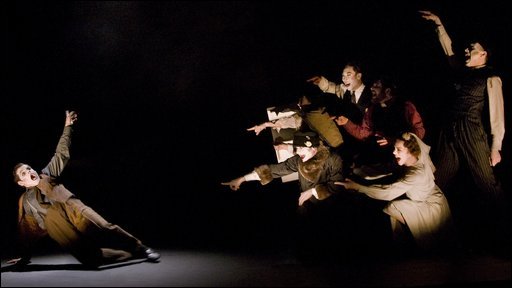
    The Overcoat was one of James’ first big successes.


    It was during these early days in London that James would start working as assistant to lighting designer Chris Ellis: “Chris was a big influence. He can be a fierce man and very business-like.  He gave me a lot of work and taught me a lot. My first experience of the West End came from him. I was his assistant on La Cava which played at the Victoria Palace and then Piccadilly Theatre and was produced by Barbara Broccoli. Lighting aside, it was my first introduction to the politics of commercial theatre and managing the intervention of producers and so forth. Chris was passionate about his work and always determined to make the best show possible.  He also put a lot of store by his team; the programmer, the production electrician, the DSM.  He showed me what lighting design really entails, that it is very much a collaboration, relying on diplomacy, patience and the skill of a great many people.  He also gave me a lot of confidence, encouraging me to have an opinion, to voice my ideas.  He came to see my early work and his enthusiasm and evident pride in me were significant factors in my decision to pursue lighting as a career”.
    KT144419_942long

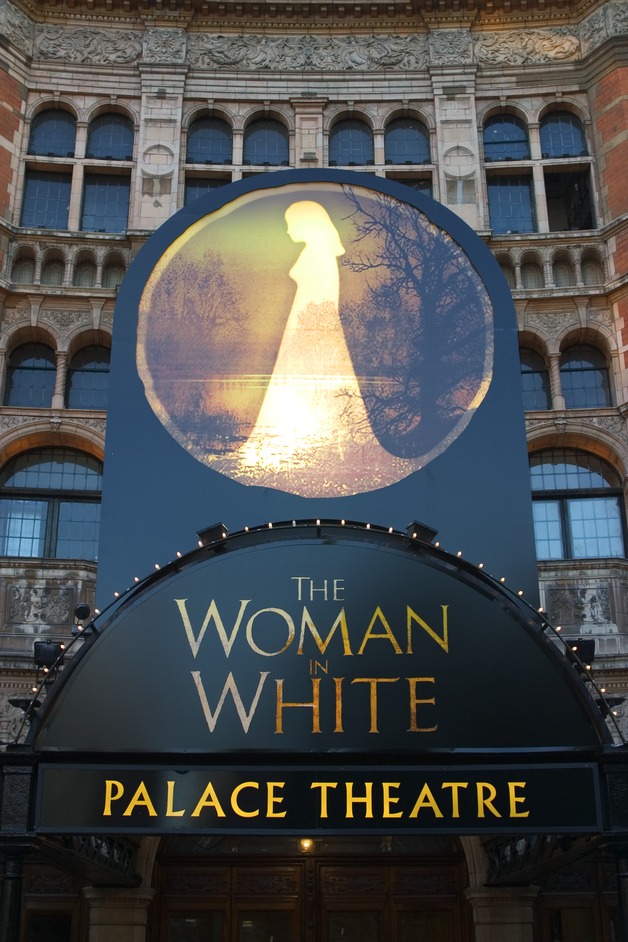
    The Woman in White is the only professional collaboration James has with his uncle.


    The year was now 2002 and James was contacted by Marcus Romer, the Artistic Director of Pilot, in what would turn out to be another fortunate intervention: “Following Lord of the Flies, Marcus had been offered a show at the Worcester Swan. It was a stage adaptation of The Elephant Man and he asked if I would be interested in lighting it. I said yes of course and I’m so glad I did. It was a tiny show in a tiny theatre, but it was a huge turning point. I started noticing the play of light everywhere”.
    Following his work on The Elephant Man, James immediately went to work on Pilot’s next show, Rumblefish. He comments: “It’s that vicious cycle: you don’t get work until you’ve done work. But from that point on, I almost became Pilot’s default lighting designer. It meant people were starting to see my work”.
    Alongside a fledgling design career, James continued working as assistant, most notably to Paul Pyant on Andrew Lloyd Webber’s The Woman in White: “It remains our only professional collaboration to date. I called the four followspots – they were hilarious! The things I learnt on that followspot ring…there was probably as much drama on cans as there was onstage!”.
    Another regular role for James was at the Ipswich Wolsey Theatre. Here he met Pete Rowe, the Artistic Director: “Similar to Marcus at Pilot, I got on well with Pete – so much so that for a while I was the regular LD at the venue. I lit everything from Pinter to the Panto (I don’t think there was actually a Pinter, but you get the idea…)”.
    There followed a long period, the best part of ten years, in which James worked up and down the country in regional repertory theatre including Nottingham Playhouse, Birmingham Rep, Leicester Haymarket, Scarborough Steven Joseph, Ipswich Wolsey, Exeter Northcott, Northampton Theatre Royal, Watford Palace and York Theatre Royal: “It was part livelihood, part apprenticeship, part endurance test. It was also an invaluable time. But I was never at home, and now I can’t abide a Virgin Pendolino”.
    Men+Should+Weep-008 - Manuel Harlan

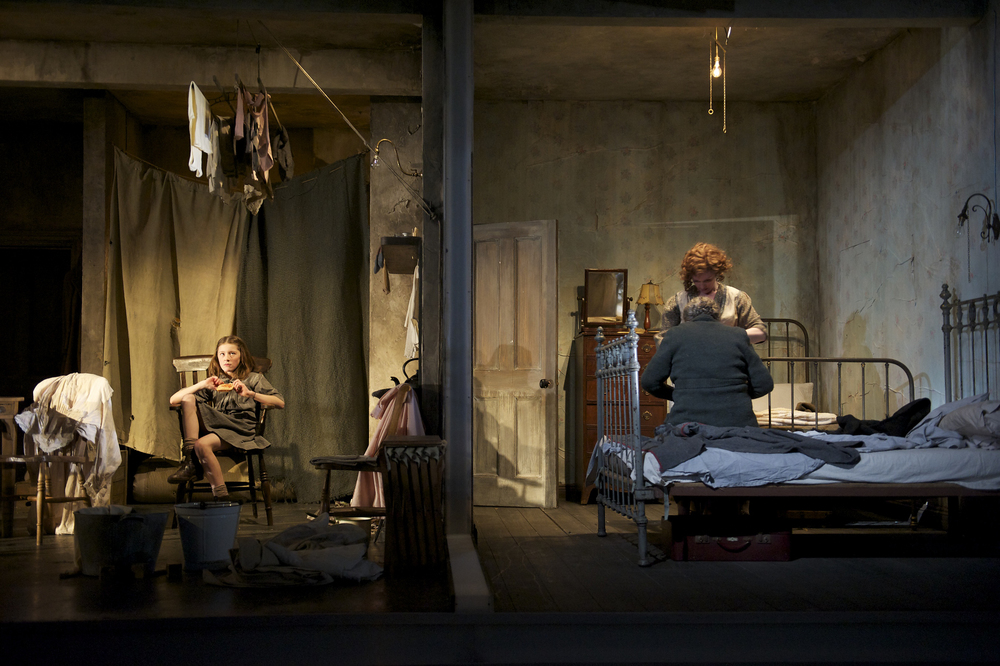
    Men Should Weep, which was directed by Josie Rourke, marked James’ National Theatre debut.


    Pete Rowe put James in touch with Amit Lahav of Gecko who asked him to light their next show, The Overcoat. It toured before coming to the Lyric Hammersmith: “There was a buzz around Gecko and lots of people were coming to see it in London. I remember Nick Hytner and Tom Morris coming along. Paule Constable was particularly complimentary and has remained a generous champion of mine. It felt like people were finally recognising my work”. This was seemingly true, with Lynn Gardner noting “James Farncombe’s exquisite use of light and shadow is a show in its own right”.
    The show marked the beginning of James’ recognition as an emerging lighting designer:  “It felt like long time coming, but when the break finally happened, things moved quickly. I had lit for Josie Rourke at the Bush Theatre and suddenly she was directing Men Should Weep at the National – which she asked me to light. This was a big moment in my career. I had wanted to work at that venue for ten years, but never came close.  The set, designed by Bunny Christie, was beautiful but challenging to light. That said, I got on the right side of Laurie Clayton and Simon Fraulo, resident wizards of the Lyttelton lighting department, and with their colossal expertise and patience, we found a way through. It really pushed me, but was actually a real joy to work on. It gave me confidence and it opened a lot of doors”.
    Following his National debut, James found himself in demand. Looking over his impressive CV, I inquire as to whether he has any favourite shows. Naturally, he doesn’t have just one: “Juno and the Paycock for the late, great Howard Davis was particularly memorable.  I remember seeing Howard’s work when I first came to London, and thought, I’d like to work with someone like him one day. A decade later I found myself in pre-production meetings for Juno sat opposite him. People for Nick Hytner which was written by Alan Bennett and it was just magic to be in the room with that brilliant man. The Ladykillers was also a memorable production. It ran at the Gielgud in the West End, and was the first time I opened a royalty cheque and thought there must be a typo – too many noughts (that doesn’t happen very often!). I love working with Katie Mitchell and my favourites would be Pelleas et Melisande at the Aix-en-Provence International Festival and recently Anatomy of a Suicide at the Royal Court. Other highlights include People, Places and Things and London Road in the Olivier. And we haven’t even really started talking about the opera…”
    Denise-Gough-(Emma)&company-in-People,Places&Things-by-JohanPersson1200x800px

    People, Places and Things which James lit at the National and transferred to the West End. It is now on tour and about to transfer to Broadway.


    So the time has come where I ask James that well-known question: what advice do you have for the next generation of lighting designers? James’ answer is actually both thoughtful and realistic: “Do your time. This industry is all about patience and climbing the ladder. You might spend years freelancing, relighting and probably doing jobs that you’d rather not. That said, working in different departments and knowing about all areas of the profession can’t be a bad thing.
    “I also think it’s important to learn to say no. If you’re a freelance designer, you need to learn how to say no to certain projects and make intelligent decisions when it comes to your work. Mainly so you can do the job properly but also for the sake of your sanity and your integrity – not to mention your general health”.
    James is also quick to remind me how, whilst theatre is his biggest passion, time away from the industry is vital. He comments: “You need to find something to do away from lighting. For me, I’m still love making music and I still write songs and play the piano. I’m also learning French at the moment.  I can spend hours getting lost around art galleries too”. However, there is one other thing that’s keeping James extremely busy at the moment: “I’m now a dad. Having my daughter means I strive for a more healthy work/life balance, and she is my saving grace. She says one day she is going to come and ‘work in the dark with me’… I still work too much, but I’m slowly learning to get my priorities in the right order”.
    And with the emergence of the next generation of the Farncombe family, it remains to be seen as to whether this theatrical family will produce yet another lighting designer…
    Photos courtesy of BBC TV, Dan Wooler, David Baird, Manual Harlan, Nottingham Trent University, Paul Pyant, Richard Haughton, Stephen Keeling and Tom Lancaster.